
Warehouse Management System Market Report 2026
Global Outlook – By Offering (Software, Services ), By Deployment (On Premises, Cloud), By Function (Labor Management System, Analytics And Optimization, Billing And Yard Management, Systems Integration And Maintenance), By Application (Transportation And Logistics, Healthcare, Retail, Manufacturing, Food And Beverage, Other Applications) – Market Size, Trends, Strategies, and Forecast to 2030
Warehouse Management System Market Overview
• Warehouse Management System market size has reached to $3.88 billion in 2025 • Expected to grow to $7.69 billion in 2030 at a compound annual growth rate (CAGR) of 14.6% • Growth Driver: Rising E-Commerce Demand Fuels Surge In Warehouse Management System Market • Market Trend: Redefines Warehouse Management with Cutting-Edge Technology • North America was the largest region in 2025 and Asia-Pacific is the fastest growing region.Market Gains By 2030 – Top Opportunities By Segment
Market Gain identifies the most promising market opportunities by highlighting the segments or products expected to generate the highest incremental revenue growth over the next five years.
What Is Covered Under Warehouse Management System Market?
A warehouse management system (WMS) is software that manages inventory movement to know where final items and goods are at any given time to fulfil orders. A warehouse management system offers visibility into a business's entire inventory and manages supply chain fulfillment operations from the distribution center to the store shelf. The main warehouse management system offerings include software and services. Warehouse management system software is used to control and manage daily warehouse operations. The warehouse management system software helps in managing and controlling regular warehouse operations. It directs inventory in managing, picking, and shipping orders and guides the system automatically in picking and shipping items. The different warehouse management systems' deployment modes include on-premises and cloud. The warehouse management system functions include labor management system, analytics and optimization, billing and yard management, and systems integration and maintenance, which are used for applications in transportation and logistics, healthcare, retail, manufacturing, food and beverage, and other applications.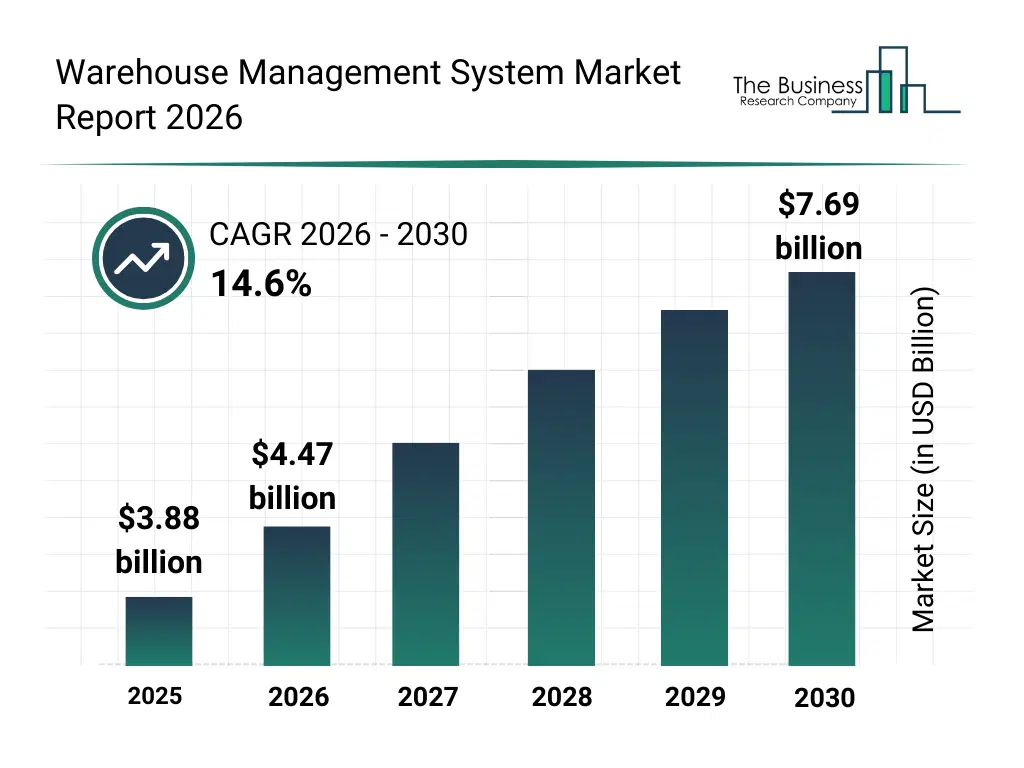
What Is The Warehouse Management System Market Size and Share 2026?
The warehouse management system market size has grown rapidly in recent years. It will grow from $3.88 billion in 2025 to $4.47 billion in 2026 at a compound annual growth rate (CAGR) of 15.3%. The growth in the historic period can be attributed to expansion of global logistics activities, growth in retail and ecommerce movement, increasing need for structured warehouse control, development of early warehouse automation, rising demand for accurate inventory handling.What Is The Warehouse Management System Market Growth Forecast?
The warehouse management system market size is expected to see rapid growth in the next few years. It will grow to $7.69 billion in 2030 at a compound annual growth rate (CAGR) of 14.6%. The growth in the forecast period can be attributed to growing need for faster fulfillment processes, rising logistics digital transformation, strengthening focus on warehouse optimization, increasing dependence on data driven inventory control, expanding global supply chain complexity. Major trends in the forecast period include increasing demand for real time inventory visibility, growing adoption of automated warehouse operations, rising focus on efficient supply chain fulfillment, strengthening dependence on cloud based warehouse platforms, increasing expansion of omnichannel distribution networks.
Global Warehouse Management System Market Segmentation
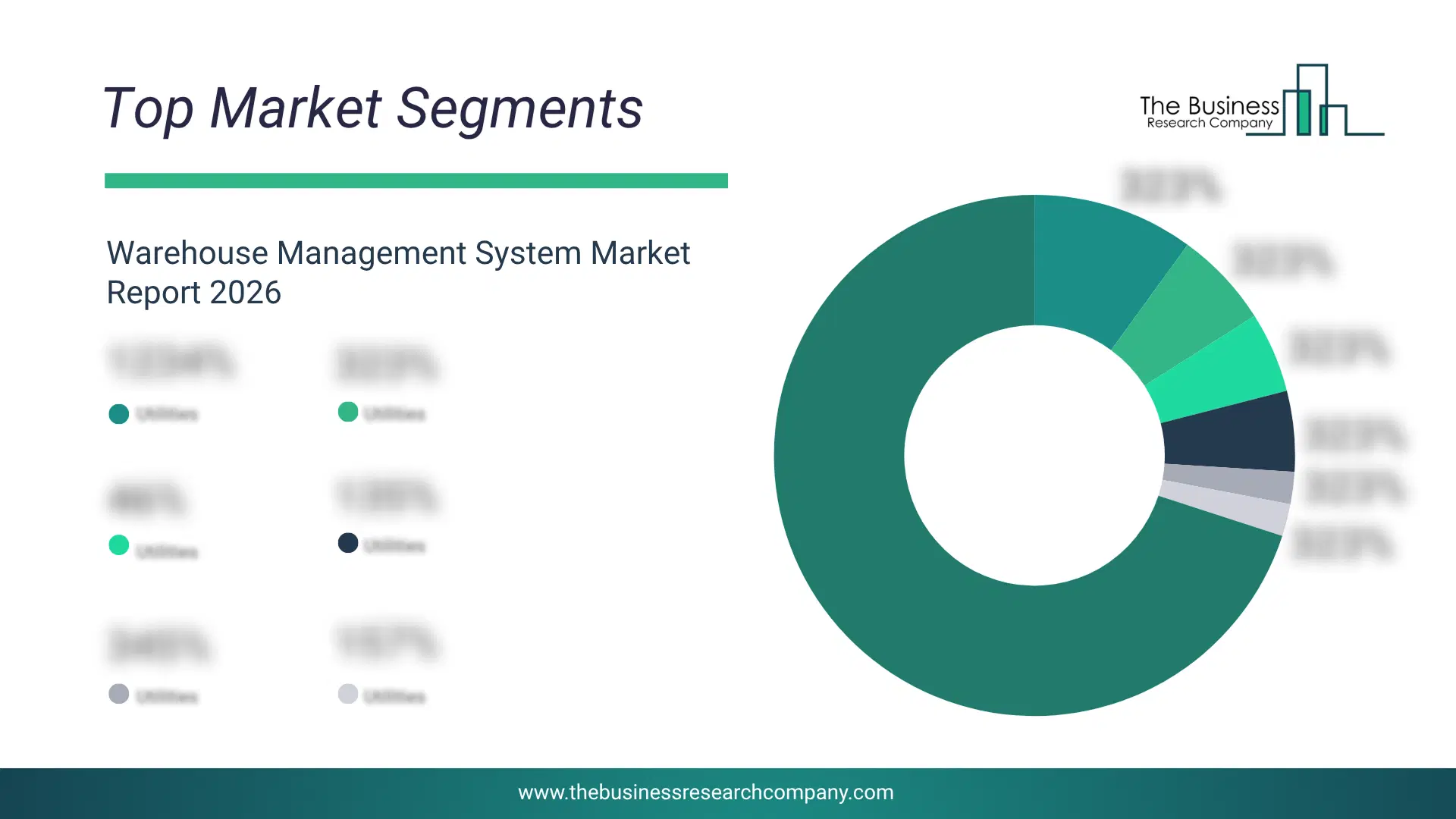
1) By Offering: Software, Services 2) By Deployment: On Premises, Cloud 3) By Function: Labor Management System, Analytics And Optimization, Billing And Yard Management, Systems Integration And Maintenance 4) By Application: Transportation And Logistics, Healthcare, Retail, Manufacturing, Food And Beverage, Other Applications Subsegments: 1) By Software: Cloud-Based WMS, On-Premise WMS, Integrated WMS, Standalone WMS 2) By Services: Consulting Services, Implementation Services, Support And Maintenance Services, Training Services The top segments in the warehouse management system market will be: • Software will reach $3.9 Billion by 2030. • Services will reach $3.74 Billion by 2030.What Is The Driver Of The Warehouse Management System Market?
The increase in demand from e-commerce companies for larger warehouses with better tracking and forecasting is expected to drive the warehouse management system market. The growing e-commerce industry requires continuous tracking of all the equipment and inventory forecasting to keep up with demand and maintain large cargo movement. For instance, in November 2023, according to International Trade Administration a US-based government agency, eCommerce revenues in the UK are projected to experience an average annual growth rate of 12.6% by 2025. By that year, eCommerce revenue is expected to reach approximately $285.60 billion. Therefore, increasing demand from e-commerce companies is expected to boost the market during the forecast period.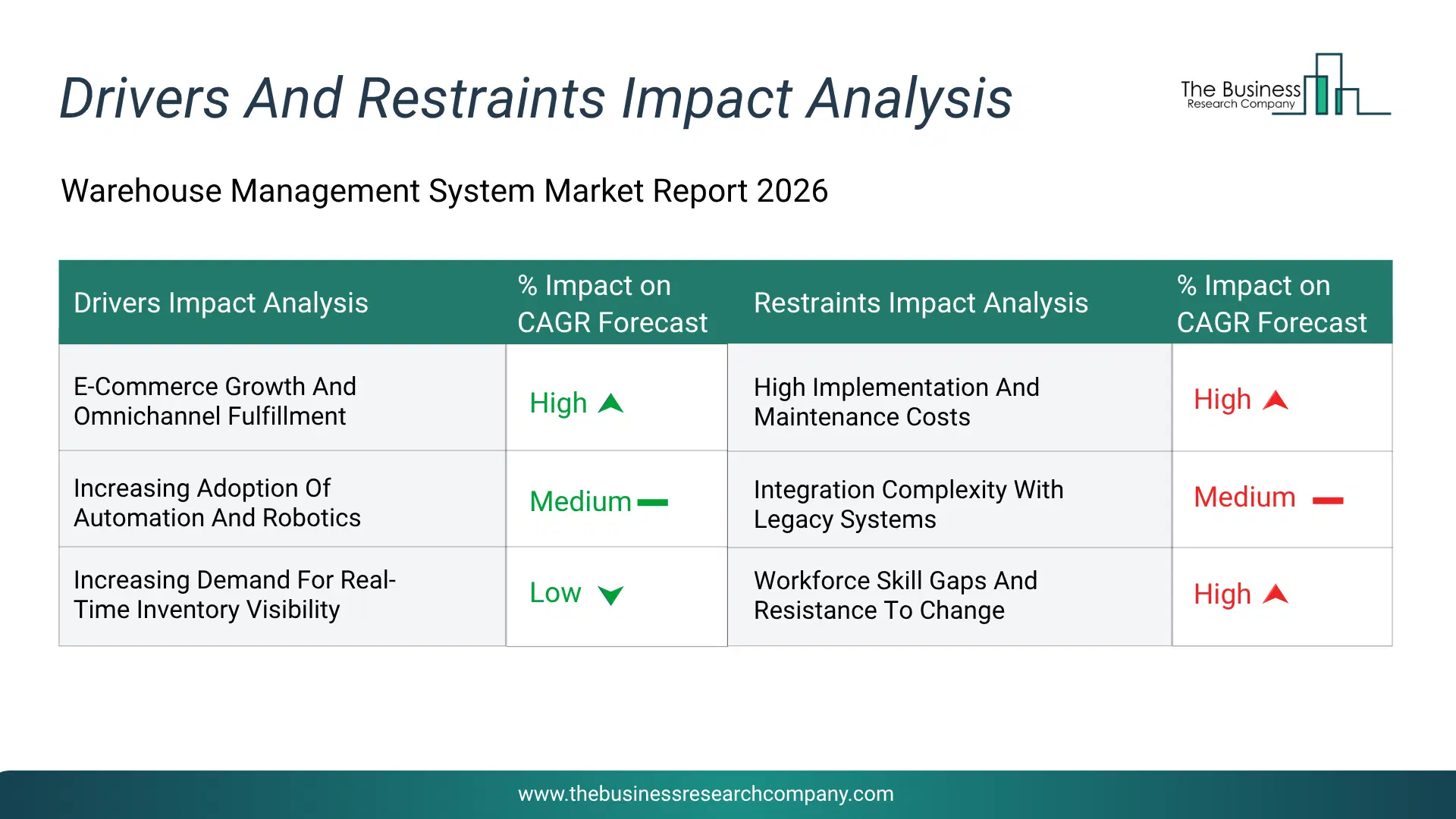
Infographic Chart Showing Key Market Drivers Analysis And Restraints For Warehouse Management System Market
The chart presents an impact analysis of key drivers and restraints, quantifying their relative influence on the market's growth rate and helping assess the balance between growth enablers and limiting factors. This chart offers a high-level perspective; the full report contains more detailed insights.
How Will The Drivers Impact Growth In The Global Warehouse Management System Market?
• E-Commerce Growth And Omnichannel Fulfillment (High) – During the forecast period, the expansion of e-commerce and omnichannel fulfillment is expected to become a key growth driver for the warehouse management system market by 2030. The increasing volume of online orders and the growing complexity of managing multiple sales channels are compelling businesses to adopt advanced warehouse systems that can streamline order processing and enhance fulfillment accuracy. Retailers and logistics providers are focusing on integrating warehouse operations with digital storefronts to ensure seamless coordination across inventory, distribution, and last-mile delivery. This shift is encouraging the deployment of scalable and agile warehouse platforms that can support dynamic demand patterns and high transaction volumes. • Increasing Adoption Of Automation And Robotics (Medium) – During the forecast period, the increasing adoption of automation and robotics is expected to emerge as a major factor driving the expansion of the warehouse management system market by 2030. Warehouses are increasingly deploying automated storage and retrieval systems, autonomous mobile robots, and conveyor technologies to enhance operational efficiency and throughput. Warehouse management systems play a critical role in orchestrating these automated processes by enabling real-time coordination, task allocation, and workflow optimization. Companies are prioritizing automation to improve speed, accuracy, and scalability in warehouse operations while maintaining consistent service levels. • Increasing Demand For Real-Time Inventory Visibility (Low) – During the forecast period, the increasing demand for real-time inventory visibility is expected to act as a key growth catalyst for the warehouse management system market by 2030. Organizations are focusing on gaining accurate and up-to-date insights into inventory levels, order status, and warehouse activities to support efficient decision-making and reduce operational disruptions. Advanced warehouse systems enable end-to-end visibility across supply chains, allowing businesses to optimize stock levels, minimize errors, and improve responsiveness to demand fluctuations. The integration of technologies such as IoT and data analytics is further enhancing visibility and control within warehouse environments.How Will The Restraints Impact Growth In The Global Warehouse Management System Market?
• High Implementation And Maintenance Costs (High) – During the forecast period, high Implementation And Maintenance Costs act as a key restraint on the WMS market because modern warehouse management systems require substantial capital expenditure for software licenses, hardware, IT infrastructure, and periodic upgrades. Small and mid‑sized enterprises often find these costs prohibitive, slowing down adoption even when operational benefits are clear. The financial burden is intensified by additional expenses such as workforce training, customization for specific workflows, and integration costs with existing systems. These high upfront and long‑term costs can outweigh perceived short‑term benefits for cost‑sensitive businesses, particularly in emerging economies. As a result, many companies postpone or scale back WMS projects, limiting overall market growth. Although cloud subscription models help reduce some upfront expenses, ongoing maintenance and scalability costs still pose challenges. Therefore, cost concerns remain a significant barrier to broader WMS market penetration. • Integration Complexity With Legacy Systems (Medium) – During the forecast period, integration Complexity With Legacy Systems restrains the WMS market because many warehouses still rely on outdated systems that are not compatible with modern software platforms. Connecting new WMS solutions to existing enterprise systems like ERP, order management, and transportation systems can be technically difficult, time‑consuming, and expensive. These challenges often lead to operational disruption, data inconsistencies, and delayed deployments as organizations struggle to align diverse platforms. As a result, some companies either delay WMS adoption or choose less capable systems to avoid integration hurdles, which diminishes the overall market opportunity. Moreover, the complexity of customization needed to connect disparate systems further increases implementation time and costs. This challenge discourages smaller and less technically‑equipped businesses from investing in advanced WMS solutions. Addressing integration issues requires careful planning and vendor support, which adds to adoption barriers. • Workforce Skill Gaps And Resistance To Change (Low) – During the forecast period, workforce Skill Gaps And Resistance To Change restrain the WMS market because implementing advanced warehouse management systems requires personnel who can configure, operate, and maintain these sophisticated technologies. Many organizations face a shortage of skilled IT and logistics professionals capable of managing complex WMS features and automation tools. This lack of expertise slows down adoption and can lead to underutilization of system capabilities even after deployment. Additionally, employees often resist transitioning from familiar manual processes to software‑driven workflows, making change management a critical challenge. Resistance to new systems can reduce productivity during the transition period and increase training costs, further deterring companies from upgrading or investing in WMS solutions. Addressing these workforce challenges requires focused training programs and supportive leadership, which adds to implementation complexity.Key Players In The Global Warehouse Management System Market
Major companies operating in the warehouse management system market report are IBM Corporation, Oracle Corporation, SAP SE, Infor Inc., Manhattan Associates Inc., Blue Yonder Group Inc., Epicor Software Corporation, Tecsys Inc., Softeon Inc., Datex Corporation, Made4net LLC, PSI Logistics GmbH, Mantis S.A., Generix Group, Microlistics Pty Ltd., Cadre Technologies Inc., Ivanti Wavelink, Reply S.p.A., Mecalux S.A., Zebra Technologies Corporation, Körber Supply Chain Software (independent WMS brand), 3PL Central LLC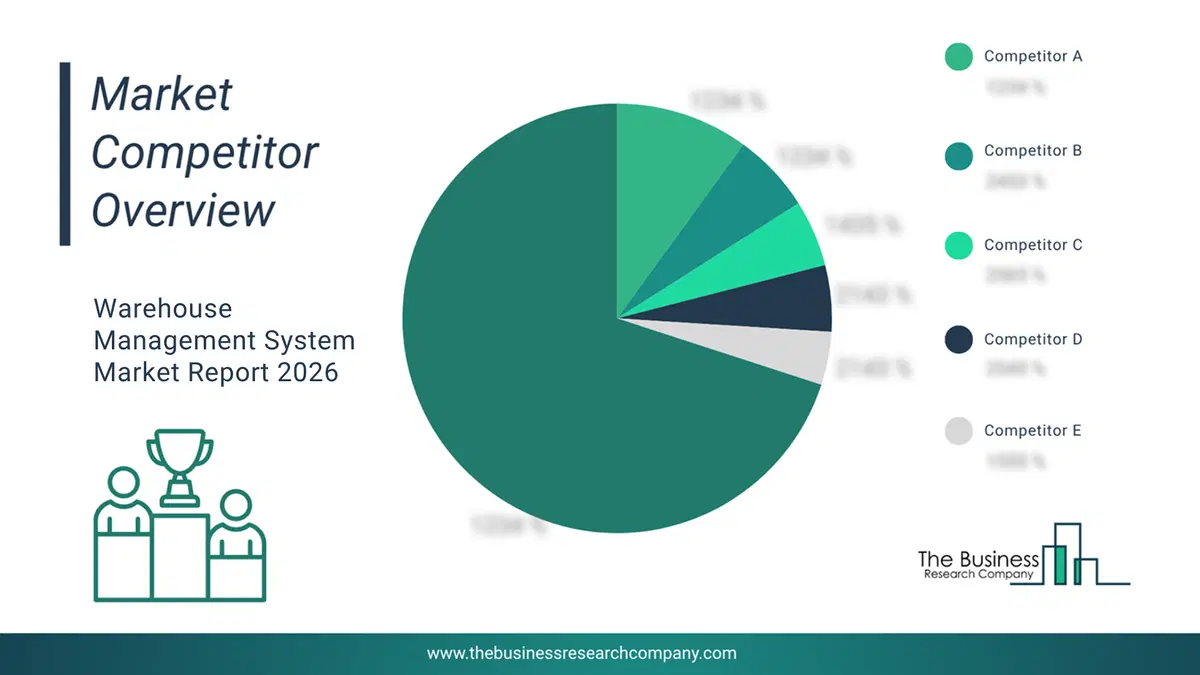
This chart is for illustrative purposes; the full report includes a detailed competitor analysis and comprehensive overview of the top 10 companies in the market.
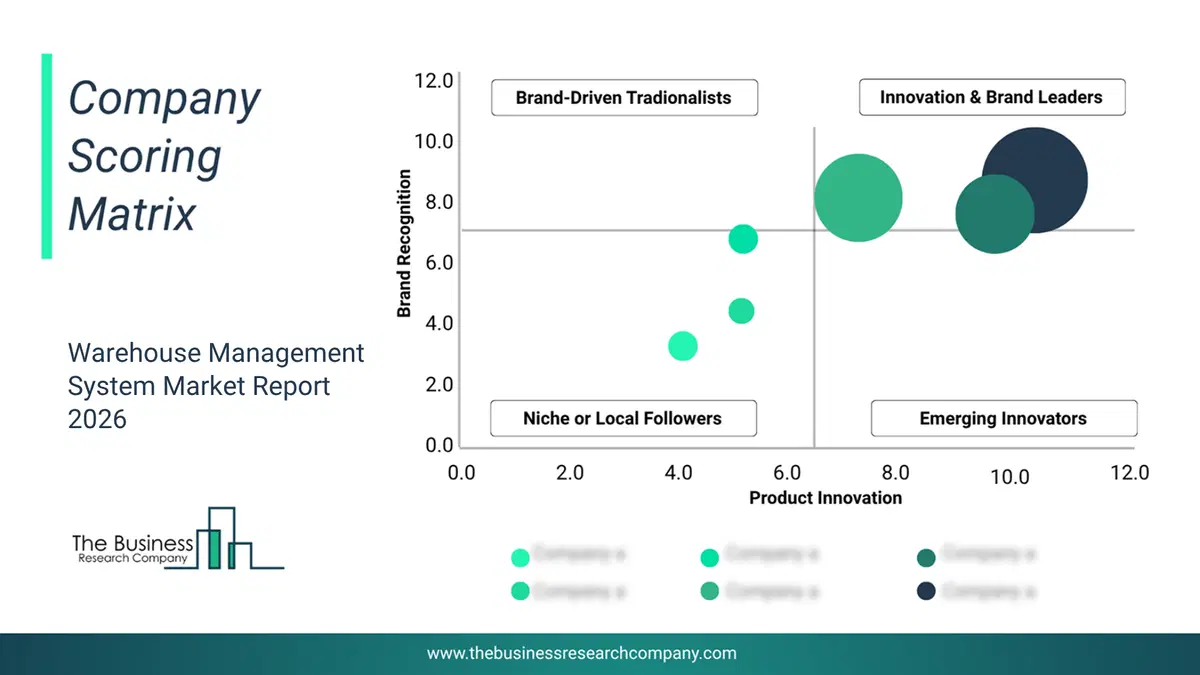
This chart maps companies by product innovation and brand strength, with bubble size indicating relative revenue, helping identify market leaders, challengers, and niche players. This is an illustrative chart; the full report provides a complete and accurate competitive analysis.
Global Warehouse Management System Market Trends and Insights
Major companies operating in the warehouse management system market are focusing on developing innovative technologies to deliver significant benefits in terms of efficiency, cost savings, employee satisfaction, and future-proofing their operations. The warehouse management system was developed, tested, and implemented across 10 North American warehouse sites in just eight months. The system has cloud capabilities that offer cost savings and can be updated every year, as opposed to the industry standard of every five to seven years. For instance, in May 2023, Mars Inc., a US-based food company, launched a new warehouse management system (WMS) to drive efficiency and save millions of dollars. It also features an optimized task interleaving process to streamline warehouse operations and improve productivity. The development of the WMS aligns with Mars' commitment to its five principles, including quality, responsibility, mutuality, efficiency, and freedom. The new system has been well-received by Mars' warehouse teams and has contributed to the company's overall efficiency and cost savings.What Are Latest Mergers And Acquisitions In The Warehouse Management System Market?
In May 2023, Ingka Group, a Sweden-based retail and omnichannel solutions company, acquired Made4net for an undisclosed amount. With this acquisition, Ingka Group aims to strengthen its end-to-end supply chain and fulfilment capabilities to support faster, more efficient, and scalable omnichannel retail operations across global IKEA markets. Made4net Inc is a US-based supply chain technology company that specializes in providing advanced cloud-based warehouse management, transportation management, and fulfilment software solutions designed to optimize logistics performance for retailers and distributors.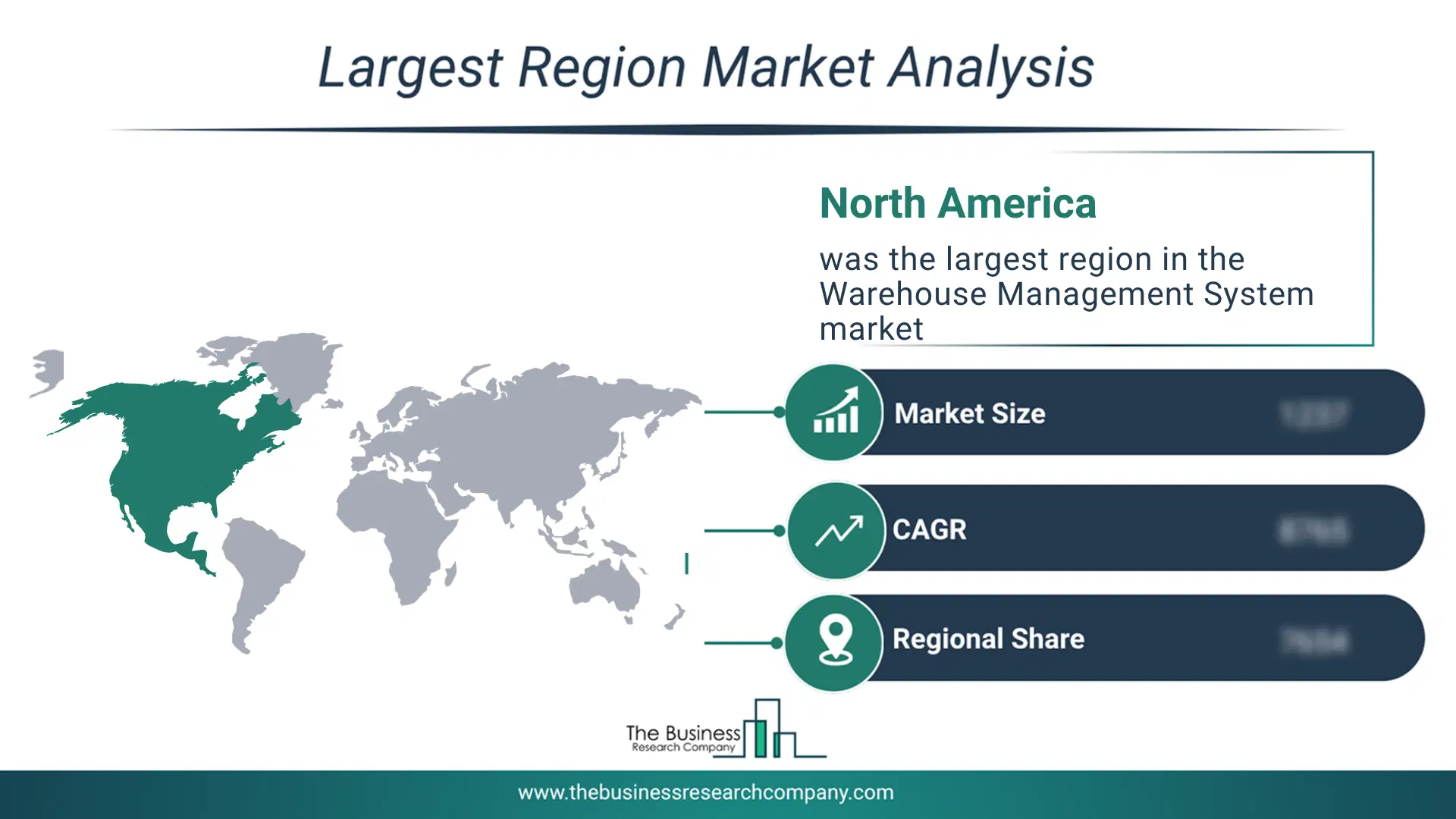
Regional Outlook
North America was the largest region in the warehouse management system market in 2025. Asia-Pacific is expected to be the fastest-growing region in the forecast period. The regions covered in this market report are Asia-Pacific, South East Asia, Western Europe, Eastern Europe, North America, South America, Middle East, Africa. The countries covered in this market report are Australia, Brazil, China, France, Germany, India, Indonesia, Japan, Taiwan, Russia, South Korea, UK, USA, Canada, Italy, SpainWhat Defines the Warehouse Management System Market?
The warehouse management system market includes revenues earned by entities by providing services such as inbound logistics and outbound logistics tools for picking and packing processes, resource utilization, analytics, and others. The market value includes the value of related goods sold by the service provider or included within the service offering. Only goods and services traded between entities or sold to end consumers are included.How is Market Value Defined and Measured?
The market value is defined as the revenues that enterprises gain from the sale of goods and/or services within the specified market and geography through sales, grants, or donations in terms of the currency (in USD unless otherwise specified). The revenues for a specified geography are consumption values that are revenues generated by organizations in the specified geography within the market, irrespective of where they are produced. It does not include revenues from resales along the supply chain, either further along the supply chain or as part of other products.
This chart presents market attractiveness based on a quantitative evaluation of growth, competition, strategic alignment, and risk, offering a clear view of opportunity areas for decision-making. This chart is for illustrative purposes; the full report contains the complete analysis.

This chart highlights the Total Addressable Market (TAM) by estimating the maximum revenue opportunity using an assumption-driven approach, supporting strategic planning and opportunity sizing across markets. The chart is illustrative; the full report provides a more comprehensive analysis.
What Key Data and Analysis Are Included in the Warehouse Management System Market Report 2026?
The warehouse management system market research report is one of a series of new reports from The Business Research Company that provides market statistics, including industry global market size, regional shares, competitors with the market share, detailed market segments, market trends and opportunities, and any further data you may need to thrive in the warehouse management system industry. The market research report delivers a complete perspective of everything you need, with an in-depth analysis of the current and future state of the industry.Warehouse Management System Market Report Forecast Analysis
| Report Attribute | Details |
|---|---|
| Market Size Value In 2026 | $4.47 billion |
| Revenue Forecast In 2030 | $7.69 billion |
| Growth Rate | CAGR of 15.3% from 2026 to 2030 |
| Base Year For Estimation | 2025 |
| Actual Estimates/Historical Data | 2020-2025 |
| Forecast Period | 2026 - 2030 |
| Market Representation | Revenue in USD Billion and CAGR from 2026 to 2030 |
| Segments Covered | Offering, Deployment, Function, Application |
| Regional Scope | Asia-Pacific, Western Europe, Eastern Europe, North America, South America, Middle East, Africa |
| Country Scope | The countries covered in the report are Australia, Brazil, China, France, Germany, India, Indonesia, Japan, Taiwan, Russia, South Korea, UK, USA, Canada, Italy, Spain. |
| Key Companies Profiled | IBM Corporation, Oracle Corporation, SAP SE, Infor Inc., Manhattan Associates Inc., Blue Yonder Group Inc., Epicor Software Corporation, Tecsys Inc., Softeon Inc., Datex Corporation, Made4net LLC, PSI Logistics GmbH, Mantis S.A., Generix Group, Microlistics Pty Ltd., Cadre Technologies Inc., Ivanti Wavelink, Reply S.p.A., Mecalux S.A., Zebra Technologies Corporation, Körber Supply Chain Software (independent WMS brand), 3PL Central LLC |
| Customization Scope | Request for Customization |
| Pricing And Purchase Options | Explore Purchase Options |