
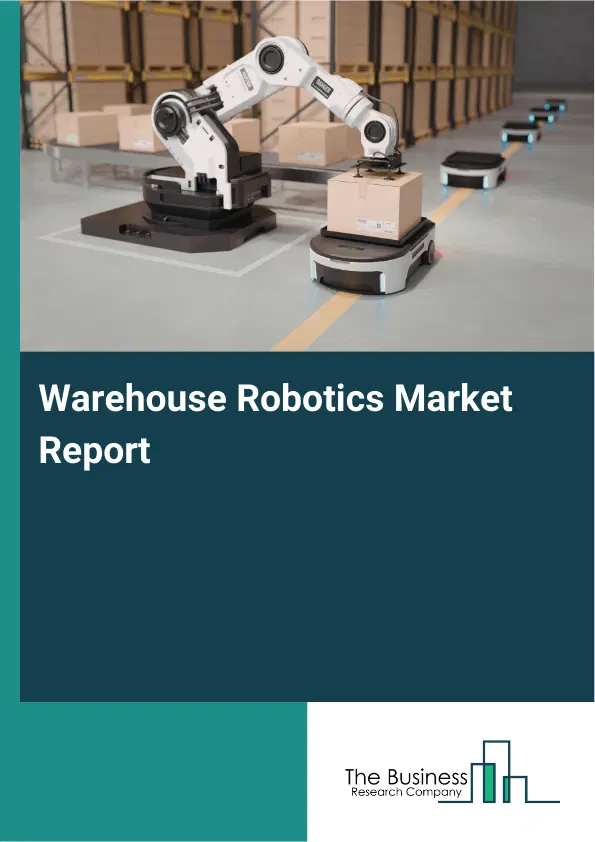
Warehouse Robotics Market Report 2026
Global Outlook – By Type (Parallel Robots, Mobile Robots, Gantry Robots), By Function (Pick And Place, Transportation, Packaging), By End-User (E-Commerce, Automotive, Food And Beverages, Electronics And Electrical, Metal And Machinery, Pharmaceuticals, Other End-Users) – Market Size, Trends, Strategies, and Forecast to 2030
Warehouse Robotics Market Overview
• Warehouse Robotics market size has reached to $6.21 billion in 2025 • Expected to grow to $11.91 billion in 2030 at a compound annual growth rate (CAGR) of 13.9% • Growth Driver: E-Commerce Boom Fuels Warehouse Robotics Market Growth • Market Trend: Cobots Transforming The Industrial Landscape • North America was the largest region in 2025 and Asia-Pacific is the fastest growing region.Market Gains By 2030 – Top Opportunities By Segment
Market Gain identifies the most promising market opportunities by highlighting the segments or products expected to generate the highest incremental revenue growth over the next five years.
What Is Covered Under Warehouse Robotics Market?
Warehouse robotics is a broad phrase that refers to the various automated devices and systems which can be used to improve speed, efficiency, and accuracy in a warehouse. The warehouse robotics are also used to transport materials, perform various tasks, and streamline or automate warehouse processes. The main types of warehouse robotics are SCARA robots, cylindrical robots, parallel robots, mobile robots, gantry robots, and stationary articulated robots. The SCARA robots (Selective Compliance Articulated Robot Arm robots) are used in processes and applications such as production equipment for electronic components, handling, small machine components requiring the precise assembly and disassembly, and transfer of large automotive components. The different types of systems include the knapp open shuttle, the locus robotics system, the fetch robotics freight system, scallog system, and the swisslog carry pick an performs functions such as pick and place, assembling dissembling, transportation, and packaging. This is implemented in various sectors such as e-commerce, automotive, food and beverage, electronics and electrical, metal and machinery, pharmaceuticals, and others.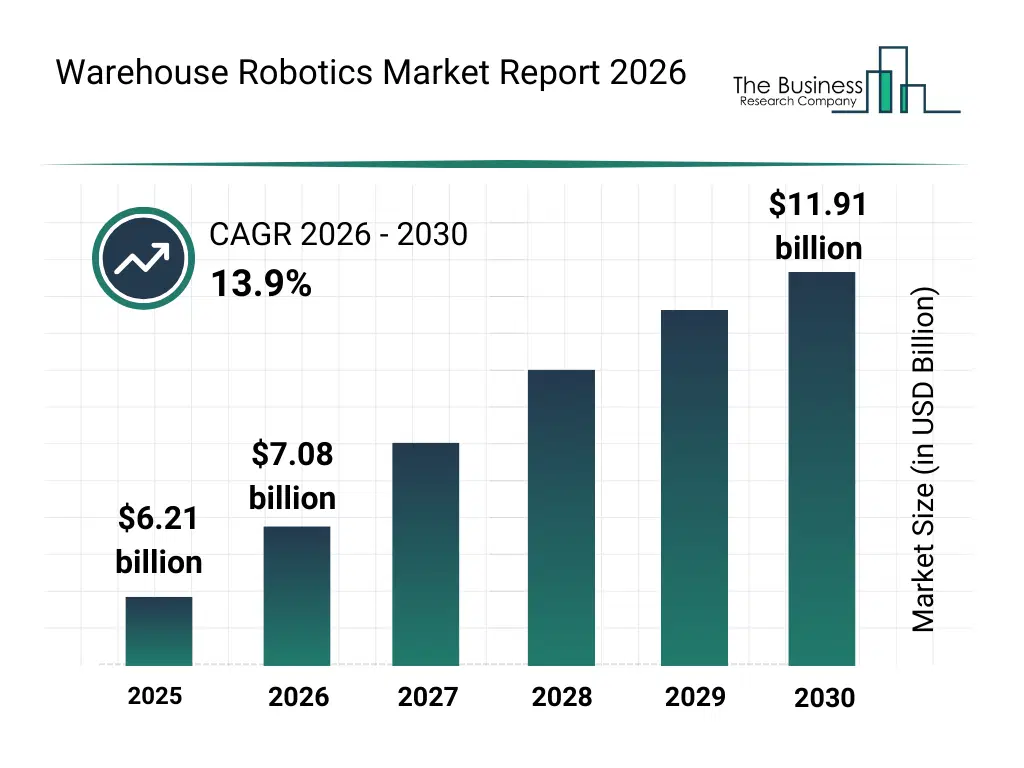
What Is The Warehouse Robotics Market Size and Share 2026?
The warehouse robotics market size has grown rapidly in recent years. It will grow from $6.21 billion in 2025 to $7.08 billion in 2026 at a compound annual growth rate (CAGR) of 14.1%. The growth in the historic period can be attributed to growth in e commerce fulfillment, rising labor shortages, demand for faster order processing, warehouse cost optimization needs, expansion of distribution centers.What Is The Warehouse Robotics Market Growth Forecast?
The warehouse robotics market size is expected to see rapid growth in the next few years. It will grow to $11.91 billion in 2030 at a compound annual growth rate (CAGR) of 13.9%. The growth in the forecast period can be attributed to same day delivery expectations, growth in omnichannel retail, advances in AI vision systems, rising warehouse safety focus, expansion of automated logistics hubs. Major trends in the forecast period include rapid adoption of autonomous mobile robots, growth in goods to person automation, integration of AI driven picking systems, expansion of flexible and scalable robotics solutions, rising demand for warehouse process optimization.
Global Warehouse Robotics Market Segmentation
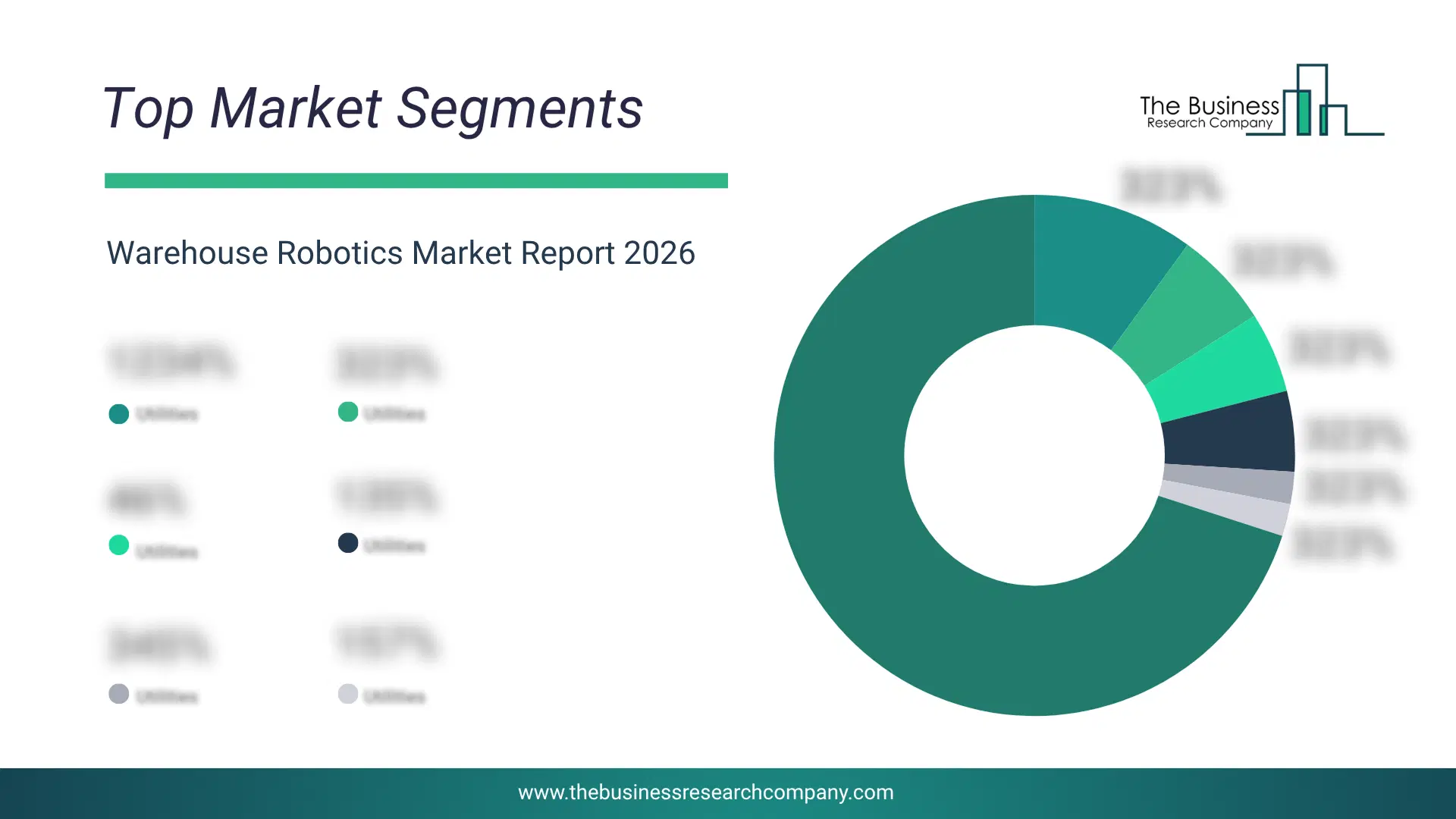
1) By Type: Parallel Robots, Mobile Robots, Gantry Robots 2) By Function: Pick And Place, Transportation, Packaging 3) By End-User: E-Commerce, Automotive, Food And Beverages, Electronics And Electrical, Metal And Machinery, Pharmaceuticals, Other End-Users Subsegments: 1) By Parallel Robots: Delta Robots, Other Parallel Kinematics Robots 2) By Mobile Robots: Automated Guided Vehicles (AGVs), Autonomous Mobile Robots (AMRs) 3) By Gantry Robots: Cartesian Gantry Robots, Overhead Gantry Systems The top segments in the warehouse robotics market will be: • Mobile Robots will reach $6.27 Billion by 2030. • Gantry Robots will reach $1.93 Billion by 2030. • Parallel Robots will reach $1.16 Billion by 2030.What Is The Driver Of The Warehouse Robotics Market?
The growing e-commerce industry is expected to drive the growth of the warehouse robotics market going forward. E-commerce, or online shopping, is a business concept that allows individuals and businesses to buy and sell goods and services via the Internet. The e-commerce sector is the most transformative industry which necessitates automated warehouse robots to automate manual material transportation in any facility and optimize warehouse operations. For instance, in August 2025, according to the United States Census Bureau, a US-based government agency, reported that E-commerce sales for the second quarter of 2025 rose by 5.3 percent (±1.2%) compared with the same quarter in 2024, outpacing the 3.9 percent (±0.4%) growth in overall retail sales. During this period, online sales made up 16.3 percent of total retail transactions. Therefore, the growing e-commerce industry is driving the growth of the warehouse robotics industry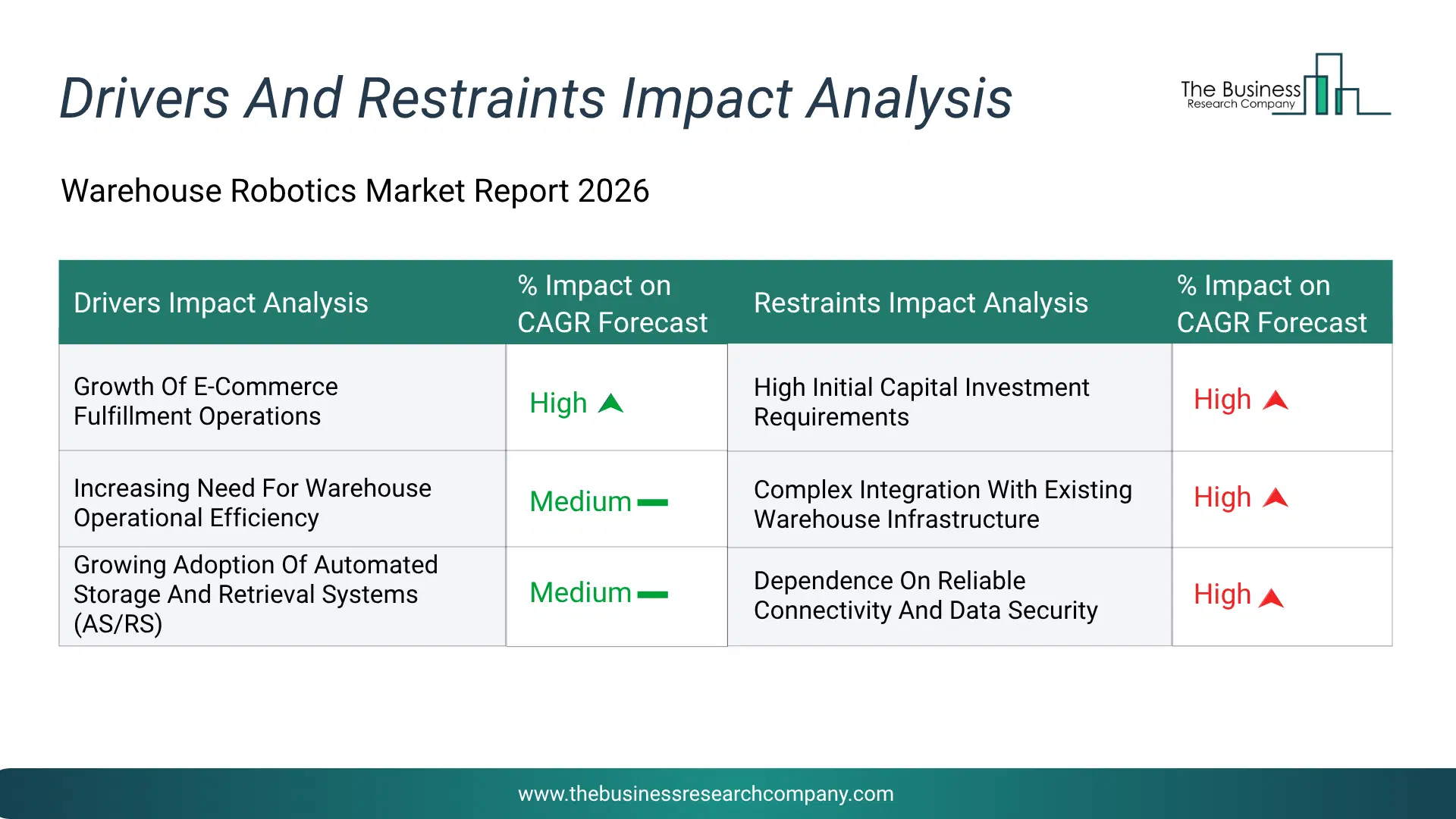
Infographic Chart Showing Key Market Drivers Analysis And Restraints For Warehouse Robotics Market
The chart presents an impact analysis of key drivers and restraints, quantifying their relative influence on the market's growth rate and helping assess the balance between growth enablers and limiting factors. This chart offers a high-level perspective; the full report contains more detailed insights.
How Will The Drivers Impact Growth In The Global Warehouse Robotics Market?
• Growth Of E-Commerce Fulfillment Operations (High) – During the forecast period, the growth of e-commerce fulfillment operations is expected to become a key growth driver for the warehouse robotics market by 2030. The expansion of e-commerce is significantly increasing order volumes and overall fulfillment complexity, thereby driving strong demand for advanced warehouse robotics solutions such as Automated Guided Vehicles (AGVs), Automated Storage and Retrieval Systems (AS/RS), and goods-to-person systems. As online retail continues to grow rapidly, warehouses are required to handle a higher frequency of smaller, more fragmented orders with faster turnaround times. Robotics technologies help improve picking speed, enhance storage efficiency, and ensure higher order accuracy, enabling logistics operators to meet rising customer expectations for same-day and next-day deliveries while maintaining cost efficiency and operational scalability. • Increasing Need For Warehouse Operational Efficiency (Medium) – During the forecast period, the increasing need for warehouse operational efficiency is expected to emerge as a major factor driving the expansion of the warehouse robotics market by 2030. Warehouse operators under rising pressure to process larger volumes of inventory with greater speed, precision, and reliability are increasingly adopting robotics systems to streamline their operations. These advanced systems automate critical warehouse functions such as material transport, storage, retrieval, sorting, and picking activities, significantly reducing dependence on manual labor and minimizing human error. By integrating robotics into warehouse workflows, operators can improve overall throughput, eliminate operational bottlenecks, optimize labor utilization, and ensure smoother coordination across supply chain processes, especially during peak demand periods and seasonal spikes. • Growing Adoption Of Automated Storage And Retrieval Systems (AS/RS) (Medium) – During the forecast period, the growing adoption of automated storage and retrieval systems (AS/RS) is expected to act as a key growth catalyst for the warehouse robotics market by 2030. Growing Focus On Space Optimization And Storage Efficiency is further accelerating demand for Automated Storage and Retrieval Systems (AS/RS), as warehouse operators aim to maximize storage density while minimizing physical footprint. These systems enable highly efficient automated inventory storage and retrieval processes, allowing warehouses to utilize vertical space more effectively and reduce wasted aisle space. In addition to improving space utilization, AS/RS solutions enhance inventory accuracy, reduce handling time, and support faster order fulfillment, making them a critical component in modern, high-performance warehouse and distribution center operations.How Will The Restraints Impact Growth In The Global Warehouse Robotics Market?
• High Initial Capital Investment Requirements (High) – During the forecast period, the deploying warehouse robotics systems, including AGVs, AS/RS, collaborative robots, and associated infrastructure, requires significant upfront investment, which can limit adoption among small and medium-sized warehouse operators. • Complex Integration With Existing Warehouse Infrastructure (Medium) – During the forecast period, the integrating robotic systems into existing warehouse layouts, workflows, and inventory management systems can be technically complex, requiring customization, operational adjustments, and implementation expertise. • Dependence On Reliable Connectivity And Data Security (Medium) – During the forecast period, the dependence on reliable connectivity and data security is expected to restrain the growth of the warehouse robotics market. Modern warehouse robotics systems rely heavily on stable wireless networks, cloud platforms, and real-time data exchange to coordinate robotic movements, inventory tracking, and warehouse operations. Network disruptions, latency issues, or connectivity failures can interrupt robotic workflows, reduce operational efficiency, and increase the risk of downtime. In addition, the growing use of connected robotic systems raises concerns regarding cybersecurity, unauthorized access, and data breaches involving sensitive operational and inventory information. Warehouse operators must invest in secure communication infrastructure, cybersecurity solutions, and continuous system monitoring to protect robotic ecosystems from evolving cyber threats. These additional technical and operational requirements increase implementation complexity and overall operating costs. Consequently, dependence on reliable connectivity and data security remains a significant restraint on the broader adoption of warehouse robotics solutions.Key Players In The Global Warehouse Robotics Market
Major companies operating in the warehouse robotics market are ABB Ltd., Honeywell International Inc., FANUC Corporation, Amazon Robotics LLC, KUKA Aktiengesellschaft, Yaskawa Electric Corporation, Attabotics Inc., Omron Corporation, Daifuku Co. Ltd., Locus Robotics Corporation, GreyOrange Pte. Ltd., KION Group AG, Fetch Robotics Inc., SSI Schaefer Systems International Holding AG, Swisslog Holding AG, Knapp AG, Dematic Corp., Geek Plus Robotics Co. Ltd., Magazino GmbH, Vecna Robotics Inc., Mobile Industrial Robots ApS, Seegrid Corporation, Yamaha Robotics, Toshiba Corporation, Universal Robots A/S, Boston Dynamics Inc., RightHand Robotics Inc., IAM Robotics LLC, Clearpath Robotics Inc.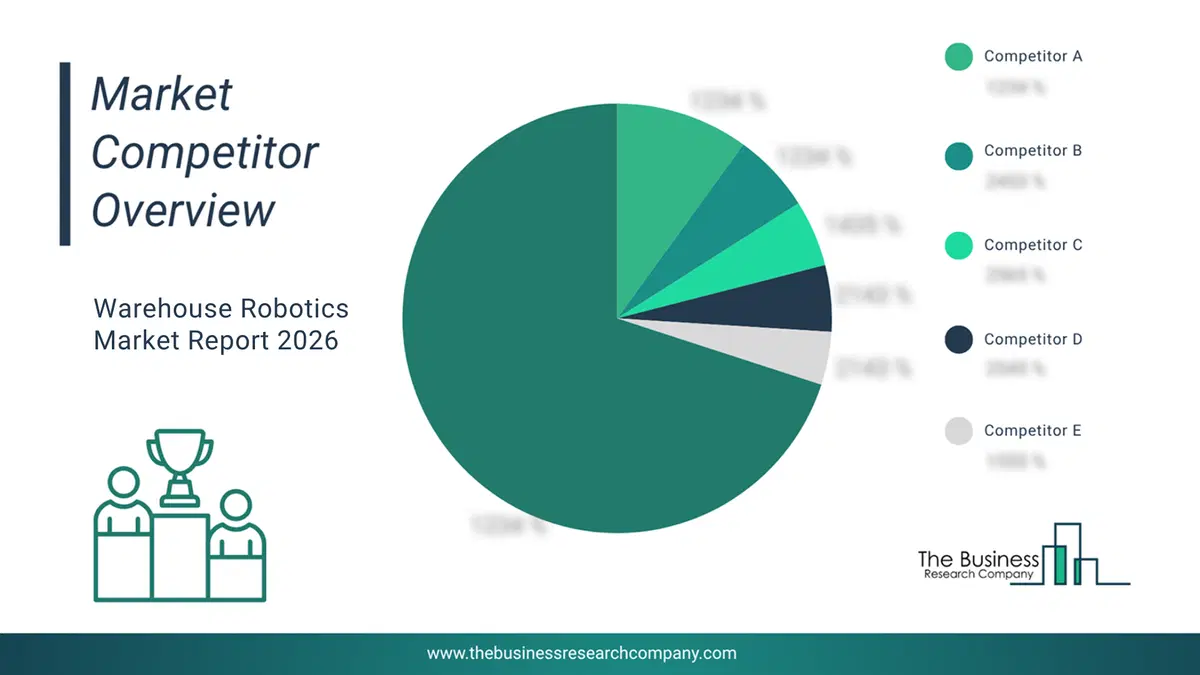
This chart is for illustrative purposes; the full report includes a detailed competitor analysis and comprehensive overview of the top 10 companies in the market.
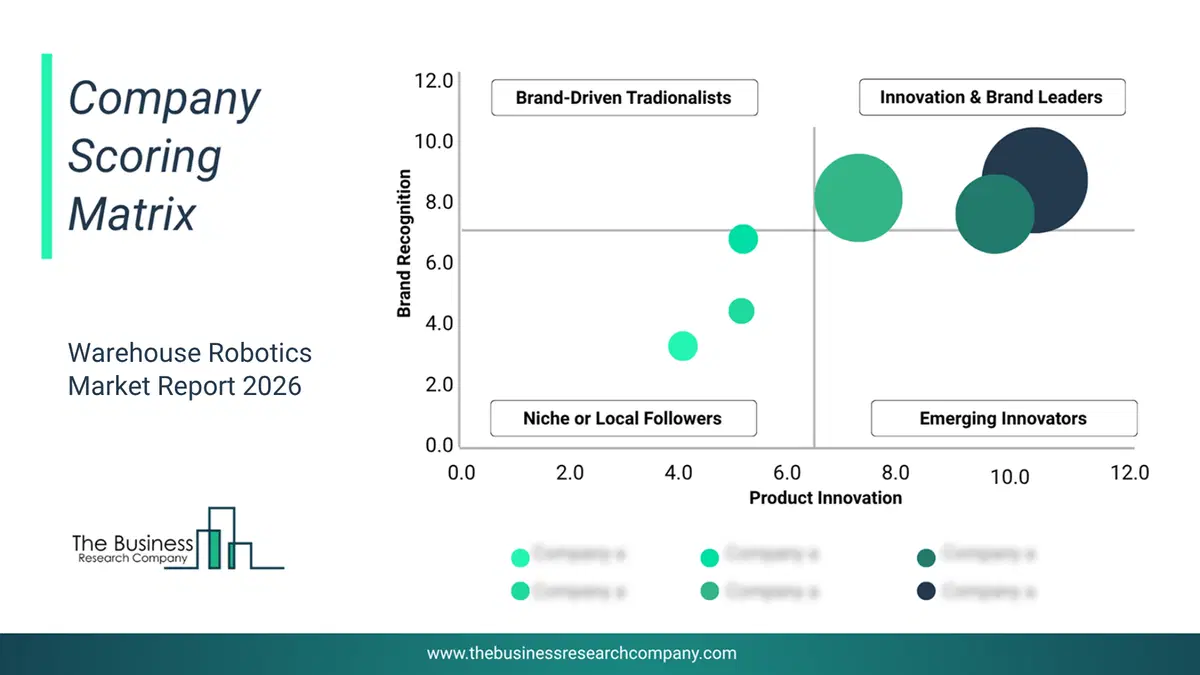
This chart maps companies by product innovation and brand strength, with bubble size indicating relative revenue, helping identify market leaders, challengers, and niche players. This is an illustrative chart; the full report provides a complete and accurate competitive analysis.
Global Warehouse Robotics Market Trends and Insights
Major companies operating in the warehouse robotics market are developing cobots to leverage a competitive edge in the market. Cobots, short for collaborative robots, are a type of industrial robot designed to work alongside human workers in a shared workspace. For instance, in August 2023, Schneider Electric SE, a France-based energy management company launched Lexium cobot, a collaborative robot designed to handle heavy payloads, reduce downtime, and improve operational efficiency in manufacturing environments. The Lexium cobot offers features such as collision detection, compact design, and easy integration, making it ideal for tasks involving heavy, repetitive, or complex operations. It aims to minimize labor shortages impact on productivity and space requirements while enhancing worker safety and agility in industrial plants.What Are Latest Mergers And Acquisitions In The Warehouse Robotics Market?
In August 2023, Jungheinrich AG, a Germany-based provider of intralogistics and warehousing equipment and solutions, acquired Magazino GmbH for an undisclosed amount. With this acquisition, Jungheinrich aims to strengthen its automation expertise particularly in warehouse mobile robotics by integrating Magazino’s advanced robotics capabilities into its intralogistics portfolio. Magazino is a Germany based provider of intelligent, mobile warehouse robots and accompanying navigation & control software.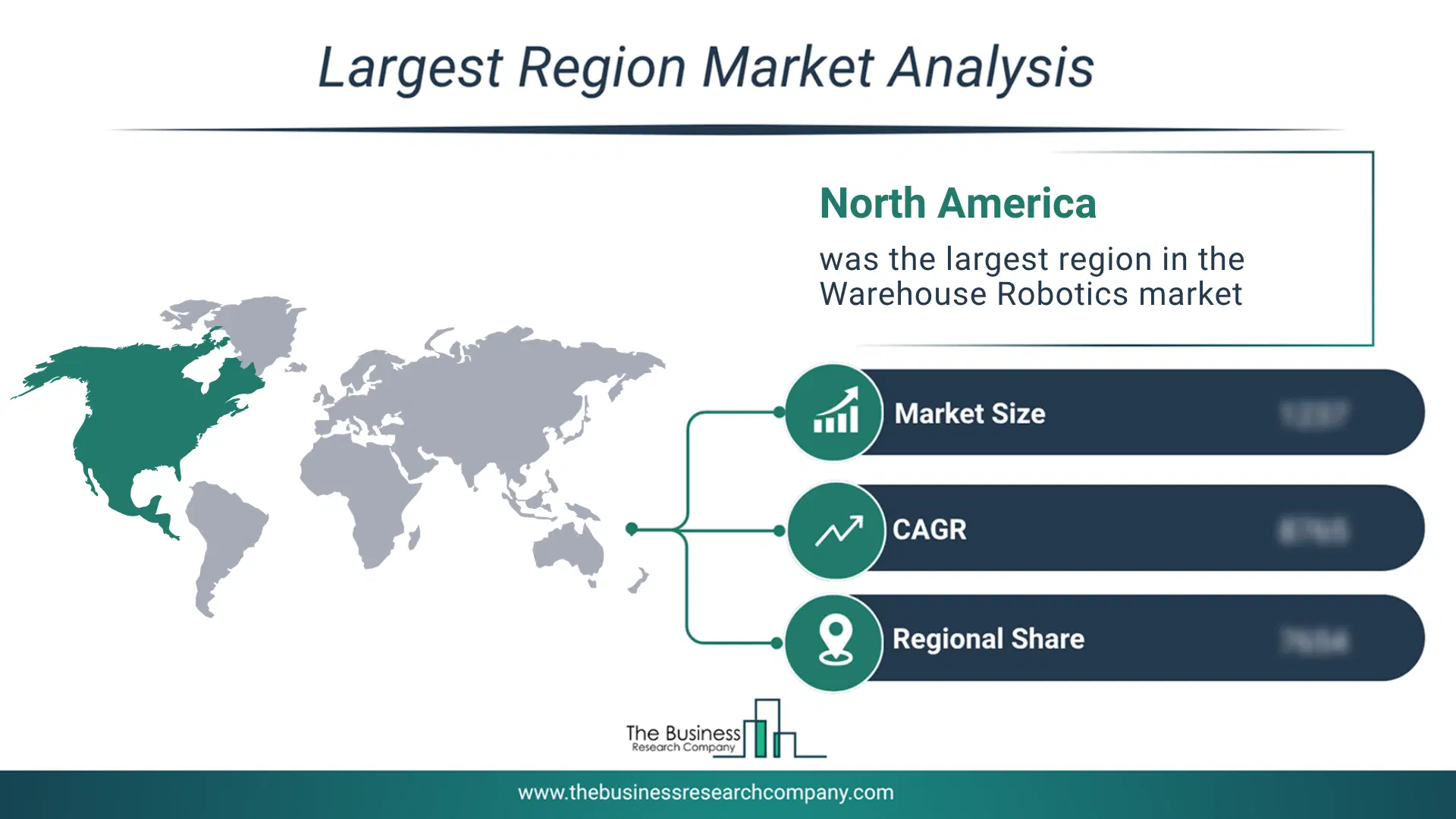
Regional Outlook
North America was the largest region in the warehouse robotics market share in 2025. Asia-Pacific is expected to be the fastest growing region in the forecast period. The regions covered in this market report are Asia-Pacific, South East Asia, Western Europe, Eastern Europe, North America, South America, Middle East, Africa The countries covered in this market report are Australia, Brazil, China, France, Germany, India, Indonesia, Japan, Taiwan, Russia, South Korea, UK, USA, Canada, Italy, Spain.What Defines the Warehouse Robotics Market?
The warehouse robotics market consists of sales of automated guided vehicles (AGVs), automated storage and retrieval systems (AS/RS), collaborative robots, articulated robotic arms, and goods-to-person technology. Values in this market are ‘factory gate’ values, that is the value of goods sold by the manufacturers or creators of the goods, whether to other entities (including downstream manufacturers, wholesalers, distributors, and retailers) or directly to end customers. The value of goods in this market includes related services sold by the creators of the goods.How is Market Value Defined and Measured?
The market value is defined as the revenues that enterprises gain from the sale of goods and/or services within the specified market and geography through sales, grants, or donations in terms of the currency (in USD unless otherwise specified). The revenues for a specified geography are consumption values that are revenues generated by organizations in the specified geography within the market, irrespective of where they are produced. It does not include revenues from resales along the supply chain, either further along the supply chain or as part of other products.
This chart presents market attractiveness based on a quantitative evaluation of growth, competition, strategic alignment, and risk, offering a clear view of opportunity areas for decision-making. This chart is for illustrative purposes; the full report contains the complete analysis.

This chart highlights the Total Addressable Market (TAM) by estimating the maximum revenue opportunity using an assumption-driven approach, supporting strategic planning and opportunity sizing across markets. The chart is illustrative; the full report provides a more comprehensive analysis.
What Key Data and Analysis Are Included in the Warehouse Robotics Market Report 2026?
The warehouse robotics market research report is one of a series of new reports from The Business Research Company that provides market statistics, including industry global market size, regional shares, competitors with the market share, detailed market segments, market trends and opportunities, and any further data you may need to thrive in the warehouse robotics industry. The market research report delivers a complete perspective of everything you need, with an in-depth analysis of the current and future state of the industry.Warehouse Robotics Market Report Forecast Analysis
| Report Attribute | Details |
|---|---|
| Market Size Value In 2026 | $7.08 billion |
| Revenue Forecast In 2030 | $11.91 billion |
| Growth Rate | CAGR of 14.1% from 2026 to 2030 |
| Base Year For Estimation | 2025 |
| Actual Estimates/Historical Data | 2020-2025 |
| Forecast Period | 2026 - 2030 |
| Market Representation | Revenue in USD Billion and CAGR from 2026 to 2030 |
| Segments Covered | Type, Function, End-User |
| Regional Scope | Asia-Pacific, Western Europe, Eastern Europe, North America, South America, Middle East, Africa |
| Country Scope | The countries covered in the report are Australia, Brazil, China, France, Germany, India, Indonesia, Japan, Taiwan, Russia, South Korea, UK, USA, Canada, Italy, Spain. |
| Key Companies Profiled | ABB Ltd., Honeywell International Inc., FANUC Corporation, Amazon Robotics LLC, KUKA Aktiengesellschaft, Yaskawa Electric Corporation, Attabotics Inc., Omron Corporation, Daifuku Co. Ltd., Locus Robotics Corporation, GreyOrange Pte. Ltd., KION Group AG, Fetch Robotics Inc., SSI Schaefer Systems International Holding AG, Swisslog Holding AG, Knapp AG, Dematic Corp., Geek Plus Robotics Co. Ltd., Magazino GmbH, Vecna Robotics Inc., Mobile Industrial Robots ApS, Seegrid Corporation, Yamaha Robotics, Toshiba Corporation, Universal Robots A/S, Boston Dynamics Inc., RightHand Robotics Inc., IAM Robotics LLC, Clearpath Robotics Inc. |
| Customization Scope | Request for Customization |
| Pricing And Purchase Options | Explore Purchase Options |