
Water Softening Systems Market Report 2026
Global Outlook – By Type (Twin Cylinder, Mono Cylinder, Multi-Cylinder), By Softener Type (Salt-Based Ion Exchange Softener, Salt-Free Water Softener), By Operation (Electric, Non-Electric), By Application (Residential, Commercial, Industrial), By Distribution Channel (Specialty Stores, Hypermarkets Or Supermarkets, Online Stores) – Market Size, Trends, Strategies, and Forecast to 2030
Water Softening Systems Market Overview
• Water Softening Systems market size has reached to $4.48 billion in 2025 • Expected to grow to $6.24 billion in 2030 at a compound annual growth rate (CAGR) of 6.8% • Growth Driver: Water-Softening Systems Market Flourishes Amidst Surging Agricultural Activities • Market Trend: Culligan Revolutionizes Water Treatment with AI-Powered WaterBot ‘Cullie’ to Elevate Customer Support and Interaction • North America was the largest region in 2025.What Is Covered Under Water Softening Systems Market?
Water softening systems refer to a whole-house filtration system that uses the ion exchange process to remove the calcium and magnesium minerals that contribute to water hardness. Water softening systems are designed to remove excess minerals, primarily calcium and magnesium, from water. The main types of water-softening systems are twin cylinders, mono-cylinders, and multi-cylinders. A twin-cylinder water softener refers to a water softener with two tanks, such that when one is regenerating, the other takes over. The softeners include salt-based ion exchange softeners, salt-free water softeners operated by electric, and non-electric methods used in several applications such as residential, commercial, and industrial and distributed by various channels including specialty stores, hypermarkets or supermarkets, and online stores.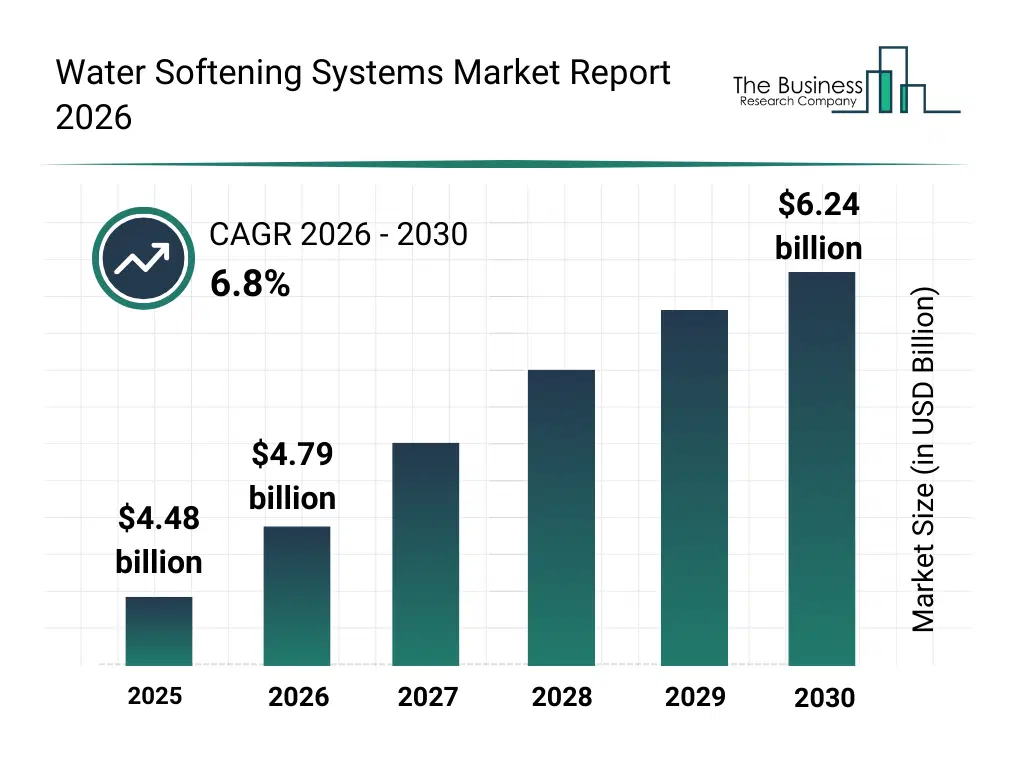
What Is The Water Softening Systems Market Size and Share 2026?
The water softening systems market size has grown strongly in recent years. It will grow from $4.48 billion in 2025 to $4.79 billion in 2026 at a compound annual growth rate (CAGR) of 6.9%. The growth in the historic period can be attributed to high water hardness levels, appliance damage from scaling, residential construction growth, industrial boiler protection needs, demand for improved water quality.What Is The Water Softening Systems Market Growth Forecast?
The water softening systems market size is expected to see strong growth in the next few years. It will grow to $6.24 billion in 2030 at a compound annual growth rate (CAGR) of 6.8%. The growth in the forecast period can be attributed to expansion of smart homes, rising commercial infrastructure development, increasing awareness of water hardness effects, growth of industrial water conditioning, adoption of eco friendly softening technologies. Major trends in the forecast period include rising adoption of whole house softening systems, growth of salt free water softeners, demand for low maintenance softening solutions, expansion in commercial water treatment, focus on reducing scale formation.Tariff Impact On Water Softening Systems Market
Tariffs have affected the water softening systems market by increasing the cost of imported resins, control valves, electronic controllers, and specialty components. These impacts are most visible in electric and twin cylinder systems, particularly in North America and Europe. Higher costs have influenced system pricing. However, tariffs are supporting domestic assembly and regional supplier expansion.
Global Water Softening Systems Market Segmentation
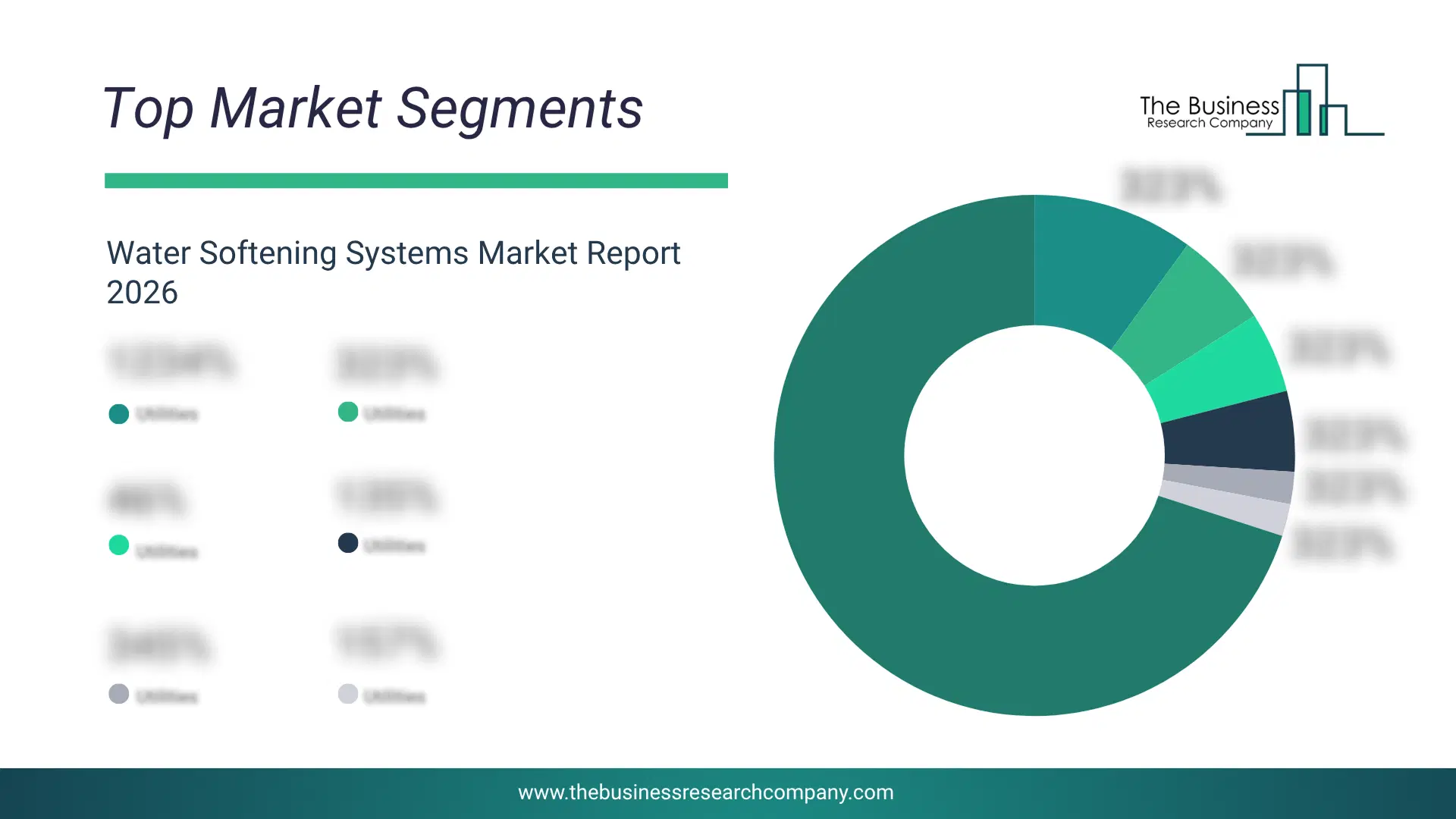
1) By Type: Twin Cylinder, Mono Cylinder, Multi-Cylinder 2) By Softener Type: Salt-Based Ion Exchange Softener, Salt-Free Water Softener 3) By Operation: Electric, Non-Electric 4) By Application: Residential, Commercial, Industrial 5) By Distribution Channel: Specialty Stores, Hypermarkets Or Supermarkets, Online Stores Subsegments: 1) By Twin Cylinder: Alternating Twin Cylinder Systems, Continuous Flow Twin Cylinder Systems 2) By Mono Cylinder: Single Tank Systems, Compact Mono Cylinder Systems 3) By Multi-Cylinder: Multi-Tank Systems, Parallel Multi-Cylinder SystemsWhat Is The Driver Of The Water Softening Systems Market?
Rising agricultural activities are expected to propel the growth of the water-softening systems market going forward. Agricultural activities refer to the harvesting, milking, breeding, keeping, and production of agricultural products, as well as raising animals for use in farming. Water-softening systems help reduce the water's surface tension and are used to supply nutrients, support water and minerals, speed up plant growth, and boost overall yields by allowing water to be easily absorbed by the plant. For instance, in October 2024, according to the predictions by the Food and Agriculture Organization (FAO), an Italy-based agency of the United Nations, global rice production in 2024 is projected to reach a record 539.2 million metric tons, driven by favorable conditions in India, highlighting increased demand for productive and resilient crops. Additionally, world wheat production is expected to rise to 792.9 million tons in 2024, with improved yield prospects in Australia contributing to the global focus on healthier and higher-yielding agricultural outputs. Therefore, rising agricultural activities are driving the growth of the water softening systems industry.Key Players In The Global Water Softening Systems Market
Major companies operating in the water softening systems market are EcoWater Systems LLC, Kinetico Incorporated, Envicare Technologies Pvt. Ltd., Wychwood Water Systems Ltd., Harvey Water Softeners Ltd., Pelican Water Systems, BWT AG, Marlo Incorporated, Monarch Water Ltd., Watts Water Technologies Inc., Qingdao Haier Co. Ltd., Culligan International Company, Water-Right Inc., Canature Environmental Products Co. Ltd., A.O. Smith Corporation, 3M Company, General Electric Company, Whirlpool Corporation, COWAY Co. Ltd., LG Electronics Inc., Panasonic Corporation, Samsung Electronics Co. Ltd.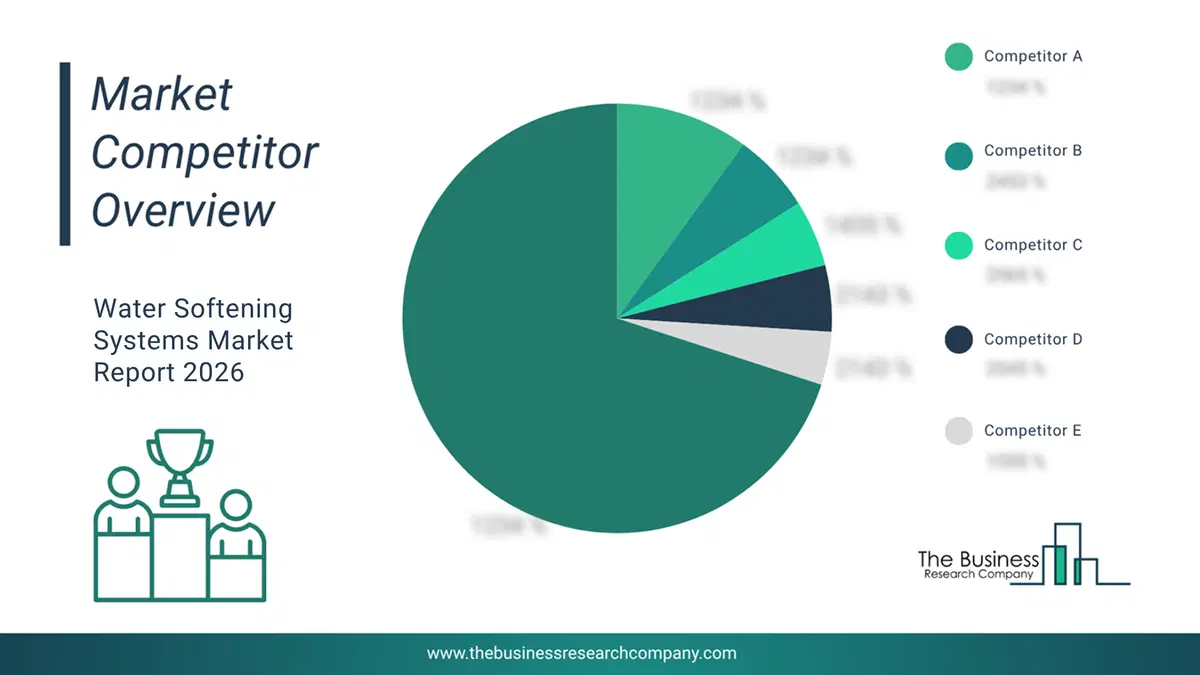
This chart is for illustrative purposes; the full report includes a detailed competitor analysis and comprehensive overview of the top 10 companies in the market.
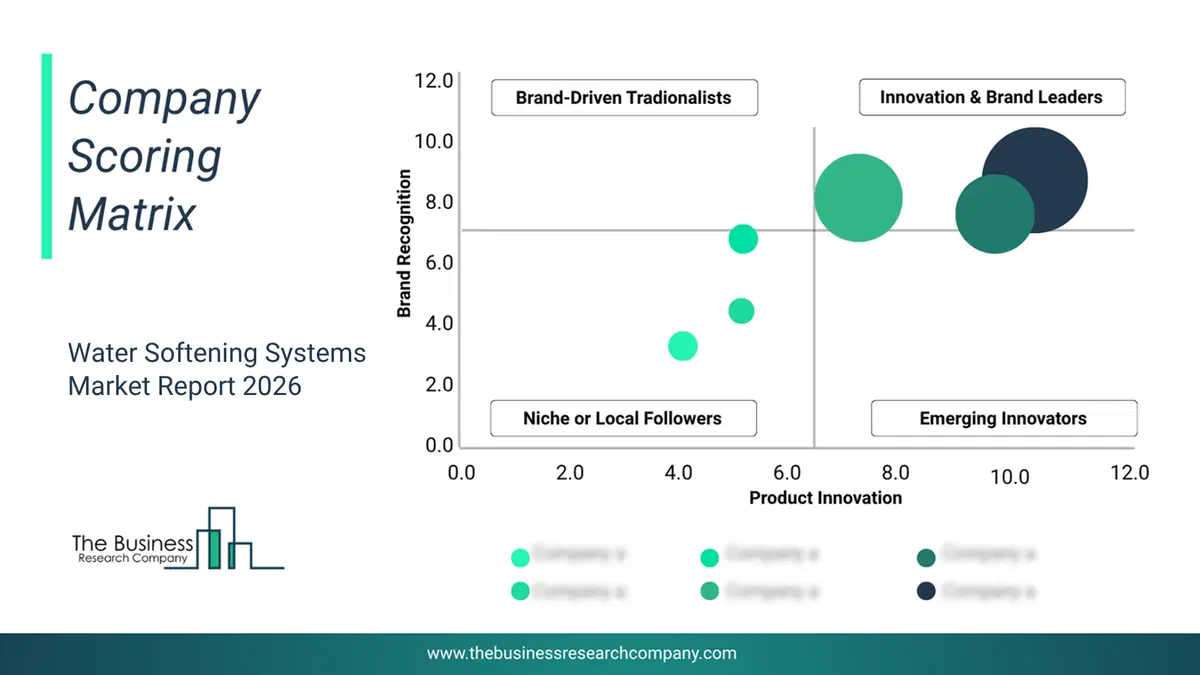
This chart maps companies by product innovation and brand strength, with bubble size indicating relative revenue, helping identify market leaders, challengers, and niche players. This is an illustrative chart; the full report provides a complete and accurate competitive analysis.
Global Water Softening Systems Market Trends and Insights
Major companies operating in the water softening systems market are focusing on developing innovative technologies such as AI-driven customer support tools to enhance user experience and strengthen their market presence. AI-driven customer support tools leverage conversational artificial intelligence to provide real-time assistance, streamline interactions, and deliver personalized guidance to consumers. They help by improving service availability, boosting customer engagement, and simplifying access to product information. For instance, in July 2023, Culligan, a US based leader and pioneer in delivering superior water treatment and services, launched the first-ever AI WaterBot, Cullie. Cullie is the latest innovation from the water industry trailblazer, using ChatGPT conversational capabilities to enhance the Culligan customer experience by providing 24/7 educational support and improving website interactions.What Are Latest Mergers And Acquisitions In The Water Softening Systems Market?
In January 2023, Xylem, a US based company specializes in water infrastructure and pumping, acquired Evoqua for $7.5 billion. Following this acquisition, it creates a transformative platform to tackle the world’s critical water challenges, strengthening leadership in water technologies and solutions. Secures strong positions in resilient, high-growth markets. Evoqua, a US based company, focuses on water softening and filtration.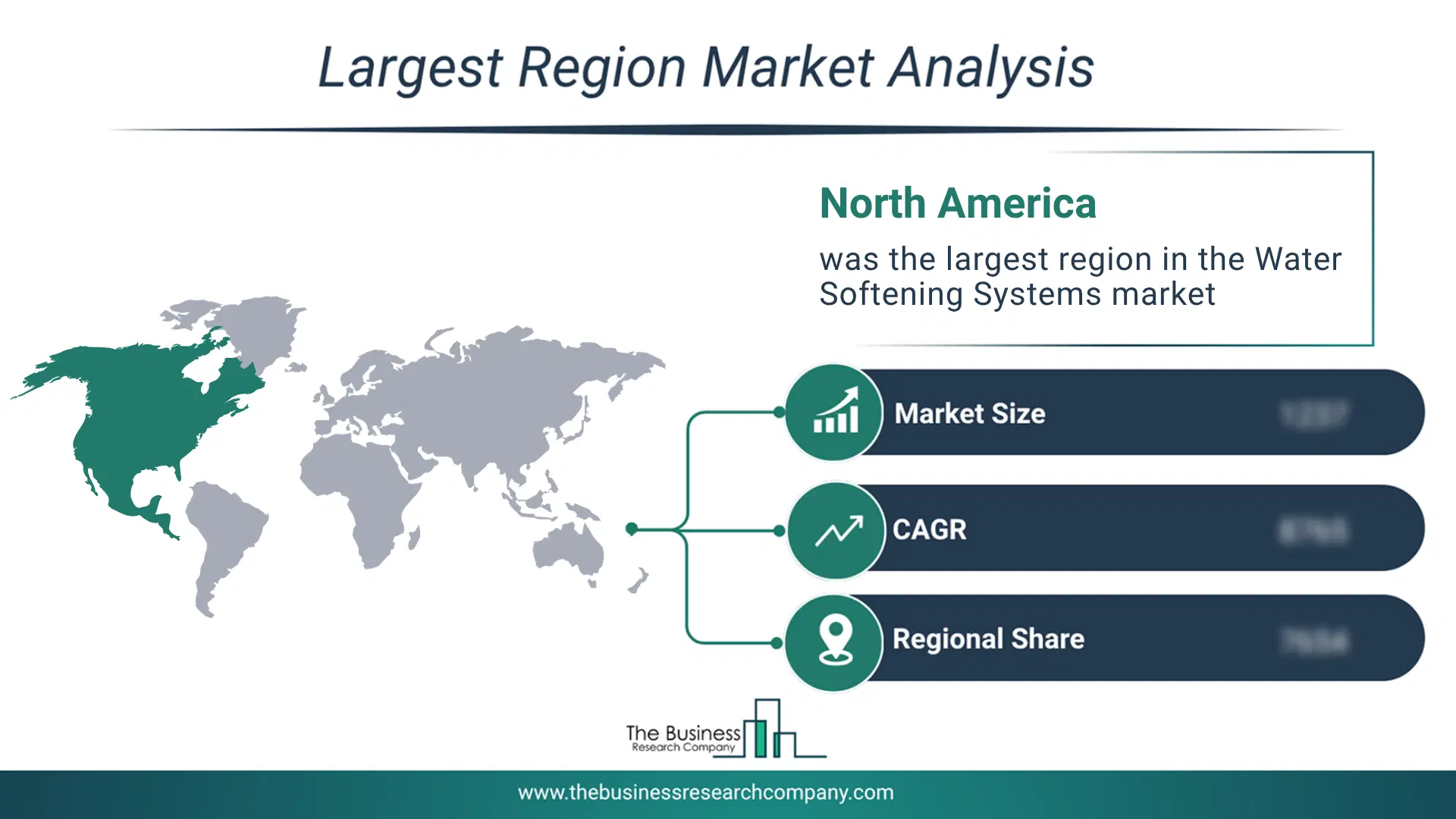
Regional Outlook
North America was the largest region in the water softening systems market in 2025. The regions covered in this market report are Asia-Pacific, South East Asia, Western Europe, Eastern Europe, North America, South America, Middle East, Africa The countries covered in this market report are Australia, Brazil, China, France, Germany, India, Indonesia, Japan, Taiwan, Russia, South Korea, UK, USA, Canada, Italy, Spain.What Defines the Water Softening Systems Market?
The water softening systems market consists of sales of ion exchange water softeners, dual-tank water softeners, and other types. Values in this market are ‘factory gate’ values, that is, the value of goods sold by the manufacturers or creators of the goods, whether to other entities (including downstream manufacturers, wholesalers, distributors, and retailers) or directly to end customers. The value of goods in this market includes related services sold by the creators of the goods.How is Market Value Defined and Measured?
The market value is defined as the revenues that enterprises gain from the sale of goods and/or services within the specified market and geography through sales, grants, or donations in terms of the currency (in USD unless otherwise specified). The revenues for a specified geography are consumption values that are revenues generated by organizations in the specified geography within the market, irrespective of where they are produced. It does not include revenues from resales along the supply chain, either further along the supply chain or as part of other products.
This chart presents market attractiveness based on a quantitative evaluation of growth, competition, strategic alignment, and risk, offering a clear view of opportunity areas for decision-making. This chart is for illustrative purposes; the full report contains the complete analysis.

This chart highlights the Total Addressable Market (TAM) by estimating the maximum revenue opportunity using an assumption-driven approach, supporting strategic planning and opportunity sizing across markets. The chart is illustrative; the full report provides a more comprehensive analysis.
What Key Data and Analysis Are Included in the Water Softening Systems Market Report 2026?
The water softening systems market research report is one of a series of new reports from The Business Research Company that provides market statistics, including industry global market size, regional shares, competitors with the market share, detailed market segments, market trends and opportunities, and any further data you may need to thrive in the water softening systems industry. The market research report delivers a complete perspective of everything you need, with an in-depth analysis of the current and future state of the industry.Water Softening Systems Market Report Forecast Analysis
| Report Attribute | Details |
|---|---|
| Market Size Value In 2026 | $4.79 billion |
| Revenue Forecast In 2030 | $6.24 billion |
| Growth Rate | CAGR of 6.8% from 2026 to 2030 |
| Base Year For Estimation | 2025 |
| Actual Estimates/Historical Data | 2020-2025 |
| Forecast Period | 2026 - 2030 |
| Market Representation | Revenue in USD Billion and CAGR from 2026 to 2030 |
| Segments Covered | Type, Softener Type, Operation, Application, Distribution Channel |
| Regional Scope | Asia-Pacific, Western Europe, Eastern Europe, North America, South America, Middle East, Africa |
| Key Companies Profiled | EcoWater Systems LLC, Kinetico Incorporated, Envicare Technologies Pvt. Ltd., Wychwood Water Systems Ltd., Harvey Water Softeners Ltd., Pelican Water Systems, BWT AG, Marlo Incorporated, Monarch Water Ltd., Watts Water Technologies Inc., Qingdao Haier Co. Ltd., Culligan International Company, Water-Right Inc., Canature Environmental Products Co. Ltd., A.O. Smith Corporation, 3M Company, General Electric Company, Whirlpool Corporation, COWAY Co. Ltd., LG Electronics Inc., Panasonic Corporation, Samsung Electronics Co. Ltd. |
| Customization Scope | Request for Customization |
| Pricing And Purchase Options | Explore Purchase Options |