
Wearable Bioelectronic Skin Patches Market Report 2026
Global Outlook – By Type (Electrochemical Sensors, Electrocardiogram Sensors, Temperature Sensors, Electromyography Sensors, Other Types), By Application (Fitness And Wellness, Medical Monitoring, Other Applications), By End Use (Hospitals And Clinics, Home Care Settings, Other End Uses) – Market Size, Trends, Strategies, and Forecast to 2030
Wearable Bioelectronic Skin Patches Market Overview
• Wearable Bioelectronic Skin Patches market size has reached to $3.21 billion in 2025 • Expected to grow to $5.79 billion in 2030 at a compound annual growth rate (CAGR) of 12.5% • Growth Driver: Surge In Telehealth Users Fueling The Growth Of The Market Due To Increasing Demand For Remote Health Monitoring Solutions • Market Trend: Advanced Sweat-Sensing Biowearable Technology Enhancing Worker Safety • North America was the largest region in 2025 and Asia-Pacific is the fastest growing region.What Is Covered Under Wearable Bioelectronic Skin Patches Market?
Wearable bioelectronic skin patches refer to flexible, skin-conformable devices embedded with electronic components that monitor, diagnose, or therapeutically interact with the body’s physiological signals in real time. These patches integrate sensors, circuits, and sometimes drug delivery systems onto biocompatible materials, enabling non-invasive, continuous health tracking or treatment. They are increasingly used in areas such as remote patient monitoring, sports performance, and chronic disease management. The main types of wearable bioelectronic skin patches include electrochemical sensors, electrocardiogram sensors, temperature sensors, electromyography sensors, and others. Electrochemical sensors refer to devices that detect and measure chemical substances by converting their electrochemical reactions into electrical signals. There are various applications, such as fitness and wellness, medical monitoring, and others, and several end uses, such as hospitals and clinics, home care settings, and others.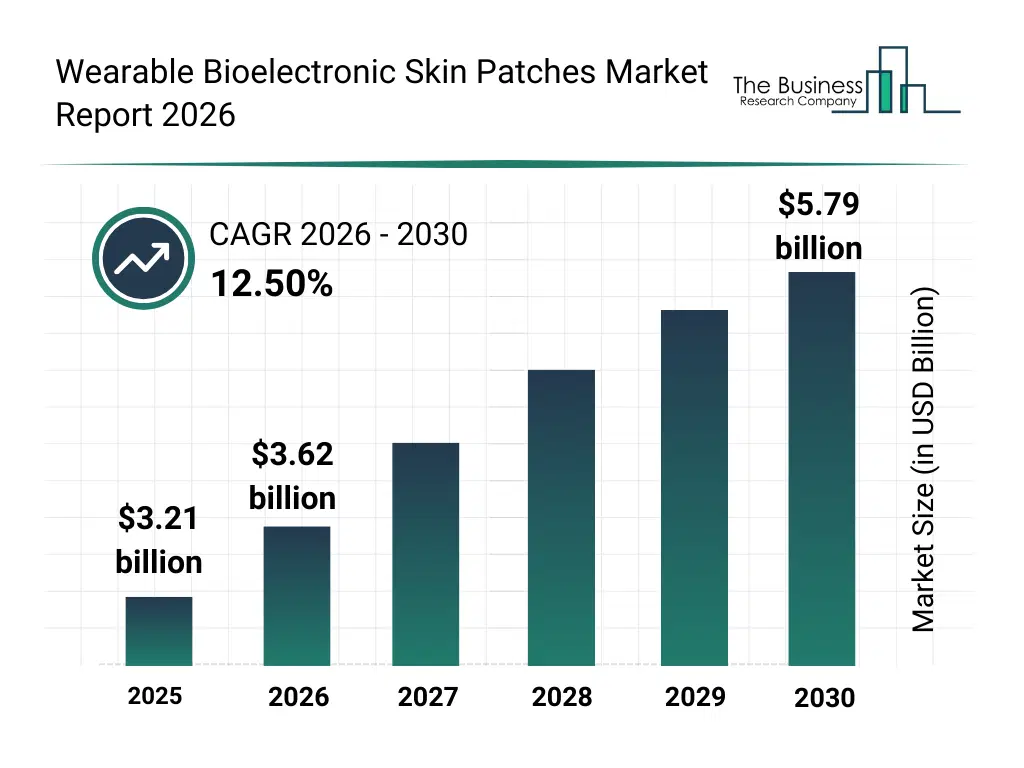
What Is The Wearable Bioelectronic Skin Patches Market Size and Share 2026?
The wearable bioelectronic skin patches market size has grown rapidly in recent years. It will grow from $3.21 billion in 2025 to $3.62 billion in 2026 at a compound annual growth rate (CAGR) of 12.8%. The growth in the historic period can be attributed to limited sensor miniaturization technologies, high cost of early prototypes, growing awareness of remote patient monitoring, nascent telemedicine infrastructure, dependence on hospital-based monitoring systems.What Is The Wearable Bioelectronic Skin Patches Market Growth Forecast?
The wearable bioelectronic skin patches market size is expected to see rapid growth in the next few years. It will grow to $5.79 billion in 2030 at a compound annual growth rate (CAGR) of 12.5%. The growth in the forecast period can be attributed to advancements in flexible electronics and biosensors, increasing home healthcare adoption, rising investment in chronic disease management, integration with ai-driven analytics platforms, expansion in fitness and wellness consumer markets. Major trends in the forecast period include growing adoption of wearable health monitoring devices, increasing demand for non-invasive chronic disease management, rising integration of drug delivery with skin patches, expansion in sports performance and fitness applications, development of flexible, biocompatible, and durable materials.
Global Wearable Bioelectronic Skin Patches Market Segmentation
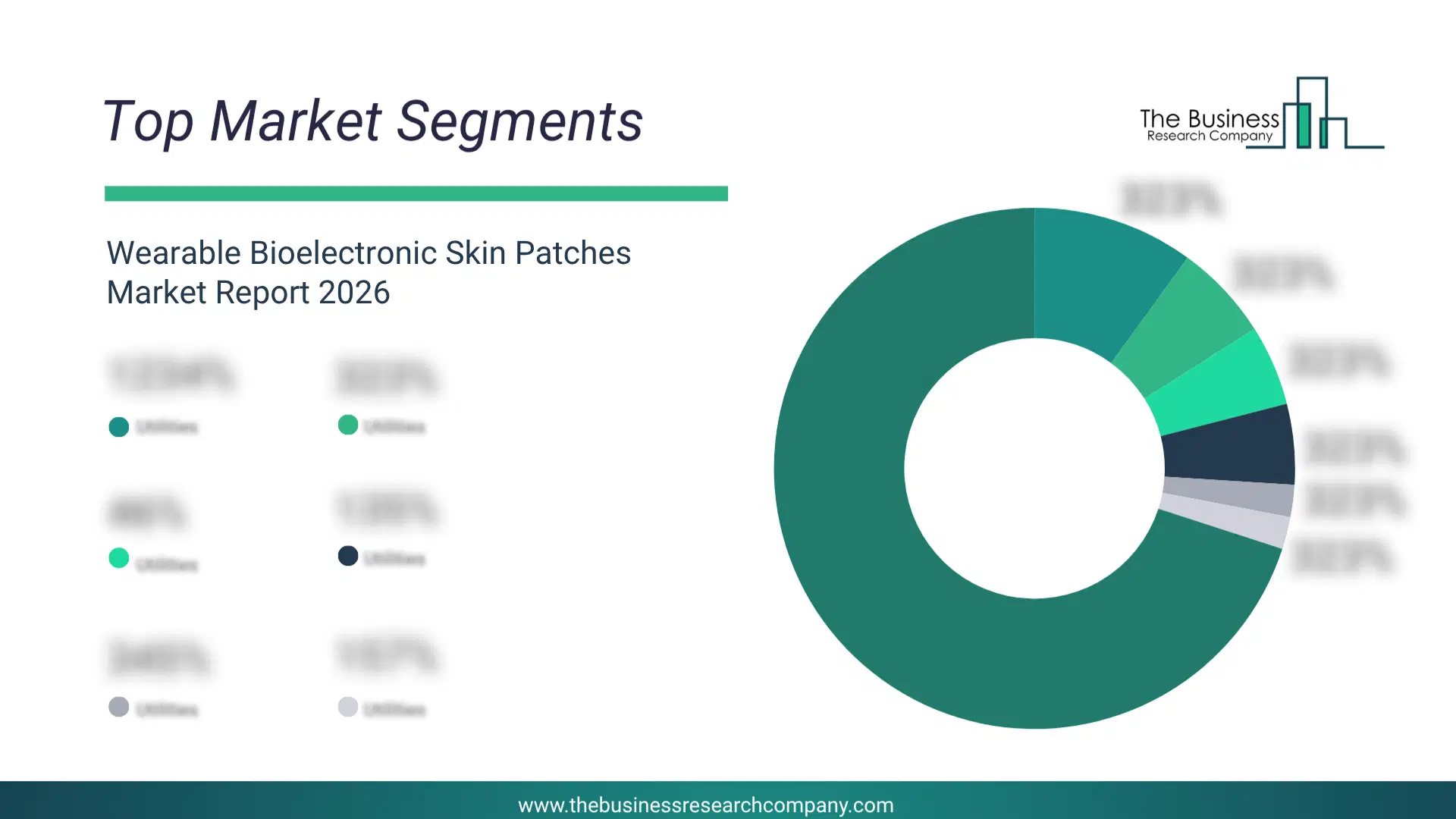
1) By Type: Electrochemical Sensors, Electrocardiogram Sensors, Temperature Sensors, Electromyography Sensors, Other Types 2) By Application: Fitness And Wellness, Medical Monitoring, Other Applications 3) By End Use: Hospitals And Clinics, Home Care Settings, Other End Uses Subsegments: 1) By Electrochemical Sensors: Glucose Monitoring Sensors, Lactate Monitoring Sensors, Potential of Hydrogen Sensors, Electrolyte Sensors, Cortisol Detection Sensors 2) By Electrocardiogram (ECG) Sensors: Single-Lead Electrocardiogram Sensors, Multi-Lead Electrocardiogram Sensors, Dry Electrode Sensors, Wet Electrode Sensors, Wireless Electrocardiogram Patches 3) By Temperature Sensors: Skin Surface Temperature Sensors, Core Body Temperature Sensors, Infrared Thermography Patches, Thermistor-Based Sensors, Phase Change Material (PCM) Sensors 4) By Electromyography (EMG) Sensors: Surface Electromyography Patches, Wireless Electromyography Patches, Multi-Channel Electromyography Sensors, Dry Electrode Electromyography Sensors, Textile-Embedded Electromyography Sensors 5) By Other Types: Optical Sensors, Mechanical Strain Sensors, Hydration Monitoring Sensors, Sweat Rate Sensors, Blood Pressure SensorsWhat Is The Driver Of The Wearable Bioelectronic Skin Patches Market?
The growing number of telehealth users is expected to propel the growth of the wearable bioelectronic skin patches market going forward. Telehealth users refer to individuals who access healthcare services remotely using digital communication technologies such as video calls, apps, or phone consultations. The rise in telehealth users is due to increased convenience, as it allows patients to access healthcare services from home without the need for travel. Wearable bioelectronic skin patches help telehealth users by continuously monitoring vital signs and transmitting real-time health data to healthcare providers, enabling remote diagnosis, timely interventions, and personalized care. For instance, in March 2024, according to the Department of Health and Aged Care, an Australia-based government department, reported that telehealth usage in 2022–23 was highest among general practitioner (GP) (20%) and allied health (12%), with general practitioner (GP) and non-general practitioner (GP) specialists accounting for 75% and 48% of all video consultations. Therefore, the growing number of telehealth users is driving the growth of the wearable bioelectronic skin patches industry.Key Players In The Global Wearable Bioelectronic Skin Patches Market
Major companies operating in the wearable bioelectronic skin patches market are Abbott Laboratories, Medtronic plc, Dexcom Inc., Interuniversity Microelectronics Centre, iRhythm Technologies Inc., Biolinq Inc., Profusa Inc., VitalConnect Inc., Blue Spark Technologies Inc., Epicore Biosystems Inc., BioIntelliSense Inc., Gentag Inc., VivaLNK Inc., PKvitality S.A.S., G-Tech Medical Inc., Biobeat Technologies Ltd., Zansors Inc., Nemaura Medical Inc., QT Medical Inc., Cardiomo Care Inc.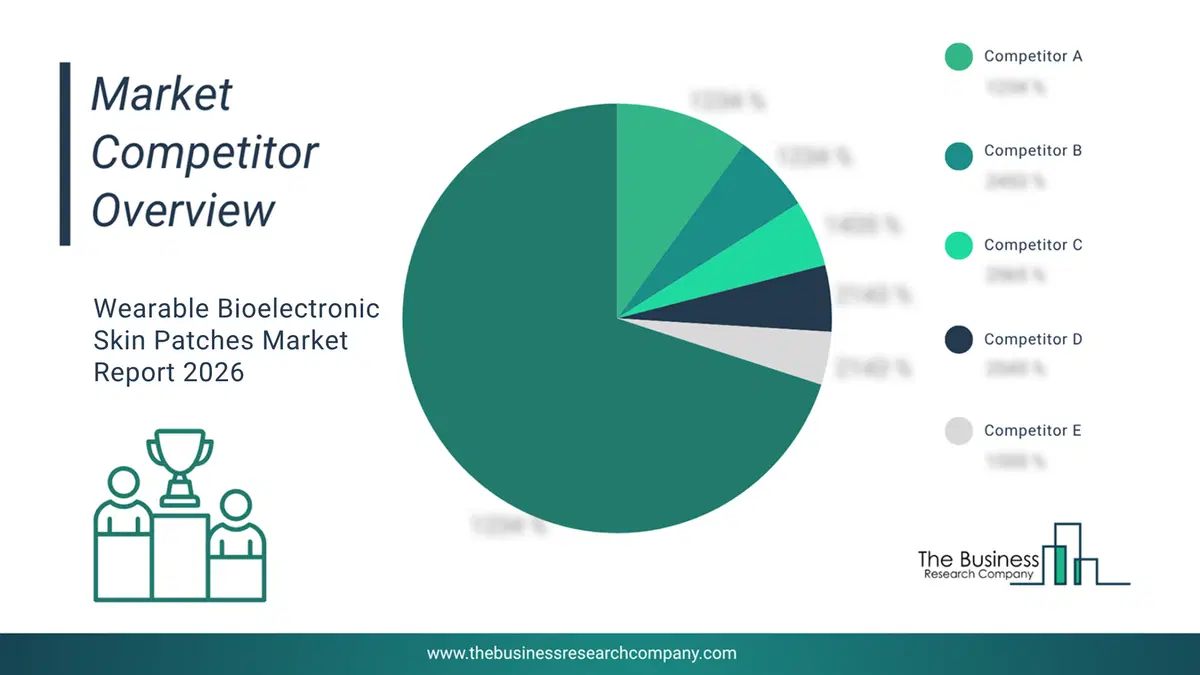
This chart is for illustrative purposes; the full report includes a detailed competitor analysis and comprehensive overview of the top 10 companies in the market.
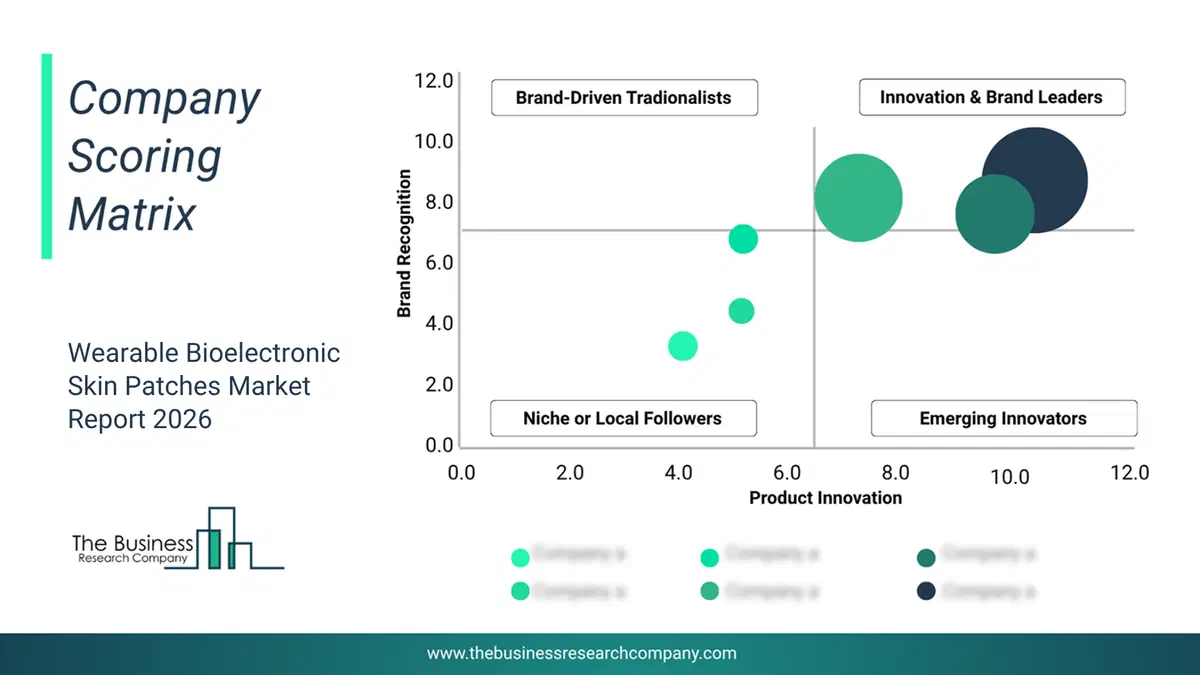
This chart maps companies by product innovation and brand strength, with bubble size indicating relative revenue, helping identify market leaders, challengers, and niche players. This is an illustrative chart; the full report provides a complete and accurate competitive analysis.
Global Wearable Bioelectronic Skin Patches Market Trends and Insights
Major companies operating in the wearable bioelectronic skin patches market are focusing on developing advanced technologies such as multi-sensor sweat-sensing systems to offer personalized real-time hydration monitoring and predictive health analytics for industrial workers. A multi-sensor sweat-sensing system integrates biosensors that measure sweat rate, electrolyte loss, skin temperature, and movement to generate real-time insights for preventing dehydration and heat stress. For instance, in April 2024, Epicore Biosystems, a US-based digital health company, launched Connected Hydration, a biowearable patch and mobile application. It is a flexible, skin-worn device designed to track sweat volume, electrolyte depletion, body temperature, and movement using multiple biosensors and machine learning algorithms trained on over 420,000 data points. The patch delivers real-time dehydration alerts through haptic feedback and enables fluid intake tracking via an integrated mobile application. It features a battery life of over 1,000 hours with no recharging required and an intrinsically safe design standard (CLASS I, DIV 2). This technology supports predictive analytics across hazardous work environments.What Are Latest Mergers And Acquisitions In The Wearable Bioelectronic Skin Patches Market?
In May 2023, Medtronic plc, a healthcare technology, an Ireland-based company, acquired EOFlow Co. Ltd. for approximately US $738 million. Through this acquisition, Medtronic aims to expand its diabetes care portfolio by integrating EOFlow’s patch pump technology with its continuous glucose monitoring (CGM) and algorithm capabilities, offering patients a more seamless, algorithm-driven, patch-based insulin delivery option. EOFlow Co. Ltd. is a South Korea based manufacturer of microfluidic patch-pump devices for insulin delivery, including the tubeless, fully disposable EOPatch.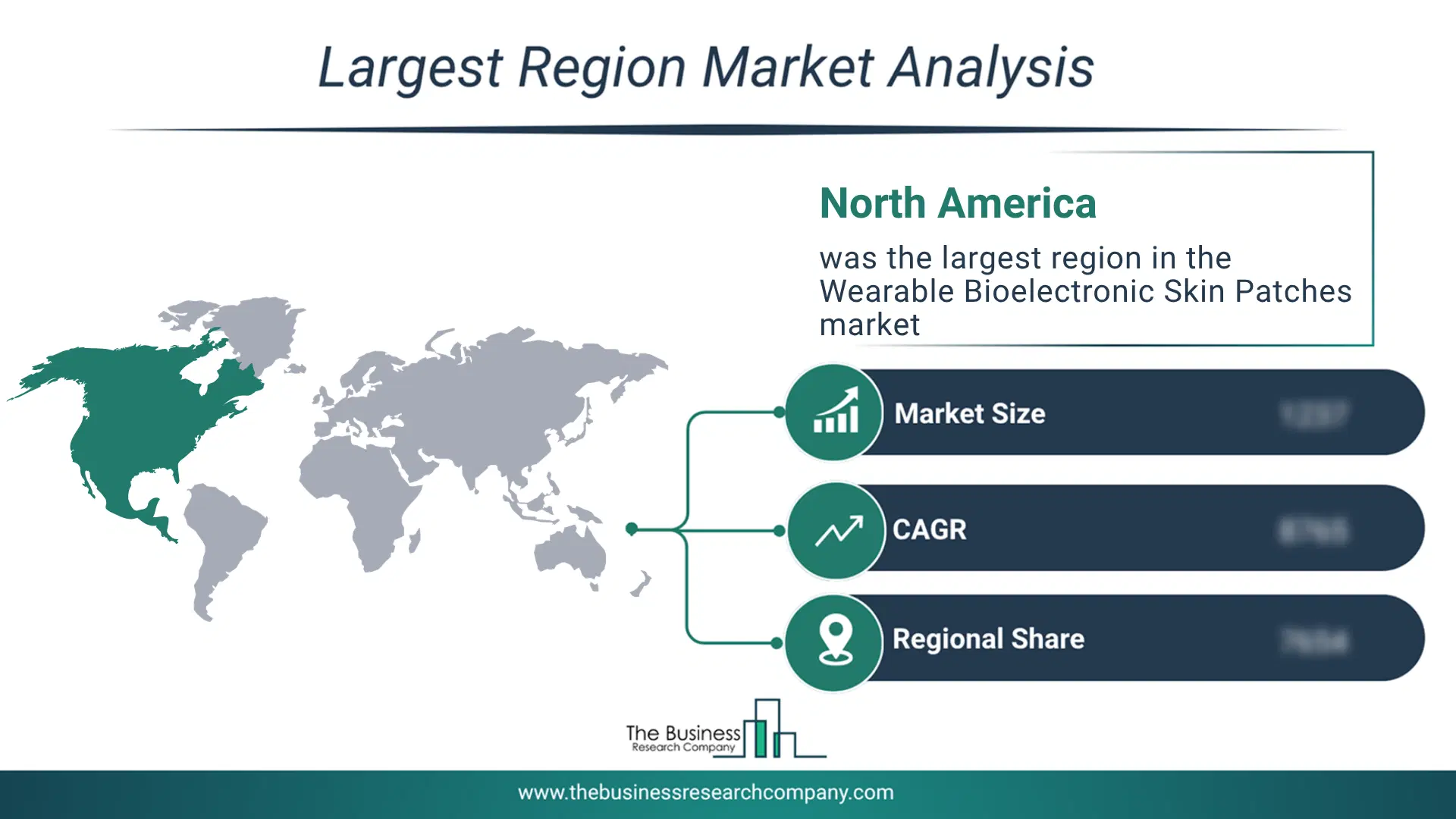
Regional Outlook
North America was the largest region in the wearable bioelectronic skin patches market in 2025. Asia-Pacific is expected to be the fastest-growing region in the forecast period. The regions covered in this market report are Asia-Pacific, South East Asia, Western Europe, Eastern Europe, North America, South America, Middle East, Africa. The countries covered in this market report are Australia, Brazil, China, France, Germany, India, Indonesia, Japan, Taiwan, Russia, South Korea, UK, USA, Canada, Italy, SpainWhat Defines the Wearable Bioelectronic Skin Patches Market?
The wearable bioelectronic skin patches market consists of revenues earned by entities by providing services such as subscription and device-as-a-service (DaaS) models, clinical trial and pilot deployment services, and custom integration services. The market value includes the value of related goods sold by the service provider or included within the service offering. The wearable bioelectronic skin patches market also includes sales of cardiac monitoring patches, transdermal drug delivery patches, and respiration monitoring patches. Values in this market are ‘factory gate’ values, that is, the value of goods sold by the manufacturers or creators of the goods, whether to other entities (including downstream manufacturers, wholesalers, distributors, and retailers) or directly to end customers. The value of goods in this market includes related services sold by the creators of the goods.How is Market Value Defined and Measured?
The market value is defined as the revenues that enterprises gain from the sale of goods and/or services within the specified market and geography through sales, grants, or donations in terms of the currency (in USD unless otherwise specified). The revenues for a specified geography are consumption values that are revenues generated by organizations in the specified geography within the market, irrespective of where they are produced. It does not include revenues from resales along the supply chain, either further along the supply chain or as part of other products.
This chart presents market attractiveness based on a quantitative evaluation of growth, competition, strategic alignment, and risk, offering a clear view of opportunity areas for decision-making. This chart is for illustrative purposes; the full report contains the complete analysis.

This chart highlights the Total Addressable Market (TAM) by estimating the maximum revenue opportunity using an assumption-driven approach, supporting strategic planning and opportunity sizing across markets. The chart is illustrative; the full report provides a more comprehensive analysis.
What Key Data and Analysis Are Included in the Wearable Bioelectronic Skin Patches Market Report 2026?
The wearable bioelectronic skin patches market research report is one of a series of new reports from The Business Research Company that provides market statistics, including industry global market size, regional shares, competitors with the market share, detailed market segments, market trends and opportunities, and any further data you may need to thrive in the wearable bioelectronic skin patches industry. The market research report delivers a complete perspective of everything you need, with an in-depth analysis of the current and future state of the industry.Wearable Bioelectronic Skin Patches Market Report Forecast Analysis
| Report Attribute | Details |
|---|---|
| Market Size Value In 2026 | $3.62 billion |
| Revenue Forecast In 2030 | $5.79 billion |
| Growth Rate | CAGR of 12.5% from 2026 to 2030 |
| Base Year For Estimation | 2025 |
| Actual Estimates/Historical Data | 2020-2025 |
| Forecast Period | 2026 - 2030 |
| Market Representation | Revenue in USD Billion and CAGR from 2026 to 2030 |
| Segments Covered | Type, Application, End Use |
| Regional Scope | Asia-Pacific, Western Europe, Eastern Europe, North America, South America, Middle East, Africa |
| Country Scope | The countries covered in the report are Australia, Brazil, China, France, Germany, India, Indonesia, Japan, Taiwan, Russia, South Korea, UK, USA, Canada, Italy, Spain. |
| Key Companies Profiled | Abbott Laboratories, Medtronic plc, Dexcom Inc., Interuniversity Microelectronics Centre, iRhythm Technologies Inc., Biolinq Inc., Profusa Inc., VitalConnect Inc., Blue Spark Technologies Inc., Epicore Biosystems Inc., BioIntelliSense Inc., Gentag Inc., VivaLNK Inc., PKvitality S.A.S., G-Tech Medical Inc., Biobeat Technologies Ltd., Zansors Inc., Nemaura Medical Inc., QT Medical Inc., Cardiomo Care Inc. |
| Customization Scope | Request for Customization |
| Pricing And Purchase Options | Explore Purchase Options |