
Wearable Cardiac Devices Market Report 2026
Global Outlook – By Product (Holter Monitors, Smartwatches, Patch, Defibrillators, Pulse Oximeters, Other Products), By Application (Arrhythmia Detection, Heart Rate Monitoring, Heart Disease Management), By Distribution Channel (Online, Offline), By End User (Hospitals, Clinics, Individual Consumers, Fitness Centers) – Market Size, Trends, Strategies, and Forecast to 2030
Wearable Cardiac Devices Market Overview
• Wearable Cardiac Devices market size has reached to $5.65 billion in 2025 • Expected to grow to $13.42 billion in 2030 at a compound annual growth rate (CAGR) of 18.8% • Growth Driver: Rising Modifiable Cardiovascular Risk Factors Fueling The Growth Of The Market Due To Increasing At-Risk Populations And Early Detection Needs • Market Trend: Extended-Wear Ai-Enabled Ecg Patches Enhance Continuous Cardiac Monitoring And Early Arrhythmia Detection • North America was the largest region in 2025 and Asia-Pacific is the fastest growing region.What Is Covered Under Wearable Cardiac Devices Market?
Wearable cardiac devices are electronic medical devices that continually monitor heart activity, such as heart rate and rhythm, using integrated sensors. These devices can detect irregular heart rhythms and, in some situations, automatically give therapeutic electrical shocks to restore normal rhythm in patients at danger of abrupt cardiac arrest. The main products in wearable cardiac devices include Holter monitors, smartwatches, patches, defibrillators, pulse oximeters, and other related products. A Holter monitor is a small, wearable device that continuously records heart activity for 24–48 hours to detect irregular rhythms during normal daily activities. These devices are used for various applications such as arrhythmia detection, heart rate monitoring, and heart disease management. They are distributed through both online and offline channels and are used by various end users including hospitals, clinics, individual consumers, and fitness centers.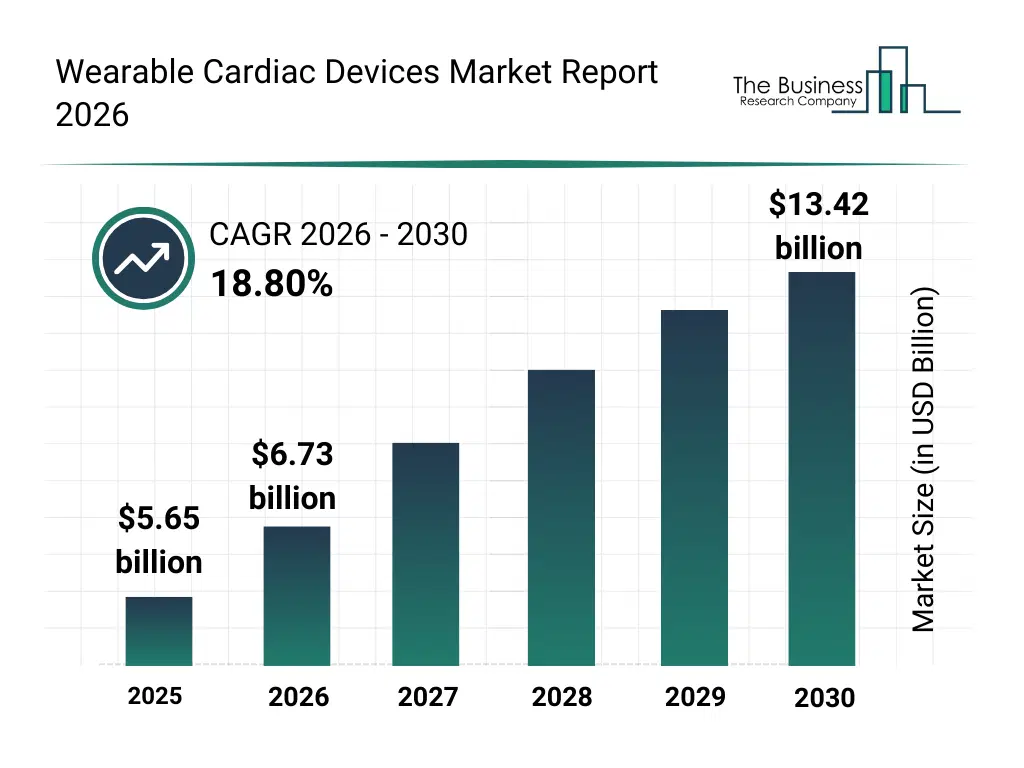
What Is The Wearable Cardiac Devices Market Size and Share 2026?
The wearable cardiac devices market size has grown rapidly in recent years. It will grow from $5.65 billion in 2025 to $6.73 billion in 2026 at a compound annual growth rate (CAGR) of 19.1%. The growth in the historic period can be attributed to limited availability of advanced cardiac monitoring technology, rising incidence of cardiovascular diseases, dependence on hospital-based monitoring, high cost of early wearable devices, lack of consumer awareness about wearable cardiac devices.What Is The Wearable Cardiac Devices Market Growth Forecast?
The wearable cardiac devices market size is expected to see rapid growth in the next few years. It will grow to $13.42 billion in 2030 at a compound annual growth rate (CAGR) of 18.8%. The growth in the forecast period can be attributed to miniaturization of sensors and devices, increasing adoption of remote patient monitoring solutions, integration with smartphones and digital health platforms, rising health consciousness among consumers, expansion of reimbursement policies for wearable cardiac devices. Major trends in the forecast period include growing adoption of wearable cardiac devices for remote patient monitoring, increasing integration of ecg and heart rate monitoring features, rising use of wearable defibrillators for sudden cardiac arrest prevention, expansion of consumer-focused fitness and wellness devices, development of wireless and disposable cardiac monitoring patches.
Global Wearable Cardiac Devices Market Segmentation
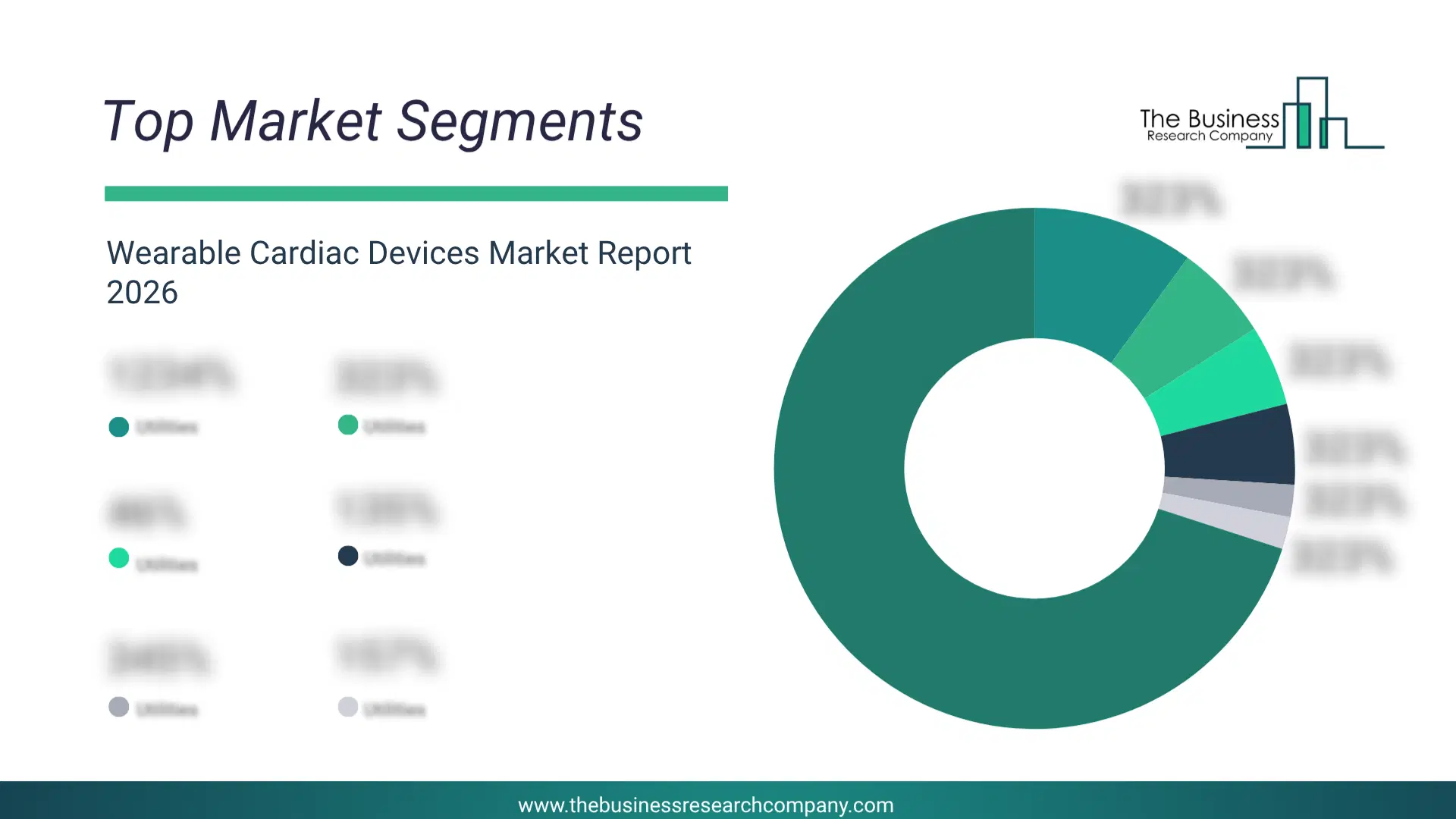
1) By Product: Holter Monitors, Smartwatches, Patch, Defibrillators, Pulse Oximeters, Other Products 2) By Application: Arrhythmia Detection, Heart Rate Monitoring, Heart Disease Management 3) By Distribution Channel: Online, Offline 4) By End User: Hospitals, Clinics, Individual Consumers, Fitness Centers Subsegments: 1) By Holter Monitors: Single-Channel Holter Monitors, Multi-Channel Holter Monitors, Wireless Holter Monitors 2) By Smartwatches: Fitness And Wellness Smartwatches, Medical-Grade Smartwatches, Electrocardiogram (ECG)-Enabled Smartwatches 3) By Patch: Adhesive Cardiac Monitoring Patches, Rechargeable Patch Monitors, Disposable Patch Monitors 4) By Defibrillators: Wearable Cardioverter Defibrillators (WCDs), Automated External Defibrillators (AEDs) With Wearable Integration 5) By Pulse Oximeters: Fingertip Wearable Oximeters, Wrist-Worn Oximeters, Ring-Type Oximeters 6) By Other Products: Chest Straps, Smart Clothing, Portable Electrocardiogram (ECG) MonitorsWhat Is The Driver Of The Wearable Cardiac Devices Market?
The increasing prevalence of cardiovascular diseases is expected to propel the growth of the wearable cardiac devices market going forward. Modifiable CVD risk factors include high blood pressure, poor diet, elevated LDL cholesterol, physical inactivity, and certain environmental exposures, all of which contribute to cardiovascular diseases such as coronary artery disease, heart failure, stroke, and hypertension. Wearable cardiac devices support public health by enabling real-time monitoring of heart activity, facilitating early detection and management of these risk factors, and helping prevent serious cardiovascular complications through continuous tracking of vital parameters such as heart rate, rhythm, and electrical signals. For instance, in October 2024, according to the Centers for Disease Control and Prevention, a US-based government agency, in 2023, cardiovascular disease claimed 919,032 lives, accounting for one in every three deaths. Coronary heart disease remained the most prevalent form of heart disease, and notably, about one in six deaths from cardiovascular diseases occurred among adults younger than 65 years. Therefore, the increasing prevalence of cardiovascular diseases is driving the growth of the wearable cardiac devices industry.Key Players In The Global Wearable Cardiac Devices Market
Major companies operating in the wearable cardiac devices market are Apple Inc., Samsung Electronics Co. Ltd., Abbott Laboratories, Medtronic plc, Garmin Ltd., Masimo Corporation, Nihon Kohden Corporation, iRhythm Technologies Inc., Biofourmis, Bittium Corporation, BPL Medical Technologies Pvt. Ltd., NeuroSky Inc., Bionet Co. Ltd., AliveCor Inc., Qardio Inc., Empatica Inc., VitalConnect Inc., Lifesignals Group, Biotricity Inc., Shimmer Research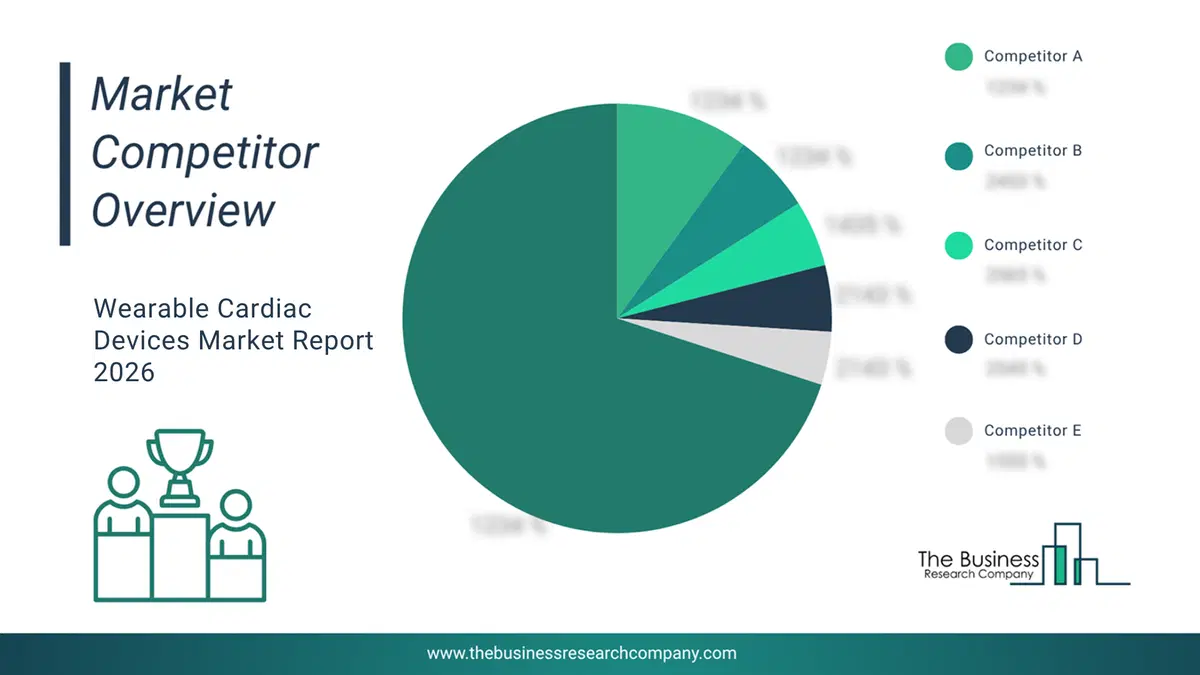
This chart is for illustrative purposes; the full report includes a detailed competitor analysis and comprehensive overview of the top 10 companies in the market.
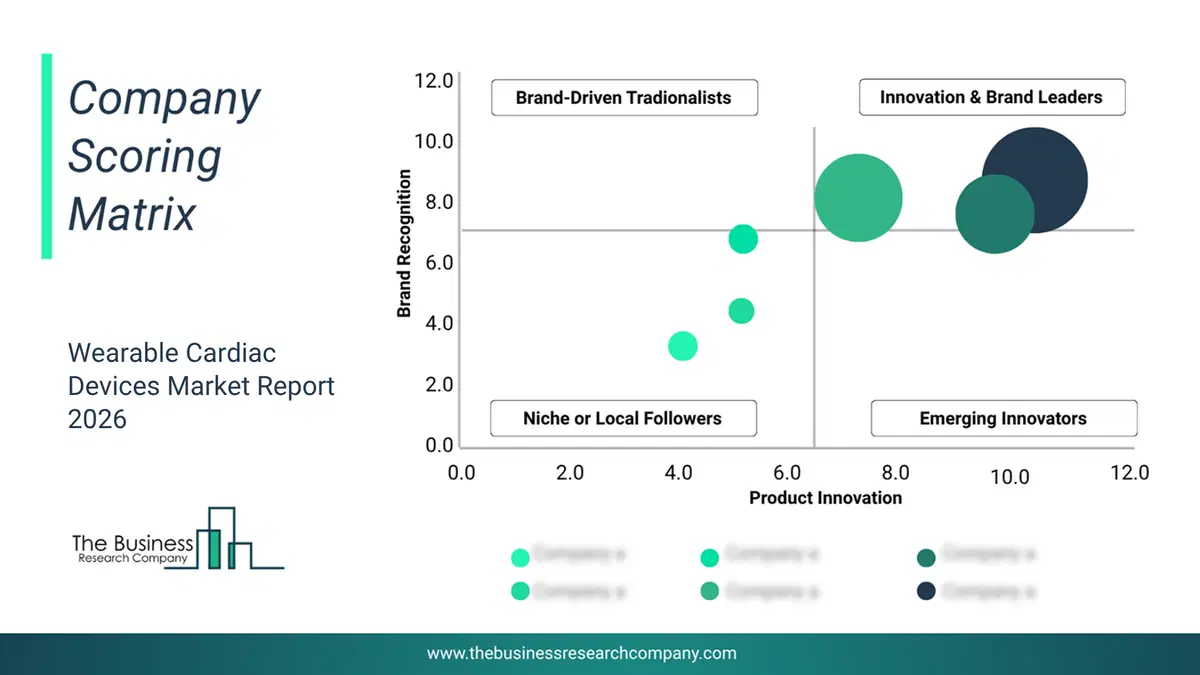
This chart maps companies by product innovation and brand strength, with bubble size indicating relative revenue, helping identify market leaders, challengers, and niche players. This is an illustrative chart; the full report provides a complete and accurate competitive analysis.
Global Wearable Cardiac Devices Market Trends and Insights
Major companies operating in the wearable cardiac device market are focusing on developing advanced solutions, such as extended-wear AI-enabled ECG patches, to enable continuous, remote cardiac monitoring, support early arrhythmia detection, and facilitate home-based care. Extended-wear AI-enabled ECG patches are thin, flexible adhesive devices placed on the chest that continuously record the heart’s electrical activity over multiple days (e.g., up to two weeks) and leverage embedded biosensors with AI-driven analytics to detect arrhythmias more efficiently than traditional Holter monitors. For instance, in September 2023, iRhythm Technologies, a U.S.-based digital health company, launched its next-generation Zio monitor, the smallest, lightest, and thinnest cardiac patch monitor for its Zio long-term continuous monitoring (LTCM) service. The Zio monitor supports up to 14 days of continuous ECG wear, features a breathable waterproof housing with hydrocolloid adhesive, and pairs with iRhythm’s ZEUS AI software for efficient arrhythmia detection, enhancing patient comfort and improving diagnostic yield.What Are Latest Mergers And Acquisitions In The Wearable Cardiac Devices Market?
In May 2024, WearLinq Inc., a US-based digital health company specializing in wearable cardiac technology, acquired AMI Cardiac Monitoring LLC for an undisclosed amount. With this acquisition, WearLinq aimed to scale its clinical services across the United States by integrating AMI’s diagnostic expertise with its FDA 510(k)-cleared 6-lead ECG wearable device. AMI Cardiac Monitoring LLC is a US-based company that specializes in providing wearlinq ewave, which is a wireless, 6-lead cardiac monitor designed for patient comfort and clinical accuracy.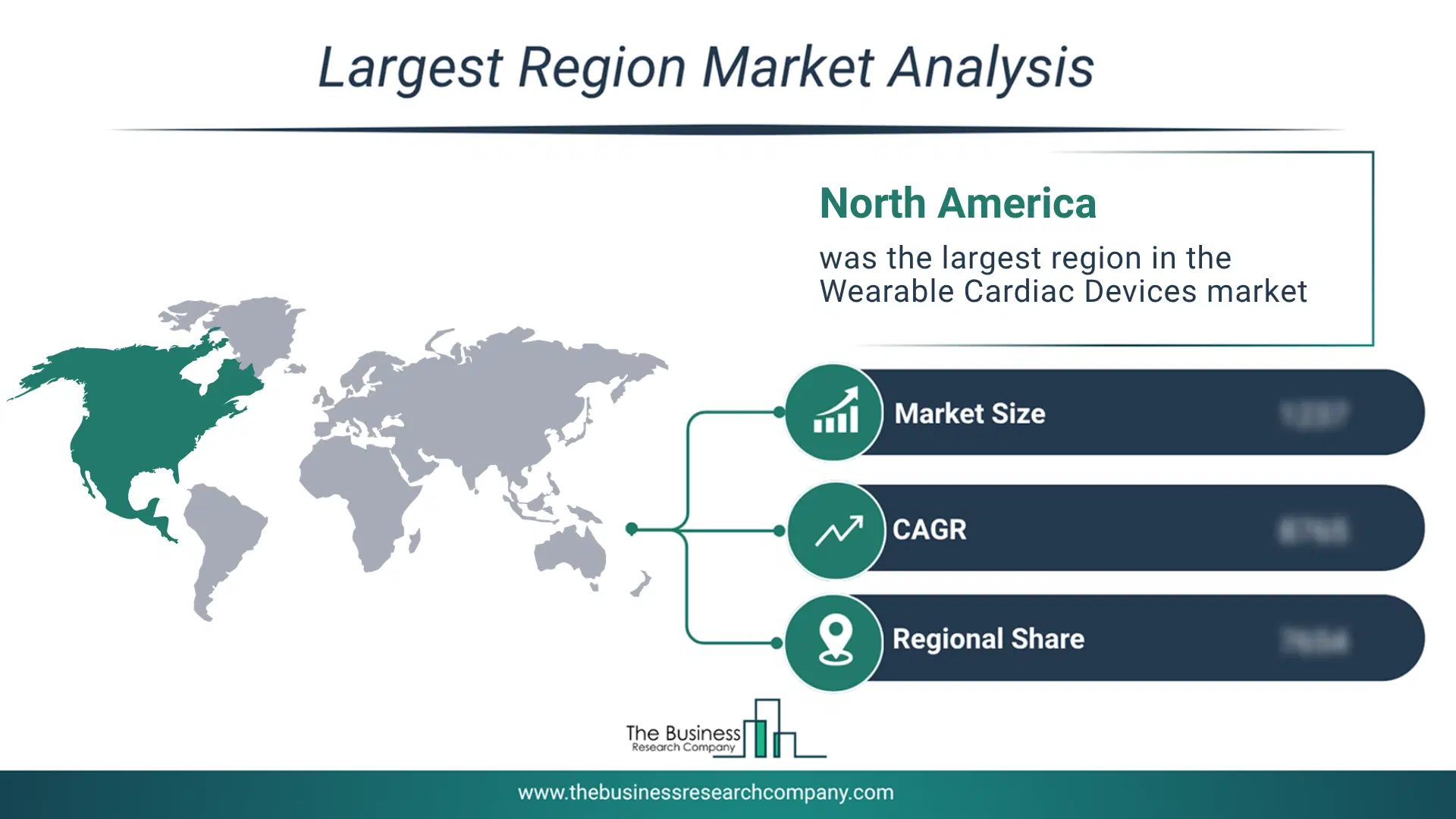
Regional Outlook
North America was the largest region in the wearable cardiac devices market in 2025. Asia-Pacific is expected to be the fastest-growing region in the forecast period. The regions covered in this market report are Asia-Pacific, South East Asia, Western Europe, Eastern Europe, North America, South America, Middle East, Africa. The countries covered in this market report are Australia, Brazil, China, France, Germany, India, Indonesia, Japan, Taiwan, Russia, South Korea, UK, USA, Canada, Italy, SpainWhat Defines the Wearable Cardiac Devices Market?
The wearable cardiac devices market consists of sales of insertable cardiac monitors (ICMS), wearable ECG t-shirts, smart garments, chest strap ECG monitors, continuous blood pressure monitors, wearable telemetry devices, smart rings, ECG-enabled hearing aids, and ECG-enabled earbuds. Values in this market are ‘factory gate’ values, that is the value of goods sold by the manufacturers or creators of the goods, whether to other entities (including downstream manufacturers, wholesalers, distributors and retailers) or directly to end customers. The value of goods in this market includes related services sold by the creators of the goods.How is Market Value Defined and Measured?
The market value is defined as the revenues that enterprises gain from the sale of goods and/or services within the specified market and geography through sales, grants, or donations in terms of the currency (in USD unless otherwise specified). The revenues for a specified geography are consumption values that are revenues generated by organizations in the specified geography within the market, irrespective of where they are produced. It does not include revenues from resales along the supply chain, either further along the supply chain or as part of other products.
This chart presents market attractiveness based on a quantitative evaluation of growth, competition, strategic alignment, and risk, offering a clear view of opportunity areas for decision-making. This chart is for illustrative purposes; the full report contains the complete analysis.

This chart highlights the Total Addressable Market (TAM) by estimating the maximum revenue opportunity using an assumption-driven approach, supporting strategic planning and opportunity sizing across markets. The chart is illustrative; the full report provides a more comprehensive analysis.
What Key Data and Analysis Are Included in the Wearable Cardiac Devices Market Report 2026?
The wearable cardiac devices market research report is one of a series of new reports from The Business Research Company that provides market statistics, including industry global market size, regional shares, competitors with the market share, detailed market segments, market trends and opportunities, and any further data you may need to thrive in the wearable cardiac devices industry. The market research report delivers a complete perspective of everything you need, with an in-depth analysis of the current and future state of the industry.Wearable Cardiac Devices Market Report Forecast Analysis
| Report Attribute | Details |
|---|---|
| Market Size Value In 2026 | $6.73 billion |
| Revenue Forecast In 2030 | $13.42 billion |
| Growth Rate | CAGR of 18.8% from 2026 to 2030 |
| Base Year For Estimation | 2025 |
| Actual Estimates/Historical Data | 2020-2025 |
| Forecast Period | 2026 - 2030 |
| Market Representation | Revenue in USD Billion and CAGR from 2026 to 2030 |
| Segments Covered | Product, Application, Distribution Channel, End User |
| Regional Scope | Asia-Pacific, Western Europe, Eastern Europe, North America, South America, Middle East, Africa |
| Country Scope | The countries covered in the report are Australia, Brazil, China, France, Germany, India, Indonesia, Japan, Taiwan, Russia, South Korea, UK, USA, Canada, Italy, Spain. |
| Key Companies Profiled | Apple Inc., Samsung Electronics Co. Ltd., Abbott Laboratories, Medtronic plc, Garmin Ltd., Masimo Corporation, Nihon Kohden Corporation, iRhythm Technologies Inc., Biofourmis, Bittium Corporation, BPL Medical Technologies Pvt. Ltd., NeuroSky Inc., Bionet Co. Ltd., AliveCor Inc., Qardio Inc., Empatica Inc., VitalConnect Inc., Lifesignals Group, Biotricity Inc., Shimmer Research |
| Customization Scope | Request for Customization |
| Pricing And Purchase Options | Explore Purchase Options |