
Wearable Fall Detection Market Report 2026
Global Outlook – By Product Type (Smart Watches, Pendants, Clip-Ons, Belt-Worn Devices, Other Product Types), By Technology (Accelerometer-Based, Gyroscope-Based, Multi-Sensor, Other Technologies), By Distribution Channel (Online, Offline), By Application (Home Care, Senior Living Facilities, Hospitals And Clinics, Other Applications), By End-User (Elderly, Patients with Chronic Diseases, Other End-Users) – Market Size, Trends, Strategies, and Forecast to 2030
Wearable Fall Detection Market Overview
• Wearable Fall Detection market size has reached to $0.56 billion in 2025 • Expected to grow to $0.85 billion in 2030 at a compound annual growth rate (CAGR) of 8.7% • Growth Driver: Rising Demand For Remote Patient Monitoring (RPM) Solutions Fueling The Growth Of The Market Due To Increasing Chronic Disease Burden And Aging Population • Market Trend: Motion Sensor-Based Smartwatches Enhance Safety And Emergency Response In Wearable Fall Detection • North America was the largest region in 2025 and Asia-Pacific is the fastest growing region.What Is Covered Under Wearable Fall Detection Market?
Wearable fall detection is an intelligent, body-worn device embedded with motion sensors that automatically identify sudden falls or unusual movements. Its primary purpose is to improve personal safety by instantly notifying caregivers or emergency responders. It enables rapid assistance to help shorten response times, reduce injury-related complications, and support better overall health outcomes. The main product types of wearable fall detection include smart watches, pendants, clip-ons, belt-worn devices, and other types. Smart watches are wearable devices equipped with sensors to detect falls in real time, alert caregivers, and ensure rapid response for safety and health monitoring. They utilize technologies such as accelerometer-based, gyroscope-based, multi-sensor, and other technologies and are distributed through online and offline channels. They find application in home care, senior living facilities, hospitals and clinics, and other applications, serving end users including elderly, patients with chronic diseases, and other end-users.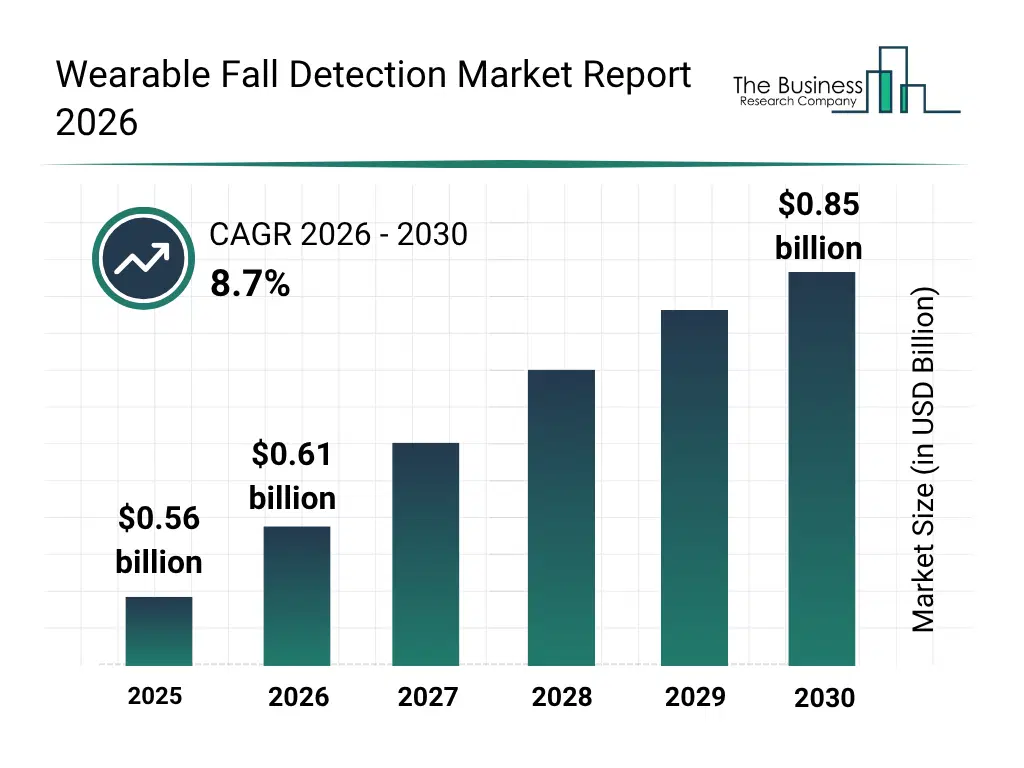
What Is The Wearable Fall Detection Market Size and Share 2026?
The wearable fall detection market size has grown strongly in recent years. It will grow from $0.56 billion in 2025 to $0.61 billion in 2026 at a compound annual growth rate (CAGR) of 8.5%. The growth in the historic period can be attributed to rising elderly population, increasing adoption of wearable devices, growing awareness of personal safety, advancements in motion sensor technology, demand for home healthcare solutions.What Is The Wearable Fall Detection Market Growth Forecast?
The wearable fall detection market size is expected to see strong growth in the next few years. It will grow to $0.85 billion in 2030 at a compound annual growth rate (CAGR) of 8.7%. The growth in the forecast period can be attributed to integration with ai and machine learning, expansion of telehealth services, increasing demand in senior living facilities, adoption of multi-sensor wearable devices, advancements in cloud-based monitoring platforms. Major trends in the forecast period include wearable multi-sensor integration, real-time fall alerts, remote health monitoring, ai-powered predictive analytics, integration with emergency response systems.
Global Wearable Fall Detection Market Segmentation
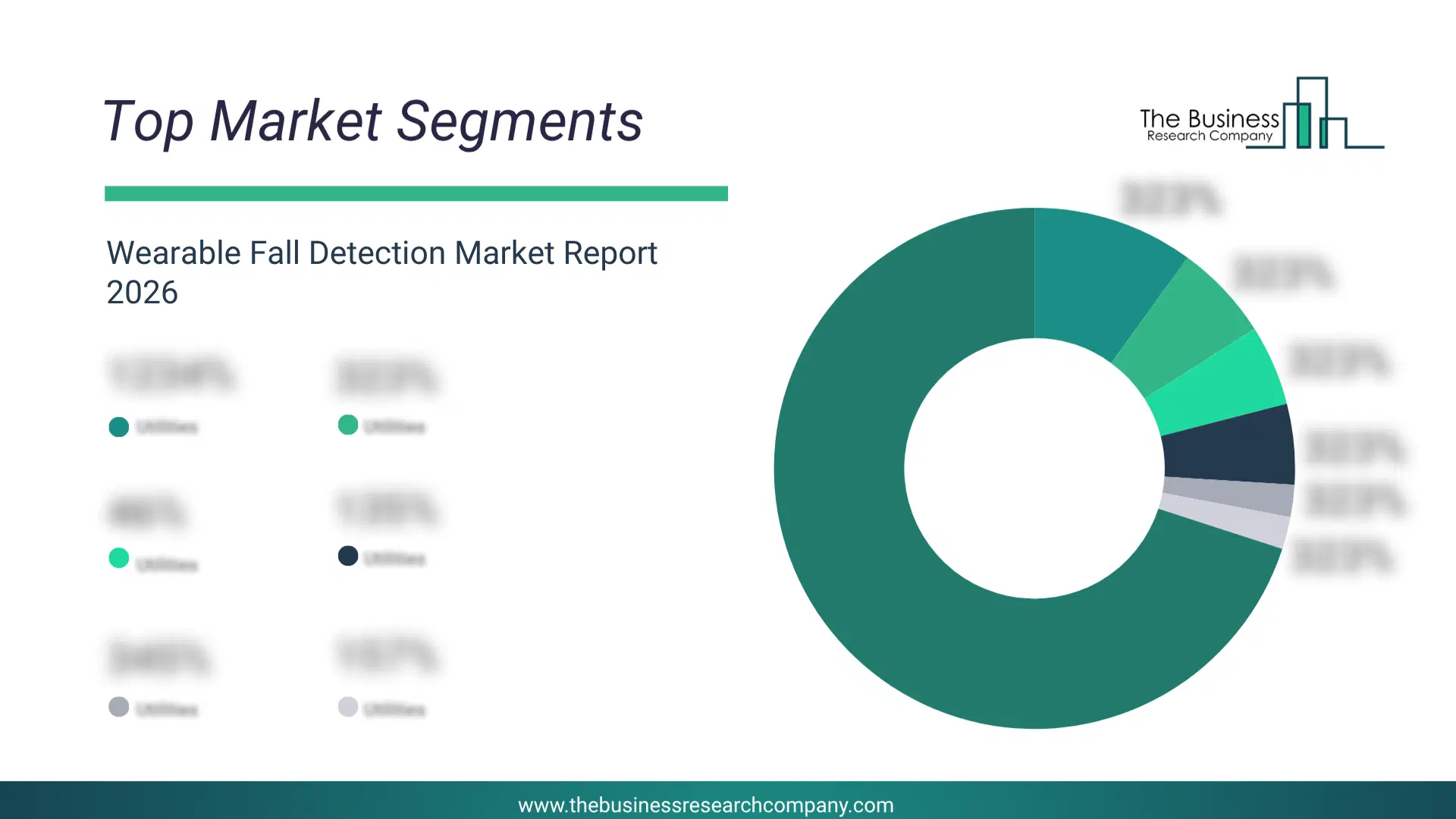
1) By Product Type: Smart Watches, Pendants, Clip-Ons, Belt-Worn Devices, Other Product Types 2) By Technology: Accelerometer-Based, Gyroscope-Based, Multi-Sensor, Other Technologies 3) By Distribution Channel: Online, Offline 4) By Application: Home Care, Senior Living Facilities, Hospitals And Clinics, Other Applications 5) By End-User: Elderly, Patients with Chronic Diseases, Other End-Users Subsegments: 1) By Smart Watches: Standalone Smart Watches, Companion Smart Watches, Medical Alert Smart Watches, Cellular-Enabled Smart Watches 2) By Pendants: Emergency Response Pendants, Fall Detection Pendants, Waterproof Pendants, Two Way Communication Pendants 3) By Clip-Ons: Waist Clip Devices, Pocket Clip Devices, Magnetic Clip Devices, Lightweight Clip Devices 4) By Belt-Worn Devices: Motion Sensor Devices, Impact Detection Devices, GPS-Enabled Devices, Rechargeable Belt Devices 5) By Other Product Types: Smart Insoles, Smart Patches, Smart Clothing, WristbandsWhat Is The Driver Of The Wearable Fall Detection Market?
The rising demand for remote patient monitoring (RPM) solutions is expected to propel the growth of the wearable fall detection market going forward. Remote patient monitoring (RPM) refers to the use of connected digital technologies and wearable devices to collect medical and health-related data from individuals in one location and electronically transmit it to healthcare providers for assessment and recommendations. The growing demand for RPM solutions is driven by the increasing prevalence of chronic diseases, the expanding geriatric population, and the need for continuous monitoring outside traditional clinical settings. Wearable fall detection devices support remote patient monitoring by enabling real-time tracking of patient movement, automatically detecting falls, and instantly alerting carers or healthcare providers, thereby improving patient safety and response time. For instance, in August 2025, according to the U.S. Department of Health & Human Services, a US-based executive branch department In 2024, Medicare spending on remote patient monitoring surpassed US$536 million, reflecting a 31% increase compared to 2023, while nearly 1 million beneficiaries utilized RPM services, representing a 27% year-over-year rise, and approximately 4,600 medical practices regularly billed for RPM services. Therefore, the rising demand for remote patient monitoring (RPM) solutions is driving the growth of the wearable fall detection industry.Key Players In The Global Wearable Fall Detection Market
Major companies operating in the wearable fall detection market are Apple Inc., Samsung Electronics Co. Ltd., Huawei Technologies Co. Ltd., Xiaomi Corporation, Koninklijke Philips N.V., Garmin Ltd., Blackline Safety Corp, LifeStation Inc., Medical Guardian LLC, LifeFone Inc., VitalConnect Inc., UnaliWear Inc., Mytrex Inc., CarePredict Inc., AlertOne Services LLC, Ranix Co. Ltd., Qmedic Health Inc., Bay Alarm Medical LLC, Aloe Care Health Inc., FallCall Solutions LLC.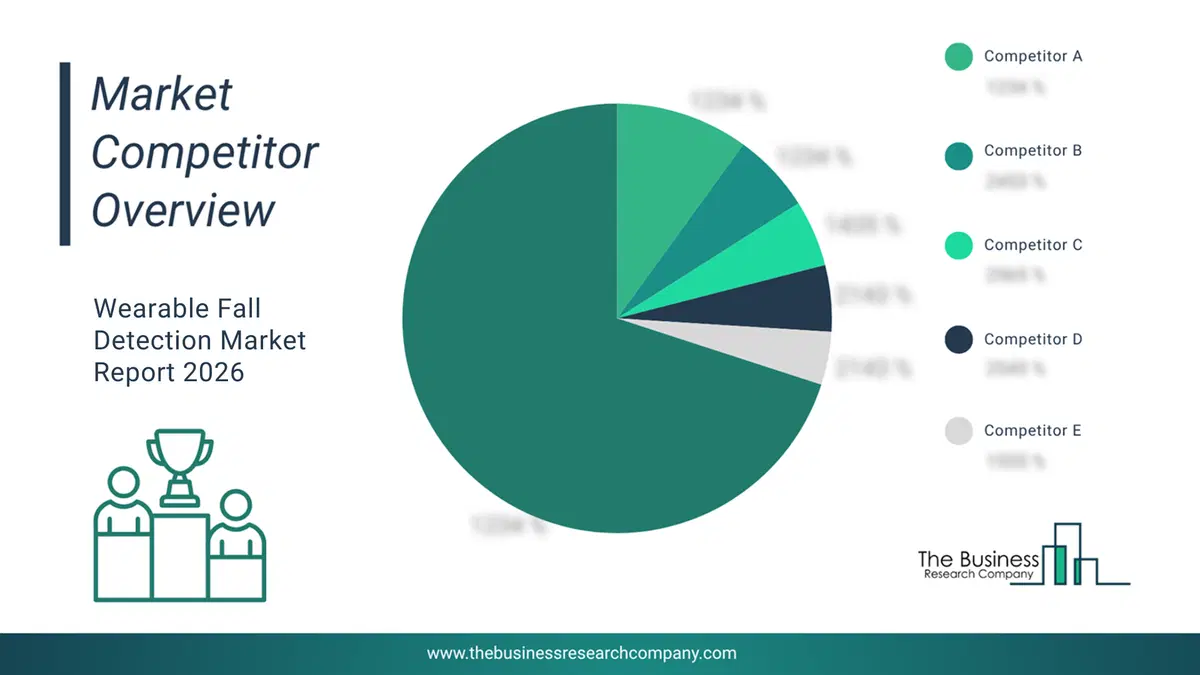
This chart is for illustrative purposes; the full report includes a detailed competitor analysis and comprehensive overview of the top 10 companies in the market.
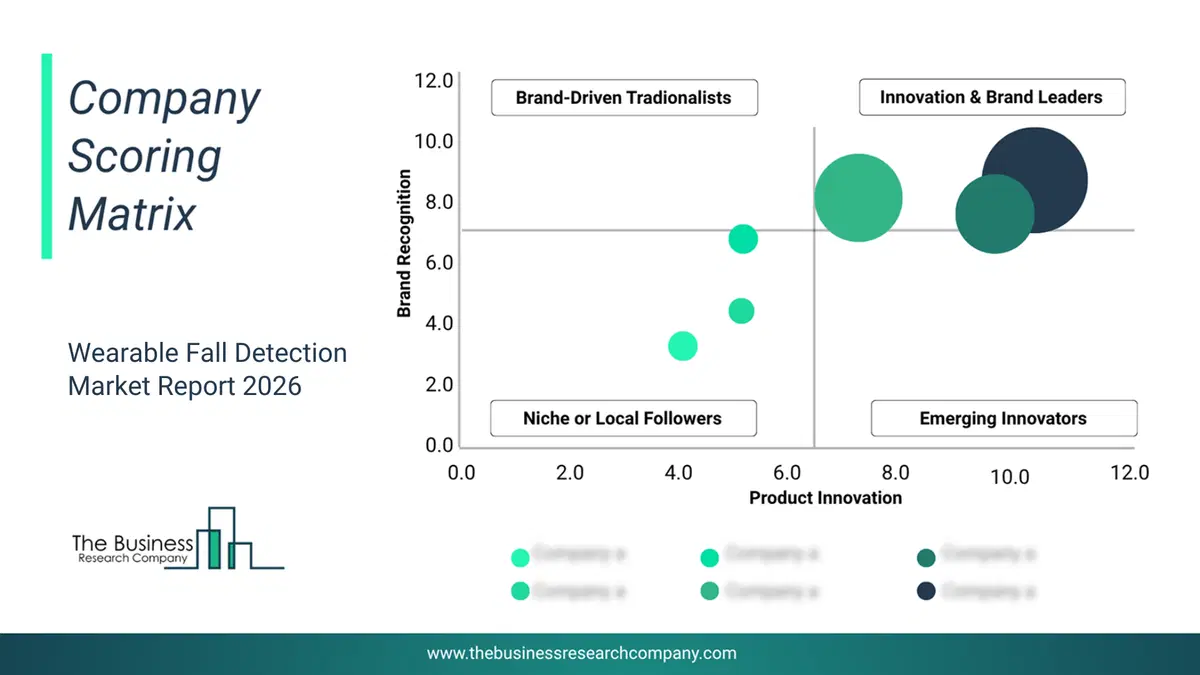
This chart maps companies by product innovation and brand strength, with bubble size indicating relative revenue, helping identify market leaders, challengers, and niche players. This is an illustrative chart; the full report provides a complete and accurate competitive analysis.
Global Wearable Fall Detection Market Trends and Insights
Major companies operating in the wearable fall detection market are focusing on developing advanced products such as motion sensor-based fall detection and prevention watches to provide greater safety and independence for elderly and high-risk individuals. Sensor-based fall detection and prevention watches are advanced wearable devices equipped with motion and positioning sensors that detect unexpected falls and promptly issue emergency alerts for immediate support. For instance, in September 2023, Antara Senior Care, an India-based integrated senior care service provider, launched 'AGEasy 'Empower' Smart Watches to enhance its integrated care ecosystem for seniors. These smartwatches feature advanced fall detection using motion sensors that auto-alert emergency contacts if a user doesn't respond post-fall, along with real-time health tracking (heart rate, blood pressure, SpO2, and temperature), GPS location, geo-fencing, and two-way voice/video calling, developed in partnership with US firm LifeQ and available on the AGEasyByAntara site and Amazon India.What Are Latest Mergers And Acquisitions In The Wearable Fall Detection Market?
In May 2024, Medical Guardian LLC, a US-based personal emergency response systems provider, acquired MobileHelp from Advocate Aurora Enterprises for an undisclosed amount. Through this acquisition, Medical Guardian seeks to expand and reinforce its portfolio of wearable fall detection and remote patient monitoring solutions by incorporating MobileHelp’s proven personal emergency response and RPM technologies into its MGEngage360 platform, thereby improving care coverage and support for seniors and high-risk individuals across diverse care environments. MobileHelp LLC is a US-based provider of automatic fall detection pendants.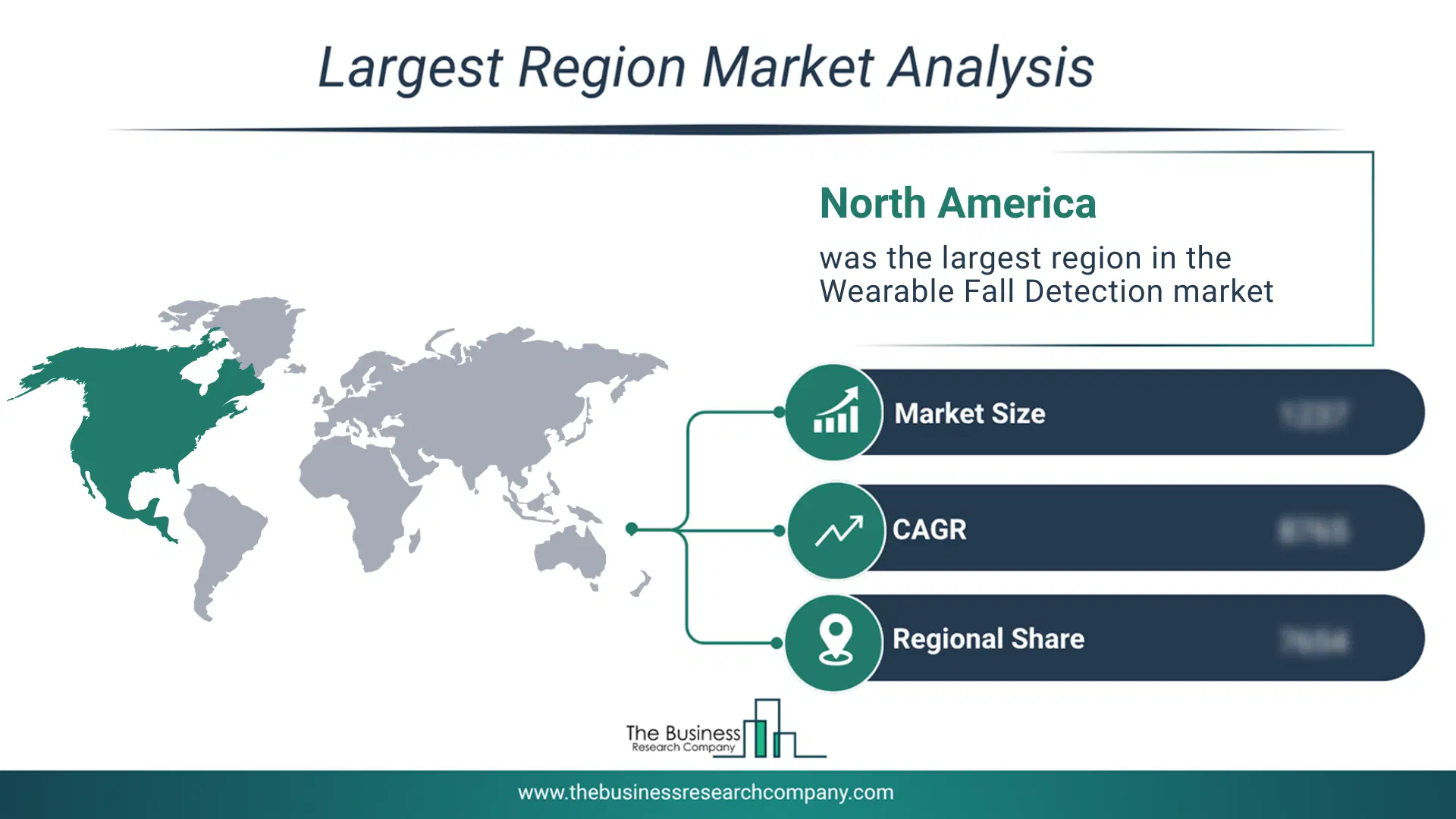
Regional Insights
North America was the largest region in the wearable fall detection market in 2025. Asia-Pacific is expected to be the fastest-growing region in the forecast period. The regions covered in this market report are Asia-Pacific, South East Asia, Western Europe, Eastern Europe, North America, South America, Middle East, Africa. The countries covered in this market report are Australia, Brazil, China, France, Germany, India, Indonesia, Japan, Taiwan, Russia, South Korea, UK, USA, Canada, Italy, Spain.What Defines the Wearable Fall Detection Market?
The wearable fall detection market consists of revenues earned by entities by providing services such as real-time activity and mobility monitoring, GPS-based location tracking, automated emergency alert communication, health data recording, and cloud-based reporting. The market value includes the value of related goods sold by the service provider or included within the service offering. The wearable fall detection market also includes sales of GPS modules, SOS emergency buttons, Cellular or LTE communication modules, and rechargeable lithium-ion batteries. Values in this market are ‘factory gate’ values, that is, the value of goods sold by the manufacturers or creators of the goods, whether to other entities (including downstream manufacturers, wholesalers, distributors, and retailers) or directly to end customers. The value of goods in this market includes related services sold by the creators of the goods.How is Market Value Defined and Measured?
The market value is defined as the revenues that enterprises gain from the sale of goods and/or services within the specified market and geography through sales, grants, or donations in terms of the currency (in USD unless otherwise specified). The revenues for a specified geography are consumption values that are revenues generated by organizations in the specified geography within the market, irrespective of where they are produced. It does not include revenues from resales along the supply chain, either further along the supply chain or as part of other products.
This chart presents market attractiveness based on a quantitative evaluation of growth, competition, strategic alignment, and risk, offering a clear view of opportunity areas for decision-making. This chart is for illustrative purposes; the full report contains the complete analysis.

This chart highlights the Total Addressable Market (TAM) by estimating the maximum revenue opportunity using an assumption-driven approach, supporting strategic planning and opportunity sizing across markets. The chart is illustrative; the full report provides a more comprehensive analysis.
What Key Data And Analysis Are Included In The Wearable Fall Detection Market Report 2026?
The wearable fall detection market research report is one of a series of new reports from The Business Research Company that provides market statistics, including industry global market size, regional shares, competitors with the market share, detailed market segments, market trends and opportunities, and any further data you may need to thrive in the wearable fall detection industry. The market research report delivers a complete perspective of everything you need, with an in-depth analysis of the current and future state of the industry.Wearable Fall Detection Market Report Forecast Analysis
| Report Attribute | Details |
|---|---|
| Market Size Value In 2026 | $0.61 billion |
| Revenue Forecast In 2030 | $0.85 billion |
| Growth Rate | CAGR of 8.7% from 2026 to 2030 |
| Base Year For Estimation | 2025 |
| Actual Estimates/Historical Data | 2020-2025 |
| Forecast Period | 2026 - 2030 |
| Market Representation | Revenue in USD Billion and CAGR from 2026 to 2030 |
| Segments Covered | Product Type, Technology, Distribution Channel, Application, End-User |
| Regional Scope | Asia-Pacific, Western Europe, Eastern Europe, North America, South America, Middle East, Africa |
| Country Scope | The countries covered in the report are Australia, Brazil, China, France, Germany, India, Indonesia, Japan, Taiwan, Russia, South Korea, UK, USA, Canada, Italy, Spain. |
| Key Companies Profiled | Apple Inc., Samsung Electronics Co. Ltd., Huawei Technologies Co. Ltd., Xiaomi Corporation, Koninklijke Philips N.V., Garmin Ltd., Blackline Safety Corp, LifeStation Inc., Medical Guardian LLC, LifeFone Inc., VitalConnect Inc., UnaliWear Inc., Mytrex Inc., CarePredict Inc., AlertOne Services LLC, Ranix Co. Ltd., Qmedic Health Inc., Bay Alarm Medical LLC, Aloe Care Health Inc., FallCall Solutions LLC. |
| Customization Scope | Request for Customization |
| Pricing And Purchase Options | Explore Purchase Options |