
Wearable Inertial Sensors Market Report 2026
Global Outlook – By Sensor Type ( Accelerometers, Gyroscopes, Magnetometers, Inertial Measurement Units (IMUs), Integrated 3- Or 6-Axis Units, Pressure And Force Sensors, Temperature And Biosensors), By Technology ( Micro-Electro-Mechanical Systems, Quantum Sensors, Optical Sensors, Hybrid Sensors), By Application ( Sports And Fitness Tracking, Healthcare And Rehabilitation Monitoring, Industrial And Worker Safety Monitoring, Military And Defense Training Systems, Augmented Reality Or Virtual Reality (VR) And Motion Gaming, Elderly Monitoring And Fall Detection), By Distribution Channel ( Online Stores, Retail Outlets, Direct Sales, Third-party Distributors), By End User ( Individuals, Healthcare Providers, Automotive Manufacturers) – Market Size, Trends, Strategies, and Forecast to 2030
Wearable Inertial Sensors Market Overview
• Wearable Inertial Sensors market size has reached to $8.33 billion in 2025 • Expected to grow to $13.93 billion in 2030 at a compound annual growth rate (CAGR) of 10.8% • Growth Driver: Increasing Demand For Remote Patient Monitoring Fueling The Growth Of The Market Due To Rising Prevalence Of Chronic Diseases • Market Trend: Advancements In Motion Tracking Technology Improve Accuracy And Real-Time Movement Analysis • North America was the largest region in 2025 and Asia-Pacific is the fastest growing region.What Is Covered Under Wearable Inertial Sensors Market?
Wearable inertial sensors are compact devices, typically worn on the body, that measure motion and orientation using accelerometers, gyroscopes, and sometimes magnetometers. These sensors help to capture real-time data on movement, posture, and activity patterns, enabling applications in health monitoring, sports performance analysis, rehabilitation, and human motion tracking. The main sensor types of wearable inertial sensors are accelerometers, gyroscopes, magnetometers, inertial measurement units (IMUs), integrated 3- or 6-axis units, pressure and force sensors, and temperature and biosensors. An accelerometer is a sensor that measures the rate of change of velocity (acceleration) of an object along one or more axes, allowing detection of motion, orientation, and vibration in devices or systems. These sensors are implemented using technologies such as micro-electro-mechanical systems, quantum sensors, optical sensors, and hybrid sensors and they serve a wide range of applications, including sports and fitness tracking, healthcare and rehabilitation monitoring, industrial and worker safety monitoring, military and defense training systems, augmented reality or virtual reality (VR) and motion gaming, and elderly monitoring and fall detection. These are distributed through various channels such as online stores, retail outlets, direct sales, and third-party distributors and cater to diverse end users including individuals, healthcare providers, automotive manufacturers, and defense organizations.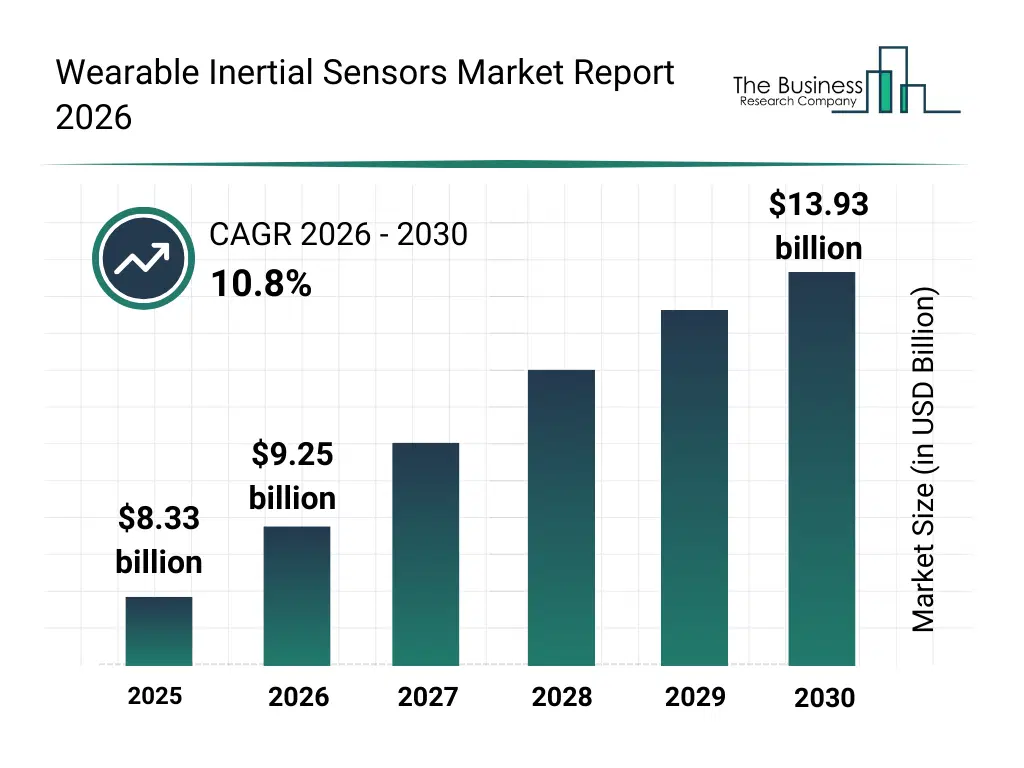
What Is The Wearable Inertial Sensors Market Size 2026 And Growth Rate?
The wearable inertial sensors market size has grown rapidly in recent years. It will grow from $8.33 billion in 2025 to $9.25 billion in 2026 at a compound annual growth rate (CAGR) of 11.0%. The growth in the historic period can be attributed to increased adoption of wearable fitness devices, advancements in accelerometer and gyroscope technologies, growing awareness of personal health monitoring, demand for rehabilitation and elderly care solutions, rise in sports performance analytics.What Is The Wearable Inertial Sensors Market Growth Forecast?
The wearable inertial sensors market size is expected to see rapid growth in the next few years. It will grow to $13.93 billion in 2030 at a compound annual growth rate (CAGR) of 10.8%. The growth in the forecast period can be attributed to integration with ai-driven health insights, expansion of telemedicine and remote patient monitoring, development of hybrid and quantum sensor technologies, increased industrial and worker safety applications, adoption in ar/vr and motion gaming environments. Major trends in the forecast period include wearable sensor miniaturization, wireless and low-power connectivity, real-time motion analytics, predictive health monitoring, multi-sensor fusion.
Global Wearable Inertial Sensors Market Segmentation
1) By Sensor Type: Accelerometers, Gyroscopes, Magnetometers, Inertial Measurement Units (IMUs), Integrated 3- Or 6-Axis Units, Pressure And Force Sensors, Temperature And Biosensors 2) By Technology: Micro-Electro-Mechanical Systems, Quantum Sensors, Optical Sensors, Hybrid Sensors 3) By Application: Sports And Fitness Tracking, Healthcare And Rehabilitation Monitoring, Industrial And Worker Safety Monitoring, Military And Defense Training Systems, Augmented Reality Or Virtual Reality (VR) And Motion Gaming, Elderly Monitoring And Fall Detection 4) By Distribution Channel: Online Stores, Retail Outlets, Direct Sales, Third-party Distributors 5) By End User: Individuals, Healthcare Providers, Automotive Manufacturers, Defense Organizations Subsegments: 1) By Accelerometers: Piezoelectric, Capacitive, Microelectromechanical, Servo 2) By Gyroscopes: Optical, Vibratory, Microelectromechanical, Ring Laser 3) By Magnetometers: Fluxgate, Hall Effect, Proton Precession, Anisotropic Magnetoresistive 4) By Inertial Measurement Units: Three Axis, Six Axis, Nine Axis, Multi Sensor 5) By Integrated Three Or Six Axis Units: Three Axis Accelerometer, Three Axis Gyroscope, Six Axis Combination, Sensor Fusion 6) By Pressure And Force Sensors: Capacitive, Piezoelectric, Piezoresistive, Strain Gauge 7) By Temperature And Biosensors: Thermocouple, Resistance Temperature Detector, Thermistor, Enzyme BasedWhat Is The Driver Of The Wearable Inertial Sensors Market?
The increasing demand for remote patient monitoring is expected to propel the growth of the wearable inertial sensors market going forward. Remote patient monitoring refers to the use of digital technologies to collect and transmit patients’ health data from outside traditional clinical settings to healthcare providers for assessment and management. The increasing demand for remote patient monitoring is due to the growing prevalence of chronic diseases, as patients with long-term conditions require continuous tracking and timely interventions to improve health outcomes. Wearable inertial sensors support remote patient monitoring by enabling continuous motion tracking, making them valuable for healthcare and elderly care. They reduce the need for frequent hospital visits by providing real-time mobility and activity data, improving patient outcomes and care efficiency. For instance, in August 2023, according to the World Health Organization, a Switzerland-based intergovernmental organization, 77% of Member States (39 out of 51) use telemedicine or remote patient monitoring. Therefore, the increasing demand for remote patient monitoring is driving the growth of the wearable inertial sensors industry.Key Players In The Global Wearable Inertial Sensors Market
Major companies operating in the wearable inertial sensors market are Panasonic Holdings Corporation, Honeywell International Inc., Safran Sensing Technologies SAS, Texas Instruments Incorporated, TDK Corporation, TE Connectivity Ltd., STMicroelectronics N.V., Murata Manufacturing Co. Ltd., NXP Semiconductors N.V., Analog Devices Inc., AMS Osram AG, Garmin Ltd., Polar Electro Oy, Oura Health Oy, MEMSIC Semiconductor Co., Bosch Sensortec GmbH, KINEXON GmbH, Vicon Motion Systems Ltd., MBientLab Inc., Shimmer Sensing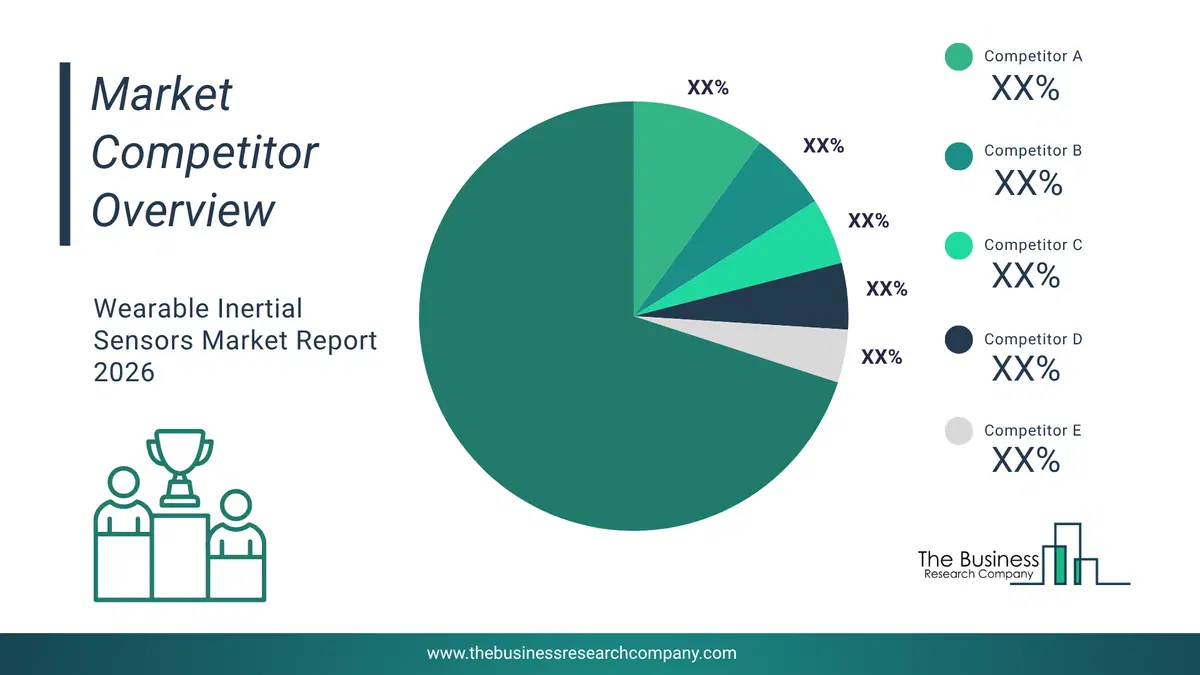
This chart is for illustrative purposes; the full report includes a detailed competitor analysis and comprehensive overview of the top 10 companies in the market.
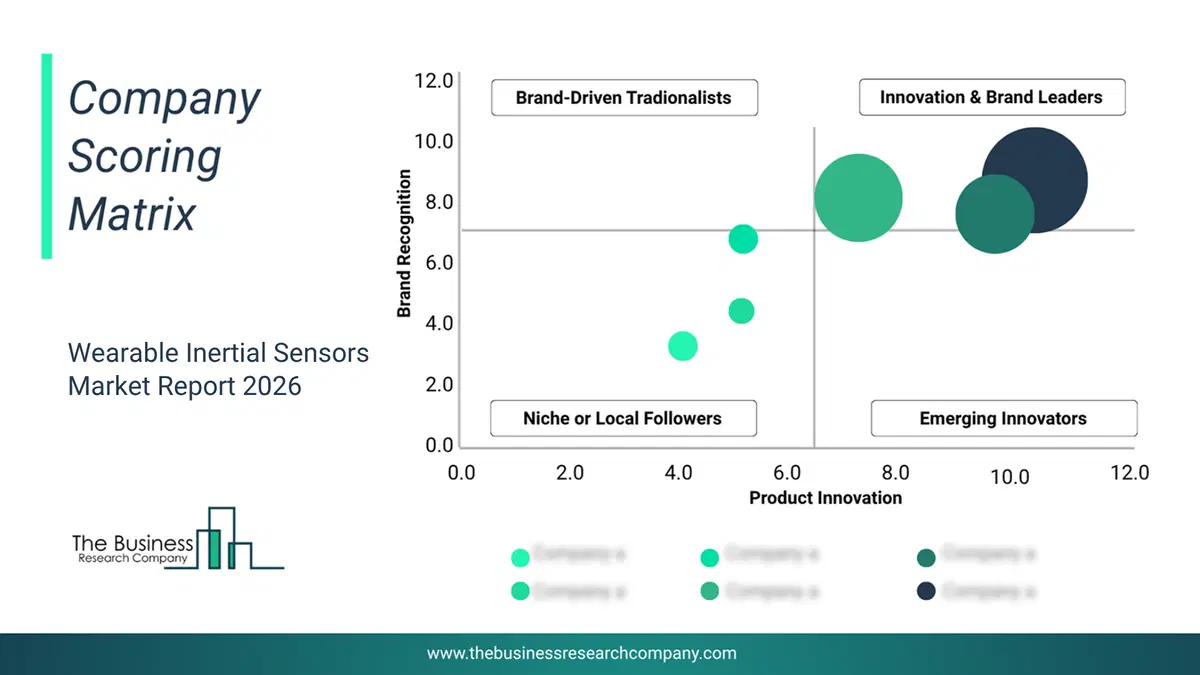
This chart maps companies by product innovation and brand strength, with bubble size indicating relative revenue, helping identify market leaders, challengers, and niche players. This is an illustrative chart; the full report provides a complete and accurate competitive analysis.
Global Wearable Inertial Sensors Market Trends and Insights
Major companies operating in the wearable inertial sensors market are focusing on advancing motion tracking, such as wireless multi-sensor platforms, to enhance accuracy, reduce latency, and enable precise full-body movement analysis. Wireless multi-sensor platforms integrate multiple inertial measurement units (IMUs) across body segments to capture fine-grained motion and posture data, providing a comprehensive picture of human biomechanics for healthcare, sports, and VR applications. For instance, in August 2024, Bosch Sensortec GmbH, a Germany-based sensor technology company, launched its Smart Connected Sensors platform, a next-generation IMU-based motion tracking solution featuring the BHI380 sensor and up to eight synchronised wireless sensor nodes. The system offers advanced features such as full-body motion capture, body-angle estimation, and gesture recognition, supported by embedded software that eliminates the need for external cameras or suits.What Are Latest Mergers And Acquisitions In The Wearable Inertial Sensors Market?
In January 2025, Viavi Solutions Inc., a US-based technology company, acquired Inertial Labs Inc. for $310 million. With this acquisition, Viavi Solutions Inc. aims to strengthen its position in aerospace, defense, and autonomous systems markets by enhancing its portfolio of high-precision navigation and inertial sensing solutions. Inertial Labs Inc. is a US-based inertial sensing company that specializes in the design and manufacture of wearable inertial sensors.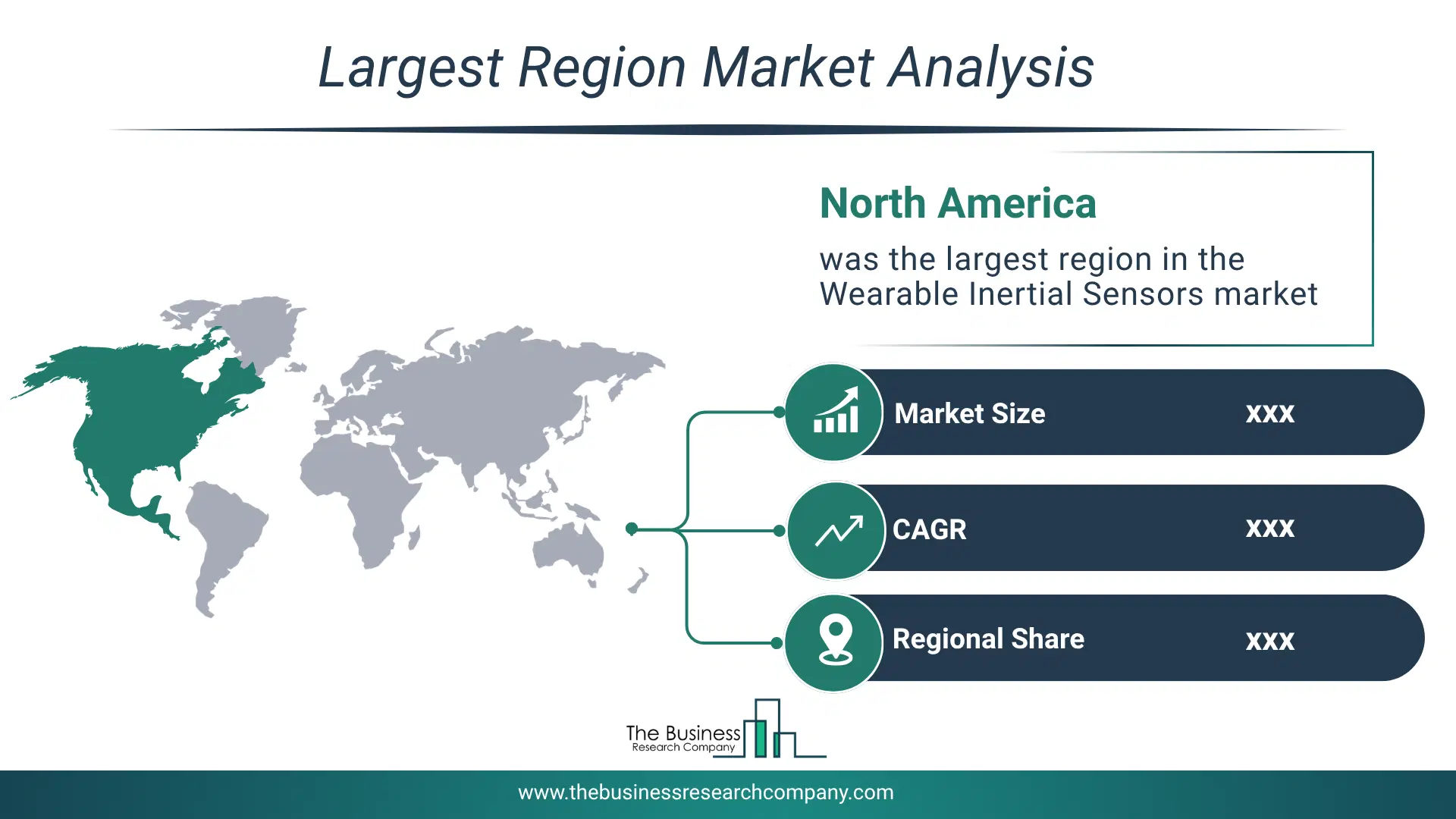
Regional Outlook
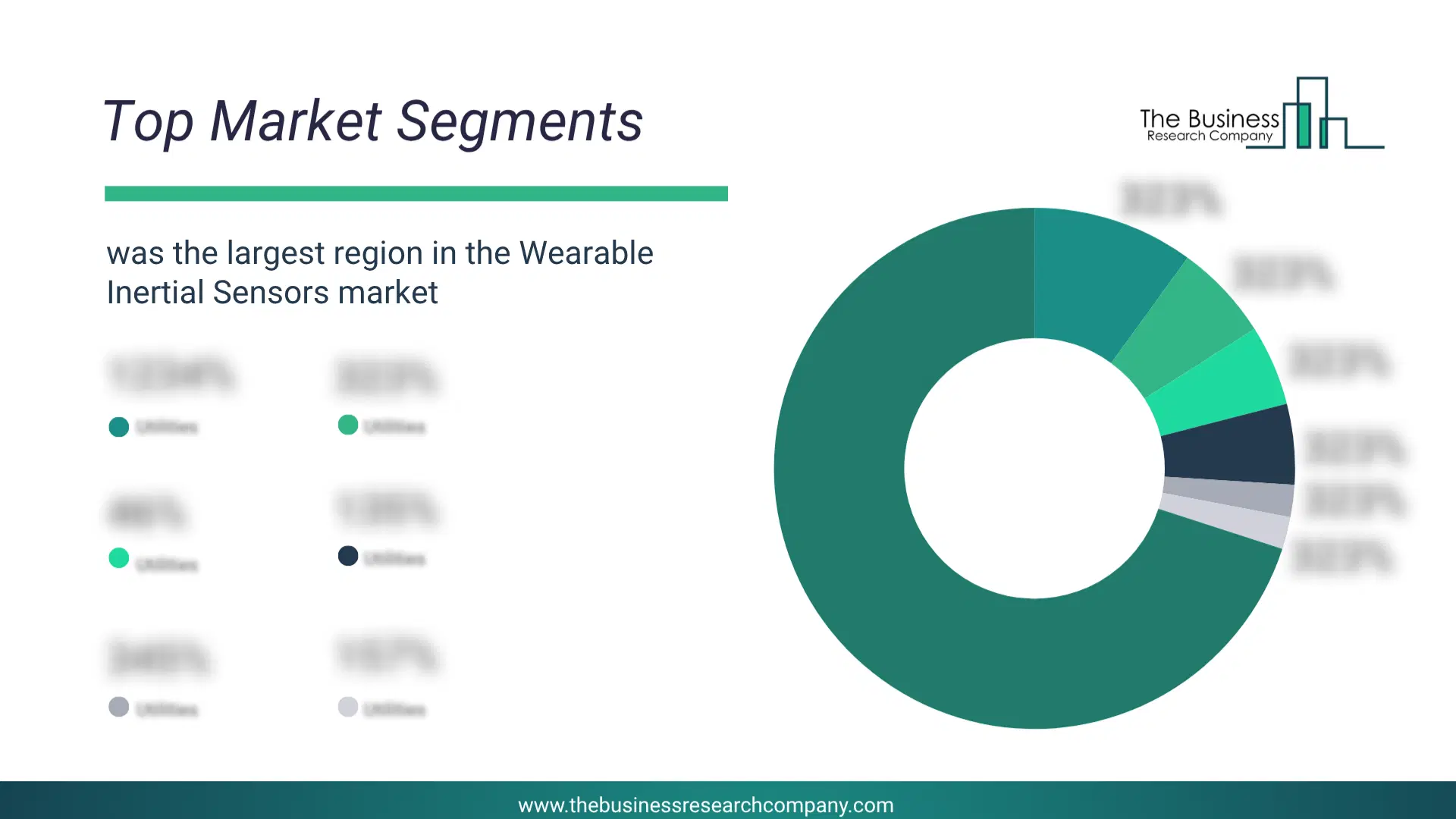
North America was the largest region in the wearable inertial sensors market in 2025. Asia-Pacific is expected to be the fastest-growing region in the forecast period. The regions covered in this market report are Asia-Pacific, South East Asia, Western Europe, Eastern Europe, North America, South America, Middle East, Africa. The countries covered in this market report are Australia, Brazil, China, France, Germany, India, Indonesia, Japan, Taiwan, Russia, South Korea, UK, USA, Canada, Italy, Spain.What Defines the Wearable Inertial Sensors Market?
The wearable inertial sensors market consists of revenues earned by entities by providing services such as real-time motion analytics, athlete performance monitoring, remote patient monitoring, industrial worker safety oversight, and motion capture for animation and gaming. The market value includes the value of related goods sold by the service provider or included within the service offering. The wearable inertial sensors market also includes sales of smartwatches and fitness trackers, medical monitoring wearables, sports performance devices, industrial wearables, and augmented reality (AR) and virtual reality (VR) headsets. Values in this market are ‘factory gate’ values, that is the value of goods sold by the manufacturers or creators of the goods, whether to other entities (including downstream manufacturers, wholesalers, distributors and retailers) or directly to end customers. The value of goods in this market includes related services sold by the creators of the goods.How is Market Value Defined and Measured?
The market value is defined as the revenues that enterprises gain from the sale of goods and/or services within the specified market and geography through sales, grants, or donations in terms of the currency (in USD unless otherwise specified). The revenues for a specified geography are consumption values that are revenues generated by organizations in the specified geography within the market, irrespective of where they are produced. It does not include revenues from resales along the supply chain, either further along the supply chain or as part of other products.
This chart presents market attractiveness based on a quantitative evaluation of growth, competition, strategic alignment, and risk, offering a clear view of opportunity areas for decision-making. This chart is for illustrative purposes; the full report contains the complete analysis.

This chart highlights the Total Addressable Market (TAM) by estimating the maximum revenue opportunity using an assumption-driven approach, supporting strategic planning and opportunity sizing across markets. The chart is illustrative; the full report provides a more comprehensive analysis.
What Key Data and Analysis Are Included in the Wearable Inertial Sensors Market Report 2026?
The wearable inertial sensors market research report is one of a series of new reports from The Business Research Company that provides market statistics, including industry global market size, regional shares, competitors with the market share, detailed market segments, market trends and opportunities, and any further data you may need to thrive in the wearable inertial sensors industry. The market research report delivers a complete perspective of everything you need, with an in-depth analysis of the current and future state of the industry.Wearable Inertial Sensors Market Report Forecast Analysis
| Report Attribute | Details |
|---|---|
| Market Size Value In 2026 | $9.25 billion |
| Revenue Forecast In 2030 | $13.93 billion |
| Growth Rate | CAGR of 10.8% from 2026 to 2030 |
| Base Year For Estimation | 2025 |
| Actual Estimates/Historical Data | 2020-2025 |
| Forecast Period | 2026 - 2030 |
| Market Representation | Revenue in USD Billion and CAGR from 2026 to 2030 |
| Segments Covered | Sensor Type, Technology, Application, Distribution Channel, End User |
| Regional Scope | Asia-Pacific, Western Europe, Eastern Europe, North America, South America, Middle East, Africa |
| Country Scope | The countries covered in the report are Australia, Brazil, China, France, Germany, India, Indonesia, Japan, Taiwan, Russia, South Korea, UK, USA, Canada, Italy, Spain. |
| Key Companies Profiled | Panasonic Holdings Corporation, Honeywell International Inc., Safran Sensing Technologies SAS, Texas Instruments Incorporated, TDK Corporation, TE Connectivity Ltd., STMicroelectronics N.V., Murata Manufacturing Co. Ltd., NXP Semiconductors N.V., Analog Devices Inc., AMS Osram AG, Garmin Ltd., Polar Electro Oy, Oura Health Oy, MEMSIC Semiconductor Co., Bosch Sensortec GmbH, KINEXON GmbH, Vicon Motion Systems Ltd., MBientLab Inc., Shimmer Sensing |
| Customization Scope | Request for Customization |
| Pricing And Purchase Options | Explore Purchase Options |