
Wearable Patch Market Report 2026
Global Outlook – By Product Type (Biometric Patches, Therapeutic Patches, Diagnostic Patches, Fitness Tracking Patches, Smart Textile Patches), By Technology (Biosensors, Radio-Frequency Identification (RFID) Technology, Bluetooth Connectivity, Near Field Communication (NFC), Microelectromechanical Systems (MEMS)), By Distribution Channel (Online Retail, Offline Retail, Direct Sales, Pharmacies, Third-Party Distributors), By Application (Clinical, Non-Clinical), By End-Use (Healthcare Providers, Individual Consumers, Fitness Centers, Research Institutions) – Market Size, Trends, Strategies, and Forecast to 2030
Wearable Patch Market Overview
• Wearable Patch market size has reached to $12.59 billion in 2025 • Expected to grow to $22.17 billion in 2030 at a compound annual growth rate (CAGR) of 11.9% • Growth Driver: Demand For Home Healthcare Is Fueling The Growth Due To Its Role In Enabling Remote Monitoring And Chronic Disease Management • Market Trend: Advancements In Wearable Cardiac Monitoring Patches Enhance Remote Patient Care And Continuous ECG Tracking • North America was the largest region in 2025.What Is Covered Under Wearable Patch Market?
A wearable patch is a soft, adhesive device applied to the skin that monitors health, delivers medication, or assists in diagnosis. It is equipped with sensors or drug delivery systems, helps track vital signs, manages chronic diseases, and provides continuous treatment. These patches enable non-invasive, real-time healthcare and improve patient adherence by offering comfort and convenience. The main product types of wearable patches are biometric patches, therapeutic patches, diagnostic patches, fitness tracking patches, and smart textile patches. Biometric patches are wearable sensors that provide real-time monitoring of vital signs through continuous health tracking and early detection. It utilizes various technologies such as biosensors, radio-frequency identification (RFID) technology, bluetooth connectivity, near-field communication (NFC), and microelectromechanical systems (MEMS) and is distributed through several distribution channels, including online retail, offline retail, direct sales, pharmacies, and third-party distributors. It is applicable in several applications, such as clinical and non-clinical, and is used by various end-users, including healthcare providers, individual consumers, fitness centers, and research institutions.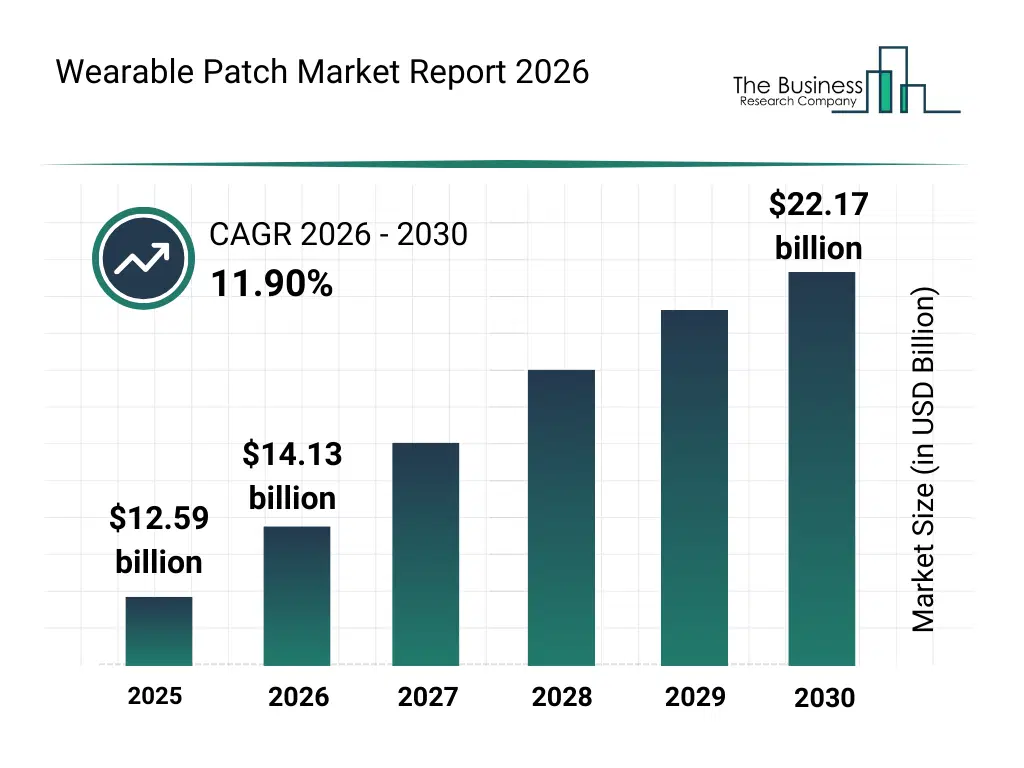
What Is The Wearable Patch Market Size and Share 2026?
The wearable patch market size has grown rapidly in recent years. It will grow from $12.59 billion in 2025 to $14.13 billion in 2026 at a compound annual growth rate (CAGR) of 12.2%. The growth in the historic period can be attributed to increasing prevalence of chronic diseases, growth in preventive healthcare awareness, adoption of wearable health devices, demand for remote patient monitoring, advancements in adhesive and skin-friendly materials.What Is The Wearable Patch Market Growth Forecast?
The wearable patch market size is expected to see rapid growth in the next few years. It will grow to $22.17 billion in 2030 at a compound annual growth rate (CAGR) of 11.9%. The growth in the forecast period can be attributed to integration of AI-based health analytics, expansion of personalized medicine, rising penetration of connected healthcare ecosystems, growth in telemedicine and digital health platforms, increasing investment in wearable medical technologies. Major trends in the forecast period include rising adoption of continuous health monitoring patches, growing demand for non-invasive drug delivery solutions, increased focus on patient comfort and adherence, expansion of wearable patches for chronic disease management, growing use of wearable patches in home-based care.
Global Wearable Patch Market Segmentation
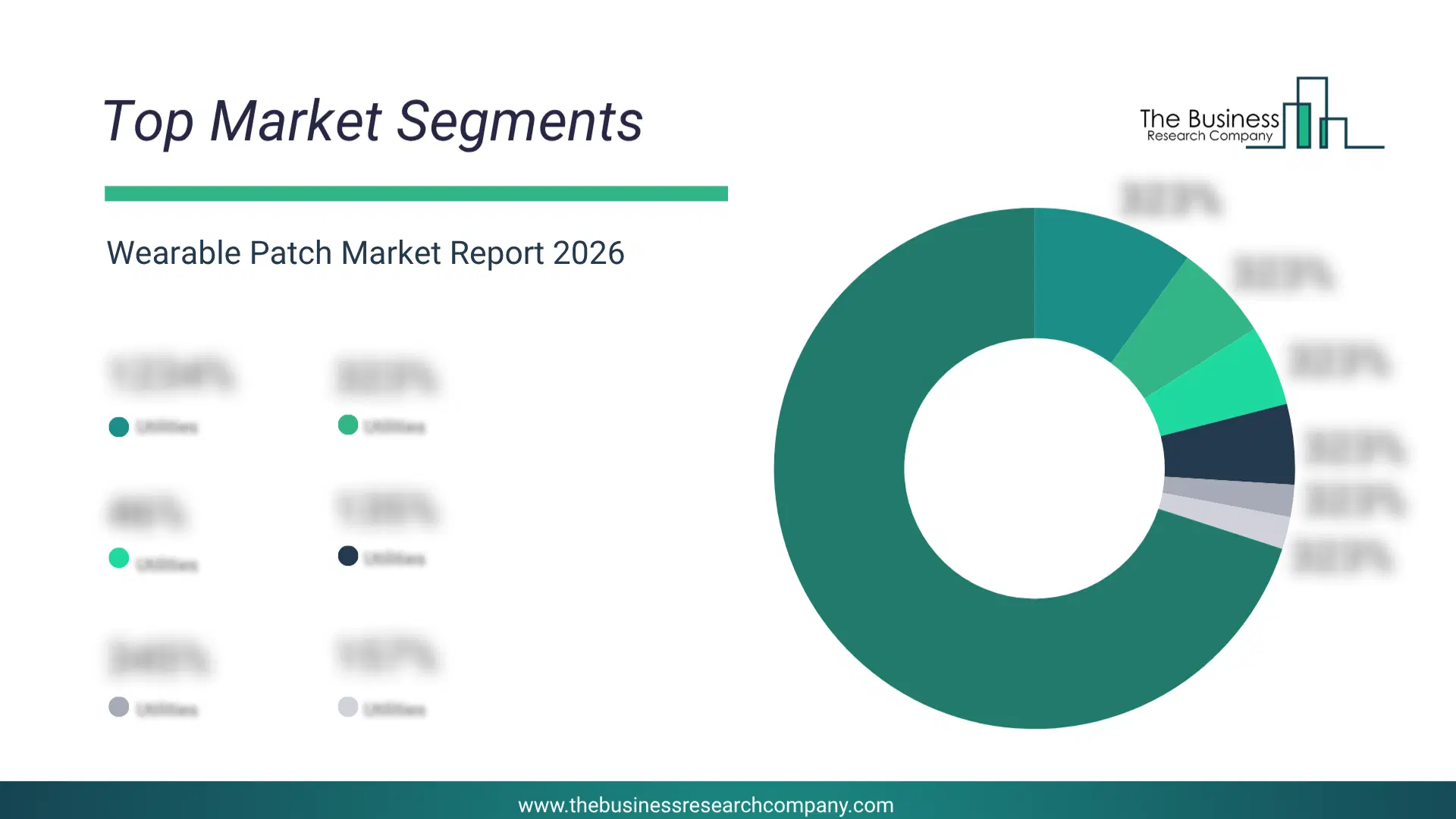
1) By Product Type: Biometric Patches, Therapeutic Patches, Diagnostic Patches, Fitness Tracking Patches, Smart Textile Patches 2) By Technology: Biosensors, Radio-Frequency Identification (RFID) Technology, Bluetooth Connectivity, Near Field Communication (NFC), Microelectromechanical Systems (MEMS) 3) By Distribution Channel: Online Retail, Offline Retail, Direct Sales, Pharmacies, Third-Party Distributors 4) By Application: Clinical, Non-Clinical 5) By End-Use: Healthcare Providers, Individual Consumers, Fitness Centers, Research Institutions Subsegments: 1) By Biometric Patches: Heart Rate Monitoring Patches, Electrocardiogram (ECG) Patches, Blood Oxygen Level Monitoring Patches (SpO2), Temperature Monitoring Patches, Respiratory Rate Monitoring Patches 2) By Therapeutic Patches: Transdermal Drug Delivery Patches, Pain Relief Patches, Nicotine Patches, Hormone Replacement Patches, Neuromodulation Patches 3) By Diagnostic Patches: Glucose Monitoring Patches, Cardiac Monitoring Patches, Sleep Monitoring Patches, Hydration And Electrolyte Monitoring Patches, Sweat-Based Biomarker Detection Patches 4) By Fitness Tracking Patches: Activity Tracking Patches, Calorie Burn Monitoring Patches, Sleep Quality Tracking Patches, Step Count Patches, Stress And Recovery Monitoring Patches 5) By Smart Textile Patches: E-Textile Biosensor Patches, Motion Sensing Textile Patches, Pressure Sensing Textile Patches, Electromyography (EMG) Textile Patches, Temperature-Regulating Textile PatchesWhat Is The Driver Of The Wearable Patch Market?
The rise in demand for home healthcare is expected to propel the growth of the wearable patch market going forward. Home healthcare involves delivering medical and support services at a patient’s residence to treat illnesses and injuries or manage chronic health conditions. The rise in home healthcare is driven by an aging population needing ongoing care for chronic conditions, prompting demand for convenient, affordable at-home services. Wearable patches enhance home healthcare by tracking vital signs and sending real-time data to medical professionals. This allows for early issue detection, timely care, and reduced need for hospital visits. For instance, in October 2024, according to the U.S. Bureau of Labor Statistics, a US-based federal agency, home-and community-based care reached 4.3 million jobs, driven by 2.5 million workers in services for the elderly and people with disabilities and 1.8 million in home health care in 2024. Therefore, the rise in demand for home healthcare is driving the growth of the wearable patch industry.Key Players In The Global Wearable Patch Market
Major companies operating in the wearable patch market are Samsung Electronics Co Ltd, Johnson And Johnson, Abbott Laboratories, Koninklijke Philips NV, GE Healthcare, VitalConnect Inc, LifeSignals Group Inc, greenTEG AG, Tapecon Inc, Molex LLC, DuPont de Nemours Inc, VARTA AG, 2M Engineering Ltd, Beneli AB, GENTAG Inc, Kenzen Inc, Nemaura Medical Inc, PKvitality SAS, Hudson Medical Innovations, BioIntelliSense Inc, MC10 Inc, iRhythm Technologies Wearable Division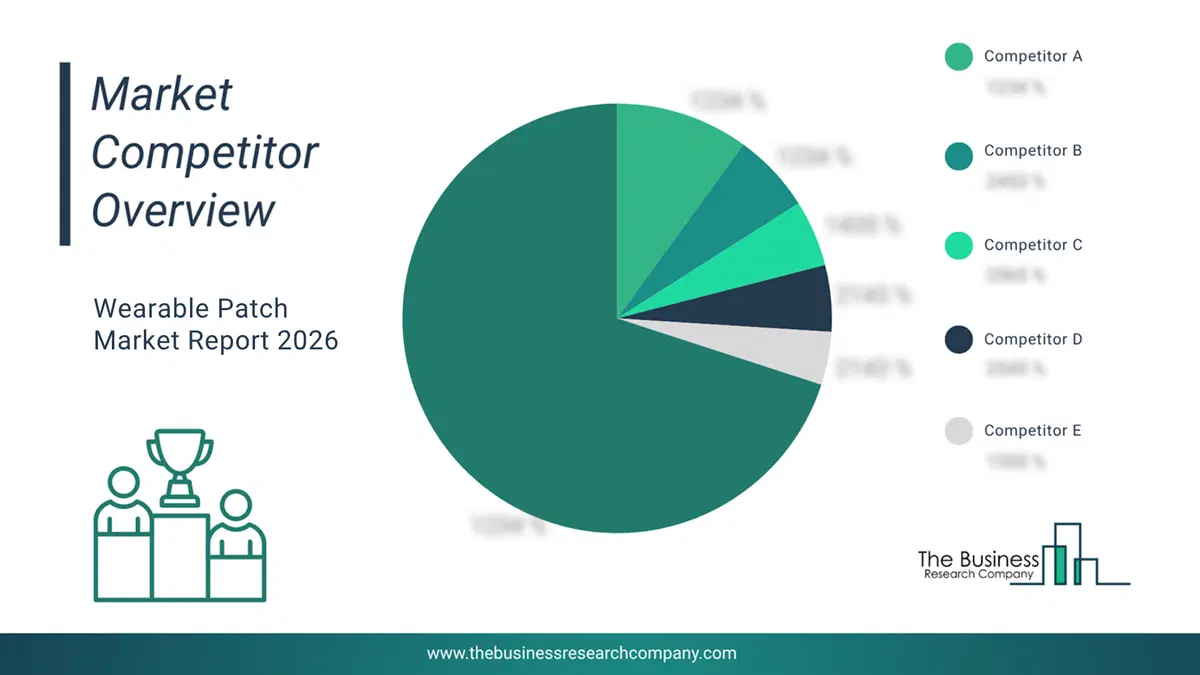
This chart is for illustrative purposes; the full report includes a detailed competitor analysis and comprehensive overview of the top 10 companies in the market.
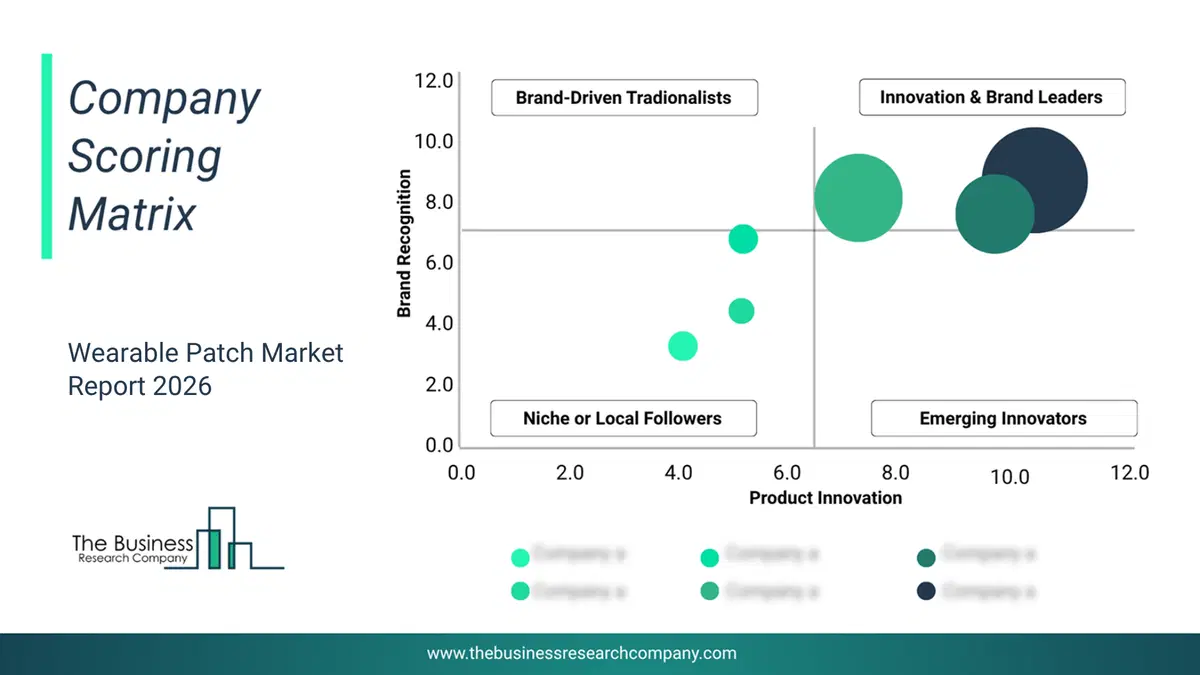
This chart maps companies by product innovation and brand strength, with bubble size indicating relative revenue, helping identify market leaders, challengers, and niche players. This is an illustrative chart; the full report provides a complete and accurate competitive analysis.
Global Wearable Patch Market Trends and Insights
Major companies operating in the wearable patches market are focused on developing advanced products, such as ambulatory cardiac monitoring wearable patches, to enhance remote patient care and support timely medical interventions. Ambulatory cardiac monitoring wearable patches are compact, skin-adhering devices that track heart activity continuously during a patient’s daily routine. For instance, in May 2023, Vivalink, Inc., a US-based digital health technology solutions provider, launched the Live Stream Wearable Electrocardiogram (ECG) Patch, a multi-parameter sensing wearable patch device. It enables continuous, real-time electrocardiogram monitoring for up to 14 days. It allows clinicians to remotely track patient cardiac activity anytime and anywhere, thus reducing both patient and clinician burden for extended ambulatory monitoring.What Are Latest Mergers And Acquisitions In The Wearable Patch Market?
In June 2025, PharmaSens AG, a Switzerland-based company that develops next-generation insulin patch pump systems, partnered with SiBionics to develop the niia signature, an all-in-one wearable insulin patch pump that integrates insulin delivery with real-time glucose sensing. Through this partnership, PharmaSens AG and SiBionics aim to simplify diabetes management by combining their respective strengths in insulin-delivery innovation and continuous glucose monitoring technology. SiBionics is a China-based medical device company that provides continuous glucose monitoring technologies, intelligent biosensors, and user-friendly software solutions.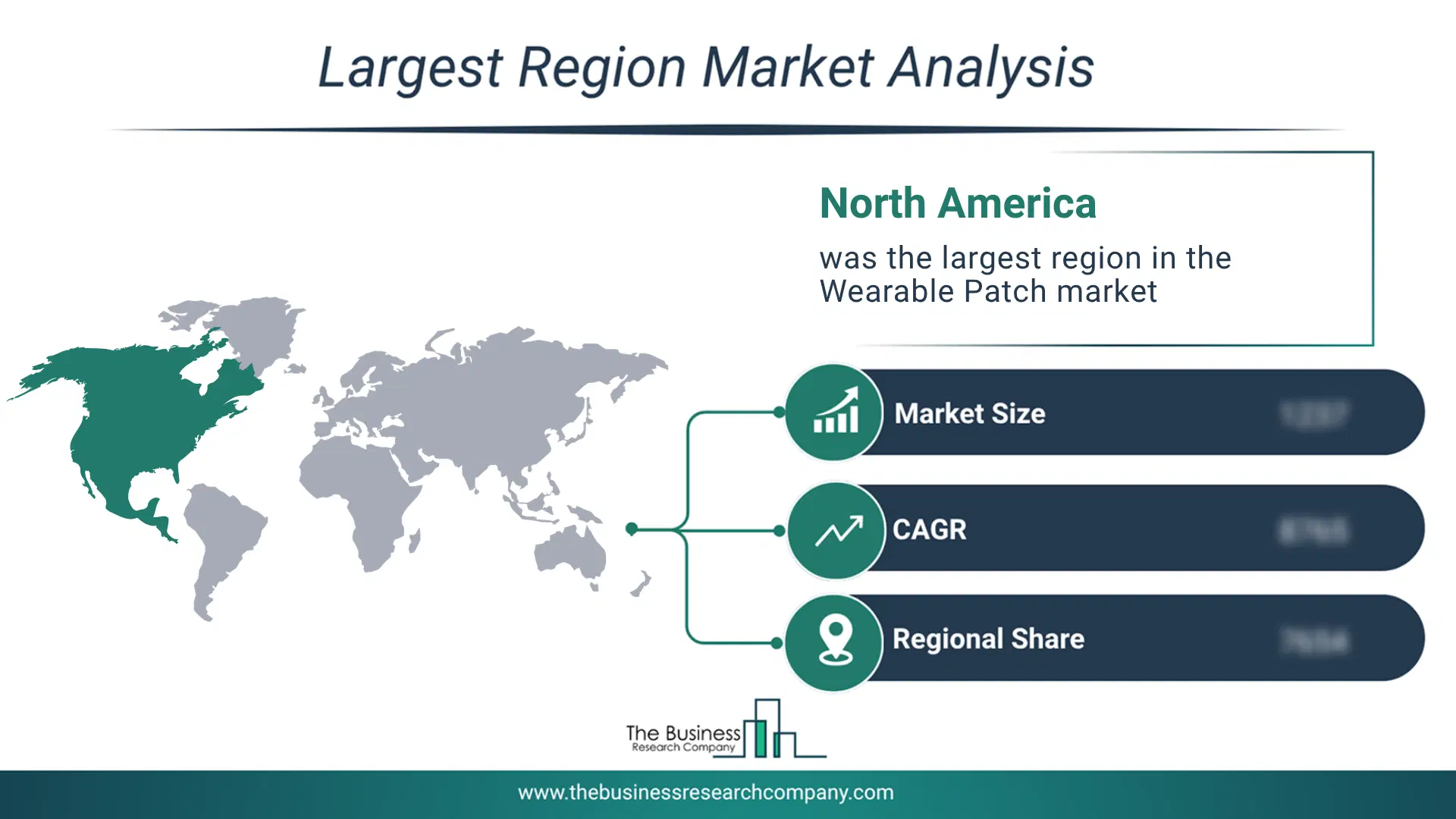
Regional Outlook
North America was the largest region in the wearable patch market in 2025. The regions covered in this market report are Asia-Pacific, South East Asia, Western Europe, Eastern Europe, North America, South America, Middle East, Africa. The countries covered in this market report are Australia, Brazil, China, France, Germany, India, Indonesia, Japan, Taiwan, Russia, South Korea, UK, USA, Canada, Italy, SpainWhat Defines the Wearable Patch Market?
The wearable patch market consists of revenues earned by entities by providing services such as health monitoring, chronic disease management, fitness and wellness tracking, and remote patient monitoring. The market value includes the value of related goods sold by the service provider or included within the service offering. The wearable patch market includes sales of electrostimulation patches, UV monitoring patches, hydration monitoring patches, and wound care patches. Values in this market are ‘factory gate’ values, that is, the value of goods sold by the manufacturers or creators of the goods, whether to other entities (including downstream manufacturers, wholesalers, distributors, and retailers) or directly to end customers. The value of goods in this market includes related services sold by the creators of the goods.How is Market Value Defined and Measured?
The market value is defined as the revenues that enterprises gain from the sale of goods and/or services within the specified market and geography through sales, grants, or donations in terms of the currency (in USD unless otherwise specified). The revenues for a specified geography are consumption values that are revenues generated by organizations in the specified geography within the market, irrespective of where they are produced. It does not include revenues from resales along the supply chain, either further along the supply chain or as part of other products.
This chart presents market attractiveness based on a quantitative evaluation of growth, competition, strategic alignment, and risk, offering a clear view of opportunity areas for decision-making. This chart is for illustrative purposes; the full report contains the complete analysis.

This chart highlights the Total Addressable Market (TAM) by estimating the maximum revenue opportunity using an assumption-driven approach, supporting strategic planning and opportunity sizing across markets. The chart is illustrative; the full report provides a more comprehensive analysis.
What Key Data and Analysis Are Included in the Wearable Patch Market Report 2026?
The wearable patch market research report is one of a series of new reports from The Business Research Company that provides market statistics, including industry global market size, regional shares, competitors with the market share, detailed market segments, market trends and opportunities, and any further data you may need to thrive in the wearable patch industry. The market research report delivers a complete perspective of everything you need, with an in-depth analysis of the current and future state of the industry.Wearable Patch Market Report Forecast Analysis
| Report Attribute | Details |
|---|---|
| Market Size Value In 2026 | $14.13 billion |
| Revenue Forecast In 2030 | $22.17 billion |
| Growth Rate | CAGR of 11.9% from 2026 to 2030 |
| Base Year For Estimation | 2025 |
| Actual Estimates/Historical Data | 2020-2025 |
| Forecast Period | 2026 - 2030 |
| Market Representation | Revenue in USD Billion and CAGR from 2026 to 2030 |
| Segments Covered | Product Type, Technology, Distribution Channel, Application, End-Use |
| Regional Scope | Asia-Pacific, Western Europe, Eastern Europe, North America, South America, Middle East, Africa |
| Country Scope | The countries covered in the report are Australia, Brazil, China, France, Germany, India, Indonesia, Japan, Taiwan, Russia, South Korea, UK, USA, Canada, Italy, Spain. |
| Key Companies Profiled | Samsung Electronics Co Ltd, Johnson And Johnson, Abbott Laboratories, Koninklijke Philips NV, GE Healthcare, VitalConnect Inc, LifeSignals Group Inc, greenTEG AG, Tapecon Inc, Molex LLC, DuPont de Nemours Inc, VARTA AG, 2M Engineering Ltd, Beneli AB, GENTAG Inc, Kenzen Inc, Nemaura Medical Inc, PKvitality SAS, Hudson Medical Innovations, BioIntelliSense Inc, MC10 Inc, iRhythm Technologies Wearable Division |
| Customization Scope | Request for Customization |
| Pricing And Purchase Options | Explore Purchase Options |