
Weight Loss Drug Biosimilar Market Report 2026
Global Outlook – By Reference Drug ( Semaglutide Biosimilar, Liraglutide Biosimilar, Tirzepatide Biosimilar), By Formulation ( Injectable, Oral), By Application ( Weight Loss In Diabetic Patients, Weight Loss In Non Diabetic Obese Patients, Weight Management In Overweight Individuals With Comorbidities), By End User ( Hospital And Clinic, Retail And Online Pharmacy, Government Health Programs, Insurance Covered Programs) – Market Size, Trends, Strategies, and Forecast to 2030
Weight Loss Drug Biosimilar Market Report 2026 Market Overview
• Weight Loss Drug Biosimilar Market Report 2026 market size has reached to $1.21 billion in 2025 • Expected to grow to $3.88 billion in 2030 at a compound annual growth rate (CAGR) of 26.2% • Growth Driver: Growing Prevalence Of Obesity And Overweight Populations Fueling The Growth Of The Market Due To Rising Demand For Affordable And Effective Anti-Obesity Therapies • Market Trend: Expanding Access To Affordable Injectable Therapies For Chronic Weight Management • North America was the largest region in 2025 and Asia-Pacific is the fastest growing region.What Is Covered Under Weight Loss Drug Biosimilar Market?
Weight loss drug biosimilars are biologic medicines developed to closely match existing branded weight management biologic therapies in terms of safety, efficacy, quality, and clinical performance after the original product’s patent or exclusivity period expires. These drugs are manufactured using living cells and advanced biotechnological processes, commonly targeting metabolic pathways such as GLP-1 receptor activity to support obesity management and long-term weight reduction. The main reference drugs of weight loss drug biosimilar include semaglutide biosimilar, liraglutide biosimilar, and tirzepatide biosimilar. Semaglutide biosimilar refers to a biologically similar version of semaglutide developed to provide comparable efficacy, safety, and therapeutic outcomes for weight management treatment. These products are available in formulations such as injectable and oral forms. They are used in applications including weight loss in diabetic patients, weight loss in non diabetic obese patients, and weight management in overweight individuals with comorbidities and various end users include hospital and clinic, retail and online pharmacy, government health programs, and insurance covered programs.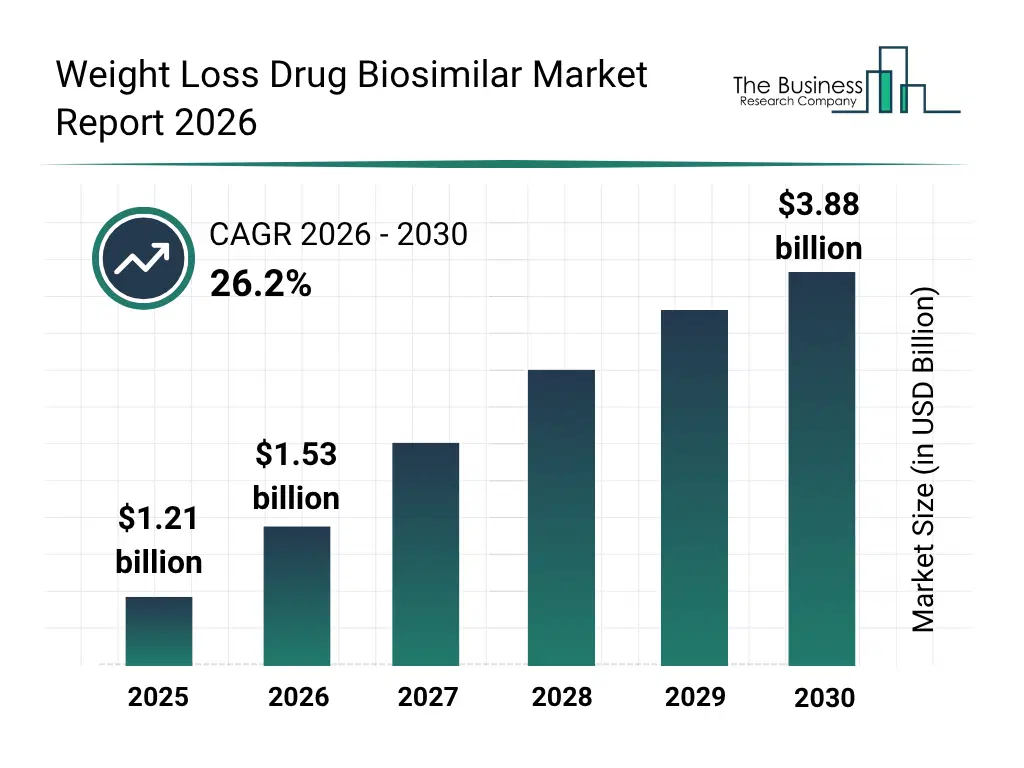
What Is The Weight Loss Drug Biosimilar Market Size and Share 2026?
The weight loss drug biosimilar market size has grown exponentially in recent years. It will grow from $1.21 billion in 2025 to $1.53 billion in 2026 at a compound annual growth rate (CAGR) of 26.6%. The growth in the historic period can be attributed to dominance of branded glp-1 therapies, rising global obesity prevalence, limited biosimilar regulatory frameworks, high biologics production costs, strong physician preference for originator drugs.What Is The Weight Loss Drug Biosimilar Market Growth Forecast?
The weight loss drug biosimilar market size is expected to see exponential growth in the next few years. It will grow to $3.88 billion in 2030 at a compound annual growth rate (CAGR) of 26.2%. The growth in the forecast period can be attributed to expiry of key biologic patents, expansion of biosimilar development pipelines, increasing healthcare cost containment policies, rising adoption in emerging markets, growth of long-term metabolic disease management programs. Major trends in the forecast period include GLP-1 biosimilar patent expiration driven market entry acceleration, intensifying price competition and biosimilar tendering in obesity therapeutics, expanding regulatory harmonization for biosimilar interchangeability approvals, growth of cold chain dependent biologics distribution networks for metabolic injectables, increasing payer and formulary driven access restrictions for branded weight loss biologics.
Global Weight Loss Drug Biosimilar Market Segmentation
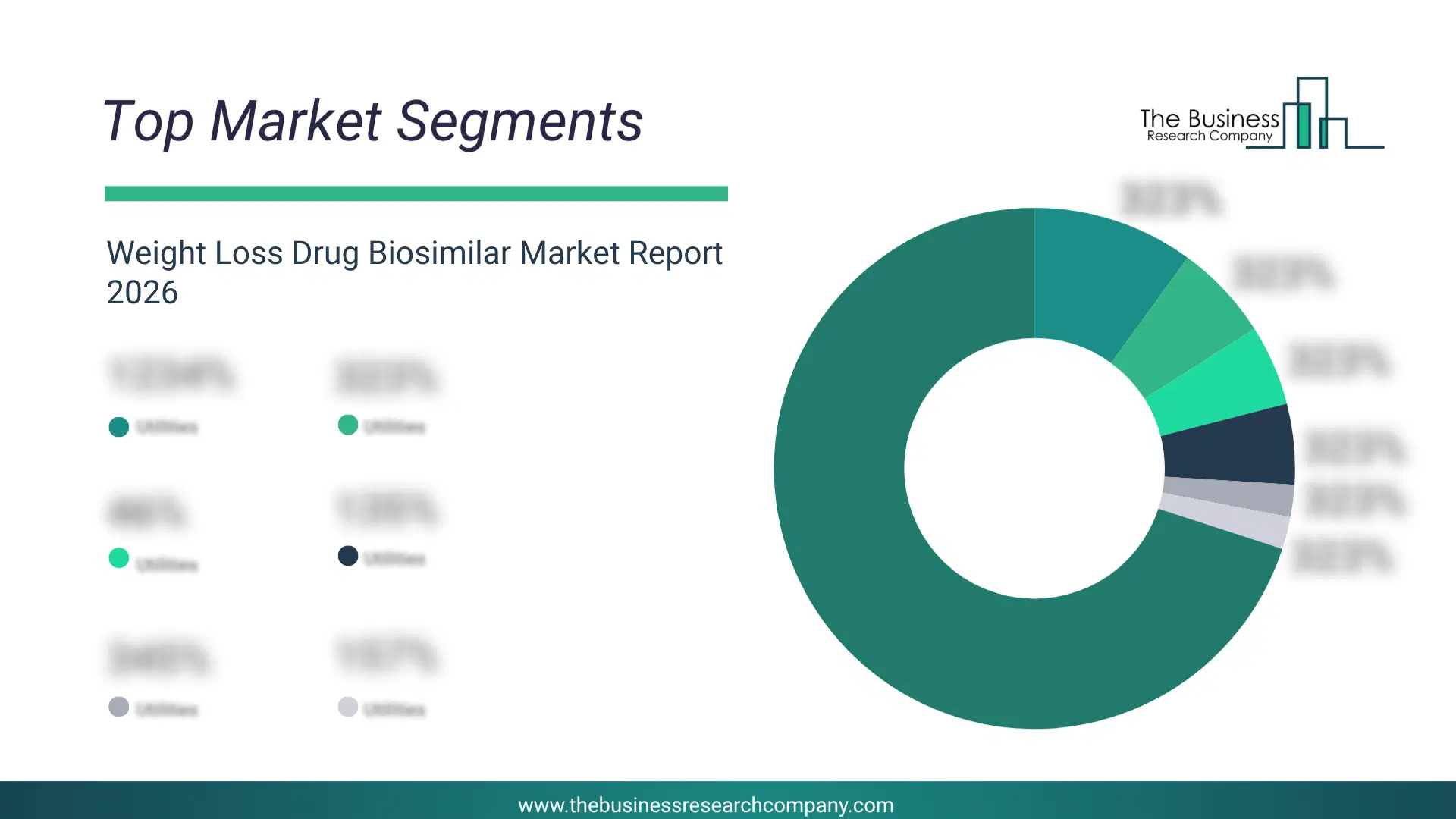
1) By Reference Drug: Semaglutide Biosimilar, Liraglutide Biosimilar, Tirzepatide Biosimilar 2) By Formulation: Injectable, Oral 3) By Application: Weight Loss In Diabetic Patients, Weight Loss In Non Diabetic Obese Patients, Weight Management In Overweight Individuals With Comorbidities 4) By End User: Hospital And Clinic, Retail And Online Pharmacy, Government Health Programs, Insurance Covered Programs Subsegments: 1) By Semaglutide Biosimilar: Subcutaneous Injection, Oral Tablet, Long Acting Formulation, High Concentration Formulation 2) By Liraglutide Biosimilar: Subcutaneous Injection, Multi Dose Pen Injector, Pre Filled Syringe, Extended Stability Formulation 3) By Tirzepatide Biosimilar: Subcutaneous Injection, Single Dose Auto Injector, Multi Dose Pen Injector, High Strength FormulationWhat Is The Driver Of The Weight Loss Drug Biosimilar Market?
The growing prevalence of obesity is expected to propel the growth of the weight loss drug biosimilar market going forward. Obesity is a medical condition characterized by excessive body fat accumulation that increases the risk of health problems such as diabetes, heart disease, and hypertension. The rise in obesity and overweight populations is primarily driven by increased consumption of high-calorie processed foods combined with reduced physical activity. Weight loss drug biosimilars are used to manage obesity by mimicking approved anti-obesity biologic therapies that regulate appetite, improve satiety, and support metabolic control to reduce body weight. For instance, in May 2025, according to the Office for Health Improvement and Disparities, a UK-based government department, reflecting a continued upward trend, an estimated 64.5 percent of adults in England were overweight or living with obesity in 2023–2024, up from 64.0% in 2022–2023. Therefore, the growing prevalence of obesity is driving the growth of the weight loss drug biosimilar industry.Key Players In The Global Weight Loss Drug Biosimilar Market
Major companies operating in the weight loss drug biosimilar market report are Alembic Pharmaceuticals Limited, Alkem Laboratories Limited, Alvotech, Amgen Inc., Biocon Limited, Celltrion Inc., Cipla Limited, Dr. Reddy’s Laboratories Limited, Emcure Pharmaceuticals Limited, Eris Lifesciences Limited, Glenmark Pharmaceuticals Limited, Hetero Labs Limited, Huadong Medicine, Jiuyuan Genetic Biopharmaceutical, Lupin Limited, Mankind Pharma, Oncosimis Biotech, Samsung Bioepis, Sandoz Group AG, Sun Pharmaceutical Industries Limited, Teva Pharmaceutical Industries Ltd., Torrent Pharmaceuticals Limited, Viatris Inc., Wockhardt, Zydus Lifesciences Limited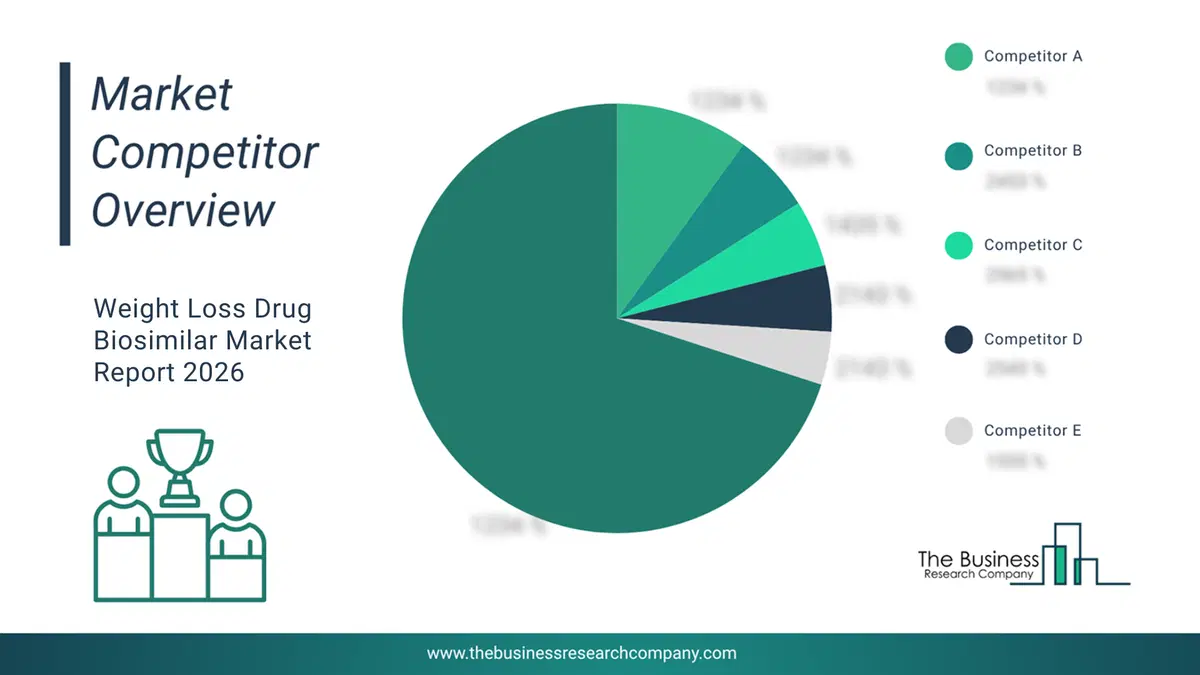
This chart is for illustrative purposes; the full report includes a detailed competitor analysis and comprehensive overview of the top 10 companies in the market.
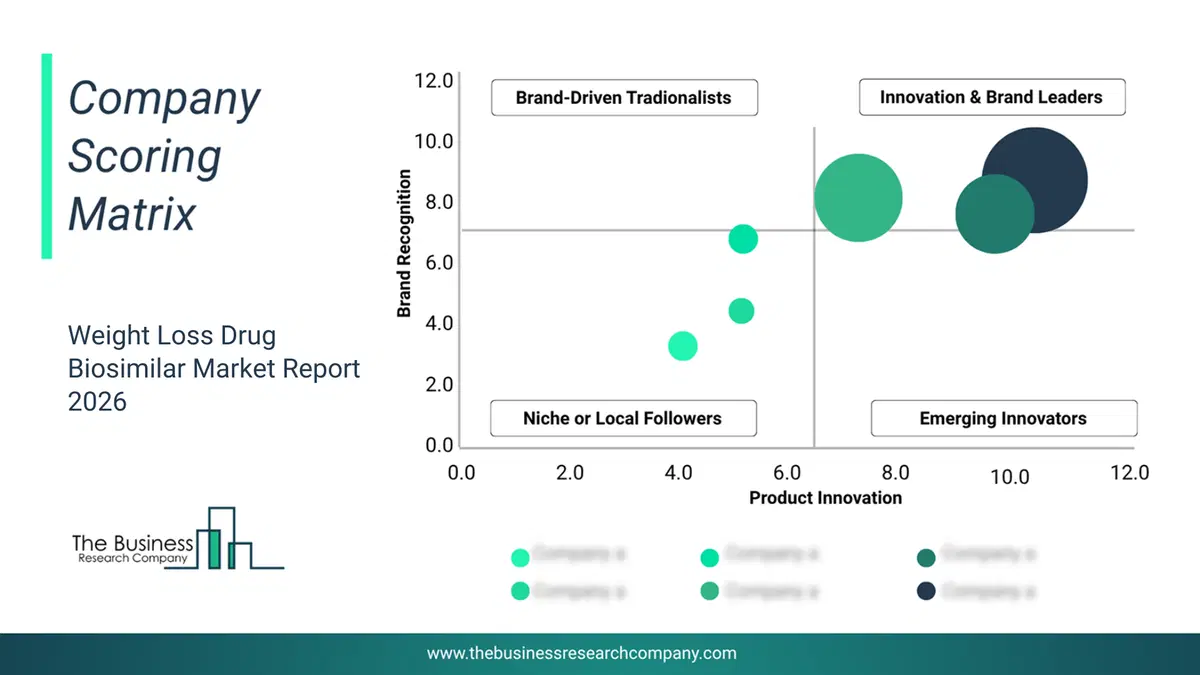
This chart maps companies by product innovation and brand strength, with bubble size indicating relative revenue, helping identify market leaders, challengers, and niche players. This is an illustrative chart; the full report provides a complete and accurate competitive analysis.
Global Weight Loss Drug Biosimilar Market Trends and Insights
Major companies operating in the weight loss drug biosimilar market are focusing on expanding access to affordable GLP-1–based therapies, strengthening partnerships for drug development, increasing dosage and formulation flexibility, and targeting the growing prevalence of obesity and lifestyle-related metabolic disorders through scalable and cost-effective treatment solutions in emerging and developed markets. Affordable GLP-1–based therapies are treatments that utilize glucagon-like peptide-1 receptor agonists to manage conditions such as type 2 diabetes and obesity while remaining financially accessible to a broader patient population. For instance, in December 2024, Emcure Pharmaceuticals Limited, an India-based pharmaceutical company, has launched Poviztra in India, marking its entry into the rapidly expanding obesity and weight-management treatment. The injectable therapy, a once-weekly GLP-1 medication, is developed in partnership with Novo Nordisk, a Denmark-based healthcare company, and is positioned as a more affordable alternative to existing branded weight-loss drugs. It is available in multiple dosage strengths and is designed to support chronic weight management alongside diet and lifestyle changes. The launch strengthens Emcure’s presence in cardiometabolic care and expands access to advanced obesity treatments in India, where demand for medical weight-loss solutions is rising quickly due to increasing lifestyle-related health concerns.What Are Latest Mergers And Acquisitions In The Weight Loss Drug Biosimilar Market?
In April 2024, Biocon Biologics, an India-based biosimilars company, partnered with Biomm SA, to commercialize semaglutide for the treatment of type 2 diabetes in Brazil. Under the agreement, Biocon will handle the development, production, and supply of the drug, while Biomm will oversee regulatory submissions and lead the product’s market launch and commercialization activities in Brazil. Biomm SA is a Brazil-based biotechnology and biopharmaceutical company.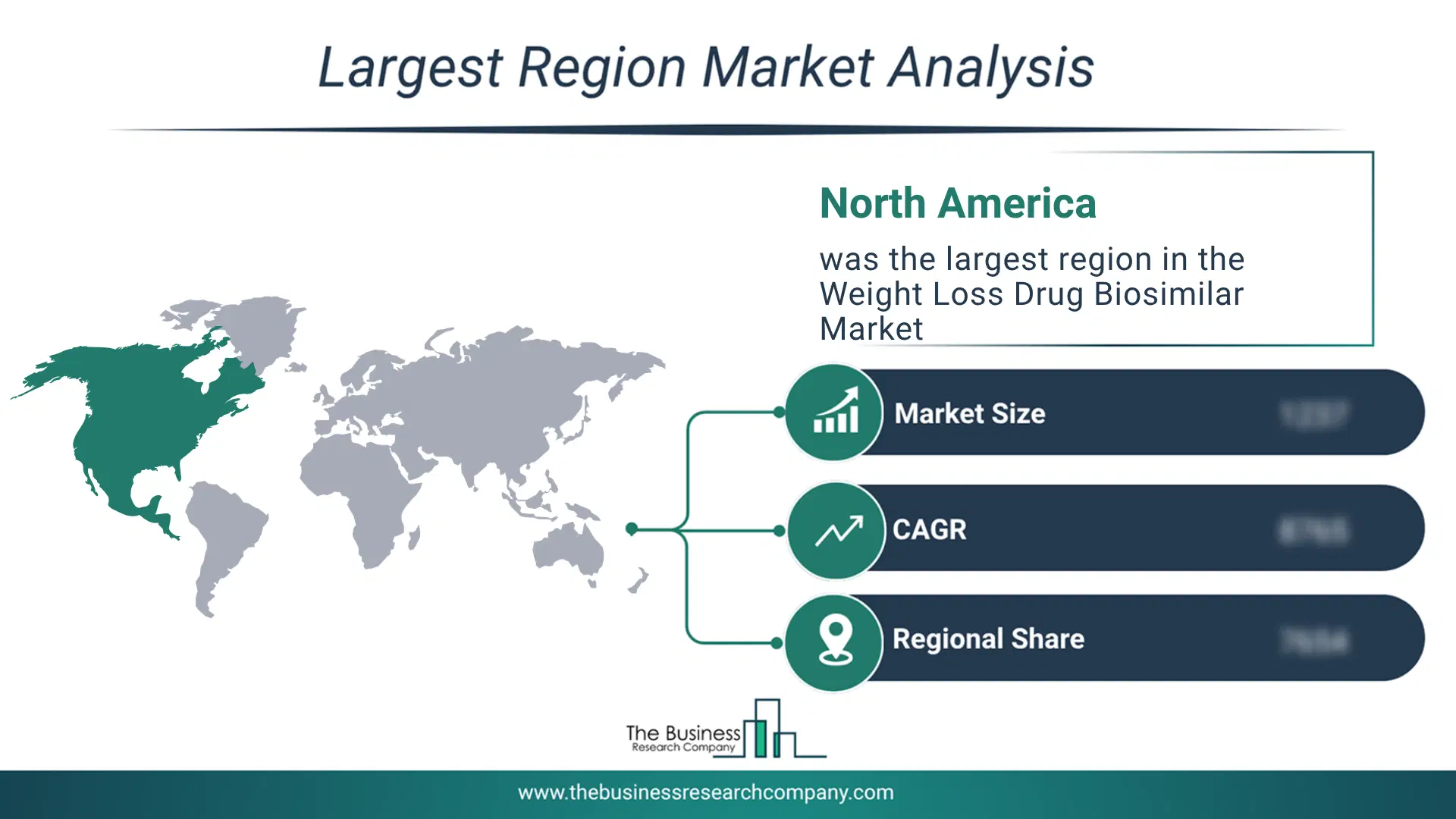
Regional Outlook
North America was the largest region in the weight loss drug biosimilar market in 2025. Asia-Pacific is expected to be the fastest-growing region in the forecast period. The regions covered in this market report are Asia-Pacific, South East Asia, Western Europe, Eastern Europe, North America, South America, Middle East, Africa. The countries covered in this market report are Australia, Brazil, China, France, Germany, India, Indonesia, Japan, Taiwan, Russia, South Korea, UK, USA, Canada, Italy, Spain.What Defines the Weight Loss Drug Biosimilar Market?
The weight loss drug biosimilars market consists of sales of semaglutide biosimilar injection, liraglutide biosimilar formulation, tirzepatide biosimilar candidate, exenatide biosimilar injection and amylin analog biosimilar. Values in this market are ‘factory gate’ values, that is the value of goods sold by the manufacturers or creators of the goods, whether to other entities (including downstream manufacturers, wholesalers, distributors and retailers) or directly to end customers. The value of goods in this market includes related services sold by the creators of the goods.How is Market Value Defined and Measured?
The market value is defined as the revenues that enterprises gain from the sale of goods and/or services within the specified market and geography through sales, grants, or donations in terms of the currency (in USD unless otherwise specified). The revenues for a specified geography are consumption values that are revenues generated by organizations in the specified geography within the market, irrespective of where they are produced. It does not include revenues from resales along the supply chain, either further along the supply chain or as part of other products.
This chart presents market attractiveness based on a quantitative evaluation of growth, competition, strategic alignment, and risk, offering a clear view of opportunity areas for decision-making. This chart is for illustrative purposes; the full report contains the complete analysis.

This chart highlights the Total Addressable Market (TAM) by estimating the maximum revenue opportunity using an assumption-driven approach, supporting strategic planning and opportunity sizing across markets. The chart is illustrative; the full report provides a more comprehensive analysis.
What Key Data and Analysis Are Included in the Weight Loss Drug Biosimilar Market Report 2026?
The weight loss drug biosimilar market research report is one of a series of new reports from The Business Research Company that provides market statistics, including industry global market size, regional shares, competitors with the market share, detailed market segments, market trends and opportunities, and any further data you may need to thrive in the weight loss drug biosimilar industry. The market research report delivers a complete perspective of everything you need, with an in-depth analysis of the current and future state of the industry.Weight Loss Drug Biosimilar Market Report Forecast Analysis
| Report Attribute | Details |
|---|---|
| Market Size Value In 2026 | $1.53 billion |
| Revenue Forecast In 2030 | $3.88 billion |
| Growth Rate | CAGR of 26.2% from 2026 to 2030 |
| Base Year For Estimation | 2025 |
| Actual Estimates/Historical Data | 2020-2025 |
| Forecast Period | 2026 - 2030 |
| Market Representation | Revenue in USD Billion and CAGR from 2026 to 2030 |
| Segments Covered | Reference Drug, Formulation, Application, End User |
| Regional Scope | Asia-Pacific, Western Europe, Eastern Europe, North America, South America, Middle East, Africa |
| Country Scope | The countries covered in the report are Australia, Brazil, China, France, Germany, India, Indonesia, Japan, Taiwan, Russia, South Korea, UK, USA, Canada, Italy, Spain. |
| Key Companies Profiled | Alembic Pharmaceuticals Limited, Alkem Laboratories Limited, Alvotech, Amgen Inc., Biocon Limited, Celltrion Inc., Cipla Limited, Dr. Reddy’s Laboratories Limited, Emcure Pharmaceuticals Limited, Eris Lifesciences Limited, Glenmark Pharmaceuticals Limited, Hetero Labs Limited, Huadong Medicine, Jiuyuan Genetic Biopharmaceutical, Lupin Limited, Mankind Pharma, Oncosimis Biotech, Samsung Bioepis, Sandoz Group AG, Sun Pharmaceutical Industries Limited, Teva Pharmaceutical Industries Ltd., Torrent Pharmaceuticals Limited, Viatris Inc., Wockhardt, Zydus Lifesciences Limited |
| Customization Scope | Request for Customization |
| Pricing And Purchase Options | Explore Purchase Options |