
Wildlife Health Market Report 2026
Global Outlook – By Animal Type (Mammals, Birds, Fish, Reptiles, Amphibians), By Product (Medicine, Equipment And Consumables), By Route Of Administration (Oral, Injectable, Other Routes Of Administration), By End-User (Zoos, Wildlife Sanctuaries, Wildlife Rescue And Rehab Centers, Other End Users) – Market Size, Trends, Strategies, and Forecast to 2030
Wildlife Health Market Overview
• Wildlife Health market size has reached to $2.74 billion in 2025 • Expected to grow to $4.53 billion in 2030 at a compound annual growth rate (CAGR) of 10.7% • Growth Driver: Wildlife Conservation Measures And Funding Initiatives Propel Growth In The Wildlife Health Market • Market Trend: Companies Embracing Technological Innovations • North America was the largest region in 2025.What Is Covered Under Wildlife Health Market?
Wildlife health refers to an animal's physical, behavioral, and social health at the level of its individual, population, and more extensive ecosystem, as well as its adaptability to change. Wildlife health is concerned with the various stressors that impact wildlife. The main types of wildlife health are mammals, birds, fish, reptiles, and amphibians. Mammals refer to any member of the vertebrate animal family whose young are fed by the mother's milk, which comes from particular mammary glands. The product types are medicine, equipment and consumables with various routes of administration such as oral, injectable, and others. The end users are zoos, wildlife sanctuaries, wildlife rescue and rehab centers, and others.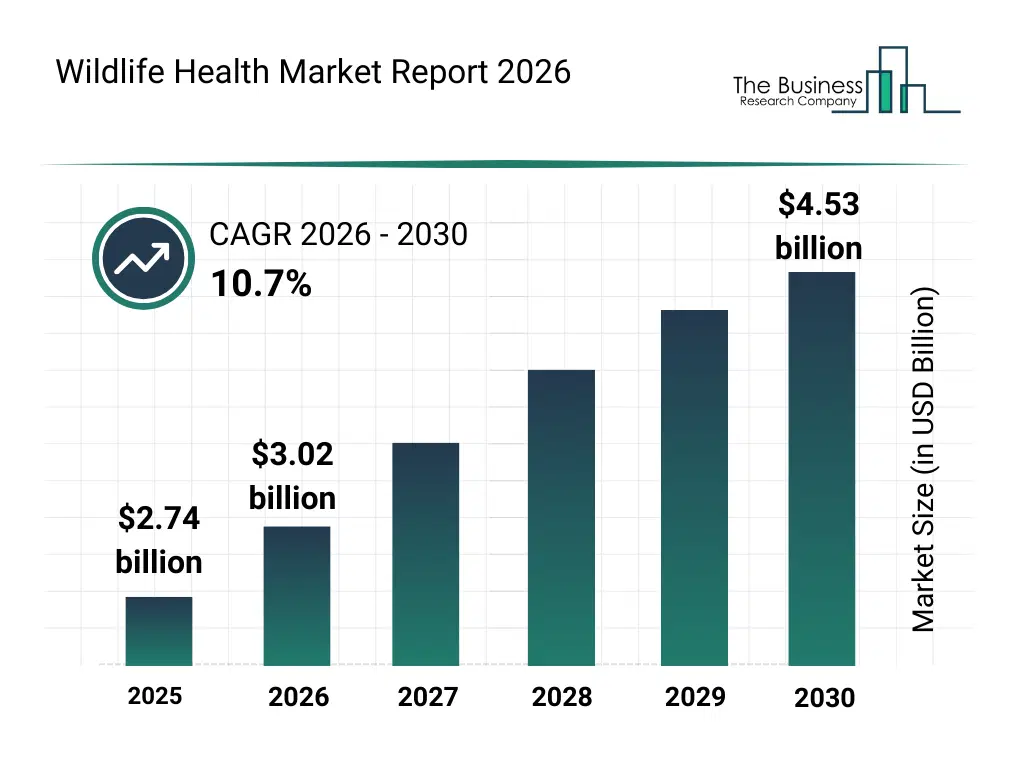
What Is The Wildlife Health Market Size and Share 2026?
The wildlife health market size has grown rapidly in recent years. It will grow from $2.74 billion in 2025 to $3.02 billion in 2026 at a compound annual growth rate (CAGR) of 10.0%. The growth in the historic period can be attributed to rising incidences of wildlife diseases, increased establishment of zoos and wildlife sanctuaries, expansion of veterinary interventions for mammals and birds, development of specialized wildlife medicines, growing awareness about conservation and animal welfare.What Is The Wildlife Health Market Growth Forecast?
The wildlife health market size is expected to see rapid growth in the next few years. It will grow to $4.53 billion in 2030 at a compound annual growth rate (CAGR) of 10.7%. The growth in the forecast period can be attributed to advancements in wildlife medicine and therapeutics, adoption of digital monitoring and tracking tools, increasing government support for wildlife health programs, growing ecotourism and conservation initiatives, integration of precision medicine in wildlife healthcare. Major trends in the forecast period include increased focus on wildlife disease surveillance, adoption of specialized veterinary medicines for wildlife, expansion of wildlife rescue and rehabilitation programs, growing demand for habitat health and conservation monitoring, use of injectable and oral therapies for diverse species.
Global Wildlife Health Market Segmentation
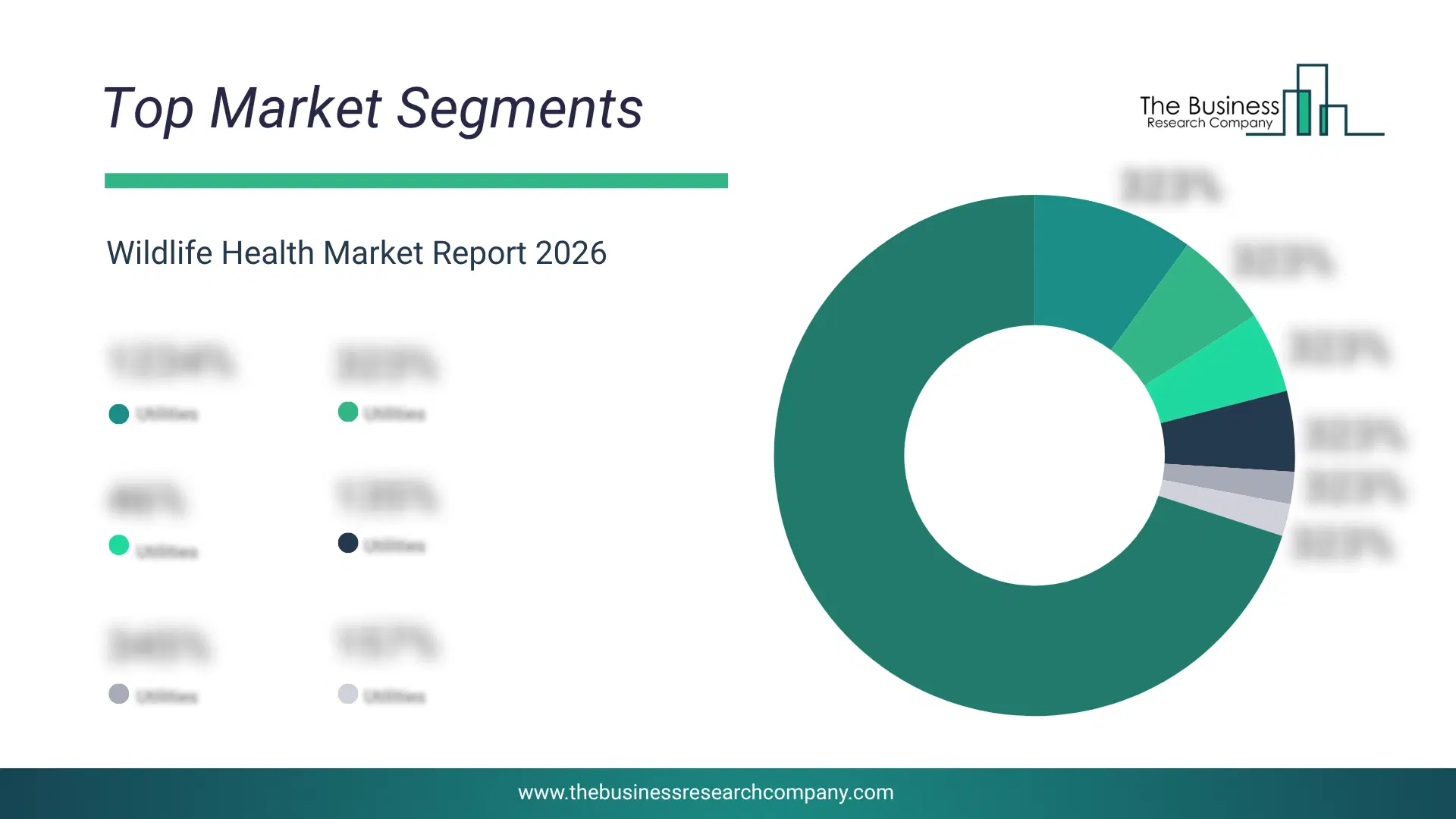
1) By Animal Type: Mammals, Birds, Fish, Reptiles, Amphibians 2) By Product: Medicine, Equipment And Consumables 3) By Route Of Administration: Oral, Injectable, Other Routes Of Administration 4) By End-User: Zoos, Wildlife Sanctuaries, Wildlife Rescue And Rehab Centers, Other End Users Subsegments: 1) By Mammals: Large Mammals, Small Mammals 2) By Birds: Raptors, Waterfowl, Songbirds 3) By Fish: Freshwater Fish, Saltwater Fish 4) By Reptiles: Snakes, Lizards, Turtles And Tortoises 5) By Amphibians: Frogs, Salamanders, NewtsWhat Is The Driver Of The Wildlife Health Market?
Wildlife conservation measures and funding activities are expected to propel the growth of the wildlife health market going forward. Wildlife conservation measures encompass a range of strategies and actions aimed at preserving and protecting biodiversity, often requiring substantial funding activities to support habitat restoration, anti-poaching efforts, research initiatives, and community engagement for sustainable wildlife management. The wildlife health market plays a pivotal role in supporting wildlife conservation measures and funding activities by providing essential services, diagnostics, and treatments that contribute to the overall well-being of wildlife populations, thereby reinforcing the foundations for sustainable conservation efforts. For instance, in September 2023, the United States Department of the Interior, a US-based executive department of the U.S. federal government, allocated over $40.6 million in grants through the U.S. Fish and Wildlife Service, leveraging an additional $17.6 million, to 10 states and the U.S., facilitating the acquisition and protection of 7,200 acres of habitat and supporting the implementation of state programs under the Endangered Species Act for the conservation and recovery of federally listed and at-risk species on non-federal lands. Therefore, wildlife conservation measures and funding activities are driving the growth of the wildlife health industry.Key Players In The Global Wildlife Health Market
Major companies operating in the wildlife health market are Bayer AG, Novartis AG, Merck & Co Inc., Boehringer Ingelheim International GmbH, Elanco Animal Health Incorporated, IDEXX Laboratories Inc., Génia USA Inc., Orion Corporation, Virbac Group, Royal Canin, Ceva Santé Animale Group, Phibro Animal Health Corporation, Dechra Pharmaceuticals PLC, Huvepharma, Vétoquinol, Indian Immunologicals Limited, Norbrook Laboratories Limited, Heska Corporation, Biogenesis Bago, Animalcare Group plc, Pneu-Dart Inc., PetAg Inc.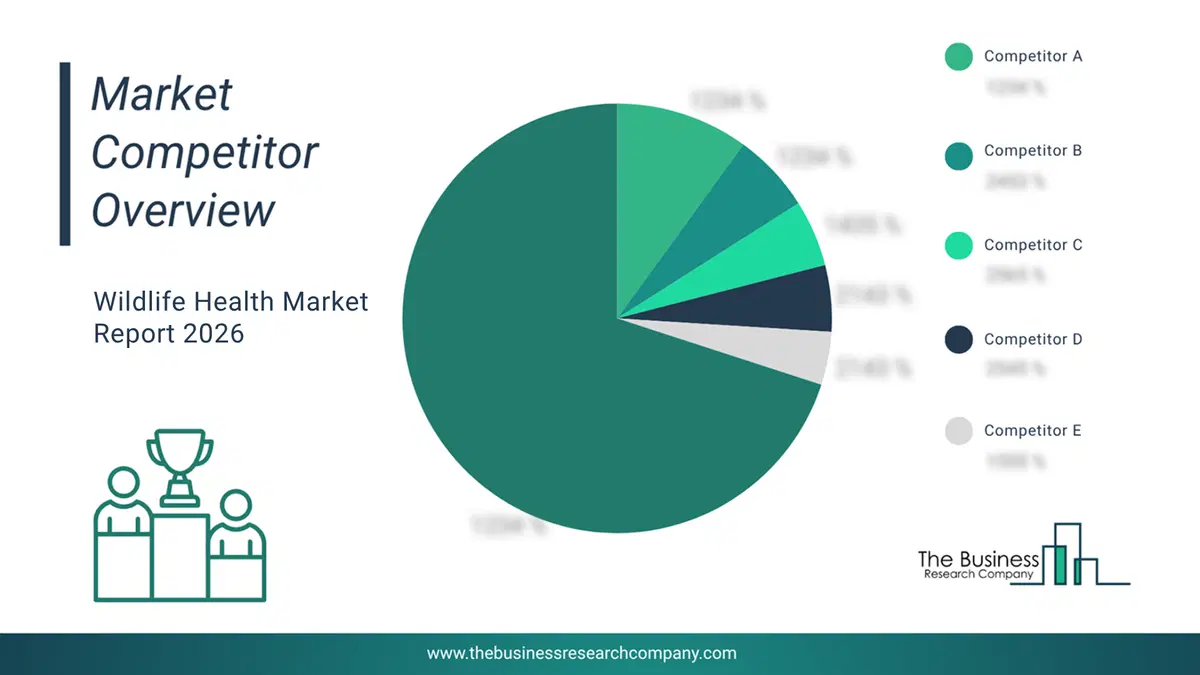
This chart is for illustrative purposes; the full report includes a detailed competitor analysis and comprehensive overview of the top 10 companies in the market.
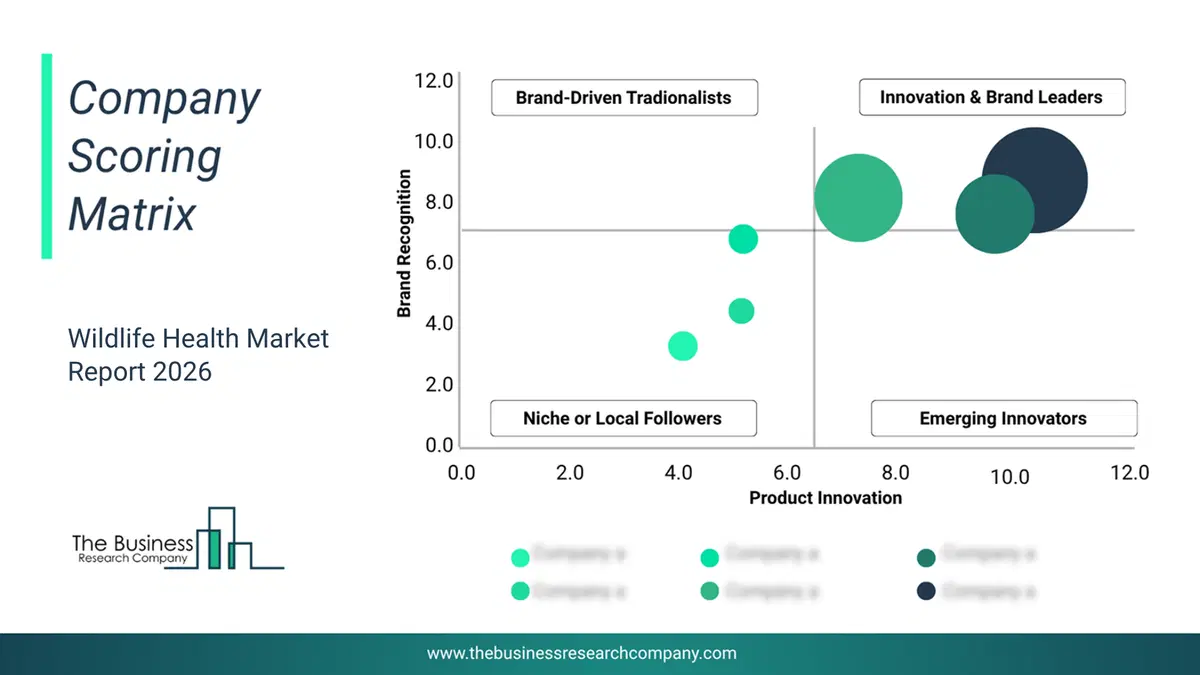
This chart maps companies by product innovation and brand strength, with bubble size indicating relative revenue, helping identify market leaders, challengers, and niche players. This is an illustrative chart; the full report provides a complete and accurate competitive analysis.
Global Wildlife Health Market Trends and Insights
Major companies operating in the wildlife health market are adopting new technologies to sustain their position in the market. New technologies refer to advanced diagnostic tools, treatment methods, and monitoring systems designed to improve wildlife health management and disease prevention. For instance, in February 2023, the U.S. Department of Agriculture (USDA), a US-based federal agency, introduced new tests in 2023 to track and detect COVID variants in wild and domestic animals. These tools help manage the spread of zoonotic diseases. The USDA Animal and Plant Health Inspection Service (APHIS) is currently implementing a $300 million provision in the American Rescue Plan Act to conduct monitoring and surveillance of susceptible animals for the COVID virus. Through this initiative, ARS, in partnership with APHIS, is conducting five research projects to improve its understanding of the virus and to help APHIS accomplish its goal of building an early warning system to potentially prevent or limit the next zoonotic disease outbreak or global pandemic.What Are Latest Mergers And Acquisitions In The Wildlife Health Market?
In November 2025, Colossal Biosciences Inc, a US‑based provider of genetic engineering, de‑extinction and conservation biology technologies, acquired Viagen Pets & Equine for an undisclosed amount. With this acquisition, Colossal Biosciences aimed to integrate advanced animal cloning and genetic technologies to support species conservation efforts and extend its capabilities in preserving endangered wildlife and companion animal genetics. Viagen Pets & Equine is a US‑based provider of animal cloning and reproductive biotechnology services, including cloning of pets and livestock and related genomic technologies that can support conservation and wildlife health research.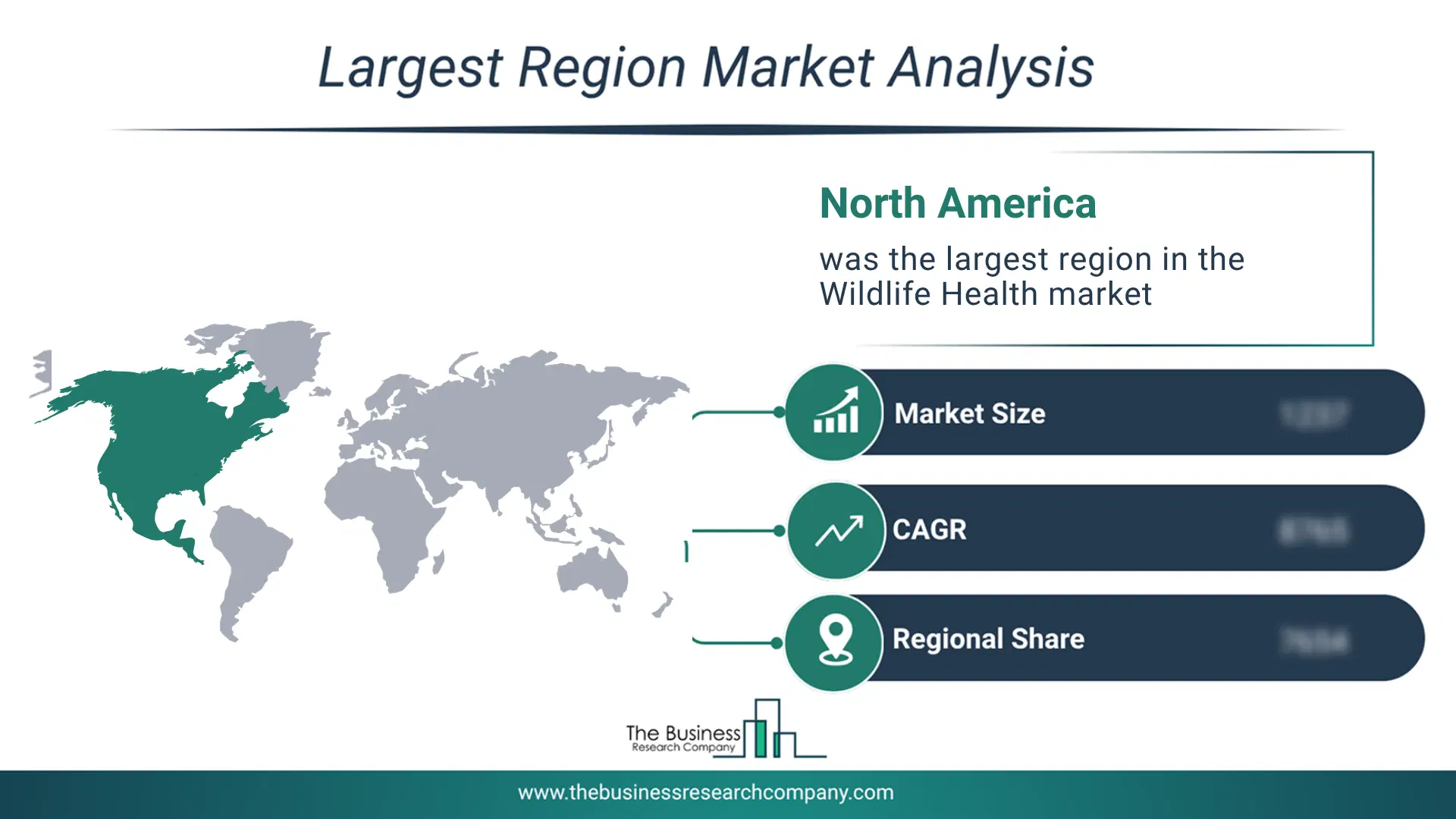
Regional Outlook
North America was the largest region in the wildlife health market in 2025. The regions covered in this market report are Asia-Pacific, South East Asia, Western Europe, Eastern Europe, North America, South America, Middle East, Africa. The countries covered in this market report are Australia, Brazil, China, France, Germany, India, Indonesia, Japan, Taiwan, Russia, South Korea, UK, USA, Canada, Italy, SpainWhat Defines the Wildlife Health Market?
The wildlife health market consists of sales of immobilizing drugs, pharmaceutical drugs, and vaccines. Values in this market are ‘factory gate’ values, that is, the value of goods sold by the manufacturers or creators of the goods, whether to other entities (including downstream manufacturers, wholesalers, distributors, and retailers) or directly to end customers. The value of goods in this market includes related services sold by the creators of the goods.How is Market Value Defined and Measured?
The market value is defined as the revenues that enterprises gain from the sale of goods and/or services within the specified market and geography through sales, grants, or donations in terms of the currency (in USD unless otherwise specified). The revenues for a specified geography are consumption values that are revenues generated by organizations in the specified geography within the market, irrespective of where they are produced. It does not include revenues from resales along the supply chain, either further along the supply chain or as part of other products.
This chart presents market attractiveness based on a quantitative evaluation of growth, competition, strategic alignment, and risk, offering a clear view of opportunity areas for decision-making. This chart is for illustrative purposes; the full report contains the complete analysis.

This chart highlights the Total Addressable Market (TAM) by estimating the maximum revenue opportunity using an assumption-driven approach, supporting strategic planning and opportunity sizing across markets. The chart is illustrative; the full report provides a more comprehensive analysis.
What Key Data and Analysis Are Included in the Wildlife Health Market Report 2026?
The wildlife health market research report is one of a series of new reports from The Business Research Company that provides market statistics, including industry global market size, regional shares, competitors with the market share, detailed market segments, market trends and opportunities, and any further data you may need to thrive in the wildlife health industry. The market research report delivers a complete perspective of everything you need, with an in-depth analysis of the current and future state of the industry.Wildlife Health Market Report Forecast Analysis
| Report Attribute | Details |
|---|---|
| Market Size Value In 2026 | $3.02 billion |
| Revenue Forecast In 2030 | $4.53 billion |
| Growth Rate | CAGR of 10.0% from 2026 to 2030 |
| Base Year For Estimation | 2025 |
| Actual Estimates/Historical Data | 2020-2025 |
| Forecast Period | 2026 - 2030 - 2030 |
| Market Representation | Revenue in USD Billion and CAGR from 2026 to 2030 |
| Segments Covered | Animal Type, Product, Route Of Administration, End-User |
| Regional Scope | Asia-Pacific, Western Europe, Eastern Europe, North America, South America, Middle East, Africa |
| Country Scope | The countries covered in the report are Australia, Brazil, China, France, Germany, India, Indonesia, Japan, Taiwan, Russia, South Korea, UK, USA, Canada, Italy, Spain. |
| Key Companies Profiled | Bayer AG, Novartis AG, Merck & Co Inc., Boehringer Ingelheim International GmbH, Elanco Animal Health Incorporated, IDEXX Laboratories Inc., Génia USA Inc., Orion Corporation, Virbac Group, Royal Canin, Ceva Santé Animale Group, Phibro Animal Health Corporation, Dechra Pharmaceuticals PLC, Huvepharma, Vétoquinol, Indian Immunologicals Limited, Norbrook Laboratories Limited, Heska Corporation, Biogenesis Bago, Animalcare Group plc, Pneu-Dart Inc., PetAg Inc. |
| Customization Scope | Request for Customization |
| Pricing And Purchase Options | Explore Purchase Options |