
Wingless-Related Integration Site (WNT) Signaling Pathway Inhibitor Market Report 2026
Global Outlook – By Drug Type (Small molecule Inhibitors, Monoclonal Antibodies, Gene Therapies), By Mechanism Of Action (Porcupine Inhibitors, Frizzled Inhibitors, ß-Catenin Inhibitors, Wingless-Related Integration Site (WNT)-Protein Inhibitors), By Stage Of Development (Pre-Clinical, Clinical Trials, Approved Products), By Indications (Cancers, Bone Diseases, Neurological Disorders), By End-Users (Pharmaceutical Companies, Research Institutions, Hospitals, Diagnostic Laboratories) – Market Size, Trends, Strategies, and Forecast to 2030
Wingless-Related Integration Site (WNT) Signaling Pathway Inhibitor Market Overview
• Wingless-Related Integration Site (WNT) Signaling Pathway Inhibitor market size has reached to $3.1 billion in 2025 • Expected to grow to $4.93 billion in 2030 at a compound annual growth rate (CAGR) of 9.7% • Growth Driver: The Rising Demand For Targeted Therapies Driving The Growth Of The Market Due To Increasing Precision And Efficacy In Cancer Treatment • Market Trend: Advancing WNT Pathway Inhibitors Through Clinical Trials For Cancer Treatment • North America was the largest region in 2025 and Asia-Pacific is the fastest growing region.What Is Covered Under Wingless-Related Integration Site (WNT) Signaling Pathway Inhibitor Market?
A wingless-related integration site (WNT) signaling pathway inhibitor is a substance or molecule that blocks or suppresses the activity of the WNT signaling pathway, which is crucial for various biological processes such as cell proliferation, differentiation, migration, and embryonic development. The main drug types of wingless-related integration site (WNT) signaling pathway inhibitors are small molecule inhibitors, monoclonal antibodies, and gene therapies. Small molecule inhibitors are low molecular weight compounds that modulate disease pathways by targeting key WNT signaling proteins to regulate cell proliferation, differentiation, and cancer progression. It works by several mechanisms of action, such as porcupine inhibitors, frizzled inhibitors, β-catenin inhibitors, and wingless-related integration site (WNT) protein inhibitors, with various stages of development, including preclinical, clinical trials, and approved products. It is applicable in several indications, such as cancers, bone diseases, and neurological disorders, and is used by various end-users, including pharmaceutical companies, research institutions, hospitals, and diagnostic laboratories.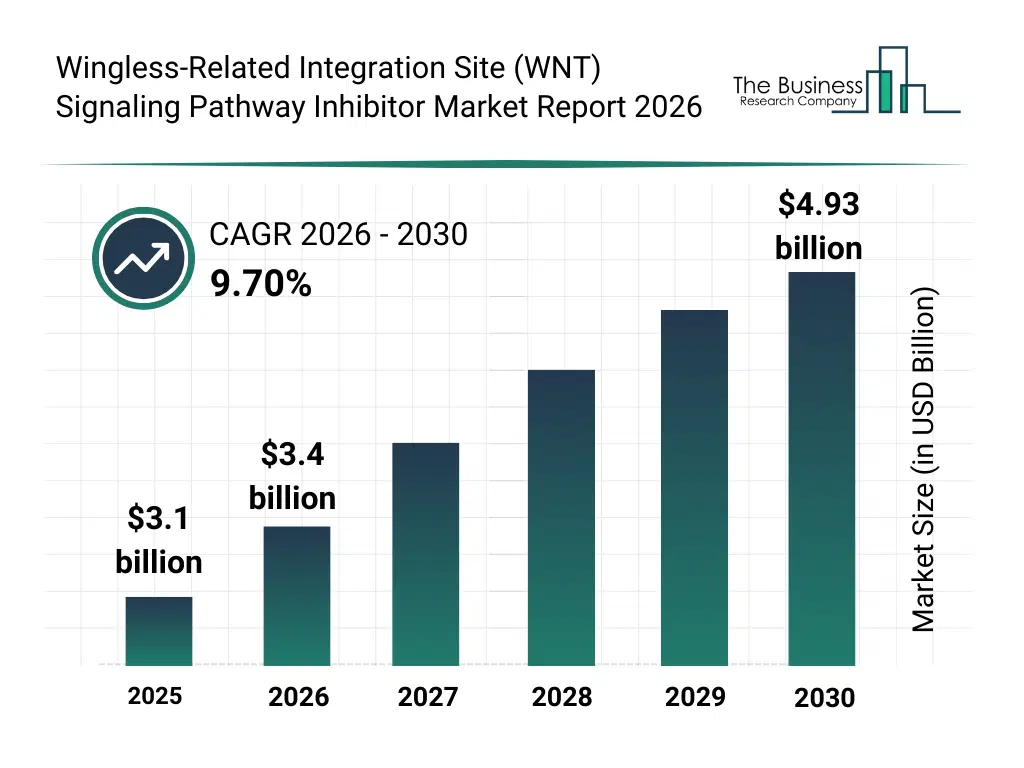
What Is The Wingless-Related Integration Site (WNT) Signaling Pathway Inhibitor Market Size and Share 2026?
The wingless-related integration site (wnt) signaling pathway inhibitor market size has grown strongly in recent years. It will grow from $3.1 billion in 2025 to $3.4 billion in 2026 at a compound annual growth rate (CAGR) of 9.8%. The growth in the historic period can be attributed to cancer pathway research growth, unmet oncology needs, academic research funding, biomolecular drug discovery, preclinical pipeline expansion.What Is The Wingless-Related Integration Site (WNT) Signaling Pathway Inhibitor Market Growth Forecast?
The wingless-related integration site (wnt) signaling pathway inhibitor market size is expected to see strong growth in the next few years. It will grow to $4.93 billion in 2030 at a compound annual growth rate (CAGR) of 9.7%. The growth in the forecast period can be attributed to precision medicine adoption, oncology drug approvals, targeted therapy demand, clinical trial acceleration, rare cancer research. Major trends in the forecast period include expansion of oncology-focused WNT inhibitors, growth of targeted molecular therapies, increasing clinical trial activity, shift toward precision oncology, rising interest in combination therapies.
Global Wingless-Related Integration Site (WNT) Signaling Pathway Inhibitor Market Segmentation
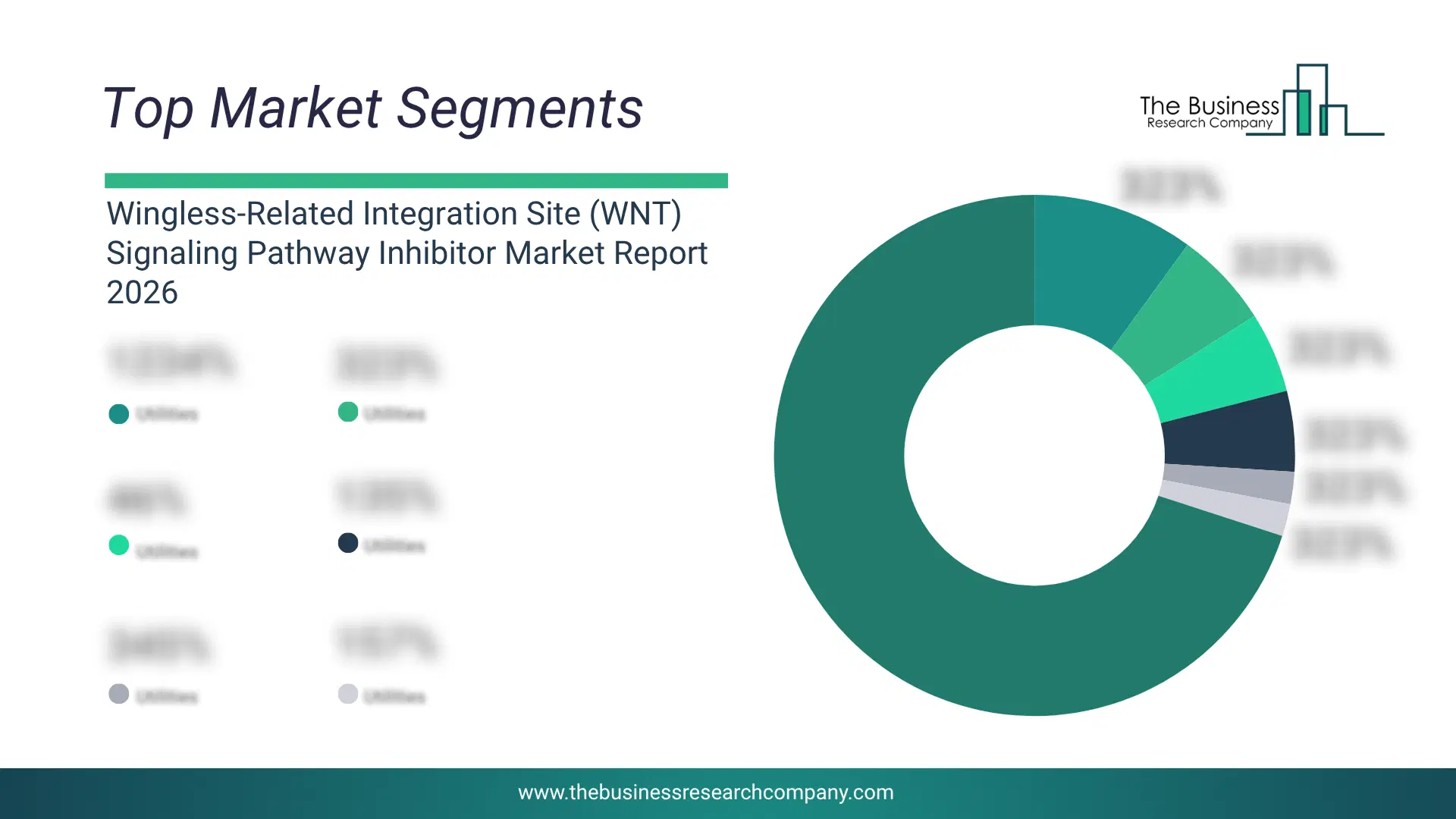
1) By Drug Type: Small molecule Inhibitors, Monoclonal Antibodies, Gene Therapies 2) By Mechanism Of Action: Porcupine Inhibitors, Frizzled Inhibitors, β-Catenin Inhibitors, Wingless-Related Integration Site (WNT)-Protein Inhibitors 3) By Stage Of Development: Pre-Clinical, Clinical Trials, Approved Products 4) By Indications: Cancers, Bone Diseases, Neurological Disorders 5) By End-Users: Pharmaceutical Companies, Research Institutions, Hospitals, Diagnostic Laboratories Subsegments: 1) By Small Molecule Inhibitors: Porcupine Inhibitors, Tankyrase Inhibitors, β-Catenin Inhibitors 2) By Monoclonal Antibodies: Wingless-Related Integration Site (WNT) Ligand-Targeting Antibodies, Frizzled Receptor-Blocking Antibodies, Dickkopf (DKK) Antibodies 3) By Gene Therapies: Clustered Regularly Interspaced Short Palindromic Repeats (CRISPR)-Based Gene Editing, RNA Interference (RNAi) Therapies, Antisense Oligonucleotides (ASOs)What Are The Drivers Of The Wingless-Related Integration Site (WNT) Signaling Pathway Inhibitor Market?
The rising demand for targeted therapies is expected to propel the growth of the wingless-related integration site (WNT) signaling pathway inhibitor market going forward. Targeted therapies are treatments that focus on specific molecules or pathways involved in disease progression. The rise of targeted therapies is driven by precision medicine, which enhances efficacy by focusing on specific genetic mutations while minimizing side effects. WNT signaling pathway inhibitors help in targeted therapies by blocking the abnormal activation of the WNT pathway, which is often implicated in cancer cell growth and metastasis, thereby slowing tumor progression and improving treatment outcomes. For instance, in July 2024, according to the American Society of Gene and Cell Therapy (ASGCT), a US-based professional membership organization, in the second quarter of 2024, 76 gene therapy trials were initiated, marking a 25% increase compared to the previous quarter. Therefore, the rising demand for targeted therapies is driving the growth of the wingless-related integration site (WNT) signaling pathway inhibitor industry. The increasing prevalence of chronic diseases is expected to propel the growth of the wingless-related integration site (WNT) signaling pathway inhibitor market going forward. Chronic diseases are long-term conditions that progress slowly, persist for over a year, and often require ongoing medical care or lifestyle management. Lack of physical activity contributes to weight gain and metabolic issues, increasing the likelihood of chronic diseases. WNT signaling pathway inhibitors regulate cell growth, differentiation, and inflammation, aiding in chronic disease management. They help prevent cancer progression, reduce fibrosis, and support neuroprotection. For instance, in April 2025, according to International Diabetes Federation, a Belgium-based non-profit organization, in 2024, more than 9.5 million people were living with type 1 diabetes, including 1.9 million children and adolescents under 20. By 2050, the global diabetes population is expected to climb to 853 million. Therefore, the increasing prevalence of chronic diseases is driving the growth of the wingless-related integration site (WNT) signaling pathway inhibitor industry.Key Players In The Global Wingless-Related Integration Site (WNT) Signaling Pathway Inhibitor Market
Major companies operating in the wingless-related integration site (wnt) signaling pathway inhibitor market are Bayer AG, Novartis AG, Merck KGaA, Eisai Co. Ltd., Redx Pharma plc, FogPharma Inc., OncoMed Pharmaceuticals Inc., Verastem Oncology Inc., Allarity Therapeutics Inc., PRISM BioLab Co. Ltd., CHEMDIV INC, MedChemExpress LLC, Selleck Chemicals LLC, Enzo Life Sciences International Inc., Allied-Bristol Life Sciences LLC, Abcam Limited, STEMCELL Technologies Inc., Creative BioMart Inc., Santa Cruz Biotechnology Inc., REPROCELL Inc.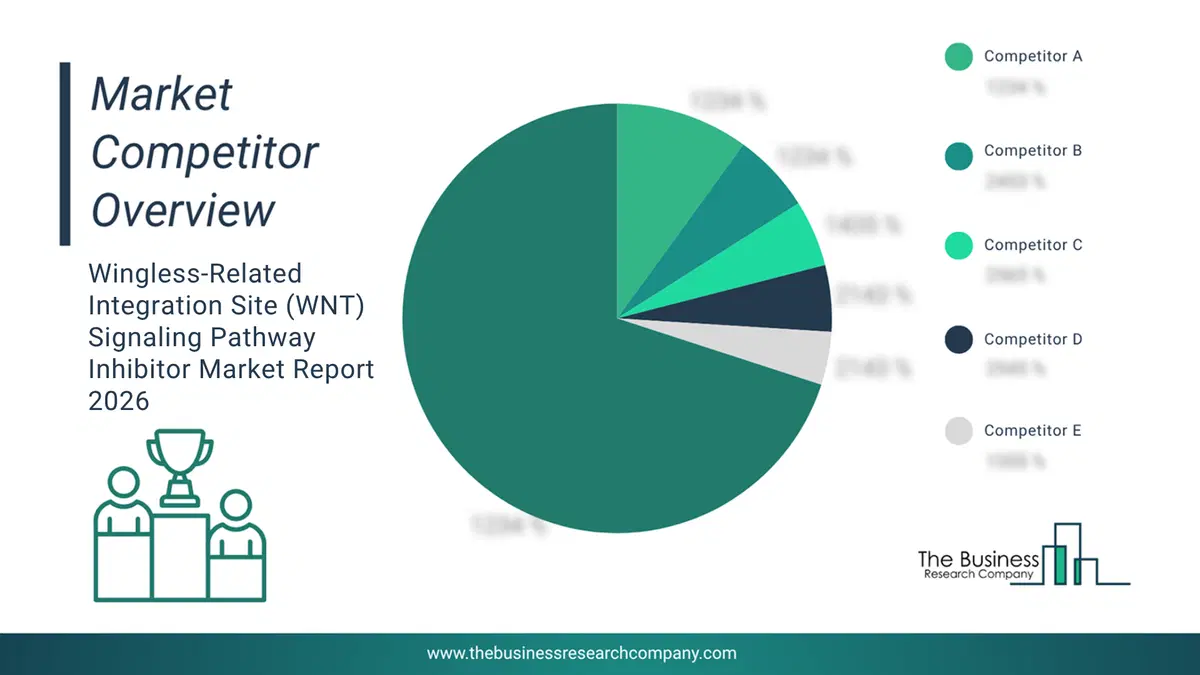
This chart is for illustrative purposes; the full report includes a detailed competitor analysis and comprehensive overview of the top 10 companies in the market.

This chart maps companies by product innovation and brand strength, with bubble size indicating relative revenue, helping identify market leaders, challengers, and niche players. This is an illustrative chart; the full report provides a complete and accurate competitive analysis.
Global Wingless-Related Integration Site (WNT) Signaling Pathway Inhibitor Market Trends and Insights
Major companies operating in the wingless-related integration site (WNT) signaling pathway inhibitor market are focusing on developing advanced solutions such as clinical trials for WNT signaling pathway inhibitors to expand treatment options and address the drug resistance challenge. Clinical trials for WNT signaling pathway inhibitors assess the effectiveness and potential benefits of drugs that target the WNT pathway, which is crucial in cancer development and other diseases. For instance, in June 2023, FogPharma, a US-based biopharmaceutical company, announced the first patient dosed in its Phase 1/2 clinical trial for FOG-001, a first-in-class TCF-blocking β-catenin inhibitor targeting advanced solid tumors, including colorectal cancer. This non-randomized, open-label study will enroll up to 200 patients to evaluate the safety, tolerability, pharmacokinetics, pharmacodynamics, and antitumor activity of FOG-001, which disrupts β-catenin-dependent signaling in the Wnt pathway, which is a key driver of oncogenesis.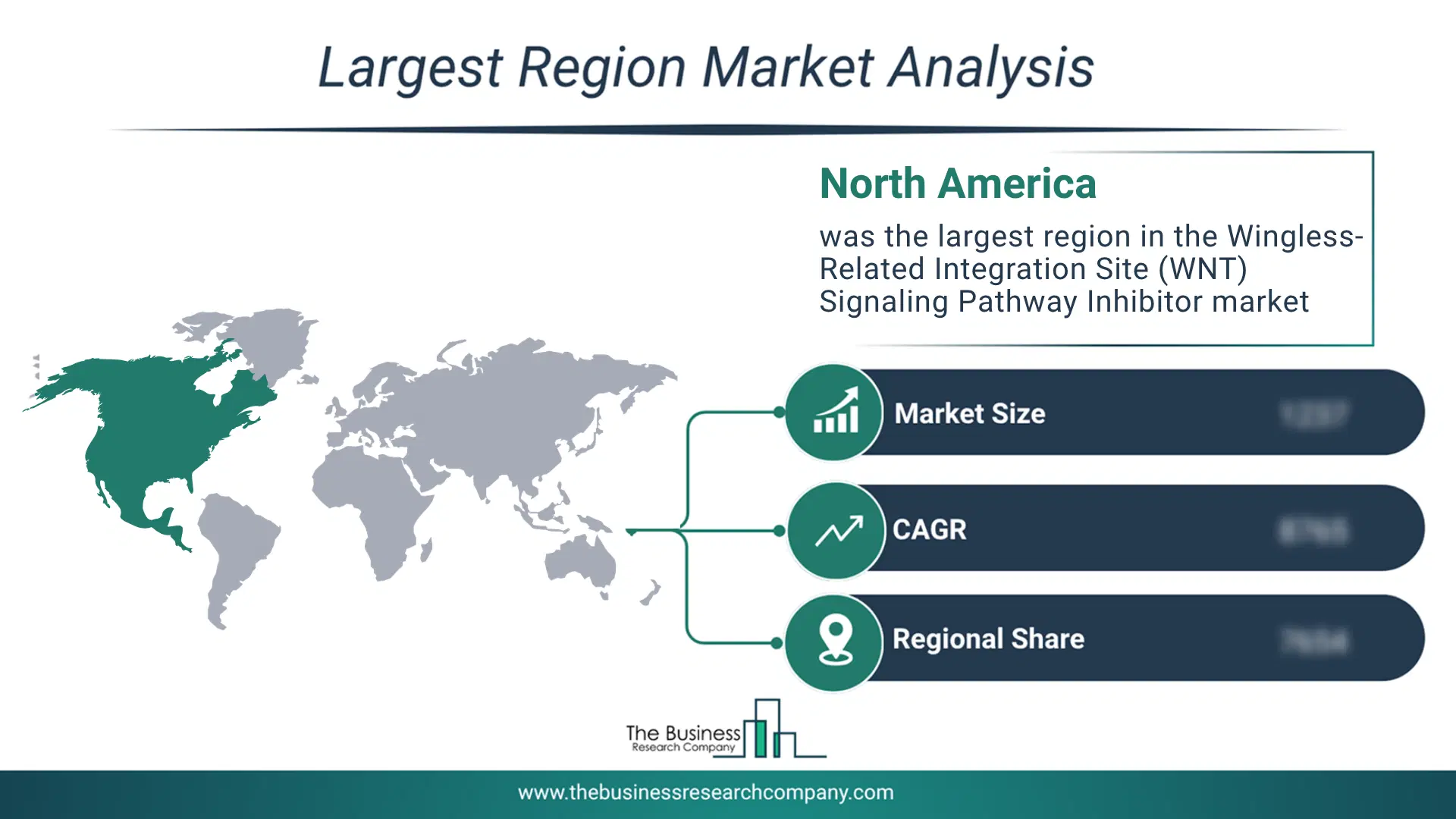
Regional Insights
North America was the largest region in the wingless-related integration site (WNT) signaling pathway inhibitor market in 2025. Asia-Pacific is expected to be the fastest-growing region in the forecast period. The regions covered in this market report are Asia-Pacific, South East Asia, Western Europe, Eastern Europe, North America, South America, Middle East, Africa. The countries covered in this market report are Australia, Brazil, China, France, Germany, India, Indonesia, Japan, Taiwan, Russia, South Korea, UK, USA, Canada, Italy, Spain.What Defines the Wingless-Related Integration Site (WNT) Signaling Pathway Inhibitor Market?
The wingless-related integration site (WNT) signaling pathway inhibitor market consists of sales of peptide inhibitors. decoy receptors, fusion proteins. Values in this market are ‘factory gate’ values, that is, the value of goods sold by the manufacturers or creators of the goods, whether to other entities (including downstream manufacturers, wholesalers, distributors, and retailers) or directly to end customers. The value of goods in this market includes related services sold by the creators of the goods.How is Market Value Defined and Measured?
The market value is defined as the revenues that enterprises gain from the sale of goods and/or services within the specified market and geography through sales, grants, or donations in terms of the currency (in USD unless otherwise specified). The revenues for a specified geography are consumption values that are revenues generated by organizations in the specified geography within the market, irrespective of where they are produced. It does not include revenues from resales along the supply chain, either further along the supply chain or as part of other products.
This chart presents market attractiveness based on a quantitative evaluation of growth, competition, strategic alignment, and risk, offering a clear view of opportunity areas for decision-making. This chart is for illustrative purposes; the full report contains the complete analysis.

This chart highlights the Total Addressable Market (TAM) by estimating the maximum revenue opportunity using an assumption-driven approach, supporting strategic planning and opportunity sizing across markets. The chart is illustrative; the full report provides a more comprehensive analysis.
What Key Data and Analysis Are Included in the Wingless-Related Integration Site (WNT) Signaling Pathway Inhibitor Market Report 2026?
The wingless-related integration site (wnt) signaling pathway inhibitor market research report is one of a series of new reports from The Business Research Company that provides market statistics, including industry global market size, regional shares, competitors with the market share, detailed market segments, market trends and opportunities, and any further data you may need to thrive in the wingless-related integration site (wnt) signaling pathway inhibitor industry. The market research report delivers a complete perspective of everything you need, with an in-depth analysis of the current and future state of the industry.Wingless-Related Integration Site (WNT) Signaling Pathway Inhibitor Market Report Forecast Analysis
| Report Attribute | Details |
|---|---|
| Market Size Value In 2026 | $3.4 billion |
| Revenue Forecast In 2030 | $4.93 billion |
| Growth Rate | CAGR of 9.8% from 2026 to 2030 |
| Base Year For Estimation | 2025 |
| Actual Estimates/Historical Data | 2020-2025 |
| Forecast Period | 2026 - 2030 |
| Market Representation | Revenue in USD Billion and CAGR from 2026 to 2030 |
| Segments Covered | Drug Type, Mechanism Of Action, Stage Of Development, Indications, End-Users |
| Regional Scope | Asia-Pacific, Western Europe, Eastern Europe, North America, South America, Middle East, Africa |
| Country Scope | The countries covered in the report are Australia, Brazil, China, France, Germany, India, Indonesia, Japan, Taiwan, Russia, South Korea, UK, USA, Canada, Italy, Spain. |
| Key Companies Profiled | Bayer AG, Novartis AG, Merck KGaA, Eisai Co. Ltd., Redx Pharma plc, FogPharma Inc., OncoMed Pharmaceuticals Inc., Verastem Oncology Inc., Allarity Therapeutics Inc., PRISM BioLab Co. Ltd., CHEMDIV INC, MedChemExpress LLC, Selleck Chemicals LLC, Enzo Life Sciences International Inc., Allied-Bristol Life Sciences LLC, Abcam Limited, STEMCELL Technologies Inc., Creative BioMart Inc., Santa Cruz Biotechnology Inc., REPROCELL Inc. |
| Customization Scope | Request for Customization |
| Pricing And Purchase Options | Explore Purchase Options |