

Wood Adhesives Market Report 2026
Global Outlook – By Product (Urea-Formaldehyde, Melamine Urea-Formaldehyde, Phenol-Formaldehyde, Isocyanates, Polyurethane, Polyvinyl Acetate, Soy-Based, Other Products), By Technology (Solvent Based, Water Based, Other Technologies), By Resin Type (Natural, Synthetic ), By Application (Flooring And Decks, Plywood, Furniture, Cabinet, Windows And Doors, Other Applications) – Market Size, Trends, Strategies, and Forecast to 2030
Wood Adhesives Market Overview
• Wood Adhesives market size has reached to $5.74 billion in 2025 • Expected to grow to $8.07 billion in 2030 at a compound annual growth rate (CAGR) of 7% • Growth Driver: The Increasing Demand for Engineered Wood Products Fueling Market Growth Due To Rising Construction Needs • Market Trend: Driving Sustainability and Innovation in the Wood Adhesives Market Through Strategic Investments • Asia-Pacific was the largest region in 2025 and Asia-Pacific is the fastest growing region.What Is Covered Under Wood Adhesives Market?
The wood adhesives are utilized to bind wooden materials with each other or with diverse materials. Wood adhesives are polymeric compounds capable of reacting with the surface of the wood in such a way that stresses are passed between bonded parts, either physically, chemically, or both. Wood adhesives are commonly used to manufacture building materials such as plywood and other laminated veneer products, particleboard, oriented strand board, fiberboard, laminated beams and timbers, edge- and enjoined products, architectural doors, windows, and frames, and fiberglass insulation. The main products of wood adhesives are urea-formaldehyde, melamine-urea-formaldehyde, phenol-formaldehyde, isocyanates, polyurethane, polyvinyl acetate, soy-based, and others. Urea-formaldehyde is one of the most important formaldehyde resin adhesives. It is a polymeric condensation product of formaldehyde and urea and is widely used for the manufacture of wood-based composite panels. The different technologies include solvent-based, water-based, and others and involve various types of resins, such as natural and synthetic. It is used in several applications, including flooring and decks, plywood, furniture, cabinets, windows and doors, and others.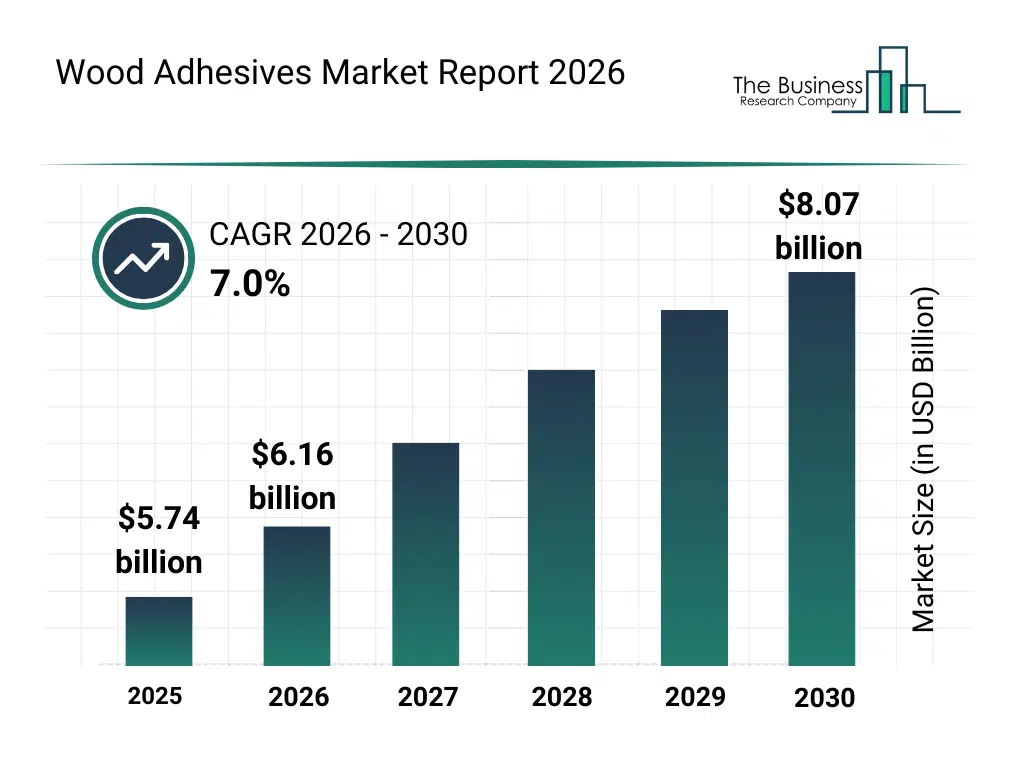
What Is The Wood Adhesives Market Size and Share 2026?
The wood adhesives market size has grown strongly in recent years. It will grow from $5.74 billion in 2025 to $6.16 billion in 2026 at a compound annual growth rate (CAGR) of 7.4%. The growth in the historic period can be attributed to growth of furniture manufacturing, expansion of construction sector, increasing plywood production, availability of synthetic adhesives, rising urbanization.What Is The Wood Adhesives Market Growth Forecast?
The wood adhesives market size is expected to see strong growth in the next few years. It will grow to $8.07 billion in 2030 at a compound annual growth rate (CAGR) of 7.0%. The growth in the forecast period can be attributed to growth in sustainable building materials, rising residential construction, advancements in adhesive formulations, increasing regulatory focus on emissions, expansion of modular construction. Major trends in the forecast period include rising demand for engineered wood products, increasing use of bio based adhesives, growing adoption in furniture manufacturing, expansion of adhesives in construction applications, rising focus on low emission adhesive solutions.
Global Wood Adhesives Market Segmentation
1) By Product: Urea-Formaldehyde, Melamine Urea-Formaldehyde, Phenol-Formaldehyde, Isocyanates, Polyurethane, Polyvinyl Acetate, Soy-Based, Other Products 2) By Technology: Solvent Based, Water Based, Other Technologies 3) By Resin Type: Natural, Synthetic 4) By Application: Flooring And Decks, Plywood, Furniture, Cabinet, Windows And Doors, Other Applications Subsegments: 1) By Urea-Formaldehyde: Liquid Urea-Formaldehyde, Powdered Urea-Formaldehyde, Melamine Urea-Formaldehyde 2) By Melamine Urea-Formaldehyde: Liquid Melamine Urea-Formaldehyde, Powdered Melamine Urea-Formaldehyde 3) By Phenol-Formaldehyde: Liquid Phenol-Formaldehyde, Powdered Phenol-Formaldehyde 4) By Isocyanates: Aromatic Isocyanates, Aliphatic Isocyanates 5) By Polyurethane: Flexible Polyurethane, Rigid Polyurethane 6) By Polyvinyl Acetate: Emulsion-Based Polyvinyl Acetate, Solvent-Based Polyvinyl Acetate 7) By Soy-Based: Soy Protein Adhesives, Soy Flour-Based Adhesives 8) By Other Products: Casein-Based Adhesives, Animal-Based Adhesives, Bio-Based AdhesivesWhat Is The Driver Of The Wood Adhesives Market?
The increasing demand for engineered wood products is expected to propel the growth of the wood adhesives market going forward. Engineered wood products refer to manufactured wood materials such as plywood, oriented strand board (OSB), laminated veneer lumber (LVL), and cross-laminated timber (CLT) engineered for strength and structural performance. This demand is rising due to growing residential and commercial construction needs, as builders increasingly choose engineered wood for its durability, sustainability, and cost-efficiency. The wood adhesives market supports this trend because adhesives are essential for bonding veneers, layers, and composites used in engineered wood manufacturing. For instance, in March 2024, according to the U.S. Census Bureau, a U.S.-based federal statistical agency, the total value of construction put in place reached about $2,100 billion in 2024, rising from about $1,980 billion in 2023, indicating increased use of engineered wood materials across construction projects. Therefore, the increasing demand for engineered wood products is driving the growth of the wood adhesives industry.Key Players In The Global Wood Adhesives Market
Major companies operating in the wood adhesives market are The Dow Chemical Company, 3M Company, BASF SE, Henkel AG & Co. KGaA, Arkema S.A., AkzoNobel N.V., Sika AG, ITW Devcon Inc., Bostik SA, Aica Kogyo Company Limited, Huntsman Corporation, Jowat SE, Pidilite Industries Ltd., LORD Corporation, Jubilant Industries Ltd., Beardow Adams Ltd., Chemence Inc., AJ Adhesives Inc., W.F. Taylor, Surebonder, Permabond LLC, L.D. Davis Industries Inc., RPM International Inc., Master Bond Inc., Cattie Adhesives, Collano Adhesives AG, DAP Products Inc., Franklin Adhesives & Polymers, Ashland Global Holdings Inc., Chemique Adhesives Inc., Eastman Chemical Company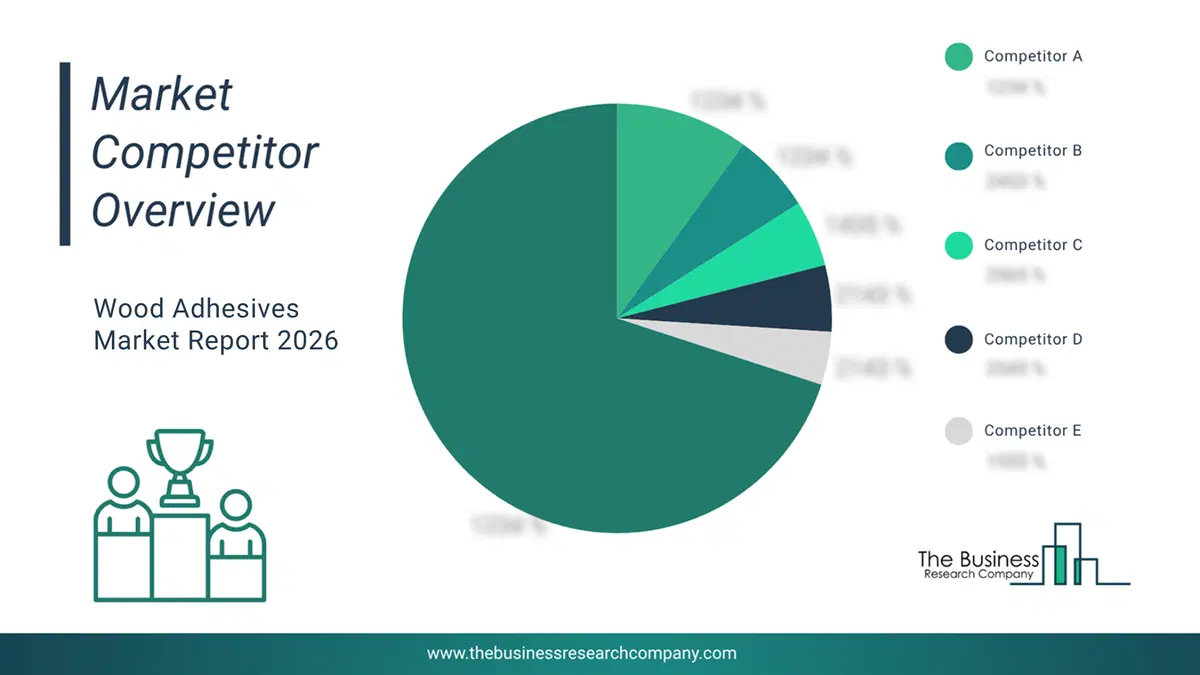
This chart is for illustrative purposes; the full report includes a detailed competitor analysis and comprehensive overview of the top 10 companies in the market.
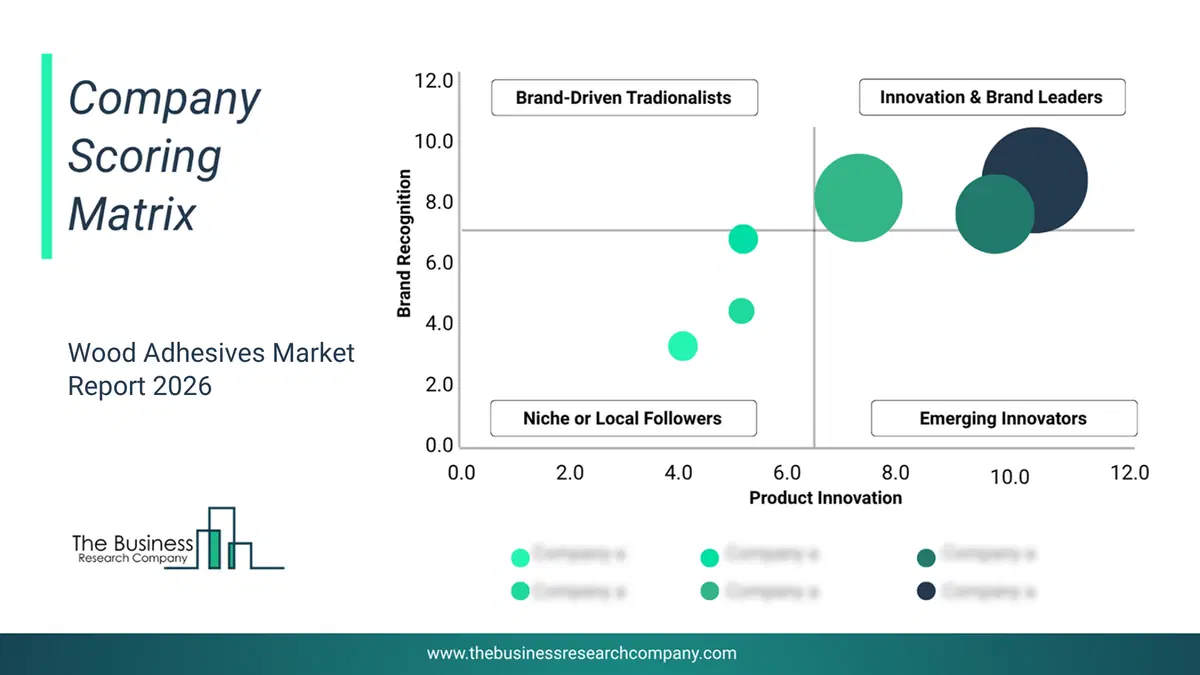
This chart maps companies by product innovation and brand strength, with bubble size indicating relative revenue, helping identify market leaders, challengers, and niche players. This is an illustrative chart; the full report provides a complete and accurate competitive analysis.
Global Wood Adhesives Market Trends and Insights
Major companies operating in the wood adhesives market are developing strategic investments to enhance product performance, improve sustainability, and meet the rising demand for eco-friendly materials. Strategic investments focus on developing advanced adhesive formulations, such as bio-based and formaldehyde-free adhesives, to align with environmental regulations and consumer preferences. For instance, in May 2023, Henkel, a Germany-based chemical and consumer goods company, opened a new Technology Center in Bridgewater, New Jersey, aimed at fostering collaboration with partners and showcasing innovations in adhesives, sealants, and coatings. This initiative is part of Henkel's strategy to drive growth and sustainability in the wood adhesives sector, leveraging advanced technologies to meet evolving market demands.What Are Latest Mergers And Acquisitions In The Wood Adhesives Market?
In September 2023, H.B. Fuller Company, a US-based global adhesives manufacturer, acquired the business of Sanglier Limited, a UK-based independent manufacturer and filler of sprayable industrial adhesives. Through this acquisition, H.B. Fuller expanded its product portfolio and geographic reach across Europe, strengthening its capacity in construction and engineering adhesives including formulations that are widely used in wood-panel production, furniture manufacturing, and other wood-bonding applications.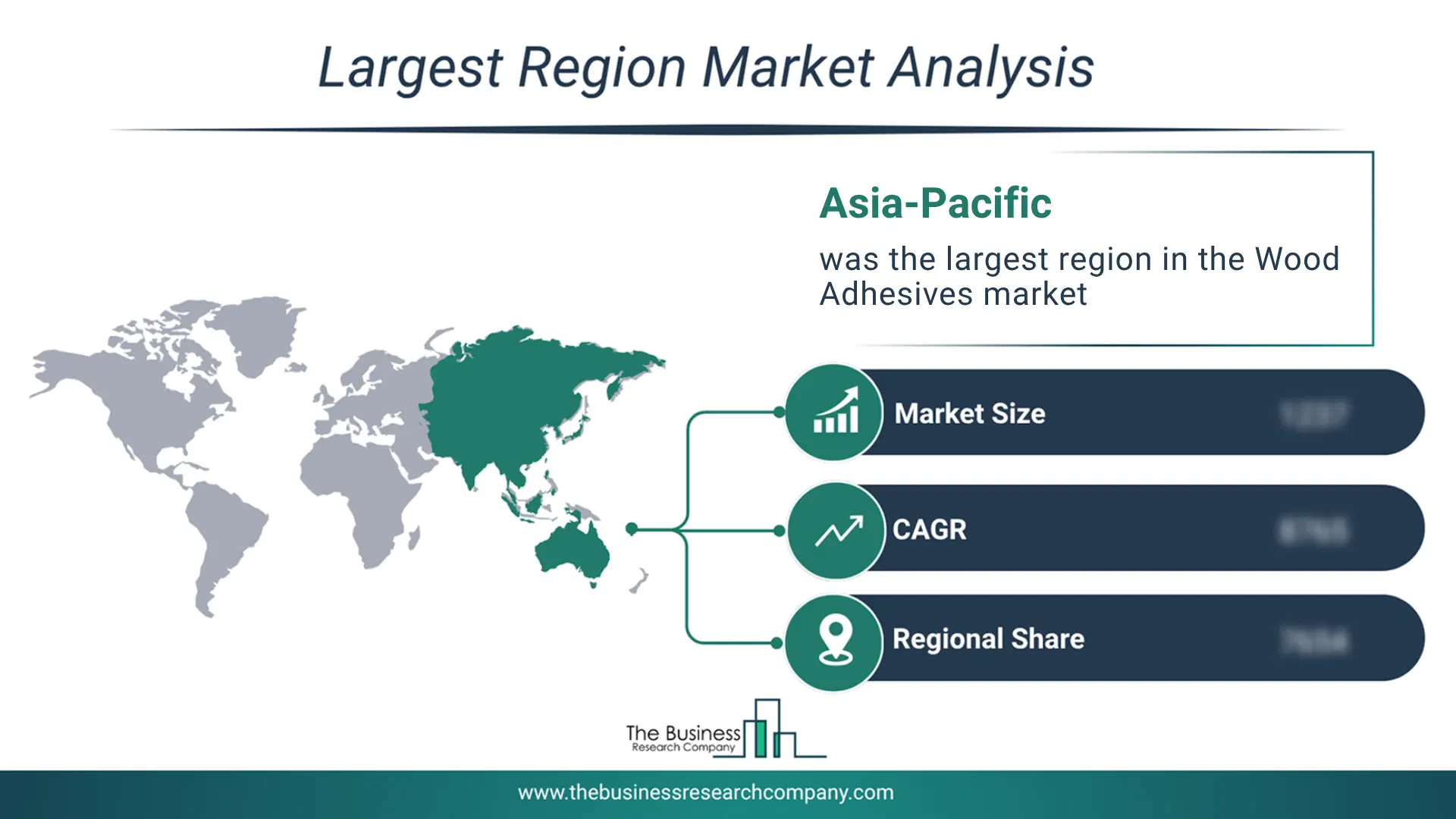
Regional Insights
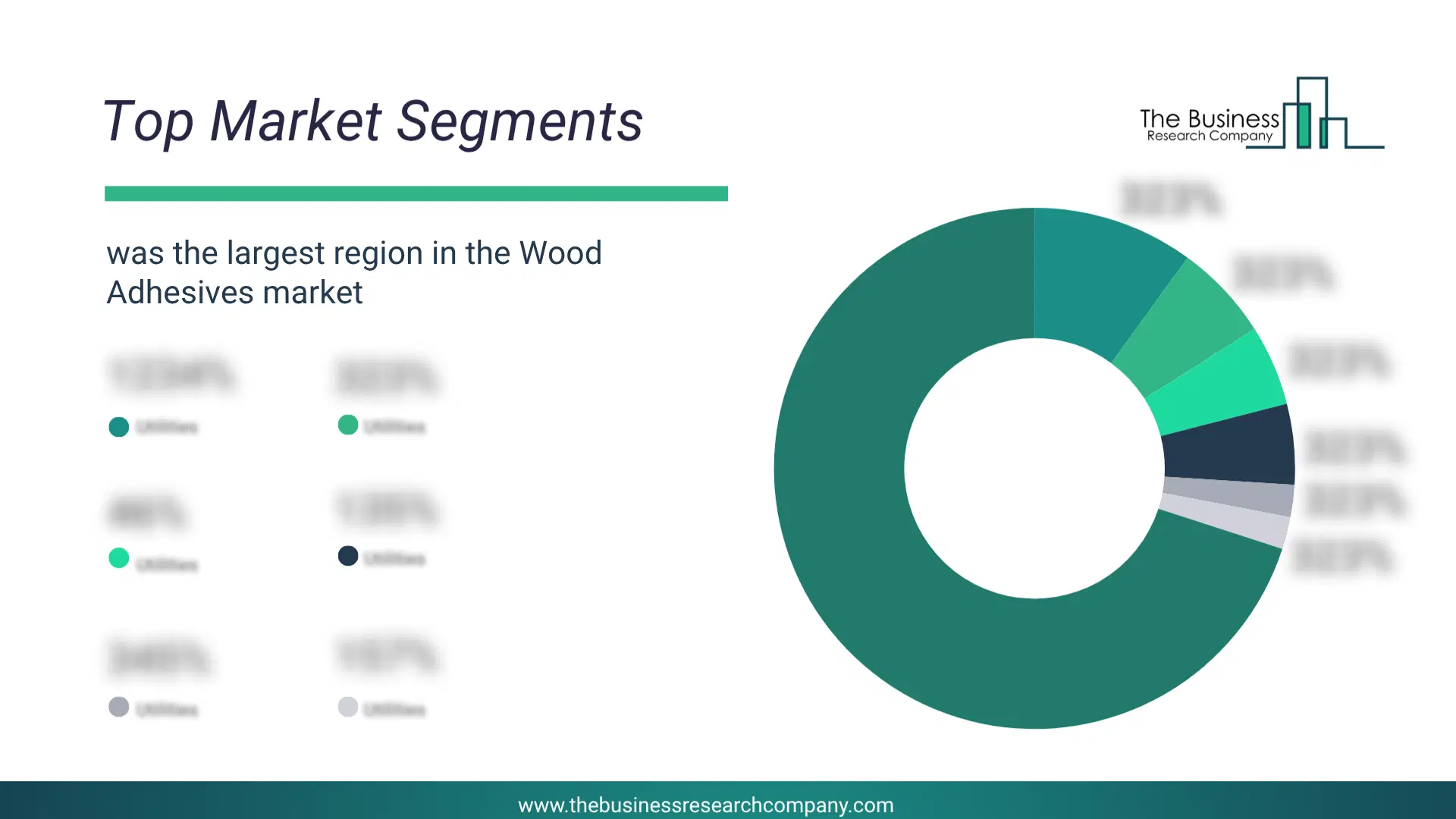
Asia-Pacific was the largest region in the wood adhesives market in 2025. Asia-Pacific is expected to be the fastest-growing region in the wood adhesives market report during the forecast period. The regions covered in this market report are Asia-Pacific, South East Asia, Western Europe, Eastern Europe, North America, South America, Middle East, Africa The countries covered in this market report are Australia, Brazil, China, France, Germany, India, Indonesia, Japan, Taiwan, Russia, South Korea, UK, USA, Canada, Italy, SpainWhat Defines the Wood Adhesives Market?
The wood adhesives market consists of sales of cyanoacrylates and epoxy wood adhesives. Values in this market are ‘factory gate’ values, that is, the value of goods sold by the manufacturers or creators of the goods, whether to other entities (including downstream manufacturers, wholesalers, distributors, and retailers) or directly to end customers. The value of goods in this market includes related services sold by the creators of the goods.How is Market Value Defined and Measured?
The market value is defined as the revenues that enterprises gain from the sale of goods and/or services within the specified market and geography through sales, grants, or donations in terms of the currency (in USD unless otherwise specified). The revenues for a specified geography are consumption values that are revenues generated by organizations in the specified geography within the market, irrespective of where they are produced. It does not include revenues from resales along the supply chain, either further along the supply chain or as part of other products.
This chart presents market attractiveness based on a quantitative evaluation of growth, competition, strategic alignment, and risk, offering a clear view of opportunity areas for decision-making. This chart is for illustrative purposes; the full report contains the complete analysis.

This chart highlights the Total Addressable Market (TAM) by estimating the maximum revenue opportunity using an assumption-driven approach, supporting strategic planning and opportunity sizing across markets. The chart is illustrative; the full report provides a more comprehensive analysis.
What Key Data and Analysis Are Included in the Wood Adhesives Market Report 2026?
The wood adhesives market research report is one of a series of new reports from The Business Research Company that provides market statistics, including industry global market size, regional shares, competitors with the market share, detailed market segments, market trends and opportunities, and any further data you may need to thrive in the wood adhesives industry. The market research report delivers a complete perspective of everything you need, with an in-depth analysis of the current and future state of the industry.Wood Adhesives Market Report Forecast Analysis
| Report Attribute | Details |
|---|---|
| Market Size Value In 2026 | $6.16 billion |
| Revenue Forecast In 2030 | $8.07 billion |
| Growth Rate | CAGR of 7.4% from 2026 to 2030 |
| Base Year For Estimation | 2025 |
| Actual Estimates/Historical Data | 2020-2025 |
| Forecast Period | 2026 - 2030 |
| Market Representation | Revenue in USD Billion and CAGR from 2026 to 2030 |
| Segments Covered | Product, Technology, Resin Type, Application |
| Regional Scope | Asia-Pacific, Western Europe, Eastern Europe, North America, South America, Middle East, Africa |
| Country Scope | The countries covered in this market report are Australia, Brazil, China, France, Germany, India, Indonesia, Japan, Taiwan, Russia, South Korea, UK, USA, Canada, Italy, Spain |
| Key Companies Profiled | The Dow Chemical Company, 3M Company, BASF SE, Henkel AG & Co. KGaA, Arkema S.A., AkzoNobel N.V., Sika AG, ITW Devcon Inc., Bostik SA, Aica Kogyo Company Limited, Huntsman Corporation, Jowat SE, Pidilite Industries Ltd., LORD Corporation, Jubilant Industries Ltd., Beardow Adams Ltd., Chemence Inc., AJ Adhesives Inc., W.F. Taylor, Surebonder, Permabond LLC, L.D. Davis Industries Inc., RPM International Inc., Master Bond Inc., Cattie Adhesives, Collano Adhesives AG, DAP Products Inc., Franklin Adhesives & Polymers, Ashland Global Holdings Inc., Chemique Adhesives Inc., Eastman Chemical Company |
| Customization Scope | Request for Customization |
| Pricing And Purchase Options | Explore Purchase Options |