

Wood Preservatives Market Report 2026
Global Outlook – By Formulation (Water Based, Solvent Based, Oil Based), By Application (Cabinets and Decks, Doors & Windows, Wood Flooring, Railroad Ties, Other Applications), By End User (Residential, Commercial, Industrial) – Market Size, Trends, Strategies, and Forecast to 2030
Wood Preservatives Market Overview
• Wood Preservatives market size has reached to $2.11 billion in 2025 • Expected to grow to $3.07 billion in 2030 at a compound annual growth rate (CAGR) of 7.7% • Growth Driver: Construction Industry Expansion Fuels Wood Preservatives Market Growth • Market Trend: Wood Preservative Industry Embraces Eco-Friendly Innovations • North America was the largest region in 2025.What Is Covered Under Wood Preservatives Market?
Wood preservatives are chemicals that can control wood degradation problems due to fungal rot or decay, sapstain, molds, or wood-destroying insects. It is mainly used to increase the durability and resistance of wood, timber, wood structures, or engineered wood. The main types of formulations in the wood preservative market are water-based, solvent-based, and oil-based. Water-based preservatives are widely used for fence posts, lumber, plywood, poles, pilings, and timbers to prevent fungal decay and insect attack. Solvent-based preservatives are composed of approximately 10% active ingredient and 90% organic solvent, which is usually white spirit or other petroleum-based hydrocarbons. Oil-based or oil-borne preservatives are generally insoluble in water, so they are dissolved in petroleum or other organic solvents to penetrate the wood. These are used by various sectors, including residential, commercial, and industrial. Wood preservatives are used in cabinets and decks, doors and windows, wood flooring, railroad ties, and others.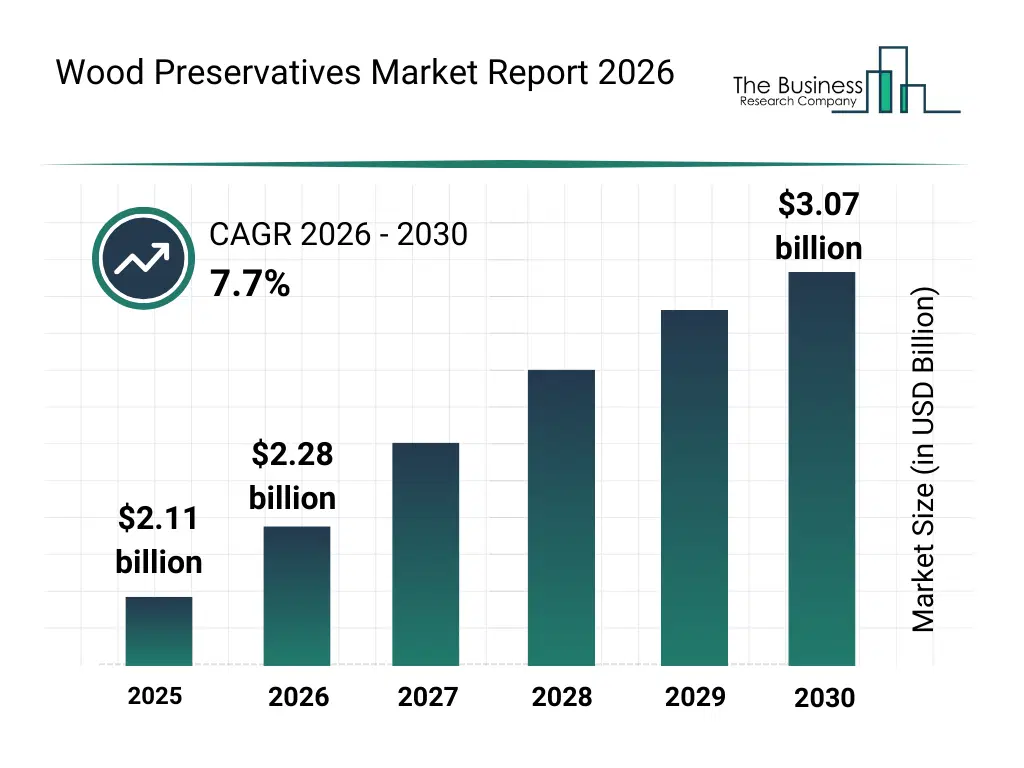
What Is The Wood Preservatives Market Size and Share 2026?
The wood preservatives market size has grown strongly in recent years. It will grow from $2.11 billion in 2025 to $2.28 billion in 2026 at a compound annual growth rate (CAGR) of 8.1%. The growth in the historic period can be attributed to growth in residential and commercial construction, widespread use of treated timber in outdoor applications, increasing railway infrastructure development, rising awareness of wood durability solutions, availability of solvent-based preservatives.What Is The Wood Preservatives Market Growth Forecast?
The wood preservatives market size is expected to see strong growth in the next few years. It will grow to $3.07 billion in 2030 at a compound annual growth rate (CAGR) of 7.7%. The growth in the forecast period can be attributed to growing demand for sustainable building materials, rising adoption of water-based preservatives, expansion of infrastructure rehabilitation projects, increasing regulatory restrictions on toxic chemicals, growing focus on extended wood lifecycle performance. Major trends in the forecast period include increasing adoption of environment-friendly preservative formulations, rising demand for long-lasting wood protection, growing use in infrastructure and construction projects, expansion of treated wood applications, enhanced focus on regulatory compliance.
Global Wood Preservatives Market Segmentation
1) By Formulation: Water Based, Solvent Based, Oil Based 2) By Application: Cabinets and Decks, Doors & Windows, Wood Flooring, Railroad Ties, Other Applications 3) By End User: Residential, Commercial, Industrial Subsegments: 1) By Water-Based: Copper-Based Preservatives, Borate Preservatives, Fungicides And Insecticides 2) By Solvent Based: Organic Solvent Preservatives, Synthetic Organic Biocide–Based Solvent Preservatives, Insecticidal Solvent-Based Preservatives 3) By Oil-Based: Creosote, Pentachlorophenol (PCP), Linseed Oil-Based PreservativesWhat Is The Driver Of The Wood Preservatives Market?
The increase in construction activities is expected to propel the growth of the wood preservatives market going forward. Construction encompasses all activities related to the planning, design, development, erection, alteration, repair, and demolition of buildings and infrastructure. Wood preservatives protect wood and wood-based products from decay, insects, and fungal growth, thereby extending their service life and structural integrity for various construction applications. For instance, in August 2024, according to the Office for National Statistics (ONS), a UK-based government statistics organization, total new construction orders in Great Britain increased by 16.5% in second quarter of 2024 compared with first quarter, driven largely by private commercial and infrastructure projects. Therefore, the rising construction activities are driving the growth of the wood preservatives industry.Key Players In The Global Wood Preservatives Market
Major companies operating in the wood preservatives market are BASF SE, Borax Inc., Buckman Laboratories International Inc., Cooper Care Wood Preservatives Inc., KMG Chemicals Inc., Koppers Inc., Kurt Obermeier GmbH & Co. KG, Lanxess AG, Lonza Group, Nisus Corporation, Osmose Inc., Quality Borate LLC, Remmers Gruppe AG, Troy Corporation, Arbolito SA, Chemonit SA, Dolphin Bay Chemicals Ltd., Draslovka Holding B.V., Jyoti Chemicals, Kop-Coat Inc., Rütgers Organics GmbH, Safeguard Europe Ltd.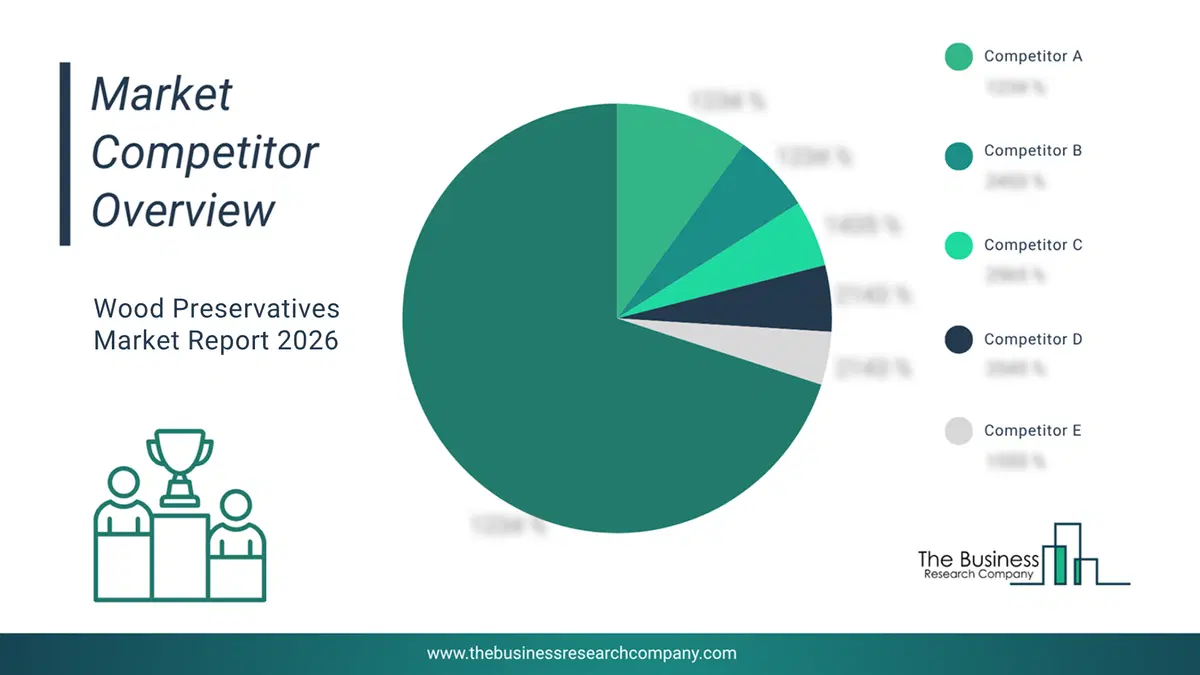
This chart is for illustrative purposes; the full report includes a detailed competitor analysis and comprehensive overview of the top 10 companies in the market.
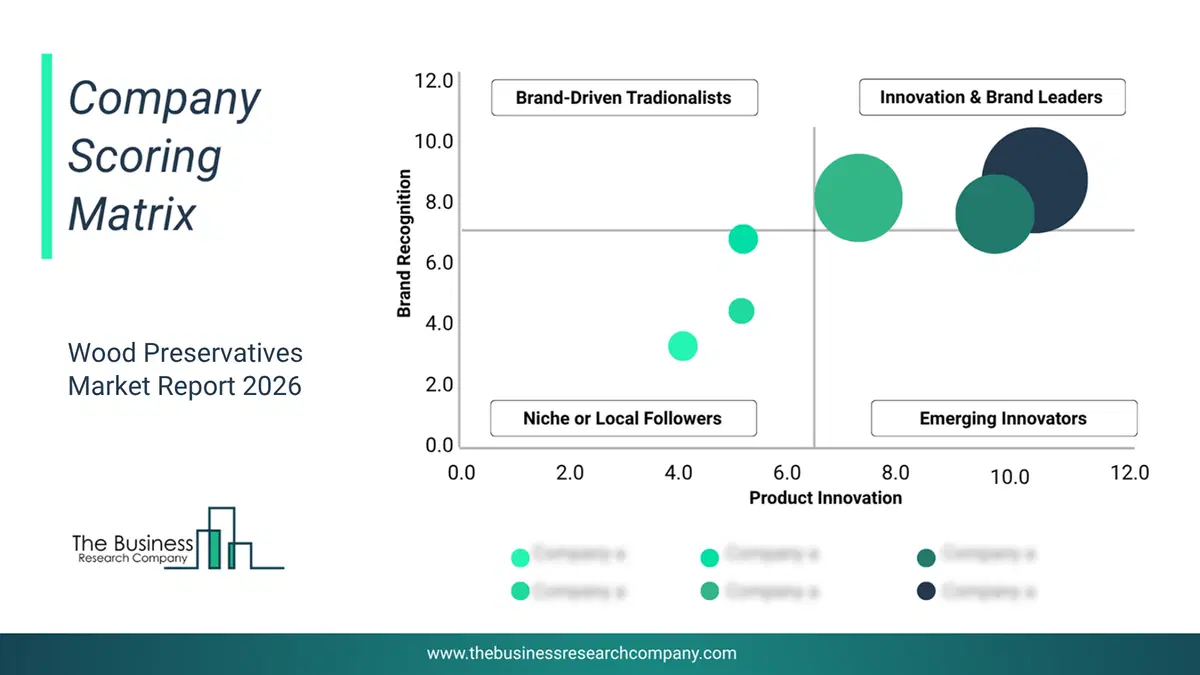
This chart maps companies by product innovation and brand strength, with bubble size indicating relative revenue, helping identify market leaders, challengers, and niche players. This is an illustrative chart; the full report provides a complete and accurate competitive analysis.
Global Wood Preservatives Market Trends and Insights
Major players operating in the wood preservatives market are focused on developing advanced product wood preservatives, which is a key trend in the wood preservatives market. Considering the environmental rules and regulations, the wood preservative manufacturers are developing natural or eco-friendly wood preservatives so that they will be less harmful to the environment. For instance, in March 2024, Arxada, US-based Chemical manufacturing company launched Tanasote S40. It is a copper-oil alternative to creosote, now approved as a wood preservative in 23 European countries. This innovative solution enhances sustainability in industrial wood protection, supported by a published Life Cycle Analysis and ongoing Environmental Product Declaration (EPD) investment. Designed for ease of use, Tanasote-treated timber offers a long service life of up to 40 years with low odor. It has been validated through successful commercial trials in agricultural fencing, utility poles, and railway sleepers.What Are Latest Mergers And Acquisitions In The Wood Preservatives Market?
In April 2024, Koppers Holdings Inc., a US-based provider of treated wood products and wood treatment chemicals, acquired substantially all of the assets of Brown Wood Preserving Company, Inc. for US$100 million in cash. Through this acquisition, Koppers aims to enhance its wood preservative capabilities by integrating Brown Wood’s pressure-treated wood utility pole production and expanding its reach in existing and new markets. Brown Wood Preserving Company is a US-based company that specializes in treating and protecting wood from decay, insects, and environmental damage.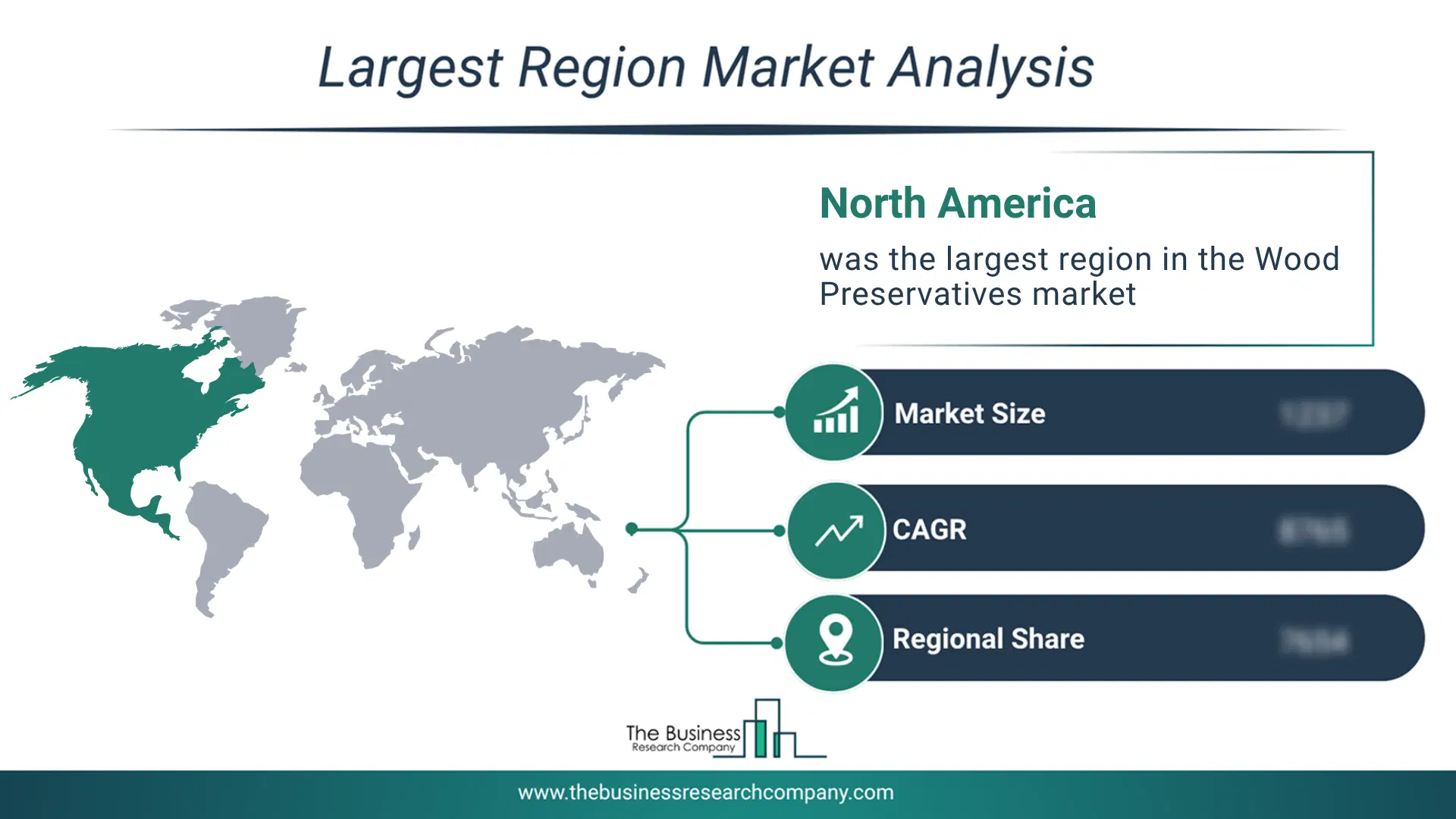
Regional Insights
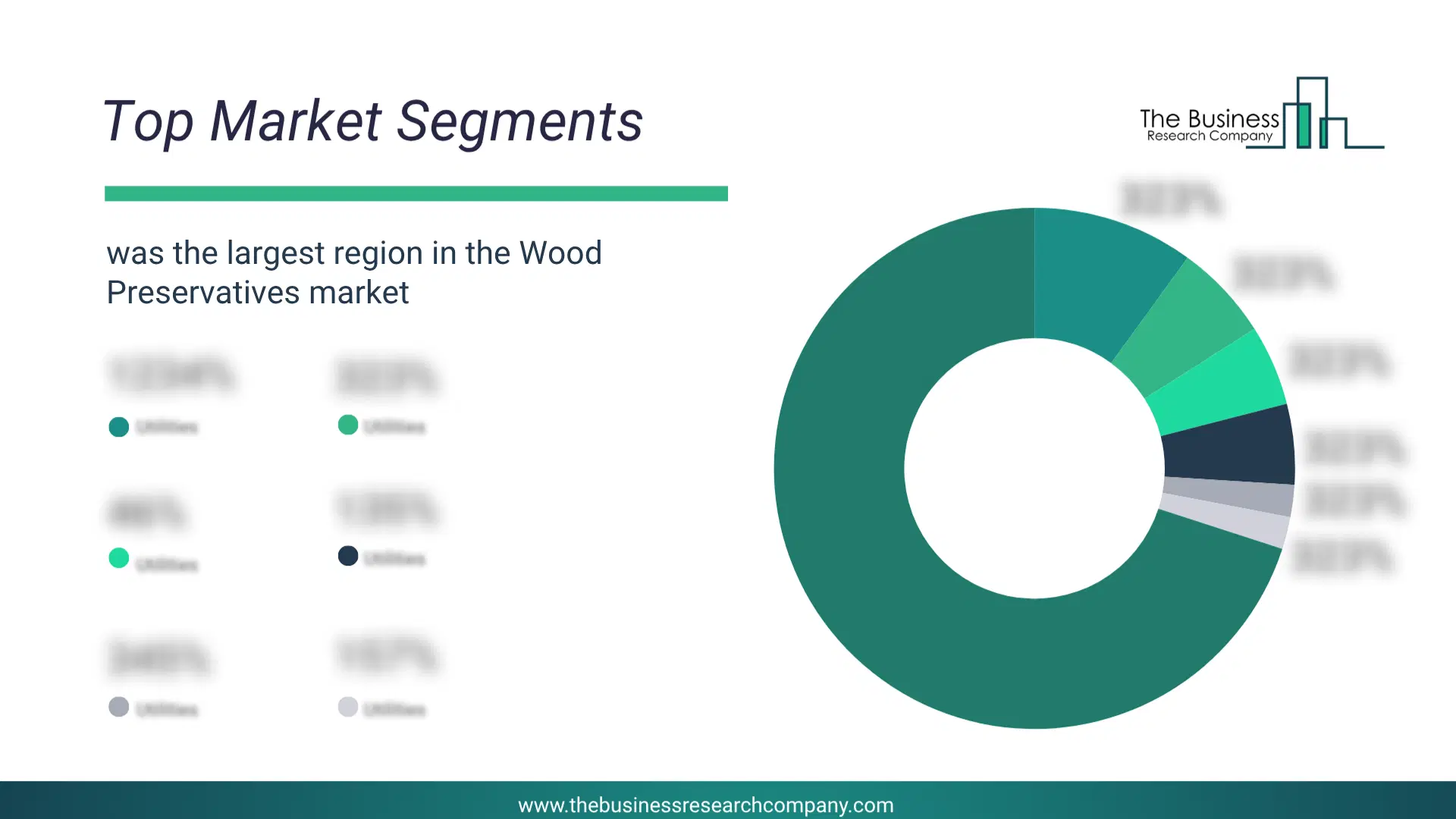
North America was the largest region in the wood preservatives market in 2025. This region is expected to continue to be the fastest-growing region in the wood preservatives market report during the forecast period. The regions covered in this market report are Asia-Pacific, South East Asia, Western Europe, Eastern Europe, North America, South America, Middle East, Africa The countries covered in this market report are Australia, Brazil, China, France, Germany, India, Indonesia, Japan, Taiwan, Russia, South Korea, UK, USA, Canada, Italy, SpainWhat Defines the Wood Preservatives Market?
The wood preservatives market consists of sales of water-based technologies for wood preservation, including chromated copper arsenate and micronized copper systems. Values in this market are ‘factory gate’ values, that is, the value of goods sold by the manufacturers or creators of the goods, whether to other entities (including downstream manufacturers, wholesalers, distributors, and retailers) or directly to end customers. The value of goods in this market includes related services sold by the creators of the goods.How is Market Value Defined and Measured?
The market value is defined as the revenues that enterprises gain from the sale of goods and/or services within the specified market and geography through sales, grants, or donations in terms of the currency (in USD unless otherwise specified). The revenues for a specified geography are consumption values that are revenues generated by organizations in the specified geography within the market, irrespective of where they are produced. It does not include revenues from resales along the supply chain, either further along the supply chain or as part of other products.
This chart presents market attractiveness based on a quantitative evaluation of growth, competition, strategic alignment, and risk, offering a clear view of opportunity areas for decision-making. This chart is for illustrative purposes; the full report contains the complete analysis.

This chart highlights the Total Addressable Market (TAM) by estimating the maximum revenue opportunity using an assumption-driven approach, supporting strategic planning and opportunity sizing across markets. The chart is illustrative; the full report provides a more comprehensive analysis.
What Key Data and Analysis Are Included in the Wood Preservatives Market Report 2026?
The wood preservatives market research report is one of a series of new reports from The Business Research Company that provides market statistics, including industry global market size, regional shares, competitors with the market share, detailed market segments, market trends and opportunities, and any further data you may need to thrive in the wood preservatives industry. The market research report delivers a complete perspective of everything you need, with an in-depth analysis of the current and future state of the industry.Wood Preservatives Market Report Forecast Analysis
| Report Attribute | Details |
|---|---|
| Market Size Value In 2026 | $2.28 billion |
| Revenue Forecast In 2030 | $3.07 billion |
| Growth Rate | CAGR of 8.1% from 2026 to 2030 |
| Base Year For Estimation | 2025 |
| Actual Estimates/Historical Data | 2020-2025 |
| Forecast Period | 2026 - 2030 |
| Market Representation | Revenue in USD Billion and CAGR from 2026 to 2030 |
| Segments Covered | Formulation, Application, End User |
| Regional Scope | Asia-Pacific, Western Europe, Eastern Europe, North America, South America, Middle East, Africa |
| Country Scope | The countries covered in this market report are Australia, Brazil, China, France, Germany, India, Indonesia, Japan, Taiwan, Russia, South Korea, UK, USA, Canada, Italy, Spain |
| Key Companies Profiled | BASF SE, Borax Inc., Buckman Laboratories International Inc., Cooper Care Wood Preservatives Inc., KMG Chemicals Inc., Koppers Inc., Kurt Obermeier GmbH & Co. KG, Lanxess AG, Lonza Group, Nisus Corporation, Osmose Inc., Quality Borate LLC, Remmers Gruppe AG, Troy Corporation, Arbolito SA, Chemonit SA, Dolphin Bay Chemicals Ltd., Draslovka Holding B.V., Jyoti Chemicals, Kop-Coat Inc., Rütgers Organics GmbH, Safeguard Europe Ltd. |
| Customization Scope | Request for Customization |
| Pricing And Purchase Options | Explore Purchase Options |