
Wooden Interior Door Market Report 2026
Global Outlook – By Type (Panel Door, Bypass Door, Bifold Door, Pocket Door), By Mechanism (Swinging, Sliding, Folding, Other Mechanisms), By End-Use (Residential, Non-Residential, Other End Uses) – Market Size, Trends, Strategies, and Forecast to 2030
Wooden Interior Door Market Overview
• Wooden Interior Door market size has reached to $17.29 billion in 2025 • Expected to grow to $23.96 billion in 2030 at a compound annual growth rate (CAGR) of 6.8% • Growth Driver: The Impact Of Rising Infrastructure Construction On The Wooden Interior Door Market • Market Trend: Advancements in Wooden Interior Doors The Launch of LaCantina's V2 Folding Door System • Asia-Pacific was the largest region in 2025.Market Gains By 2030 – Top Opportunities By Segment
Market Gain identifies the most promising market opportunities by highlighting the segments or products expected to generate the highest incremental revenue growth over the next five years.
What Is Covered Under Wooden Interior Door Market?
A wooden interior door is a type of door primarily designed for use within the interior of buildings. It is constructed primarily from wood materials and is intended to separate rooms, provide privacy, and enhance the aesthetic appeal of indoor spaces. The main types of wooden interior doors are panel doors, bypass doors, bifold doors, pocket doors, and others. A panel door is a wooden interior door with multiple horizontal and vertical panels framed together. Several mechanisms are involved, such as swinging, sliding, folding, and others, which are used for various end-uses, including residential, non-residential, and others.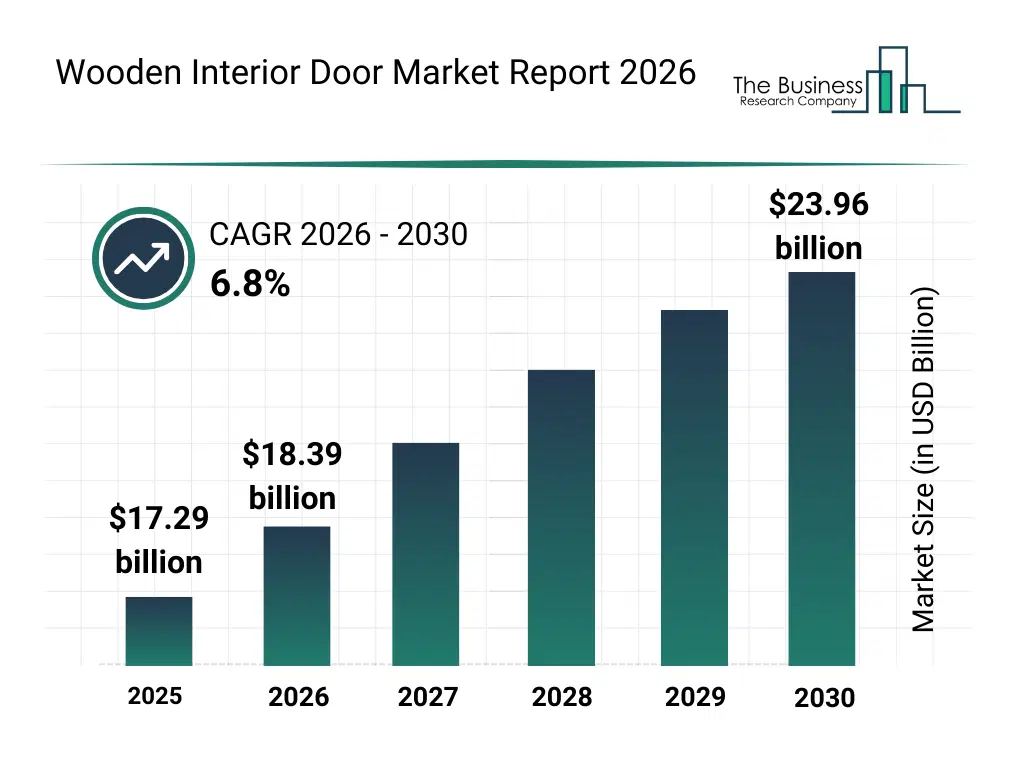
What Is The Wooden Interior Door Market Size and Share 2026?
The wooden interior door market size has grown strongly in recent years. It will grow from $17.29 billion in 2025 to $18.39 billion in 2026 at a compound annual growth rate (CAGR) of 6.4%. The growth in the historic period can be attributed to residential construction growth, long-term use of wooden doors in interiors, availability of diverse wood finishes, expansion of home renovation services, preference for natural interior materials.What Is The Wooden Interior Door Market Growth Forecast?
The wooden interior door market size is expected to see strong growth in the next few years. It will grow to $23.96 billion in 2030 at a compound annual growth rate (CAGR) of 6.8%. The growth in the forecast period can be attributed to increasing investments in residential remodeling, rising demand for premium interior finishes, growth of modular housing projects, increased adoption of customized door solutions, expansion of urban housing developments. Major trends in the forecast period include increasing demand for custom interior wooden doors, growing adoption of space-saving door mechanisms, rising preference for solid wood interior doors, expansion of renovation and remodeling projects, enhanced focus on interior aesthetics.
Global Wooden Interior Door Market Segmentation
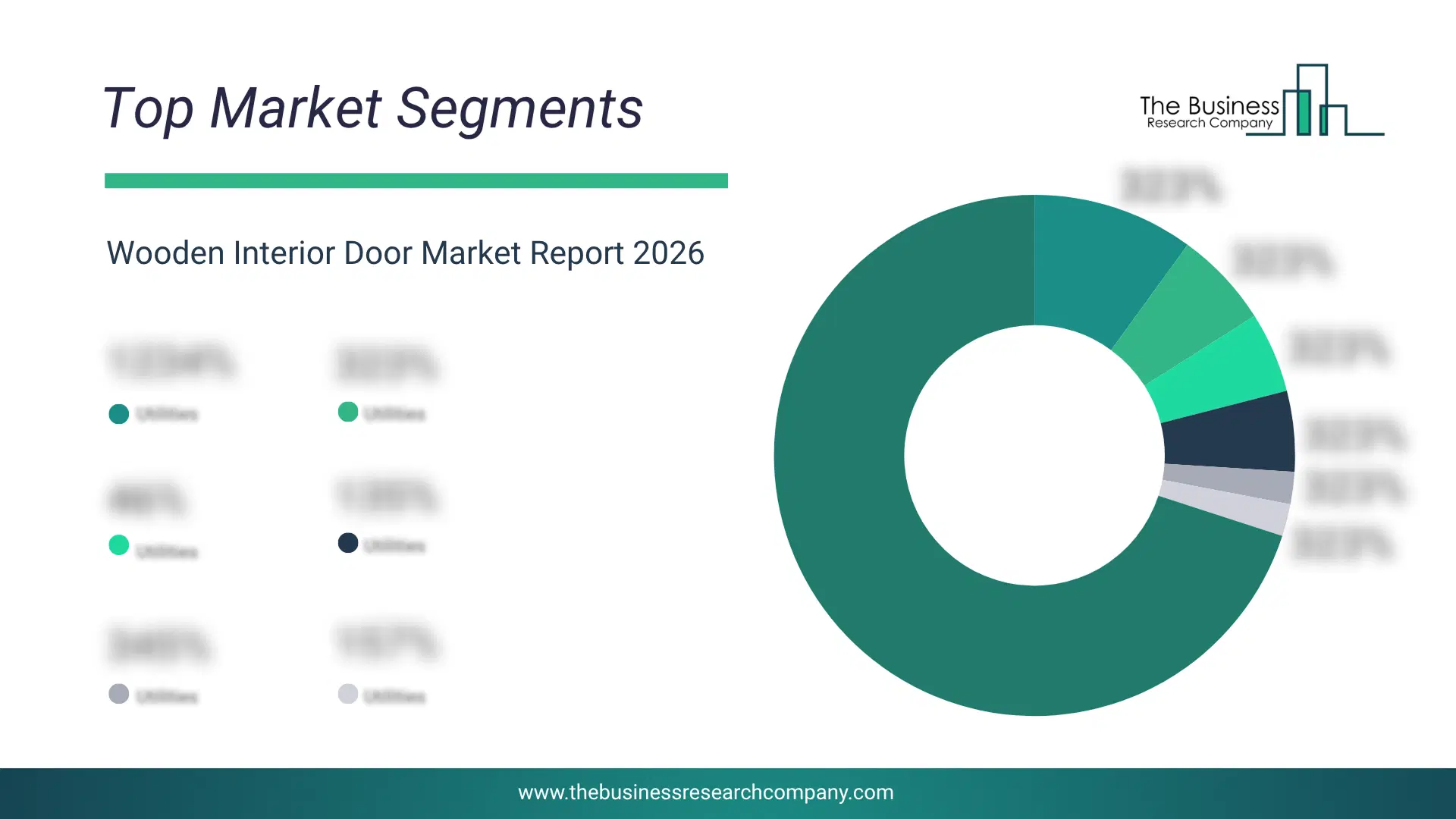
1) By Type: Panel Door, Bypass Door, Bifold Door, Pocket Door 2) By Mechanism: Swinging, Sliding, Folding, Other Mechanisms 3) By End-Use: Residential, Non-Residential, Other End Uses Subsegments: 1) By Panel Door: Solid Panel Doors, Hollow Core Panel Doors, Raised Panel Doors, Flat Panel Doors 2) By Bypass Door: Double Bypass Doors, Single Bypass Doors 3) By Bifold Door: Folding Bifold Doors, Accordion Bifold Doors 4) By Pocket Door: Single Pocket Doors, Double Pocket Doors The top segments in the professional lighting market will be: • Light Emitting Diode (LED) Lighting will reach $28.92 Billion by 2030. • Fluorescent Lighting will reach $11.5 Billion by 2030. • High-Intensity Discharge (HID) Lighting will reach $6.8 Billion by 2030. • Incandescent Lighting will reach $4.45 Billion by 2030. • Smart Lighting Solutions will reach $1.78 Billion by 2030. The top segments in the wooden interior door market will be: • Panel Door will reach $7.91 Billion by 2030. • Bifold Door will reach $7.28 Billion by 2030. • Bypass Door will reach $5.2 Billion by 2030. • Pocket Door will reach $4.98 Billion by 2030.What Is The Driver Of The Wooden Interior Door Market?
The rising infrastructure construction is expected to propel the growth of the wooden interior door market going forward. Infrastructure construction refers to the planning, design, and implementation of physical structures that support the functioning and development of a region. The benefit of wooden interior doors in infrastructure construction lies in their natural look and durability, enhancing the built infrastructure’s overall aesthetic appeal and longevity. For instance, in July 2024, according to the US Census Bureau, a US-based government agency, the value of construction operations rose from $2.01 trillion in May 2023 to $2.14 trillion in May 2024. Therefore, the rising infrastructure construction will drive the future wooden interior door industry forward.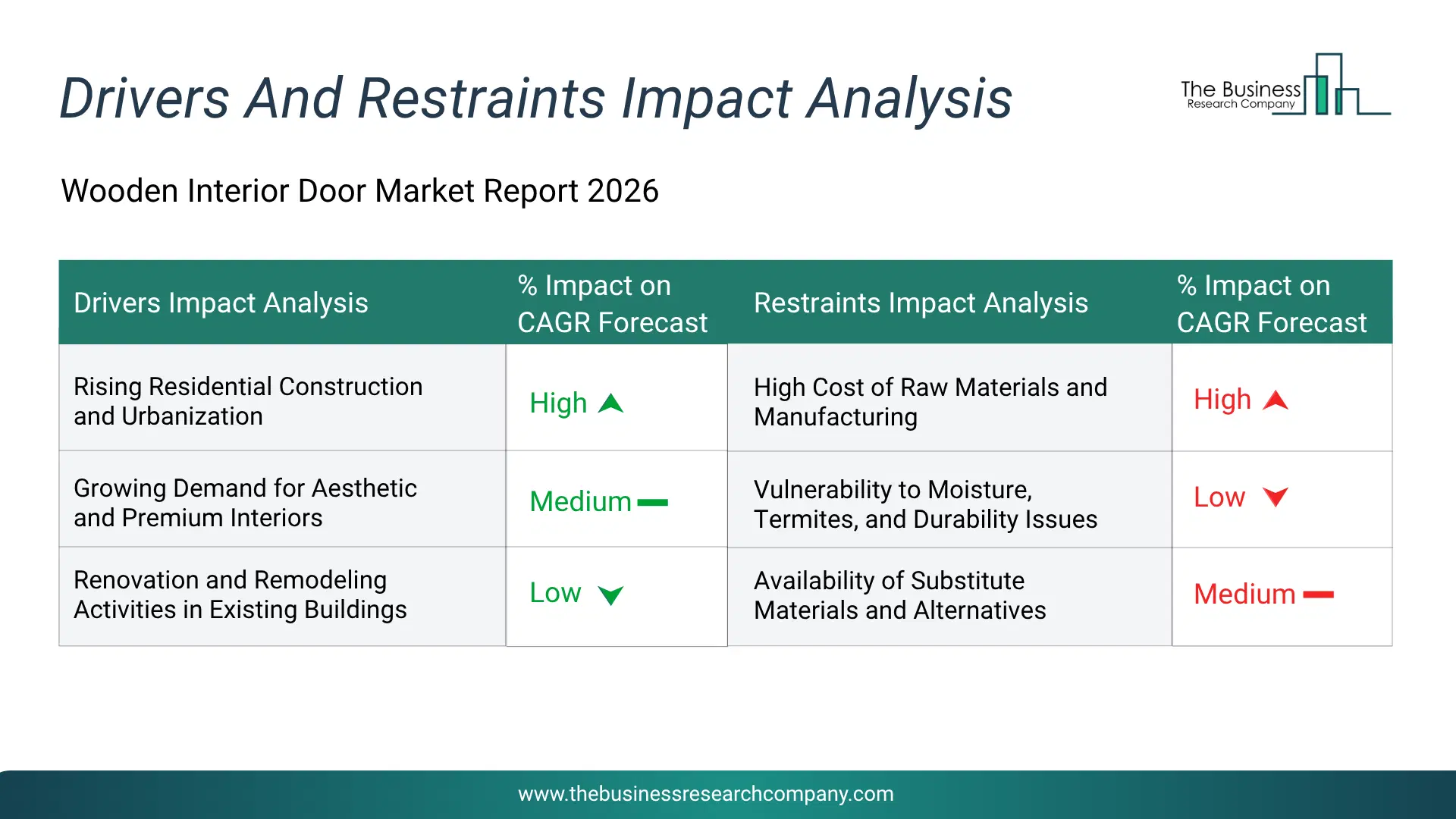
Infographic Chart Showing Key Market Drivers Analysis And Restraints For Wooden Interior Door Market
The chart presents an impact analysis of key drivers and restraints, quantifying their relative influence on the market's growth rate and helping assess the balance between growth enablers and limiting factors. This chart offers a high-level perspective; the full report contains more detailed insights.
How Will The Drivers Impact Growth In The Global Wooden Interior Door Market?
• Rising Residential Construction and Urbanization (High) – During the forecast period, the rising residential construction and urbanization is expected to become a key growth driver for the wooden interior door market by 2030. Rising Residential Construction and Urbanization acts as a critical driver for the wooden interior door market because expanding urban populations are increasing the demand for new housing units. Rapid urban development, especially in emerging economies, is leading to higher construction of apartments, villas, and gated communities. Wooden interior doors are widely preferred in residential buildings due to their durability, insulation properties, and cost-effectiveness. Growth in real estate development directly translates into higher installation of interior doors across new projects. This sustained expansion in housing infrastructure continues to boost market demand. • Growing Demand for Aesthetic and Premium Interiors (Medium) – During the forecast period, the growing demand for aesthetic and premium interiors is expected to emerge as a major factor driving the expansion of the wooden interior door market by 2030. Growing Demand for Aesthetic and Premium Interiors acts as a key driver for the wooden interior door market as consumers increasingly prioritize interior design and home décor. Wooden doors offer a wide range of finishes, designs, and customization options that enhance the visual appeal of living and commercial spaces. Rising disposable incomes and lifestyle improvements are encouraging homeowners to invest in premium interior fittings. Additionally, architects and designers often recommend wooden doors for their classic and versatile appearance. This shift toward visually appealing and customized interiors significantly supports market growth. • Renovation and Remodeling Activities in Existing Buildings (Low) – During the forecast period, the renovation and remodeling activities in existing buildings is expected to act as a key growth catalyst for the wooden interior door market by 2030. Renovation and Remodeling Activities in Existing Buildings act as an important driver for the wooden interior door market due to the increasing trend of upgrading older residential and commercial spaces. Property owners frequently replace outdated doors with modern wooden alternatives to improve functionality, aesthetics, and energy efficiency. The growing focus on home improvement projects, particularly in urban areas, is fueling replacement demand. In addition, commercial establishments such as offices, hotels, and retail spaces regularly undergo renovations that include interior upgrades. This continuous cycle of refurbishment contributes to steady demand in the market.How Will The Restraints Impact Growth In The Global Wooden Interior Door Market?
• High Cost of Raw Materials and Manufacturing (High) – During the forecast period, the the wooden interior door market faces a major restraint due to fluctuations and high costs of raw materials such as timber and engineered wood products. Premium wood types and treatments (moisture resistance, termite protection, finishing) further increase production costs. Manufacturers also incur additional expenses in processing, drying, and finishing wooden doors to meet quality standards. These rising input costs directly impact the final pricing of products, making them less affordable for price-sensitive consumers. As a result, demand may shift toward alternative materials like MDF, metal, or composite doors, limiting overall market expansion. • Vulnerability to Moisture, Termites, and Durability Issues (Medium) – During the forecast period, the wooden interior doors are prone to environmental issues such as moisture absorption, warping, swelling, and termite infestation if not properly treated. These durability concerns increase maintenance requirements and reduce the product lifecycle compared to alternatives like steel or PVC doors. In humid or tropical regions, such as parts of Asia-Pacific, these limitations become more pronounced. Consumers may hesitate to invest in wooden doors due to concerns about long-term performance and upkeep. This perceived lack of durability acts as a significant barrier to adoption in both residential and commercial segments. • Availability of Substitute Materials and Alternatives (Low) – During the forecast period, the the presence of alternative materials such as fiberglass, PVC, aluminum, and engineered composite doors poses strong competition to wooden interior doors. These substitutes often offer advantages like lower cost, better resistance to environmental factors, and minimal maintenance requirements. In modern construction, especially in cost-conscious and high-moisture environments, such alternatives are increasingly preferred. Additionally, advancements in design and aesthetics of non-wood materials have narrowed the visual gap with wooden doors. This growing preference for substitutes restrains the growth potential of the wooden interior door market.Key Players In The Global Wooden Interior Door Market
Major companies operating in the wooden interior door market are JELD-WEN Holding Inc., Masonite International Corporation, Pella Corporation, Marvin Ltd., Woodgrain Millwork Inc., Simpson Door Company, Steves and Sons Inc., Bayer Built Woodworks Inc., Oregon Door, GlassCraft Door Company, Jiangshan Oupai Door Industry Co Ltd, Oppein Home Group, Mexin Doors, Tata Pravesh, Windor India Pvt Ltd, DRE Doors, Puertas Sanrafael SA, Lualdi Porte, Barausse Doors, Garofoli Group, Tre Più
This chart is for illustrative purposes; the full report includes a detailed competitor analysis and comprehensive overview of the top 10 companies in the market.
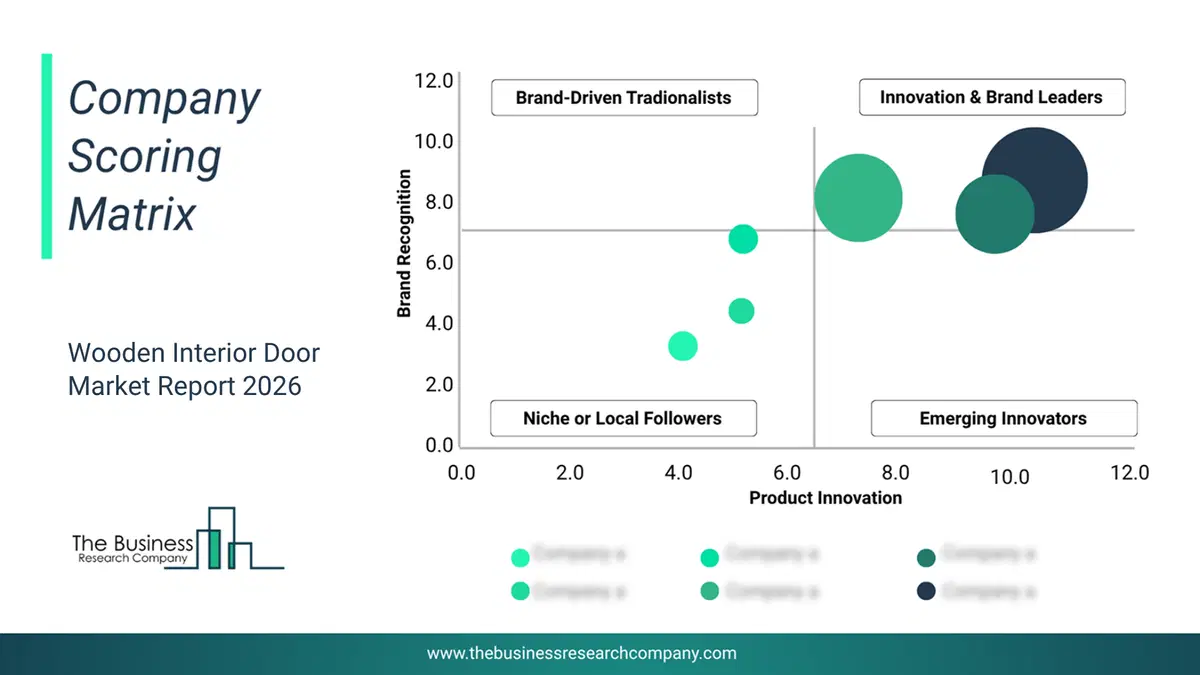
This chart maps companies by product innovation and brand strength, with bubble size indicating relative revenue, helping identify market leaders, challengers, and niche players. This is an illustrative chart; the full report provides a complete and accurate competitive analysis.
Global Wooden Interior Door Market Trends and Insights
Major companies operating in the wooden interior door market are focused on developing technological advancements such as New Folding Door to enhance design versatility, improve space efficiency, and provide customizable options for modern interiors. The New Folding Door is an innovative solution designed to optimize space and enhance aesthetics in both residential and commercial interiors. For instance, in January 2023, LaCantina Doors, Inc., a US-based door manufacturing company, launched the V2 Folding Door System to enhance open-concept living spaces. offers seamless indoor-outdoor living by creating expansive openings that enhance natural light and views, making spaces feel larger and more inviting. Its energy-efficient design ensures comfort across various climates while minimizing heating and cooling costs. Additionally, the low maintenance requirements and durable construction make it a practical choice for homeowners and builders alike, combining beauty with functionality.What Are Latest Mergers And Acquisitions In The Wooden Interior Door Market?
In October 2024, Roca Industry Holdingrock1 S.A, a Romania-based construction materials holding company, acquired Workshop Doors for an undisclosed amount. Through this acquisition, ROCA Industry aims to consolidate its interior door manufacturing operations, expand production capacity, and strengthen its position in the Romanian wooden interior door market. Workshop Doors Srl is a Romania-based company that provides residential interior wooden doors through its production facilities in Reghin and Petelea
Regional Outlook
Asia-Pacific was the largest region in the wooden interior door market in 2025. The regions covered in this market report are Asia-Pacific, South East Asia, Western Europe, Eastern Europe, North America, South America, Middle East, Africa. The countries covered in this market report are Australia, Brazil, China, France, Germany, India, Indonesia, Japan, Taiwan, Russia, South Korea, UK, USA, Canada, Italy, Spain.What Defines the Wooden Interior Door Market?
The wooden interior door market consists of sales of battened and ledged doors, wooden Dutch doors, and wooden French doors. Values in this market are ‘factory gate’ values, that is the value of goods sold by the manufacturers or creators of the goods, whether to other entities (including downstream manufacturers, wholesalers, distributors and retailers) or directly to end customers. The value of goods in this market includes related services sold by the creators of the goods.How is Market Value Defined and Measured?
The market value is defined as the revenues that enterprises gain from the sale of goods and/or services within the specified market and geography through sales, grants, or donations in terms of the currency (in USD unless otherwise specified). The revenues for a specified geography are consumption values that are revenues generated by organizations in the specified geography within the market, irrespective of where they are produced. It does not include revenues from resales along the supply chain, either further along the supply chain or as part of other products.
This chart presents market attractiveness based on a quantitative evaluation of growth, competition, strategic alignment, and risk, offering a clear view of opportunity areas for decision-making. This chart is for illustrative purposes; the full report contains the complete analysis.

This chart highlights the Total Addressable Market (TAM) by estimating the maximum revenue opportunity using an assumption-driven approach, supporting strategic planning and opportunity sizing across markets. The chart is illustrative; the full report provides a more comprehensive analysis.
What Key Data and Analysis Are Included in the Wooden Interior Door Market Report 2026?
The wooden interior door market research report is one of a series of new reports from The Business Research Company that provides market statistics, including Market Report 2026?global market size, regional shares, competitors with the market share, detailed market segments, market trends and opportunities, and any further data you may need to thrive in the wooden interior door Market Report 2026? The market research report delivers a complete perspective of everything you need, with an in-depth analysis of the current and future state of the Market Report 2026?Wooden Interior Door Market Report Forecast Analysis
| Report Attribute | Details |
|---|---|
| Market Size Value In 2026 | $18.39 billion |
| Revenue Forecast In 2030 | $23.96 billion |
| Growth Rate | CAGR of 6.4% from 2026 to 2030 |
| Base Year For Estimation | 2025 |
| Actual Estimates/Historical Data | 2020-2025 |
| Forecast Period | 2026 - 2030 |
| Market Representation | Revenue in USD Billion and CAGR from 2026 to 2030 |
| Segments Covered | Type, Mechanism, End-Use |
| Regional Scope | Asia-Pacific, Western Europe, Eastern Europe, North America, South America, Middle East, Africa |
| Country Scope | The countries covered in the report are Australia, Brazil, China, France, Germany, India, Indonesia, Japan, Taiwan, Russia, South Korea, UK, USA, Canada, Italy, Spain. |
| Key Companies Profiled | JELD-WEN Holding Inc., Masonite International Corporation, Pella Corporation, Marvin Ltd., Woodgrain Millwork Inc., Simpson Door Company, Steves and Sons Inc., Bayer Built Woodworks Inc., Oregon Door, GlassCraft Door Company, Jiangshan Oupai Door Industry Co Ltd, Oppein Home Group, Mexin Doors, Tata Pravesh, Windor India Pvt Ltd, DRE Doors, Puertas Sanrafael SA, Lualdi Porte, Barausse Doors, Garofoli Group, Tre Più |
| Customization Scope | Request for Customization |
| Pricing And Purchase Options | Explore Purchase Options |