
X Linked Hypophosphatemia Market Report 2026
Global Outlook – By Treatment Type (Conventional Therapy, Phosphate Supplements, Active Vitamin D Analogs, Novel Therapies, FGF23 inhibitors, Other Treatment Types), By Route Of Administration (Oral, Intravenous), By Distribution Channel (Hospital Pharmacies, Retail Pharmacies, Online Pharmacies, Other Distribution Channels), By End-User (Hospitals, Specialty Clinics, Homecare, Other End-Users) - Market Size, Trends, Strategies, and Forecast to 2030
X Linked Hypophosphatemia Market Overview
• X Linked Hypophosphatemia market size has reached to $1.33 billion in 2025 • Expected to grow to $2.01 billion in 2030 at a compound annual growth rate (CAGR) of 8.6% • Growth Driver: The Rising Prevalence Of Metabolic Bone Disorders Fueling The Market Growth Due To Advancements In Diagnosis And Genetic Awareness • North America was the largest region in 2025 and Asia-Pacific is the fastest growing region.What Is Covered Under X Linked Hypophosphatemia Market?
X-linked hypophosphatemia (XLH) refers to a rare genetic disorder caused by mutations in the phosphate-regulating endopeptidase homolog X-linked (PHEX) gene, leading to excessive phosphate loss in the urine and impaired bone mineralization. It is inherited in an X-linked dominant pattern, where males are usually more severely affected than females. The main types of X-linked hypophosphatemia are conventional therapy, phosphate supplements, active vitamin D analogs, novel therapies, FGF23 inhibitors, and others. Conventional therapy for XLH includes phosphate supplements and vitamin D analogs to regulate minerals, supporting bone health and growth. It is administered through various routes of administration such as oral and intravenous, and distributed through several distribution channels including hospital pharmacies, retail pharmacies, online pharmacies, and others. It is also used by several end-users, including hospitals, specialty clinics, homecare, and others.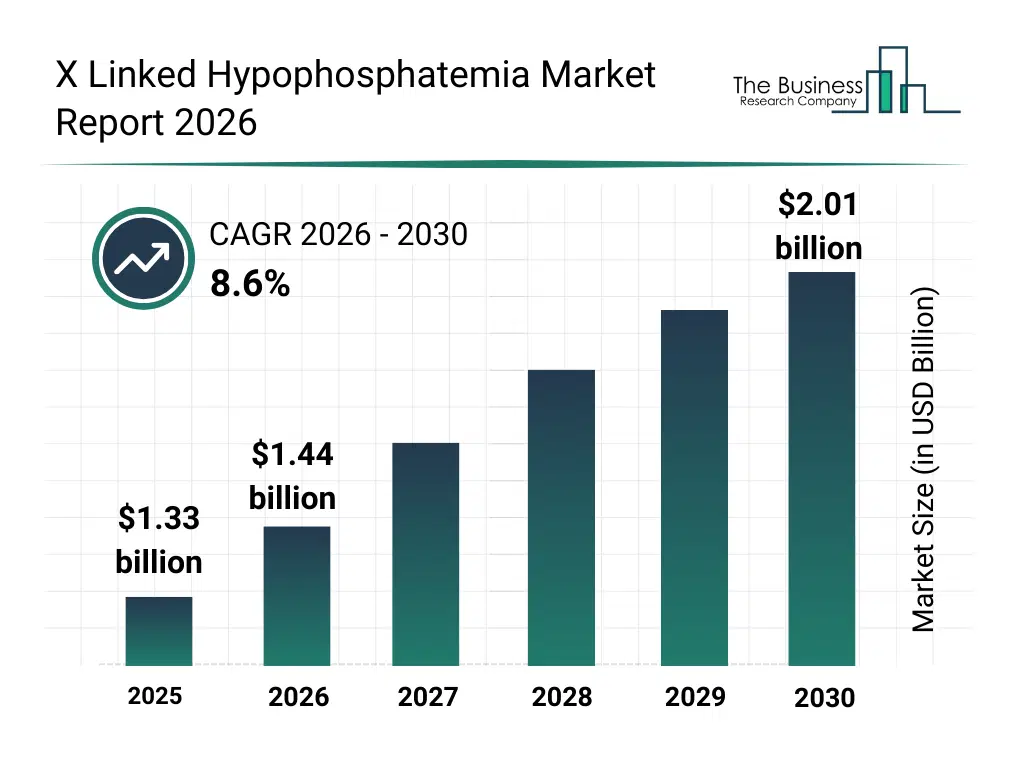
What Is The X Linked Hypophosphatemia Market Size and Share 2026?
The x linked hypophosphatemia market size has grown strongly in recent years. It will grow from $1.33 billion in 2025 to $1.44 billion in 2026 at a compound annual growth rate (CAGR) of 8.9%. The growth in the historic period can be attributed to improved understanding of phosphate metabolism disorders, availability of conventional phosphate and vitamin d therapies, increased diagnosis of rare bone disorders, growth of specialty endocrine clinics, expansion of pediatric metabolic disease care.What Is The X Linked Hypophosphatemia Market Growth Forecast?
The x linked hypophosphatemia market size is expected to see strong growth in the next few years. It will grow to $2.01 billion in 2030 at a compound annual growth rate (CAGR) of 8.6%. The growth in the forecast period can be attributed to increasing adoption of biologic therapies, rising investments in rare disease research, expansion of genetic screening programs, growing focus on long-term disease outcome management, increasing access to specialty biologic treatments. Major trends in the forecast period include increasing adoption of targeted fgf23 inhibitor therapies, growing focus on early genetic diagnosis, expansion of personalized treatment approaches, rising use of long-acting injectable therapies, improved multidisciplinary disease management.
Global X Linked Hypophosphatemia Market Segmentation
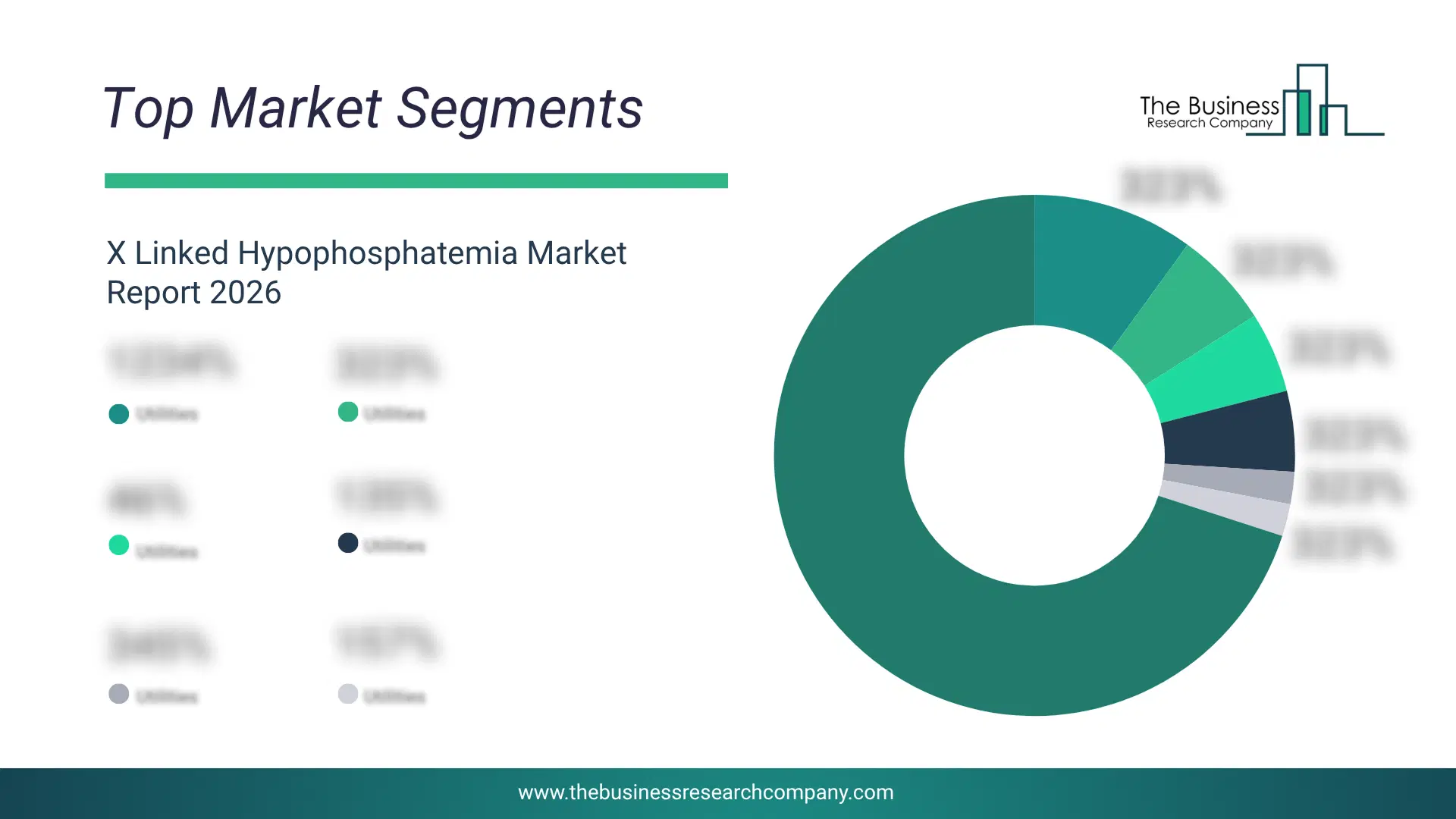
1) By Treatment Type: Conventional Therapy, Phosphate Supplements, Active Vitamin D Analogs, Novel Therapies, FGF23 inhibitors, Other Treatment Types 2) By Route Of Administration: Oral, Intravenous 3) By Distribution Channel: Hospital Pharmacies, Retail Pharmacies, Online Pharmacies, Other Distribution Channels 4) By End-User: Hospitals, Specialty Clinics, Homecare, Other End-Users Subsegments: 1) By Conventional Therapy: Pain Management, Physical Therapy, Orthopedic Surgery 2) By Phosphate Supplements: Oral Phosphate Formulations, Intravenous Phosphate Therapy 3) By Active Vitamin D Analogs: Calcitriol, Alfacalcidol, Paricalcitol 4) By Novel Therapies: Gene Therapy, Monoclonal Antibodies 5) By FGF23 Inhibitors: Burosumab (Crysvita), Other Investigational FGF23 Inhibitors 6) By Other Treatment Types: Growth Hormone Therapy, Calcium Supplements, BisphosphonatesWhat Are The Drivers Of The X Linked Hypophosphatemia Market?
The rising prevalence of metabolic bone disorders is expected to propel the growth of the X-linked hypophosphatemia market going forward. Metabolic bone disorders are diseases affecting bone strength, structure, or mineral balance, resulting from disruptions in calcium, phosphate, vitamin D, or hormone regulation. The rising prevalence of metabolic bone disorders is due to aging populations and lifestyle factors. As people age, there is a natural decline in bone density and an increased risk of conditions like osteoporosis and rickets. The prevalence of metabolic bone disorders increases awareness, research, and early diagnosis of conditions like X-linked hypophosphatemia (XLH), which leads to better screening and improved treatment options and drives innovations in managing XLH more effectively. For instance, in October 2024, according to the International Osteoporosis Foundation, a Switzerland-based nonprofit bone health organisation, up to 37 million fragility fractures occur annually worldwide in individuals aged over 55, equivalent to roughly 70 fractures every minute, and globally one in three women and one in five men over age 50 will experience an osteoporosis related fracture during their remaining lifetime. Therefore, the increasing prevalence of metabolic bone disorders drives the growth of the X-linked hypophosphatemia market. The increasing focus on personalized medicine is expected to propel the growth of the X-linked hypophosphatemia market going forward. Personalized medicine refers to customizing healthcare treatments and practices to individual patients based on their unique genetic, environmental, and lifestyle factors. The increasing focus on personalized medicine is due to the development of more accurate diagnostic tools, and patient-centered care. Personalized medicine in X-linked hypophosphatemia (XLH) tailors treatment based on genetic mutations, optimizing phosphate management and bone health. This approach ensures precise, targeted care for better disease management. For instance, in February 2024, according to the Personalized Medicine Coalition, a US-based nonprofit organization, the Food and Drug Administration (FDA) approved 16 new personalized treatments for rare disease patients in 2023, up from six in 2022. Therefore, the increasing focus on personalized medicine is driving the growth of the X-linked hypophosphatemia market.Key Players In The Global X Linked Hypophosphatemia Market
Major companies operating in the x linked hypophosphatemia market are Mayo Foundation for Medical Education and Research, Seattle Children’s Hospital, Kyowa Kirin Co. Ltd., Boston Children's Hospital, Apollo Hospitals, Medicover Hospitals, Arkansas Childrens Hospital, Swixx Biopharma SA, King's College Hospital, Alder Hey Children's Hospital, Invitae Corp., Ultragenyx Pharmaceutical Inc., Childrens Hospital of Philadelpia, Nanavati Max Super Specialty Hospital, Ascendis Pharma A/S, Inozyme Pharma Inc., Yale School of Medicine, Mitsubishi Tanabe Pharma Corporation, Lurie Children's Hospital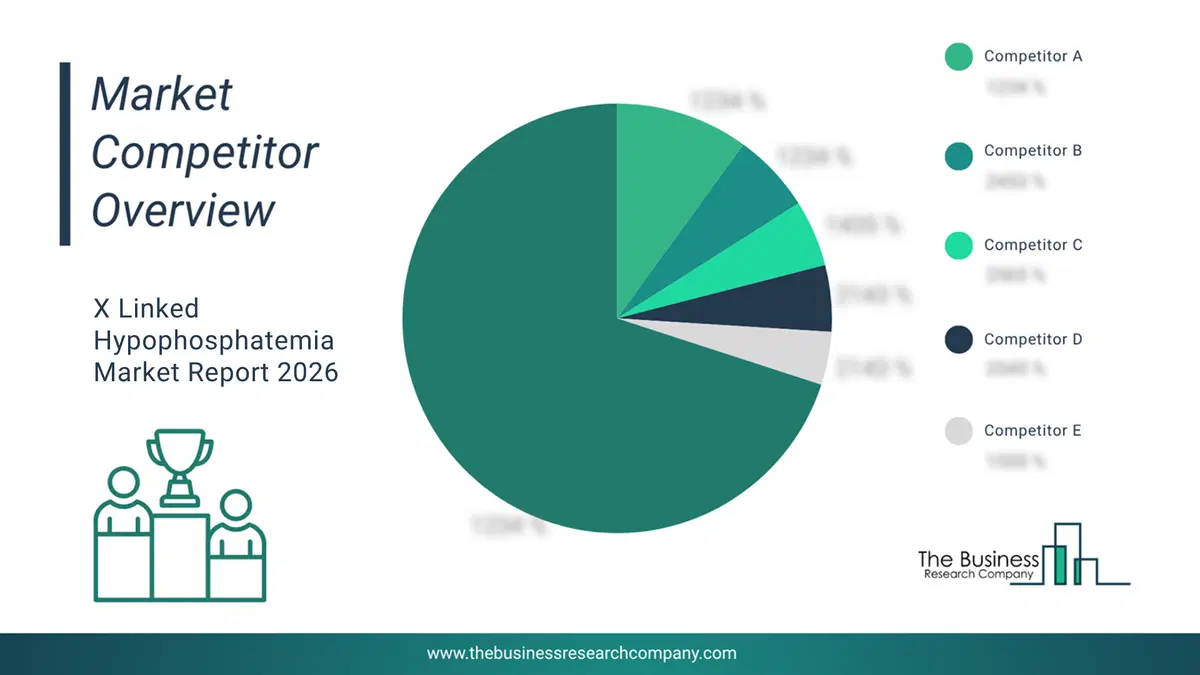
This chart is for illustrative purposes; the full report includes a detailed competitor analysis and comprehensive overview of the top 10 companies in the market.
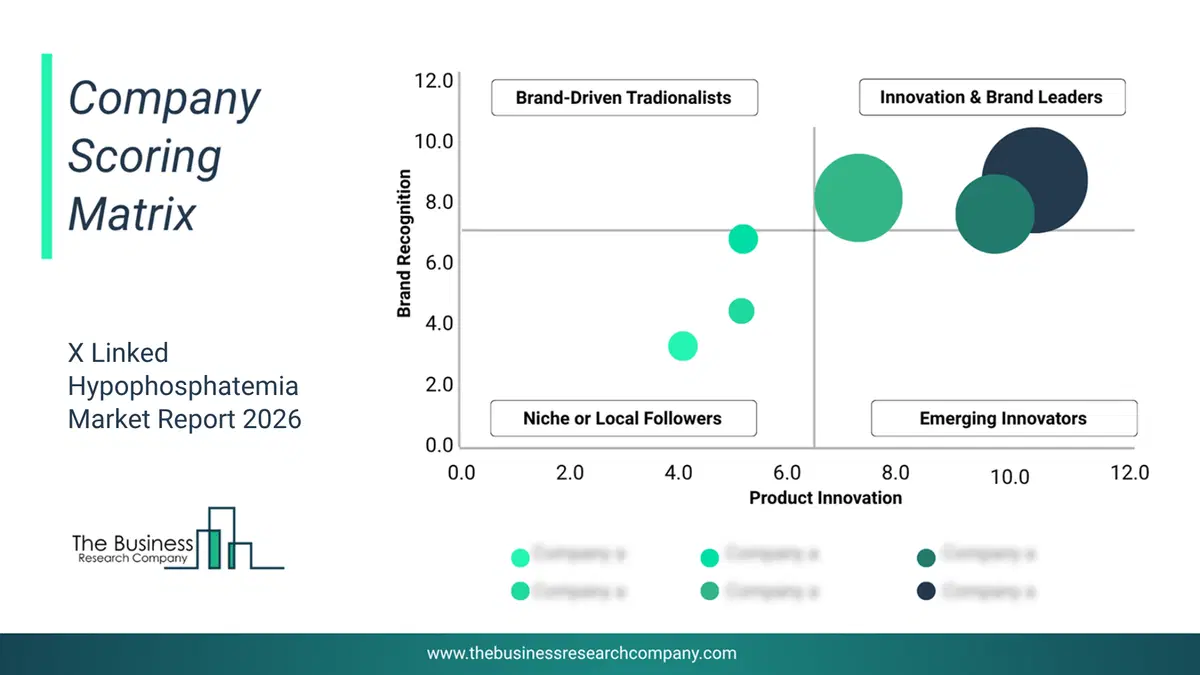
This chart maps companies by product innovation and brand strength, with bubble size indicating relative revenue, helping identify market leaders, challengers, and niche players. This is an illustrative chart; the full report provides a complete and accurate competitive analysis.
What Are Latest Mergers And Acquisitions In The X Linked Hypophosphatemia Market?
In August 2024, Kyowa Kirin International, a UK registered specialty pharmaceutical company, partnered with NewBridge Pharmaceuticals to expand access to its rare disease medicines across select Middle East and North Africa (MENA) markets. With this partnership, Kyowa Kirin International and NewBridge aim to commercialise Crysvita (burosumab), a leading treatment for X Linked Hypophosphataemia (XLH) and Tumour Induced Osteomalacia (TIO), and Poteligeo (mogamulizumab), used for rare subtypes of cutaneous T cell lymphoma, in Algeria, Iraq, Libya and Jordan, thereby improving access to life changing treatments for underserved rare disease patients in the region. NewBridge Pharmaceuticals is a UAE-based specialty pharmaceutical partner focused on bridging access gaps in MENA by in licensing and commercialising innovative therapies from global biopharmaceutical companies.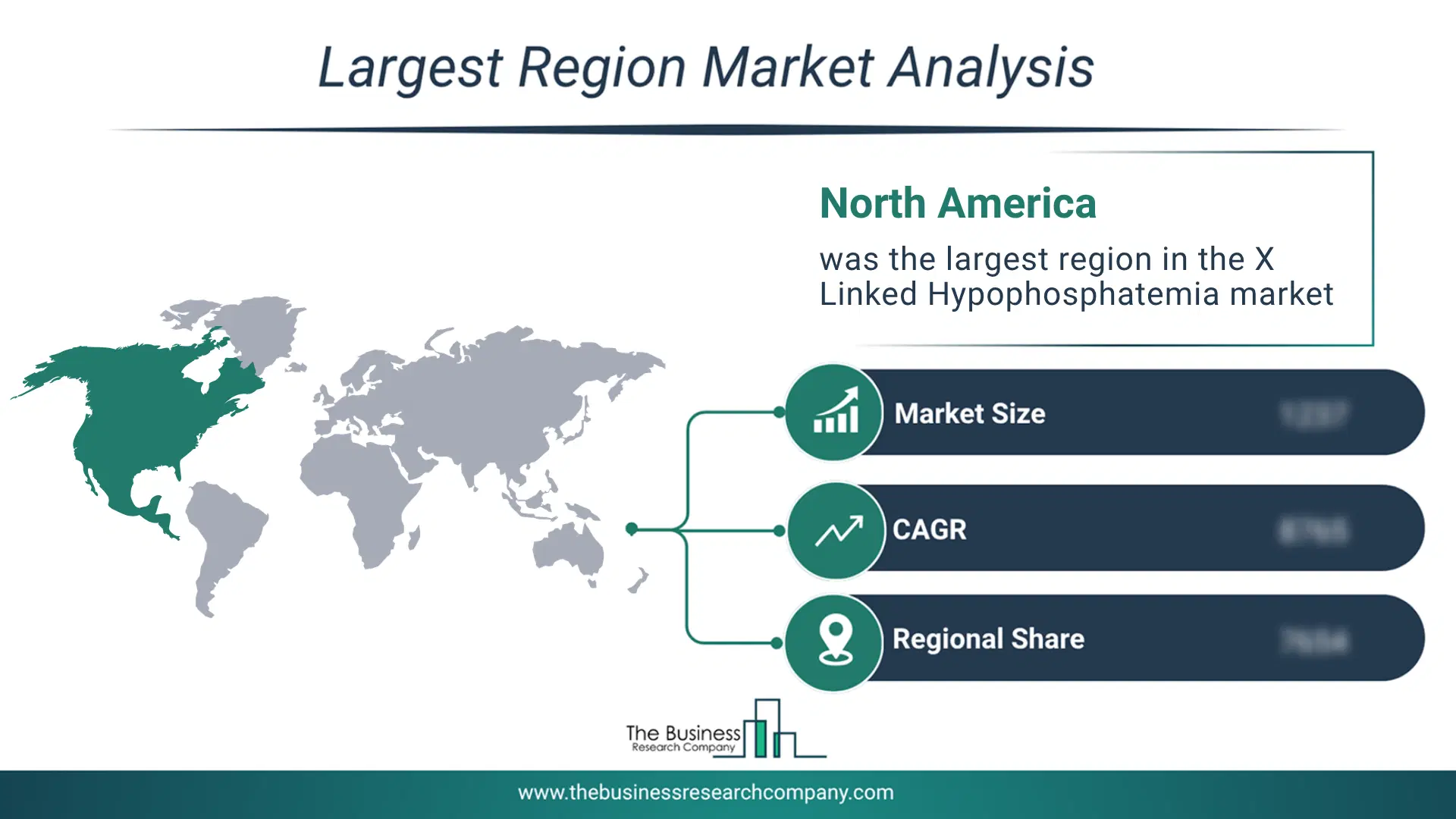
Regional Outlook
North America was the largest region in the X-linked hypophosphatemia market in 2025. Asia-Pacific region is expected to be the fastest-growing region in the forecast period. The regions covered in this market report are Asia-Pacific, South East Asia, Western Europe, Eastern Europe, North America, South America, Middle East, Africa. The countries covered in this market report are Australia, Brazil, China, France, Germany, India, Indonesia, Japan, Taiwan, Russia, South Korea, UK, USA, Canada, Italy, Spain.What Defines the X Linked Hypophosphatemia Market?
The X-linked hypophosphatemia market consists of revenues earned by entities by providing services such as genetic testing, monoclonal antibody treatments, endocrinology consultations, and patient counseling. The market value includes the value of related goods sold by the service provider or included within the service offering. The X-linked hypophosphatemia market includes sales of orthopedic braces, pain management medications, bone density monitoring devices, and genetic testing kits. Values in this market are ‘factory gate’ values, that is, the value of goods sold by the manufacturers or creators of the goods, whether to other entities (including downstream manufacturers, wholesalers, distributors, and retailers) or directly to end customers. The value of goods in this market includes related services sold by the creators of the goods.How is Market Value Defined and Measured?
The market value is defined as the revenues that enterprises gain from the sale of goods and/or services within the specified market and geography through sales, grants, or donations in terms of the currency (in USD unless otherwise specified). The revenues for a specified geography are consumption values that are revenues generated by organizations in the specified geography within the market, irrespective of where they are produced. It does not include revenues from resales along the supply chain, either further along the supply chain or as part of other products.
This chart presents market attractiveness based on a quantitative evaluation of growth, competition, strategic alignment, and risk, offering a clear view of opportunity areas for decision-making. This chart is for illustrative purposes; the full report contains the complete analysis.

This chart highlights the Total Addressable Market (TAM) by estimating the maximum revenue opportunity using an assumption-driven approach, supporting strategic planning and opportunity sizing across markets. The chart is illustrative; the full report provides a more comprehensive analysis.
What Key Data and Analysis Are Included in the X Linked Hypophosphatemia Market Report 2026?
The x linked hypophosphatemia market research report is one of a series of new reports from The Business Research Company that provides market statistics, including industry global market size, regional shares, competitors with the market share, detailed market segments, market trends and opportunities, and any further data you may need to thrive in the x linked hypophosphatemia industry. The market research report delivers a complete perspective of everything you need, with an in-depth analysis of the current and future state of the industry.X Linked Hypophosphatemia Market Report Forecast Analysis
| Report Attribute | Details |
|---|---|
| Market Size Value In 2026 | $1.44 billion |
| Revenue Forecast In 2030 | $2.01 billion |
| Growth Rate | CAGR of 8.6% from 2026 to 2030 |
| Base Year For Estimation | 2025 |
| Actual Estimates/Historical Data | 2020-2025 |
| Forecast Period | 2026 - 2030 |
| Market Representation | Revenue in USD Billion and CAGR from 2026 to 2030 |
| Segments Covered | Treatment Type, Route Of Administration, Distribution Channel, End-User |
| Regional Scope | Asia-Pacific, Western Europe, Eastern Europe, North America, South America, Middle East, Africa |
| Country Scope | The countries covered in the report are Australia, Brazil, China, France, Germany, India, Indonesia, Japan, Taiwan, Russia, South Korea, UK, USA, Canada, Italy, Spain |
| Key Companies Profiled | Mayo Foundation for Medical Education and Research, Seattle Children’s Hospital, Kyowa Kirin Co. Ltd., Boston Children's Hospital, Apollo Hospitals, Medicover Hospitals, Arkansas Childrens Hospital, Swixx Biopharma SA, King's College Hospital, Alder Hey Children's Hospital, Invitae Corp., Ultragenyx Pharmaceutical Inc., Childrens Hospital of Philadelpia, Nanavati Max Super Specialty Hospital, Ascendis Pharma A/S, Inozyme Pharma Inc., Yale School of Medicine, Mitsubishi Tanabe Pharma Corporation, Lurie Children's Hospital |
| Customization Scope | Request for Customization |
| Pricing And Purchase Options | Explore Purchase Options |