
X-Ray Detectors Market Report 2026
Global Outlook – By Type ( Direct FPDs, Cesium Iodide Fpds, Gadolinium Oxysulfide Fpds), By Technology ( Flat-Panel Detectors, Computed Radiography Detectors, Line-Scan Detectors, Charge-Coupled Device Detectors), By Portability ( Portable FPDs, Fixed FPDs ), By Field Of View ( Large Field of View FPDs, Medium Field of View FPDs, Small Field of View FPDs ), By Application ( Medical, Dental, Security, Veterinary, Industrial, Other Applications) – Market Size, Trends, Strategies, and Forecast to 2030
X-Ray Detectors Market Overview
• X-Ray Detectors market size has reached to $5.39 billion in 2025 • Expected to grow to $7.61 billion in 2030 at a compound annual growth rate (CAGR) of 7.2% • Growth Driver: Rising Prevalence Of Chronic Diseases Fuels X-Ray Detectors Market Growth • Market Trend: Strategic Partnerships To Expand Capabilities • North America was the largest region in 2025 and Asia-Pacific is the fastest growing region.Market Gains By 2030 – Top Opportunities By Segment
Market Gain identifies the most promising market opportunities by highlighting the segments or products expected to generate the highest incremental revenue growth over the next five years.
What Is Covered Under X-Ray Detectors Market?
X-ray detectors are devices that transform X-rays into visible light using an electric current. X-rays are also useful in medical imaging for diagnostic procedures using X-ray radiography, mammography, computed tomography (CT), and angiography. They are used to measure spatial distribution, spectrum, flux, and other X-rays properties. The main types of components in the surface inspection are cameras, frame grabbers, optics, lighting equipment, processors, software, and others. Frame Grabbers are used in image processing, and analysis of cell motion, and it is helpful to detect faults through surface inspection. The different surface types include 2D and 3D and are deployed in various types including traditional systems and robotic cells. These are used in several sectors such as semiconductor, automotive, electrical and electronics, glass, and metal, food and packaging, medical and pharmaceuticals, plastic and rubber, printing, and others.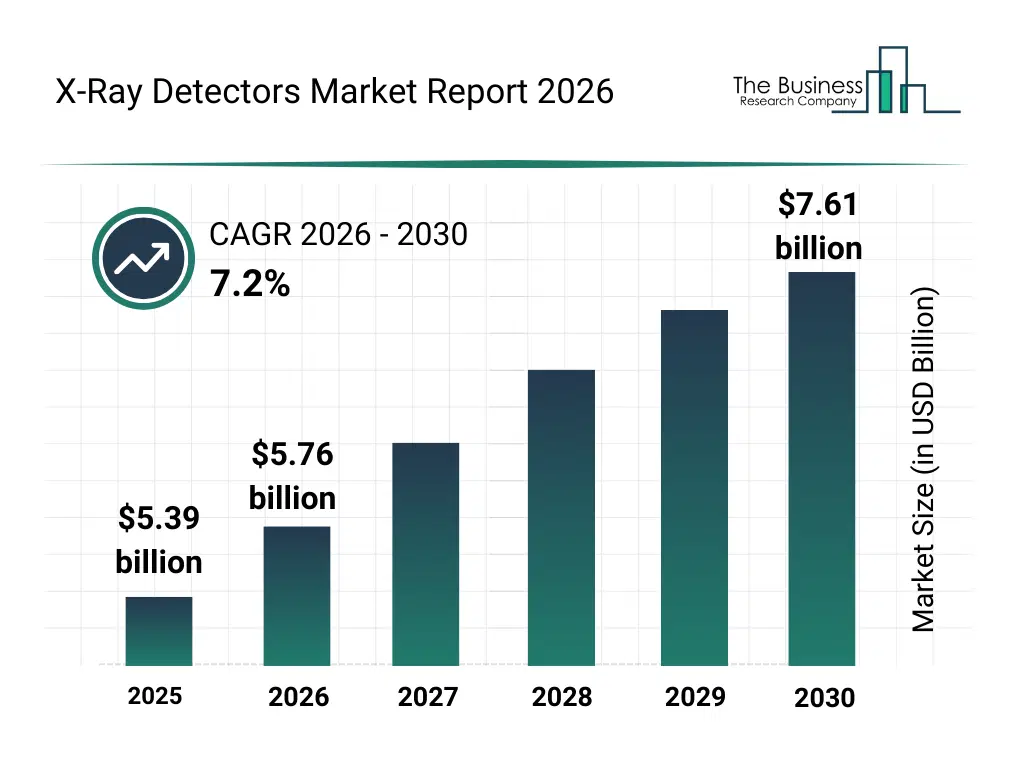
What Is The X-Ray Detectors Market Size 2026 And Growth Rate?
The x-ray detectors market size has grown strongly in recent years. It will grow from $5.39 billion in 2025 to $5.76 billion in 2026 at a compound annual growth rate (CAGR) of 6.8%. The growth in the historic period can be attributed to early adoption in medical radiography, reliance on analog imaging detectors, growth in basic security screening, expansion of dental imaging systems, initial industrial nondestructive testing applications.What Is The X-Ray Detectors Market Growth Forecast?
The x-ray detectors market size is expected to see strong growth in the next few years. It will grow to $7.61 billion in 2030 at a compound annual growth rate (CAGR) of 7.2%. The growth in the forecast period can be attributed to increasing demand for high-resolution digital detectors, rising use in portable and mobile medical imaging, expansion of advanced ct and mammography systems, growing adoption in security and defense screening, development of low-dose imaging technologies. Major trends in the forecast period include adoption of AI-enabled diagnostic imaging systems, development of high-resolution digital x-ray platforms, integration of smart connected radiology equipment, advancement of automated imaging workflows, expansion of data-driven medical imaging technologies.
Global X-Ray Detectors Market Segmentation
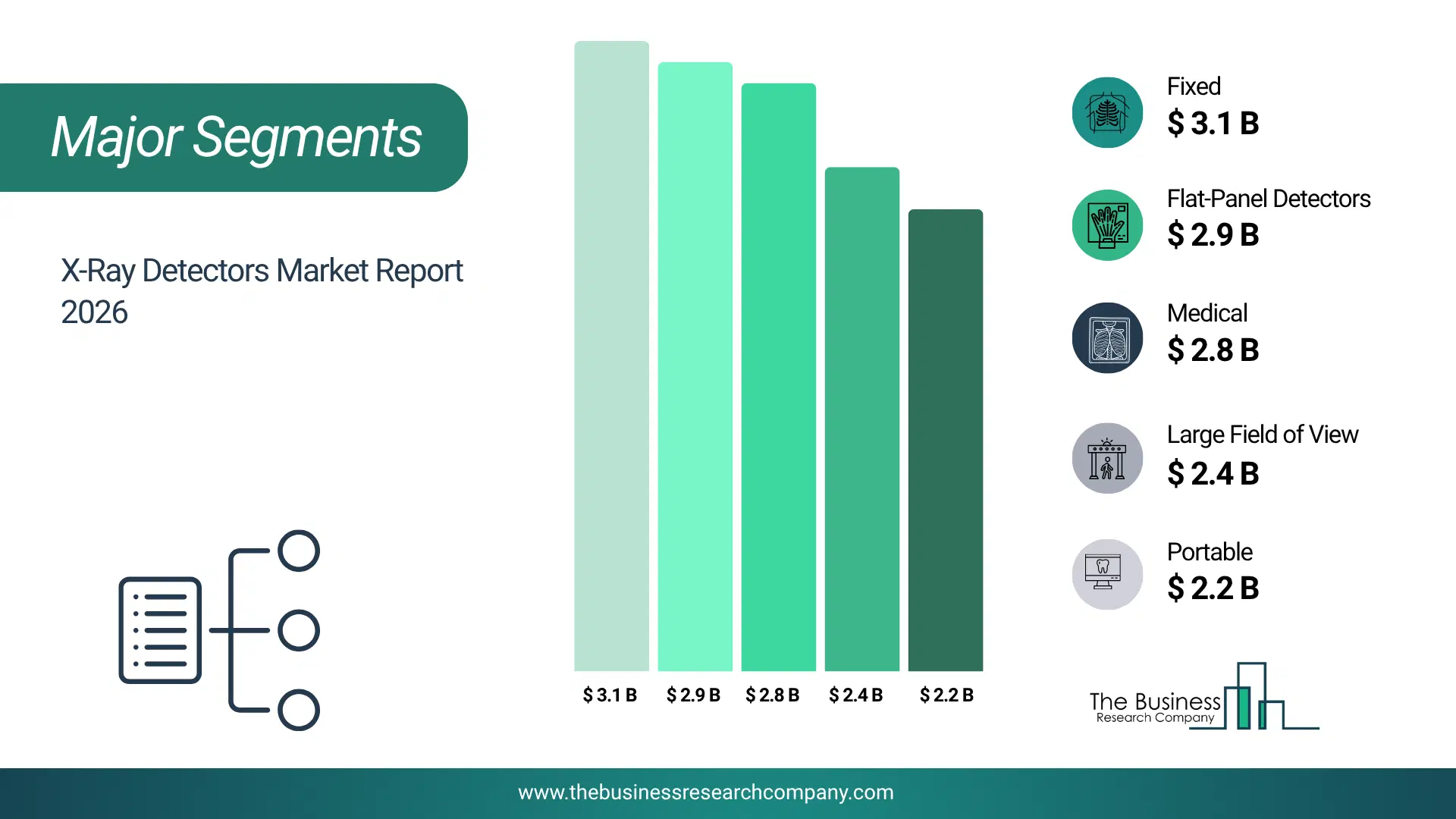
1) By Type: Direct FPDs, Cesium Iodide Fpds, Gadolinium Oxysulfide Fpds 2) By Technology: Flat-Panel Detectors, Computed Radiography Detectors, Line-Scan Detectors, Charge-Coupled Device Detectors 3) By Portability: Portable FPDs, Fixed FPDs 4) By Field Of View: Large Field of View FPDs, Medium Field of View FPDs, Small Field of View FPDs 5) By Application: Medical, Dental, Security, Veterinary, Industrial, Other Applications Subsegments: 1) By Direct FPDs (Flat Panel Detectors): Amorphous Selenium Detectors, CMOS-Based Detectors 2) By Cesium Iodide FPDs: Scintillator-Based Detectors, Thin Film Transistor (TFT) Technology 3) By Gadolinium Oxysulfide FPDs: Scintillator Detectors, Combination Detectors The top segments in the x-ray detectors market will be: • Fixed will reach $3164.49 Million by 2025. • Flat-Panel Detectors will reach $2909.76 Million by 2025. • Medical will reach $2860.17 Million by 2025. • Large Field of View will reach $2459.65 Million by 2025. • Portable will reach $2229.37 Million by 2025.What Is The Driver Of The X-Ray Detectors Market?
The increasing prevalence of chronic diseases is expected to propel the growth of the X-ray detectors market going forward. Chronic disease refers to a form of illness that lasts for three months or more and can deteriorate with time. X-ray detectors are used for diagnosing and monitoring the progression of chronic disease with detailed images of affected areas. For instance, in January 2023, according to the National Library of Medicine, a US-based agency, the number of people in the US aged 50 and older who have at least one chronic condition would increase by 99.5%, that is 142.66 million, by 2050. Additionally, in September 2022, according to the World Health Organization (WHO) 2022 Highlights, a Switzerland-based intergovernmental health organization, there were 41 million deaths, which is 74% of all deaths caused by noncommunicable diseases (NCDs) or chronic diseases every year globally. Therefore, the increasing prevalence of chronic diseases drives the growth of the X-ray detectors industry.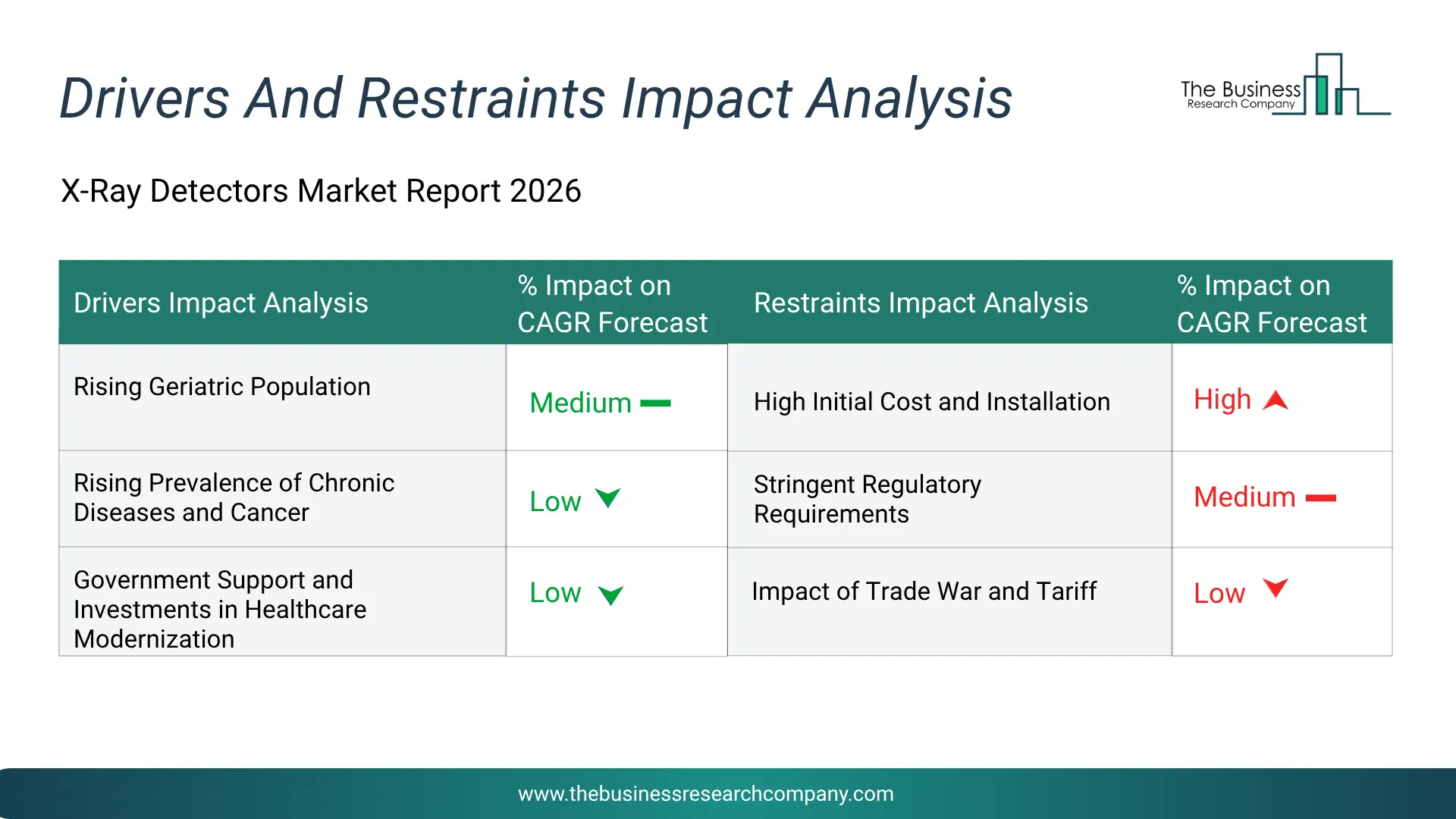
Infographic Chart Showing Key Market Drivers Analysis And Restraints For X-Ray Detectors Market
The chart presents an impact analysis of key drivers and restraints, quantifying their relative influence on the market's growth rate and helping assess the balance between growth enablers and limiting factors. This chart offers a high-level perspective; the full report contains more detailed insights.
How Will The Drivers Impact Growth In The Global X-Ray Detectors Market?
• Rising Geriatric Population (Medium) – The rising geriatric population will become a key driver of growth in the x-ray detectors market by 2030. An increasing share of the global population is aging, which leads to greater demand for diagnostic imaging because older individuals typically experience more health conditions requiring monitoring, screening, and follow-up. As people age, the incidence of bone disorders, degenerative joint diseases, osteoarthritis, osteoporosis, cardiovascular issues, and other age-related pathologies rises, all of which often require routine X-ray imaging to diagnose or monitor. This increase in imaging volume exerts pressure on hospitals and diagnostic centers to upgrade or expand their digital radiography capacities, particularly by investing in more sensitive, faster, and higher resolution X-ray detectors to handle larger throughput while maintaining image quality and reducing radiation dose. The trend also pushes innovation toward more user-friendly, portable, or bedside detectors so that elderly or mobility-impaired patients can be imaged more easily, increasing adoption of detector systems optimized for these use cases. The cumulative effect is that as geriatric population grows, more X-ray detectors are needed across healthcare infrastructure to meet the clinical demand. As a result, the rising geriatric population is anticipated to contributing to a 1.0% annual growth in the market. • Rising Prevalence of Chronic Diseases and Cancer (Low) – The rising prevalence of chronic diseases and cancer will emerge as a major factor driving the expansion of the market by 2030. Chronic diseases (such as cardiovascular disease, diabetes, chronic respiratory conditions) and cancer are becoming more prevalent globally, and many of these conditions demand repeated imaging procedures for diagnosis, staging, monitoring response to therapy, or detecting complications. For example, cancer patients may need periodic X-ray based imaging (chest X-rays, bone scans) as part of treatment follow-up or to detect metastases. Similarly, chronic pulmonary or cardiac patients often require imaging to monitor disease progression or treatment impact. This continuous demand for diagnostic and monitoring imaging makes robust, reliable detectors essential in clinical workflows. To keep up with the increasing volume and complexity of imaging use, healthcare providers will push for detectors with higher efficiency, better sensitivity, lower noise, and improved processing (e.g., AI image enhancements), thereby expanding demand for advanced X-ray detectors. The rising chronic disease burden also motivates modular or scalable detector upgrades and calibration or maintenance services to extend lifespan and performance of installed systems. Consequently, the rising prevalence of chronic diseases and cancer is projected to contributing to a 0.7% annual growth in the market. • Government Support and Investments in Healthcare Modernization (Low) – The government support and investments in healthcare modernization will serve as a key growth catalyst for the market by 2030. Governments in many countries are investing in healthcare infrastructure upgrades, digital transformation initiatives, and diagnostic facility expansions, often as part of public health programs or stimulus measures. These investments include upgrading from analog to digital imaging, procuring modern detector systems, and funding hospital modernization projects. Supported by national health policy, grants, subsidies, or health infrastructure budgets, such investments lower barriers for adoption of advanced X-ray detector technologies. Because public healthcare institutions often serve large patient volumes, these procurements translate into sizable orders for detectors and related services (installation, calibration, maintenance). In parallel, governments may mandate stricter imaging regulation, safety standards, or imaging capacity minimums (e.g., for screening programs), which encourages institutions to replace outdated detectors with compliant next-generation systems. Thus, government support acts as a catalyst, channeling capital and priority into markets for X-ray detector hardware, software upgrades, and service ecosystems. Therefore, this government support and investments in healthcare modernization is projected to supporting to a 0.5% annual growth in the market. • Growing Demand from Industrial and Security Applications (Low) – The growing demand from industrial and security applications will become a significant driver contributing to the growth of the market by 2030. Beyond medical use, industrial inspection (non-destructive testing, materials inspection, electronics, defect detection) and security screening (airports, cargo, border control) increasingly rely on X-ray imaging and detectors. Industrial sectors require detectors that are rugged, fast, and capable of capturing fine structural or defect details in materials. As manufacturing, energy, and infrastructure projects expand globally, inspection and quality assurance demand rise, pushing adoption of advanced digital X-ray detectors in factories and NDT (non-destructive testing) labs. In security and transportation, growing volumes of passenger traffic, cargo shipment, and heightened concerns over contraband, threat detection, and border security motivate investments in high-resolution, throughput-capable detectors. Government mandates tighter security, customs inspection regimes, and modernization of airports also feed demand. As these non-medical sectors scale demand, they widen the addressable market for X-ray detector manufacturers and service providers. Consequently, the growing demand from industrial and security applications is projected to contributing to a 0.2% annual growth in the market.How Will The Restraints Impact Growth In The Global X-Ray Detectors Market?
• High Initial Cost and Installation (Low) – High Initial Cost and Installation will restrict the growth of the X-Ray Detectors market during the forecast period. X-ray detectors involve significant costs for equipment, installation, and integration with imaging systems. High costs create barriers for smaller healthcare facilities and budget-constrained institutions. Investment requirements can limit the adoption of advanced detector technologies and affect market growth. • Stringent Regulatory Requirements (Low) – Stringent Regulatory Requirements will restrict the growth of the X-Ray Detectors market during the forecast period. X-ray detectors must comply with strict regulatory requirements for safety and performance. Regulatory compliance adds to product development and certification costs. Regulatory hurdles can delay product approvals and limit the availability of innovative detector technologies. • Impact of Trade War and Tariff (Low) – Impact of Trade War and Tariff will restrict the growth of the X-Ray Detectors market during the forecast period. X-ray detector production relies on imported components and materials subject to trade tariffs. Trade barriers can increase equipment costs and affect product availability. Trade tensions may also impact healthcare investment and technology adoption.Key Players In The Global X-Ray Detectors Market
Major companies operating in the x-ray detectors market are Varex Imaging Corporation, Thales Group, Canon Inc., Agfa-Gevaert Group, FUJIFILM Holdings America Corporation, Hamamatsu Photonics K.K., Analogic Corporation, Konica Minolta Inc., MOXTEK Inc., Teledyne Digital Imaging Inc., iRay Technology Co.Ltd., Vieworks Co. Ltd., Koninklijke Philips N.V., Siemens AG, Trixell SAS, DRTECH Corporation, Comet Holding AG, Carestream Health Inc., Rayence Co. Ltd., PerkinElmer Inc., Bruker Corporation, Amptek Inc., CareRay Medical Systems Co., Rayence Inc., Adaptix Inc., MediView XR, Kromek Group PLC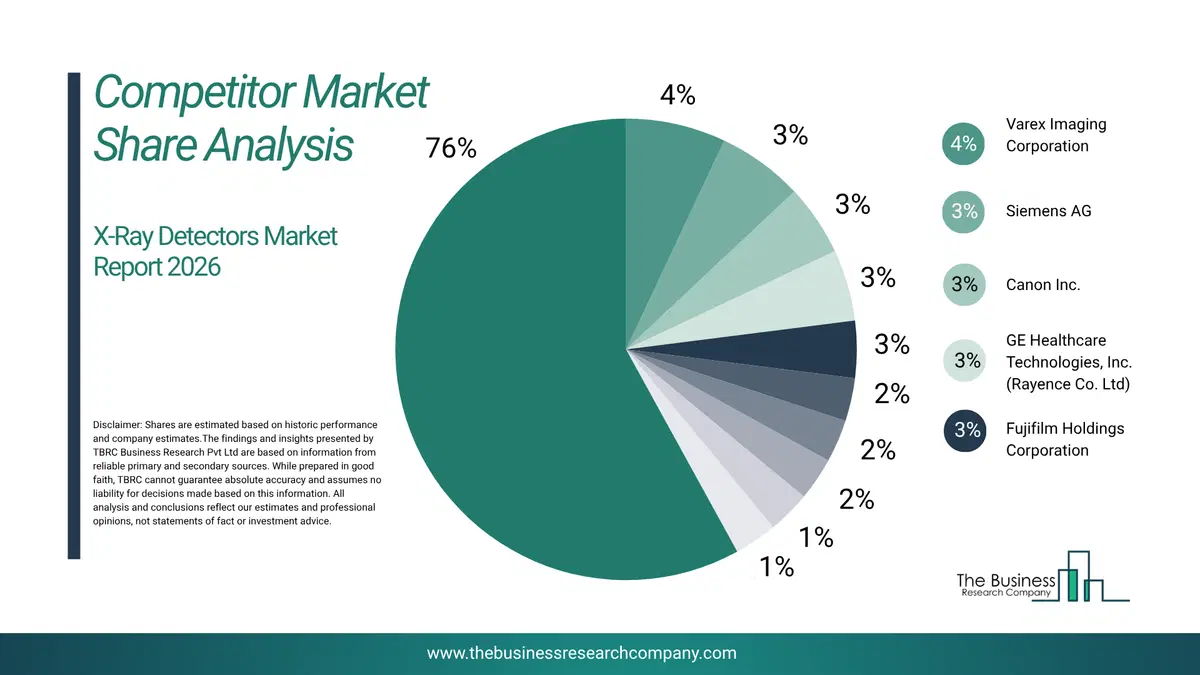
This chart is for illustrative purposes; the full report includes a detailed competitor analysis and comprehensive overview of the top 10 companies in the market.
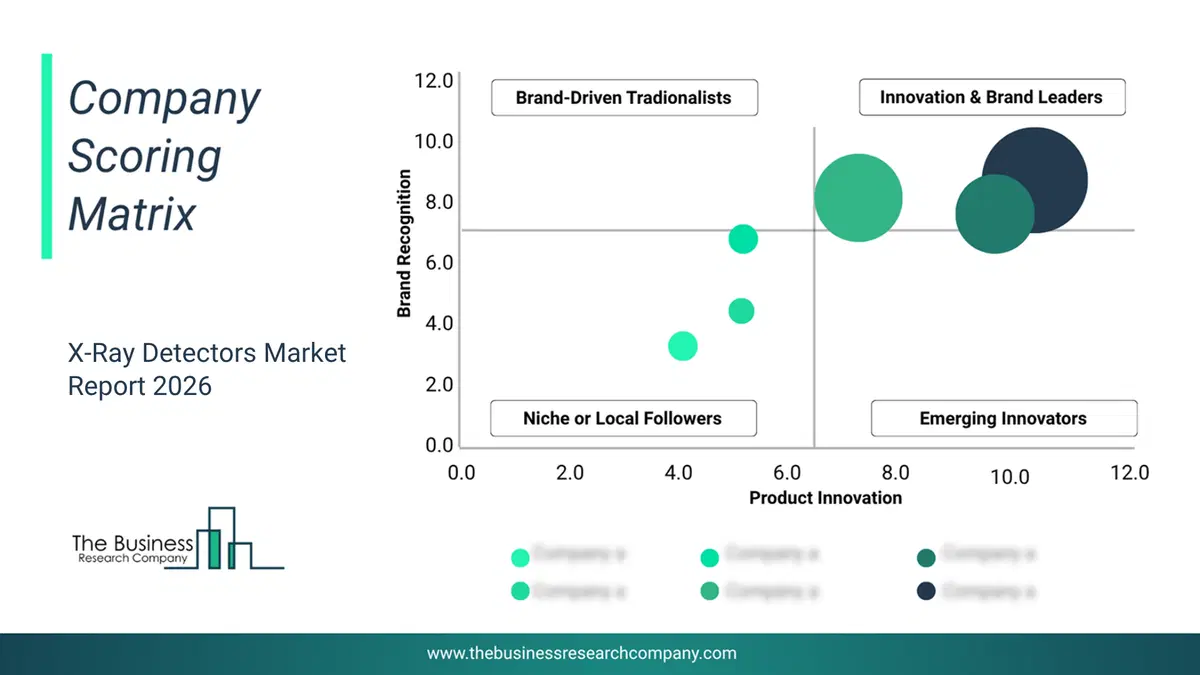
This chart maps companies by product innovation and brand strength, with bubble size indicating relative revenue, helping identify market leaders, challengers, and niche players. This is an illustrative chart; the full report provides a complete and accurate competitive analysis.
Global X-Ray Detectors Market Trends and Insights
Major companies operating in the X-ray detectors market are adopting a strategic partnership approach for expanding capabilities. Strategic partnerships refer to a process in which companies leverage each other's strengths and resources to achieve mutual benefits and success. In September 2023, Quantum Detectors, a UK-based a company that specializes in developing direct electron detectors and readout systems, partnered with Amsterdam Scientific Instruments (ASI). As part of this partnership, Quantum Detectors will become the exclusive distributor of ASI’s Electron Microscopy and X-ray detectors. Amsterdam Scientific Instruments (ASI) is a Netherlands-based company that designs and manufactures advanced and customized detector solutions for researchers.What Are Latest Mergers And Acquisitions In The X-Ray Detectors Market?
In July 2023, Detection Technology Plc, a Finland-based X-ray detector solutions and services company, acquired Haobo Imaging for EUR 12 million ($ 12.69 million). The acquisition aims to boost Detection Technology's capabilities in static and dynamic TFT flat panel detectors for medical imaging, nearly doubling its market reach. The integration of Haobo Imaging’s platforms and expertise will drive long-term growth and enhance customer experiences. Haobo Imaging is a China-based provider of X-ray flat panel detectors.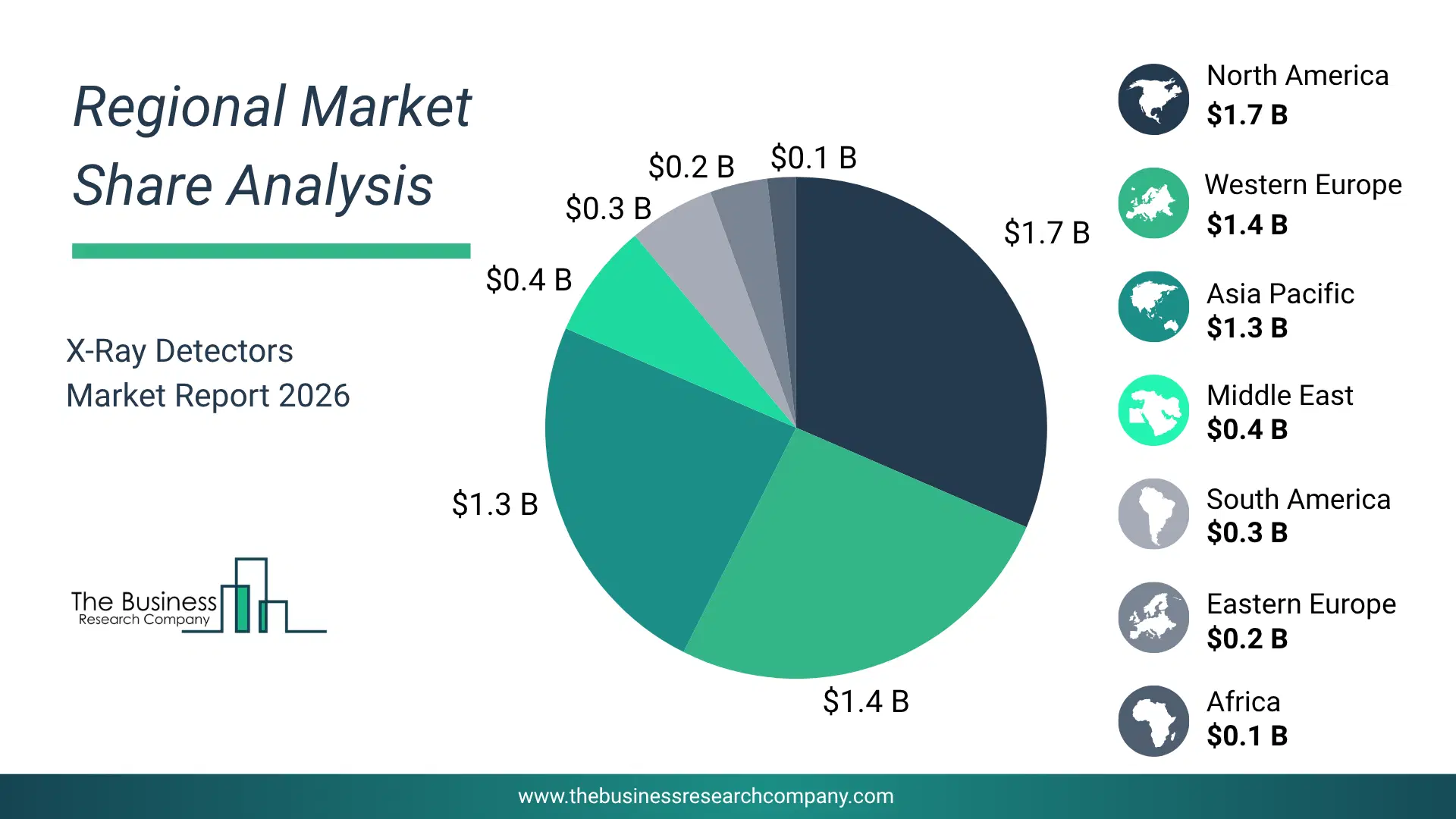
Regional Outlook
North America was the largest region in the X-ray detectors market in 2025. Asia-Pacific is expected to be the fastest-growing region in the X-ray detectors market report during the forecast period. The regions covered in this market report are Asia-Pacific, South East Asia, Western Europe, Eastern Europe, North America, South America, Middle East, Africa. The countries covered in this market report are Australia, Brazil, China, France, Germany, India, Indonesia, Japan, Taiwan, Russia, South Korea, UK, USA, Canada, Italy, Spain.What Defines the X-Ray Detectors Market?
The X-ray detectors market consists of sales of charge-coupled device (CCD) detectors, flat panel detectors, computed radiography (CR) detectors, and other X-ray detectors. Values in this market are ‘factory gate’ values, that is the value of goods sold by the manufacturers or creators of the goods, whether to other entities (including downstream manufacturers, wholesalers, distributors and retailers) or directly to end customers. The value of goods in this market includes related services sold by the creators of the goods.How is Market Value Defined and Measured?
The market value is defined as the revenues that enterprises gain from the sale of goods and/or services within the specified market and geography through sales, grants, or donations in terms of the currency (in USD unless otherwise specified). The revenues for a specified geography are consumption values that are revenues generated by organizations in the specified geography within the market, irrespective of where they are produced. It does not include revenues from resales along the supply chain, either further along the supply chain or as part of other products.
This chart presents market attractiveness based on a quantitative evaluation of growth, competition, strategic alignment, and risk, offering a clear view of opportunity areas for decision-making. This chart is for illustrative purposes; the full report contains the complete analysis.

This chart highlights the Total Addressable Market (TAM) by estimating the maximum revenue opportunity using an assumption-driven approach, supporting strategic planning and opportunity sizing across markets. The chart is illustrative; the full report provides a more comprehensive analysis.
What Key Data and Analysis Are Included in the X-Ray Detectors Market Report 2026?
The x-ray detectors market research report is one of a series of new reports from The Business Research Company that provides market statistics, including industry global market size, regional shares, competitors with the market share, detailed market segments, market trends and opportunities, and any further data you may need to thrive in the x-ray detectors industry. The market research report delivers a complete perspective of everything you need, with an in-depth analysis of the current and future state of the industry.X-Ray Detectors Market Report 2026 Market Report Forecast Analysis
| Report Attribute | Details |
|---|---|
| Market Size Value In 2026 | $5.76 billion |
| Revenue Forecast In 2030 | $7.61 billion |
| Growth Rate | CAGR of 6.8% from 2026 to 2030 |
| Base Year For Estimation | 2025 |
| Actual Estimates/Historical Data | 2020-2025 |
| Forecast Period | 2026 - 2030 |
| Market Representation | Revenue in USD Billion and CAGR from 2026 to 2030 |
| Segments Covered | Type, Technology, Portability, Field Of View, Application |
| Regional Scope | Asia-Pacific, Western Europe, Eastern Europe, North America, South America, Middle East, Africa |
| Country Scope | The countries covered in the report are Australia, Brazil, China, France, Germany, India, Indonesia, Japan, Taiwan, Russia, South Korea, UK, USA, Canada, Italy, Spain. |
| Key Companies Profiled | Varex Imaging Corporation, Thales Group, Canon Inc., Agfa-Gevaert Group, FUJIFILM Holdings America Corporation, Hamamatsu Photonics K.K., Analogic Corporation, Konica Minolta Inc., MOXTEK Inc., Teledyne Digital Imaging Inc., iRay Technology Co.Ltd., Vieworks Co. Ltd., Koninklijke Philips N.V., Siemens AG, Trixell SAS, DRTECH Corporation, Comet Holding AG, Carestream Health Inc., Rayence Co. Ltd., PerkinElmer Inc., Bruker Corporation, Amptek Inc., CareRay Medical Systems Co., Rayence Inc., Adaptix Inc., MediView XR, Kromek Group PLC |
| Customization Scope | Request for Customization |
| Pricing And Purchase Options | Explore Purchase Options |