
Yescarta Market Report 2026
Epidemiology, Pipeline Analysis, Market Insights & Forecasts
Yescarta Market Overview
• The Yescarta market growth in the historic period has been driven by advances in genetic engineering technologies, increasing incidence of hematologic malignancies • Market expansion is supported by expansion into additional cancer indications, rising investments in next-generation car constructs • Growth Driver: Impact Of Rising Leukemia Incidence On The Market Growth • North America was the largest region in 2025.What Is Covered Under Yescarta Market?
Yescarta (axicabtagene ciloleucel) is a genetically engineered autologous T-cell therapy used for the treatment of certain types of hematologic cancers, specifically relapsed or refractory large B-cell lymphoma and primary mediastinal B-cell lymphoma in adults. It involves modifying a patient’s own T cells to express a chimeric antigen receptor (CAR) that targets CD19 on cancerous B cells. The main indication for yescarta are large b-cell lymphoma, mantle cell lymphoma, acute lymphoblastic leukemia, follicular lymphoma. Large B-cell lymphoma (LBCL) is an aggressive type of non-Hodgkin lymphoma, a cancer that originates in the lymphatic system. These are distributed through various distribution channels such as hospitals, specialty clinics, online pharmacies and are used by various end users such as adult, geriatric.
What Is The Yescarta Market Size and Share 2026?
The growth in the historic period can be attributed to advances in genetic engineering technologies, increasing incidence of hematologic malignancies, regulatory approvals of car-t therapies, expansion of specialized cancer treatment centers, early success in refractory lymphoma treatment.What Is The Yescarta Market Growth Forecast?
The growth in the forecast period can be attributed to expansion into additional cancer indications, rising investments in next-generation car constructs, growing focus on manufacturing scalability, increasing adoption in earlier treatment lines, development of cost-optimized cell therapy processes. Major trends in the forecast period include expanding adoption of car-t cell therapies in oncology, rising focus on personalized cancer treatments, growing investment in cell and gene therapy platforms, increased use of autologous immunotherapies, enhanced emphasis on long-term remission outcomes.
Global Yescarta Market Segmentation
1) By Indication: Large B-Cell Lymphoma, Mantle Cell Lymphoma, Acute Lymphoblastic Leukemia, Follicular Lymphoma 2) By Distribution Channel: Hospitals, Specialty Clinics, Online Pharmacies 3) By End User: Adult, GeriatricWhat Are The Drivers Of The Yescarta Market?
The increasing incidence of leukemia is expected to propel the growth of the yescarta market going forward. Leukemia is a type of cancer that affects the blood and bone marrow, leading to the abnormal production of white blood cells. The increasing incidence of leukemia may be attributed to factors such as environmental exposures, genetic mutations, lifestyle changes, and improved detection methods. Yescarta, an advanced CAR T-cell therapy, revolutionizes leukemia treatment by reprogramming a patient’s own immune cells to target and destroy cancerous cells, offering renewed hope for improved outcomes in battling the disease. For instance, in 2024, according to the American Cancer Society, a US-based non-profit cancer advocacy organization, the number of leukemia cases increased to 62,770, reflecting an increase from 59,610 recorded in 2023. Therefore, the increasing incidence of leukemia drives the yescarta industry. The rising demand for personalized medicine is expected to propel the growth of the Yescarta market going forward. Personalized medicine refers to a medical approach that tailors the prevention, diagnosis, and treatment of diseases to an individual’s unique genetic, environmental, and lifestyle factors. Rising demand for personalized medicine is primarily driven by the increasing prevalence of chronic and genetic diseases, which necessitates tailored treatments that improve patient outcomes and reduce adverse effects. Personalized medicine, driven by the increasing prevalence of chronic and genetic diseases, supports Yescarta by enabling targeted CAR-T therapies that are tailored to individual patients’ genetic and tumor profiles, thereby improving treatment efficacy and patient outcomes. For instance, in February 2024, the Personalized Medicine Coalition, a US-based non-profit organization, reported that in 2023, the FDA approved 16 new personalized treatments for rare disease patients, up from six in 2022. The newly approved personalized treatments for 2023 also include seven cancer drugs and three for other diseases and conditions. Therefore, the rising demand for personalized medicine drives the Yescarta industry. The growing number of clinical trials is expected to propel the growth of the Yescarta market going forward. Clinical trials refer to carefully designed research studies conducted with human participants to evaluate the safety, efficacy, and optimal use of new medical treatments, drugs, devices, or interventions before they are widely approved for general use. The growing number of clinical trials is primarily driven by the rising prevalence of chronic and rare diseases, as more patients require effective treatments, prompting pharmaceutical and biotech companies to develop and test new therapies to meet this increasing demand. Clinical trials help Yescarta by generating robust clinical evidence that demonstrates its safety and efficacy, supports regulatory approvals, and drives physician adoption and patient access. For instance, in December 2024, the Association of the British Pharmaceutical Industry (ABPI), a UK-based organization, highlighted that the number of pharmaceutical industry trials launched in the UK increased for the second consecutive year, rising from 411 in 2022 to 426 in 2023. Therefore, the growing number of clinical trials drives the Yescarta industry.Key Players In The Global Yescarta Market
Major companies operating in the yescarta market are Kite Pharma Inc. ( a subsidiary of Gilead Sciences Inc.)
This chart is for illustrative purposes; the full report includes a detailed competitor analysis and comprehensive overview of the top 10 companies in the market.
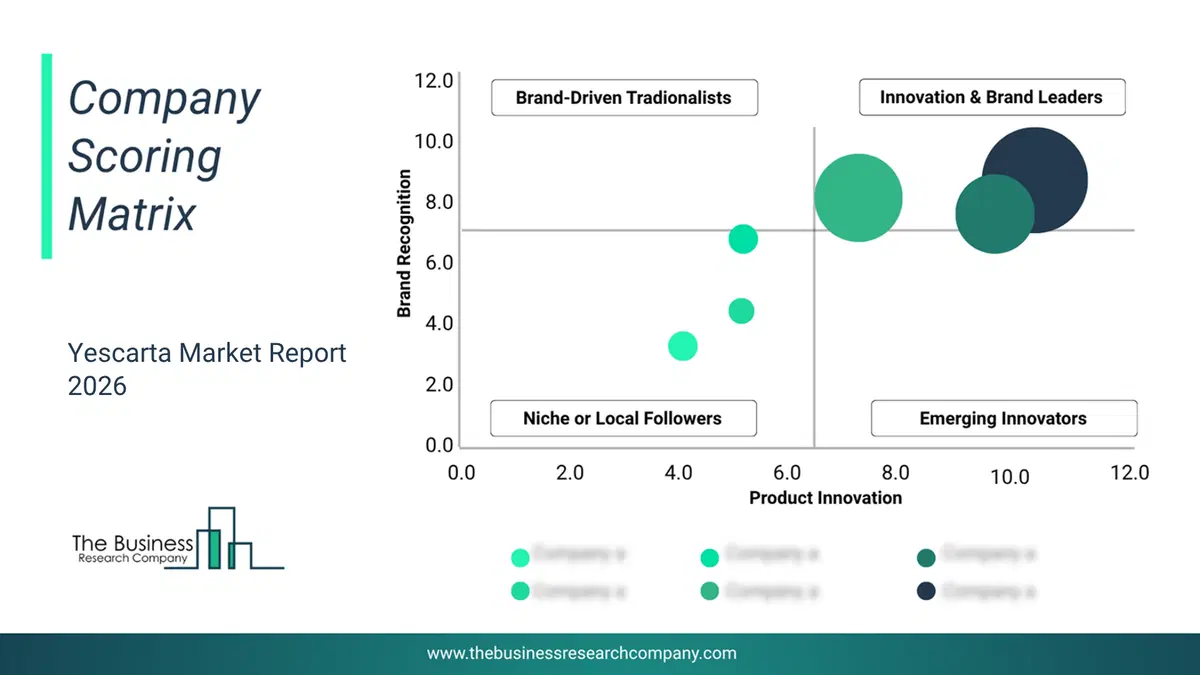
This chart maps companies by product innovation and brand strength, with bubble size indicating relative revenue, helping identify market leaders, challengers, and niche players. This is an illustrative chart; the full report provides a complete and accurate competitive analysis.
Regional Insights
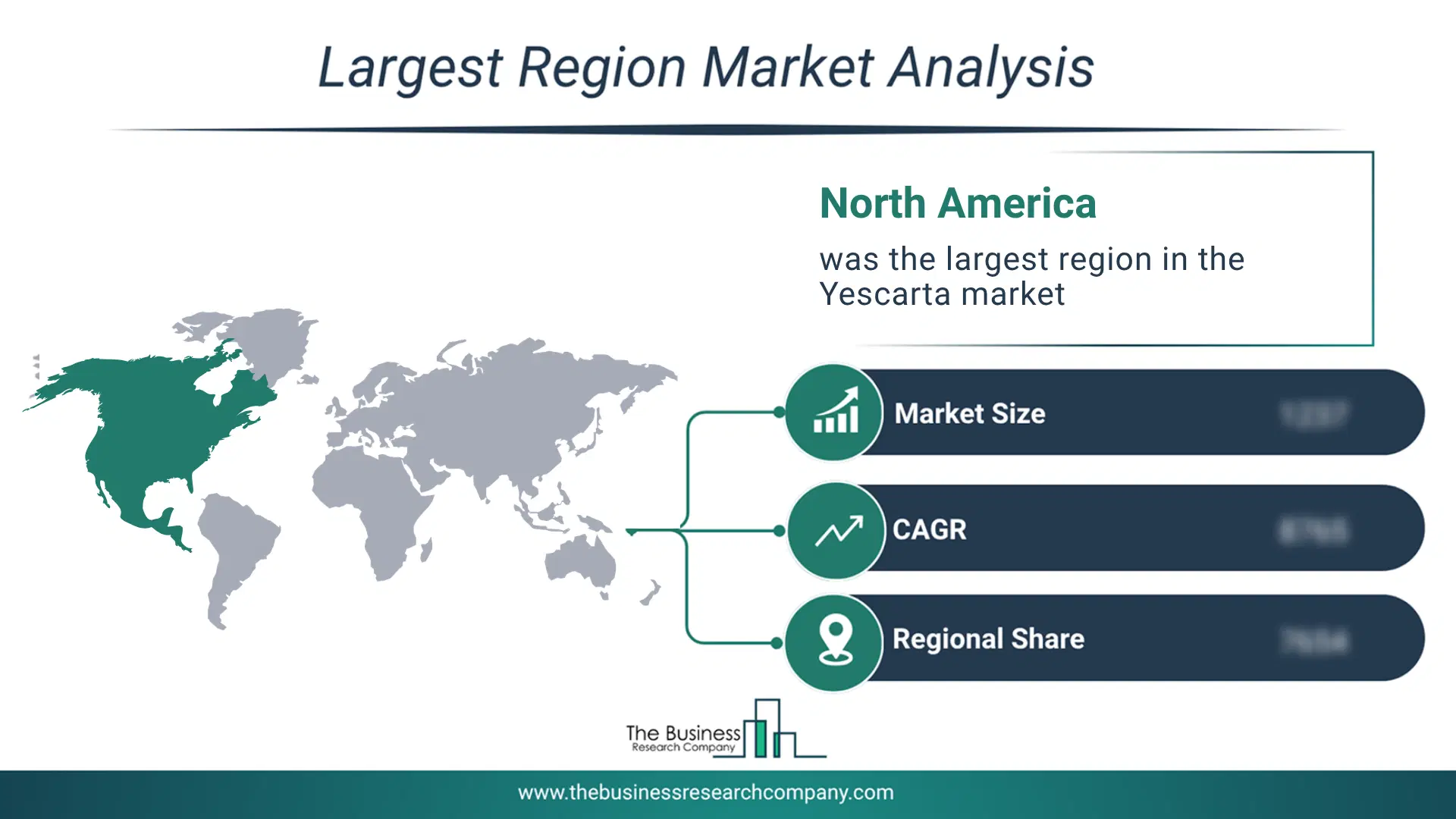
North America was the largest region in the yescarta market in 2025. The regions covered in this market report are Asia-Pacific, Western Europe, Eastern Europe, North America, South America, Middle East, Africa. The countries covered in this market report are Australia, India, China, South Korea, Japan, UK, France, Germany, USA, Canada.What Defines the Yescarta Market?
The yescarta market consists of sales of cell-based therapies and intravenous (IV) infusion. Values in this market are ‘factory gate’ values, the value of goods sold by the manufacturers or creators of the goods, whether to other entities (including downstream manufacturers, wholesalers, distributors, and retailers) or directly to end customers. The value of goods in this market includes related services sold by the creators of the goods.How is Market Value Defined and Measured?
The market value is defined as the revenues that enterprises gain from the sale of goods and/or services within the specified market and geography through sales, grants, or donations in terms of the currency (in USD unless otherwise specified). The revenues for a specified geography are consumption values that are revenues generated by organizations in the specified geography within the market, irrespective of where they are produced. It does not include revenues from resales along the supply chain, either further along the supply chain or as part of other products.
This chart presents market attractiveness based on a quantitative evaluation of growth, competition, strategic alignment, and risk, offering a clear view of opportunity areas for decision-making. This chart is for illustrative purposes; the full report contains the complete analysis.

This chart highlights the Total Addressable Market (TAM) by estimating the maximum revenue opportunity using an assumption-driven approach, supporting strategic planning and opportunity sizing across markets. The chart is illustrative; the full report provides a more comprehensive analysis.
What Key Data and Analysis Are Included in the Yescarta Market Report 2026?
The yescarta market research report is one of a series of new reports from The Business Research Company that provides market statistics, including industry global market size, regional shares, competitors with the market share, detailed market segments, market trends and opportunities, and any further data you may need to thrive in the yescarta industry. The market research report delivers a complete perspective of everything you need, with an in-depth analysis of the current and future state of the industry.Yescarta Market Report Forecast Analysis
| Report Attribute | Details |
|---|---|
| Market Size Value In 2026 | - |
| Revenue Forecast In 2030 | - |
| Growth Rate | - |
| Base Year For Estimation | 2025 |
| Actual Estimates/Historical Data | 2020-2025 |
| Forecast Period | 2026 - 2030 |
| Market Representation | Revenue in USD Billion and CAGR from 2026 to 2030 |
| Segments Covered | Indication, Distribution Channel, End User |
| Regional Scope | Asia-Pacific, Western Europe, Eastern Europe, North America, South America, Middle East, Africa |
| Country Scope | The countries covered in the report are Australia, Brazil, China, France, Germany, India, Indonesia, Japan, Taiwan, Russia, South Korea, UK, USA, Canada, Italy, Spain. |
| Key Companies Profiled | Kite Pharma Inc. ( a subsidiary of Gilead Sciences Inc.) |
| Customization Scope | Request for Customization |
| Pricing And Purchase Options | Explore Purchase Options |