
Zero Carbon Shipping Market Report 2026
Global Outlook – By Ship Type (Cargo Ships, Container Ships, Tankers, Bulk Carriers, Passenger Ships), By Fuel Type (Green Hydrogen, Green Ammonia, Bio-Liquefied Natural Gas (LNG), Methanol, Synthetic Fuels), By Technology (Fuel Cell Propulsion, Battery-electric Propulsion, Hybrid Propulsion Systems, Wind-Assisted Propulsion, Solar-Assisted Propulsion), By Application (Deep-Sea Shipping, Short-Sea Shipping, Inland Water Transport), By End-User (Manufacturing, Oil And Gas, Agriculture, Retail, Passenger Transportation, Other Industries) – Market Size, Trends, Strategies, and Forecast to 2030
Zero Carbon Shipping Market Overview
• Zero Carbon Shipping market size has reached to $2.34 billion in 2025 • Expected to grow to $3.59 billion in 2030 at a compound annual growth rate (CAGR) of 9% • Growth Driver: Surge In Increasing Demand For Sustainable Logistics Solutions Fueling The Growth Of The Market Due To Rising Corporate And Consumer ESG Priorities • Market Trend: CATL Launches Integrated Smart Port Solution To Advance Zero-Carbon Shipping • North America was the largest region in 2025 and Asia-Pacific is the fastest growing region.Market Gains By 2030 – Top Opportunities By Segment
Market Gain identifies the most promising market opportunities by highlighting the segments or products expected to generate the highest incremental revenue growth over the next five years.
What Is Covered Under Zero Carbon Shipping Market?
Zero carbon shipping refers to the transportation of goods and passengers by vessels that produce no greenhouse gas emissions during operation. It utilizes alternative fuels, renewable energy sources, and advanced propulsion technologies to minimize environmental impact. These ships are designed to support sustainable maritime logistics while maintaining efficiency and safety. The main ship types of zero carbon shipping include cargo ships, container ships, tankers, bulk carriers, and passenger ships. Cargo ships are general-purpose vessels designed to transport packaged and unpackaged goods across domestic and international waters, supporting global trade through versatile freight handling capabilities. These ships utilize fuels such as green hydrogen, green ammonia, bio-liquefied natural gas, methanol, and synthetic fuels, and incorporate technologies including fuel cell propulsion, battery-electric propulsion, hybrid propulsion systems, wind-assisted propulsion, and solar-assisted propulsion. They are applied across deep-sea shipping, short-sea shipping, and inland water transport. These ships are used by several end users such as manufacturing companies, Oil And Gas firms, agricultural businesses, retail organizations, passenger transportation services, and other industries.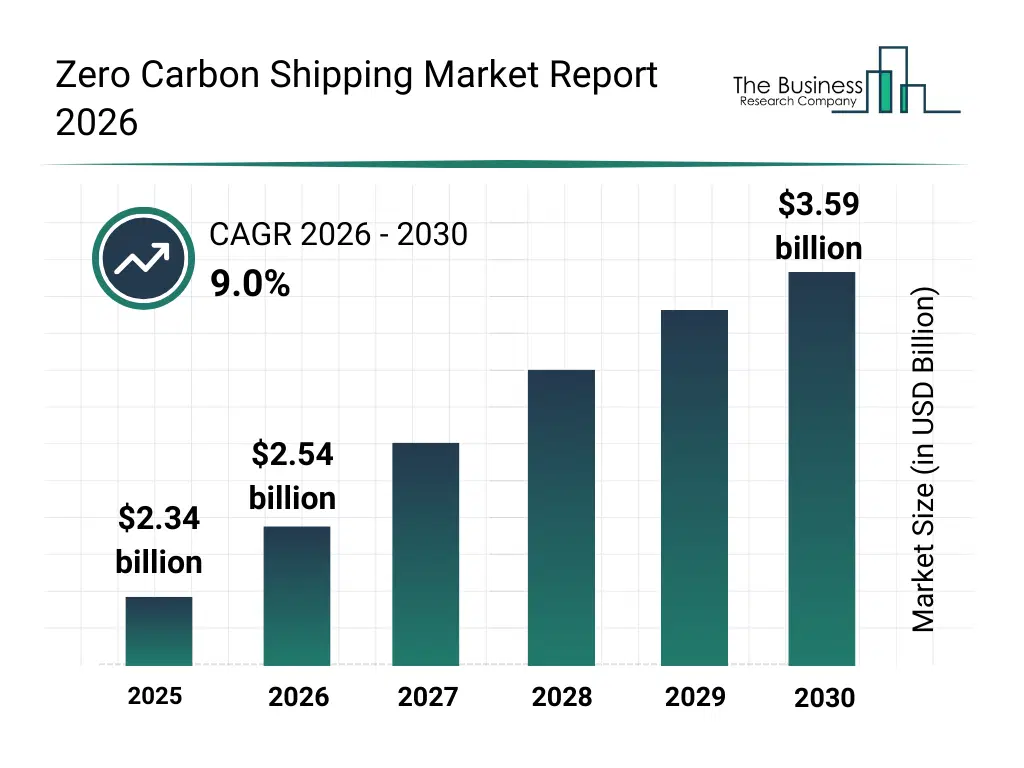
What Is The Zero Carbon Shipping Market Size and Share 2026?
The zero carbon shipping market size has grown strongly in recent years. It will grow from $2.34 billion in 2025 to $2.54 billion in 2026 at a compound annual growth rate (CAGR) of 8.8%. The growth in the historic period can be attributed to implementation of maritime emission regulations, rise in global trade volumes, growth of environmental awareness, expansion of renewable fuel research, increase in fuel cost volatility.What Is The Zero Carbon Shipping Market Growth Forecast?
The zero carbon shipping market size is expected to see strong growth in the next few years. It will grow to $3.59 billion in 2030 at a compound annual growth rate (CAGR) of 9.0%. The growth in the forecast period can be attributed to stricter international decarbonization mandates, growth in green hydrogen production capacity, expansion of electric vessel charging infrastructure, rising public and investor pressure for sustainability, technological advancements in fuel cell propulsion. Major trends in the forecast period include increasing investment in alternative marine fuels, rising adoption of wind and solar assisted propulsion, expansion of ship retrofit and conversion projects, growing demand for energy efficient vessel designs, integration of onboard carbon capture systems.
Global Zero Carbon Shipping Market Segmentation
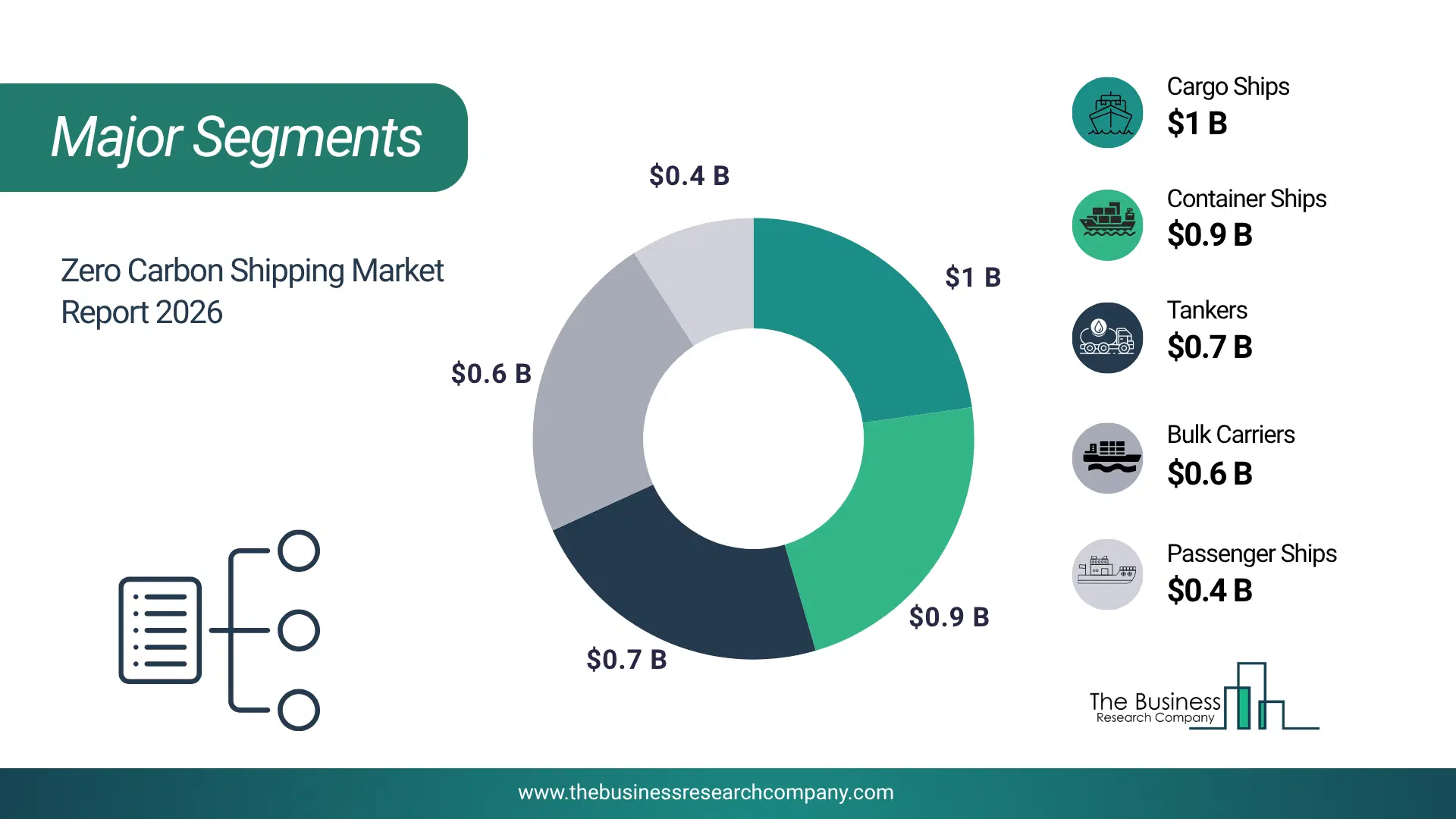
1) By Ship Type: Cargo Ships, Container Ships, Tankers, Bulk Carriers, Passenger Ships 2) By Fuel Type: Green Hydrogen, Green Ammonia, Bio-Liquefied Natural Gas (LNG), Methanol, Synthetic Fuels 3) By Technology: Fuel Cell Propulsion, Battery-electric Propulsion, Hybrid Propulsion Systems, Wind-Assisted Propulsion, Solar-Assisted Propulsion 4) By Application: Deep-Sea Shipping, Short-Sea Shipping, Inland Water Transport 5) By End-User: Manufacturing, Oil And Gas, Agriculture, Retail, Passenger Transportation, Other Industries Subsegments: 1) By Cargo Ships: General Cargo Ships, Multi-Purpose Cargo Vessels, Roll-On Or Roll-Off (Ro-Ro) Cargo Ships, Short-Sea Cargo Vessels, Zero-Emission Coastal Cargo Ships 2) By Container Ships: Small Feeder Container Ships, Medium Container Vessels, Large Container Ships, Ultra-large Container Ships (ULCs), Green Container Ships Using Alternative Fuels 3) By Tankers: Crude Oil Tankers, Product Tankers, Liquefied Natural Gas (LNG) Tankers, Chemical Tankers, Zero-emission Fuel Tankers 4) By Bulk Carriers: Handysize Bulk Carriers, Supramax Bulk Carriers, Panamax Bulk Carriers, Capesize Bulk Carriers, Low-Carbon Dry Bulk Carriers 5) By Passenger Ships: Cruise Ships, Ferries, Ro-Pax Vessels, River Passenger Ships, Electric Or Hydrogen-Powered Passenger Ships The top segments in the zero carbon shipping market will be: • Cargo Ships will reach $0.98 Billion by 2030. • Container Ships will reach $0.88 Billion by 2030. • Tankers will reach $0.7 Billion by 2030. • Bulk Carriers will reach $0.62 Billion by 2030. • Passenger Ships will reach $0.41 Billion by 2030.What Is The Driver Of The Zero Carbon Shipping Market?
The increasing demand for sustainable logistics solutions is expected to propel the growth of the zero-carbon shipping market going forward. Sustainable logistics solutions are logistics practices and systems designed to reduce environmental impacts from freight and supply chains by minimizing emissions, energy use, and waste. The demand for sustainable logistics solutions is rising because a growing share of shippers prioritize environmentally friendly transport options to meet corporate ESG commitments and regulatory expectations. The zero-carbon shipping supports sustainable logistics solutions by providing vessels and fuels that eliminate carbon emissions from maritime transport, enabling logistics providers to reduce scope 3 emissions. For instance, in June 2025, according to the International council on Clean Tranportation, US-based, independent non-profit think tank, in 2024, a total of 1,103 zero-emission heavy-duty trucks were registered in 2024, 34% more than in 2023 and nearly four times more than in 2022. Additionally, out of roughly 277,000 heavy-duty trucks registered, zero-emission heavy-duty trucks accounted for 0.40%. Therefore, an increasing demand for sustainable logistics solutions is expected to drive the growth of the zero-carbon shipping market.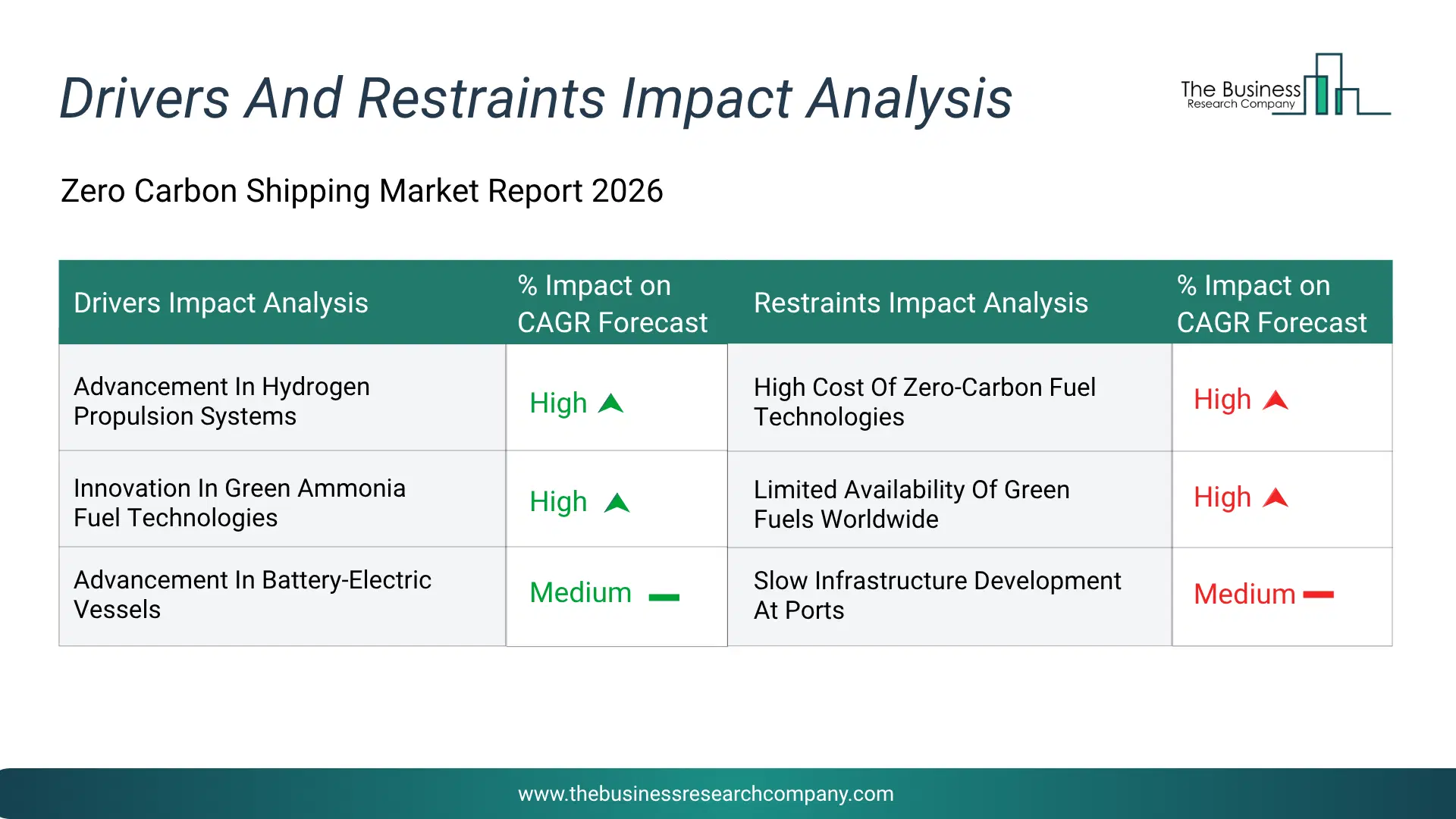
Infographic Chart Showing Key Market Drivers Analysis And Restraints For Zero Carbon Shipping Market
The chart presents an impact analysis of key drivers and restraints, quantifying their relative influence on the market's growth rate and helping assess the balance between growth enablers and limiting factors. This chart offers a high-level perspective; the full report contains more detailed insights.
How Will The Drivers Impact Growth In The Global Zero Carbon Shipping Market?
• Advancement In Hydrogen Propulsion Systems (High) – During the forecast period, the advancement in hydrogen propulsion systems is expected to become a key growth driver for the zero carbon shipping market by 2030. Shipping companies are increasingly exploring hydrogen-based fuel cell systems to enable zero-emission operations, particularly for medium- and long-distance maritime routes. Hydrogen propulsion offers high energy density and eliminates direct carbon emissions, making it a viable alternative to conventional marine fuels. Technological improvements in onboard hydrogen storage, fuel cell efficiency, and safety systems are further enhancing its commercial feasibility. Industry stakeholders are actively investing in pilot projects and infrastructure development to accelerate adoption. • Innovation In Green Ammonia Fuel Technologies (High) – During the forecast period, the innovation in green ammonia fuel technologies is expected to emerge as a major factor driving the expansion of the zero carbon shipping market by 2030. Green ammonia is gaining traction as a scalable marine fuel due to its carbon-free combustion properties and ease of storage compared to hydrogen. Advancements in ammonia engine design, fuel handling systems, and global supply chain development are supporting its integration into commercial shipping fleets. Additionally, partnerships between energy providers and shipping operators are facilitating large-scale ammonia fuel production and bunkering capabilities. The growing focus on long-haul decarbonization is further strengthening the role of ammonia as a preferred alternative fuel. • Advancement In Battery-Electric Vessels (Medium) – During the forecast period, the advancement in battery-electric vessels is expected to act as a key growth catalyst for the zero carbon shipping market by 2030. Electrification of vessels is gaining momentum in short-sea shipping and inland waterways due to improvements in battery energy density, charging infrastructure, and operational efficiency. Battery-electric propulsion enables silent, emission-free operations and reduces maintenance requirements compared to traditional engines. Increasing deployment of fully electric ferries, cargo vessels, and service ships is demonstrating the commercial viability of this technology. Furthermore, integration of smart energy management systems is optimizing battery usage and extending operational range.How Will The Restraints Impact Growth In The Global Zero Carbon Shipping Market?
• High Cost Of Zero-Carbon Fuel Technologies (High) – During the forecast period, high cost of zero-carbon fuel technologies is restricting the growth of the zero carbon shipping market. Expensive alternative fuels, advanced propulsion systems, and retrofitting requirements are increasing operational and capital costs for shipping companies, thereby limiting adoption • Limited Availability Of Green Fuels Worldwide (High) – During the forecast period, limited availability of green fuels worldwide is restricting the growth of the zero carbon shipping market. Insufficient production and distribution of sustainable fuels such as green hydrogen and ammonia are creating supply constraints and slowing transition efforts • Slow Infrastructure Development At Ports (Medium) – During the forecast period, slow infrastructure development at ports is restricting the growth of the zero carbon shipping market. Lack of adequate bunkering facilities, storage systems, and supporting infrastructure at ports is hindering deployment and scalability of zero-carbon shipping solutionsKey Players In The Global Zero Carbon Shipping Market
Major companies operating in the zero carbon shipping market are Kongsberg Gruppen ASA, A.P. Moller – Maersk A/S, Wärtsilä Oyj Abp, Norled AS, Amogy Inc., Ocean Infinity Group Limited, Corvus Energy Ltd., Incat Tasmania Pty Ltd., CMA CGM Group, Echandia Marine AB, Artemis Technologies Ltd., Hydrogenious LOHC Technologies GmbH, VEAR AS, NEOLINE S.A.S., Zero Emission Industries, Inc., Yara Clean Ammonia AS, Eco Marine Power Co., Ltd., Synhelion SA, Windship Technology Ltd., and Yara Birkeland.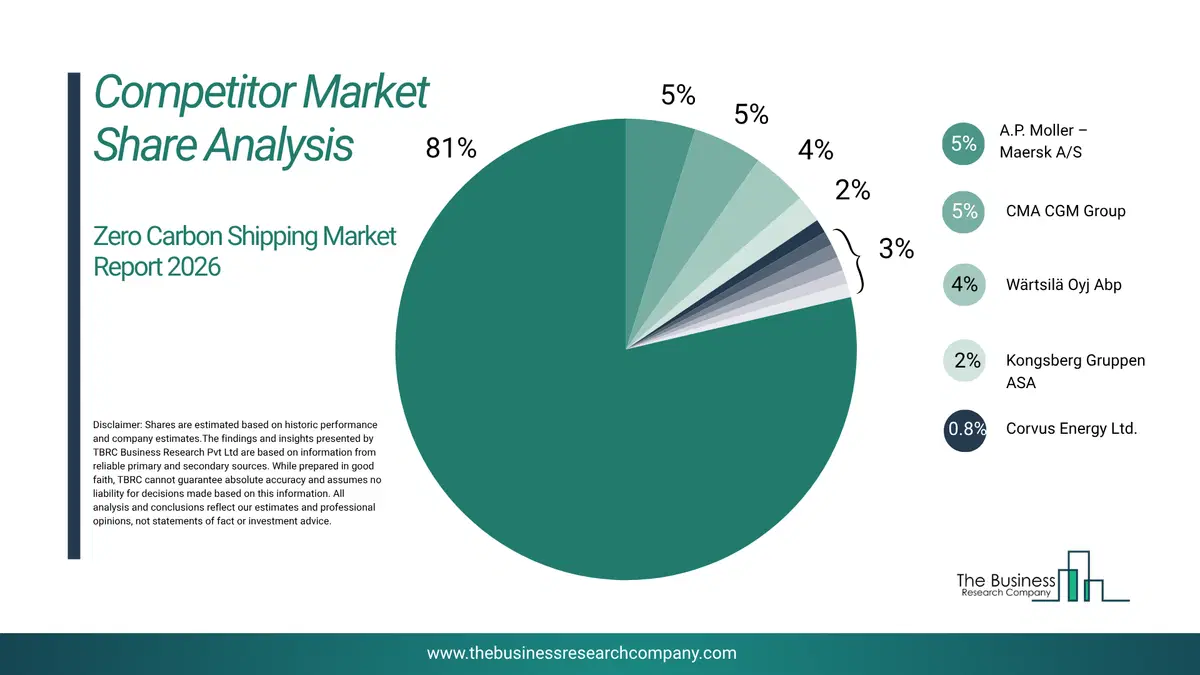
This chart is for illustrative purposes; the full report includes a detailed competitor analysis and comprehensive overview of the top 10 companies in the market.
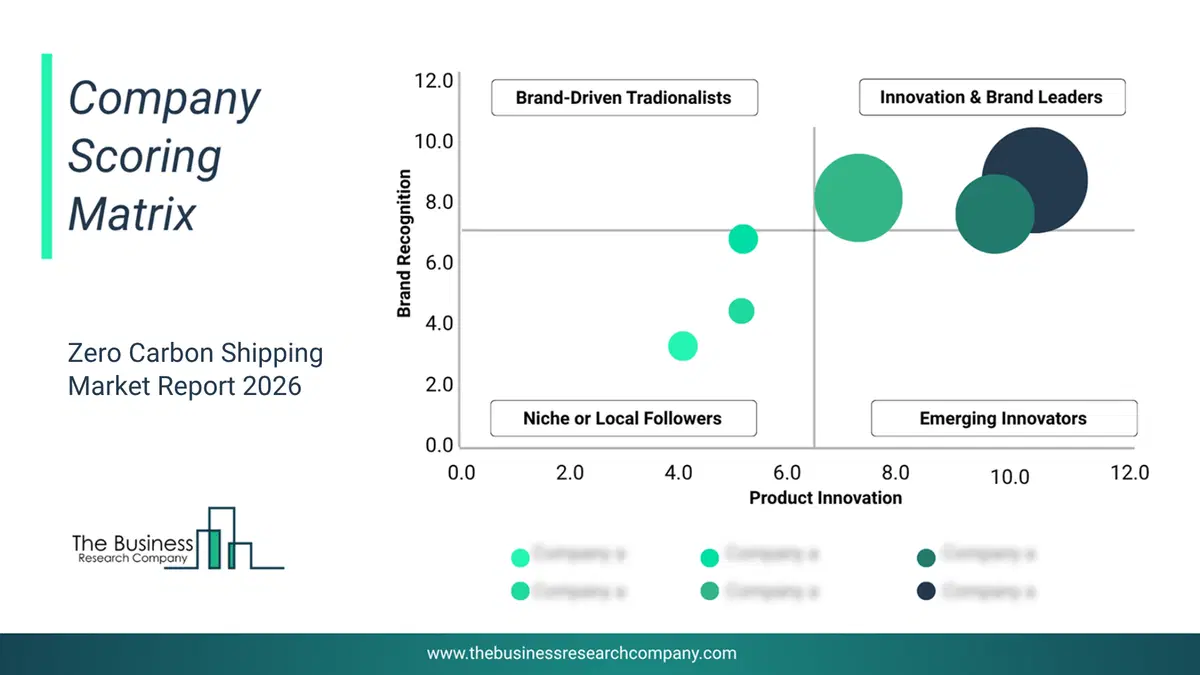
This chart maps companies by product innovation and brand strength, with bubble size indicating relative revenue, helping identify market leaders, challengers, and niche players. This is an illustrative chart; the full report provides a complete and accurate competitive analysis.
Global Zero Carbon Shipping Market Trends and Insights
Major companies operating in the zero-carbon shipping market are focusing on advancements in green fuel production capacity, such as ship‑shore‑cloud integrated energy and charging networks, to decarbonize maritime operations, enhance operational efficiency, and meet stringent environmental regulations. Ship‑shore‑cloud integrated energy and charging networks combine vessel battery systems, shore‑based electrification infrastructure, and cloud‑enabled fleet management to support full‑chain decarbonization of maritime operations and efficient energy distribution for zero‑carbon fuel use. For instance, in December 2025, Contemporary Amperex Electric Vessel Co., Ltd., a China‑based battery technology company, launched the world’s first ship‑shore‑cloud. CATL’s ship-shore-cloud solution offers an end-to-end zero-carbon shipping ecosystem by integrating onboard power and battery systems, shore-side charging and battery-swapping networks, and cloud-based intelligent monitoring and dispatch. It eliminates coordination issues caused by multiple suppliers by providing a unified, full-chain service model across the vessel’s lifecycle. The solution supports stable long-distance electric ship operations through integrated navigation, energy management, and safety systems. It also reduces cost and range anxiety through the “separation of ship and battery” approach and faster energy replenishment.What Are Latest Mergers And Acquisitions In The Zero Carbon Shipping Market?
In December 2023, Euronav NV, a Belgium-based global tanker operator and maritime logistics provider, acquired CMB.TECH NV for an undisclosed amount. With this acquisition, Euronav aimed to speed up its plans to move into the zero-carbon shipping by adding CMB.TECH’s range of low-carbon ships that use hydrogen and ammonia, along with its hydrogen-related services and clean technology solutions, which would help improve its ability to provide eco-friendly shipping and decarbonization technologies. The CMB.TECH NV is a Belgium-based company that offers zero carbon shipping.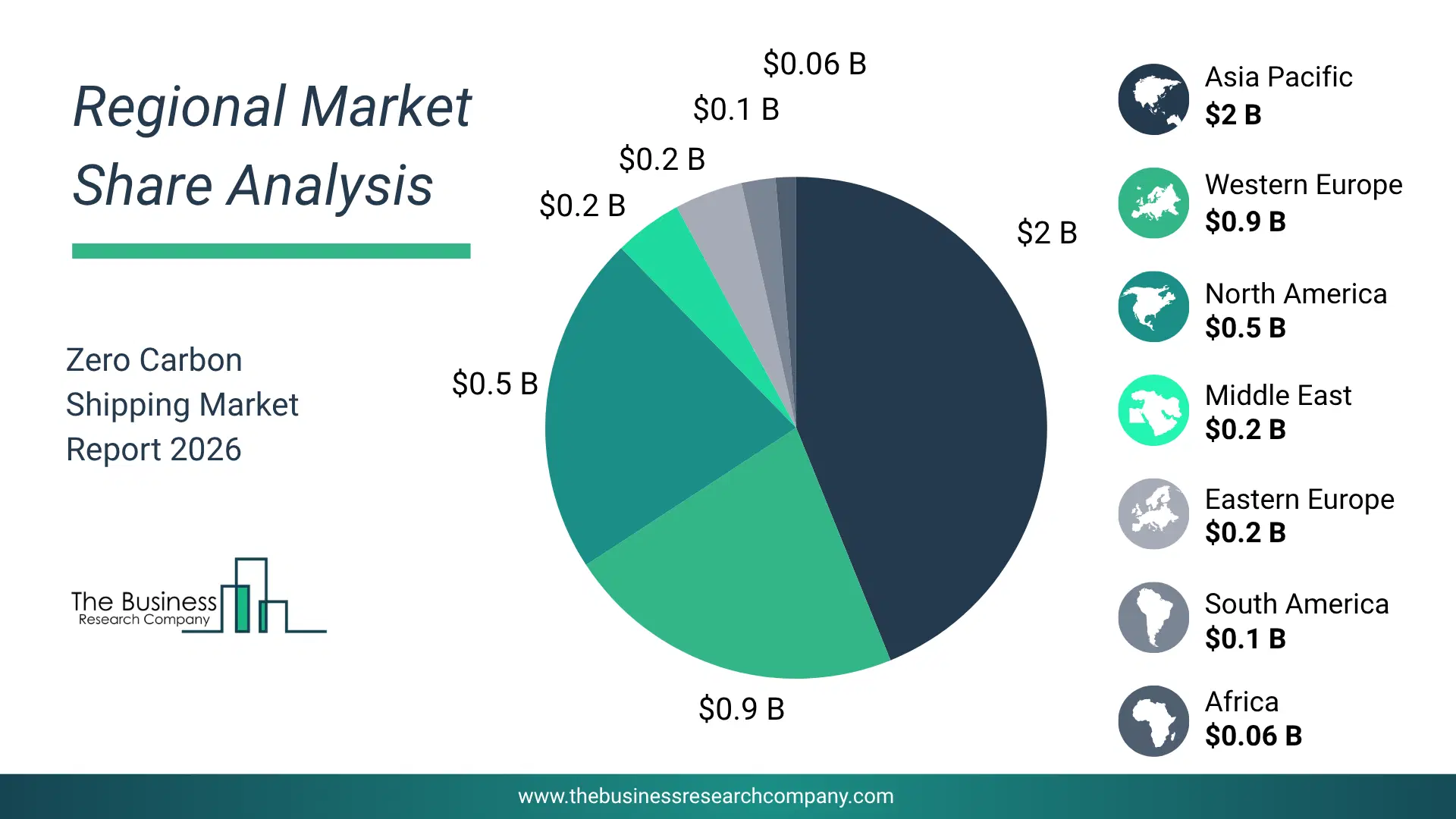
Regional Outlook
North America was the largest region in the zero carbon shipping market in 2025. Asia-Pacific is expected to be the fastest-growing region in the forecast period. The regions covered in this market report are Asia-Pacific, South East Asia, Western Europe, Eastern Europe, North America, South America, Middle East, Africa. The countries covered in this market report are Australia, Brazil, China, France, Germany, India, Indonesia, Japan, Taiwan, Russia, South Korea, UK, USA, Canada, Italy, Spain.What Defines the Zero Carbon Shipping Market?
The zero carbon shipping market consists of revenues earned by entities by providing services such as design and construction of zero-emission vessels, retrofit and conversion of ships to alternative fuels, installation of wind-assisted and electric propulsion systems, green fuel bunkering solutions, onboard carbon capture integration, energy efficiency optimization systems, and maintenance services for low-carbon marine technologies. The market value includes the value of related goods sold by the service provider or included within the service offering. The zero carbon shipping market also includes sales of zero-emission vessels, electric and hybrid ships, wind-assisted propulsion systems, onboard carbon capture systems, green fuel storage, and bunkering equipment. Values in this market are ‘factory gate’ values, that is, the value of goods sold by the manufacturers or creators of the goods, whether to other entities (including downstream manufacturers, wholesalers, distributors, and retailers) or directly to end customers. The value of goods in this market includes related services sold by the creators of the goods.How is Market Value Defined and Measured?
The market value is defined as the revenues that enterprises gain from the sale of goods and/or services within the specified market and geography through sales, grants, or donations in terms of the currency (in USD unless otherwise specified). The revenues for a specified geography are consumption values that are revenues generated by organizations in the specified geography within the market, irrespective of where they are produced. It does not include revenues from resales along the supply chain, either further along the supply chain or as part of other products.
This chart presents market attractiveness based on a quantitative evaluation of growth, competition, strategic alignment, and risk, offering a clear view of opportunity areas for decision-making. This chart is for illustrative purposes; the full report contains the complete analysis.

This chart highlights the Total Addressable Market (TAM) by estimating the maximum revenue opportunity using an assumption-driven approach, supporting strategic planning and opportunity sizing across markets. The chart is illustrative; the full report provides a more comprehensive analysis.
What Key Data and Analysis Are Included in the Zero Carbon Shipping Market Report 2026?
The zero carbon shipping market research report is one of a series of new reports from The Business Research Company that provides market statistics, including industry global market size, regional shares, competitors with the market share, detailed market segments, market trends and opportunities, and any further data you may need to thrive in the zero carbon shipping industry. The market research report delivers a complete perspective of everything you need, with an in-depth analysis of the current and future state of the industry.Zero Carbon Shipping Market Report Forecast Analysis
| Report Attribute | Details |
|---|---|
| Market Size Value In 2026 | $2.54 billion |
| Revenue Forecast In 2030 | $3.59 billion |
| Growth Rate | CAGR of 8.8% from 2026 to 2030 |
| Base Year For Estimation | 2025 |
| Actual Estimates/Historical Data | 2020-2025 |
| Forecast Period | 2026 - 2030 |
| Market Representation | Revenue in USD Billion and CAGR from 2026 to 2030 |
| Segments Covered | Ship Type, Fuel Type, Technology, Application, End-User |
| Regional Scope | Asia-Pacific, Western Europe, Eastern Europe, North America, South America, Middle East, Africa |
| Country Scope | The countries covered in the report are Australia, Brazil, China, France, Germany, India, Indonesia, Japan, Taiwan, Russia, South Korea, UK, USA, Canada, Italy, Spain. |
| Key Companies Profiled | Kongsberg Gruppen ASA, A.P. Moller – Maersk A/S, Wärtsilä Oyj Abp, Norled AS, Amogy Inc., Ocean Infinity Group Limited, Corvus Energy Ltd., Incat Tasmania Pty Ltd., CMA CGM Group, Echandia Marine AB, Artemis Technologies Ltd., Hydrogenious LOHC Technologies GmbH, VEAR AS, NEOLINE S.A.S., Zero Emission Industries, Inc., Yara Clean Ammonia AS, Eco Marine Power Co., Ltd., Synhelion SA, Windship Technology Ltd., and Yara Birkeland. |
| Customization Scope | Request for Customization |
| Pricing And Purchase Options | Explore Purchase Options |