
Zinc Chemicals Market Report 2026
Global Outlook – By Type (Zinc Oxide, Zinc Sulfate, Zinc Carbonate, Zinc Chloride, Other Types), By Application (Rubber Compounding, Agriculture, Glass And Ceramics, Paints And Coatings, Chemicals, Food And Pharmaceuticals, Textiles, Other Applications), By End-Use Industry (Automotive, Agriculture, Construction, Chemical Manufacturing, Others) – Market Size, Trends, Strategies, and Forecast to 2030
Zinc Chemicals Market Overview
• Zinc Chemicals market size has reached to $10.78 billion in 2025 • Expected to grow to $14.41 billion in 2030 at a compound annual growth rate (CAGR) of 5.9% • Growth Driver: The Role Of The Automotive Boom In Propelling The Zinc Chemicals Market • Market Trend: Technological Advancements Steer The Zinc Chemicals Market Toward New Horizons • Asia-Pacific was the largest region in 2025 and North America is the fastest growing region.What Is Covered Under Zinc Chemicals Market?
Zinc (Zn), chemical element, a low-melting metal of group 12 (IIb, or zinc group) of the periodic table, that is essential to life and is one of the most widely used metals for galvanizing iron. Zinc is of considerable commercial importance. The main types of zinc chemicals are zinc oxide, zinc sulfate, zinc carbonate, zinc chloride, and others. A zinc oxide is an inorganic substance with a white tint that is accessible as powder. The various applications involved are rubber compounding, agriculture, glass and ceramics, paints and coatings, chemicals, food and pharmaceuticals, textiles, and others.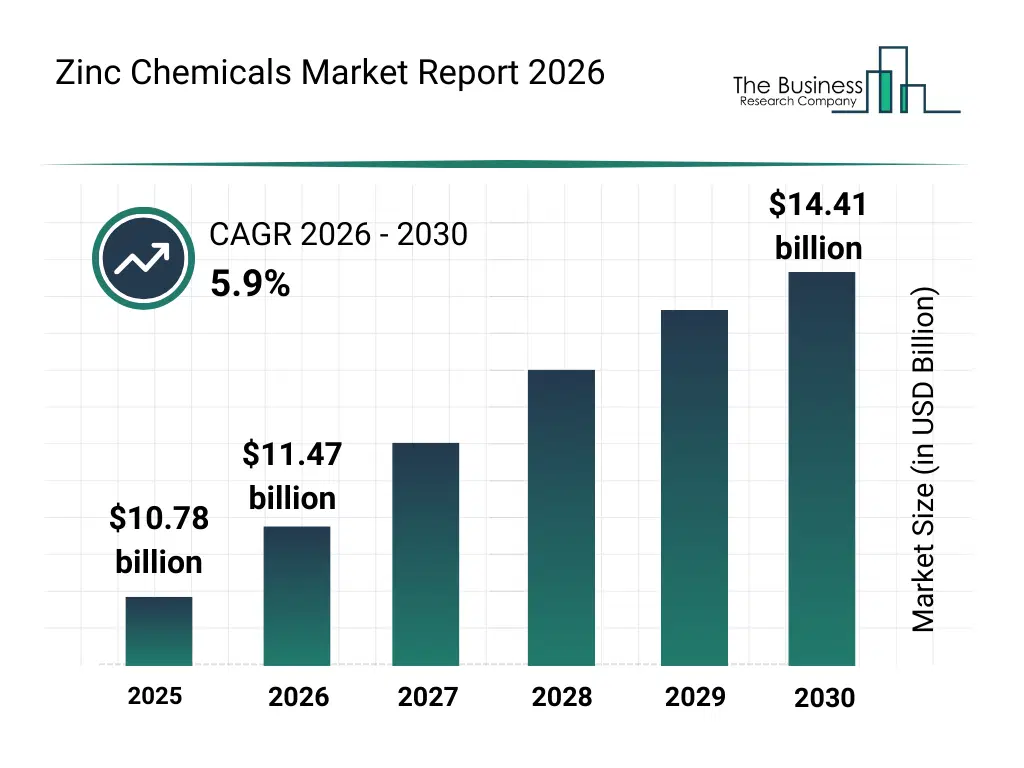
What Is The Zinc Chemicals Market Size and Share 2026?
The zinc chemicals market size has grown strongly in recent years. It will grow from $10.78 billion in 2025 to $11.47 billion in 2026 at a compound annual growth rate (CAGR) of 6.4%. The growth in the historic period can be attributed to expansion of galvanization applications, growth of rubber manufacturing industries, rising agricultural micronutrient usage, increasing demand from glass and ceramics industries, availability of diverse zinc compound grades.What Is The Zinc Chemicals Market Growth Forecast?
The zinc chemicals market size is expected to see strong growth in the next few years. It will grow to $14.41 billion in 2030 at a compound annual growth rate (CAGR) of 5.9%. The growth in the forecast period can be attributed to increasing use of zinc in electric vehicle components, rising demand for specialty zinc chemicals, expansion of sustainable agriculture inputs, growing investments in advanced material processing, increasing focus on recycling and circular zinc usage. Major trends in the forecast period include increasing demand for high-purity zinc compounds, rising use of zinc chemicals in rubber and coatings, growing adoption in agricultural micronutrients, expansion of zinc-based additives in ceramics, enhanced focus on sustainable zinc processing.
Global Zinc Chemicals Market Segmentation
1) By Type: Zinc Oxide, Zinc Sulfate, Zinc Carbonate, Zinc Chloride, Other Types 2) By Application: Rubber Compounding, Agriculture, Glass And Ceramics, Paints And Coatings, Chemicals, Food And Pharmaceuticals, Textiles, Other Applications 3) By End-Use Industry: Automotive, Agriculture, Construction, Chemical Manufacturing, Others Subsegments: 1) By Zinc Oxide: Regular Zinc Oxide, Nano Zinc Oxide 2) By Zinc Sulfate: Heptahydrate Zinc Sulfate, Monohydrate Zinc Sulfate 3) By Zinc Carbonate: Basic Zinc Carbonate, Zinc Carbonate Hydroxide 4) By Zinc Chloride: Anhydrous Zinc Chloride, Hexahydrate Zinc Chloride 5) By Other Types: Zinc Acetate, Zinc Citrate, Zinc PhosphateWhat Is The Driver Of The Zinc Chemicals Market?
The rapid growth of the automotive industry is expected to drive the zinc chemicals market. The automotive sector includes businesses involved in the manufacture, distribution, retail, and upkeep of automobiles. Zinc is the most crucial component in the production of automotive parts such as door lock housing, pawls, retractor gears, and pulleys for seat belt systems, as well as camshaft and sensor components. It is possible to achieve strength, ductility, and malleability with this metal and its alloys, which is not feasible with other materials. For instance, in February 2024, according to the Institute of Chartered Accountants in England and Wales, a UK-based regulatory and professional body for chartered accountants, reports that worldwide sales of motor vehicles, a core segment of the automotive ecosystem, reached approximately 95 million units in 2024, up from 92.8 million units in 2023. Therefore, the rapid growth of the automotive industry is driving the growth of the zinc chemicals industry.Key Players In The Global Zinc Chemicals Market
Major companies operating in the zinc chemicals market are Umicore, BASF SE, EverZinc, US Zinc, Zochem LLC, Grillo-Werke AG, Weifang Longda Zinc Industry, Hakusui Tech, Rubamin Limited, Zinc Nacional, Silox India, Pan-Continental Chemical, American Chemet Corporation, Seyang Zinc Technology, BruggemannChemical, Transpek-Silox, Nyrstar, Toho Zinc Co. Ltd., Shaanxi Zinc Industry, Yongchang Zinc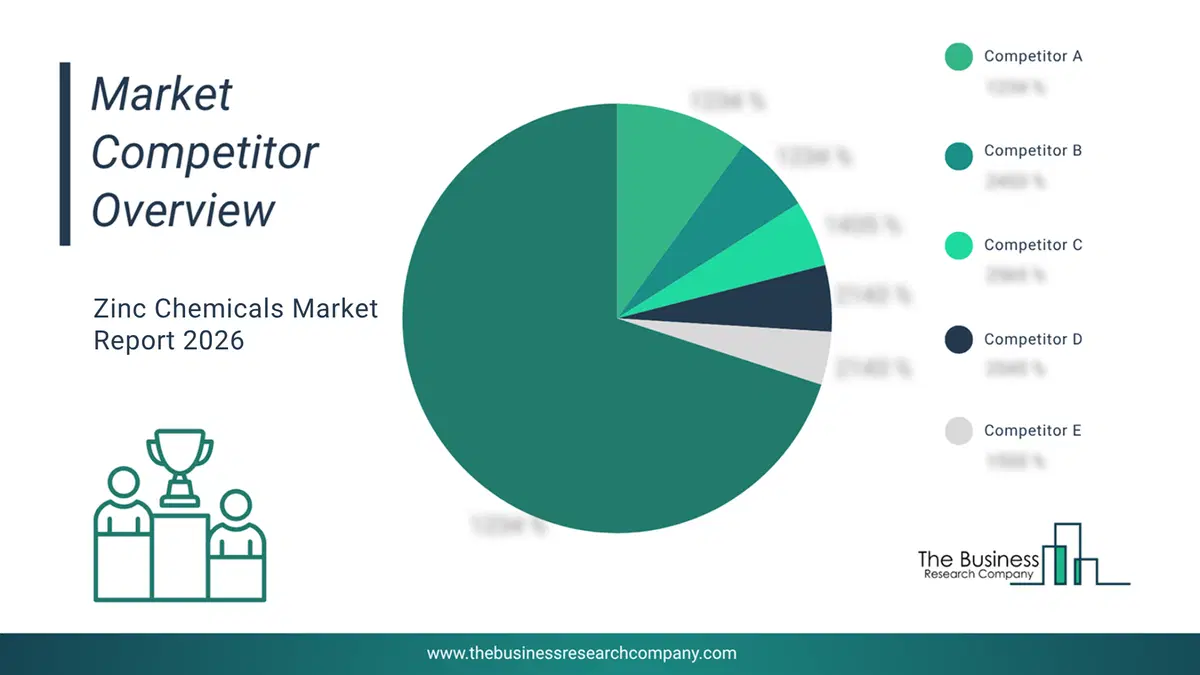
This chart is for illustrative purposes; the full report includes a detailed competitor analysis and comprehensive overview of the top 10 companies in the market.
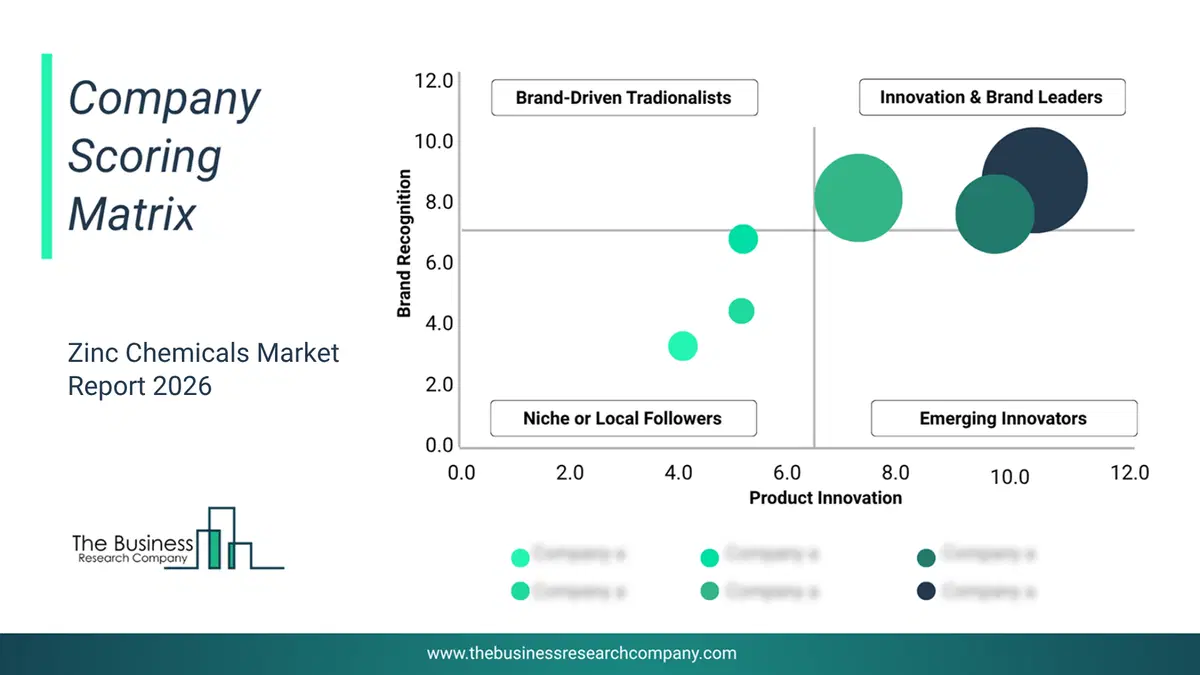
This chart maps companies by product innovation and brand strength, with bubble size indicating relative revenue, helping identify market leaders, challengers, and niche players. This is an illustrative chart; the full report provides a complete and accurate competitive analysis.
Global Zinc Chemicals Market Trends and Insights
Major companies operating in the zinc chemicals market are focusing on developing technologically advanced and sustainable products such as low-carbon zinc to strengthen their market position and meet growing environmental demands. Low-carbon zinc refers to zinc products manufactured using advanced processes that significantly reduce greenhouse gas emissions across the production lifecycle while maintaining high quality and performance standards. For instance, in July 2024, Hindustan Zinc, an Indian mining and resources producer of zinc, silver, lead, and cadmium, launched its new low-carbon zinc brand, EcoZen, which represents Asia's first low-carbon zinc product for the global market. Certified through a life cycle assessment (LCA) by a leading global sustainability consultancy, EcoZen boasts a carbon footprint of less than one ton of carbon equivalent per ton of zinc produced. EcoZen combines eco-consciousness with quality, offering a sustainable product that boasts one of the lowest global warming potential (GWP) values approximately 75% lower than the global average.What Are Latest Mergers And Acquisitions In The Zinc Chemicals Market?
In April 2025, Boliden AB, a Sweden-based metals and mining company specializing in the production of base metals, acquired Somincor Sociedade Mineira de Neves Corvo for an undisclosed amount. Through this acquisition, Boliden aims to strengthen its position as a leading European base-metals producer and significantly increase its zinc and copper concentrate production capacity, supporting downstream operations including zinc refining and potential zinc chemicals production. Somincor is a Portugal-based mining company specializing in the extraction of zinc, copper, lead, and associated by-products at the Neves Corvo mine.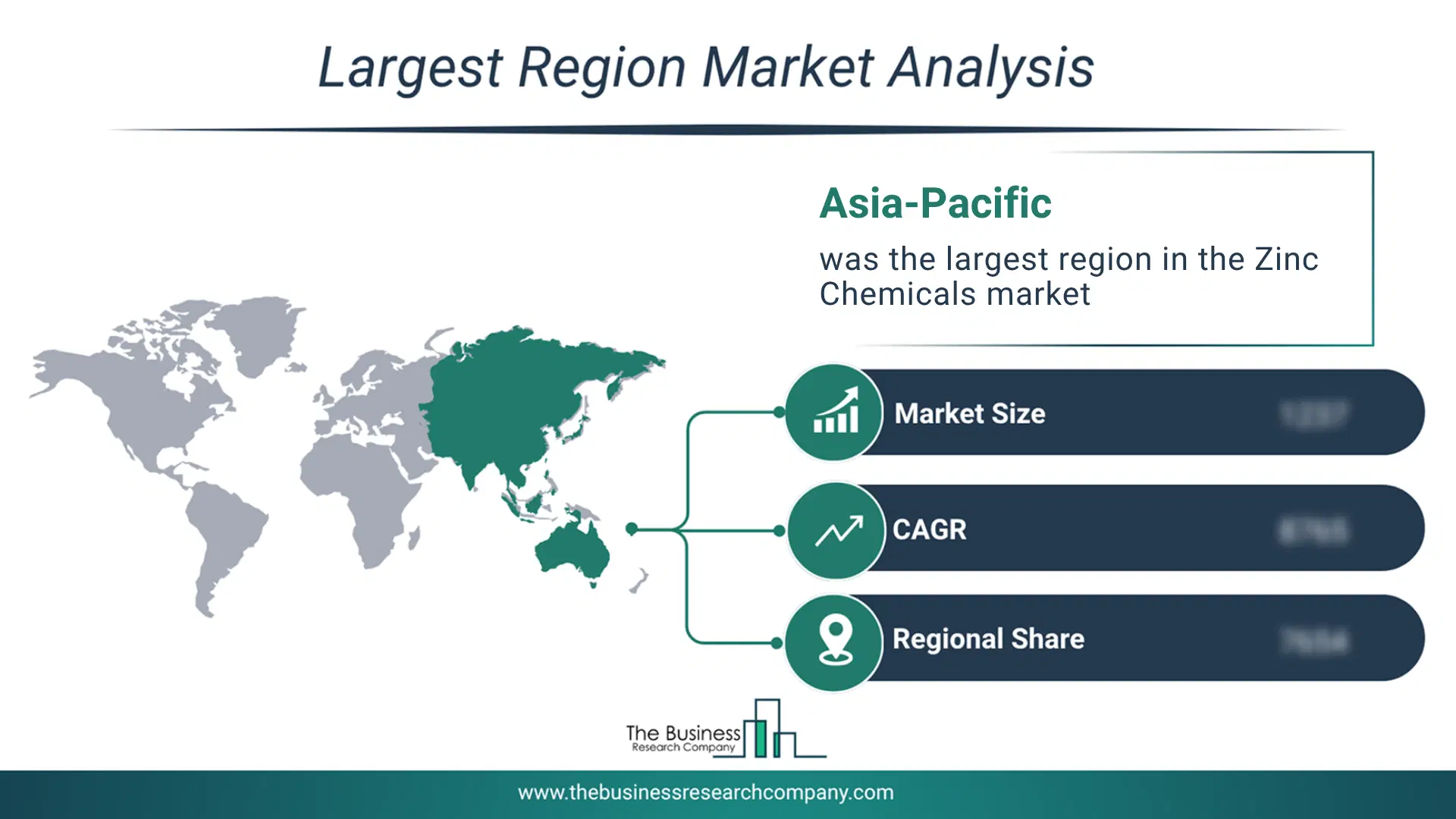
Regional Insights
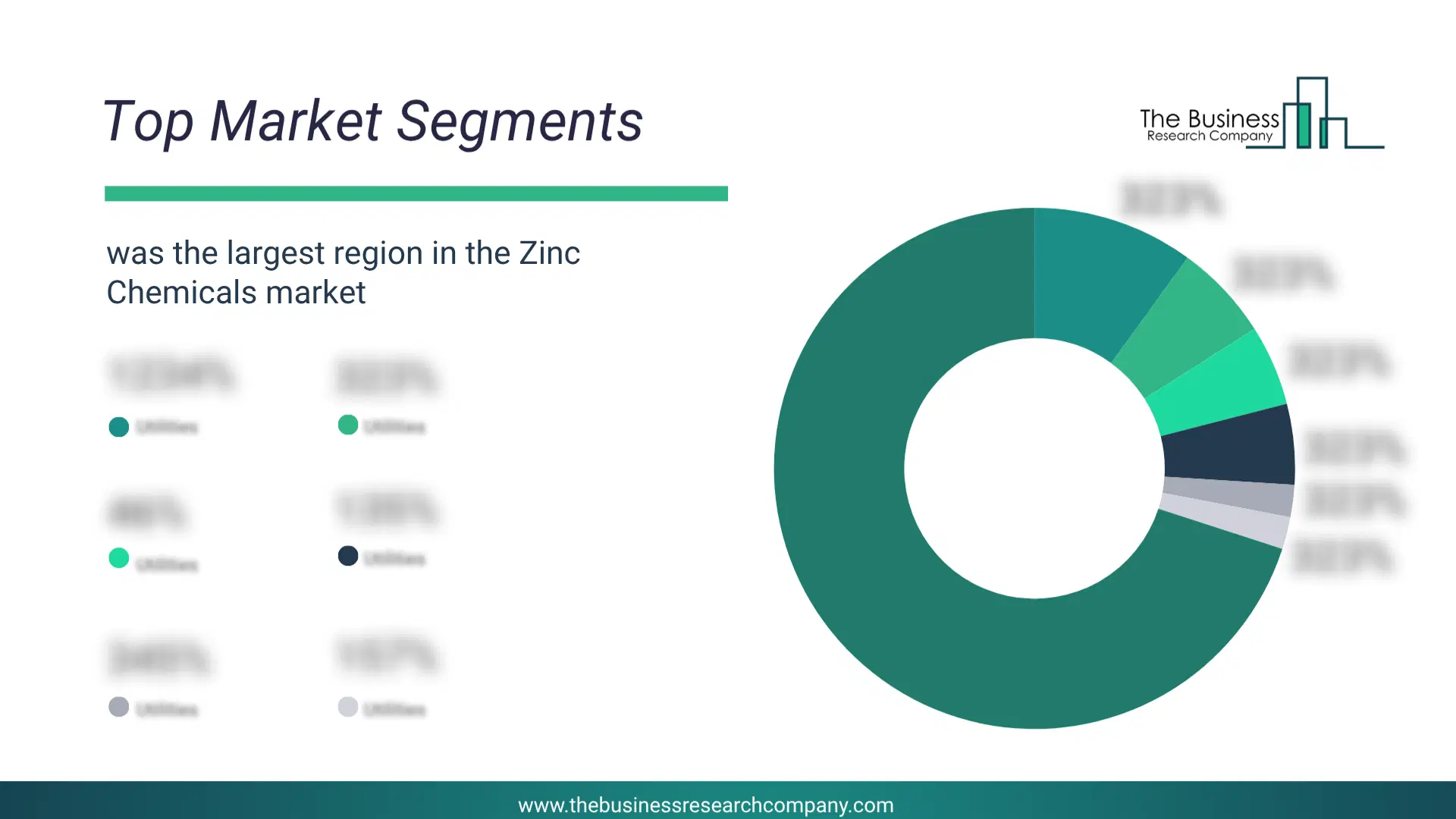
Asia-Pacific was the largest region in the zinc chemicals market in 2025. North America is expected to be the fastest-growing region in the zinc chemicals market report during the forecast period. The regions covered in this market report are Asia-Pacific, South East Asia, Western Europe, Eastern Europe, North America, South America, Middle East, Africa The countries covered in this market report are Australia, Brazil, China, France, Germany, India, Indonesia, Japan, Taiwan, Russia, South Korea, UK, USA, Canada, Italy, SpainWhat Defines the Zinc Chemicals Market?
The zinc chemicals market consists of sales of zinc chemicals used in cosmetics, plastics, inks, soaps, batteries, and electrical equipment. Values in this market are ‘factory gate’ values, that is the value of goods sold by the manufacturers or creators of the goods, whether to other entities (including downstream manufacturers, wholesalers, distributors and retailers) or directly to end customers. The value of goods in this market includes related services sold by the creators of the goods.How is Market Value Defined and Measured?
The market value is defined as the revenues that enterprises gain from the sale of goods and/or services within the specified market and geography through sales, grants, or donations in terms of the currency (in USD unless otherwise specified). The revenues for a specified geography are consumption values that are revenues generated by organizations in the specified geography within the market, irrespective of where they are produced. It does not include revenues from resales along the supply chain, either further along the supply chain or as part of other products.
This chart presents market attractiveness based on a quantitative evaluation of growth, competition, strategic alignment, and risk, offering a clear view of opportunity areas for decision-making. This chart is for illustrative purposes; the full report contains the complete analysis.

This chart highlights the Total Addressable Market (TAM) by estimating the maximum revenue opportunity using an assumption-driven approach, supporting strategic planning and opportunity sizing across markets. The chart is illustrative; the full report provides a more comprehensive analysis.
What Key Data and Analysis Are Included in the Zinc Chemicals Market Report 2026?
The zinc chemicals market research report is one of a series of new reports from The Business Research Company that provides market statistics, including industry global market size, regional shares, competitors with the market share, detailed market segments, market trends and opportunities, and any further data you may need to thrive in the zinc chemicals industry. The market research report delivers a complete perspective of everything you need, with an in-depth analysis of the current and future state of the industry.Zinc Chemicals Market Report Forecast Analysis
| Report Attribute | Details |
|---|---|
| Market Size Value In 2026 | $11.47 billion |
| Revenue Forecast In 2030 | $14.41 billion |
| Growth Rate | CAGR of 6.4% from 2026 to 2030 |
| Base Year For Estimation | 2025 |
| Actual Estimates/Historical Data | 2020-2025 |
| Forecast Period | 2026 - 2030 |
| Market Representation | Revenue in USD Billion and CAGR from 2026 to 2030 |
| Segments Covered | Type, Application, End-Use Industry |
| Regional Scope | Asia-Pacific, Western Europe, Eastern Europe, North America, South America, Middle East, Africa |
| Country Scope | The countries covered in this market report are Australia, Brazil, China, France, Germany, India, Indonesia, Japan, Taiwan, Russia, South Korea, UK, USA, Canada, Italy, Spain |
| Key Companies Profiled | Umicore, BASF SE, EverZinc, US Zinc, Zochem LLC, Grillo-Werke AG, Weifang Longda Zinc Industry, Hakusui Tech, Rubamin Limited, Zinc Nacional, Silox India, Pan-Continental Chemical, American Chemet Corporation, Seyang Zinc Technology, BruggemannChemical, Transpek-Silox, Nyrstar, Toho Zinc Co. Ltd., Shaanxi Zinc Industry, Yongchang Zinc |
| Customization Scope | Request for Customization |
| Pricing And Purchase Options | Explore Purchase Options |