
Nuclear Energy's Second Life: Why Governments Are Reconsidering Advanced Reactors
Published date: 16th December, 2025
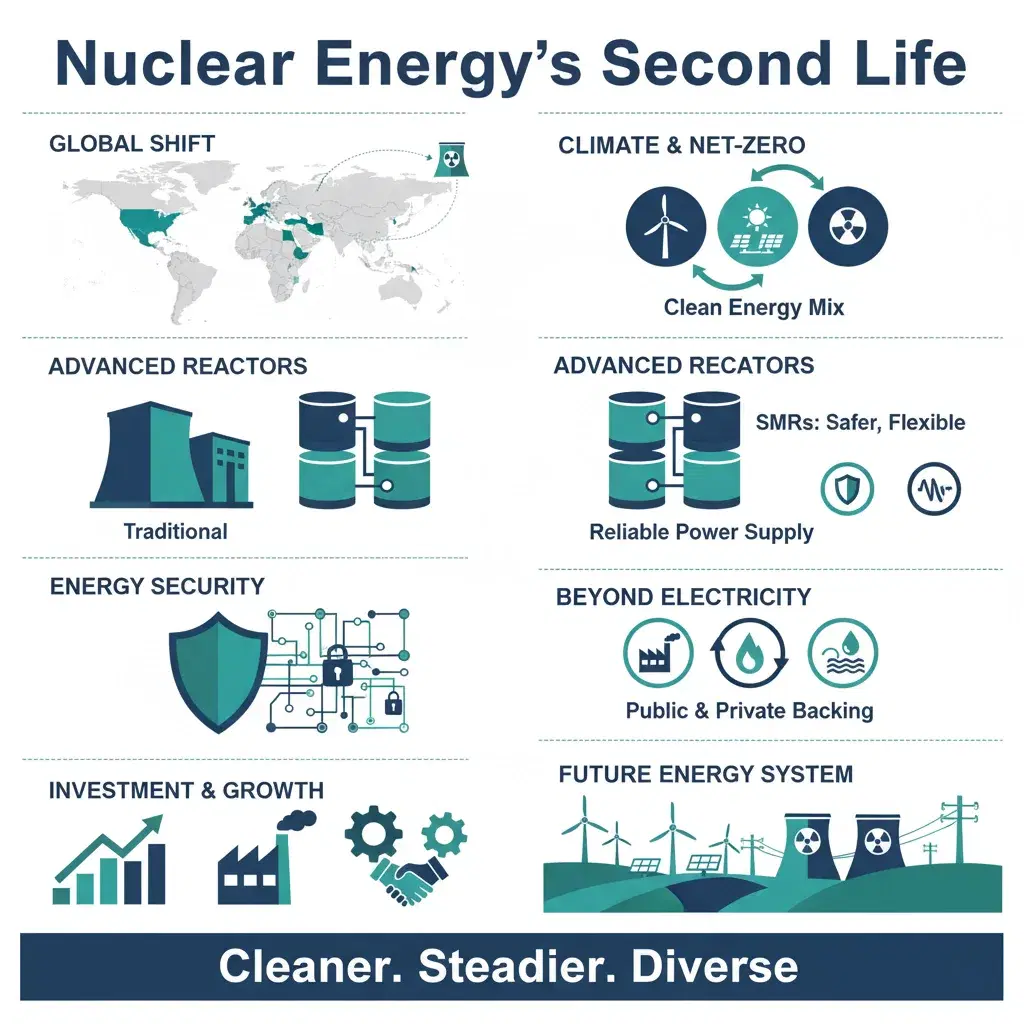
A quiet shift is taking place in global energy strategy. Countries that once kept nuclear power at arm's length are now revisiting it, this time with a different lens. The conversation is no longer framed by the reactors of the past but by new technologies designed to be smaller, safer, and more flexible. As electricity demand rises and pressure grows to cut emissions, governments across continents are beginning to see these advanced reactors as tools that can work alongside renewables rather than compete with them.

Climate goals are reshaping the energy mix
Nations that have committed to reaching net zero emissions are learning that renewable energy alone cannot meet every need. Wind and solar output varies with weather and daylight, and even expanding battery storage cannot fully guarantee consistent power for large grids. This persistent challenge is pushing policymakers back toward nuclear energy as a stabilising force.
The International Energy Agency has been clear: without added nuclear capacity, the global path to net zero becomes considerably steeper. Modern grids need dependable, low carbon electricity to complement intermittent renewables, and nuclear plants are one of the few options that can supply it continuously.

A new era of reactor technology
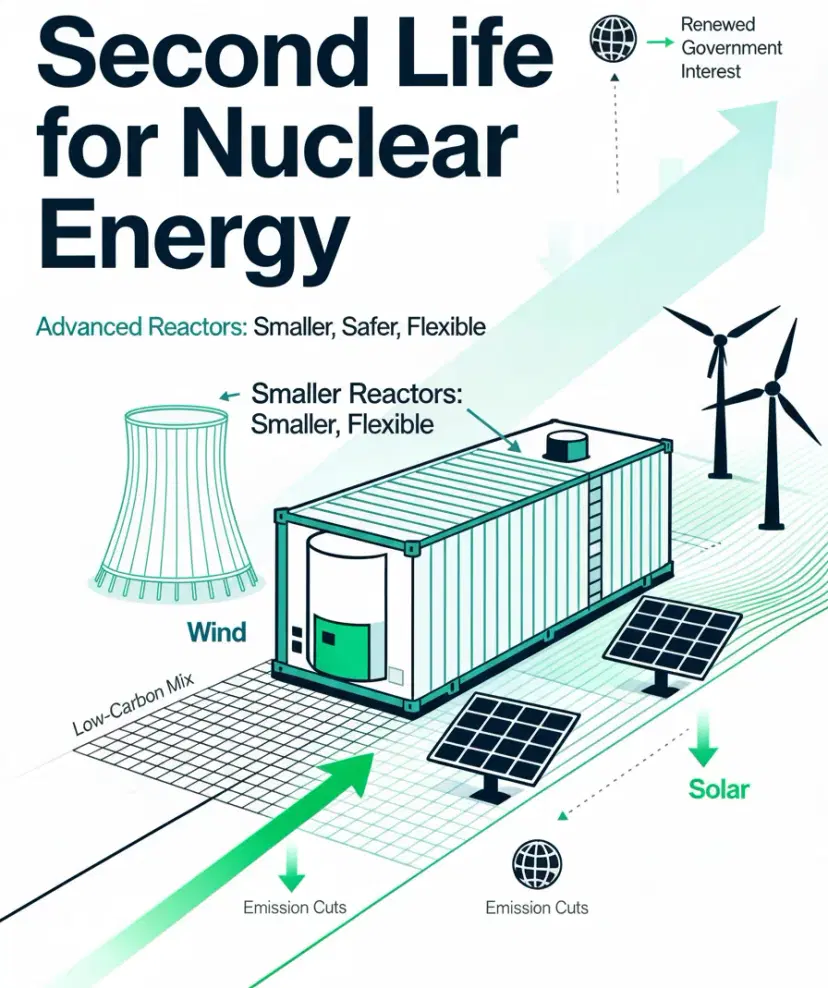
The reactors now under development differ sharply from the massive facilities that defined the last generation. Small modular reactors (SMRs), for instance, are built from factory-produced units that can be transported and installed more easily. Their streamlined designs also reduce the complexity and cost overruns that have historically plagued nuclear projects.
Several countries are moving quickly in this direction:
- The United States is supporting projects from TerraPower, X-energy, and Oklo.
- Canada is advancing one of the first commercial-scale SMRs through Ontario Power Generation.
- The United Kingdom is running a competitive programme to select SMR technologies for deployment in the next decade.
- Japan and South Korea are restoring nuclear capacity while also exploring cutting edge high-temperature reactor designs.
This shift reflects a different philosophy: instead of depending on a single enormous plant, countries can gradually scale capacity with modular units that match their energy needs.

Energy security has become impossible to ignore
Global events in recent years have highlighted how fragile energy systems can be when they rely heavily on imported fuels. Volatile prices and disrupted supply chains forced many governments to rethink long-term plans. Nuclear power, with its ability to provide stable domestic electricity independent of geopolitical tensions, is gaining renewed attention.
Examples span continents. Finland's Olkiluoto 3 reactor now plays a major role in the country's power mix. France is preparing to build a new fleet of EPR2 reactors. Even in regions that moved away from nuclear energy, debates are reopening as costs and risks associated with fossil fuel imports become clearer.

Beyond electricity: new roles for nuclear technology
What makes advanced reactors especially compelling is their potential to support industries beyond power generation. High-temperature reactors can provide the heat needed for steelmaking, chemical production, and other industrial processes that currently rely on fossil fuels. Molten-salt and gas-cooled designs can produce hydrogen more efficiently than traditional methods, opening doors for cleaner fuels in sectors that are difficult to decarbonise.
Several countries are exploring these opportunities. The United States is evaluating nuclear-powered hydrogen hubs. Middle Eastern nations are considering reactors paired with desalination plants. Canada and Poland are studying SMRs as heat sources for mining and heavy industry. These applications broaden nuclear energy's relevance in a future low-carbon economy.

Investment is flowing from both public and private sectors
The nuclear sector is experiencing an influx of private innovation not seen in decades. Established companies and new entrants alike are developing advanced reactors with automated safety systems, modular designs, and alternative fuel cycles. Firms such as TerraPower, Rolls-Royce, Nuscale, and Mitsubishi Heavy Industries are helping expand the technology's potential.
Industry data shows more than 80 advanced reactor concepts currently in development worldwide. The level of experimentation and investment mirrors what happened in the commercial space industry, where private companies re-energised innovation and reduced costs. Nuclear energy appears to be heading down a similar path.


Challenges remain, but the momentum is real
For all the optimism, real obstacles still need attention. Effective waste management strategies must be refined. Regulatory frameworks require updates to match new technologies. Cost control remains a constant challenge, especially for first-of-a-kind deployments. Demonstration plants will have to prove that advanced reactors can be built on schedule and at predictable prices.
Still, the global demand for reliable, low carbon power is only increasing. Advanced reactors offer attributes — stability, scalability, and versatility — that few other energy sources can match. Their potential role in the energy transition is hard to ignore.

A turning point for the future of nuclear power
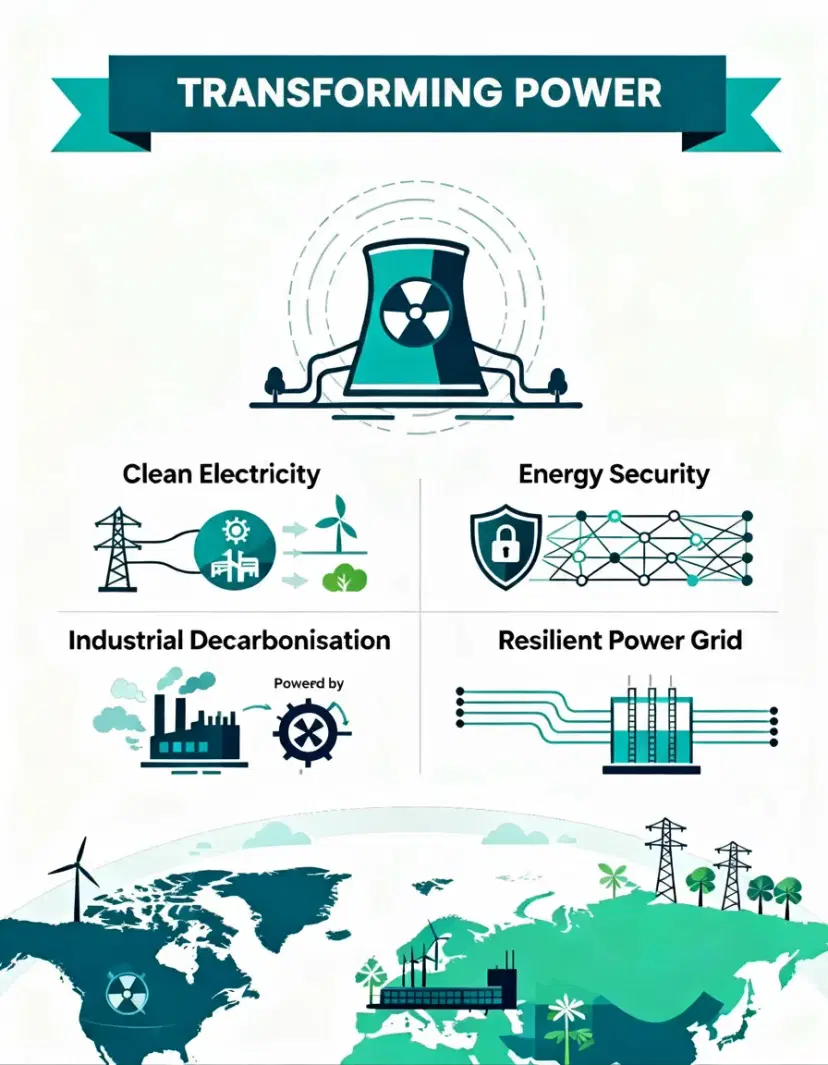
Governments are not revisiting nuclear energy out of nostalgia. They are doing so because the technology has changed and because the world's energy challenges require a broader set of solutions. Advanced reactors offer tools that align with modern priorities: clean electricity, energy security, industrial decarbonisation, and a resilient power grid.
If the momentum continues and current projects deliver as expected, nuclear energy may step into a renewed and more central role in the decades ahead — not as a holdover from the past, but as a crucial piece of a cleaner, steadier, and more diverse global energy system.