
5G in Healthcare Market Report 2026
Global Outlook – By Type (Data Transmission, Wearable Devices, Telediagnosis, Telemonitoring, Telerobotic Surgery, Other Types), By Component (Hardware, Services, Connectivity), By End Users (Healthcare Providers, Healthcare Payers, Other End Users) – Market Size, Trends, Strategies, and Forecast to 2030
5G in Healthcare Market Overview
• 5G in Healthcare market size has reached to $1.65 billion in 2025 • Expected to grow to $19.72 billion in 2030 at a compound annual growth rate (CAGR) of 64.1% • Growth Driver: Telehealth Boom Drives 5G In Healthcare Market Growth As Connectivity Becomes Critical For Remote Healthcare Services • Market Trend: Strategic Partnerships Accelerating 5G Healthcare Adoption through Industry Collaboration • Asia-Pacific was the largest region in 2025.What Is Covered Under 5G in Healthcare Market?
5G in healthcare refers to providing the fifth generation of broadband or cellular technology (i. e., 5G ) designed to dramatically improve the speed and responsiveness of wireless networks for various healthcare uses. The main components of 5G in healthcare includes hardware, services, and connectivity. The 5G hardware refers to components such as 5G small cells or similar hardware to enable seamless and uninterrupted 5G connections in healthcare. They are used in operations of data transmission, wearable devices, telediagnosis, telemonitoring, telerobotic surgery, and others. They are used by healthcare providers, healthcare payers, and other end-users.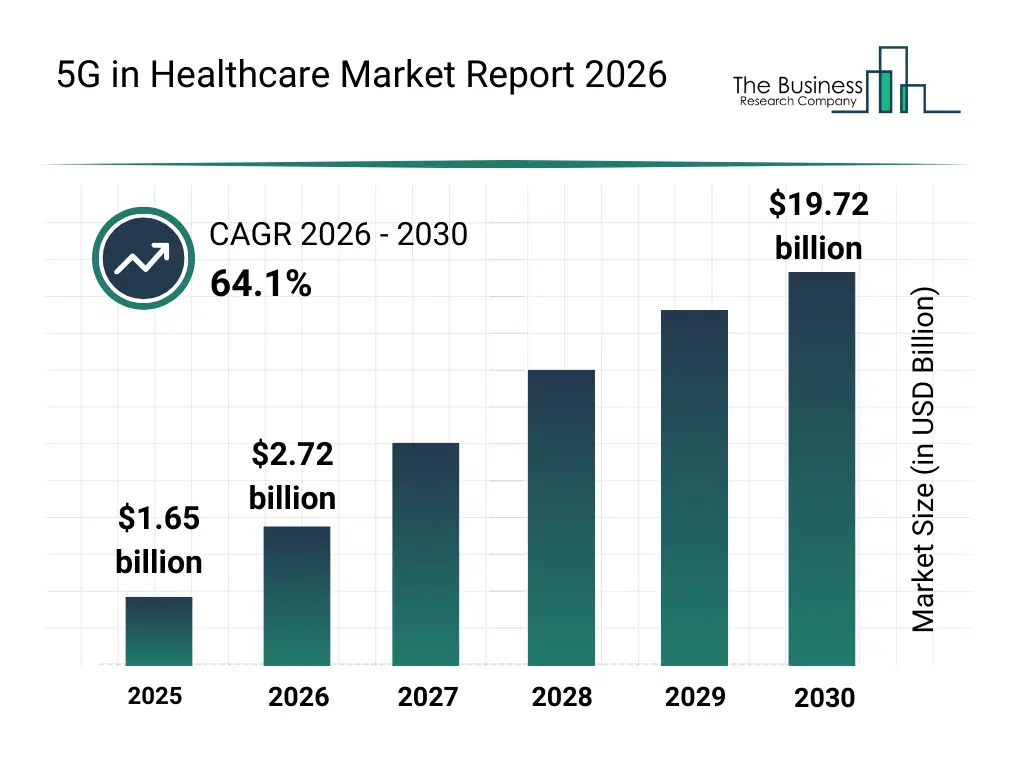
What Is The 5G in Healthcare Market Size and Share 2026?
The 5G in healthcare market size has grown exponentially in recent years. It will grow from $1.65 billion in 2025 to $2.72 billion in 2026 at a compound annual growth rate (CAGR) of 64.7%. The growth in the historic period can be attributed to growth of telemedicine platforms, rising mobile healthcare adoption, expansion of wireless hospital networks, increasing use of connected medical devices, early deployment of 4G lte in healthcare.What Is The 5G in Healthcare Market Growth Forecast?
The 5G in healthcare market size is expected to see exponential growth in the next few years. It will grow to $19.72 billion in 2030 at a compound annual growth rate (CAGR) of 64.1%. The growth in the forecast period can be attributed to expansion of 5G infrastructure, demand for real-time remote surgeries, growth of digital health ecosystems, rising need for continuous patient monitoring, increasing investment in smart hospitals. Major trends in the forecast period include ultra-low latency clinical communication, remote critical care connectivity, high-bandwidth medical imaging transfer, mobile hospital network integration, emergency response network optimization.
Global 5G in Healthcare Market Segmentation
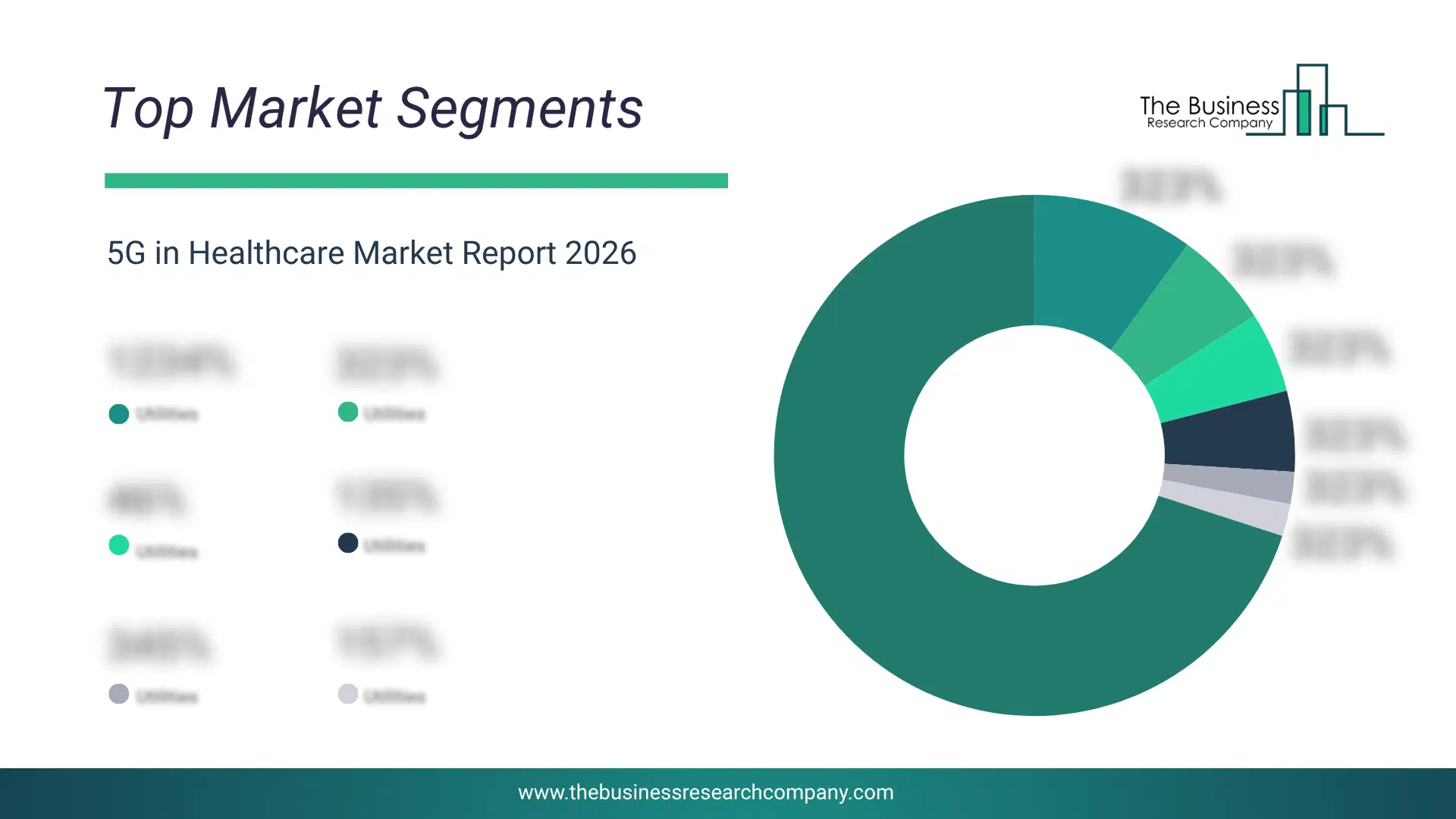
1) By Type: Data Transmission, Wearable Devices, Telediagnosis, Telemonitoring, Telerobotic Surgery, Other Types 2) By Component: Hardware, Services, Connectivity 3) By End Users: Healthcare Providers, Healthcare Payers, Other End Users Subsegments: 1) By Data Transmission: Real-Time Data Streaming, Remote Data Access, Cloud-Based Data Storage 2) By Wearable Devices: Fitness Trackers, Smartwatches, Health Monitoring Devices 3) By Telediagnosis: Virtual Consultations, Remote Imaging Services, AI-based Diagnostic Tools 4) By Telemonitoring: Remote Patient Monitoring Systems, Continuous Glucose Monitoring, Cardiac Monitoring Devices 5) By Telerobotic Surgery: Surgical Robots, Robotic-Assisted Surgical Systems 6) By Other Types: Mobile Health Applications, Augmented Reality (AR) For Training, Emergency Response SolutionsWhat Is The Driver Of The 5G in Healthcare Market?
The increasing adoption of telehealth is expected to propel the growth of the 5G in healthcare market going forward. Telehealth refers to the use of digital communication technologies, such as computers and mobile devices, by patients or doctors to access healthcare services remotely and manage health conditions effectively. The adoption of telehealth is rising due to the growing demand for convenient and accessible healthcare services, especially among populations with limited mobility, time, or transportation options. 5G in healthcare supports the increasing adoption of telehealth by providing high-speed, low-latency connectivity that ensures seamless video consultations, real-time patient monitoring, and improved communication between healthcare professionals and patients. For instance, in April 2025, according to the American Hospital Association, a US-based hospital association, in the last quarter of 2023, over 12.6% of Medicare beneficiaries received a telehealth service, reflecting the continued expansion of virtual care. Therefore, the increasing adoption of telehealth is driving the growth of the 5G in healthcare industry.Key Players In The Global 5G in Healthcare Market
Major companies operating in the 5G in healthcare market are AT&T Inc.; Verizon Communications Inc.; Telefonaktiebolaget LM Ericsson; T‑Mobile USA Inc.; Cisco Systems Inc.; NEC Corporation; SK Telecom Co. Ltd.; Fibocom Wireless Inc.; Qualcomm Incorporated; Nokia Corporation; Huawei Technologies Co. Ltd.; China Mobile Limited; Telus Corporation; Vodafone Group plc; Deutsche Telekom AG; Telefónica S. A.; Bharti Airtel Limited; Sierra Wireless Inc.; Swisscom AG; Quectel Wireless Solutions Co. Ltd.; Sequans Communications; Koninklijke Philips N. V.; Samsung Electronics Co. Ltd.; Siemens Healthineers AG; Telit Communications Ltd.; BT Group plc; NTT Docomo Inc.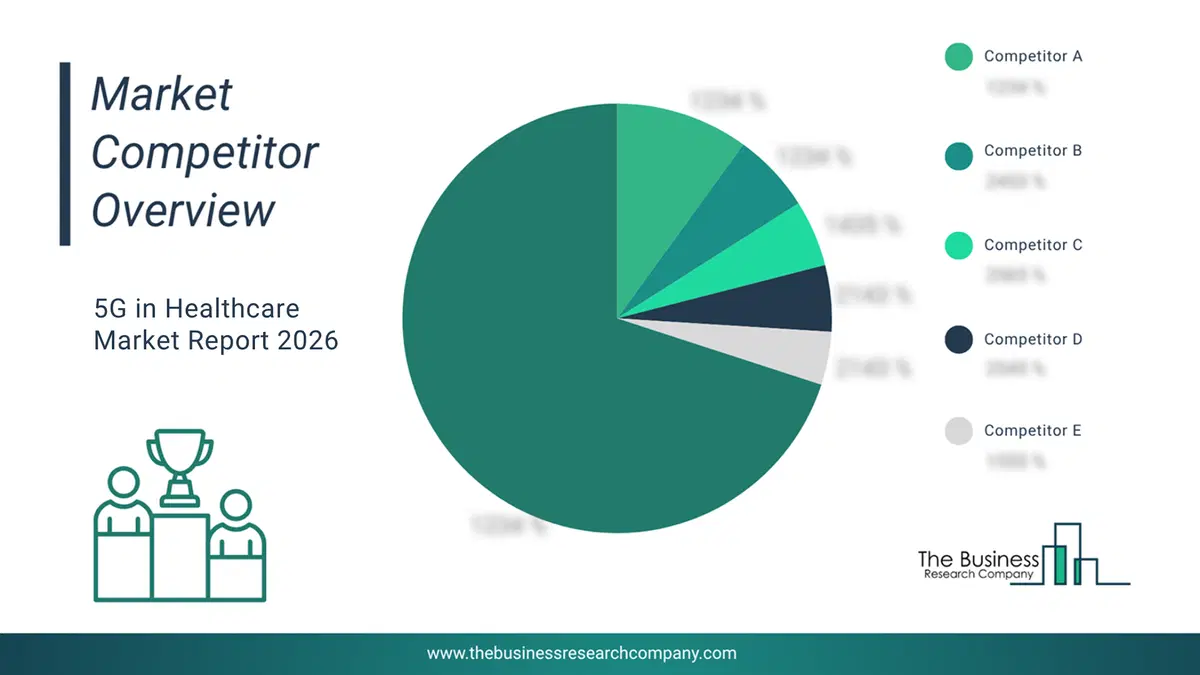
This chart is for illustrative purposes; the full report includes a detailed competitor analysis and comprehensive overview of the top 10 companies in the market.
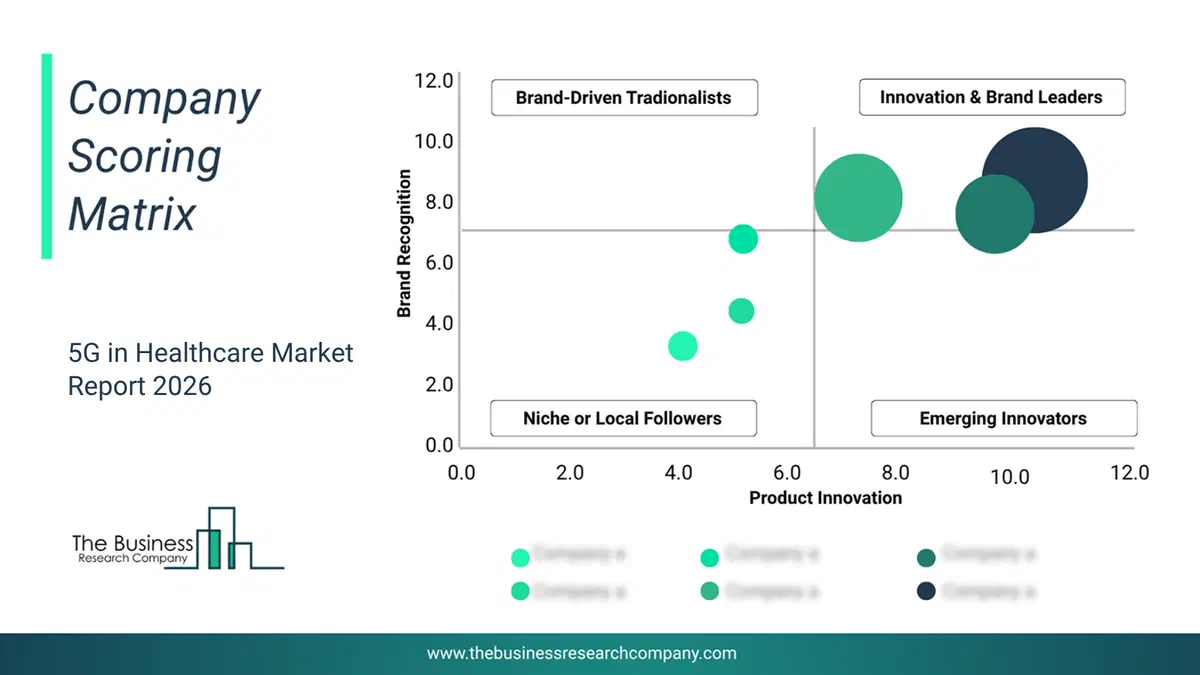
This chart maps companies by product innovation and brand strength, with bubble size indicating relative revenue, helping identify market leaders, challengers, and niche players. This is an illustrative chart; the full report provides a complete and accurate competitive analysis.
Global 5G in Healthcare Market Trends and Insights
Major companies operating in the 5G in healthcare market are focusing on adopting strategic partnership approaches to enhance the delivery of advanced healthcare services to individuals, businesses, and governments. Strategic partnerships refer to collaborative arrangements where companies leverage each other’s strengths, technologies, and resources to achieve mutual benefits and drive innovation. For instance, in October 2023, Chunghwa Telecom, a Taiwan-based telecommunications company, partnered with Ericsson, a Sweden-based telecommunication technology company, to enable 5G standalone (SA) connected ambulances for St. Paul’s Hospital in Taiwan. Leveraging 5G network slicing, this collaboration facilitates the transmission of 4K resolution real-time patient data from ambulances to hospital staff, enabling faster diagnosis and treatment. Such strategic partnerships are expected to accelerate the adoption of 5G technology in healthcare and support the market’s growth in the coming years.What Are Latest Mergers And Acquisitions In The 5G in Healthcare Market?
In November 2024, Health Catalyst, Inc., a US-based healthcare technology company, acquired Intraprise Health, LLC, for an undisclosed amount. Through this acquisition, Health Catalyst aims to enhance its cybersecurity risk-management capabilities for medical devices and clinical systems, addressing the growing security needs of connected healthcare networks. Intraprise Health, LLC is a US-based cybersecurity provider specializing in safeguarding healthcare IoT and medical device ecosystems.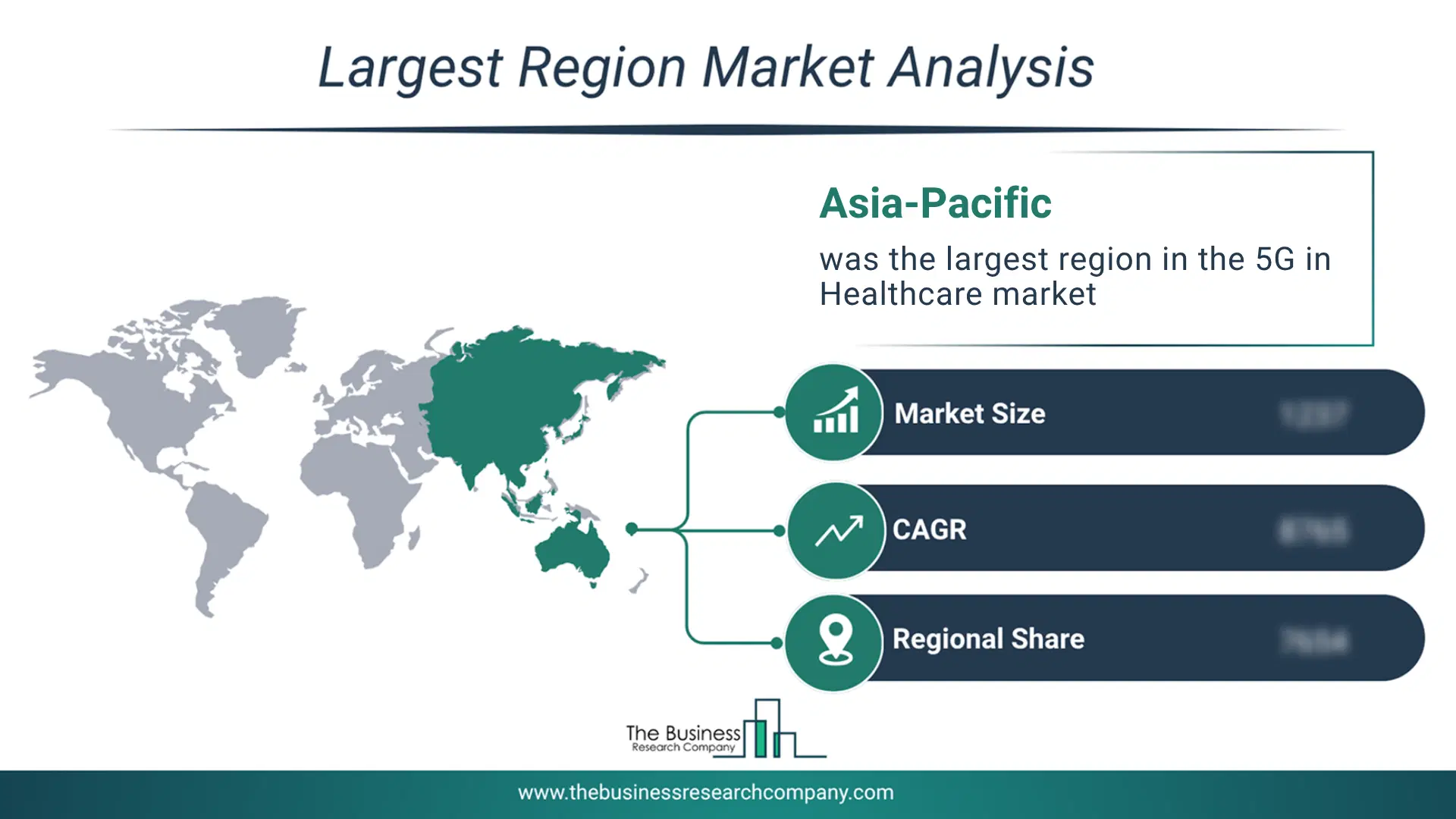
Regional Insights
Asia-Pacific was the largest region in the 5G in healthcare market in 2025, and it is also expected to be the fastest-growing region in the forecast period. The regions covered in this market report are Asia-Pacific, South East Asia, Western Europe, Eastern Europe, North America, South America, Middle East, Africa. The countries covered in this market report are Australia, Brazil, China, France, Germany, India, Indonesia, Japan, Taiwan, Russia, South Korea, UK, USA, Canada, Italy, SpainWhat Defines the 5G in Healthcare Market?
The 5G in the healthcare market includes revenues earned by entities by providing telehealth, data management, and real-time remote monitoring in healthcare institutes. The market value includes the value of related goods sold by the service provider or included within the service offering. Only goods and services traded between entities or sold to end consumers are included.How is Market Value Defined and Measured?
The market value is defined as the revenues that enterprises gain from the sale of goods and/or services within the specified market and geography through sales, grants, or donations in terms of the currency (in USD unless otherwise specified). The revenues for a specified geography are consumption values that are revenues generated by organizations in the specified geography within the market, irrespective of where they are produced. It does not include revenues from resales along the supply chain, either further along the supply chain or as part of other products.
This chart presents market attractiveness based on a quantitative evaluation of growth, competition, strategic alignment, and risk, offering a clear view of opportunity areas for decision-making. This chart is for illustrative purposes; the full report contains the complete analysis.

This chart highlights the Total Addressable Market (TAM) by estimating the maximum revenue opportunity using an assumption-driven approach, supporting strategic planning and opportunity sizing across markets. The chart is illustrative; the full report provides a more comprehensive analysis.
What Key Data and Analysis Are Included in the 5G in Healthcare Market Report 2026?
The 5g in healthcare market research report is one of a series of new reports from The Business Research Company that provides market statistics, including industry global market size, regional shares, competitors with the market share, detailed market segments, market trends and opportunities, and any further data you may need to thrive in the 5g in healthcare industry. The market research report delivers a complete perspective of everything you need, with an in-depth analysis of the current and future state of the industry.5G in Healthcare Market Report Forecast Analysis
| Report Attribute | Details |
|---|---|
| Market Size Value In 2026 | $2.72 billion |
| Revenue Forecast In 2030 | $19.72 billion |
| Growth Rate | CAGR of 64.1% from 2026 to 2030 |
| Base Year For Estimation | 2025 |
| Actual Estimates/Historical Data | 2020-2025 |
| Forecast Period | 2026 - 2030 |
| Market Representation | Revenue in USD Billion and CAGR from 2026 to 2030 |
| Segments Covered | Type, Component, End Users |
| Regional Scope | Asia-Pacific, Western Europe, Eastern Europe, North America, South America, Middle East, Africa |
| Country Scope | The Countries Covered In This Market Report Are Australia, Brazil, China, France, Germany, India, Indonesia, Japan, Taiwan, Russia, South Korea, Uk, Usa, Canada, Italy, Spain. |
| Key Companies Profiled | AT&T Inc., Verizon Communications Inc., Telefonaktiebolaget LM Ericsson, T‑Mobile USA Inc., Cisco Systems Inc., NEC Corporation, SK Telecom Co. Ltd., Fibocom Wireless Inc., Qualcomm Incorporated, Nokia Corporation, Huawei Technologies Co. Ltd., China Mobile Limited, Telus Corporation, Vodafone Group plc, Deutsche Telekom AG, Telefónica S. A., Bharti Airtel Limited, Sierra Wireless Inc., Swisscom AG, Quectel Wireless Solutions Co. Ltd., Sequans Communications, Koninklijke Philips N. V., Samsung Electronics Co. Ltd., Siemens Healthineers AG, Telit Communications Ltd., BT Group plc, NTT Docomo Inc. |
| Customization Scope | Request for Customization |
| Pricing And Purchase Options | Explore Purchase Options |