
Induced Pluripotent Stem Cell (iPSC) Market Report 2026
Global Outlook – By Derived Cell Type (Hepatocytes, Fibroblasts, Keratinocytes, Amniotic Cells, Other Derived Cell Types), By Application (Academic Research, Drug Discovery And Toxicity Studies, Regenerative Medicine, Cell And Gene Therapy), By End-User (Hospitals, Research Laboratories) - Market Size, Trends, And Global Forecast 2026-2030
Induced Pluripotent Stem Cell (iPSC) Market Overview
• Induced Pluripotent Stem Cell (iPSC) market size has reached to $3.67 billion in 2025 • Expected to grow to $5.75 billion in 2030 at a compound annual growth rate (CAGR) of 9.3% • Growth Driver: Neurological Disorder Prevalence Fuels Growth Of The Induced Pluripotent Stem Cell Market • Market Trend: Collaborative Advances In Induced Pluripotent Stem Cell (iPSC) Technology Enhancing Regenerative Medicine And Personalized Therapeutic Solutions • North America was the largest region in 2025 and Western Europe is the fastest growing region.Market Gains By 2030 – Top Opportunities By Segment
Market Gain identifies the most promising market opportunities by highlighting the segments or products expected to generate the highest incremental revenue growth over the next five years.
What Is Covered Under Induced Pluripotent Stem Cell (iPSC) Market?
Induced pluripotent stem cells are the regenerated form of stem cells, which are produced from an existing adult cell, such as from hepatocytes, fibroblasts, keratinocytes, and neurons. This process involves introducing specific genes that induce the cell to become pluripotent, meaning it can differentiate into any cell type in the body (e.g., heart, brain, liver cells). The main derived cell types of induced pluripotent cells are hepatocytes, fibroblasts, keratinocytes, amniotic cells, and others. Hepatocytes are the liver's primary functional cells, performing a staggering array of metabolic, endocrine, and secretory tasks. The various applications include academic research, drug development, and discovery, toxicity screening, and regenerative medicine and are used in several sectors such as hospitals, and research laboratories.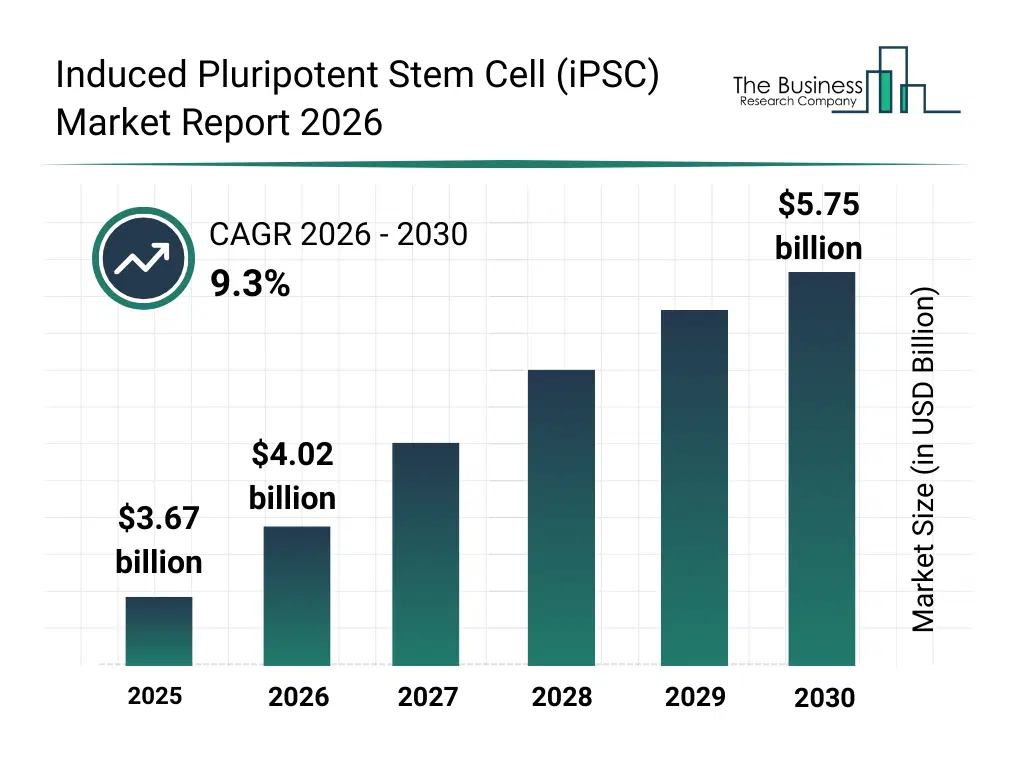
What Is The Induced Pluripotent Stem Cell (iPSC) Market Size and Share 2026?
The induced pluripotent stem cell (ipsc) market size has grown strongly in recent years. It will grow from $3.67 billion in 2025 to $4.02 billion in 2026 at a compound annual growth rate (CAGR) of 9.5%. The growth in the historic period can be attributed to breakthroughs in cellular reprogramming research, ethical concerns around embryonic stem cells, increased funding for stem cell research, growth of academic research collaborations, rising prevalence of chronic and degenerative diseases.What Is The Induced Pluripotent Stem Cell (iPSC) Market Growth Forecast?
The induced pluripotent stem cell (ipsc) market size is expected to see strong growth in the next few years. It will grow to $5.75 billion in 2030 at a compound annual growth rate (CAGR) of 9.3%. The growth in the forecast period can be attributed to expansion of regenerative medicine applications, increasing demand for personalized therapies, growing investment in cell and gene therapy, rising adoption of ipscs in neurological and cardiac research, favorable regulatory support for advanced therapies. Major trends in the forecast period include growing use of ipscs in disease modeling, increasing adoption in drug discovery and toxicity testing, expansion of patient-specific cell line development, rising focus on ethical alternatives to embryonic stem cells, advancements in reprogramming efficiency and cell stability.
Global Induced Pluripotent Stem Cell (iPSC) Market Segmentation
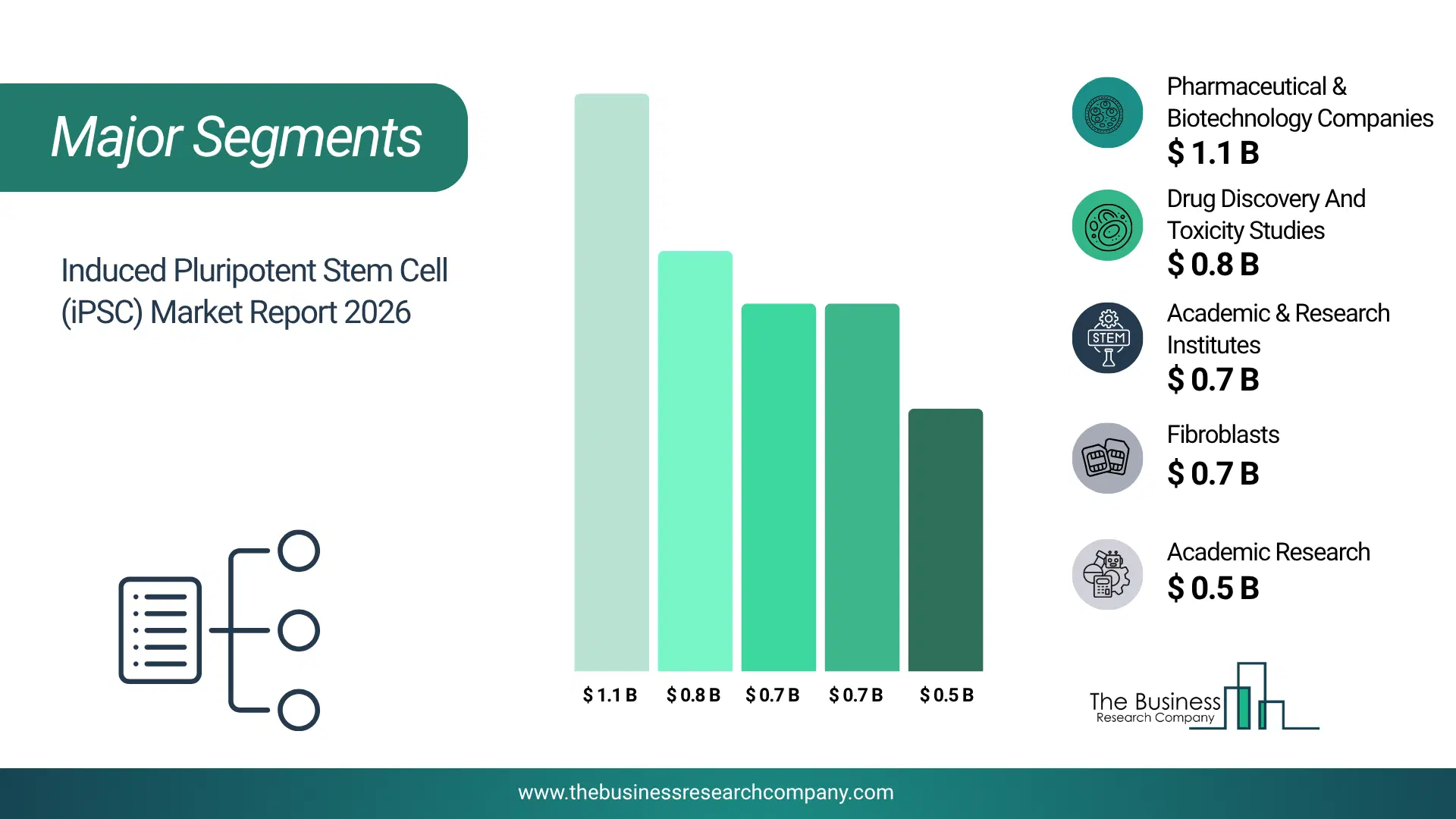
1) By Derived Cell Type: Hepatocytes, Fibroblasts, Keratinocytes, Amniotic Cells, Other Derived Cell Types 2) By Application: Academic Research, Drug Discovery And Toxicity Studies, Regenerative Medicine, Cell And Gene Therapy 3) By End-User: Hospitals, Research Laboratories Subsegments: 1) By Hepatocytes: iPSC-Derived Liver Cells For Drug Toxicity Testing, Disease Modeling And Regenerative Therapies 2) By Fibroblasts: iPSC-Derived Skin Cells For Wound Healing And Tissue Repair, Fibroblast-Based Disease Research 3) By Keratinocytes: iPSC-Derived Skin Cells For Dermatological Research, Skin Regeneration Therapies 4) By Amniotic Cells: iPSC-Derived Cells For Prenatal Research, Amniotic Fluid-Based Regenerative Applications 5) By Other Derived Cell Types: Neurons For Neurological Disease Modeling, Cardiomyocytes For Heart Disease Studies, Endothelial Cells For Vascular Research The top segments in the induced pluripotent stem cell (ipsc) market will be: • Pharmaceutical & Biotechnology Companies will reach $1143.54 Million by 2025. • Drug Discovery And Toxicity Studies will reach $882.83 Million by 2025. • Academic & Research Institutes will reach $774.94 Million by 2025. • Fibroblasts will reach $732.79 Million by 2025. • Academic Research will reach $521.94 Million by 2025.What Is The Driver Of The Induced Pluripotent Stem Cell (iPSC) Market?
The increasing prevalence of neurological disorders is expected to propel the growth of the induced pluripotent stem cell market going forward. Neurological disorder refers to a medical condition that affects the nervous system, including the brain, spinal cord, and nerves. Common neurological disorders include acute spinal cord injury, Alzheimer's disease, Amyotrophic Lateral Sclerosis (ALS), and more. Pluripotent stem cells offer the potential for studying disease mechanisms and drug testing, providing insights into neurological disorders' causes, and aiding in the development of regenerative therapies for conditions such as Parkinson's and Alzheimer's disease. For instance, in October 2023, according to the World Federation of Neurology (WFN), a UK-based international nonprofit neurological organization, more than 40% of the global population were living with a neurological condition, and the overall neurological disease burden was projected to nearly double by 2050. Therefore, the increasing prevalence of neurological disorders is driving the growth of the induced pluripotent stem cell market.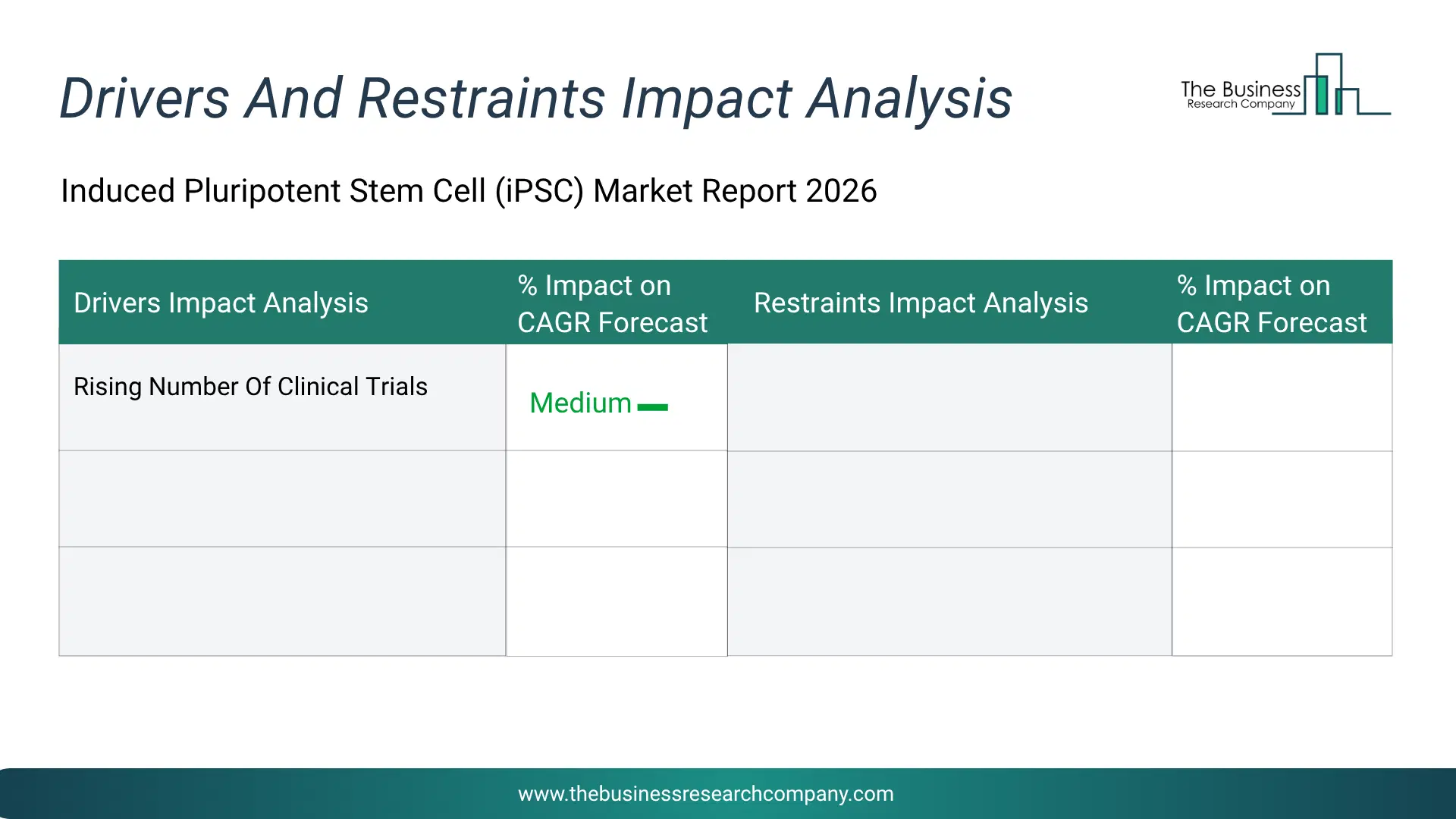
Infographic Chart Showing Key Market Drivers Analysis And Restraints For Induced Pluripotent Stem Cell (Ipsc) Market
The chart presents an impact analysis of key drivers and restraints, quantifying their relative influence on the market's growth rate and helping assess the balance between growth enablers and limiting factors. This chart offers a high-level perspective; the full report contains more detailed insights.
How Will The Drivers Impact Growth In The Global Induced Pluripotent Stem Cell (iPSC) Market?
• Rising Number Of Clinical Trials (Medium) – The rising number of clinical trials will become a key driver of growth in the induced pluripotent stem cell (iPSC) market by 2030. iPSCs are increasingly used in disease modelling, toxicity screening, and regenerative therapies, leading to a surge in clinical trials—accelerating market adoption and validation. As clinical trials increase, more iPSC-based therapies are being tested for a range of conditions, enhancing their viability in regenerative and personalized medicine. Successful trials boost market confidence, encouraging both investors and healthcare providers to adopt iPSC solutions. iPSCs also improve disease models for drug discovery, reducing reliance on animal studies and accelerating the development process. These factors collectively drive the growing market for iPSC-based therapies and research tools. As a result, the rising number of clinical trials is anticipated to contributing to a 1.4% annual growth in the market. • Growth In Drug Discovery And Development (Medium) – The growth in drug discovery and development will emerge as a major factor driving the expansion of the induced pluripotent stem cell (iPSC) market by 2030. The iPSCs provide human-like models for high-throughput drug screening, significantly improving the efficiency and cost-effectiveness of early-stage drug discovery. Induced pluripotent stem cells (iPSCs) are revolutionizing drug discovery by providing the ability to generate human cell types from a patient's own cells, enabling the creation of highly accurate disease models. They accelerate the drug development process by enabling faster and cost-effective testing in human-like environments before clinical trials. iPSCs also allow the creation of disease-specific models, enhancing precision in drug testing and facilitating the discovery of targeted treatments for complex diseases. The use of iPSCs in drug development can help reduce reliance on animal testing. The iPSCs allow for in vitro testing of drugs, bypassing the ethical concerns and limitations associated with animal studies. Consequently, the accelerating growth in drug discovery and development capabilities is projected to contributing to a 1.0% annual growth in the market.How Will The Restraints Impact Growth In The Global Induced Pluripotent Stem Cell (iPSC) Market?
• Limited Reimbursement Coverage (Medium) – Limited Reimbursement Coverage will restrict the growth of the Induced Pluripotent Stem Cell (iPSC) market during the forecast period. Limited reimbursement policies for iPSC-based therapies and research applications create financial barriers for healthcare providers and patients. Reimbursement uncertainty affects adoption rates and limits the commercial potential of iPSC technologies. The lack of clear reimbursement pathways can slow market growth and restrict patient access. • Lack Of Awareness On Induced Pluripotent Stem Cell (Medium) – Lack Of Awareness On Induced Pluripotent Stem Cell will restrict the growth of the Induced Pluripotent Stem Cell (iPSC) market during the forecast period. Limited awareness among healthcare professionals, researchers, and potential end-users about iPSC technology and its applications restricts adoption. Lack of understanding about iPSC benefits and capabilities affects investment decisions and research funding. Education gaps limit market growth and technology utilization.Key Players In The Global Induced Pluripotent Stem Cell (iPSC) Market
Major companies operating in the induced pluripotent stem cell (ipsc) market are FUJIFILM Holdings Corporation (FUJIFILM Cellular Dynamics, Inc), Thermo Fisher Scientific, Inc, Takara Bio Inc, Lonza Group AG, Astellas Pharma Inc, ViaCyte, Inc, Ncardia, REPROCELL USA, Inc, Japan Tissue Engineering Co., Ltd, Merck KGaA, Cynata Therapeutics Limited, Dainippon Sumitomo Pharma, Shenzhen Bioscience, Shanghai Cell Therapy Group, Car-T Bio, JW therapeutics, Fosun Kite Biotechnology, Shanghai UniCar Therapy, SEED Biosciences SA, Cellerix, CellGenix, NsGene, TiGenix, Renuron Group, Smart Cells, Genenta Science, Biocad Rf, Selvita, Mabion, Pure Biologics, OncoArendi Therapeutics, Proteon Pharmaceuticals, Parexel, BrainStorm Cell Therapeutics, Cellular Biomedicine Group, Pluristem Therapeutics, Gamida Cell, Caladrius Biosciences, BioCanRx, CellCAN, CCRM, C3i, BioCells Argentina, Stem Cells, Royan Stem Cell Technology Co., Next BioSciences, CryoSave, BioHeart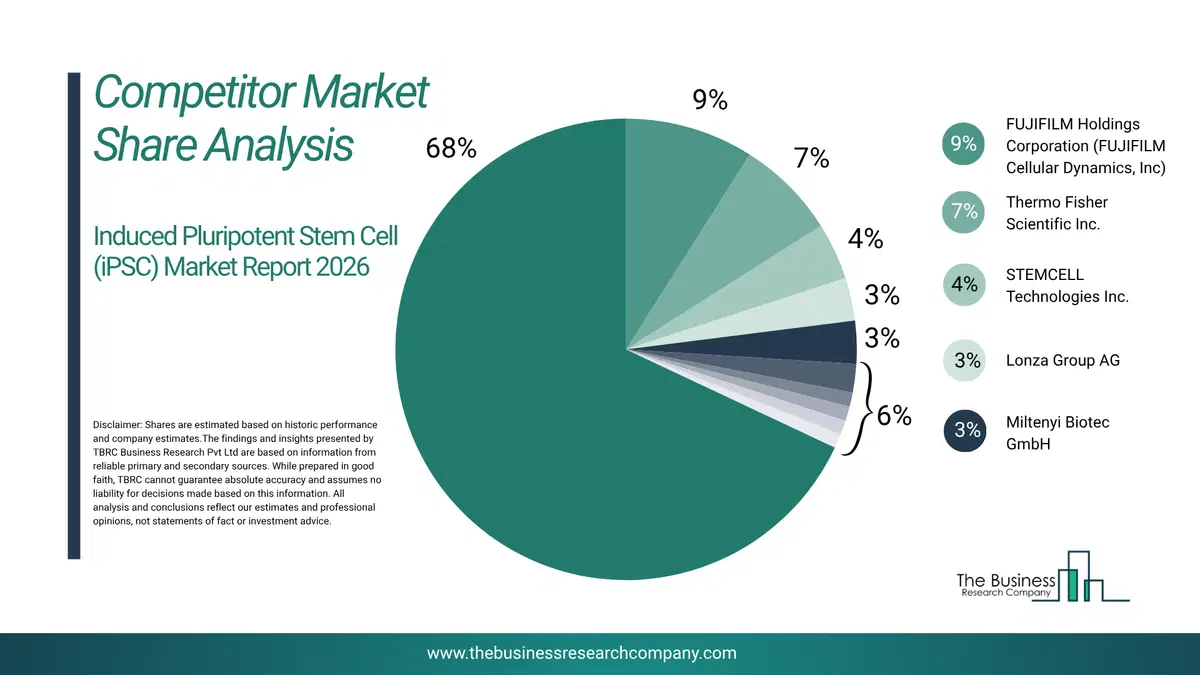
This chart is for illustrative purposes; the full report includes a detailed competitor analysis and comprehensive overview of the top 10 companies in the market.
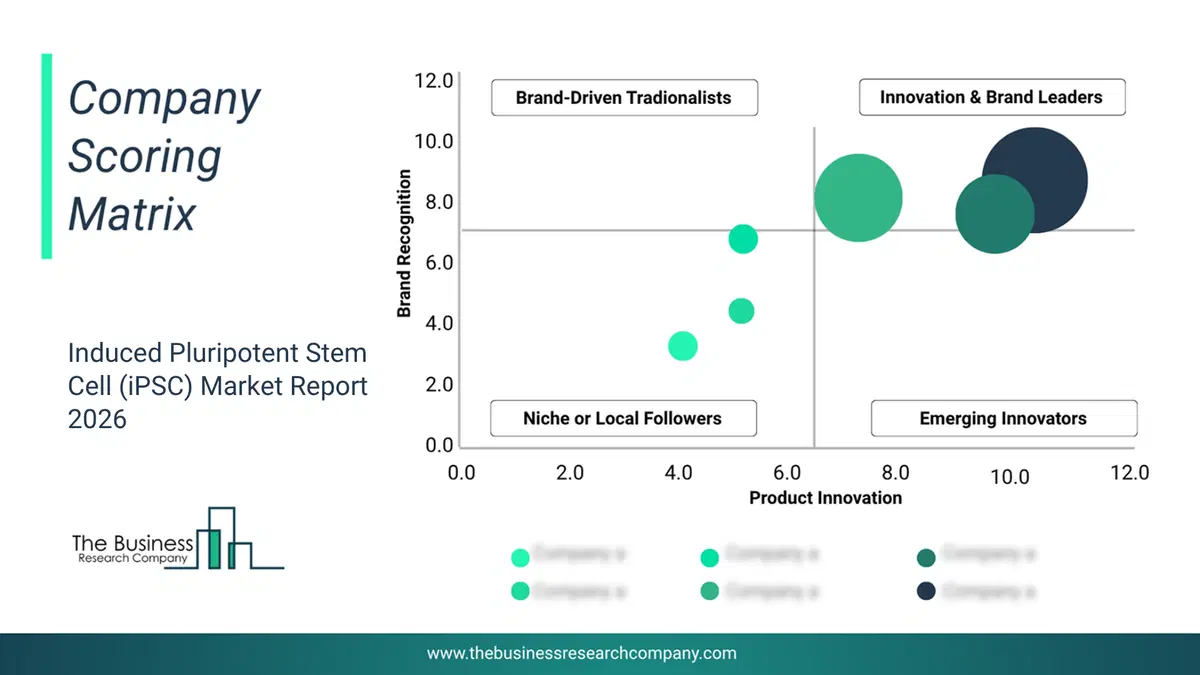
This chart maps companies by product innovation and brand strength, with bubble size indicating relative revenue, helping identify market leaders, challengers, and niche players. This is an illustrative chart; the full report provides a complete and accurate competitive analysis.
Global Induced Pluripotent Stem Cell (iPSC) Market Trends and Insights
Major companies operating in the induced pluripotent stem cell (IPSC) market are collaborating to Advance iPSC Technology to enhance regenerative medicine applications, improve disease modeling, accelerate drug discovery, and develop personalized therapeutic solutions. Induced Pluripotent Stem Cell (iPSC) technology refers to the scientific process and methodologies used to reprogram adult somatic cells (such as skin or blood cells) back into a pluripotent state, making them capable of differentiating into any type of cell in the body. For instance, in April 2024, SCG Cell Therapy Pte Ltd, a Singapore-based biotechnology company, and the Agency for Science, Technology and Research, a Singapore-based Statutory board, launched joint laboratories aimed at advancing cellular immunotherapies. The initiative is supported by close to S$30 million, emphasizing Singapore's commitment to advancing biotechnology and healthcare solutions. The collaboration aims to develop scalable manufacturing processes for GMP-grade iPSC products, addressing the challenges of translating laboratory innovations into clinically viable therapies.What Are Latest Mergers And Acquisitions In The Induced Pluripotent Stem Cell (iPSC) Market?
In May 2024, Theragent Inc., a US-based biotechnology company, partnered with Pluristyx Inc. With this partnership, Theragent aims to expand its portfolio by incorporating Pluristyx's expertise in providing induced Pluripotent Stem Cell (iPSC) products. Pluristyx Inc. is a US-based biotechnology company that offers induced pluripotent stem cell (iPSC) products.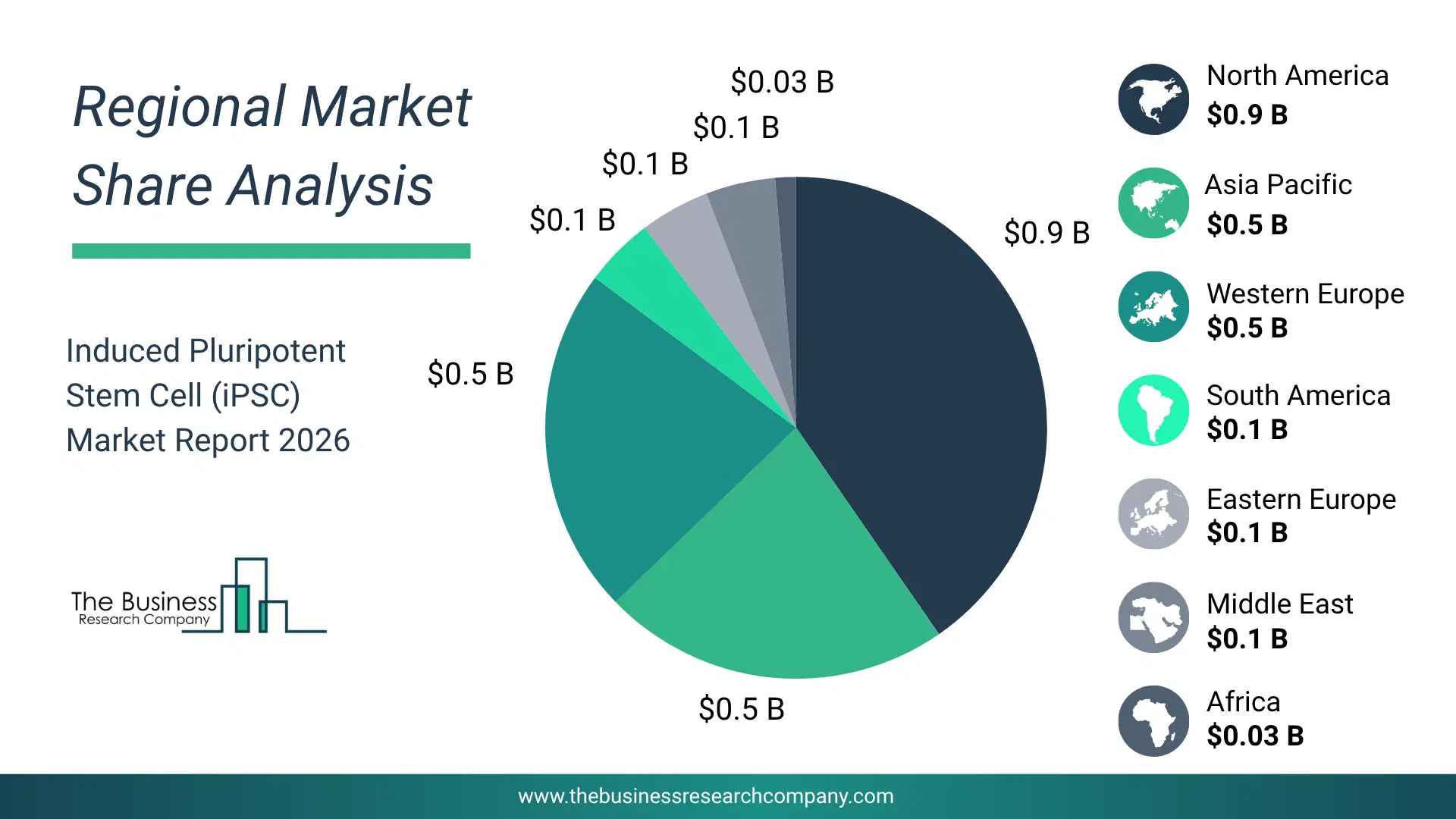
Regional Outlook
North America was the largest region in the induced pluripotent stem cell (IPSC) market in 2025. Western Europe was the second largest region in the global induced pluripotent stem cell (IPSC) market share. The regions covered in this market report are Asia-Pacific, South East Asia, Western Europe, Eastern Europe, North America, South America, Middle East, Africa. The countries covered in this market report are Australia, Brazil, China, France, Germany, India, Indonesia, Japan, Taiwan, Russia, South Korea, UK, USA, Canada, Italy, Spain.What Defines the Induced Pluripotent Stem Cell (iPSC) Market?
The induced pluripotent stem cell (IPSC) market consists of sales of induced pluripotent stem cells and related services. Values in this market are factory gate values, that is the value of goods sold by the manufacturers or creators of the goods, whether to other entities (including downstream manufacturers, wholesalers, distributors and retailers) or directly to end customers. The value of goods in this market includes related services sold by the creators of the goods.How is Market Value Defined and Measured?
The market value is defined as the revenues that enterprises gain from the sale of goods and/or services within the specified market and geography through sales, grants, or donations in terms of the currency (in USD unless otherwise specified). The revenues for a specified geography are consumption values that are revenues generated by organizations in the specified geography within the market, irrespective of where they are produced. It does not include revenues from resales along the supply chain, either further along the supply chain or as part of other products.
This chart presents market attractiveness based on a quantitative evaluation of growth, competition, strategic alignment, and risk, offering a clear view of opportunity areas for decision-making. This chart is for illustrative purposes; the full report contains the complete analysis.

This chart highlights the Total Addressable Market (TAM) by estimating the maximum revenue opportunity using an assumption-driven approach, supporting strategic planning and opportunity sizing across markets. The chart is illustrative; the full report provides a more comprehensive analysis.
What Key Data and Analysis Are Included in the Induced Pluripotent Stem Cell (iPSC) Market Report 2026?
The induced pluripotent stem cell (ipsc) market research report is one of a series of new reports from The Business Research Company that provides market statistics, including industry global market size, regional shares, competitors with the market share, detailed market segments, market trends and opportunities, and any further data you may need to thrive in the induced pluripotent stem cell (ipsc) industry. The market research report delivers a complete perspective of everything you need, with an in-depth analysis of the current and future state of the industry.Induced Pluripotent Stem Cell (iPSC) Market Report Forecast Analysis
| Report Attribute | Details |
|---|---|
| Market Size Value In 2026 | $4.02 billion |
| Revenue Forecast In 2030 | $5.75 billion |
| Growth Rate | CAGR of 9.5% from 2026 to 2030 |
| Base Year For Estimation | 2025 |
| Actual Estimates/Historical Data | 2020-2025 |
| Forecast Period | 2026 - 2030 |
| Market Representation | Revenue in USD Billion and CAGR from 2026 to 2030 |
| Segments Covered | Derived Cell Type, Application, End-User |
| Regional Scope | Asia-Pacific, Western Europe, Eastern Europe, North America, South America, Middle East, Africa |
| Country Scope | The countries covered in the report are Australia, Brazil, China, France, Germany, India, Indonesia, Japan, Taiwan, Russia, South Korea, UK, USA, Canada, Italy, Spain. |
| Key Companies Profiled | FUJIFILM Holdings Corporation (FUJIFILM Cellular Dynamics, Inc), Thermo Fisher Scientific, Inc, Takara Bio Inc, Lonza Group AG, Astellas Pharma Inc, ViaCyte, Inc, Ncardia, REPROCELL USA, Inc, Japan Tissue Engineering Co., Ltd, Merck KGaA, Cynata Therapeutics Limited, Dainippon Sumitomo Pharma, Shenzhen Bioscience, Shanghai Cell Therapy Group, Car-T Bio, JW therapeutics, Fosun Kite Biotechnology, Shanghai UniCar Therapy, SEED Biosciences SA, Cellerix, CellGenix, NsGene, TiGenix, Renuron Group, Smart Cells, Genenta Science, Biocad Rf, Selvita, Mabion, Pure Biologics, OncoArendi Therapeutics, Proteon Pharmaceuticals, Parexel, BrainStorm Cell Therapeutics, Cellular Biomedicine Group, Pluristem Therapeutics, Gamida Cell, Caladrius Biosciences, BioCanRx, CellCAN, CCRM, C3i, BioCells Argentina, Stem Cells, Royan Stem Cell Technology Co., Next BioSciences, CryoSave, BioHeart |
| Customization Scope | Request for Customization |
| Pricing And Purchase Options | Explore Purchase Options |