
Regenerative Medicine For Cartilage Market Report 2026
Global Outlook – By Product (Cell Based, Gene Based, Tissue Based), By End-Use (Ambulatory Surgical Centers, Hospitals And Clinics, Others), By Application (Musculoskeletal, Oncology, Dental, Wound Care, Others) – Market Size, Trends, Strategies, and Forecast to 2030
Regenerative Medicine For Cartilage Market Overview
• Regenerative Medicine For Cartilage market size has reached to $4.68 billion in 2025 • Expected to grow to $6.33 billion in 2030 at a compound annual growth rate (CAGR) of 6.3% • Growth Driver: Surge In Chronic Diseases Propels Growth In The Regenerative Medicine For Cartilage Market • Market Trend: Breakthrough Bioactive Material for Cartilage Regeneration Developed by Northwestern University • Europe was the largest region in 2025.What Is Covered Under Regenerative Medicine For Cartilage Market?
Regenerative medicine for cartilage refers to a medication used during surgery to repair damaged cartilage in the knees using body-produced cells that can create cartilage. A biopsy is required to collect chondrocytes (cells that produce cartilage), which are then multiplied in a lab before being implanted into the injured area during surgery. The main types of regenerative medicine for cartilage are cell-based, gene-based, and tissue-based. Cell-based typically refers to processes, technologies, or products that involve or are derived from living cells. They are used in various applications such as musculoskeletal, oncology, dental, wound care, and others by various end-users including ambulatory surgical centers, hospitals and clinics, and others.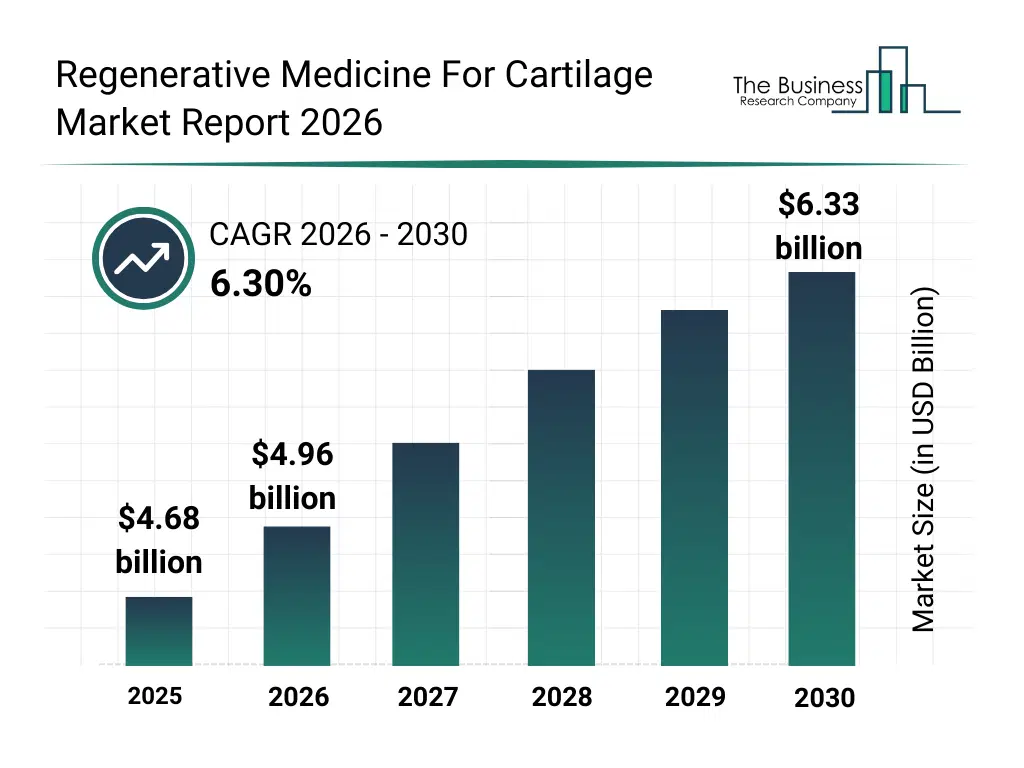
What Is The Regenerative Medicine For Cartilage Market Size and Share 2026?
The regenerative medicine for cartilage market size has grown strongly in recent years. It will grow from $4.68 billion in 2025 to $4.96 billion in 2026 at a compound annual growth rate (CAGR) of 6.1%. The growth in the historic period can be attributed to rising incidence of knee osteoarthritis, increasing sports-related cartilage injuries, limitations of conventional pain management therapies, growing orthopedic surgical volumes, early adoption of autologous chondrocyte implantation.What Is The Regenerative Medicine For Cartilage Market Growth Forecast?
The regenerative medicine for cartilage market size is expected to see strong growth in the next few years. It will grow to $6.33 billion in 2030 at a compound annual growth rate (CAGR) of 6.3%. The growth in the forecast period can be attributed to advancements in regenerative biologics, increasing geriatric population, rising demand for joint preservation therapies, expansion of outpatient surgical centers, improving reimbursement for regenerative treatments. Major trends in the forecast period include expansion of autologous chondrocyte implantation procedures, rising adoption of minimally invasive cartilage repair surgeries, increasing clinical validation of stem cell-based cartilage therapies, growing demand for long-lasting knee cartilage regeneration solutions, standardization of cartilage repair protocols in orthopedic practice.
Global Regenerative Medicine For Cartilage Market Segmentation
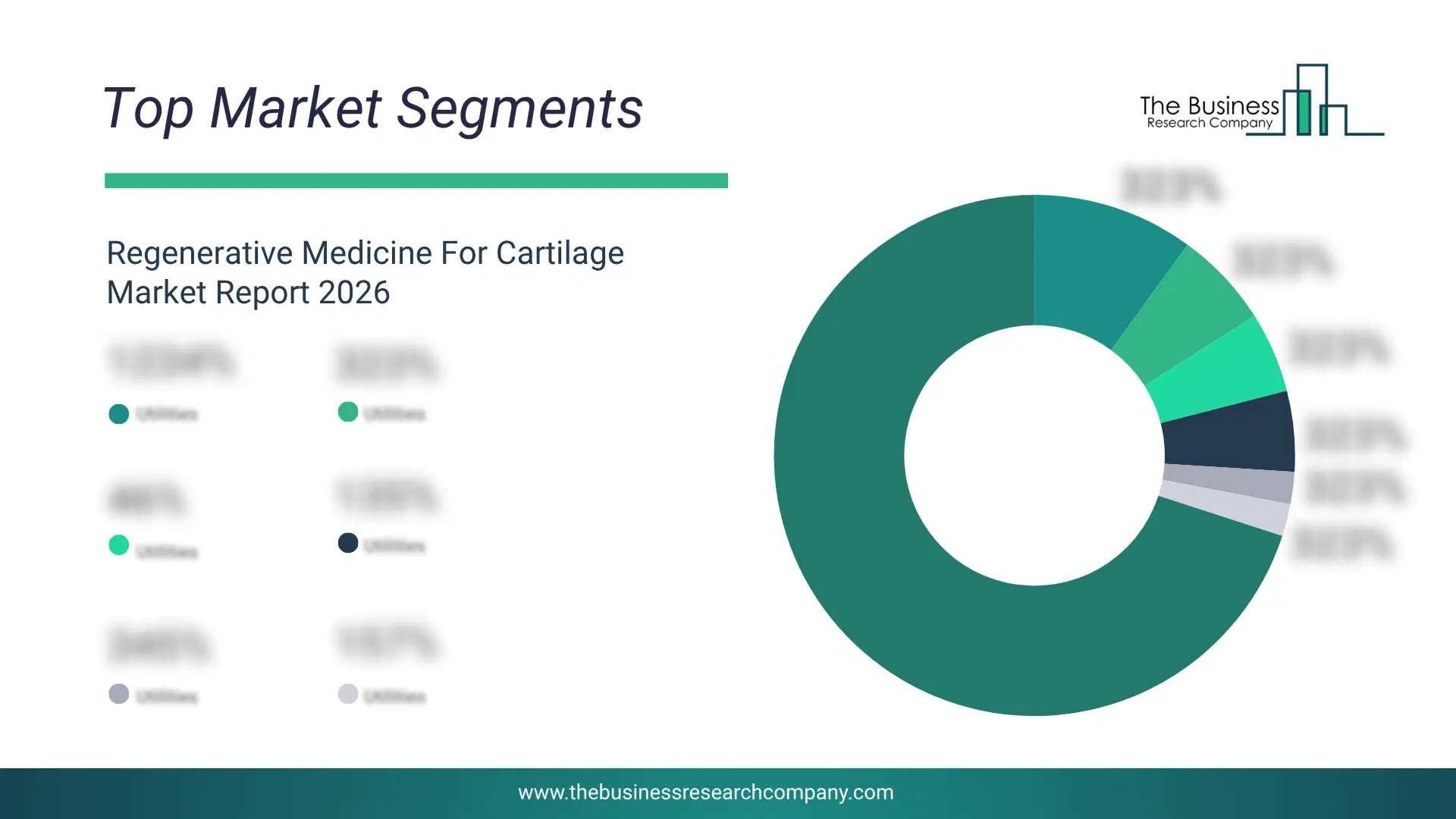
1) By Product: Cell Based, Gene Based, Tissue Based 2) By End-Use: Ambulatory Surgical Centers, Hospitals And Clinics, Others 3) By Application: Musculoskeletal, Oncology, Dental, Wound Care, Others Subsegments: 1) By Cell-Based: Chondrocyte-Based Therapies, Mesenchymal Stem Cell (MSC) Therapies, Induced Pluripotent Stem Cell (iPSC) Therapies, Embryonic Stem Cell (ESC) Therapies 2) By Gene-Based: Gene Modification Therapies, CRISPR-Based Gene Editing, Viral Vector Gene Therapies, Non-Viral Gene Therapies 3) By Tissue-Based: Autologous Tissue Grafts, Allogeneic Tissue Grafts, Xenogeneic Tissue Grafts, Synthetic ScaffoldsWhat Is The Driver Of The Regenerative Medicine For Cartilage Market?
The increasing number of chronic diseases is expected to propel the growth of regenerative medicine for cartilage market. Chronic diseases are medical conditions that persist over an extended period, often for a person's lifetime. Medical specialty bags play a crucial role in the treatment and management of chronic diseases. The prevalence of chronic diseases, particularly those affecting the musculoskeletal system, can be beneficial for the field of regenerative medicine, including regenerative medicine for cartilage. For instance, in June 2024, according to the National Health Service, a UK-based government department, 3,615,330 individuals registered with a general practitioner (GP) were diagnosed with non-diabetic hyperglycemia or pre-diabetes (a condition with elevated blood sugar levels, not high enough to be classified as diabetes) in 2023, marking an 18% increase from 3,065,825 cases in 2022. Therefore, the increasing number of chronic diseases is driving the growth of regenerative medicine for cartilage industry.Key Players In The Global Regenerative Medicine For Cartilage Market
Major companies operating in the regenerative medicine for cartilage market are Smith & Nephew plc, Integra LifeSciences, Stryker Corporation, MiMedx Group Inc., Zimmer Biomet Holdings Inc., B. Braun Melsungen AG, AbbVie, CONMED Corporation, Arthrex Inc., Baxter International Inc., China Regenerative Medicine International, ABLbio, Cellgenix GmbH, BioTissue Technologies, Corin Group, Medical Import Ltd., Orthonika, Merete, 3di GmbH, Aditus Medical GmbH, Anton Hipp GmbH, AREX SAS, Acelity L.P. Inc., StemCells Inc, Organogenesis Inc, NuVasive Inc, Japan Tissue Engineering Co. Ltd, Advantagene Inc., Mesoblast Ltd, Globus Medical, DePuy Synthes, Cryolife Inc, Johnson & Johnson, Medtronic Plc, Rti Surgical, CartiHeal Inc., DJO Global Inc., Wright Medical Group, Auxein, Aesculap Inc, AMEGA Biotech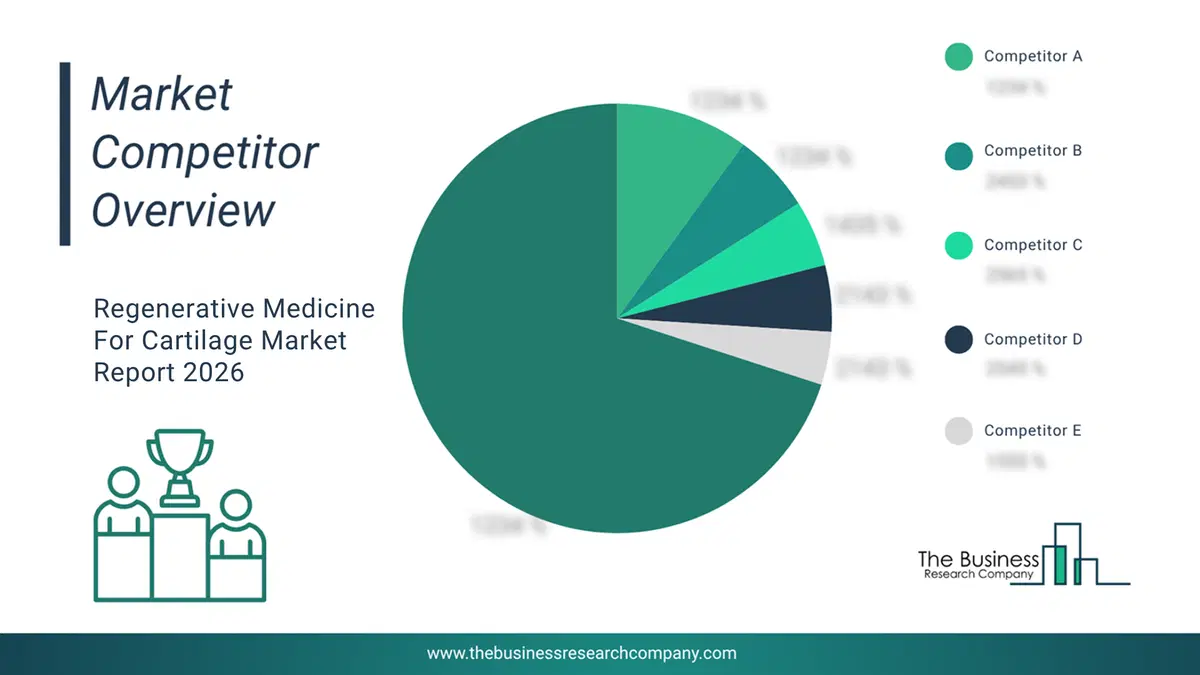
This chart is for illustrative purposes; the full report includes a detailed competitor analysis and comprehensive overview of the top 10 companies in the market.
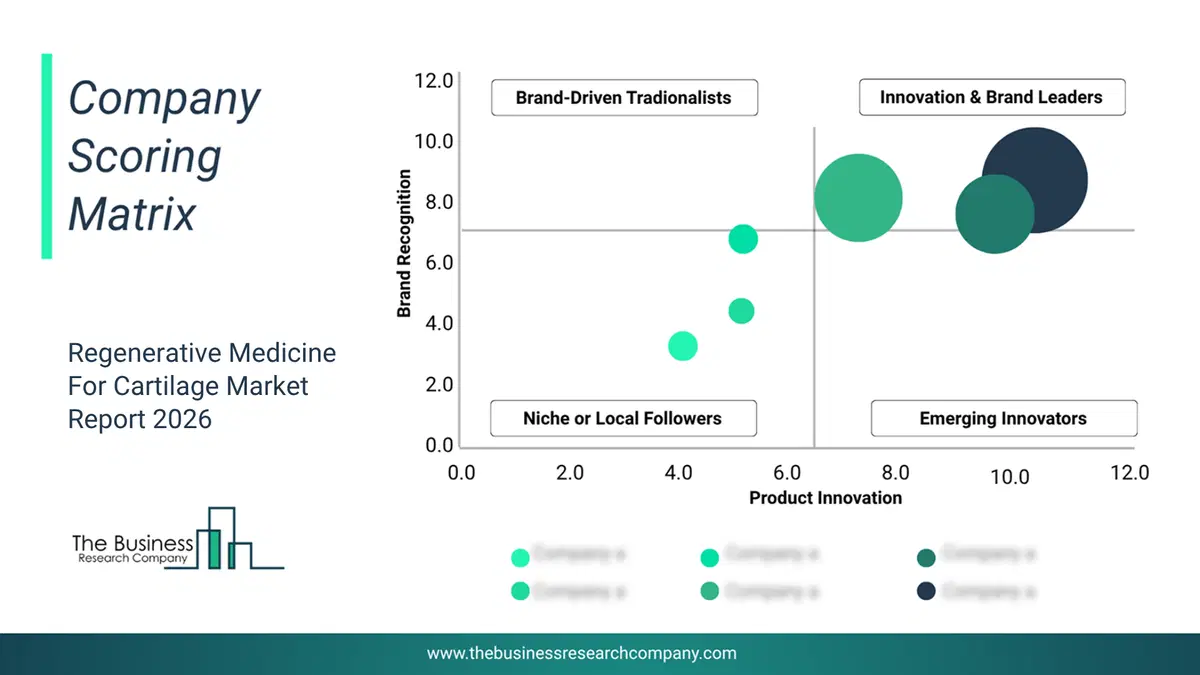
This chart maps companies by product innovation and brand strength, with bubble size indicating relative revenue, helping identify market leaders, challengers, and niche players. This is an illustrative chart; the full report provides a complete and accurate competitive analysis.
Global Regenerative Medicine For Cartilage Market Trends and Insights
Major companies operating in the regenerative medicine for the cartilage market are developing bioactive materials to enhance cartilage regeneration and improve treatment outcomes. These bioactive materials are designed to mimic the natural extracellular matrix, promoting cell proliferation, differentiation, and tissue repair. For instance, in August 2024, Researchers at Northwestern University, a US-based private research university, developed a bioactive material that successfully regenerated high-quality hyaline cartilage in a sheep model. The biomaterial combines a bioactive peptide that binds to transforming growth factor beta-1 (TGFb-1) with chemically modified hyaluronic acid. This combination promotes the self-organization of nanoscale fibers, mimicking natural cartilage formation and enhancing cellular repair processes. This material could potentially prevent knee replacements and treat degenerative diseases.What Are Latest Mergers And Acquisitions In The Regenerative Medicine For Cartilage Market?
In November 2023, Smith & Nephew, a UK-based manufacturing company, acquired CartiHeal for an undisclosed amount. The aim of the acquisition is to bolster Smith & Nephew's portfolio in the orthopedic sector, particularly in the realm of cartilage repair and regeneration. Smith & Nephew aims to enhance its capability to address the growing demand for effective solutions in orthopedic care, ultimately improving patient outcomes and solidifying its position in the global medical technology market. CartiHeal is an Israel-based medical technology company specializing in the development of innovative treatments for cartilage and osteochondral defects in joints.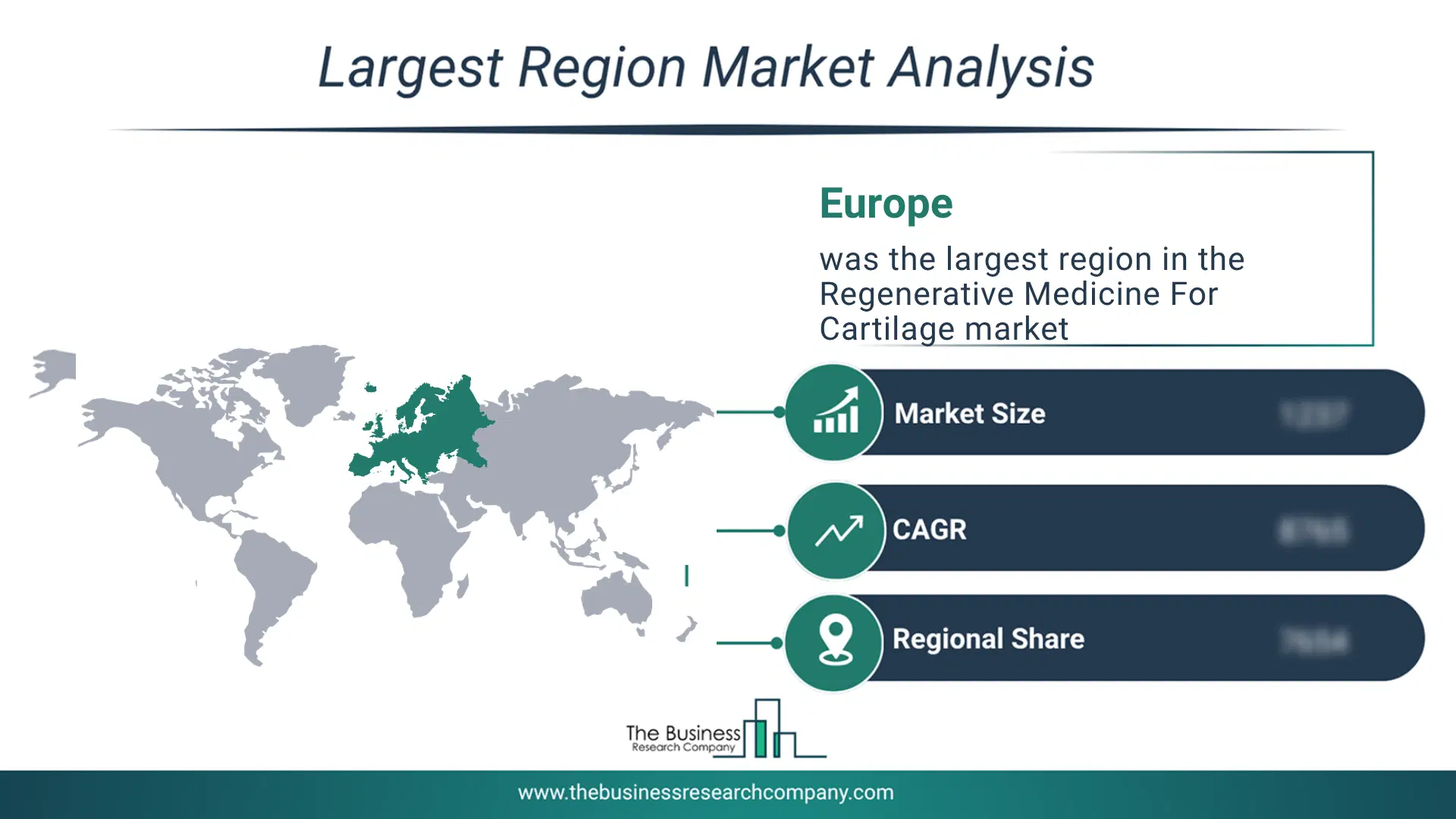
Regional Insights
Europe was the largest region in regenerative medicine for cartilage in 2025. The regions covered in this market report are Asia-Pacific, South East Asia, Western Europe, Eastern Europe, North America, South America, Middle East, Africa. The countries covered in this market report are Australia, Brazil, China, France, Germany, India, Indonesia, Japan, Taiwan, Russia, South Korea, UK, USA, Canada, Italy, Spain.What Defines the Regenerative Medicine For Cartilage Market?
The regenerative medicine for cartilage market consists of sales of cartilage regeneration, platelet-rich plasma (PRP), and prolotherapy. Values in this market are ‘factory gate’ values, that is the value of goods sold by the manufacturers or creators of the goods, whether to other entities (including downstream manufacturers, wholesalers, distributors and retailers) or directly to end customers. The value of goods in this market includes related services sold by the creators of the goods.How is Market Value Defined and Measured?
The market value is defined as the revenues that enterprises gain from the sale of goods and/or services within the specified market and geography through sales, grants, or donations in terms of the currency (in USD unless otherwise specified). The revenues for a specified geography are consumption values that are revenues generated by organizations in the specified geography within the market, irrespective of where they are produced. It does not include revenues from resales along the supply chain, either further along the supply chain or as part of other products.
This chart presents market attractiveness based on a quantitative evaluation of growth, competition, strategic alignment, and risk, offering a clear view of opportunity areas for decision-making. This chart is for illustrative purposes; the full report contains the complete analysis.

This chart highlights the Total Addressable Market (TAM) by estimating the maximum revenue opportunity using an assumption-driven approach, supporting strategic planning and opportunity sizing across markets. The chart is illustrative; the full report provides a more comprehensive analysis.
What Key Data and Analysis Are Included in the Regenerative Medicine For Cartilage Market Report 2026?
The regenerative medicine for cartilage market research report is one of a series of new reports from The Business Research Company that provides market statistics, including industry global market size, regional shares, competitors with the market share, detailed market segments, market trends and opportunities, and any further data you may need to thrive in the regenerative medicine for cartilage industry. The market research report delivers a complete perspective of everything you need, with an in-depth analysis of the current and future state of the industry.Regenerative Medicine For Cartilage Market Report Forecast Analysis
| Report Attribute | Details |
|---|---|
| Market Size Value In 2026 | $4.96 billion |
| Revenue Forecast In 2030 | $6.33 billion |
| Growth Rate | CAGR of 6.1% from 2026 to 2030 |
| Base Year For Estimation | 2025 |
| Actual Estimates/Historical Data | 2020-2025 |
| Forecast Period | 2026 - 2030 |
| Market Representation | Revenue in USD Billion and CAGR from 2026 to 2030 |
| Segments Covered | Product, End-Use, Application |
| Regional Scope | Asia-Pacific, Western Europe, Eastern Europe, North America, South America, Middle East, Africa |
| Country Scope | The countries covered in the report are Australia, Brazil, China, France, Germany, India, Indonesia, Japan, Taiwan, Russia, South Korea, UK, USA, Canada, Italy, Spain. |
| Key Companies Profiled | Smith & Nephew plc, Integra LifeSciences, Stryker Corporation, MiMedx Group Inc., Zimmer Biomet Holdings Inc., B. Braun Melsungen AG, AbbVie, CONMED Corporation, Arthrex Inc., Baxter International Inc., China Regenerative Medicine International, ABLbio, Cellgenix GmbH, BioTissue Technologies, Corin Group, Medical Import Ltd., Orthonika, Merete, 3di GmbH, Aditus Medical GmbH, Anton Hipp GmbH, AREX SAS, Acelity L.P. Inc., StemCells Inc, Organogenesis Inc, NuVasive Inc, Japan Tissue Engineering Co. Ltd, Advantagene Inc., Mesoblast Ltd, Globus Medical, DePuy Synthes, Cryolife Inc, Johnson & Johnson, Medtronic Plc, Rti Surgical, CartiHeal Inc., DJO Global Inc., Wright Medical Group, Auxein, Aesculap Inc, AMEGA Biotech |
| Customization Scope | Request for Customization |
| Pricing And Purchase Options | Explore Purchase Options |