
Power Generation Market Report 2026
Global Outlook – By Type (Hydroelectricity, Fossil Fuel Electricity, Nuclear Electricity, Solar Electricity, Wind Electricity, Geothermal Electricity, Biomass Electricity, Other Types), By Type Of Grid (Off Grid, On Grid), By Source Of Energy (Conventional Or Non-Renewable Source, Renewable Source), By End-User (Industrial, Commercial, Residential, Transportation) – Market Size, Trends, Strategies, and Forecast to 2030
Power Generation Market Overview
• Power Generation market size has reached to $2117.01 billion in 2025 • Expected to grow to $2790.8 billion in 2030 at a compound annual growth rate (CAGR) of 5.8% • Growth Driver: Growing Demand For Electricity In Transportation Boost Power Generation Market • Market Trend: Increasing Focus On Use Of Hydrogen Fuel Cells For Backup Power To Gain A Competitive Edge • Asia-Pacific was the largest region in 2025 and Western Europe is the fastest growing region.What Is Covered Under Power Generation Market?
Power generation refers to electricity production using different types of technologies in order to supply power to the electrical grid for society's electrical needs. It includes electricity produced in electricity-only plants and in combined heat and power plants. The main types of power generation are hydroelectricity, fossil fuel electricity, nuclear electricity, solar electricity, wind electricity, geothermal electricity, biomass electricity, and other electricity. Hydroelectricity, also known as hydroelectric power or hydroelectric energy, is a type of energy that generates electricity by harnessing the power of moving water, such as water running over a waterfall. Energy for power generation is derived from both conventional (non-renewable) and renewable sources. The different types of grids include off-grid and on-grid, which are used by the residential, commercial, industrial, and transportation sectors.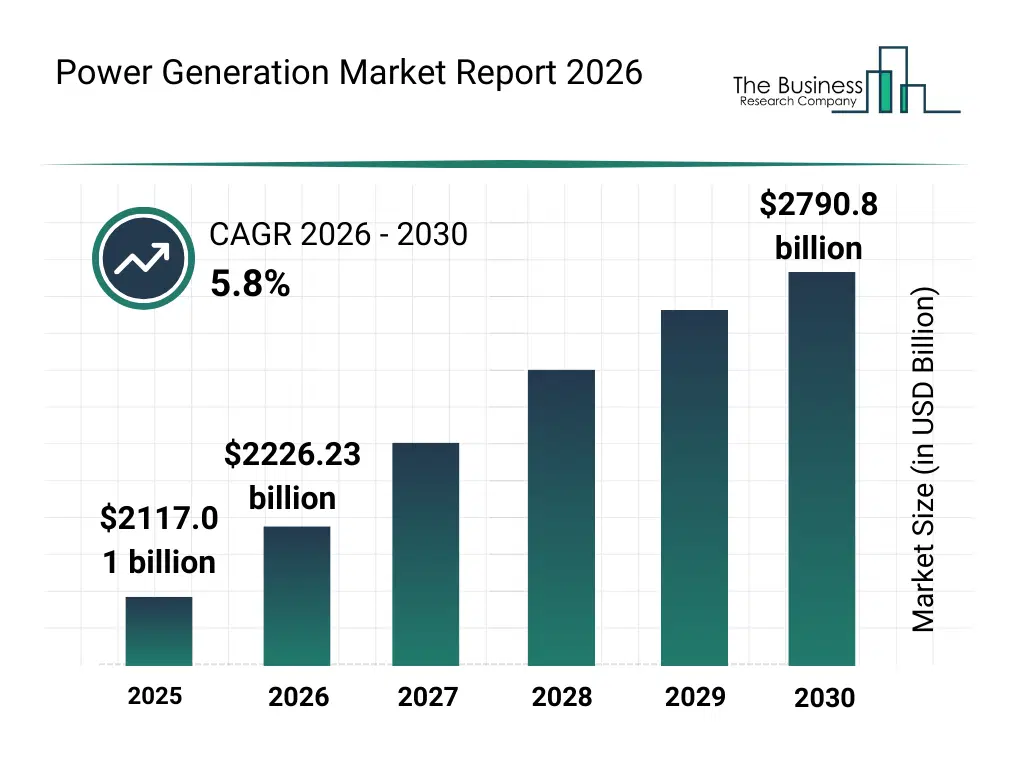
What Is The Power Generation Market Size and Share 2026?
The power generation market size has grown strongly in recent years. It will grow from $2117.01 billion in 2025 to $2226.23 billion in 2026 at a compound annual growth rate (CAGR) of 5.2%. The growth in the historic period can be attributed to expansion of global electricity demand, increased investment in fossil fuel power infrastructure, development of national power grids, growth of industrial electricity consumption, long-term operation of centralized power plants.What Is The Power Generation Market Growth Forecast?
The power generation market size is expected to see strong growth in the next few years. It will grow to $2790.8 billion in 2030 at a compound annual growth rate (CAGR) of 5.8%. The growth in the forecast period can be attributed to increasing renewable energy penetration targets, rising electrification of transportation and industry, expansion of smart grid infrastructure, growing focus on energy security, continued modernization of aging power plants. Major trends in the forecast period include increasing deployment of renewable power generation assets, rising integration of grid-scale energy storage systems, expansion of hybrid power generation plants, growing adoption of distributed generation models, enhanced focus on grid reliability and stability.
Global Power Generation Market Segmentation
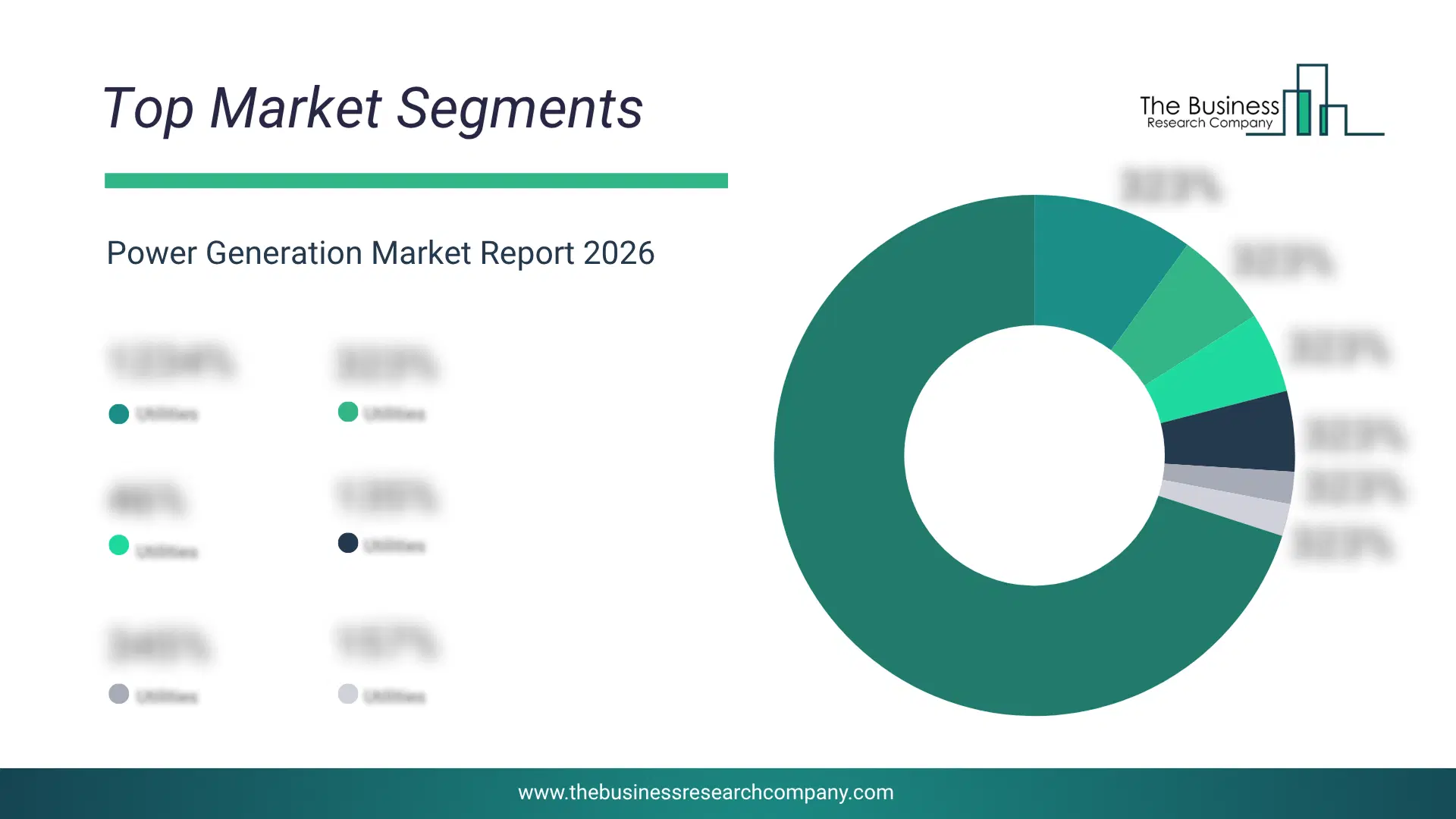
1) By Type: Hydroelectricity, Fossil Fuel Electricity, Nuclear Electricity, Solar Electricity, Wind Electricity, Geothermal Electricity, Biomass Electricity, Other Types 2) By Type Of Grid: Off Grid, On Grid 3) By Source Of Energy: Conventional Or Non-Renewable Source, Renewable Source 4) By End-User: Industrial, Commercial, Residential, Transportation Subsegments: 1) By Hydroelectricity: Large Hydroelectric Plants, Small Hydroelectric Plants, Pumped Storage Hydroelectricity 2) By Fossil Fuel Electricity: Coal-Fired Power Generation, Natural Gas-Fired Power Generation, Oil-Fired Power Generation 3) By Nuclear Electricity: Pressurized Water Reactors (Pwr), Boiling Water Reactors (Bwr), Other Nuclear Reactor Types 4) By Solar Electricity: Photovoltaic (Pv) Systems, Concentrated Solar Power (Csp) 5) By Wind Electricity: Onshore Wind Farms, Offshore Wind Farms 6) By Geothermal Electricity: Dry Steam Plants, Flash Steam Plants, Binary Cycle Plants 7) By Biomass Electricity: Direct Combustion, Gasification, Anaerobic Digestion 8) By Other Electricity: Tidal Energy, Wave Energy, Waste-To-EnergyWhat Are The Drivers Of The Power Generation Market?
The increasing applications of electricity in the transportation industry are expected to propel the growth of the power generation market going forward. Electricity usage in transportation refers to the adoption of electric power for mobility solutions such as electric vehicles, electrified railways, and mass transit systems, reducing reliance on fossil fuels and improving energy efficiency. The rise in electricity applications across transportation is driven by rapid urbanization, government initiatives to reduce carbon emissions, and growing investments in public transportation infrastructure and electric mobility solutions. Power generation supports the transportation sector by ensuring a reliable and scalable supply of electricity required to operate electrified transport networks and charging infrastructure. For instance, in July 2024, according to the International Energy Agency (IEA), a France-based intergovernmental organization, the share of global electricity supply is anticipated to increase from 30% in 2023 to 35% by 2025. Therefore, the increasing applications of electricity in the transportation industry are driving the growth of the power generation industry. The rising demand for cooling is expected to propel the growth of the power generation market going forward. Cooling refers to the process of lowering indoor or environmental temperatures through systems such as air conditioners and fans, which rely on electricity to operate efficiently. The increase in cooling demand is driven by rising global temperatures, urbanization, and improved living standards, leading to higher adoption of air conditioning across residential and commercial sectors. Power generation supports cooling requirements by providing the electricity needed to operate cooling systems and maintain thermal comfort. For instance, in July 2023, according to the International Energy Agency, a France-based autonomous intergovernmental organization, over 90% of households in both the United States and Japan owned an air conditioner, and cooling accounted for approximately 10% of global electricity consumption, with power demand in warmer countries surging by more than 50% during summer months. Therefore, the rising demand for cooling is driving the growth of the power generation industry.Key Players In The Global Power Generation Market
Major companies operating in the power generation market are Enel SpA, Electricite De France SA, State Power Investment Corporation, E.ON SE, Engie, Huaneng Power International Inc, Exelon Corp, Endesa SA, Datang International Power Generation Company Limited, Inter RAO UES, NTPC Limited, Tata Power, Adani Power, NHPC Limited, Guodian Corporation, Hokkaido Electric Power Company, Tohoku Electric Power Co, AGL Energy, EDF Energy, RWE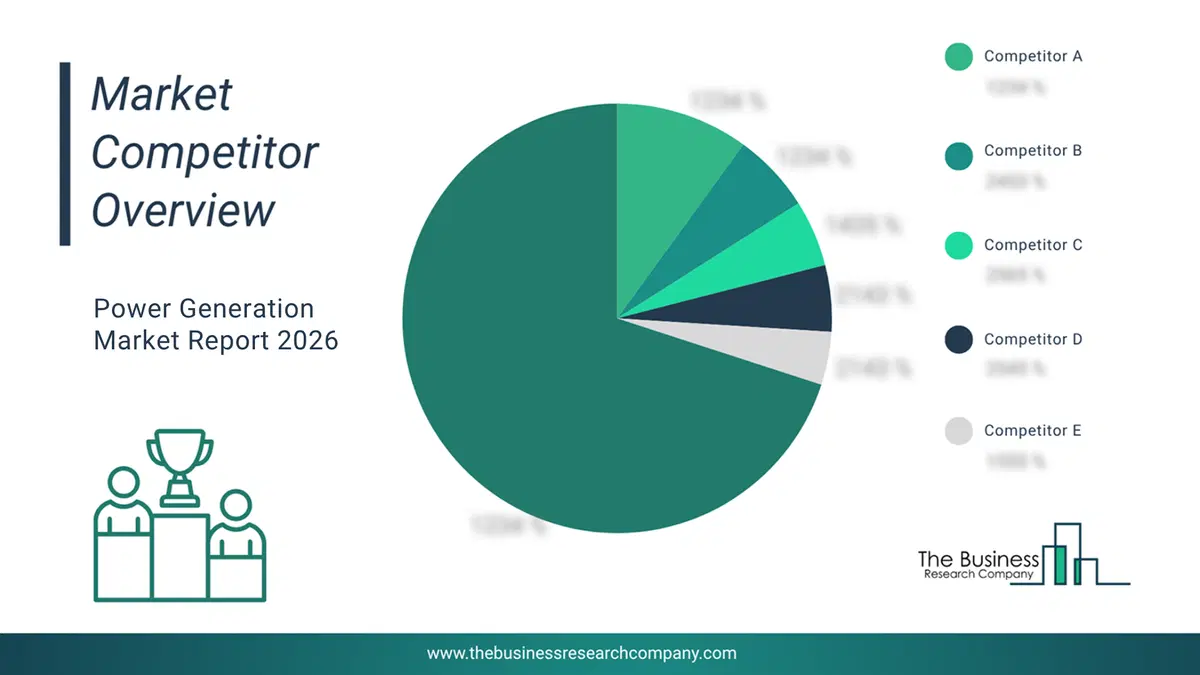
This chart is for illustrative purposes; the full report includes a detailed competitor analysis and comprehensive overview of the top 10 companies in the market.
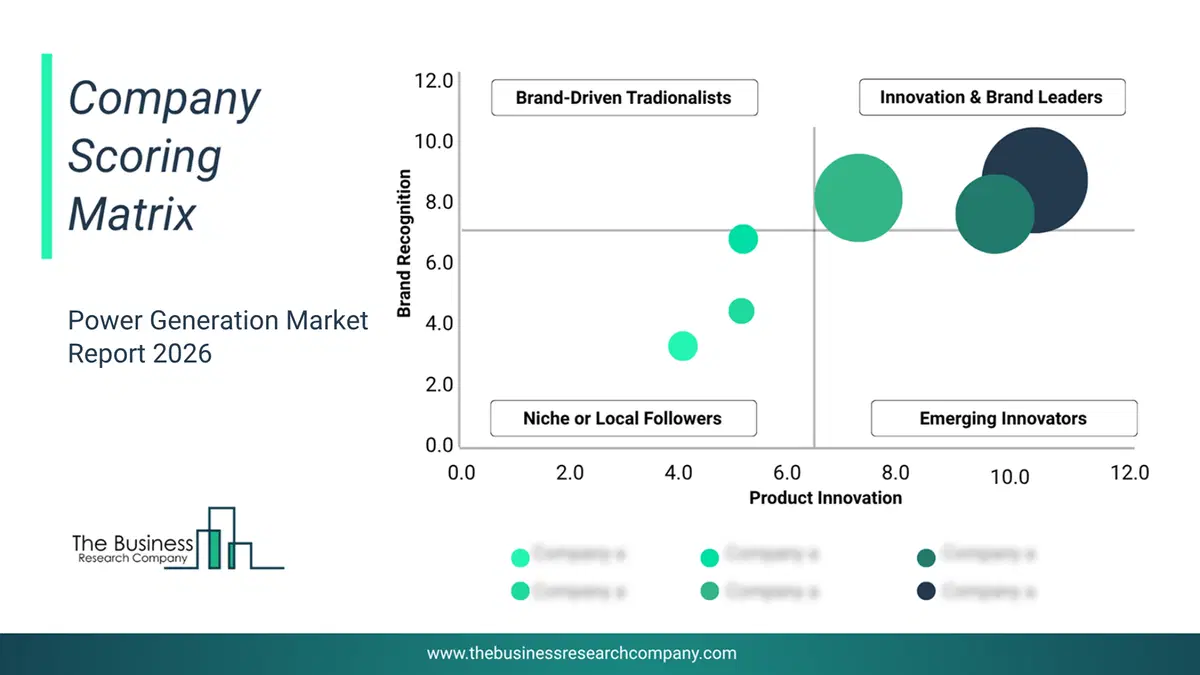
This chart maps companies by product innovation and brand strength, with bubble size indicating relative revenue, helping identify market leaders, challengers, and niche players. This is an illustrative chart; the full report provides a complete and accurate competitive analysis.
Global Power Generation Market Trends and Insights
Major companies operating in the power generation market are focusing towards innovative solutions to increase the use of hydrogen fuel cells for backup power, and to gain a competitive edge in the market. Hydrogen fuel cells are a modern and efficient solution for backup power, offering a reliable and decentralized source of electricity during power outages or other emergency situations. For instance, in April 2024, Panasonic Corporation a Japan-based multinational company that develops, manufactures, and sells a vast range of electronics, appliances, and solutions for homes, businesses, automotive, and energy sectors,revealed that its Electric Works Company is set to introduce a new pure hydrogen fuel cell generator in October 2024. This generator will produce electricity through a chemical reaction involving high-purity hydrogen and oxygen from the air, targeting markets in Australia, Europe, and China.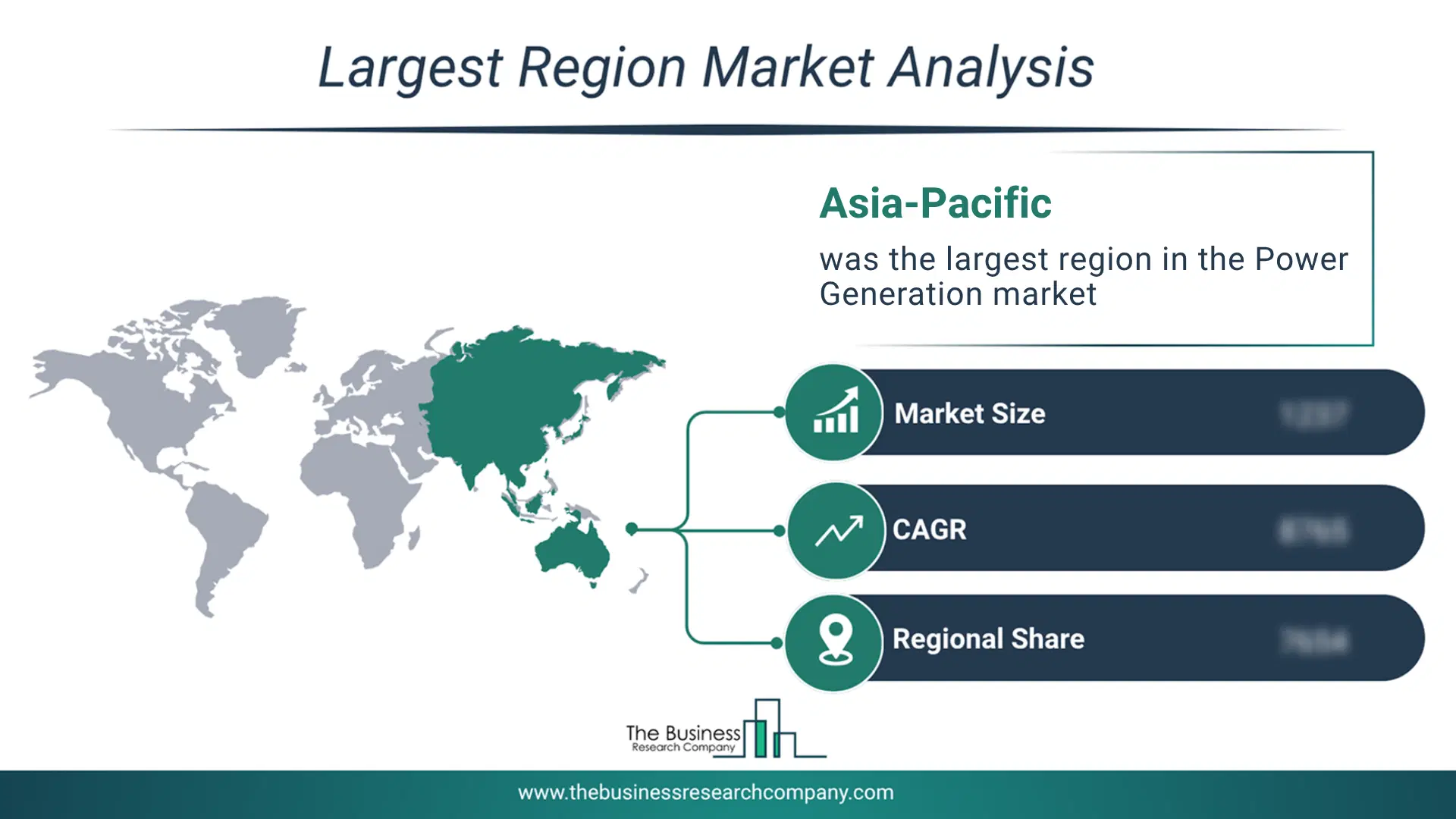
Regional Outlook
Asia-Pacific was the largest region in the power generation market in 2025. Western Europe was the second-largest region in the power generation market. The regions covered in this market report are Asia-Pacific, South East Asia, Western Europe, Eastern Europe, North America, South America, Middle East, Africa. The countries covered in this market report are China, India, Japan, Australia, Indonesia, South Korea, Bangladesh, Thailand, Vietnam, Malaysia, Singapore, Philippines, Hong Kong, Taiwan, New Zealand, UK, Germany, France, Italy, Spain, Austria, Belgium, Denmark, Finland, Ireland, Netherlands, Norway, Portugal, Sweden, Switzerland, Russia, Czech Republic, Poland, Romania, Ukraine, USA, Canada, Mexico, Brazil, Chile, Argentina, Colombia, Peru, Saudi Arabia, Israel, Iran, Turkey, UAE, Egypt, Nigeria, South Africa.What Defines the Power Generation Market?
The power generation market includes revenue earned by entities by thermal energy generated from fossil fuels, coal, petroleum, natural gas, solar thermal energy, chemical energy, and potential energy from falling water. The market value includes the value of related goods sold by the service provider or included within the service offering. Only goods and services traded between entities or sold to end consumers are included.How is Market Value Defined and Measured?
The market value is defined as the revenues that enterprises gain from the sale of goods and/or services within the specified market and geography through sales, grants, or donations in terms of the currency (in USD unless otherwise specified). The revenues for a specified geography are consumption values that are revenues generated by organizations in the specified geography within the market, irrespective of where they are produced. It does not include revenues from resales along the supply chain, either further along the supply chain or as part of other products.
This chart presents market attractiveness based on a quantitative evaluation of growth, competition, strategic alignment, and risk, offering a clear view of opportunity areas for decision-making. This chart is for illustrative purposes; the full report contains the complete analysis.

This chart highlights the Total Addressable Market (TAM) by estimating the maximum revenue opportunity using an assumption-driven approach, supporting strategic planning and opportunity sizing across markets. The chart is illustrative; the full report provides a more comprehensive analysis.
What Key Data and Analysis Are Included in the Power Generation Market Report 2026?
The power generation market research report is one of a series of new reports from The Business Research Company that provides market statistics, including Market Report 2026?global market size, regional shares, competitors with the market share, detailed market segments, market trends and opportunities, and any further data you may need to thrive in the power generation Market Report 2026? The market research report delivers a complete perspective of everything you need, with an in-depth analysis of the current and future state of the Market Report 2026?Power Generation Market Report Forecast Analysis
| Report Attribute | Details |
|---|---|
| Market Size Value In 2026 | $2226.23 billion |
| Revenue Forecast In 2030 | $2790.8 billion |
| Growth Rate | CAGR of 5.2% from 2026 to 2030 |
| Base Year For Estimation | 2025 |
| Actual Estimates/Historical Data | 2020-2025 |
| Forecast Period | 2026 - 2030 - 2030 |
| Market Representation | Revenue in USD Billion and CAGR from 2026 to 2030 |
| Segments Covered | Type, Type Of Grid, Source Of Energy, End-User |
| Regional Scope | Asia-Pacific, Western Europe, Eastern Europe, North America, South America, Middle East, Africa |
| Country Scope | The countries covered in the report are Australia, Brazil, China, France, Germany, India, Indonesia, Japan, Taiwan, Russia, South Korea, UK, USA, Canada, Italy, Spain. |
| Key Companies Profiled | Enel SpA, Electricite De France SA, State Power Investment Corporation, E.ON SE, Engie, Huaneng Power International Inc, Exelon Corp, Endesa SA, Datang International Power Generation Company Limited, Inter RAO UES, NTPC Limited, Tata Power, Adani Power, NHPC Limited, Guodian Corporation, Hokkaido Electric Power Company, Tohoku Electric Power Co, AGL Energy, EDF Energy, RWE |
| Customization Scope | Request for Customization |
| Pricing And Purchase Options | Explore Purchase Options |