
Activewear Market Report 2026
Global Outlook – By Product (Apparel, Footwear, Accessories), By Fabric (Polyester, Nylon, Neoprene, Polypropylene, Spandex, Other Fabrics), By Usage (Running, Outdoor Sports, Yoga And Pilates, Gym And Fitness Training, Recreational Activities, Other Usages), By Distribution Channel (Offline, Online), By End User (Men, Women, Kids) – Market Size, Trends, Strategies, and Forecast to 2030
Activewear Market Overview
• Activewear market size has reached to $384.48 billion in 2025 • Expected to grow to $521.79 billion in 2030 at a compound annual growth rate (CAGR) of 6.3% • Growth Driver: Impact Of Recreational Activities On The Activewear Market • Market Trend: Lightest Emission Sneaker Pioneer Sustainability • North America was the largest region in 2025.Market Gains By 2030 – Top Opportunities By Segment
Market Gain identifies the most promising market opportunities by highlighting the segments or products expected to generate the highest incremental revenue growth over the next five years.
What Is Covered Under Activewear Market?
Activewear refers to clothing designed specifically for athletic or fitness activities. This type of clothing is typically made from lightweight, moisture-wicking, and breathable fabrics to provide comfort and support during physical exercise. The main product types of activewear are apparel, footwear, and accessories. The apparel segment of activewear includes clothing items designed for physical activities to provide comfort, support, and performance-enhancing features to meet the needs of active consumers. The fabric types include polyester, nylon, neoprene, polypropylene, spandex, cotton, and others used for running, outdoor sports, yoga and Pilates, gym and fitness training, recreational activities, and others distributed through channels such as offline and online for end users such as men, women, and kids.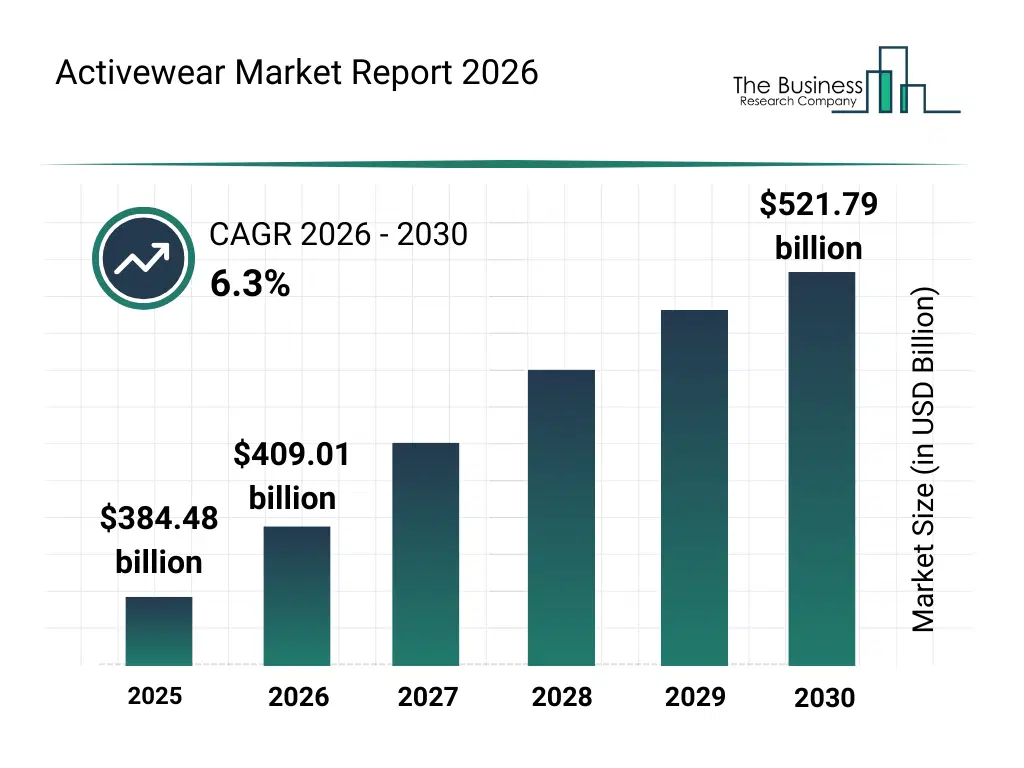
What Is The Activewear Market Size and Share 2026?
The activewear market size has grown strongly in recent years. It will grow from $384.48 billion in 2025 to $409.01 billion in 2026 at a compound annual growth rate (CAGR) of 6.4%. The growth in the historic period can be attributed to rising health and fitness awareness, expansion of organized sports participation, growth of e-commerce apparel platforms, increasing disposable income levels, influence of global fitness trends.What Is The Activewear Market Growth Forecast?
The activewear market size is expected to see strong growth in the next few years. It will grow to $521.79 billion in 2030 at a compound annual growth rate (CAGR) of 6.3%. The growth in the forecast period can be attributed to growing demand for eco-friendly activewear, rising customization and personalization offerings, expansion of online-first apparel brands, increasing integration of wearable-compatible clothing, growing focus on inclusive sizing and design. Major trends in the forecast period include increasing demand for sustainable performance fabrics, rising adoption of direct-to-consumer sales models, growing integration of smart and functional textiles, expansion of athleisure wear across daily use, enhanced focus on comfort and versatility.
Global Activewear Market Segmentation
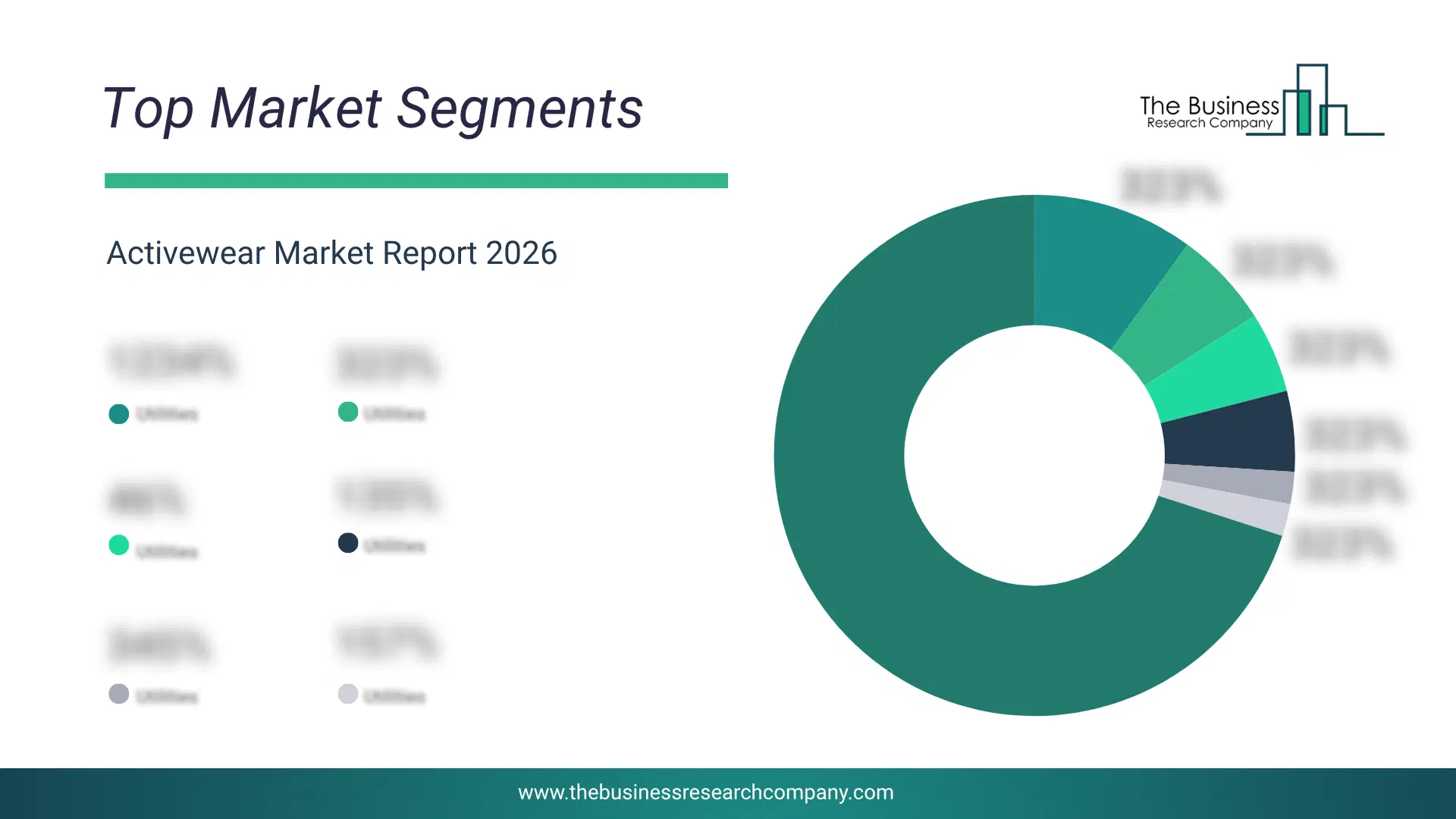
1) By Product: Apparel, Footwear, Accessories 2) By Fabric: Polyester, Nylon, Neoprene, Polypropylene, Spandex, Other Fabrics 3) By Usage: Running, Outdoor Sports, Yoga And Pilates, Gym And Fitness Training, Recreational Activities, Other Usages 4) By Distribution Channel: Offline, Online 5) By End User: Men, Women, Kids Subsegments: 1) By Apparel: T-Shirts And Tops, Leggings And Pants, Jackets And Hoodies, Sports Bras, Shorts, Sweatshirts And Track Suits 2) By Footwear: Running Shoes, Training Shoes, Cross-training Shoes 3) By Accessories: Sports Bags And Backpacks, Headbands And Caps, Fitness Gloves, Compression Wear, Socks And Leg Warmers The top segments in the activewear market will be: • Apparel will reach $321.37 Billion by 2030. • Footwear will reach $147.3 Billion by 2030. • Accessories will reach $48.76 Billion by 2030.What Is The Driver Of The Activewear Market?
The rise in recreational activities is expected to propel the growth of the activewear market. Recreational activities refer to a wide range of leisure-time pursuits engaged in for enjoyment, amusement, and pleasure. These activities can include sports, games, hobbies, exercise, reading, watching TV, movies, and more. The rise in recreational activities is driven by increasing awareness of the importance of physical fitness and a growing desire for leisure pursuits to alleviate stress and improve overall well-being. Activewear regulates body temperature by allowing heat to escape and prevent overheating. Breathable fabrics allow air circulation, keeping cool during intense workouts or hot weather conditions. This helps prevent chafing, discomfort, and irritation, allowing one to focus more on activity. For instance, in June 2024, according to the Outdoor Participation Trend report by the Outdoor Industry Association (OIA), a US-based non-profit organization, that participation in outdoor recreation grew by 4.1 percent in 2023, to a record 175.8 million participants. This number, it noted, represents 57.3 percent of the U.S. population. Therefore, the rise in recreational activities is expected to propel the growth of the activewear industry.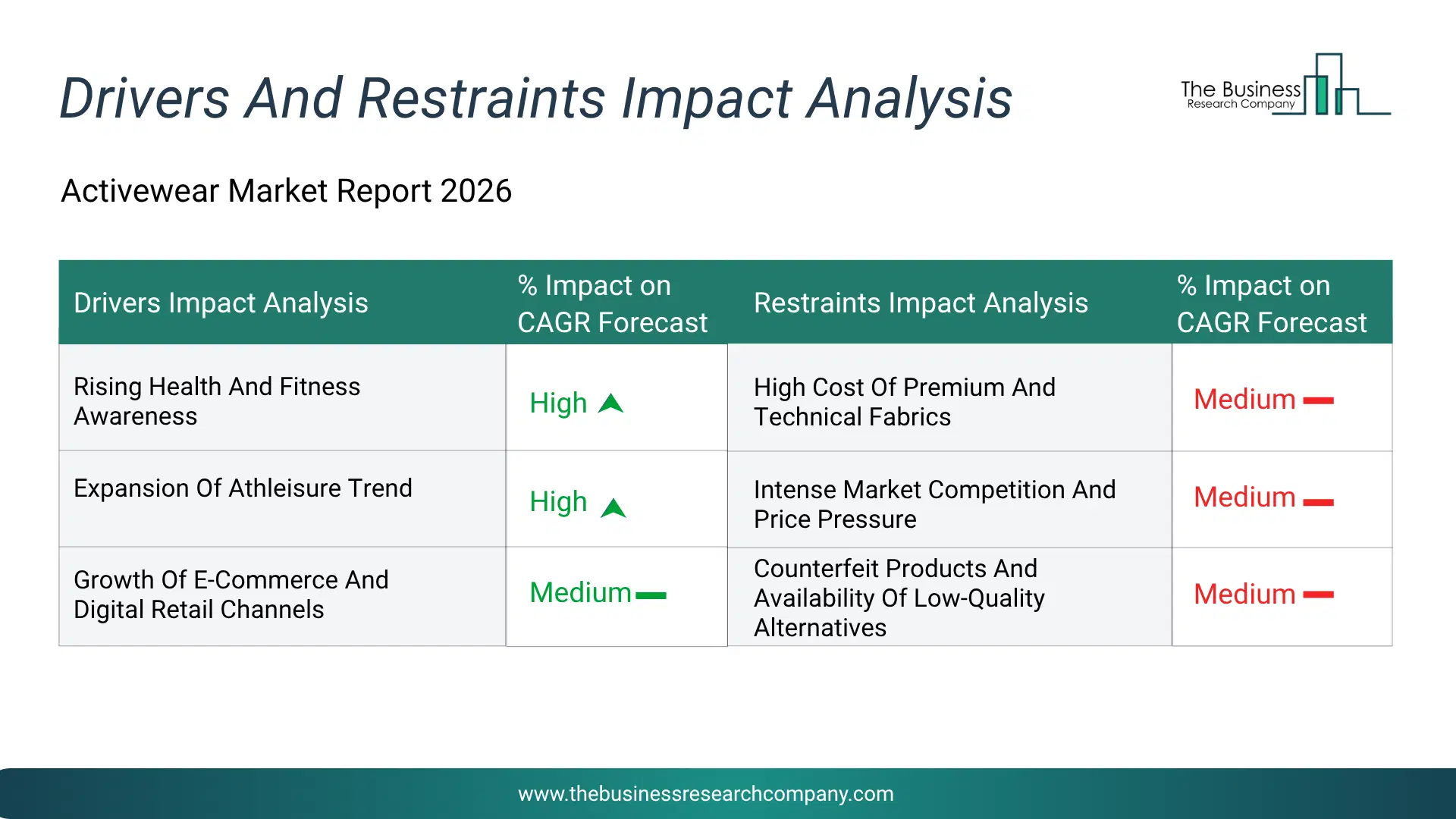
Infographic Chart Showing Key Market Drivers Analysis And Restraints For Activewear Market
The chart presents an impact analysis of key drivers and restraints, quantifying their relative influence on the market's growth rate and helping assess the balance between growth enablers and limiting factors. This chart offers a high-level perspective; the full report contains more detailed insights.
How Will The Drivers Impact Growth In The Global Activewear Market?
• Rising Health And Fitness Awareness (High) – During the forecast period, the rising health and fitness awareness is expected to become a key growth driver for the activewear market by 2030. Consumers are increasingly prioritizing physical well-being, preventive healthcare, and active lifestyles, leading to higher participation in gym workouts, running, yoga, and other fitness activities. This shift is driving demand for comfortable and performance-oriented clothing designed to support a wide range of physical activities. Brands are responding by expanding product portfolios tailored to evolving fitness preferences and wellness-focused consumers. • Expansion Of Athleisure Trend (High) – During the forecast period, the expansion of the athleisure trend is expected to emerge as a major factor driving the growth of the activewear market by 2030. Consumers are increasingly incorporating sports-inspired apparel into everyday wardrobes, creating demand for products that combine style, comfort, and functionality. The growing acceptance of casual dress codes in workplaces, educational institutions, and social settings is further supporting adoption of athleisure clothing. Fashion brands and sportswear manufacturers are continuously introducing versatile collections that appeal to a broader consumer base. • Growth Of E-Commerce And Digital Retail Channels (Medium) – During the forecast period, the growth of e-commerce and digital retail channels is expected to act as a key growth catalyst for the activewear market by 2030. Online platforms provide consumers with convenient access to extensive product selections, competitive pricing, and personalized shopping experiences. Digital marketing campaigns, social commerce initiatives, and direct-to-consumer strategies are enhancing brand visibility and customer engagement across global markets. Additionally, advancements in online fulfillment and omnichannel retail capabilities are improving purchasing convenience and customer satisfaction.How Will The Restraints Impact Growth In The Global Activewear Market?
• High Cost Of Premium And Technical Fabrics (High) – During the forecast period, the high cost of premium and technical fabrics acts as a significant restraint for the activewear market by increasing overall production expenses for manufacturers. Advanced materials such as moisture-wicking, antimicrobial, and stretchable fabrics require specialized processing, which raises product prices for end consumers. This limits affordability, particularly in price-sensitive markets, reducing mass adoption of high-performance activewear. Smaller brands also struggle to compete due to high input costs and limited economies of scale. As a result, market growth is constrained as consumers may shift toward cheaper alternatives or non-branded products. • Intense Market Competition And Price Pressure (High) – During the forecast period, the intense market competition and price pressure restrain the activewear market by compressing profit margins for both established and emerging players. The presence of numerous global and regional brands leads to aggressive pricing strategies, frequent discounts, and high marketing expenditures. This reduces profitability and makes it difficult for companies to sustain long-term growth, especially for new entrants. Additionally, constant innovation and branding efforts increase operational costs, further impacting margins. Consequently, companies face challenges in balancing quality, pricing, and profitability, slowing overall market expansion. • Counterfeit Products And Availability Of Low-Quality Alternatives (Medium) – During the forecast period, the counterfeit products and availability of low-quality alternatives act as a restraint by eroding brand value and consumer trust in the activewear market. Fake products are often sold at significantly lower prices, attracting cost-conscious consumers and diverting revenue from legitimate manufacturers. These products fail to meet quality and performance standards, which can negatively impact the perception of branded activewear. Moreover, the widespread presence of counterfeit goods disrupts fair competition and reduces incentives for innovation. As a result, overall market revenue growth is hindered due to loss of sales and brand dilution.Key Players In The Global Activewear Market
Major companies operating in the activewear market are Nike Inc., Adidas AG, Puma SE, Under Armour Inc., Lululemon Athletica Inc., New Balance Athletics Inc., ASICS Corporation, Reebok International Limited, Anta Sports Products Limited, Li Ning Company Limited, Fila Holdings Corp., Mizuno Corporation, Brooks Sports Inc., Columbia Sportswear Company, Patagonia Inc., Skechers USA Inc., Decathlon Group, Kappa, Umbro International Limited, Karhu Holding BV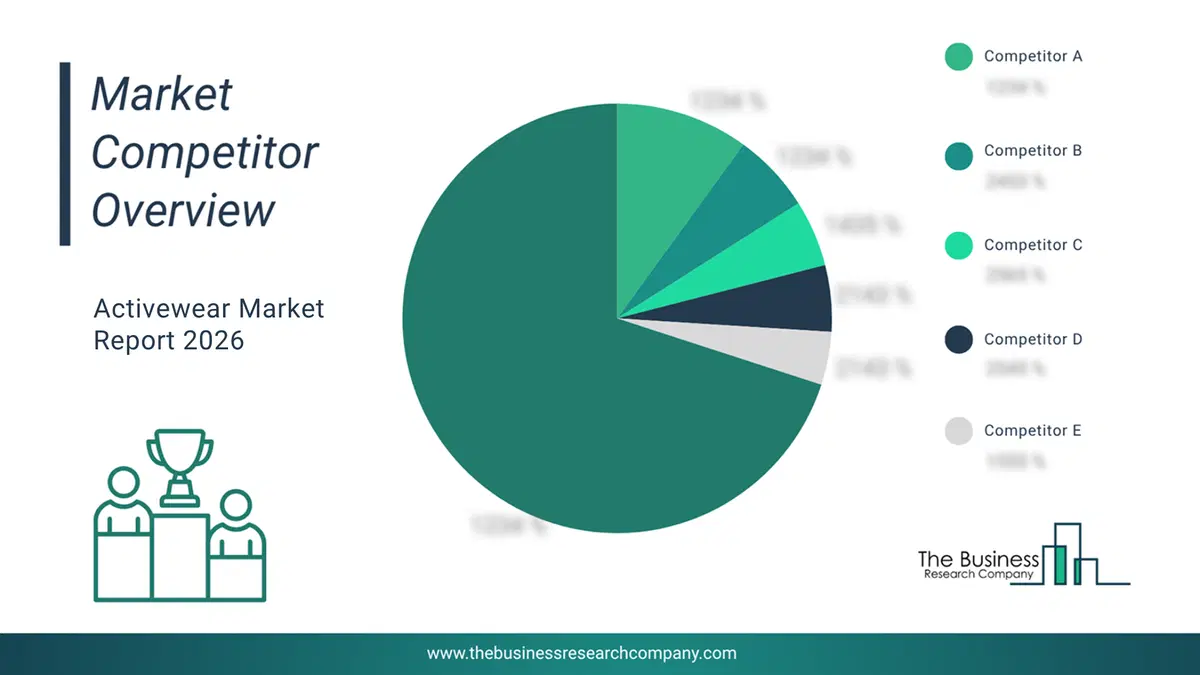
This chart is for illustrative purposes; the full report includes a detailed competitor analysis and comprehensive overview of the top 10 companies in the market.
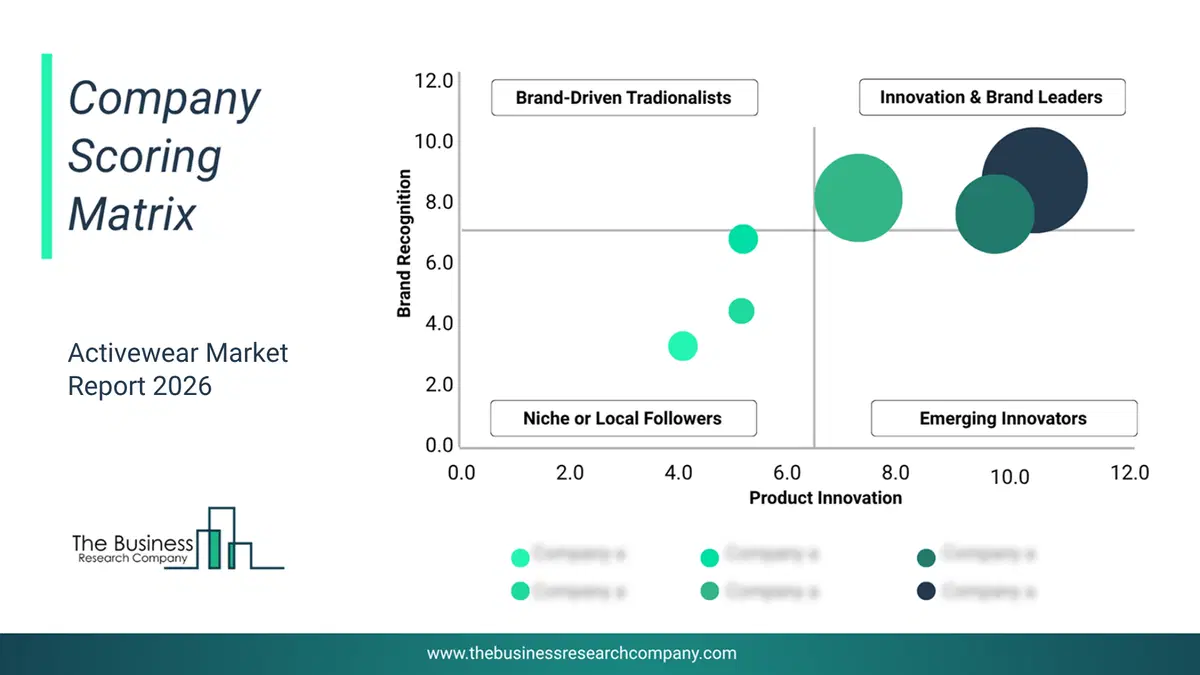
This chart maps companies by product innovation and brand strength, with bubble size indicating relative revenue, helping identify market leaders, challengers, and niche players. This is an illustrative chart; the full report provides a complete and accurate competitive analysis.
Global Activewear Market Trends and Insights
Major companies operating in the activewear market are focusing on developing innovative solutions, such as the lightest emission sneakers, to enhance sustainability and provide environmentally responsible options for consumers. Lightest emission sneakers are athletic footwear designed to minimize carbon emissions throughout their lifecycle, combining sustainable materials and innovative construction techniques to reduce environmental impact while maintaining performance and comfort. For instance, in September 2023, ASICS Corporation, a Japan-based sportswear manufacturer, launched the GEL-LYTE III CM 1.95 sneaker. This sneaker emits only 1.95 kg of CO₂ per pair, making it the lightest CO₂ emissions sneaker available on the market. It features carbon-negative foam in the midsole and sock liner, partially derived from sugarcane, as well as solution-dyed polyester to reduce water and energy usage.What Are Latest Mergers And Acquisitions In The Activewear Market?
In January 2024, Platinum Equity LLC, a US-based private equity firm, acquired Augusta Sportswear Brands (ASB) and Founder Sport Group (FSG) for an undisclosed amount. This acquisition merges companies to broaden their sports and lifestyle apparel offerings to increase customer service and enhance supply chain efficiency. Augusta Sportswear Brands (ASB) is a US-based sports apparel company that designs, manufactures, and sells activewear and spirit wear. Founder Sport Group (FSG) is a US-based company specializing in athletic and performance apparel.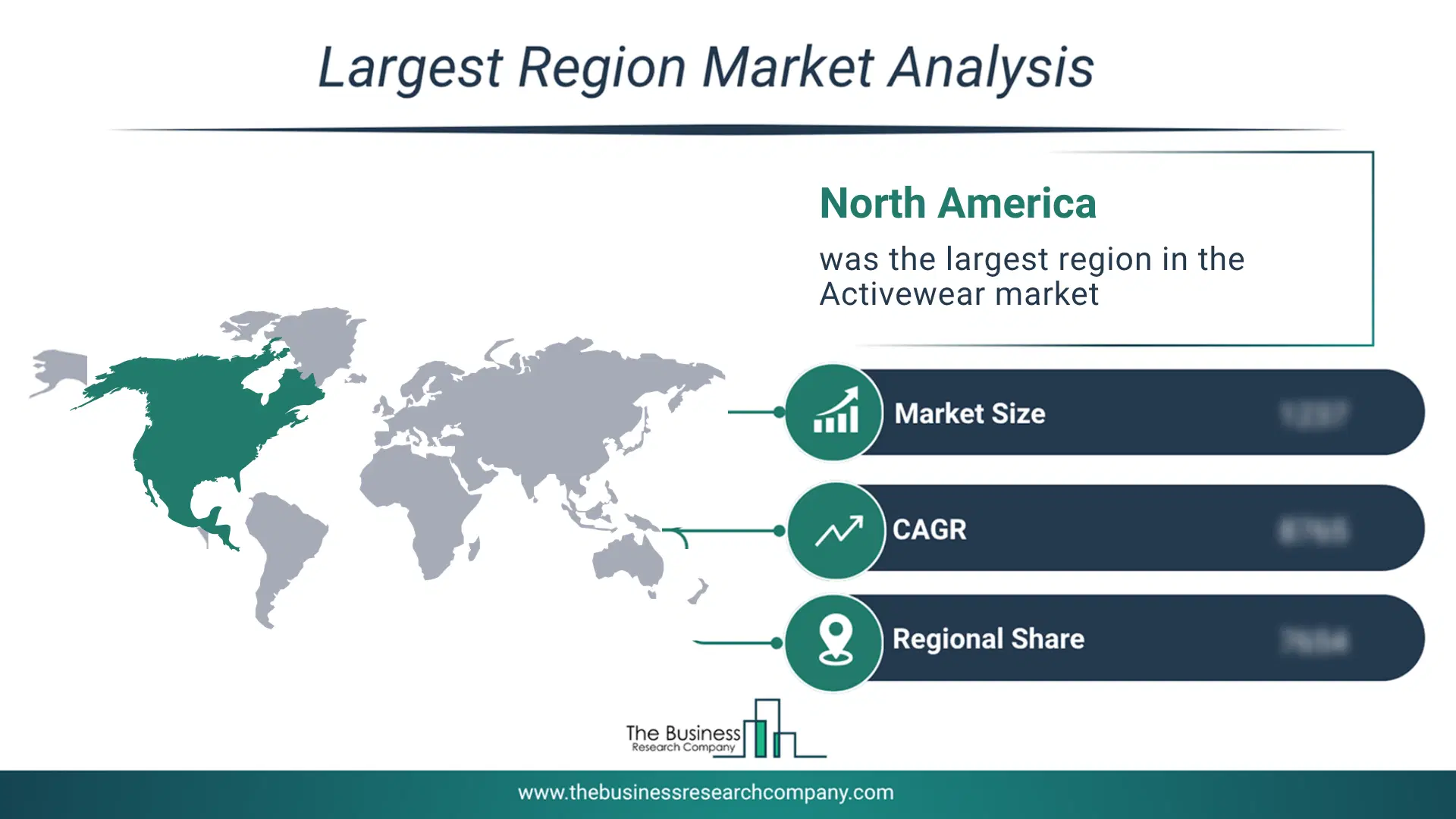
Regional Outlook
North America was the largest region in the activewear market in 2025. The regions covered in this market report are Asia-Pacific, South East Asia, Western Europe, Eastern Europe, North America, South America, Middle East, Africa. The countries covered in this market report are Australia, Brazil, China, France, Germany, India, Indonesia, Japan, Taiwan, Russia, South Korea, UK, USA, Canada, Italy, Spain.What Defines the Activewear Market?
The activewear market consists of sales of compression wear, specialized gear, and athleisure wear. Values in this market are ‘factory gate’ values, that is the value of goods sold by the manufacturers or creators of the goods, whether to other entities (including downstream manufacturers, wholesalers, distributors, and retailers) or directly to end customers. The value of goods in this market includes related services sold by the creators of the goods.How is Market Value Defined and Measured?
The market value is defined as the revenues that enterprises gain from the sale of goods and/or services within the specified market and geography through sales, grants, or donations in terms of the currency (in USD unless otherwise specified). The revenues for a specified geography are consumption values that are revenues generated by organizations in the specified geography within the market, irrespective of where they are produced. It does not include revenues from resales along the supply chain, either further along the supply chain or as part of other products.
This chart presents market attractiveness based on a quantitative evaluation of growth, competition, strategic alignment, and risk, offering a clear view of opportunity areas for decision-making. This chart is for illustrative purposes; the full report contains the complete analysis.

This chart highlights the Total Addressable Market (TAM) by estimating the maximum revenue opportunity using an assumption-driven approach, supporting strategic planning and opportunity sizing across markets. The chart is illustrative; the full report provides a more comprehensive analysis.
What Key Data and Analysis Are Included in the Activewear Market Report 2026?
The activewear market research report is one of a series of new reports from The Business Research Company that provides market statistics, including Market Report 2026?global market size, regional shares, competitors with the market share, detailed market segments, market trends and opportunities, and any further data you may need to thrive in the activewear Market Report 2026? The market research report delivers a complete perspective of everything you need, with an in-depth analysis of the current and future state of the Market Report 2026?Activewear Market Report Forecast Analysis
| Report Attribute | Details |
|---|---|
| Market Size Value In 2026 | $409.01 billion |
| Revenue Forecast In 2030 | $521.79 billion |
| Growth Rate | CAGR of 6.4% from 2026 to 2030 |
| Base Year For Estimation | 2025 |
| Actual Estimates/Historical Data | 2020-2025 |
| Forecast Period | 2026 - 2030 |
| Market Representation | Revenue in USD Billion and CAGR from 2026 to 2030 |
| Segments Covered | Product, Fabric, Usage, Distribution Channel, End User |
| Regional Scope | Asia-Pacific, Western Europe, Eastern Europe, North America, South America, Middle East, Africa |
| Country Scope | The countries covered in the report are Australia, Brazil, China, France, Germany, India, Indonesia, Japan, Taiwan, Russia, South Korea, UK, USA, Canada, Italy, Spain. |
| Key Companies Profiled | Nike Inc., Adidas AG, Puma SE, Under Armour Inc., Lululemon Athletica Inc., New Balance Athletics Inc., ASICS Corporation, Reebok International Limited, Anta Sports Products Limited, Li Ning Company Limited, Fila Holdings Corp., Mizuno Corporation, Brooks Sports Inc., Columbia Sportswear Company, Patagonia Inc., Skechers USA Inc., Decathlon Group, Kappa, Umbro International Limited, Karhu Holding BV |
| Customization Scope | Request for Customization |
| Pricing And Purchase Options | Explore Purchase Options |