

Adeno-Associated Virus (AVV) Vectors In Gene Therapy Market Report 2026
Global Outlook – By Type of Therapy (Gene Augmentation, Immunotherapy, Other Type of Therapy), By Type of Gene Delivery Method Used (Ex Vivo, In Vivo), By Scale of Operation (Preclinical, Clinical, Commercial), By Target Therapeutic Area (Genetic Disorders, Hematological Disorders, Infectious Diseases, Metabolic Disorders, Ophthalmic Disorders, Muscle Disorders, Neurological Disorders, Other Target Therapeutic Area) – Market Size, Trends, Strategies, and Forecast to 2030
Adeno-Associated Virus (AVV) Vectors In Gene Therapy Market Overview
• Adeno-Associated Virus (AVV) Vectors In Gene Therapy market size has reached to $3.16 billion in 2025 • Expected to grow to $6.99 billion in 2030 at a compound annual growth rate (CAGR) of 17.2% • Growth Driver: Surge In Gene-based Therapies Fueling The Growth Of The Market Due To Rising Demand For Precise And Long-term Genetic Treatments • Market Trend: Strengthening Manufacturing Consistency In Advanced Therapies • North America was the largest region in 2025.Market Gains By 2030 – Top Opportunities By Segment
Market Gain identifies the most promising market opportunities by highlighting the segments or products expected to generate the highest incremental revenue growth over the next five years.
What Is Covered Under Adeno-Associated Virus (AVV) Vectors In Gene Therapy Market?
Adeno-associated virus (AAV) vectors in gene therapy are advanced delivery tools that transport genetic material into cells to treat various genetic disorders. Their primary goal is to enable targeted, long-lasting therapeutic effects by correcting or modifying faulty genes. AAV vectors are valued for their safety, low immunogenicity, and ability to deliver genes to both dividing and non-dividing cells, supporting the development of precise and durable gene therapies that advance personalized medicine and transform the treatment of rare and inherited diseases. The main types of adeno-associated virus (AVV) vectors are gene augmentation, immunotherapy, and other kind of therapy. Gene augmentation refers to the therapeutic introduction of a functional gene into a cell to replace or compensate for a defective or missing one. This can be performed using different gene delivery methods, such as ex vivo, and in vivo. This is conducted at various scales of operation, including preclinical, clinical, and commercial. The target therapeutic areas include genetic disorders, hematological disorders, infectious diseases, metabolic disorders, ophthalmic disorders, muscle disorders, and neurological conditions.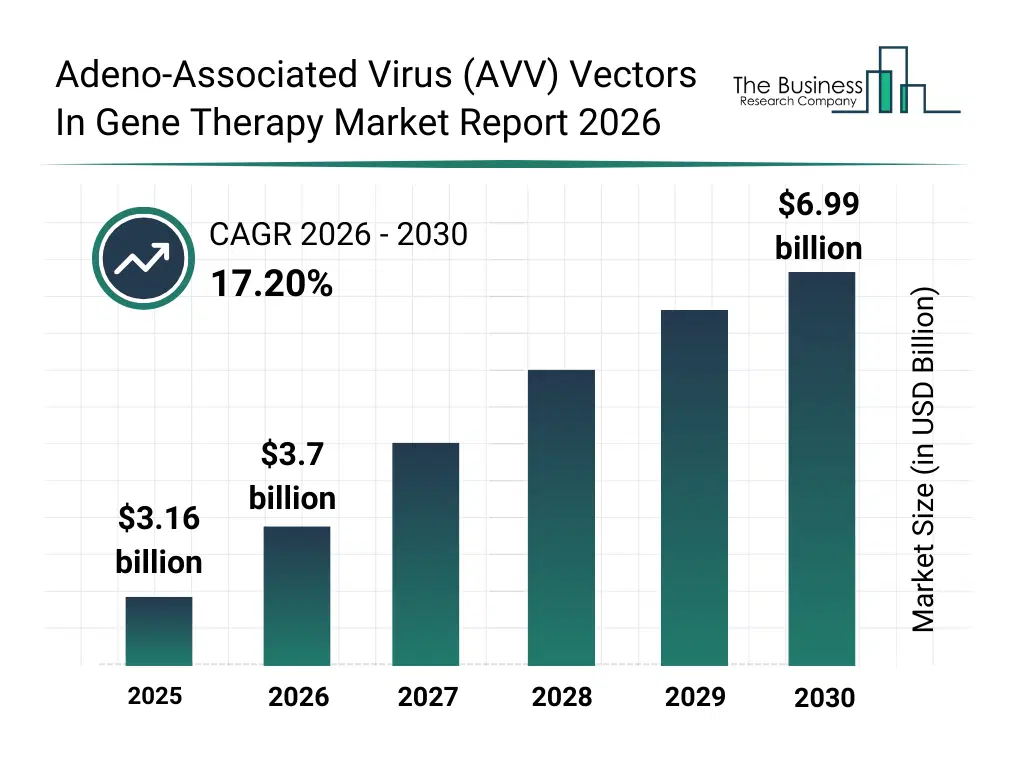
What Is The Adeno-Associated Virus (AVV) Vectors In Gene Therapy Market Size and Share 2026?
The adeno-associated virus (avv) vectors in gene therapy market size has grown rapidly in recent years. It will grow from $3.16 billion in 2025 to $3.7 billion in 2026 at a compound annual growth rate (CAGR) of 17.3%. The growth in the historic period can be attributed to advancements in viral vector safety, rare genetic disorder research, clinical gene therapy success, regulatory approvals, academic research investments.What Is The Adeno-Associated Virus (AVV) Vectors In Gene Therapy Market Growth Forecast?
The adeno-associated virus (avv) vectors in gene therapy market size is expected to see rapid growth in the next few years. It will grow to $6.99 billion in 2030 at a compound annual growth rate (CAGR) of 17.2%. The growth in the forecast period can be attributed to commercial gene therapy launches, scalable vector production demand, precision medicine expansion, orphan drug incentives, global clinical trial growth. Major trends in the forecast period include expansion of gene augmentation therapies, rising demand for rare disease gene treatments, growth of in vivo gene delivery, increased commercial-scale vector manufacturing, focus on long-term therapeutic durability.
Global Adeno-Associated Virus (AVV) Vectors In Gene Therapy Market Segmentation
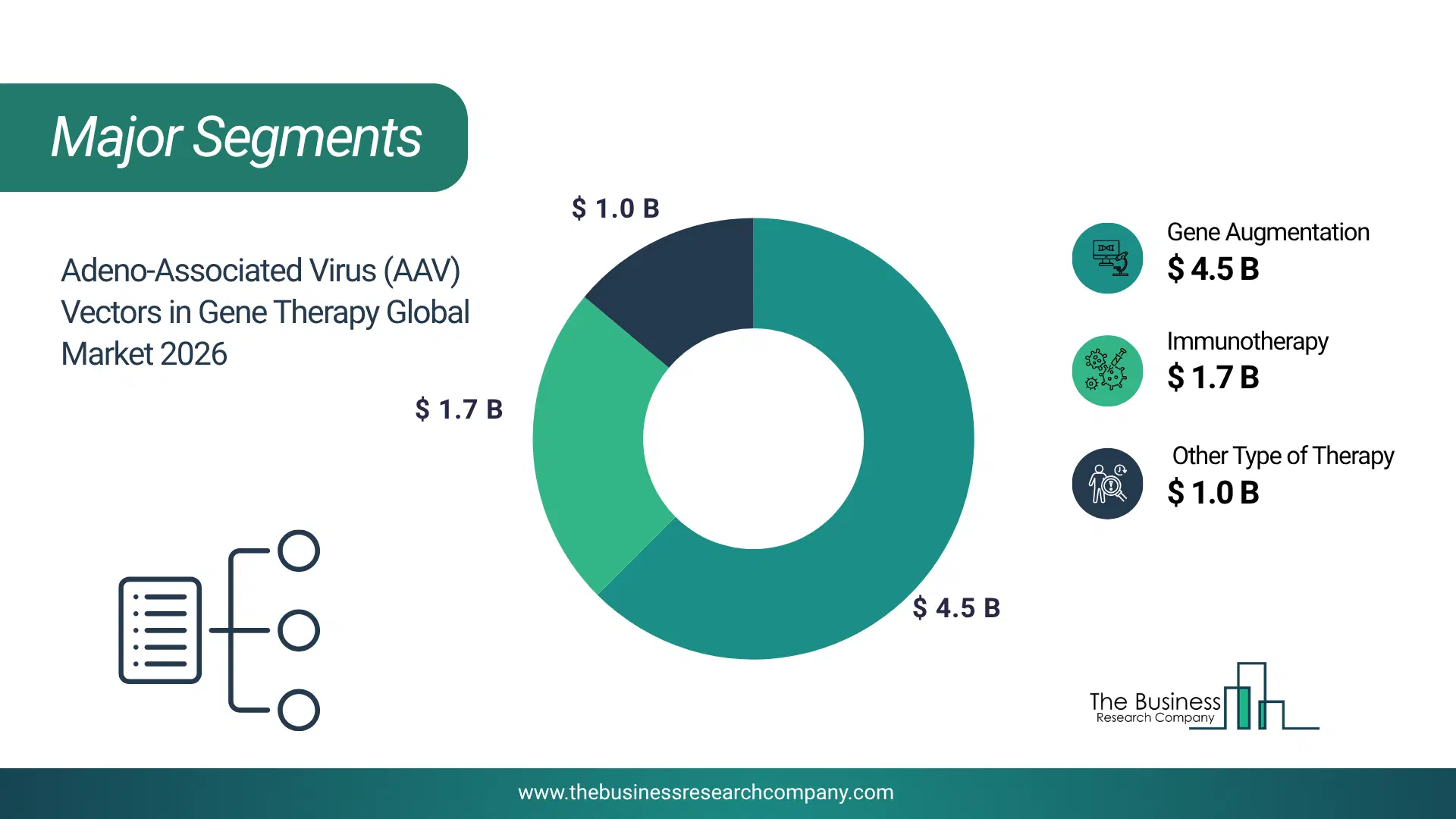
1) By Type of Therapy: Gene Augmentation, Immunotherapy, Other Type of Therapy 2) By Type of Gene Delivery Method Used: Ex Vivo, In Vivo 3) By Scale of Operation: Preclinical, Clinical, Commercial 4) By Target Therapeutic Area: Genetic Disorders, Hematological Disorders, Infectious Diseases, Metabolic Disorders, Ophthalmic Disorders, Muscle Disorders, Neurological Disorders, Other Target Therapeutic Area Subsegments: 1) By Gene Augmentation: Monogenic Disorders, Neurological Disorders, Muscular Disorders, Ophthalmological Disorders, Metabolic Disorders 2) By Immunotherapy: Oncology, Infectious Diseases, Autoimmune Disorders, Vaccine Development, T-Cell Engineering 3) By Other Type of Therapy: Gene Editing Support, RNA Interference, Neuroprotection and Neuroregeneration, Anti-Inflammatory Applications, Regenerative Medicine The top segments in the adeno-associated virus (aav) vectors in gene therapy market will be: • Gene Augmentation will reach $4.46 billion by 2030. • Immunotherapy will reach $1.69 billion by 2030. • Other Type of Therapy will reach $0.97 billion by 2030.What Is The Driver Of The Adeno-Associated Virus (AVV) Vectors In Gene Therapy Market?
The increasing focus on gene-based therapies is expected to propel the growth of the adeno-associated virus (AAV) vectors in the gene therapy market going forward. Gene-based therapies are treatments that modify or manipulate genes to prevent, treat, or cure diseases at the molecular level. Advancements in genetic research drive the increasing focus on creating gene-based therapies, as they enhance the precision and effectiveness of gene editing techniques. Adeno-associated virus (AAV) vectors in gene therapy help create gene-based therapies by delivering therapeutic genes safely and efficiently into target cells, owing to their low immunogenicity and ability to provide long-term gene expression. For instance, in 2023, according to IQVIA, a US-based provider of advanced analytics and technology solutions for the life sciences industry, global spending on cell and gene therapies reached $5.9 billion, representing a 38% increase from 2022. Therefore, increasing focus on creating gene-based therapies is driving the growth of the adeno-associated virus (AAV) vectors market.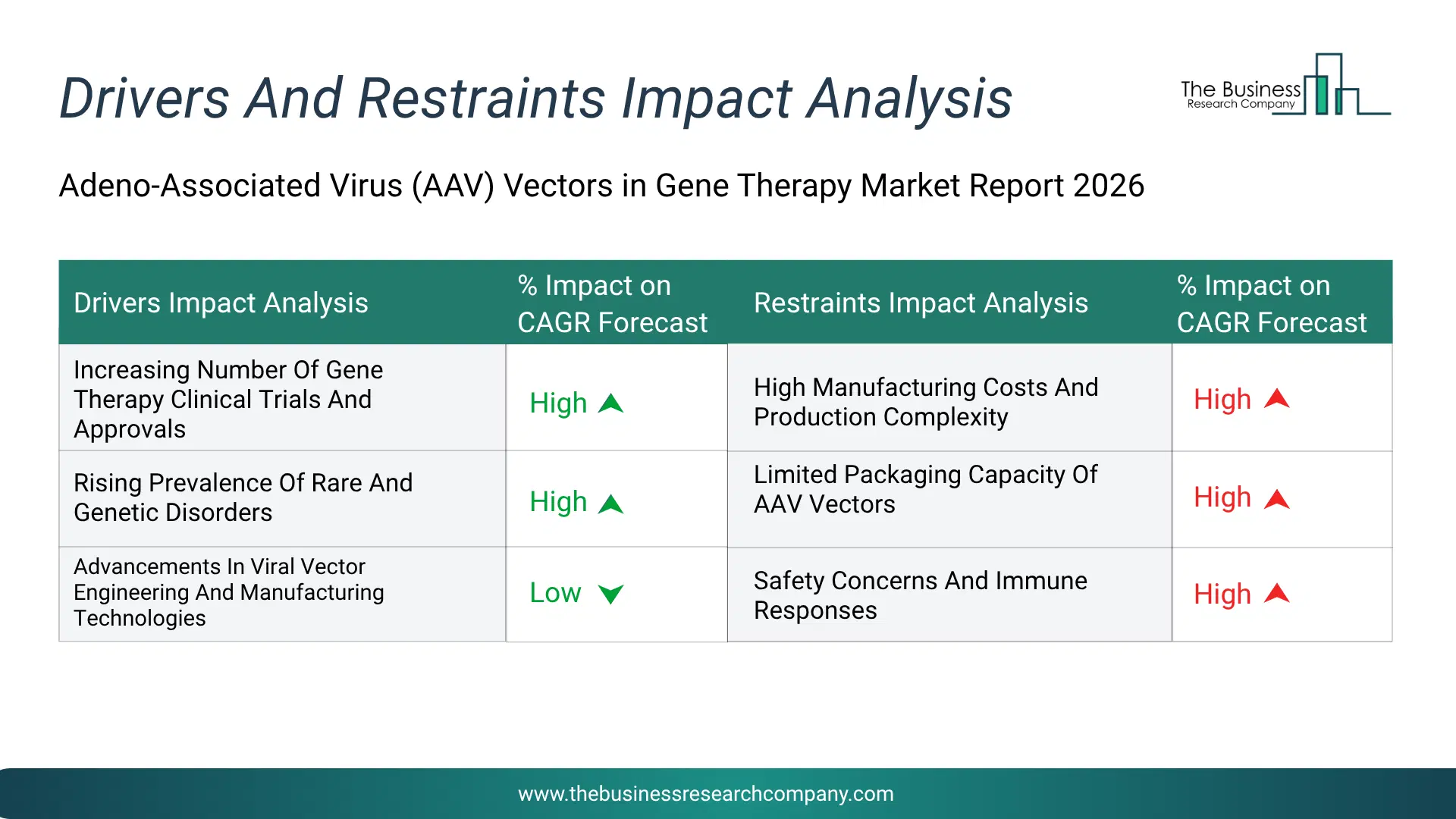
Infographic Chart Showing Key Market Drivers Analysis And Restraints For Adeno-Associated Virus (Aav) Vectors In Gene Therapy Market
The chart presents an impact analysis of key drivers and restraints, quantifying their relative influence on the market's growth rate and helping assess the balance between growth enablers and limiting factors. This chart offers a high-level perspective; the full report contains more detailed insights.
How Will The Drivers Impact Growth In The Global Adeno-Associated Virus (AAV) Vectors in Gene Therapy Market?
• Increasing Number Of Gene Therapy Clinical Trials And Approvals (High) – During the forecast period, the increasing number of gene therapy clinical trials and approvals is expected to become a key growth driver for the adeno -associated virus (aav) vectors in gene therapy market by 2030. As biotechnology and pharmaceutical companies intensify research into gene -based treatments, the demand for efficient gene delivery systems such as aav vectors continues to rise. Clinical trials rely heavily on viral vectors to transport therapeutic genes into patient cells, making aav vectors a critical component in the development pipeline of gene therapies. The growing success rate of gene therapy studies and the approval of treatments for conditions such as inherited retinal diseases and spinal muscular atrophy have strengthened confidence in aav -based platforms. These approvals also encourage further investment from pharmaceutical companies, research institutions, and venture capital firms. As more therapies move from early research stages into late -stage clinical trials and commercialization, the production and use of aav vectors increase significantly. • Rising Prevalence Of Rare And Genetic Disorders (High) – During the forecast period, the rising prevalence of rare and genetic disorders is expected to emerge as a major factor driving the expansion of the adeno-associated virus (aav) vectors in gene therapy market by 2030. The rising prevalence of rare and inherited genetic disorders is another key factor driving the aav vectors in gene therapy market. Many genetic diseases are caused by mutations or missing genes that cannot be effectively treated with traditional pharmaceuticals. Gene therapy offers a promising solution by delivering functional copies of genes directly into affected cells, and aav vectors are widely used for this purpose due to their safety and efficiency. As awareness and diagnosis of rare diseases improve globally, healthcare systems and research organizations are focusing more resources on developing targeted therapies. Governments and regulatory agencies are also providing incentives such as orphan drug designations, research grants, and accelerated approval pathways to encourage the development of treatments for rare conditions. Aav vectors play a central role in many of these therapies because of their ability to enable long-term gene expression with relatively low immune response. • Advancements In Viral Vector Engineering And Manufacturing Technologies (Low) – During the forecast period, the advancements in viral vector engineering and manufacturing technologies are expected to act as a key growth catalyst for the adeno-associated virus (aav) vectors in gene therapy market by 2030. The technological advancements in viral vector engineering and manufacturing are significantly accelerating the growth of the aav vectors in gene therapy market. Continuous innovation in vector design has improved the efficiency, specificity, and stability of aav vectors, enabling them to target specific tissues and deliver therapeutic genes more effectively. Scientists are developing new aav serotypes and engineered capsids that enhance gene delivery to organs such as the liver, brain, muscles, and eyes. At the same time, improvements in manufacturing platforms, including scalable cell culture systems and advanced purification techniques, are helping increase vector yield and production efficiency. These developments reduce production bottlenecks and make it easier for companies to produce aav vectors at a commercial scale for clinical and therapeutic use. Enhanced manufacturing technologies also support faster development timelines and improve product quality and consistency. As gene therapy research expands globally, these technological improvements strengthen the reliability and accessibility of aav vectors, encouraging broader adoption across pharmaceutical and biotechnology companies developing next-generation genetic treatments.How Will The Restraints Impact Growth In The Global Adeno-Associated Virus (AAV) Vectors in Gene Therapy Market?
• High Manufacturing Costs And Production Complexity (High) – During the forecast period, the high manufacturing costs and production complexity act as a significant restraint in the adeno-associated virus (aav) vectors in gene therapy market because producing viral vectors requires highly specialized biomanufacturing infrastructure, advanced cell culture systems, and strict quality control processes. Manufacturing aav vectors involves complex steps such as vector design, cell transfection, viral harvesting, purification, and validation to ensure safety and therapeutic effectiveness. These processes require skilled personnel, expensive reagents, and sophisticated facilities that meet stringent regulatory standards. As a result, the overall cost of producing aav vectors remains high compared with many other biological products. Scaling production to meet growing demand for gene therapies also presents technical challenges, as maintaining vector purity, potency, and consistency at large volumes is difficult. In addition, production inefficiencies and limited yields further increase operational costs. These high manufacturing expenses ultimately raise the cost of aav-based therapies, making them less accessible to patients and healthcare systems. Smaller biotechnology companies and research institutions may also face financial barriers when developing or commercializing aav-based gene therapies. Consequently, the high cost and complexity of production slow down widespread adoption and limit the expansion of the aav vectors in gene therapy market. • Limited Packaging Capacity Of AAV Vectors (High) – During the forecast period, the limited packaging capacity is another important restraint affecting the adeno-associated virus (aav) vectors in gene therapy market. Aav vectors can typically carry genetic material of only about 4.7 kilobases in size, which restricts the amount of therapeutic dna that can be delivered into target cells. Many genetic diseases require the transfer of larger genes or multiple regulatory sequences, which exceed the carrying capacity of aav vectors. This limitation reduces the applicability of aav-based delivery systems for certain complex genetic disorders. Researchers and developers often need to modify gene constructs, split genes into smaller fragments, or explore alternative delivery technologies when the therapeutic gene is too large. These additional steps increase development complexity, time, and cost. In some cases, the limited gene capacity may prevent the use of aav vectors altogether, forcing companies to adopt different viral or non-viral vector platforms. As a result, the restricted genetic payload capacity narrows the range of diseases that can be effectively treated using aav-based gene therapy. This technological limitation slows innovation in some therapeutic areas and acts as a barrier to broader market growth. • Safety Concerns And Immune Responses (High) – During the forecast period, the safety concerns and immune responses also restrain the growth of the adeno-associated virus (aav) vectors in gene therapy market. Although aav vectors are generally considered safe and have relatively low immunogenicity, some patients may already have pre-existing antibodies against naturally occurring aav viruses. These antibodies can neutralize the vector before it successfully delivers the therapeutic gene into target cells, reducing treatment effectiveness. Additionally, immune reactions triggered by the vector or by high vector doses can lead to inflammation or other adverse effects during treatment. Such risks require careful patient screening, dose optimization, and extensive clinical testing to ensure safety. Regulatory agencies closely monitor these safety concerns, which can slow down clinical development timelines and increase approval requirements for aav-based therapies. In some cases, safety issues observed in clinical trials may lead to delays or temporary suspension of studies. These challenges increase development costs and create uncertainty for companies investing in gene therapy programs. Consequently, safety concerns and immune responses remain a critical restraint that can limit the widespread adoption and commercialization of aav vector-based gene therapies.Key Players In The Global Adeno-Associated Virus (AVV) Vectors In Gene Therapy Market
Major companies operating in the adeno-associated virus (avv) vectors in gene therapy market are F. Hoffmann-La Roche Ltd., Sanofi S.A., Novartis AG, Astellas Gene Therapies Inc., Biogen Inc., Sarepta Therapeutics Inc., Oxford BioMedica plc, Rocket Pharmaceuticals Inc., Aldevron LLC, REGENXBIO Inc., uniQure N.V., Passage Bio Inc., Voyager Therapeutics Inc., Dyno Therapeutics Inc., MeiraGTx Holdings plc, Abeona Therapeutics Inc., 4D Molecular Therapeutics Inc., GenSight Biologics S.A., Taysha Gene Therapies Inc., LogicBio Therapeutics Inc.
This chart is for illustrative purposes; the full report includes a detailed competitor analysis and comprehensive overview of the top 10 companies in the market.
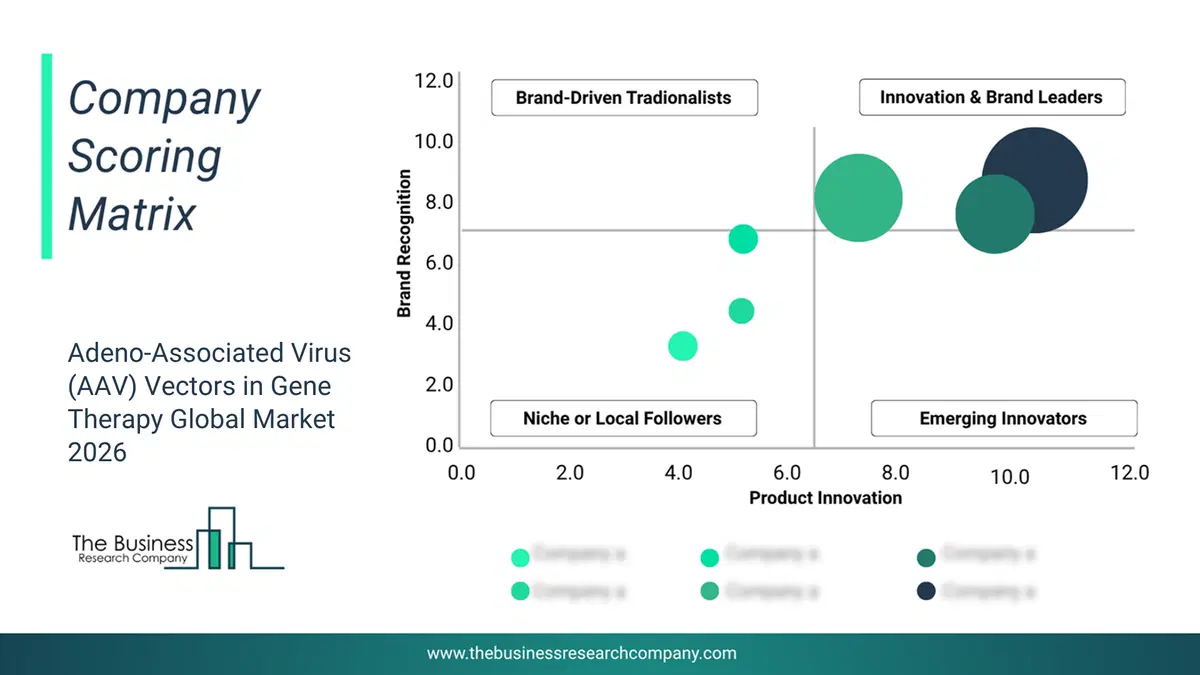
This chart maps companies by product innovation and brand strength, with bubble size indicating relative revenue, helping identify market leaders, challengers, and niche players. This is an illustrative chart; the full report provides a complete and accurate competitive analysis.
Global Adeno-Associated Virus (AVV) Vectors In Gene Therapy Market Trends and Insights
Major companies operating in the adeno-associated virus (AAV) vectors in the gene therapy market are focusing on advanced innovation, such as tailored vector diversity for assay versatility to enhance target tissue specificity, improve therapeutic efficacy, and accelerate the development of customized gene therapies across various indications. Tailored vector diversity for assay versatility refers to using multiple AAV serotypes or constructs to support various analytical tests and therapeutic applications. For instance, in May 2024, Charles River Laboratories, a US-based pharmaceutical company, introduced new reference materials for adeno-associated virus (AAV) and lentiviral vectors (LVV). These materials are intended to support the growing needs of cell and gene therapy (CGT) development. The portfolio facilitates a smoother transition from early-stage research to GMP-grade production. It helps standardize processes and improve consistency in viral vector manufacturing. This launch addresses a key challenge in scaling CGT programs toward clinical and commercial readiness.What Are Latest Mergers And Acquisitions In The Adeno-Associated Virus (AVV) Vectors In Gene Therapy Market?
In March 2023, Ginkgo Bioworks, a US-based biotech company, acquired StrideBio's AAV capsid discovery and engineering platform assets for an undisclosed amount. With this acquisition, Ginkgo Bioworks aims to enhance its end-to-end research and development capabilities in gene therapy, particularly developing novel adeno-associated virus (AVV) capsids for improved gene delivery. StrideBio is a US-based biotechnology company focused on developing engineered AAV capsids for gene therapy applications.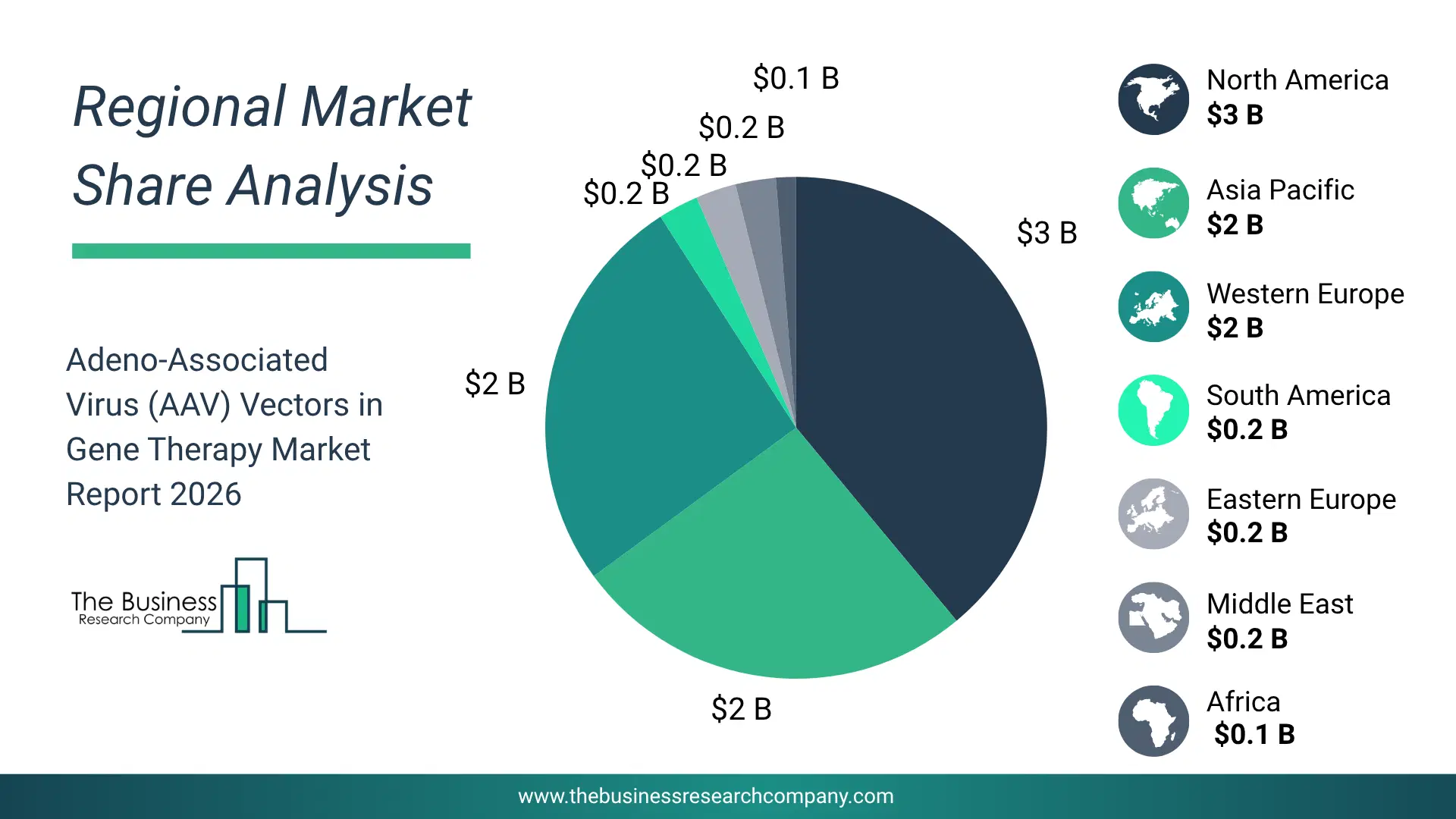
Regional Insights
North America was the largest region in the adeno-associated virus (AVV) vectors in gene therapy market in 2025. The regions covered in this market report are Asia-Pacific, South East Asia, Western Europe, Eastern Europe, North America, South America, Middle East, Africa. The countries covered in this market report are Australia, Brazil, China, France, Germany, India, Indonesia, Japan, Taiwan, Russia, South Korea, UK, USA, Canada, Italy, Spain.What Defines the Adeno-Associated Virus (AVV) Vectors In Gene Therapy Market?
The adeno-associated virus (AAV) vectors in gene therapy market consists of revenues earned by entities by providing services such as gene delivery solutions, targeted therapeutic development, long-term gene expression, and treatment of genetic disorders through safe and efficient viral vector technologies. The market value includes the value of related goods sold by the service provider or included within the service offering. The adeno-associated virus (AAV) vectors in gene therapy market includes sales of viral vector delivery systems used for transporting genetic material into patient cells. Values in this market are ‘factory gate’ values, that is, the value of goods sold by the manufacturers or creators of the goods, whether to other entities (including downstream manufacturers, wholesalers, distributors, and retailers) or directly to end customers. The value of goods in this market includes related services sold by the creators of the goods.How is Market Value Defined and Measured?
The market value is defined as the revenues that enterprises gain from the sale of goods and/or services within the specified market and geography through sales, grants, or donations in terms of the currency (in USD unless otherwise specified). The revenues for a specified geography are consumption values that are revenues generated by organizations in the specified geography within the market, irrespective of where they are produced. It does not include revenues from resales along the supply chain, either further along the supply chain or as part of other products.
This chart presents market attractiveness based on a quantitative evaluation of growth, competition, strategic alignment, and risk, offering a clear view of opportunity areas for decision-making. This chart is for illustrative purposes; the full report contains the complete analysis.

This chart highlights the Total Addressable Market (TAM) by estimating the maximum revenue opportunity using an assumption-driven approach, supporting strategic planning and opportunity sizing across markets. The chart is illustrative; the full report provides a more comprehensive analysis.
What Key Data and Analysis Are Included in the Adeno-Associated Virus (AVV) Vectors In Gene Therapy Market Report 2026?
The adeno-associated virus (avv) vectors in gene therapy market research report is one of a series of new reports from The Business Research Company that provides market statistics, including industry global market size, regional shares, competitors with the market share, detailed market segments, market trends and opportunities, and any further data you may need to thrive in the adeno-associated virus (avv) vectors in gene therapy industry. The market research report delivers a complete perspective of everything you need, with an in-depth analysis of the current and future state of the industry.Adeno-Associated Virus (AVV) Vectors In Gene Therapy Market Report Forecast Analysis
| Report Attribute | Details |
|---|---|
| Market Size Value In 2026 | $3.7 billion |
| Revenue Forecast In 2030 | $6.99 billion |
| Growth Rate | CAGR of 17.3% from 2026 to 2030 |
| Base Year For Estimation | 2025 |
| Actual Estimates/Historical Data | 2020-2025 |
| Forecast Period | 2026 - 2030 |
| Market Representation | Revenue in USD Billion and CAGR from 2026 to 2030 |
| Segments Covered | Type of Therapy, Type of Gene Delivery Method Used, Scale of Operation, Target Therapeutic Area |
| Regional Scope | Asia-Pacific, Western Europe, Eastern Europe, North America, South America, Middle East, Africa |
| Country Scope | The countries covered in the report are Australia, Brazil, China, France, Germany, India, Indonesia, Japan, Taiwan, Russia, South Korea, UK, USA, Canada, Italy, Spain. |
| Key Companies Profiled | F. Hoffmann-La Roche Ltd., Sanofi S.A., Novartis AG, Astellas Gene Therapies Inc., Biogen Inc., Sarepta Therapeutics Inc., Oxford BioMedica plc, Rocket Pharmaceuticals Inc., Aldevron LLC, REGENXBIO Inc., uniQure N.V., Passage Bio Inc., Voyager Therapeutics Inc., Dyno Therapeutics Inc., MeiraGTx Holdings plc, Abeona Therapeutics Inc., 4D Molecular Therapeutics Inc., GenSight Biologics S.A., Taysha Gene Therapies Inc., LogicBio Therapeutics Inc. |
| Customization Scope | Request for Customization |
| Pricing And Purchase Options | Explore Purchase Options |