

Algae Protein Market Report 2026
Global Outlook – By Type (Microalgae, Macroalgae), By Source (Freshwater, Marine), By Application (Dietary Supplements, Human Food, Animal Feed, Pharmaceutical, Other Applications) – Market Size, Trends, Strategies, and Forecast to 2030
Algae Protein Market Overview
• Algae Protein market size has reached to $4.27 billion in 2025 • Expected to grow to $7.07 billion in 2030 at a compound annual growth rate (CAGR) of 10.6% • Growth Driver: Surging Vegan Population Drives Growth in Algae Protein Market • Market Trend: Commercial-Scale Advancements In Microalgae Protein Production • Asia-Pacific was the largest region in 2025 and North America is the fastest growing region.What Is Covered Under Algae Protein Market?
Algae protein is derived from various types of algae, including microalgae (spirulina and chlorella) and macroalgae (seaweed). Algae are rich in proteins, essential amino acids, vitamins, minerals, and other bioactive compounds, making them a valuable source of nutrition and functional ingredients. It is a versatile and sustainable source of high-quality nutrition, with applications in food, supplements, cosmetics, and animal feed. The main types in the algae protein market are microalgae and macroalgae. Microalgae refers to microscopic algae, found in freshwater and marine systems, that are capable of photosynthesis. The various sources include freshwater and marine, and several applications including dietary supplements, human food, animal feed, pharmaceutical, and others.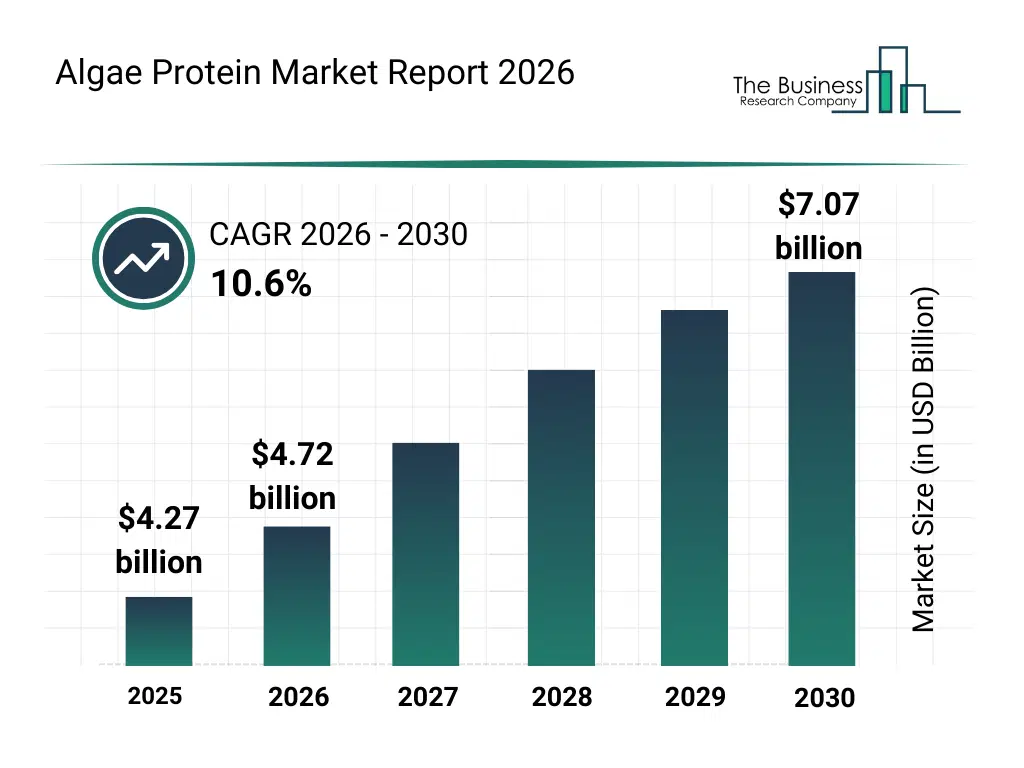
What Is The Algae Protein Market Size and Share 2026?
The algae protein market size has grown rapidly in recent years. It will grow from $4.27 billion in 2025 to $4.72 billion in 2026 at a compound annual growth rate (CAGR) of 10.6%. The growth in the historic period can be attributed to rising interest in plant-based nutrition, early commercialization of spirulina and chlorella products, growth of dietary supplement consumption, expansion of algae farming techniques, increasing awareness of sustainable food sources.What Is The Algae Protein Market Growth Forecast?
The algae protein market size is expected to see rapid growth in the next few years. It will grow to $7.07 billion in 2030 at a compound annual growth rate (CAGR) of 10.6%. The growth in the forecast period can be attributed to growing investments in alternative protein production, rising demand for clean-label nutrition products, expansion of algae protein use in animal feed, increasing focus on low-carbon food ingredients, technological advancements in algae processing. Major trends in the forecast period include increasing adoption of algae-based protein alternatives, rising demand for sustainable protein sources, growing use of algae protein in functional foods, expansion of algae-based nutraceutical applications, enhanced focus on scalable algae cultivation.
Global Algae Protein Market Segmentation
1) By Type: Microalgae, Macroalgae 2) By Source: Freshwater, Marine 3) By Application: Dietary Supplements, Human Food, Animal Feed, Pharmaceutical, Other Applications Subsegments: 1) By Microalgae: Spirulina, Chlorella, Dunaliella, Haematococcus, Aphanizomenon 2) By Macroalgae: Red Algae, Green Algae, Brown Algae, Kelp, SeaweedWhat Is The Driver Of The Algae Protein Market?
The surge in the vegan population is expected to propel the growth of the algae protein market going forward. The vegan population refers to the group of people who follow a diet and lifestyle that excludes all animal products and by-products. The surge in the vegan population is due to increased awareness of animal welfare, health benefits, environmental concerns, and the availability of plant-based food options. Algae protein serves as a sustainable, nutrient-rich source of plant-based protein for the vegan population. For instance, in April 2024, according to the Good Food Institute (GFI), a US-based nonprofit organization focused on alternative protein research, US retail plant-based food dollar sales reached $8.1 billion in 2023, and 81% of households that purchased plant-based foods in 2023 made repeat purchases throughout the year. Therefore, the surge in the vegan population will drive the growth of the algae protein industry.Key Players In The Global Algae Protein Market
Major companies operating in the algae protein market are Roquette Freres SA, E.I.D-Parry Limited, Corbion NV, Now Health Group Inc., Rainbow Light Nutritional Systems, Far East Bio-Tec Co. Ltd., Cyanotech Corporation, Heliae Development LLC, Earthrise Nutritionals LLC, Algenol Biotech LLC, Algenuity Limited, Triton Algae Innovations Ltd., AlgaEnergy, Prairie Naturals, ALGAMA Foods, Qualitas Health Inc., ENERGY bits Inc., Vimergy LLC, AlgoSource SA, Aliga ApS, Pond Technologies Holdings Inc., Seagrass Tech Private Limited, EnerGaia Pte Ltd., GreenCoLab, Phycom BV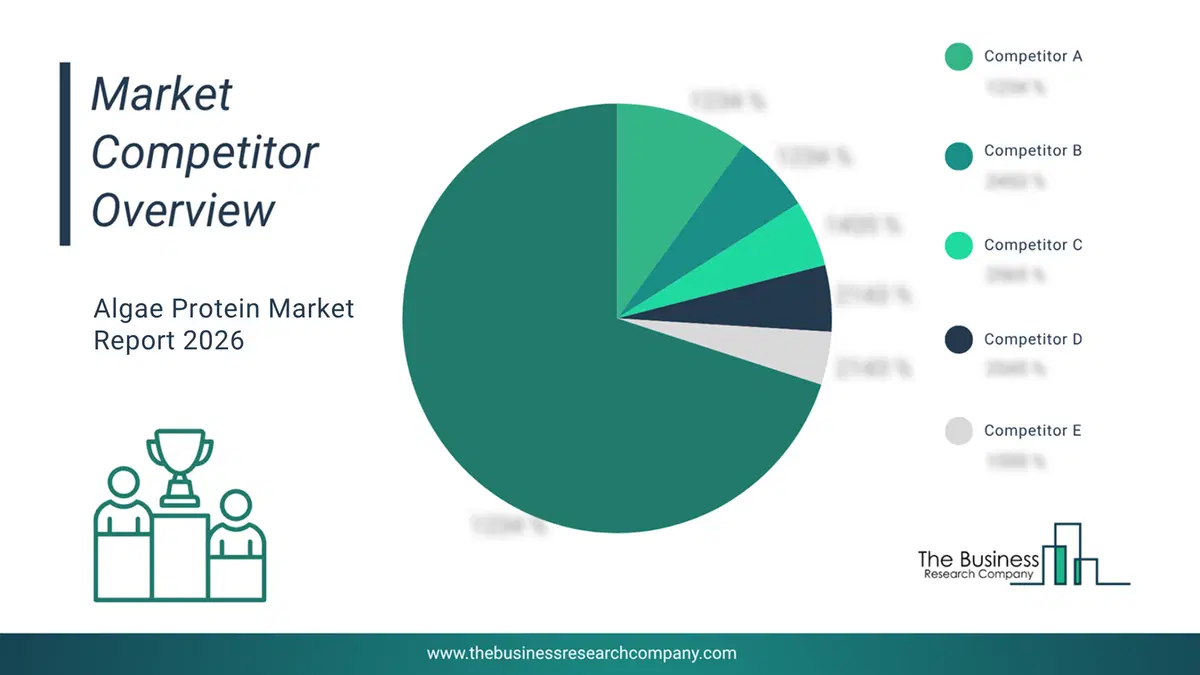
This chart is for illustrative purposes; the full report includes a detailed competitor analysis and comprehensive overview of the top 10 companies in the market.
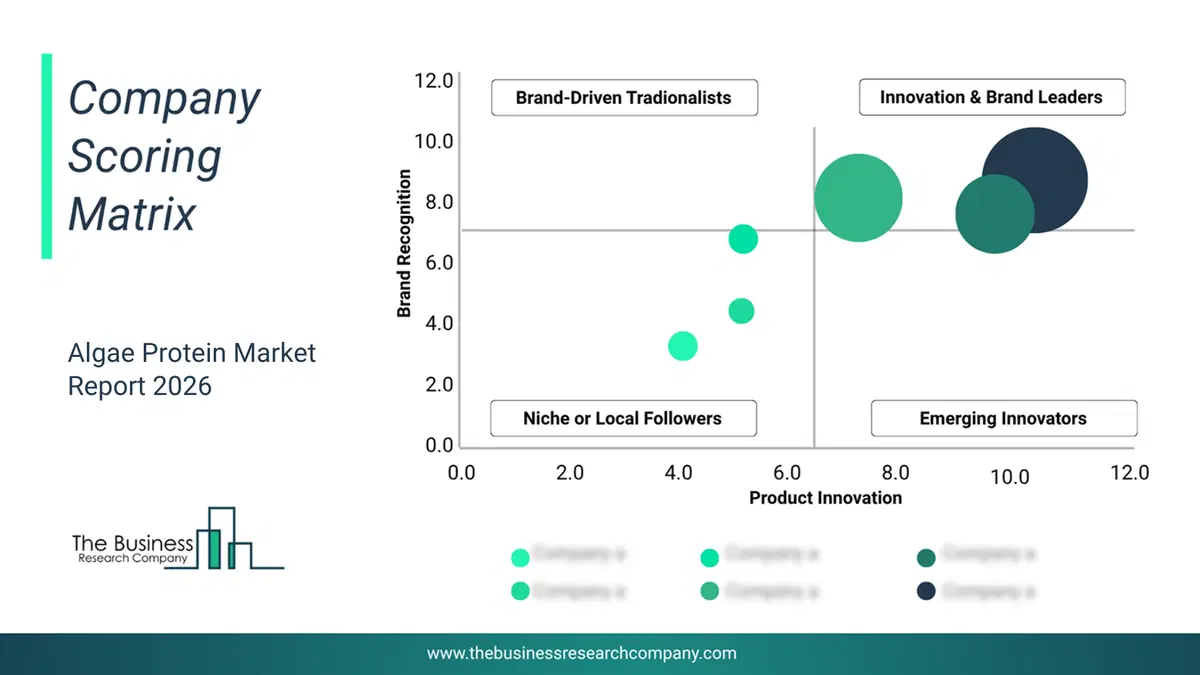
This chart maps companies by product innovation and brand strength, with bubble size indicating relative revenue, helping identify market leaders, challengers, and niche players. This is an illustrative chart; the full report provides a complete and accurate competitive analysis.
Global Algae Protein Market Trends and Insights
Major companies operating in the algae protein market are focusing on developing innovative solutions such as high-protein microalgae concentrates produced via hybrid light-assisted fermentation to enhance sustainability, nutritional value, and formulation flexibility in plant-based foods and dairy/meat alternatives. Hybrid light-assisted fermentation refers to a cultivation and processing method that combines sugar-based fermentation with controlled light exposure in indoor bioreactors to grow microalgae and extract concentrated protein using natural photosynthesis plus fermentation. For instance, in June 2024, Brevel, Ltd., an Israel-based food-tech company specializing in microalgae protein, launched a commercial-scale facility that produces a microalgae protein concentrate designed for plant-based dairy and meat alternatives featuring a white, neutral-flavored 60–70% protein powder with a full amino acid profile and non-genetically modified organism (GMO) composition. This microalgae protein concentrate improves the sustainability, nutritional density, and sensory/functional integration of plant-based products while enabling industrial-scale supply and easier formulation without flavor or color compromise.What Are Latest Mergers And Acquisitions In The Algae Protein Market?
In November 2025, Newrest Group International, a France-based catering and foodservice company, entered into a partnership with Edonia to incorporate Edonia’s spirulina-based microalgae protein. With this partnership, Newrest aims to diversify its institutional foodservice portfolio with minimally processed, nutrient-dense microalgae proteins while supporting the broader shift away from traditional soy-based proteins toward more sustainable, innovative alternatives in large-scale catering. Edonia is a France-based food technology company that specializes in transforming microalgae, particularly spirulina, into minimally processed, protein-rich textured ingredients.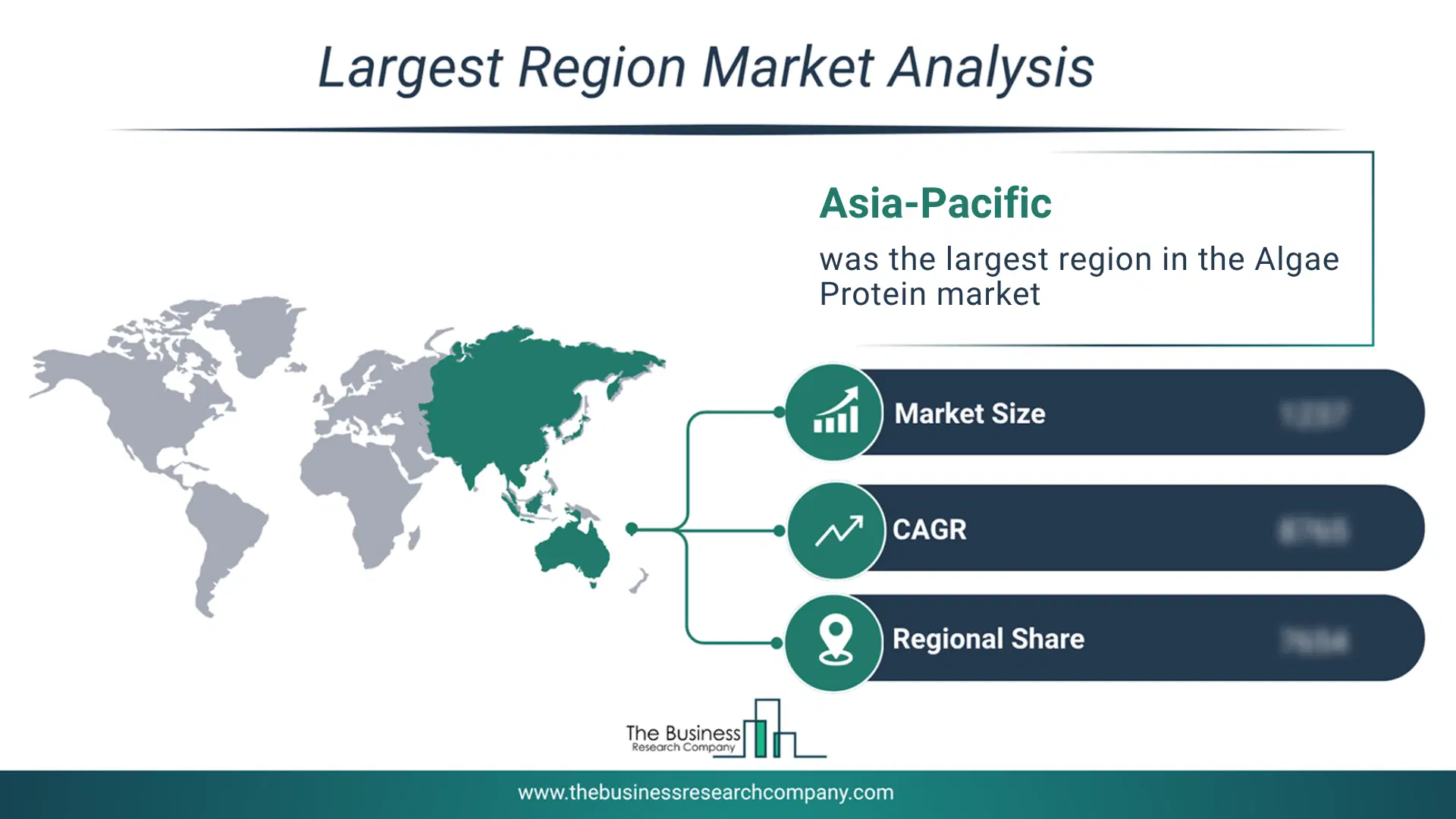
Regional Outlook
Asia-Pacific was the largest region in the algae protein market in 2025. North America is expected to be the fastest-growing region in the forecast period. The regions covered in this market report are Asia-Pacific, South East Asia, Western Europe, Eastern Europe, North America, South America, Middle East and Africa. The countries covered in this market report are Australia, Brazil, China, France, Germany, India, Indonesia, Japan, Taiwan, Russia, South Korea, UK, USA, Italy, Spain, CanadaWhat Defines the Algae Protein Market?
The algae protein market consists of sales of protein powders, supplements, food additives, and energy bars. Values in this market are ‘factory gate’ values, that is the value of goods sold by the manufacturers or creators of the goods, whether to other entities (including downstream manufacturers, wholesalers, distributors, and retailers) or directly to end customers. The value of goods in this market includes related services sold by the creators of the goods.How is Market Value Defined and Measured?
The market value is defined as the revenues that enterprises gain from the sale of goods and/or services within the specified market and geography through sales, grants, or donations in terms of the currency (in USD unless otherwise specified). The revenues for a specified geography are consumption values that are revenues generated by organizations in the specified geography within the market, irrespective of where they are produced. It does not include revenues from resales along the supply chain, either further along the supply chain or as part of other products.
This chart presents market attractiveness based on a quantitative evaluation of growth, competition, strategic alignment, and risk, offering a clear view of opportunity areas for decision-making. This chart is for illustrative purposes; the full report contains the complete analysis.

This chart highlights the Total Addressable Market (TAM) by estimating the maximum revenue opportunity using an assumption-driven approach, supporting strategic planning and opportunity sizing across markets. The chart is illustrative; the full report provides a more comprehensive analysis.
What Key Data and Analysis Are Included in the Algae Protein Market Report 2026?
The algae protein market research report is one of a series of new reports from The Business Research Company that provides market statistics, including industry global market size, regional shares, competitors with the market share, detailed market segments, market trends and opportunities, and any further data you may need to thrive in the algae protein industry. The market research report delivers a complete perspective of everything you need, with an in-depth analysis of the current and future state of the industry.Algae Protein Market Report Forecast Analysis
| Report Attribute | Details |
|---|---|
| Market Size Value In 2026 | $4.72 billion |
| Revenue Forecast In 2030 | $7.07 billion |
| Growth Rate | CAGR of 10.6% from 2026 to 2030 |
| Base Year For Estimation | 2025 |
| Actual Estimates/Historical Data | 2020-2025 |
| Forecast Period | 2026 - 2030 |
| Market Representation | Revenue in USD Billion and CAGR from 2026 to 2030 |
| Segments Covered | Type, Source, Application |
| Regional Scope | Asia-Pacific, Western Europe, Eastern Europe, North America, South America, Middle East, Africa |
| Country Scope | The countries covered in the report are Australia, Brazil, China, France, Germany, India, Indonesia, Japan, Taiwan, Russia, South Korea, UK, USA, Canada, Italy, Spain. |
| Key Companies Profiled | Roquette Freres SA, E.I.D-Parry Limited, Corbion NV, Now Health Group Inc., Rainbow Light Nutritional Systems, Far East Bio-Tec Co. Ltd., Cyanotech Corporation, Heliae Development LLC, Earthrise Nutritionals LLC, Algenol Biotech LLC, Algenuity Limited, Triton Algae Innovations Ltd., AlgaEnergy, Prairie Naturals, ALGAMA Foods, Qualitas Health Inc., ENERGY bits Inc., Vimergy LLC, AlgoSource SA, Aliga ApS, Pond Technologies Holdings Inc., Seagrass Tech Private Limited, EnerGaia Pte Ltd., GreenCoLab, Phycom BV |
| Customization Scope | Request for Customization |
| Pricing And Purchase Options | Explore Purchase Options |