
Plant-Based Protein Market Report 2026
Global Outlook – By Type (Isolates, Concentrates, Textured), By Source (Soy, Wheat, Pea, Other Sources), By Form (Dry, Liquid), By Application (Feed, Food, Other Applications) – Market Size, Trends, Strategies, and Forecast to 2030
Plant-Based Protein Market Overview
• Plant-Based Protein market size has reached to $24.16 billion in 2025 • Expected to grow to $39.38 billion in 2030 at a compound annual growth rate (CAGR) of 10.2% • Growth Driver: Growing Health Consciousness Drives Demand For Plant-Based Proteins, Propelling Market Growth • Market Trend: Enhancing Nutritional Value The Emergence of Meal Extenders in Plant-Based Protein Products • North America was the largest region in 2025 and Asia-Pacific is the fastest growing region.What Is Covered Under Plant-Based Protein Market?
Plant-based protein refers to protein sourced from plants, encompassing ingredients like beans, lentils, tofu, and quinoa. It is used to promote muscle development, improve nutritional intake, and cater to dietary preferences that avoid animal products. With a growing emphasis on health and sustainability, plant-based proteins are becoming a staple in many diets worldwide. The main types of plant-based protein are isolates, concentrates and textured. Plant-based protein isolates are consumed in an isolated form after being chemically extracted into a powder from the whole food. Plant-based proteins are derived from various sources such as soy, wheat, pea, others and are available in both dry and liquid forms. It is used in feed, food and other applications.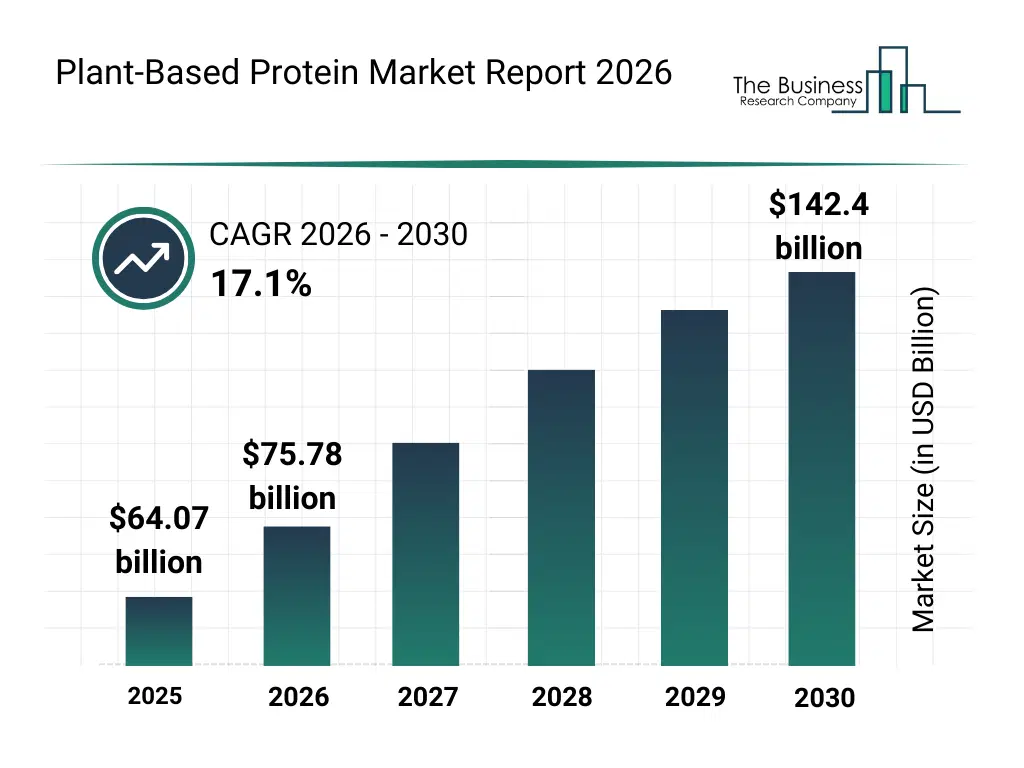
What Is The Plant-Based Protein Market Size and Share 2026?
The plant-based protein market size has grown rapidly in recent years. It will grow from $24.16 billion in 2025 to $26.72 billion in 2026 at a compound annual growth rate (CAGR) of 10.6%. The growth in the historic period can be attributed to growing awareness of plant-based nutrition benefits, expansion of soy and pea protein usage, rising demand for meat substitutes, increased availability of plant protein ingredients, adoption of plant proteins in animal feed.What Is The Plant-Based Protein Market Growth Forecast?
The plant-based protein market size is expected to see rapid growth in the next few years. It will grow to $39.38 billion in 2030 at a compound annual growth rate (CAGR) of 10.2%. The growth in the forecast period can be attributed to increasing demand for sustainable nutrition solutions, rising innovation in plant protein formulations, expansion of personalized nutrition trends, growing use of plant proteins in sports nutrition, increasing regulatory focus on sustainable food systems. Major trends in the forecast period include increasing consumption of plant-based protein products, rising demand for clean and natural protein sources, expansion of flexitarian diet adoption, growing use of plant proteins in fortified foods, enhanced focus on nutritional profile optimization.
Global Plant-Based Protein Market Segmentation
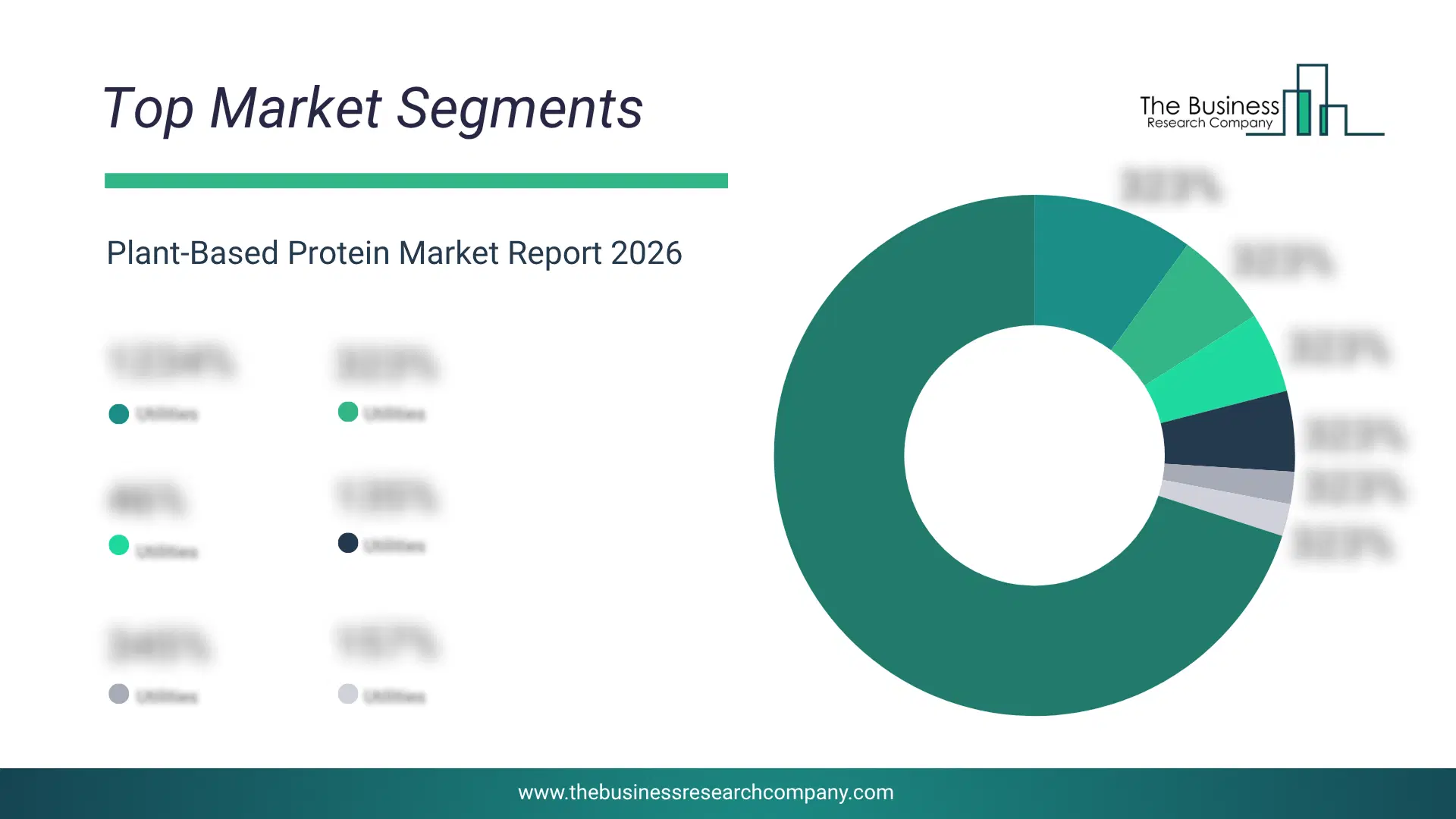
2) By Source: Soy, Wheat, Pea, Other Sources 3) By Form: Dry, Liquid 4) By Application: Feed, Food, Other Applications Subsegments: 1) By Isolates: Soy Protein Isolate, Pea Protein Isolate, Rice Protein Isolate, Wheat Protein Isolate 2) By Concentrates: Soy Protein Concentrate, Pea Protein Concentrate, Rice Protein Concentrate, Hemp Protein Concentrate 3) By Textured: Textured Soy Protein (TSP), Textured Pea Protein, Textured Wheat Protein, Textured Rice ProteinWhat Is The Driver Of The Plant-Based Protein Market?
The increasing awareness of health and wellness is expected to propel the growth of the plant-based protein market going forward. Health and wellness awareness refers to the growing consumer focus on adopting nutritious diets, active lifestyles, and preventive healthcare practices to improve overall well-being. The rising focus on wellness is increasing as more individuals prioritize healthier dietary choices. The plant-based protein market supports health and wellness by offering nutrient-rich, low-fat, and high-fiber protein options that align with preventive health goals. This strong alignment between consumer wellness priorities and the nutritional benefits of plant-based proteins enhances the market’s relevance and adoption. For instance, in December 2024, according to Health Affairs, a US-based health policy journal, healthcare spending in the US increased by 7.5% in 2023, up from 4.6% in 2022. Therefore, the increasing awareness of health and wellness is driving the growth of the plant-based protein industry.Key Players In The Global Plant-Based Protein Market
Major companies operating in the plant-based protein market are Archer-Daniels-Midland Company, DuPont Nutrition & Biosciences, Axiom Foods Inc., Cargill Inc., Kerry Group, Ingredion Inc., Roquette Freres SA, Wilmar International Ltd., Glanbia plc, Cosucra Groupe Warcoing SA, Sotexpro SAS, Emsland Group, Puris Proteins LLC., Beyond Meat Inc., BENEO GmbH, Tate & Lyle plc, Shandong Jianyuan group, Proeon Foods, Australian Plant Proteins Pty Ltd., Impossible Foods Inc., Nestle SA, Kellogg Company, Conagra Brands Inc., Tyson Foods Inc., Turtle Island Foods, Lightlife Foods Inc., Field Roast Grain Meat Co. Inc., Quorn Foods Ltd.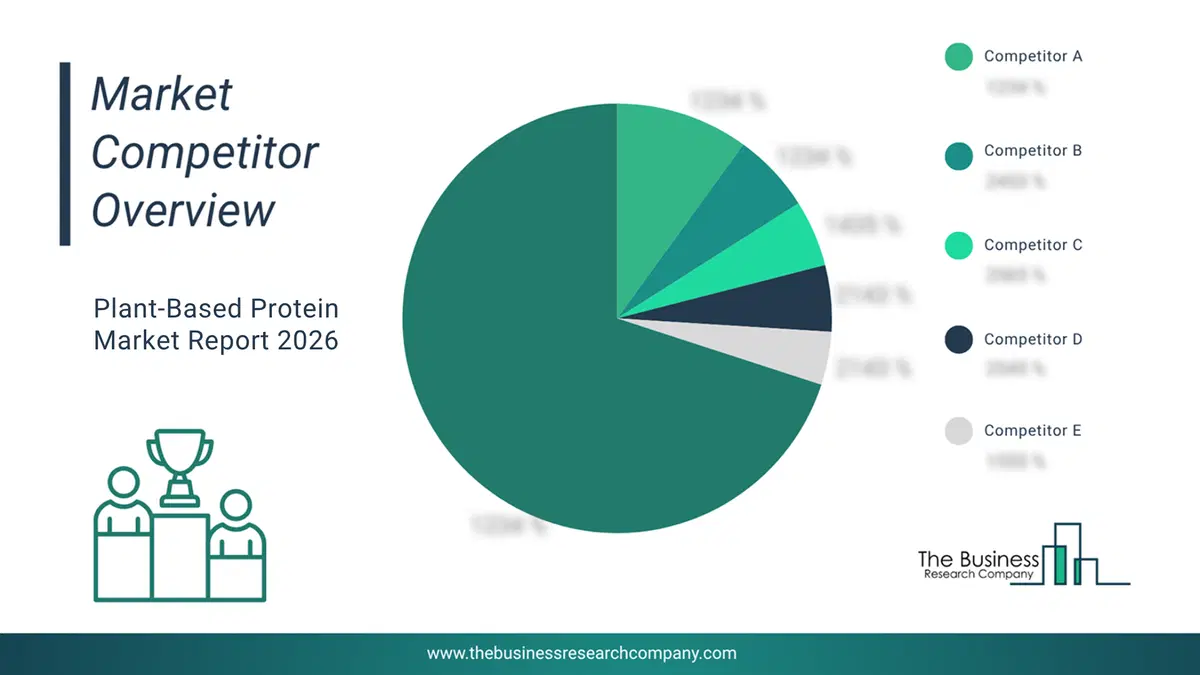
This chart is for illustrative purposes; the full report includes a detailed competitor analysis and comprehensive overview of the top 10 companies in the market.
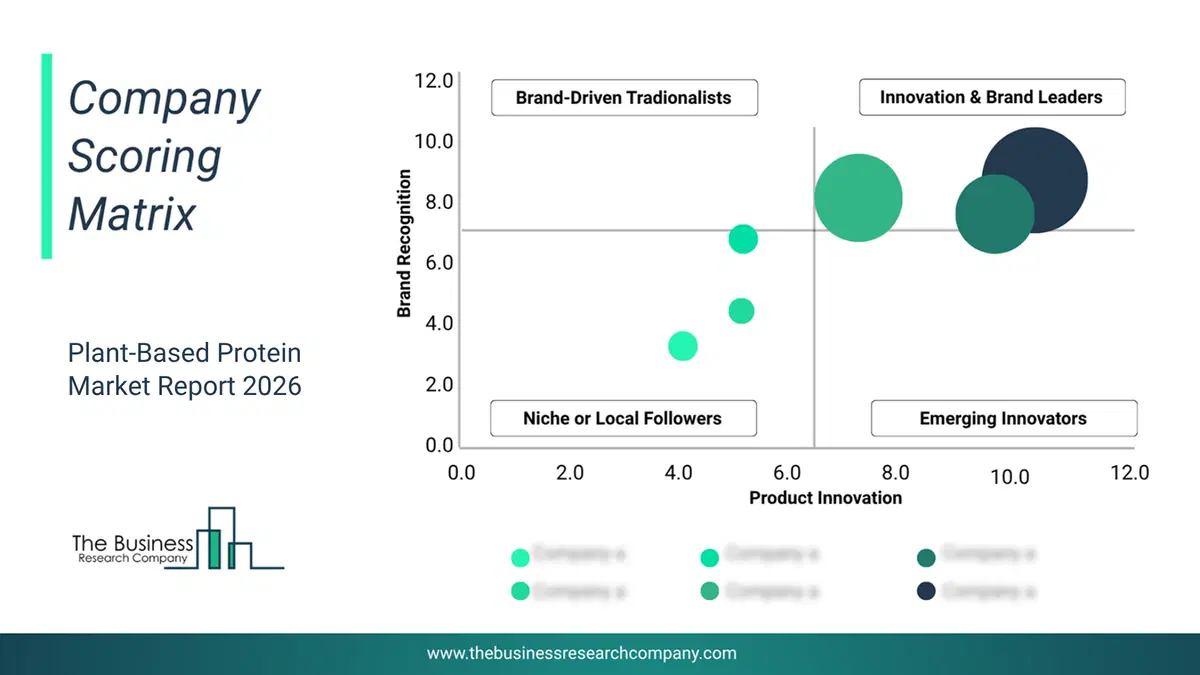
This chart maps companies by product innovation and brand strength, with bubble size indicating relative revenue, helping identify market leaders, challengers, and niche players. This is an illustrative chart; the full report provides a complete and accurate competitive analysis.
Global Plant-Based Protein Market Trends and Insights
Major companies operating in the plant-based protein market are focusing on developing innovative products, such as Meal Extender, to enhance nutritional profiles and improve the sensory experience of meat alternatives. A meal extender is an ingredient added to a dish to increase its volume or bulk without significantly altering its flavor. Commonly used in various cuisines, meal extenders can include ingredients like grains, vegetables, or legumes, helping to reduce costs and increase portion sizes. For instance, in July 2024, Nestle, a Switzerland-based food company, launched Maggi Rindecarne to enhance meals by combining it with traditional minced meat. Maggi Rindecarne is a plant-based meat extender that enhances meals by combining with traditional minced meat, providing approximately 5.2 g of protein per serving while keeping fat content low. This cost-effective solution allows families to double their servings, making it an economical choice for budget-conscious consumers.What Are Latest Mergers And Acquisitions In The Plant-Based Protein Market?
In June 2024, Ahimsa Industries, a US-based plant-based food holding company that brings together CPG brands, manufacturers, and sales enablement businesses, acquired Wicked Foods, Inc. for an undisclosed amount. With this acquisition, Ahimsa Industries aims to enhance market presence, drive innovation, and stabilize the plant-based food sector through strategic consolidation. Wicked Foods, Inc., a UK-based pioneering food company that specializes in plant-based food products.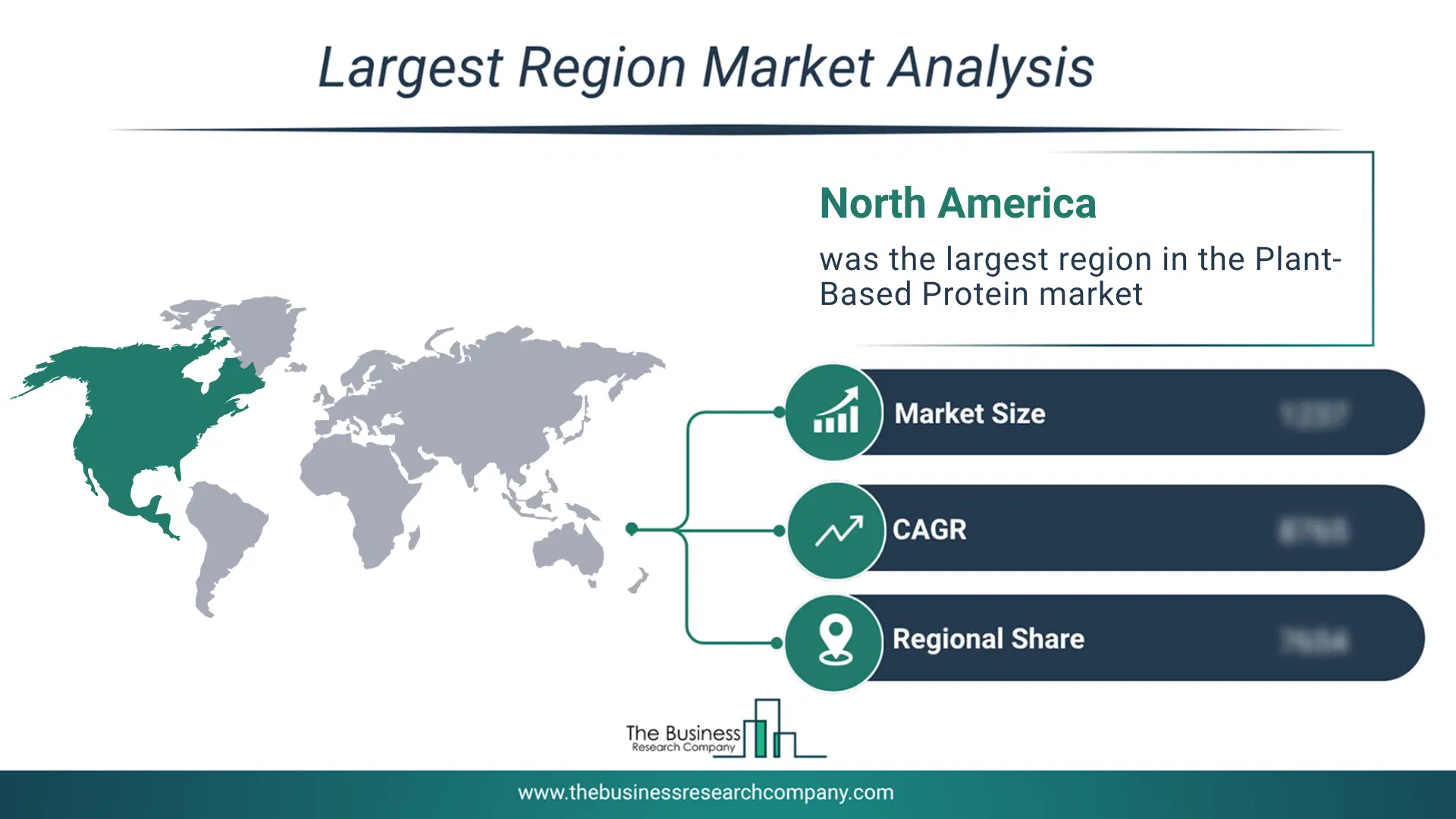
Regional Outlook
North America was the largest region in the plant-based protein market in 2025. Asia-Pacific is expected to be the fastest-growing region in the forecast period. The regions covered in this market report are Asia-Pacific, South East Asia, Western Europe, Eastern Europe, North America, South America, Middle East, Africa. The countries covered in this market report are Australia, Brazil, China, France, Germany, India, Indonesia, Japan, Taiwan, Russia, South Korea, UK, USA, Canada, Italy, Spain.What Defines the Plant-Based Protein Market?
The plant-based protein market consists of sales of wheat protein, soy protein, pea protein, and other plant-based proteins. Values in this market are ‘factory gate’ values, that is the value of goods sold by the manufacturers or creators of the goods, whether to other entities (including downstream manufacturers, wholesalers, distributors and retailers) or directly to end customers. The value of goods in this market includes related services sold by the creators of the goods.How is Market Value Defined and Measured?
The market value is defined as the revenues that enterprises gain from the sale of goods and/or services within the specified market and geography through sales, grants, or donations in terms of the currency (in USD unless otherwise specified). The revenues for a specified geography are consumption values that are revenues generated by organizations in the specified geography within the market, irrespective of where they are produced. It does not include revenues from resales along the supply chain, either further along the supply chain or as part of other products.
This chart presents market attractiveness based on a quantitative evaluation of growth, competition, strategic alignment, and risk, offering a clear view of opportunity areas for decision-making. This chart is for illustrative purposes; the full report contains the complete analysis.

This chart highlights the Total Addressable Market (TAM) by estimating the maximum revenue opportunity using an assumption-driven approach, supporting strategic planning and opportunity sizing across markets. The chart is illustrative; the full report provides a more comprehensive analysis.
What Key Data and Analysis Are Included in the Plant-Based Protein Market Report 2026?
The plant-based protein market research report is one of a series of new reports from The Business Research Company that provides market statistics, including industry global market size, regional shares, competitors with the market share, detailed market segments, market trends and opportunities, and any further data you may need to thrive in the plant-based protein industry. The market research report delivers a complete perspective of everything you need, with an in-depth analysis of the current and future state of the industry.Plant-Based Protein Market Report Forecast Analysis
| Report Attribute | Details |
|---|---|
| Market Size Value In 2026 | $26.72 billion |
| Revenue Forecast In 2030 | $39.38 billion |
| Growth Rate | CAGR of 10.2% from 2026 to 2030 |
| Base Year For Estimation | 2025 |
| Actual Estimates/Historical Data | 2020-2025 |
| Forecast Period | 2026 - 2030 |
| Market Representation | Revenue in USD Billion and CAGR from 2026 to 2030 |
| Segments Covered | Type, Source, Form, Application |
| Regional Scope | Asia-Pacific, Western Europe, Eastern Europe, North America, South America, Middle East, Africa |
| Country Scope | The countries covered in the report are Australia, Brazil, China, France, Germany, India, Indonesia, Japan, Taiwan, Russia, South Korea, UK, USA, Canada, Italy, Spain. |
| Key Companies Profiled | Archer-Daniels-Midland Company, DuPont Nutrition & Biosciences, Axiom Foods Inc., Cargill Inc., Kerry Group, Ingredion Inc., Roquette Freres SA, Wilmar International Ltd., Glanbia plc, Cosucra Groupe Warcoing SA, Sotexpro SAS, Emsland Group, Puris Proteins LLC., Beyond Meat Inc., BENEO GmbH, Tate & Lyle plc, Shandong Jianyuan group, Proeon Foods, Australian Plant Proteins Pty Ltd., Impossible Foods Inc., Nestle SA, Kellogg Company, Conagra Brands Inc., Tyson Foods Inc., Turtle Island Foods, Lightlife Foods Inc., Field Roast Grain Meat Co. Inc., Quorn Foods Ltd. |
| Customization Scope | Request for Customization |
| Pricing And Purchase Options | Explore Purchase Options |