
Textured Pea Protein Market Report 2026
Global Outlook – By Product Type (Yellow Peas, Green Peas), By Nature (Organic, Conventional), By Processing Type (Dry Processing, Wet Processing), By End Use (Food Processing, Nutraceuticals, Sports Nutrition, Other End-users) – Market Size, Trends, Strategies, and Forecast to 2030
Textured Pea Protein Market Overview
• Textured Pea Protein market size has reached to $0.68 billion in 2025 • Expected to grow to $1.08 billion in 2030 at a compound annual growth rate (CAGR) of 9.6% • Growth Driver: Growing Consumer Interest In Plant-Based Proteins Drives Expansion Of The Textured Pea Protein Market • Market Trend: Innovative Textured Pea Proteins For Meat-Like Plant-Based Foods • North America was the largest region in 2025 and Europe is the fastest growing region.What Is Covered Under Textured Pea Protein Market?
Textured pea protein is a protein supplement that is extracted from peas to create high-protein, plant-based meat substitutes. It is a naturally gluten-free and soy-free product with a pleasant taste and texture, offering it an ideal complement to popular ingredients in a variety of applications. Textured pea protein is non-GMO and has low allergenicity which makes it a great alternative to wheat and soy products. The main types of products in textured pea protein are yellow peas and green peas. Field peas, often known as yellow peas, are a type of pea that is best dried rather than eaten fresh. The peas' skin (seed coat) is a pale-yellow color. The peas are a deeper yellow inside, but the color disappears when cooked. It has both organic and conventional nature and has different processing types such as dry processing and wet processing. It is implemented in various verticals such as food processing, animal feed, nutraceuticals, sports nutrition, infant nutrition, cosmetic and personal care, others.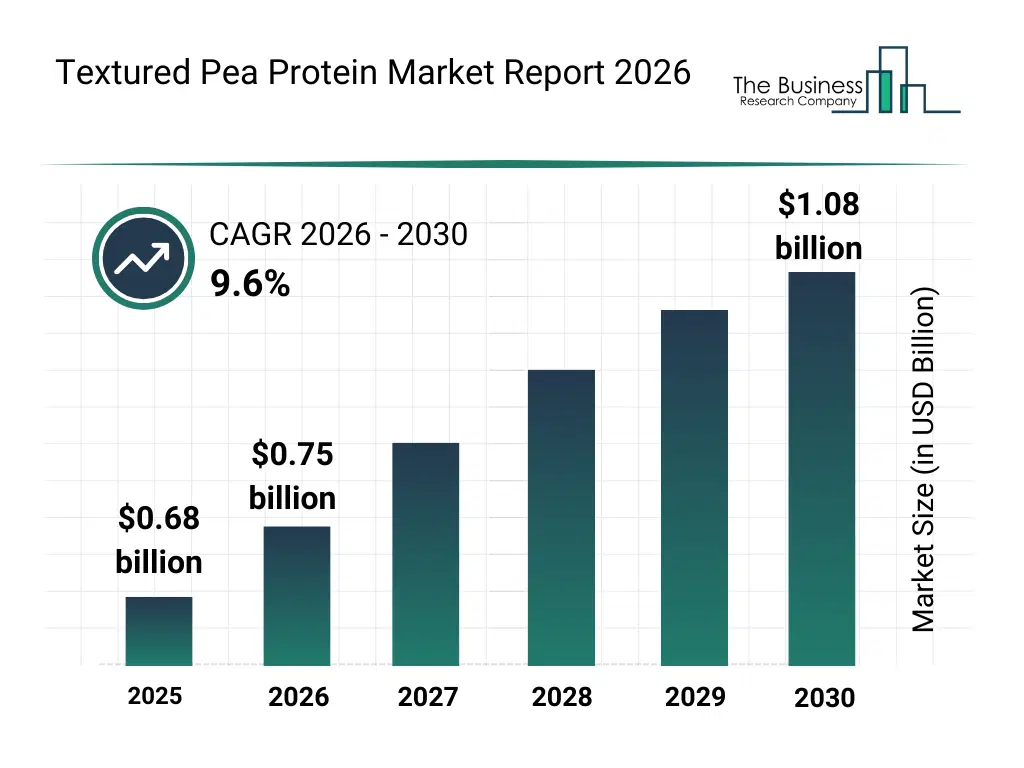
What Is The Textured Pea Protein Market Size and Share 2026?
The textured pea protein market size has grown strongly in recent years. It will grow from $0.68 billion in 2025 to $0.75 billion in 2026 at a compound annual growth rate (CAGR) of 9.4%. The growth in the historic period can be attributed to growth in vegetarian and vegan populations, increasing awareness of protein nutrition, expansion of pulse crop cultivation, availability of pea processing infrastructure, demand for allergen-free proteins.What Is The Textured Pea Protein Market Growth Forecast?
The textured pea protein market size is expected to see strong growth in the next few years. It will grow to $1.08 billion in 2030 at a compound annual growth rate (CAGR) of 9.6%. The growth in the forecast period can be attributed to growing demand for sustainable protein sources, expansion of plant-based meat markets, rising innovation in protein texturization, increasing use in infant and clinical nutrition, investments in advanced protein processing. Major trends in the forecast period include increasing demand for plant-based protein ingredients, rising adoption in meat alternative products, growing use in sports and nutritional foods, expansion of clean-label protein formulations, enhanced focus on texture and mouthfeel.
Global Textured Pea Protein Market Segmentation
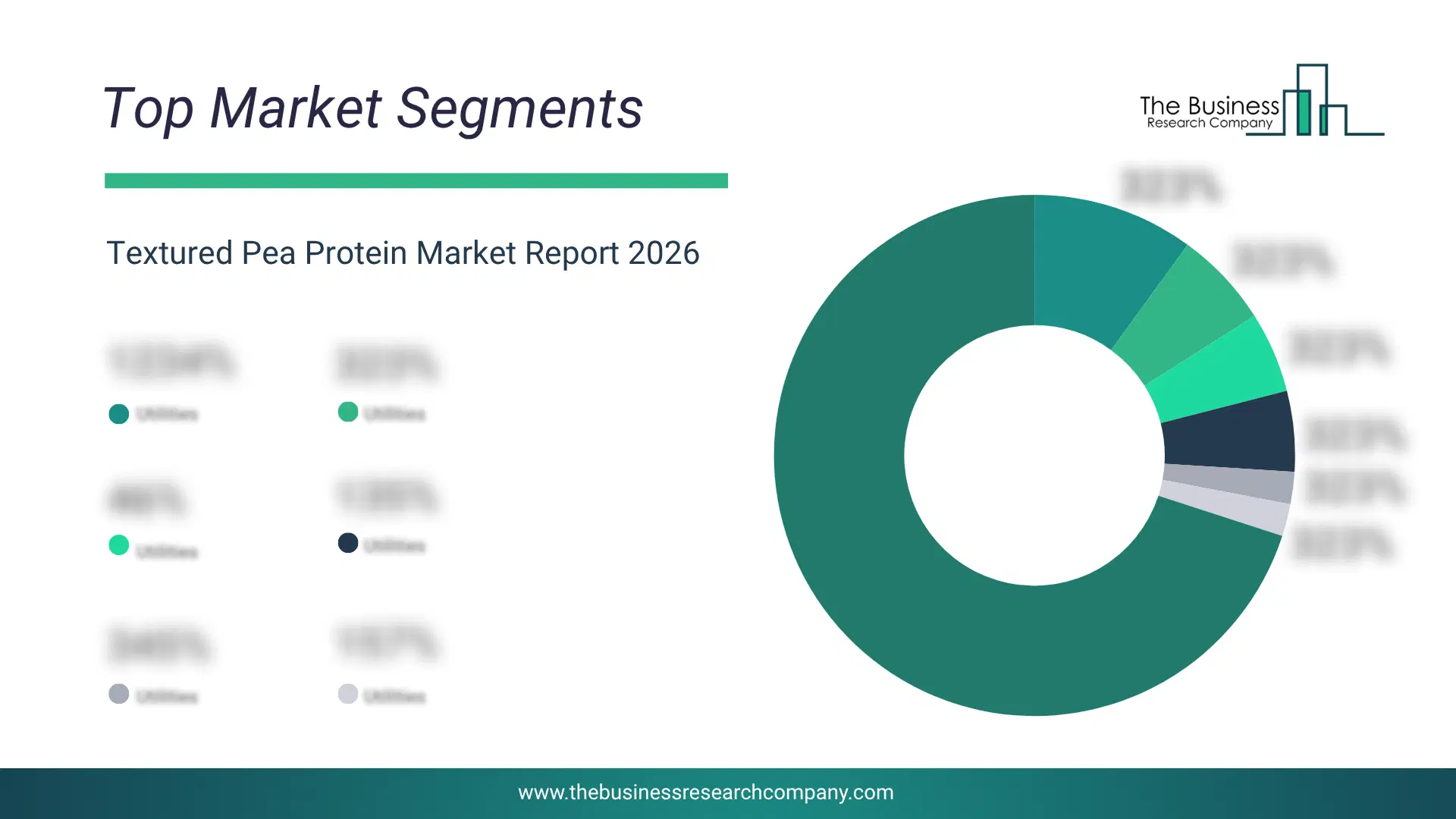
1) By Product Type: Yellow Peas, Green Peas 2) By Nature: Organic, Conventional 3) By Processing Type: Dry Processing, Wet Processing 4) By End Use: Food Processing, Nutraceuticals, Sports Nutrition, Other End-users Subsegments: 1) By Yellow Peas: Textured Yellow Pea Protein Isolate, Textured Yellow Pea Protein Concentrate, Textured Yellow Pea Protein Flour 2) By Green Peas: Textured Green Pea Protein Isolate, Textured Green Pea Protein Concentrate, Textured Green Pea Protein FlourWhat Is The Driver Of The Textured Pea Protein Market?
The rising consumer interest in plant-based protein is contributing to the growth of the textured pea protein market. In recent years, consumer interest in plant-based diets has increased significantly with vegan, vegetarian, and flexitarian diets becoming quite prevalent. The protein level of textured pea protein components is among the highest on the globe, with a pleasant taste and attractive texture. For instance, in May 2025, according to The Food Institute, a U.S.-based food and beverage industry information organization’s platform reported that the global plant based sales were up roughly 5% in 2024 compared to 2023. Therefore, the rising consumer interest in plant-based proteins propels the growth of the textured pea protein industry.Key Players In The Global Textured Pea Protein Market
Major companies operating in the textured pea protein market are Roquette Freres SA, Puris Foods LLC, Burcon NutraScience Corporation, Nisco ApS, Sotexpro SAS, Exeller NV, Vestkorn Milling AS, Nutri-Pea Ltd., Cosucra Groupe Warcoing SA, Scoular Grain Company, Axiom Foods Inc., Alliance Grain Traders Foods, DuPont Nutrition & Biosciences, Shandong Jianyuan Foods Co Ltd., Kerry Group plc, Emsland Group, Yantai Shuangta Food Co Ltd., Yantai Oriental Protein Tech Co Ltd., Shandong Zhaoyuan Food Company, Shandong Huatai Food Co Ltd., Ingredion Inc., Fenchem Inc., A&B Ingredients, Glanbia Nutritionals Plc, Prinova Group, Shaanxi Fuheng Biotechnology Co Ltd.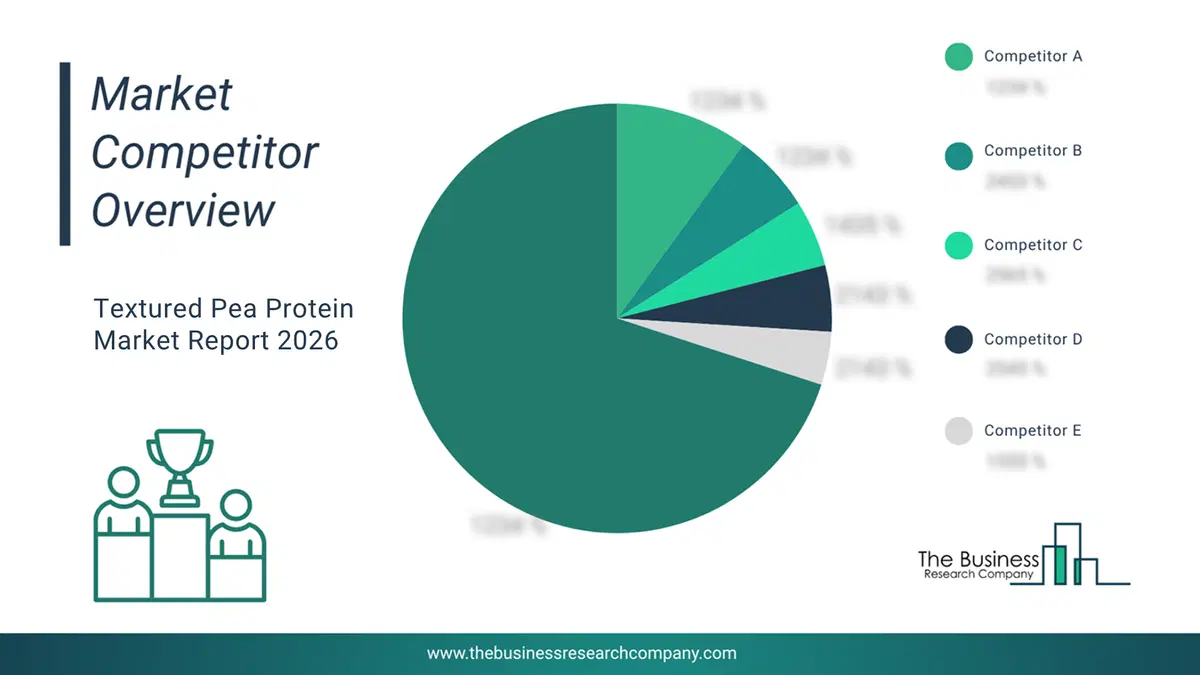
This chart is for illustrative purposes; the full report includes a detailed competitor analysis and comprehensive overview of the top 10 companies in the market.
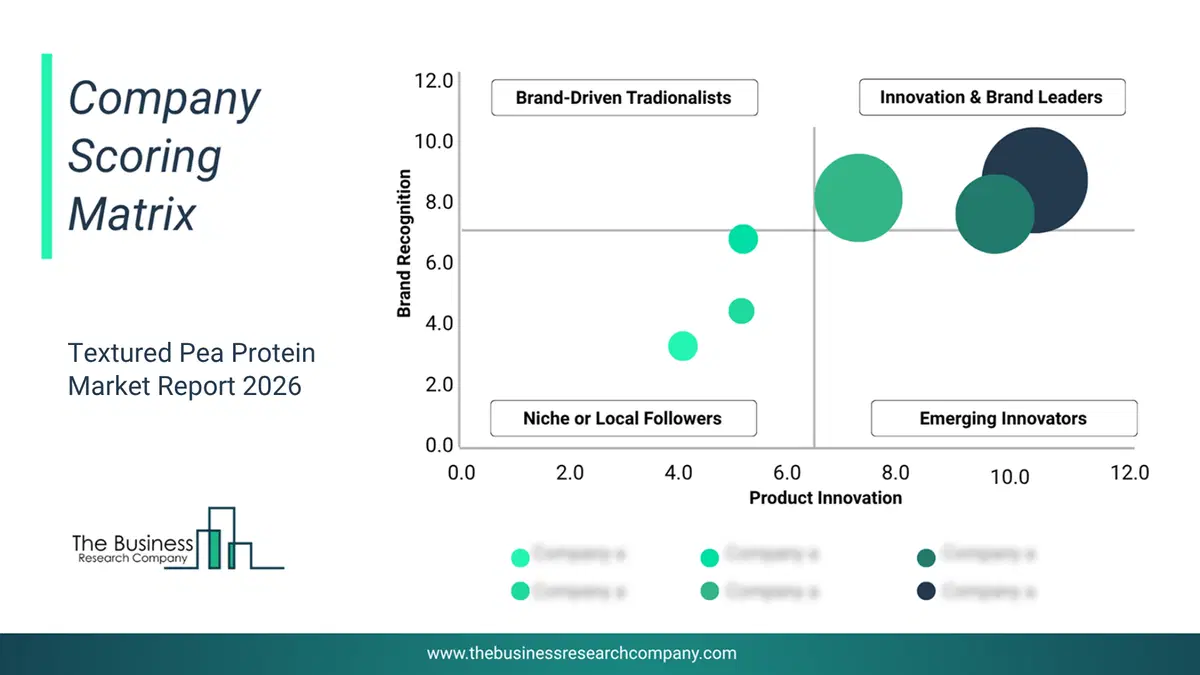
This chart maps companies by product innovation and brand strength, with bubble size indicating relative revenue, helping identify market leaders, challengers, and niche players. This is an illustrative chart; the full report provides a complete and accurate competitive analysis.
Global Textured Pea Protein Market Trends and Insights
Major companies operating in the textured pea protein market focus on product innovation, such as aligned fiber structure, which allows for a more realistic meat-like texture by mimicking the directional muscle fibers found in animal proteins. Aligned fiber structure refers to the arrangement of protein fibers in a parallel or directional way, like the way muscle fibers are aligned in meat, creating meat-like textures in plant-based proteins. For instance, in February 2025, Roquette, a France-based company that specializes in plant-based ingredients and solutions, introduced two new textured pea proteins, NUTRALYS T Pea 700FL and NUTRALYS® T Pea 700M, as part of its extended NUTRALYS pea protein range, designed to create meat-like textures in plant-based foods. These textured proteins feature an aligned fibrous structure to enhance chewiness and improve juiciness by enabling realistic meat-like products such as ground-style meat alternatives, meat-free chunks, and plant-based fillings or toppings.What Are Latest Mergers And Acquisitions In The Textured Pea Protein Market?
In June 2023, DCP Capita, a China-based private equity firm acquired Cargill Protein China of Cargill Incorporated for an undisclosed amount. With this acquisition, DCP Capita aims to enhance its operations and expand its market presence in China, addressing both local consumer demands and broader market challenges. Cargill Incorporated is a US-based provider of texture pea protein.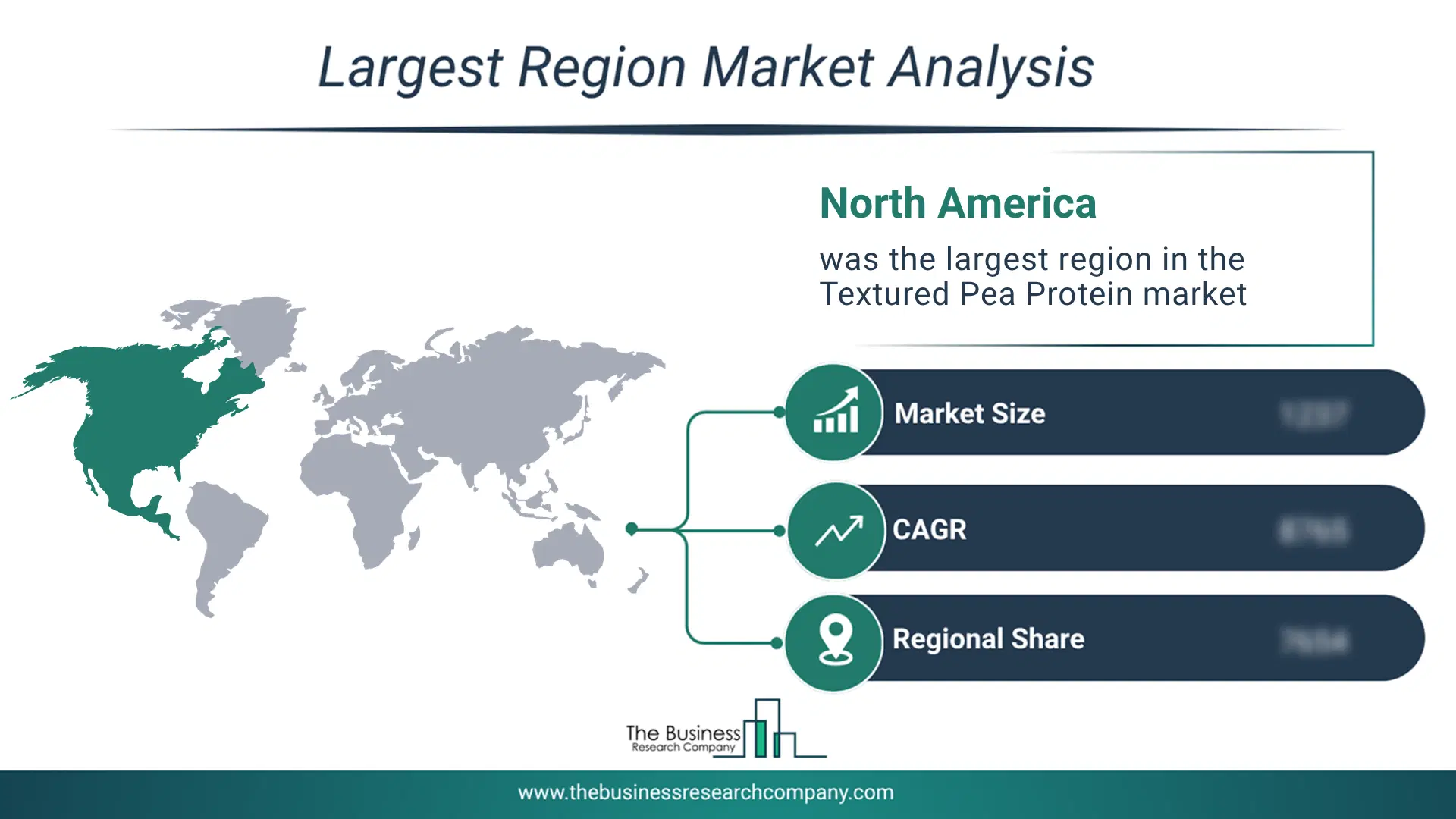
Regional Outlook
North America was the largest region in the textured pea protein market in 2025. Europe was the second-largest market in the textured pea protein market. The regions covered in this market report are Asia-Pacific, South East Asia, Western Europe, Eastern Europe, North America, South America, Middle East and Africa. The countries covered in this market report are Australia, Brazil, China, France, Germany, India, Indonesia, Japan, Taiwan, Russia, South Korea, UK, USA, Italy, Spain, CanadaWhat Defines the Textured Pea Protein Market?
The textured pea protein market consists of sales of green peas and yellow peas. Values in this market are ‘factory gate’ values, that is the value of goods sold by the manufacturers or creators of the goods, whether to other entities (including downstream manufacturers, wholesalers, distributors and retailers) or directly to end customers. The value of goods in this market includes related services sold by the creators of the goods.How is Market Value Defined and Measured?
The market value is defined as the revenues that enterprises gain from the sale of goods and/or services within the specified market and geography through sales, grants, or donations in terms of the currency (in USD unless otherwise specified). The revenues for a specified geography are consumption values that are revenues generated by organizations in the specified geography within the market, irrespective of where they are produced. It does not include revenues from resales along the supply chain, either further along the supply chain or as part of other products.
This chart presents market attractiveness based on a quantitative evaluation of growth, competition, strategic alignment, and risk, offering a clear view of opportunity areas for decision-making. This chart is for illustrative purposes; the full report contains the complete analysis.

This chart highlights the Total Addressable Market (TAM) by estimating the maximum revenue opportunity using an assumption-driven approach, supporting strategic planning and opportunity sizing across markets. The chart is illustrative; the full report provides a more comprehensive analysis.
What Key Data and Analysis Are Included in the Textured Pea Protein Market Report 2026?
The textured pea protein market research report is one of a series of new reports from The Business Research Company that provides market statistics, including industry global market size, regional shares, competitors with the market share, detailed market segments, market trends and opportunities, and any further data you may need to thrive in the textured pea protein industry. The market research report delivers a complete perspective of everything you need, with an in-depth analysis of the current and future state of the industry.Textured Pea Protein Market Report Forecast Analysis
| Report Attribute | Details |
|---|---|
| Market Size Value In 2026 | $0.75 billion |
| Revenue Forecast In 2030 | $1.08 billion |
| Growth Rate | CAGR of 9.4% from 2026 to 2030 |
| Base Year For Estimation | 2025 |
| Actual Estimates/Historical Data | 2020-2025 |
| Forecast Period | 2026 - 2030 |
| Market Representation | Revenue in USD Billion and CAGR from 2026 to 2030 |
| Segments Covered | Product Type, Nature, Processing Type, End Use |
| Regional Scope | Asia-Pacific, Western Europe, Eastern Europe, North America, South America, Middle East, Africa |
| Country Scope | The countries covered in the report are Australia, Brazil, China, France, Germany, India, Indonesia, Japan, Taiwan, Russia, South Korea, UK, USA, Canada, Italy, Spain. |
| Key Companies Profiled | Roquette Freres SA, Puris Foods LLC, Burcon NutraScience Corporation, Nisco ApS, Sotexpro SAS, Exeller NV, Vestkorn Milling AS, Nutri-Pea Ltd., Cosucra Groupe Warcoing SA, Scoular Grain Company, Axiom Foods Inc., Alliance Grain Traders Foods, DuPont Nutrition & Biosciences, Shandong Jianyuan Foods Co Ltd., Kerry Group plc, Emsland Group, Yantai Shuangta Food Co Ltd., Yantai Oriental Protein Tech Co Ltd., Shandong Zhaoyuan Food Company, Shandong Huatai Food Co Ltd., Ingredion Inc., Fenchem Inc., A&B Ingredients, Glanbia Nutritionals Plc, Prinova Group, Shaanxi Fuheng Biotechnology Co Ltd. |
| Customization Scope | Request for Customization |
| Pricing And Purchase Options | Explore Purchase Options |