

Allergic Rhinitis Drugs Market Report 2026
Global Outlook – By Disease (Seasonal Allergic Rhinitis, Perennial Allergic Rhinitis, Occupational Allergic Rhinitis), By Treatment (Antihistamines, Immunotherapy, Corticosteroids, Decongestants, Other Treatments), By Route Of Administration (Oral, Nasal, Intraocular), By Distribution Channel (Retail Pharmacies, Hospital Pharmacies, Online Channel) – Market Size, Trends, Strategies, and Forecast to 2030
Allergic Rhinitis Drugs Market Overview
• Allergic Rhinitis Drugs market size has reached to $16.26 billion in 2025 • Expected to grow to $20 billion in 2030 at a compound annual growth rate (CAGR) of 4.2% • Growth Driver: The Rise In Respiratory Disorders Fueling The Growth Of The Market Due To Increasing Allergen Exposure And Environmental Triggers • Market Trend: Advancements in Immune System Modulation for Allergies • Asia-Pacific was the largest region in 2025.What Is Covered Under Allergic Rhinitis Drugs Market?
Allergic rhinitis drugs refer to medications used to treat symptoms of allergic rhinitis, a condition characterized by inflammation of the nasal passages due to exposure to allergens such as pollen, dust, mold, or animal dander. These drugs help to relieve symptoms such as sneezing, itching, nasal congestion, and a runny nose. The main types of diseases covered by allergic rhinitis drugs are seasonal allergic rhinitis, perennial allergic rhinitis, and occupational allergic rhinitis. Seasonal allergic rhinitis, commonly known as hay fever, occurs at specific times of the year when certain allergens, such as pollen from trees, grasses, or weeds, are in the air. The different treatments involved are antihistamines, immunotherapy, corticosteroids, decongestants, and other treatments. The different routes of administration include oral, nasal, intraocular, and intravenous. The various distribution channels involve retail pharmacies, hospital pharmacies, and online channels.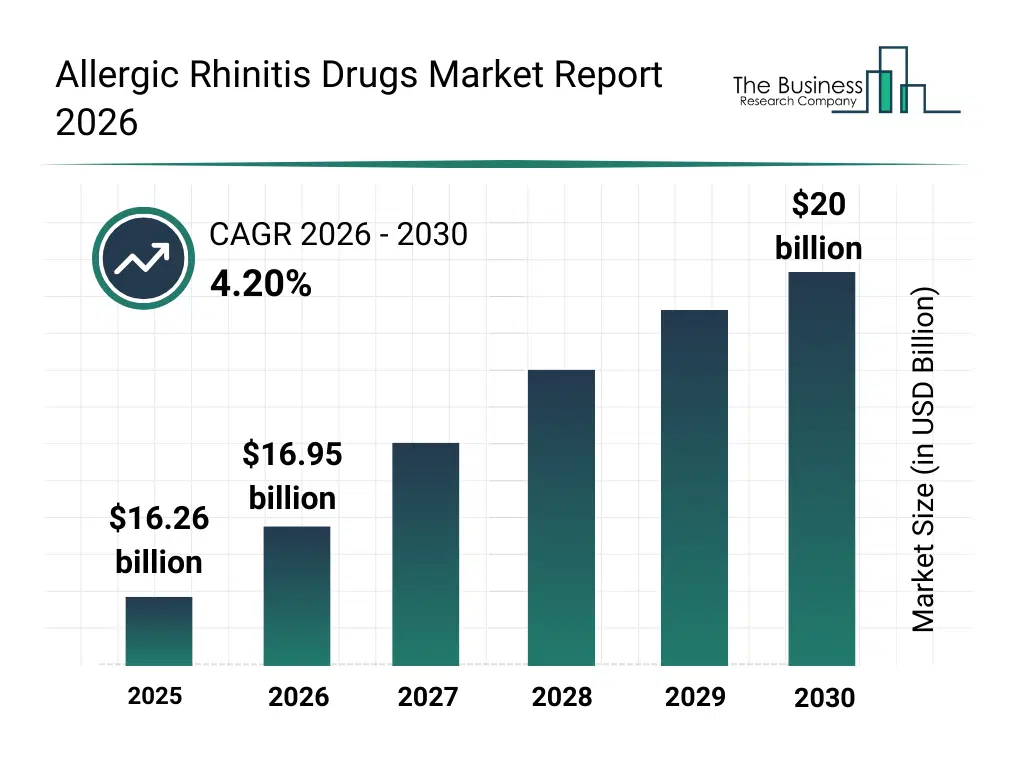
What Is The Allergic Rhinitis Drugs Market Size and Share 2026?
The allergic rhinitis drugs market size has grown steadily in recent years. It will grow from $16.26 billion in 2025 to $16.95 billion in 2026 at a compound annual growth rate (CAGR) of 4.2%. The growth in the historic period can be attributed to increasing prevalence of seasonal and perennial allergic rhinitis, limited awareness and accessibility to allergy treatments, reliance on conventional antihistamines and corticosteroids, rising environmental allergens and pollution levels, growing urban population with higher exposure to allergens.What Is The Allergic Rhinitis Drugs Market Growth Forecast?
The allergic rhinitis drugs market size is expected to see steady growth in the next few years. It will grow to $20 billion in 2030 at a compound annual growth rate (CAGR) of 4.2%. The growth in the forecast period can be attributed to advancements in biologics and immunotherapy, growing adoption of digital health platforms for allergy management, increased R&D in pediatric and precision medicine, expansion of e-commerce and online pharmacy channels, rising government initiatives promoting allergy awareness and early diagnosis. Major trends in the forecast period include rise of personalized allergy treatments, growth of biologic-based allergic rhinitis drugs, expansion of online pharmacies and e-pharmacy platforms, increasing focus on pediatric allergic rhinitis management, adoption of non-steroidal anti-inflammatory therapies.
Global Allergic Rhinitis Drugs Market Segmentation
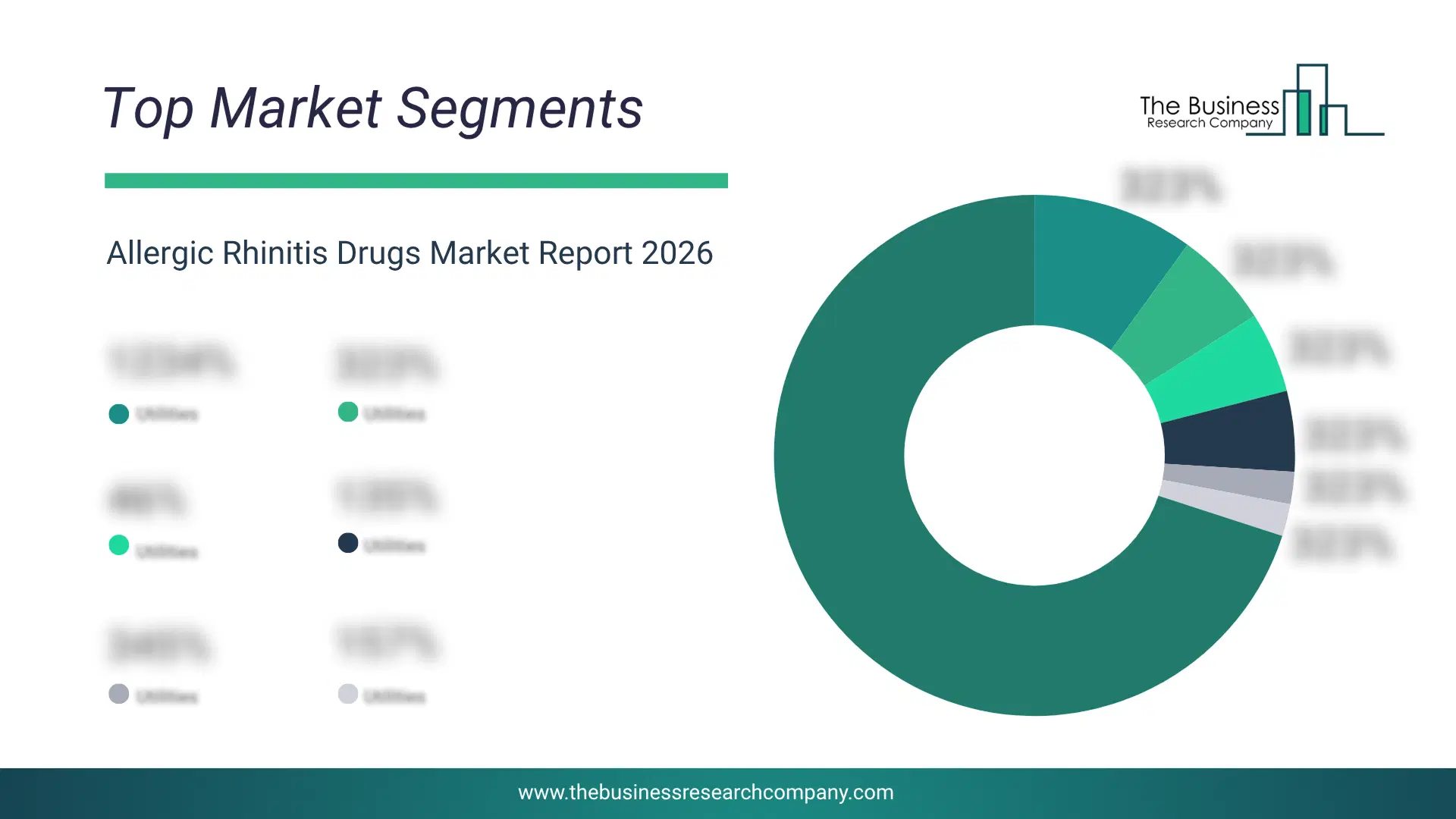
1) By Disease: Seasonal Allergic Rhinitis, Perennial Allergic Rhinitis, Occupational Allergic Rhinitis 2) By Treatment: Antihistamines, Immunotherapy, Corticosteroids, Decongestants, Other Treatments 3) By Route Of Administration: Oral, Nasal, Intraocular 4) By Distribution Channel: Retail Pharmacies, Hospital Pharmacies, Online Channel Subsegments: 1) By Seasonal Allergic Rhinitis: Hay Fever, Pollen Allergy, Spring And Summer Allergies 2) By Perennial Allergic Rhinitis: Dust Mite Allergy, Pet Dander Allergy, Mold Allergy 3) By Occupational Allergic Rhinitis: Chemical Exposure Allergies, Occupational Dust And Fume Allergies, Allergies Related To Specific Work EnvironmentsWhat Is The Driver Of The Allergic Rhinitis Drugs Market?
The growing burden of respiratory disorders is expected to boost the growth of the allergic rhinitis drug market going forward. Respiratory disorders, such as asthma, are chronic conditions affecting the lungs and airways, and their prevalence is rising due to factors including worsening air pollution, higher levels of airborne allergens, and climate-related environmental changes. Respiratory disorders are rising due to increasing air pollution, which damages lung tissue and triggers chronic respiratory conditions, leading to higher incidence of diseases like asthma and COPD worldwide. Allergic rhinitis drugs help respiratory disorders by reducing nasal inflammation and congestion, which improves airflow and eases breathing, thereby preventing complications in the lower respiratory tract. For instance, in January 2025, according to the Centers for Disease Control and Prevention (CDC), a US-based federal agency, approximately 81.7% of U.S. adults had current asthma based on data from the 2023 Behavioral Risk Factor Surveillance System Asthma Call-Back Survey (ACBS). Therefore, the increasing prevalence of respiratory disorders is driving the growth of the allergic rhinitis drug industry.Key Players In The Global Allergic Rhinitis Drugs Market
Major companies operating in the allergic rhinitis drugs market are Pfizer Inc., Johnson & Johnson, Merck & Co., Bayer AG, Sanofi SA, AstraZeneca plc, Novartis AG, GlaxoSmithKline PLC, Boehringer Ingelheim International GmbH, Viatris Inc., Teva Pharmaceutical Industries Ltd., Regeneron Pharmaceuticals Inc., Bausch Health Companies Inc., Sun Pharmaceuticals Industries Ltd., Perrigo Company plc, Dr. Reddy’s Laboratories, Apotex Inc., Meda AB, Amneal Pharmaceuticals Inc., Glenmark Pharmaceuticals Ltd, ALK-Abelló A/S, Stallergenes Greer plc, Himalaya Wellness Company, Aytu BioPharma Inc., Allergy Therapeutics PLC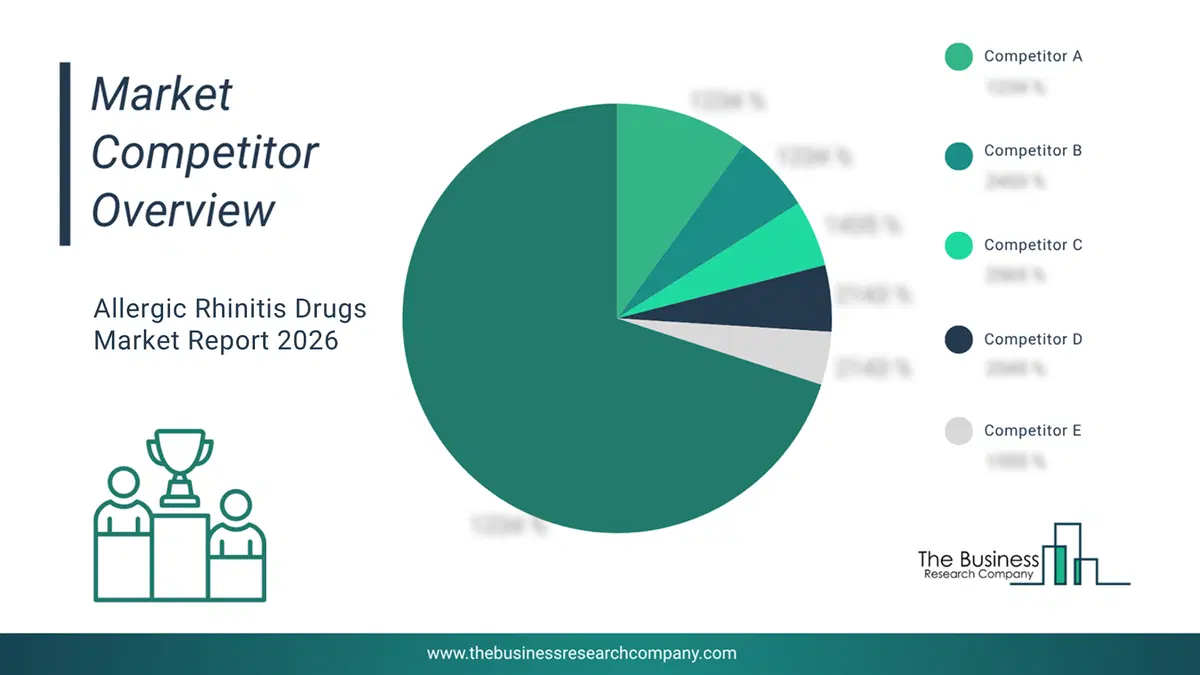
This chart is for illustrative purposes; the full report includes a detailed competitor analysis and comprehensive overview of the top 10 companies in the market.
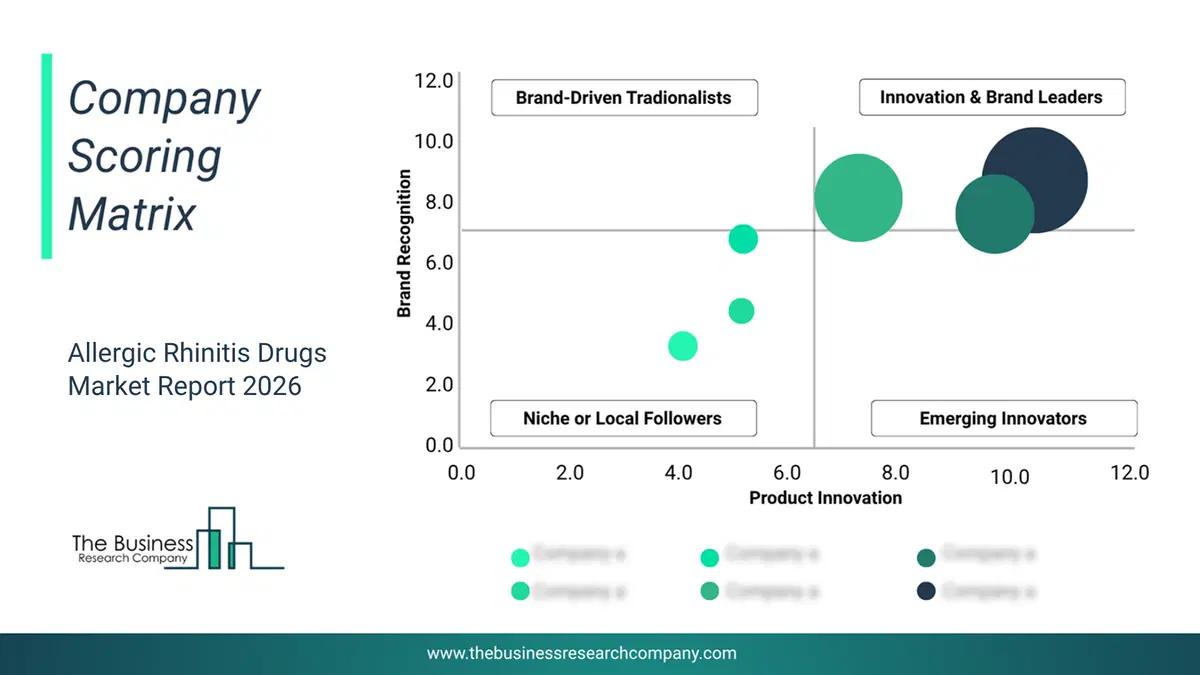
This chart maps companies by product innovation and brand strength, with bubble size indicating relative revenue, helping identify market leaders, challengers, and niche players. This is an illustrative chart; the full report provides a complete and accurate competitive analysis.
Global Allergic Rhinitis Drugs Market Trends and Insights
Major companies in the Allergic Rhinitis Drugs market are focusing on developing innovative products, such as novel probiotics, to enhance immune responses and reduce allergy symptoms effectively. Novel probiotics are being explored for their ability to modulate the immune system and reduce allergic rhinitis symptoms. By promoting a balanced gut microbiome, they offer a potential natural alternative to traditional treatments. For instance, in March 2024, Entod Pharma, an India-based pharmaceutical company, launched Lactoshield RH for the management of nasal allergies, including allergic rhinitis. This product combines clinically evaluated probiotic strains that aim to stabilize intestinal flora and modulate immune responses, potentially alleviating symptoms associated with nasal allergies.What Are Latest Mergers And Acquisitions In The Allergic Rhinitis Drugs Market?
In November 2024, CBC Group, a Singapore-based healthcare investment firm, and Mubadala Investment Company, an Abu Dhabi–based sovereign investor, acquired the UCB's mature neurology and allergy product portfolio for $680 million. Through this acquisition, the buyers aim to expand their presence in the CNS and allergy therapeutics market by integrating established brands such as Zyrtec and Xyzal and leveraging UCB’s commercial footprint in China. Union Chimique Belge is a Belgium-based biopharmaceutical company specializing in innovative treatments for immunology and neurology disorders.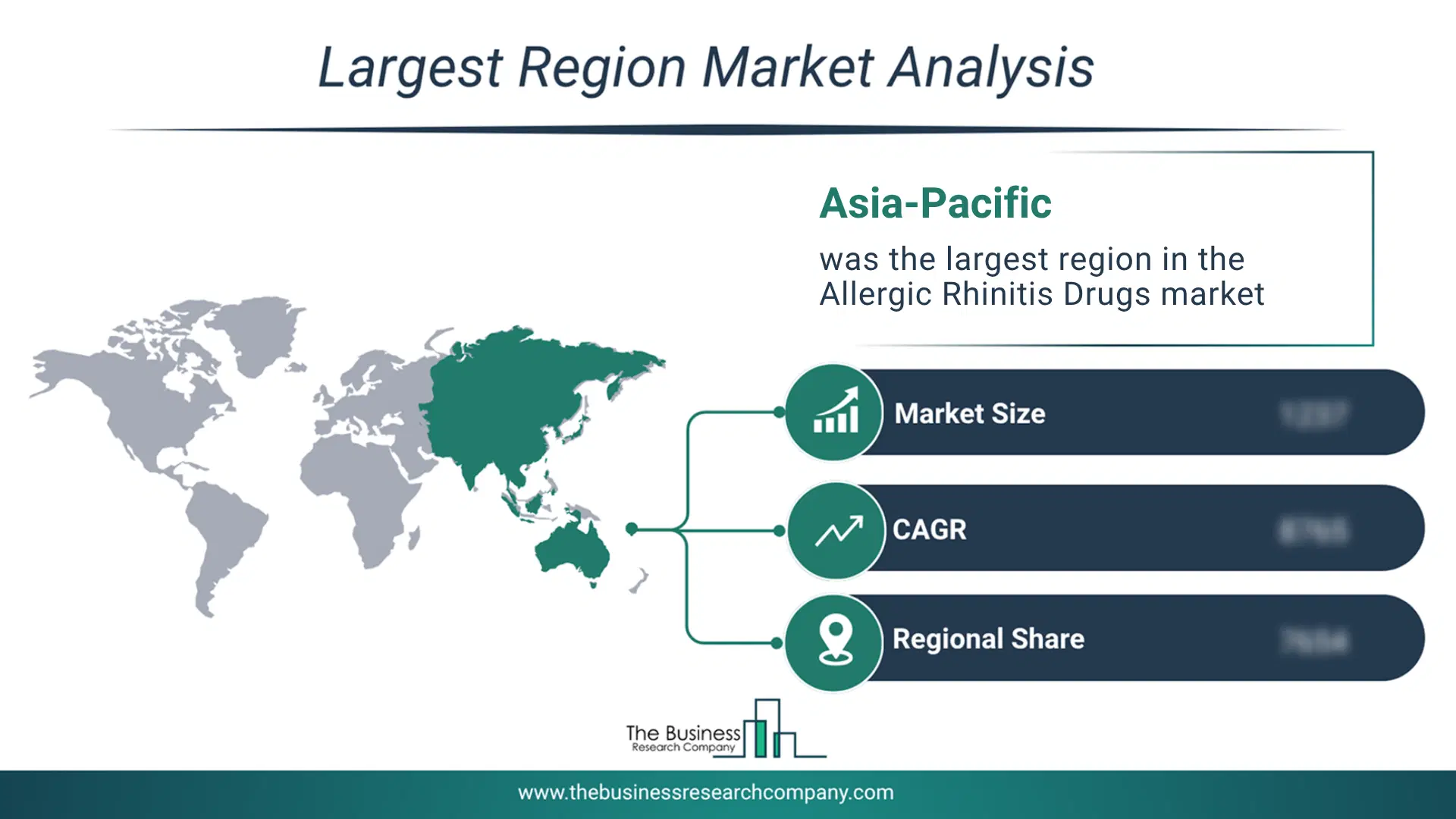
Regional Insights
Asia-Pacific was the largest region in the allergic rhinitis drugs market in 2025. The regions covered in this market report are Asia-Pacific, South East Asia, Western Europe, Eastern Europe, North America, South America, Middle East, Africa. The countries covered in this market report are Australia, Brazil, China, France, Germany, India, Indonesia, Japan, Taiwan, Russia, South Korea, UK, USA, Canada, Italy, Spain.What Defines the Allergic Rhinitis Drugs Market?
The allergic rhinitis drugs market consists of sales of mast cell stabilizers, drops, and saline nasal sprays. Values in this market are ‘factory gate’ values, that is the value of goods sold by the manufacturers or creators of the goods, whether to other entities (including downstream manufacturers, wholesalers, distributors, and retailers) or directly to end customers. The value of goods in this market includes related services sold by the creators of the goods.How is Market Value Defined and Measured?
The market value is defined as the revenues that enterprises gain from the sale of goods and/or services within the specified market and geography through sales, grants, or donations in terms of the currency (in USD unless otherwise specified). The revenues for a specified geography are consumption values that are revenues generated by organizations in the specified geography within the market, irrespective of where they are produced. It does not include revenues from resales along the supply chain, either further along the supply chain or as part of other products.
This chart presents market attractiveness based on a quantitative evaluation of growth, competition, strategic alignment, and risk, offering a clear view of opportunity areas for decision-making. This chart is for illustrative purposes; the full report contains the complete analysis.

This chart highlights the Total Addressable Market (TAM) by estimating the maximum revenue opportunity using an assumption-driven approach, supporting strategic planning and opportunity sizing across markets. The chart is illustrative; the full report provides a more comprehensive analysis.
What Key Data and Analysis Are Included in the Allergic Rhinitis Drugs Market Report 2026?
The allergic rhinitis drugs market research report is one of a series of new reports from The Business Research Company that provides market statistics, including industry global market size, regional shares, competitors with the market share, detailed market segments, market trends and opportunities, and any further data you may need to thrive in the allergic rhinitis drugs industry. The market research report delivers a complete perspective of everything you need, with an in-depth analysis of the current and future state of the industry.Allergic Rhinitis Drugs Market Report Forecast Analysis
| Report Attribute | Details |
|---|---|
| Market Size Value In 2026 | $16.95 billion |
| Revenue Forecast In 2030 | $20 billion |
| Growth Rate | CAGR of 4.2% from 2026 to 2030 |
| Base Year For Estimation | 2025 |
| Actual Estimates/Historical Data | 2020-2025 |
| Forecast Period | 2026 - 2030 |
| Market Representation | Revenue in USD Billion and CAGR from 2026 to 2030 |
| Segments Covered | Disease, Treatment, Route Of Administration, Distribution Channel |
| Regional Scope | Asia-Pacific, Western Europe, Eastern Europe, North America, South America, Middle East, Africa |
| Country Scope | The countries covered in the report are Australia, Brazil, China, France, Germany, India, Indonesia, Japan, Taiwan, Russia, South Korea, UK, USA, Canada, Italy, Spain. |
| Key Companies Profiled | Pfizer Inc., Johnson & Johnson, Merck & Co., Bayer AG, Sanofi SA, AstraZeneca plc, Novartis AG, GlaxoSmithKline PLC, Boehringer Ingelheim International GmbH, Viatris Inc., Teva Pharmaceutical Industries Ltd., Regeneron Pharmaceuticals Inc., Bausch Health Companies Inc., Sun Pharmaceuticals Industries Ltd., Perrigo Company plc, Dr. Reddy’s Laboratories, Apotex Inc., Meda AB, Amneal Pharmaceuticals Inc., Glenmark Pharmaceuticals Ltd, ALK-Abelló A/S, Stallergenes Greer plc, Himalaya Wellness Company, Aytu BioPharma Inc., Allergy Therapeutics PLC |
| Customization Scope | Request for Customization |
| Pricing And Purchase Options | Explore Purchase Options |