
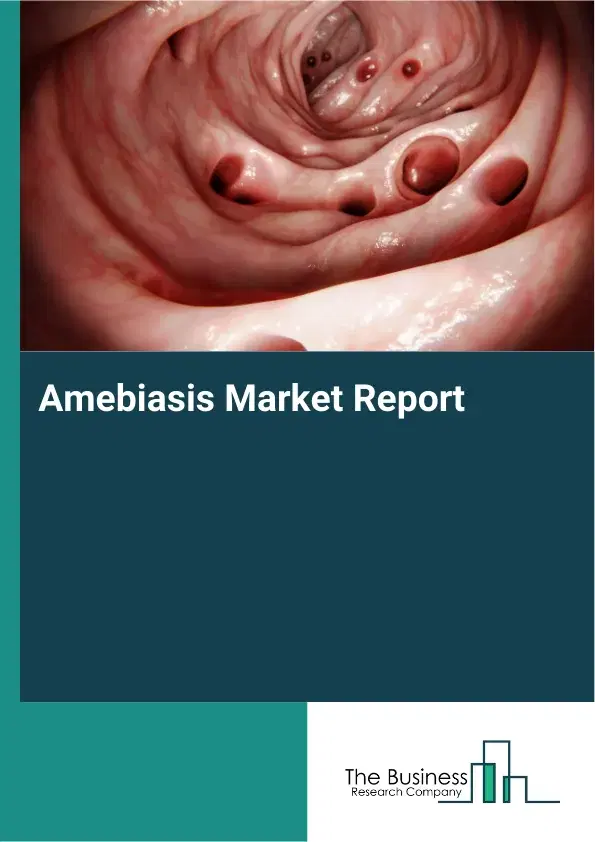
Amebiasis Market Report 2026
Global Outlook – By Type (Metronidazole, Paromomycin, Tinidazole), By Route Of Administration (Oral, Intravenous), By Application (Hospital, Pharmacy) - Market Size, Trends, Strategies, and Forecast to 2030
Amebiasis Market Overview
• Amebiasis market size has reached to $0.88 billion in 2025 • Expected to grow to $1.2 billion in 2030 at a compound annual growth rate (CAGR) of 6.4% • Growth Driver: Rising Parasitic Infections Are Driving The Market Due To Worsening Sanitation Conditions And Transmission Risks • Market Trend: Development Of Ready-To-Use Oral Liquid Metronidazole In The Market • North America was the largest region in 2025 and Asia-Pacific is the fastest growing region.What Is Covered Under Amebiasis Market?
Amebiasis refers to an intestinal infection caused by the parasite Entamoeba histolytica, often leading to symptoms such as diarrhea, abdominal pain, and sometimes liver abscesses. It is used for the treatment of this infection through medications such as metronidazole and tinidazole, which target the parasite in the gut and tissues. The main drug types used in amebiasis treatment are metronidazole, paromomycin, and tinidazole. Metronidazole is an antibiotic that kills certain bacteria and parasites by disrupting their DNA, effectively treating infections such as amebiasis. Various types of routes of administration include those such as oral and intravenous and are used in applications such as hospitals and pharmacies.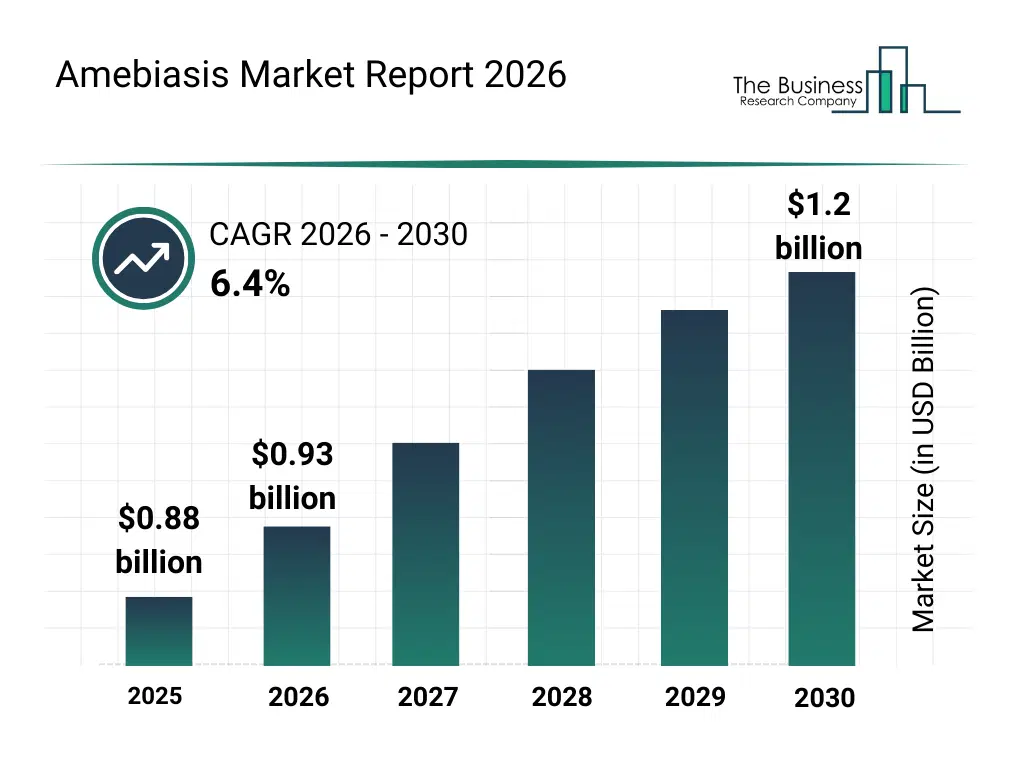
What Is The Amebiasis Market Size and Share 2026?
The amebiasis market size has grown strongly in recent years. It will grow from $0.88 billion in 2025 to $0.93 billion in 2026 at a compound annual growth rate (CAGR) of 6.6%. The growth in the historic period can be attributed to prevalence of poor sanitation conditions, limited access to clean drinking water, reliance on metronidazole-based treatments, expansion of public health programs, availability of generic antiparasitic drugs.What Is The Amebiasis Market Growth Forecast?
The amebiasis market size is expected to see strong growth in the next few years. It will grow to $1.2 billion in 2030 at a compound annual growth rate (CAGR) of 6.4%. The growth in the forecast period can be attributed to increasing investments in infectious disease control, rising demand for improved diagnostic tools, expansion of healthcare access in developing regions, growing focus on antimicrobial resistance management, advancement in targeted antiparasitic therapies. Major trends in the forecast period include increasing availability of combination drug therapies, rising focus on early diagnosis and treatment, expansion of oral antiparasitic medications, growing awareness of waterborne diseases, enhanced access to essential medicines.
Global Amebiasis Market Segmentation
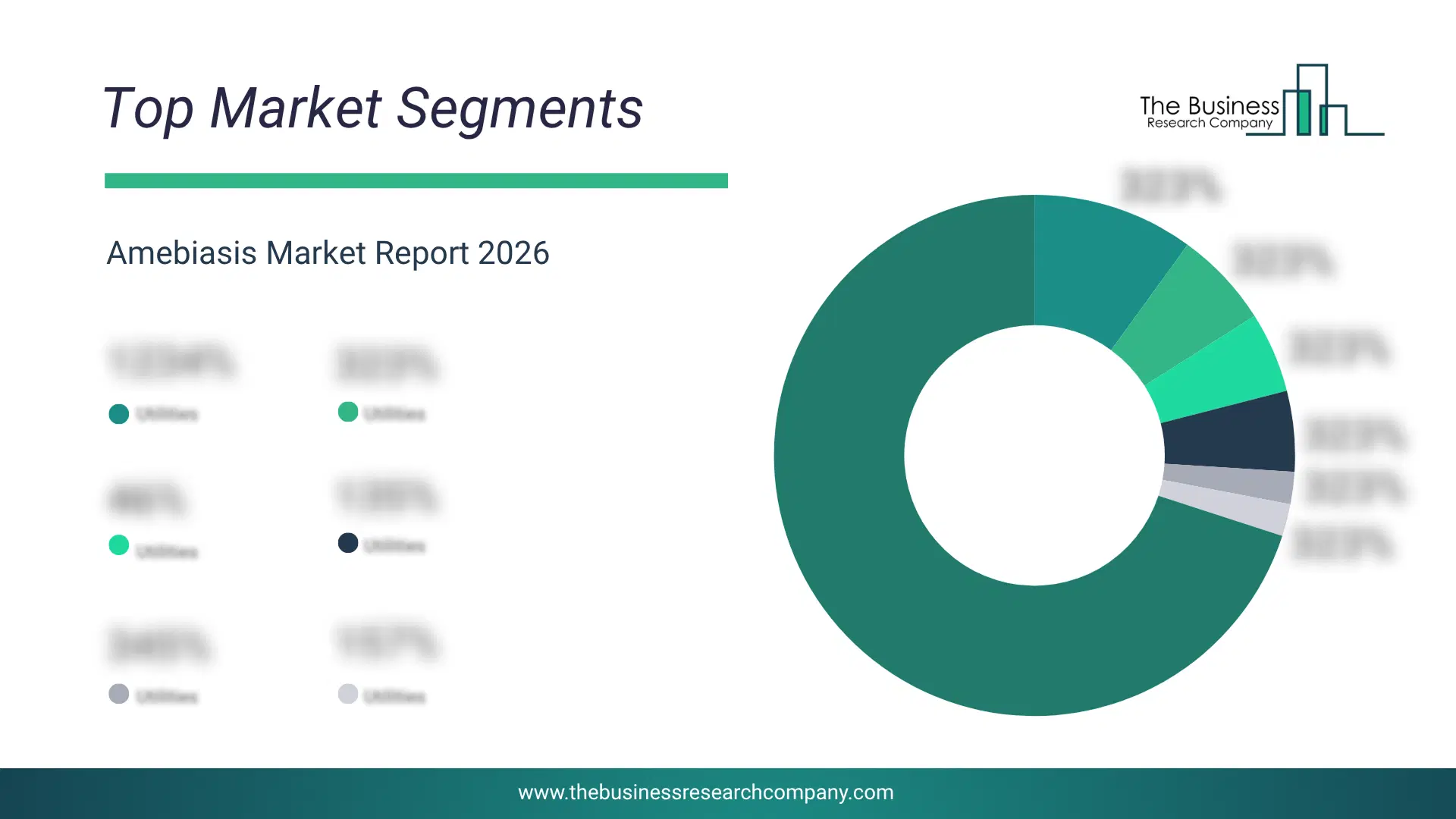
1) By Type: Metronidazole, Paromomycin, Tinidazole 2) By Route Of Administration: Oral, Intravenous 3) By Application: Hospital, Pharmacy Subsegments: 1) By Metronidazole: Oral Metronidazole, Intravenous Metronidazole, Combination Therapy with Metronidazole 2) By Paromomycin: Oral Paromomycin, Paromomycin in Combination with Other Drugs 3) By Tinidazole: Oral Tinidazole, Tinidazole for Severe InfectionsWhat Are The Drivers Of The Amebiasis Market?
The rising parasitic infections are expected to propel the growth of the amebiasis market going forward. Parasitic infections are illnesses caused by protozoa, helminths, or ectoparasites that invade and proliferate within human hosts, leading to a wide range of gastrointestinal, systemic, or tissue-specific disorders. A primary factor driving rising parasitic infections is inadequate sanitation, as limited access to clean water and proper waste management facilitates the environmental survival and transmission of parasites, thereby increasing the risk of exposure in affected communities. Amebiasis treatment supports efforts to reduce the growing burden of parasitic infections by enabling timely diagnosis and effective therapeutic management, which helps disrupt transmission cycles and prevent progression to severe disease. For instance, in February 2025, according to the Centers for Disease Control and Prevention (CDC), a US-based nation's health protection agency, approximately 100 million amebiasis cases occur globally each year mainly in developing regions with roughly 90% remaining asymptomatic, thereby sustaining ongoing community transmission. Therefore, the rising parasitic infections are driving the growth of the amebiasis industry. The rising prevalence of poor sanitation is expected to propel the growth of the amebiasis market going forward. Poor sanitation refers to inadequate access to safely managed toilets, clean water, and basic hygiene facilities, which significantly increases the risk of parasitic infections such as Entamoeba histolytica. The increase in sanitation gaps is driven by factors such as insufficient infrastructure, rapid urbanization, and limited access to clean water, all of which contribute to the persistence and spread of these infections. Amebiasis causes a spectrum of intestinal and extra-intestinal complications, including diarrhea, abdominal pain, and liver abscesses, leading to substantial morbidity and mortality. For instance, in March 2023, according to the United Nations Children's Fund (UNICEF), a US-based United Nations agency, an estimated 3.6 billion people still lack safe household sanitation, with 1.8 billion lacking access to safe drinking water, and these conditions contribute to roughly 829,000 annual deaths linked to unsafe water, inadequate sanitation, and poor hygiene. Therefore, the rising prevalence of poor sanitation is driving the growth of the amebiasis industry.Key Players In The Global Amebiasis Market
Major companies operating in the amebiasis market are Pfizer Inc., Merck & Co. Inc., Sanofi SA, AbbVie Inc., Bristol-Myers Squibb Company, Novartis AG, F. Hoffmann-La Roche Ltd, Eli Lilly and Company, Takeda Pharmaceutical Company Limited, Boehringer Ingelheim International GmbH, Teva Pharmaceutical Industries Ltd., Cipla Limited, Lupin Limited, Zydus Lifesciences Limited, Hikma Pharmaceuticals PLC, Sun Pharmaceutical Industries Limited, Alkem Laboratories Limited, Aurobindo Pharma Limited, Dr. Reddy’s Laboratories Limited, Mylan NV, Glenmark Pharmaceuticals Limited, Torrent Pharmaceuticals Limited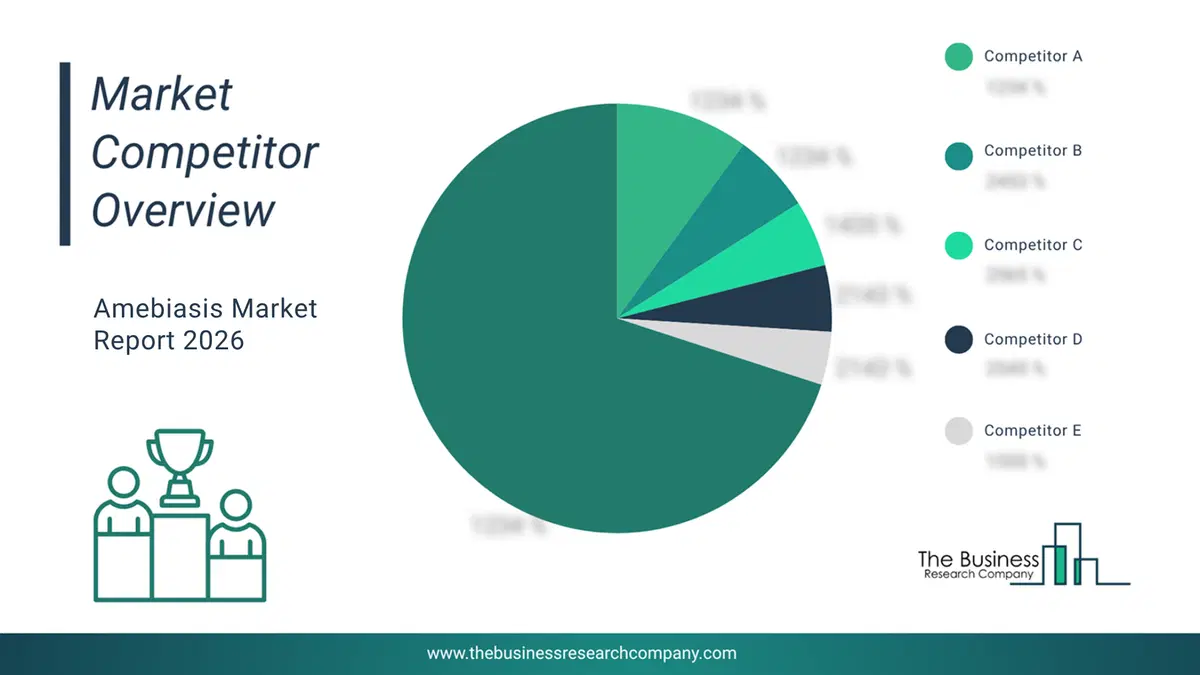
This chart is for illustrative purposes; the full report includes a detailed competitor analysis and comprehensive overview of the top 10 companies in the market.
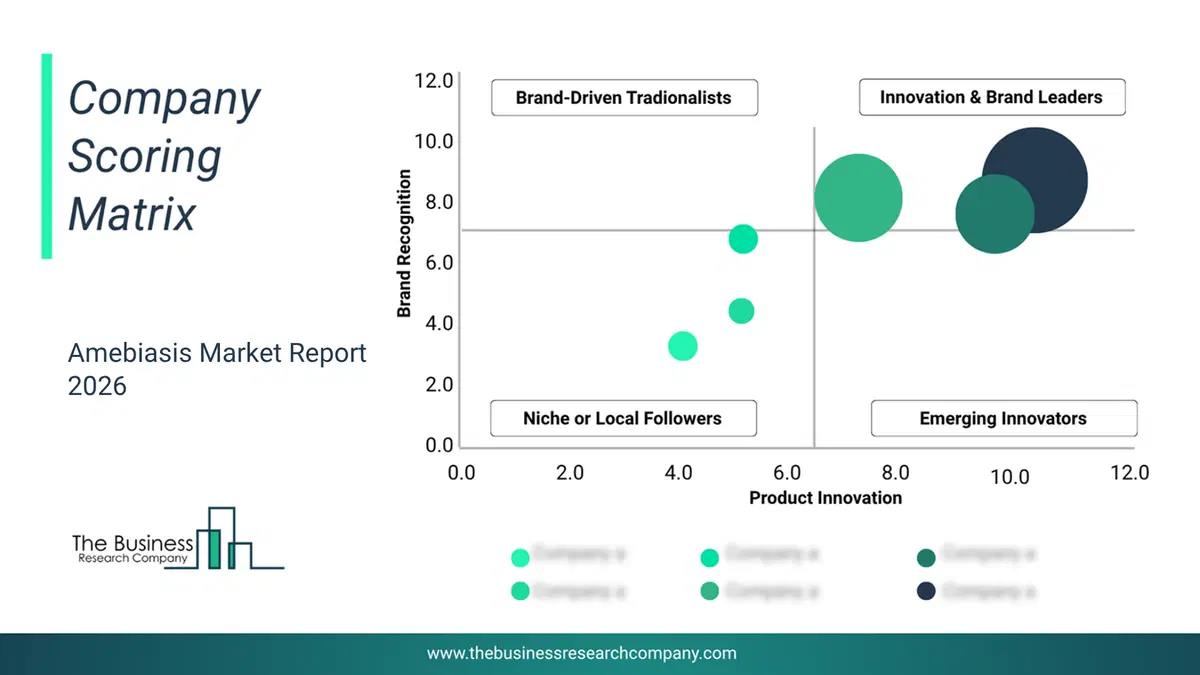
This chart maps companies by product innovation and brand strength, with bubble size indicating relative revenue, helping identify market leaders, challengers, and niche players. This is an illustrative chart; the full report provides a complete and accurate competitive analysis.
Global Amebiasis Market Trends and Insights
Major companies operating in the amebiasis market are focusing on developing advanced solutions, such as ready-to-use oral liquid metronidazole, to improve patient compliance and treatment efficacy. Ready-to-use oral liquid metronidazole is a pre-prepared liquid form of the antibiotic used to treat infections like amebiasis, making it easier for patients who have trouble swallowing pills. For instance, in November 2023, Kesin Pharma Corporation, a US-based pharmaceutical company, received approval from the U.S. Food and Drug Administration for Likmez (metronidazole) oral suspension, 500 mg/5 mL, marking it as the first ready-to-use oral liquid formulation of metronidazole. The oral suspension formulation provides a pediatric-friendly option, making it easier for children to take the medication with accurate dosing, ensuring better adherence to treatment protocols. The liquid form offers flexibility in dosing, allowing healthcare providers to adjust treatment based on individual patient needs, particularly for varying infection severity.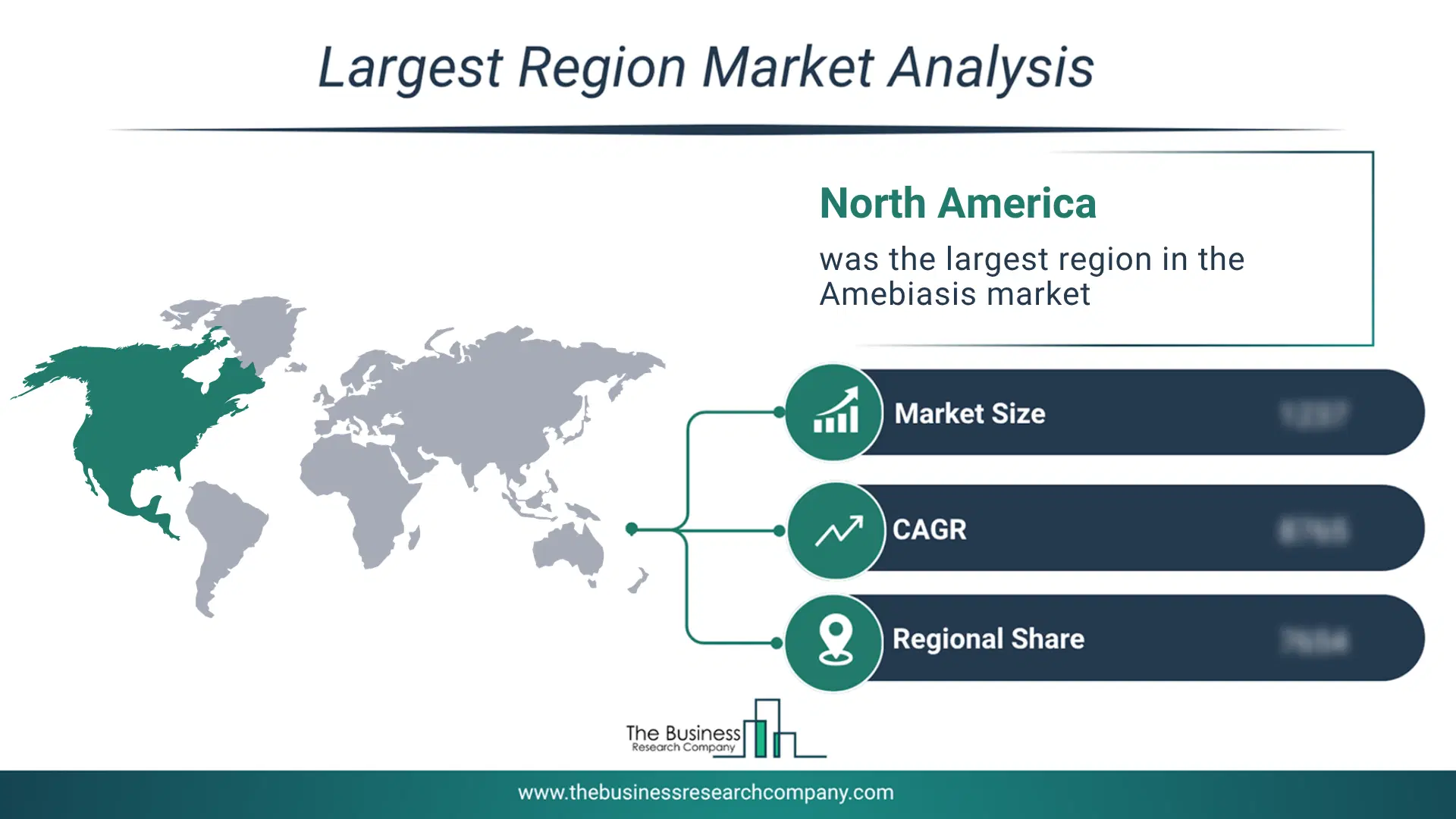
Regional Outlook
North America was the largest region in the amebiasis market in 2025. Asia-Pacific is expected to be the fastest-growing region in the forecast period. The regions covered in this market report are Asia-Pacific, South East Asia, Western Europe, Eastern Europe, North America, South America, Middle East, Africa. The countries covered in this market report are Australia, Brazil, China, France, Germany, India, Indonesia, Japan, Taiwan, Russia, South Korea, UK, USA, Canada, Italy, Spain.What Defines the Amebiasis Market?
The amebiasis market includes revenues earned by entities by providing services such as medical consultation and treatment management, vaccination and preventive services, pharmaceutical services, and diagnostic testing services. The market value includes the value of related goods sold by the service provider or included within the service offering. The amebiasis market also includes sales of antiprotozoal medications, diagnostic kits, vaccines, and probiotics. Values in this market are ‘factory gate’ values, that is the value of goods sold by the manufacturers or creators of the goods, whether to other entities (including downstream manufacturers, wholesalers, distributors and retailers) or directly to end customers. The value of goods in this market includes related services sold by the creators of the goods.How is Market Value Defined and Measured?
The market value is defined as the revenues that enterprises gain from the sale of goods and/or services within the specified market and geography through sales, grants, or donations in terms of the currency (in USD unless otherwise specified). The revenues for a specified geography are consumption values that are revenues generated by organizations in the specified geography within the market, irrespective of where they are produced. It does not include revenues from resales along the supply chain, either further along the supply chain or as part of other products.
This chart presents market attractiveness based on a quantitative evaluation of growth, competition, strategic alignment, and risk, offering a clear view of opportunity areas for decision-making. This chart is for illustrative purposes; the full report contains the complete analysis.

This chart highlights the Total Addressable Market (TAM) by estimating the maximum revenue opportunity using an assumption-driven approach, supporting strategic planning and opportunity sizing across markets. The chart is illustrative; the full report provides a more comprehensive analysis.
What Key Data and Analysis Are Included in the Amebiasis Market Report 2026?
The amebiasis market research report is one of a series of new reports from The Business Research Company that provides market statistics, including industry global market size, regional shares, competitors with the market share, detailed market segments, market trends and opportunities, and any further data you may need to thrive in the amebiasis industry. The market research report delivers a complete perspective of everything you need, with an in-depth analysis of the current and future state of the industry.Amebiasis Market Report Forecast Analysis
| Report Attribute | Details |
|---|---|
| Market Size Value In 2026 | $0.93 billion |
| Revenue Forecast In 2030 | $1.2 billion |
| Growth Rate | CAGR of 6.4% from 2026 to 2030 |
| Base Year For Estimation | 2025 |
| Actual Estimates/Historical Data | 2020-2025 |
| Forecast Period | 2026 - 2030 |
| Market Representation | Revenue in USD Billion and CAGR from 2026 to 2030 |
| Segments Covered | Type, Route Of Administration, Application |
| Regional Scope | Asia-Pacific, Western Europe, Eastern Europe, North America, South America, Middle East, Africa |
| Country Scope | The countries covered in the report are Australia, Brazil, China, France, Germany, India, Indonesia, Japan, Taiwan, Russia, South Korea, UK, USA, Canada, Italy, Spain |
| Key Companies Profiled | Pfizer Inc., Merck & Co. Inc., Sanofi SA, AbbVie Inc., Bristol-Myers Squibb Company, Novartis AG, F. Hoffmann-La Roche Ltd, Eli Lilly and Company, Takeda Pharmaceutical Company Limited, Boehringer Ingelheim International GmbH, Teva Pharmaceutical Industries Ltd., Cipla Limited, Lupin Limited, Zydus Lifesciences Limited, Hikma Pharmaceuticals PLC, Sun Pharmaceutical Industries Limited, Alkem Laboratories Limited, Aurobindo Pharma Limited, Dr. Reddy’s Laboratories Limited, Mylan NV, Glenmark Pharmaceuticals Limited, Torrent Pharmaceuticals Limited |
| Customization Scope | Request for Customization |
| Pricing And Purchase Options | Explore Purchase Options |