

Anti-Allergy Medicine Market Report 2026
Global Outlook – By Drug Class (Antihistamines, Corticosteroids, Decongestants, Leukotriene Inhibitors, Mast Cell Stabilizers, Other Drug Classes), By Type Of Allergy (Seasonal Allergies, Perennial Allergies, Food Allergies, Skin Allergies, Insect Sting Allergies), By Formulation (Tablets, Capsules, Syrups, Nasal Sprays, Eye Drops, Injectables), By Application (Online Pharmacy, Hospital, Offline Pharmacy, Clinic, Other Applications), By End User (Children, Adults, Geriatric Population, Pregnant Women) – Market Size, Trends, Strategies, and Forecast to 2030
Anti-Allergy Medicine Market Overview
• Anti-Allergy Medicine market size has reached to $42.25 billion in 2025 • Expected to grow to $63.27 billion in 2030 at a compound annual growth rate (CAGR) of 8.3% • Growth Driver: Growing Prevalence Of Allergies Fueling The Growth Of The Market Due To Rising Environmental Pollution And Increasing Asthma Cases • Market Trend: Targeted Allergy Therapy Gains Approval For Adolescent And Adult Use • North America was the largest region in 2025 and Asia-Pacific is the fastest growing region.What Is Covered Under Anti-Allergy Medicine Market?
Anti-allergy medicine refers to a broad category of pharmaceutical products designed to prevent or alleviate the symptoms caused by allergic reactions by targeting the immune system’s response to allergens such as pollen, dust, pet dander, insect stings, or certain foods and medications. These medicines help reduce symptoms such as sneezing, itching, runny nose, hives, and watery eyes and reduce discomfort caused by allergens. The main drug classes of anti-allergy medicine include antihistamines, corticosteroids, decongestants, leukotriene inhibitors, mast cell stabilizers, and others. Antihistamines are medications that help relieve allergy symptoms by blocking the effects of histamine, a chemical released by the immune system during allergic reactions. It is used to treat different types of allergies, including seasonal allergies, perennial allergies, food allergies, skin allergies, and insect sting allergies, and is divided by formulation into tablets, capsules, syrups, nasal sprays, eye drops, and injectables. Anti-allergy medicine is categorized by application into online pharmacy, hospital, offline pharmacy, clinic, and others, serving various end users such as children, adults, geriatric population, and pregnant women.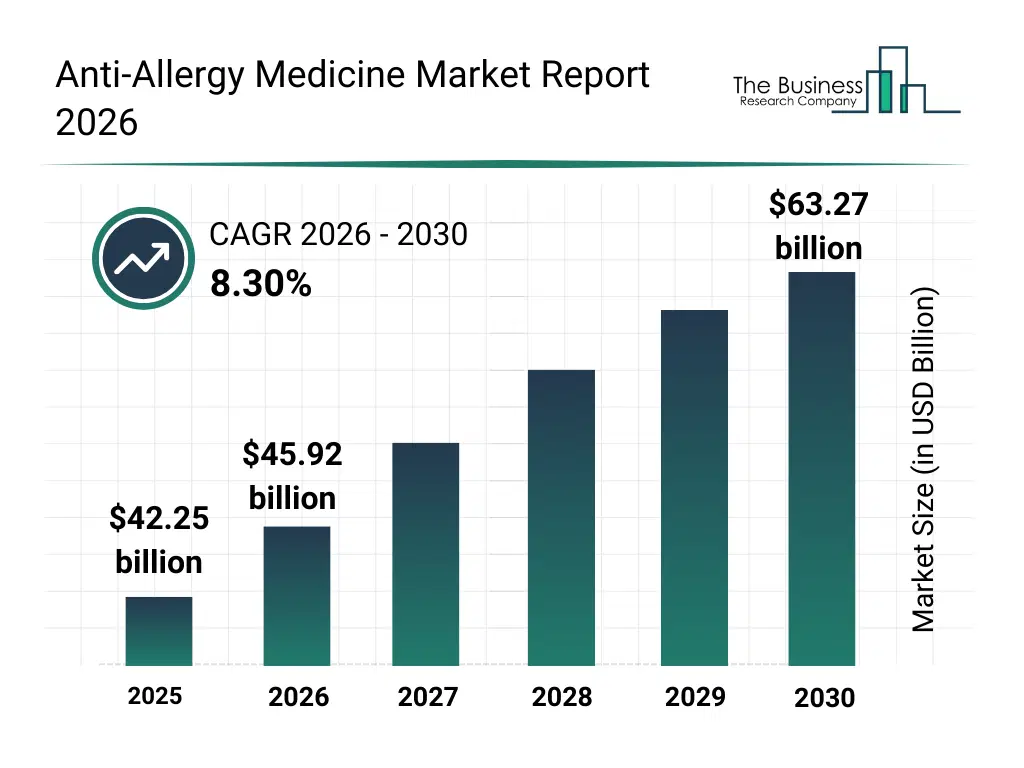
What Is The Anti-Allergy Medicine Market Size and Share 2026?
The anti-allergy medicine market size has grown strongly in recent years. It will grow from $42.25 billion in 2025 to $45.92 billion in 2026 at a compound annual growth rate (CAGR) of 8.7%. The growth in the historic period can be attributed to seasonal allergies, urban pollution, otc drug access, hospital allergy treatment, antihistamine availability.What Is The Anti-Allergy Medicine Market Growth Forecast?
The anti-allergy medicine market size is expected to see strong growth in the next few years. It will grow to $63.27 billion in 2030 at a compound annual growth rate (CAGR) of 8.3%. The growth in the forecast period can be attributed to climate-related allergy increase, digital pharmacy growth, biologic allergy treatments, pediatric allergy awareness, healthcare access expansion. Major trends in the forecast period include rising prevalence of allergic conditions, growth of otc allergy medications, increased use of second-generation antihistamines, expansion of online pharmacy sales, focus on pediatric and geriatric formulations.
Global Anti-Allergy Medicine Market Segmentation
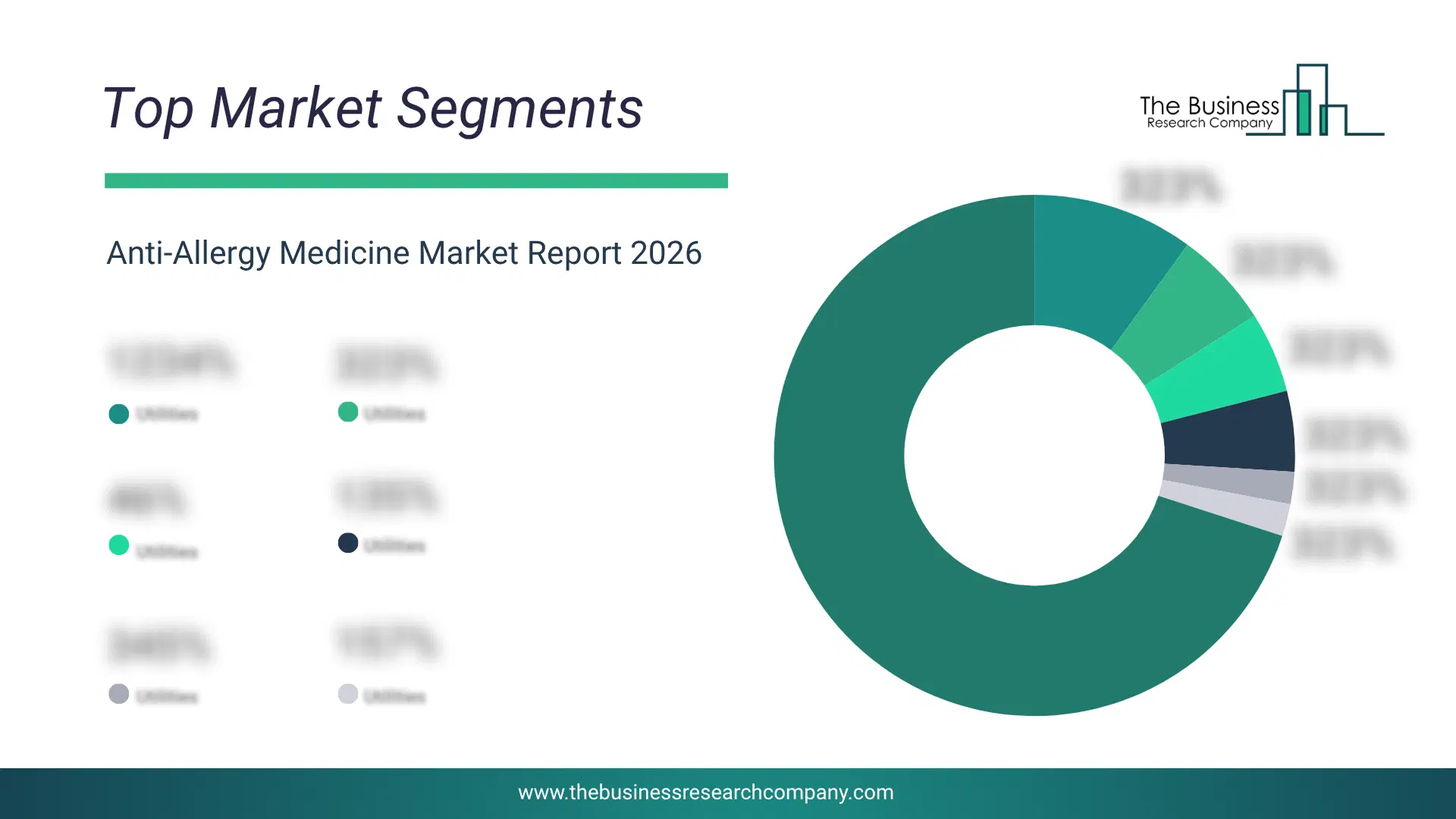
1) By Drug Class: Antihistamines, Corticosteroids, Decongestants, Leukotriene Inhibitors, Mast Cell Stabilizers, Other Drug Classes 2) By Type Of Allergy: Seasonal Allergies, Perennial Allergies, Food Allergies, Skin Allergies, Insect Sting Allergies 3) By Formulation: Tablets, Capsules, Syrups, Nasal Sprays, Eye Drops, Injectables 4) By Application: Online Pharmacy, Hospital, Offline Pharmacy, Clinic, Other Applications 5) By End User: Children, Adults, Geriatric Population, Pregnant Women Subsegments: 1) By Antihistamines: First-Generation Antihistamines, Second-Generation Antihistamines, Third-Generation Antihistamines 2) By Corticosteroids: Oral Corticosteroids, Nasal Corticosteroids, Inhaled Corticosteroids, Topical Corticosteroids 3) By Decongestants: Oral Decongestants, Nasal Spray Decongestants, Topical Decongestants 4) By Leukotriene Inhibitors: Leukotriene Receptor Antagonists, Leukotriene Synthesis Inhibitors 5) By Mast Cell Stabilizers: Cromolyn Sodium, Nedocromil Sodium 6) By Other Drug Classes: Immunotherapy Agents, Biologics, Monoclonal AntibodiesWhat Is The Driver Of The Anti-Allergy Medicine Market?
The growing prevalence of allergies is expected to propel the growth of the anti-allergy medicine market going forward. Allergies refer to hypersensitive immune responses to allergens such as pollen, dust mites, food, or pet dander, causing symptoms ranging from mild irritation to severe, life-threatening reactions. It includes hay fever, asthma, eczema, food allergies, and allergic rhinitis. The growing prevalence of allergies is due to increasing environmental pollution, as pollutants weaken the immune system and heighten sensitivity to common allergens. Anti-allergy medicines help manage allergies by providing targeted relief from allergens, making them essential for individuals with conditions such as hay fever, asthma, and eczema. They reduce immune overreactions by blocking histamines and other triggers, improving daily comfort and quality of life. For instance, in May 2025, according to the UK Parliament, a UK-based government body, there were 3,886,879 people over the age of six diagnosed with asthma in 2023-24, accounting for 6.5% of England’s population. Therefore, the growing prevalence of allergies is driving the growth of the anti-allergy medicine industry.Key Players In The Global Anti-Allergy Medicine Market
Major companies operating in the anti-allergy medicine market are Pfizer Inc., Johnson & Johnson, F. Hoffmann-La Roche AG, Merck & Co. Inc., Bayer AG, Sanofi S.A., AstraZeneca plc, Novartis AG, GSK plc, Amgen Inc., Teva Pharmaceutical Industries Ltd., Regeneron Pharmaceuticals Inc., Perrigo Company plc, Cipla Limited, Dr. Reddy's Laboratories, Lupin Limited, Zydus Lifesciences Limited, Takeda Pharmaceutical Company Limited, Torrent Pharmaceuticals Ltd., ALK-Abelló A/S, Torii Pharmaceutical Co. Ltd., Biomay Aktiengesellschaft, Kaléo Inc., Immunomic Therapeutics Inc., Circassia Group plc, Sun Pharmaceutical Industries Ltd., Anergis S.A., Aravax Pty Ltd., DBV Technologies S.A., Desentum Oy.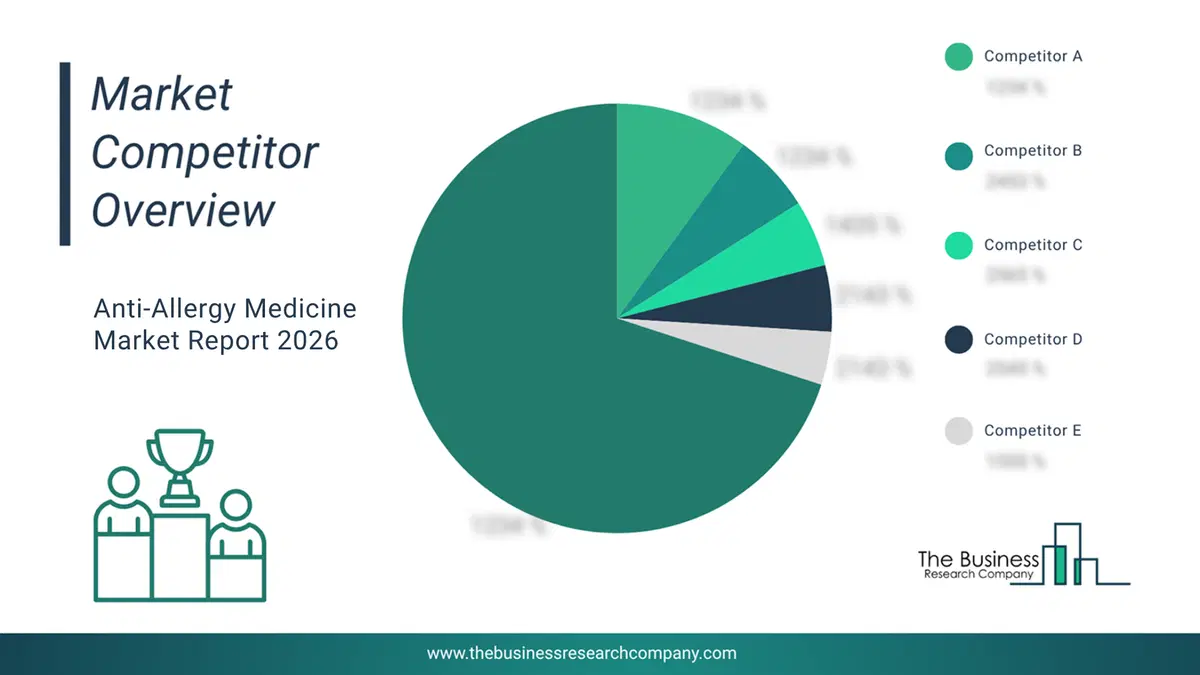
This chart is for illustrative purposes; the full report includes a detailed competitor analysis and comprehensive overview of the top 10 companies in the market.
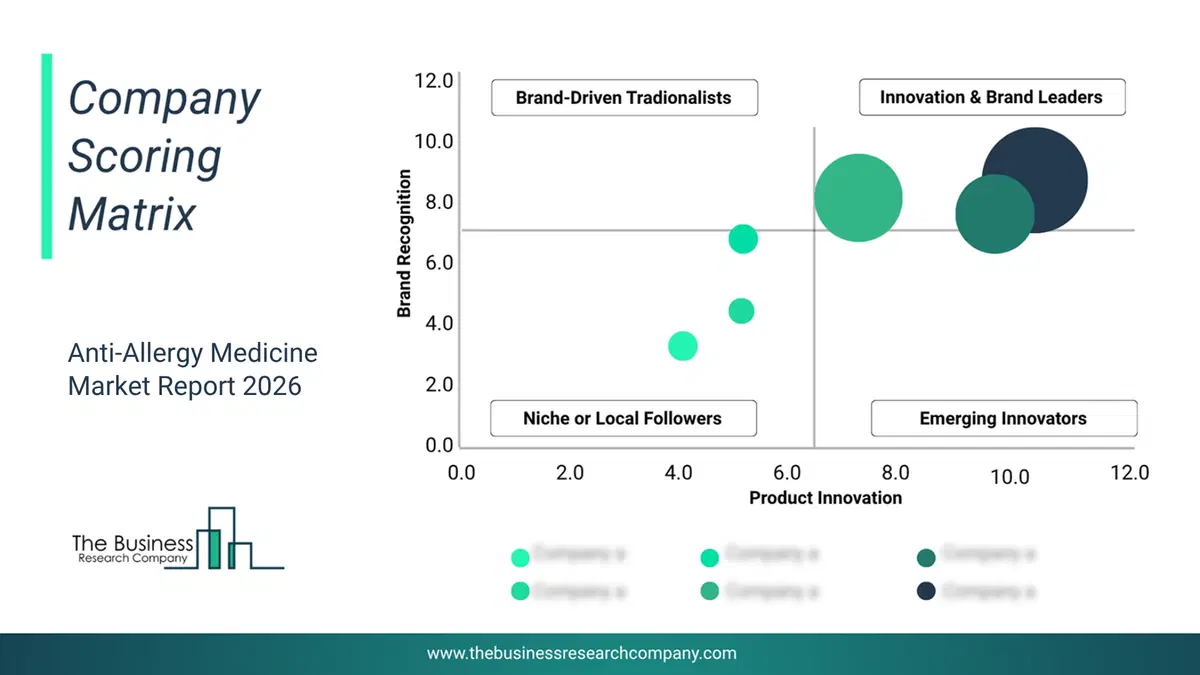
This chart maps companies by product innovation and brand strength, with bubble size indicating relative revenue, helping identify market leaders, challengers, and niche players. This is an illustrative chart; the full report provides a complete and accurate competitive analysis.
Global Anti-Allergy Medicine Market Trends and Insights
Major companies operating in the anti-allergy medicine market are focusing on developing innovative therapies and getting approvals, such as monoclonal antibody therapies, to provide targeted treatment, improve efficacy, reduce side effects, and address chronic and severe allergic conditions. Monoclonal antibody therapies refer to laboratory-made proteins that mimic the immune system’s ability to fight harmful allergens by specifically targeting and blocking immune pathways involved in allergic reactions, offering precise and long-lasting relief. For instance, in December 2024, Galderma SA, a Switzerland-based pharmaceutical company, received approval from the Food and Drug Administration (FDA) for Nemluvio (nemolizumab-ilto) for the treatment of adults and pediatric patients 12 years of age and older with moderate to severe atopic dermatitis in combination with topical corticosteroids and/or calcineurin inhibitors. This monoclonal antibody is an interleukin-31 receptor antagonist that works by blocking IL-31 signaling, a key driver of inflammation and itch in atopic dermatitis, thereby reducing symptoms and improving skin condition.What Are Latest Mergers And Acquisitions In The Anti-Allergy Medicine Market?
In January 2024, Johnson & Johnson, a US-based pharmaceutical company, acquired Proteologix Inc. for $850 million. With this acquisition, Johnson & Johnson aims to strengthen its immunology portfolio by integrating Proteologix’s bispecific antibody programs to develop innovative treatments for immune-mediated diseases such as atopic dermatitis and asthma. Proteologix Inc. is a US-based biotechnology company focused on anti-allergy medicine through novel bispecific antibody therapies for conditions such as asthma and atopic dermatitis.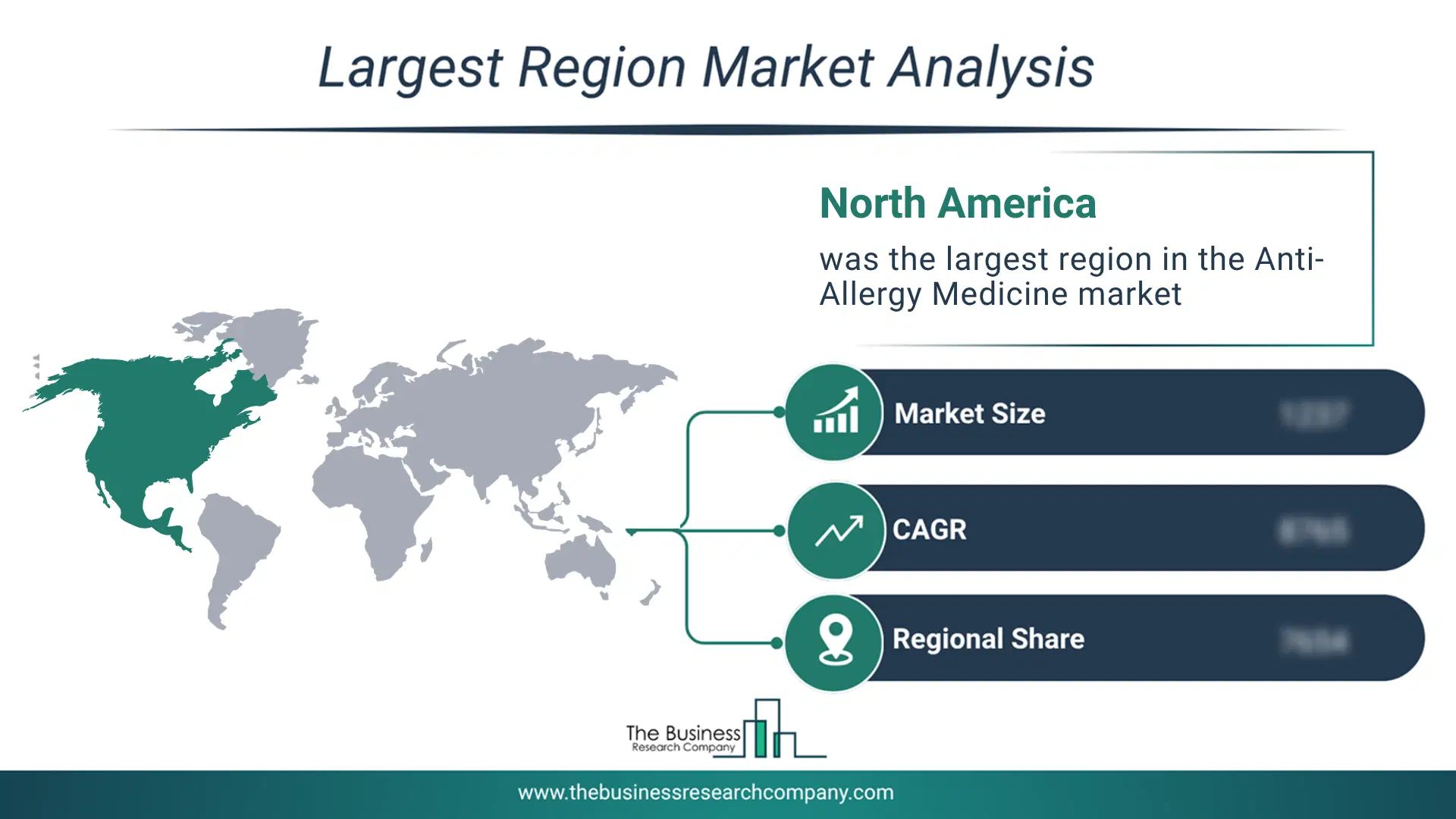
Regional Insights
North America was the largest region in the anti-allergy medicine market in 2025. Asia-Pacific is expected to be the fastest-growing region in the forecast period. The regions covered in this market report are Asia-Pacific, South East Asia, Western Europe, Eastern Europe, North America, South America, Middle East, Africa. The countries covered in this market report are Australia, Brazil, China, France, Germany, India, Indonesia, Japan, Taiwan, Russia, South Korea, UK, USA, Canada, Italy, Spain.What Defines the Anti-Allergy Medicine Market?
The anti-allergy medicine market consists of sales of combination therapies, inhalers, nebulizers, auto-injectors, prefilled syringes, and transdermal patches. Values in this market are ‘factory gate’ values, that is the value of goods sold by the manufacturers or creators of the goods, whether to other entities (including downstream manufacturers, wholesalers, distributors and retailers) or directly to end customers. The value of goods in this market includes related services sold by the creators of the goods.How is Market Value Defined and Measured?
The market value is defined as the revenues that enterprises gain from the sale of goods and/or services within the specified market and geography through sales, grants, or donations in terms of the currency (in USD unless otherwise specified). The revenues for a specified geography are consumption values that are revenues generated by organizations in the specified geography within the market, irrespective of where they are produced. It does not include revenues from resales along the supply chain, either further along the supply chain or as part of other products.
This chart presents market attractiveness based on a quantitative evaluation of growth, competition, strategic alignment, and risk, offering a clear view of opportunity areas for decision-making. This chart is for illustrative purposes; the full report contains the complete analysis.

This chart highlights the Total Addressable Market (TAM) by estimating the maximum revenue opportunity using an assumption-driven approach, supporting strategic planning and opportunity sizing across markets. The chart is illustrative; the full report provides a more comprehensive analysis.
What Key Data and Analysis Are Included in the Anti-Allergy Medicine Market Report 2026?
The anti-allergy medicine market research report is one of a series of new reports from The Business Research Company that provides market statistics, including industry global market size, regional shares, competitors with the market share, detailed market segments, market trends and opportunities, and any further data you may need to thrive in the anti-allergy medicine industry. The market research report delivers a complete perspective of everything you need, with an in-depth analysis of the current and future state of the industry.Anti-Allergy Medicine Market Report Forecast Analysis
| Report Attribute | Details |
|---|---|
| Market Size Value In 2026 | $45.92 billion |
| Revenue Forecast In 2030 | $63.27 billion |
| Growth Rate | CAGR of 8.7% from 2026 to 2030 |
| Base Year For Estimation | 2025 |
| Actual Estimates/Historical Data | 2020-2025 |
| Forecast Period | 2026 - 2030 |
| Market Representation | Revenue in USD Billion and CAGR from 2026 to 2030 |
| Segments Covered | Drug Class, Type Of Allergy, Formulation, Application, End User |
| Regional Scope | Asia-Pacific, Western Europe, Eastern Europe, North America, South America, Middle East, Africa |
| Country Scope | The countries covered in the report are Australia, Brazil, China, France, Germany, India, Indonesia, Japan, Taiwan, Russia, South Korea, UK, USA, Canada, Italy, Spain. |
| Key Companies Profiled | Pfizer Inc., Johnson & Johnson, F. Hoffmann-La Roche AG, Merck & Co. Inc., Bayer AG, Sanofi S.A., AstraZeneca plc, Novartis AG, GSK plc, Amgen Inc., Teva Pharmaceutical Industries Ltd., Regeneron Pharmaceuticals Inc., Perrigo Company plc, Cipla Limited, Dr. Reddy's Laboratories, Lupin Limited, Zydus Lifesciences Limited, Takeda Pharmaceutical Company Limited, Torrent Pharmaceuticals Ltd., ALK-Abelló A/S, Torii Pharmaceutical Co. Ltd., Biomay Aktiengesellschaft, Kaléo Inc., Immunomic Therapeutics Inc., Circassia Group plc, Sun Pharmaceutical Industries Ltd., Anergis S.A., Aravax Pty Ltd., DBV Technologies S.A., Desentum Oy. |
| Customization Scope | Request for Customization |
| Pricing And Purchase Options | Explore Purchase Options |