
Anti-Neoplastic Agents Market Report 2026
Global Outlook – By Type (Alkylating Agents, Antimetabolites, Hormones And Antagonists, Miscellaneous), By Disease Type (Gastrointestinal Cancer, Prostate Cancer, Lung Cancer, Breast Cancer, Other Disease Types), By End User (Hospitals, Clinics) – Market Size, Trends, Strategies, and Forecast to 2030
Anti-Neoplastic Agents Market Overview
• Anti-Neoplastic Agents market size has reached to $142.41 billion in 2025 • Expected to grow to $227.48 billion in 2030 at a compound annual growth rate (CAGR) of 9.9% • Growth Driver: Rising Cancer Cases Propel Antineoplastic Agent Market Growth • Market Trend: Advancements In Oral Estrogen Receptor Antagonists For Targeted Breast Cancer Therapy • North America was the largest region in 2025 and Asia-Pacific is the fastest growing region.Market Gains By 2030 – Top Opportunities By Segment
Market Gain identifies the most promising market opportunities by highlighting the segments or products expected to generate the highest incremental revenue growth over the next five years.
What Is Covered Under Anti-Neoplastic Agents Market?
Anti-neoplastic agents refer to drugs that inhibit or destroy abnormal tissue growth, specifically targeting and combating cancerous cells in the body. They have a vital role in cancer treatment by disrupting the processes involved in tumor development and progression. The main types of anti-neoplastic agents are alkylating agents, antimetabolites, hormones and antagonists and miscellaneous. Alkylating agents are a class of chemical compounds that can add alkyl groups to DNA, RNA and proteins, disrupting their normal function and interfering with cell replication. These are used to treat several diseases, including gastrointestinal cancer, prostate cancer, lung cancer, breast cancer and others and are used by various end users, such as hospitals, clinics, cancer rehabilitation centers and ambulatory surgical centers.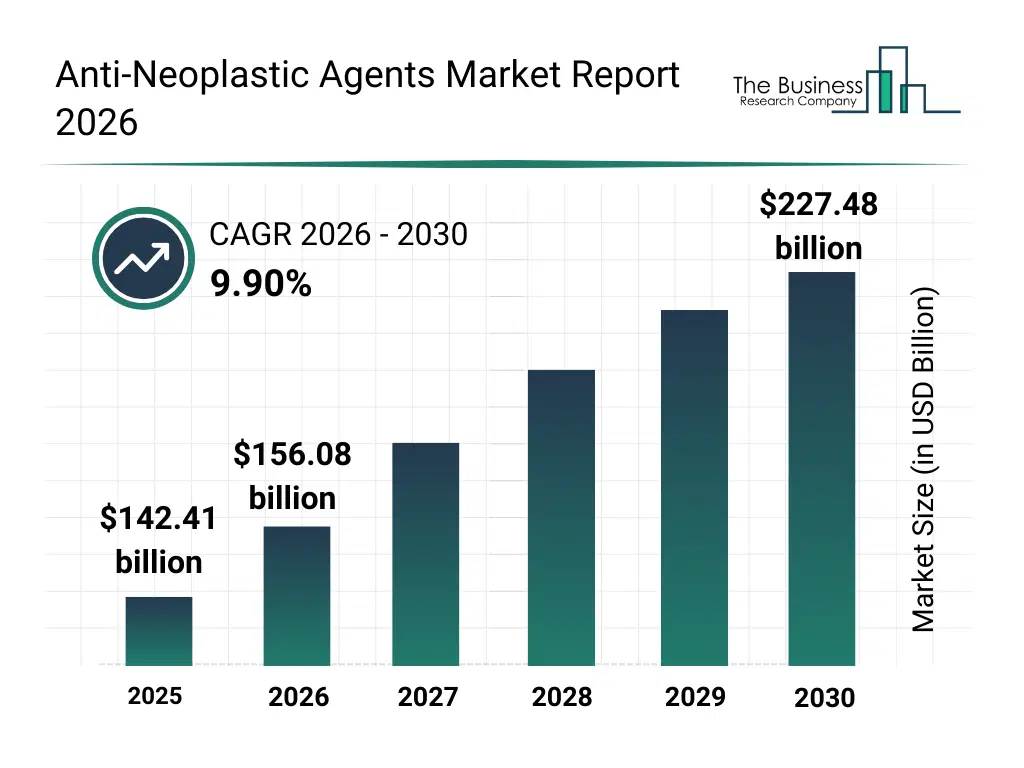
What Is The Anti-Neoplastic Agents Market Size and Share 2026?
The anti-neoplastic agents market size has grown strongly in recent years. It will grow from $142.41 billion in 2025 to $156.08 billion in 2026 at a compound annual growth rate (CAGR) of 9.6%. The growth in the historic period can be attributed to limited treatment options, high reliance on chemotherapy, slow adoption of targeted therapies, manual manufacturing processes, fragmented regulatory frameworks.What Is The Anti-Neoplastic Agents Market Growth Forecast?
The anti-neoplastic agents market size is expected to see strong growth in the next few years. It will grow to $227.48 billion in 2030 at a compound annual growth rate (CAGR) of 9.9%. The growth in the forecast period can be attributed to rise of precision medicine, growing geriatric population, increased funding for oncology research, adoption of AI in drug discovery, expansion of global oncology care centers. Major trends in the forecast period include personalized cancer therapies, targeted drug delivery systems, immunotherapy integration, oral and injectable formulation innovations, combination therapy development.
Global Anti-Neoplastic Agents Market Segmentation
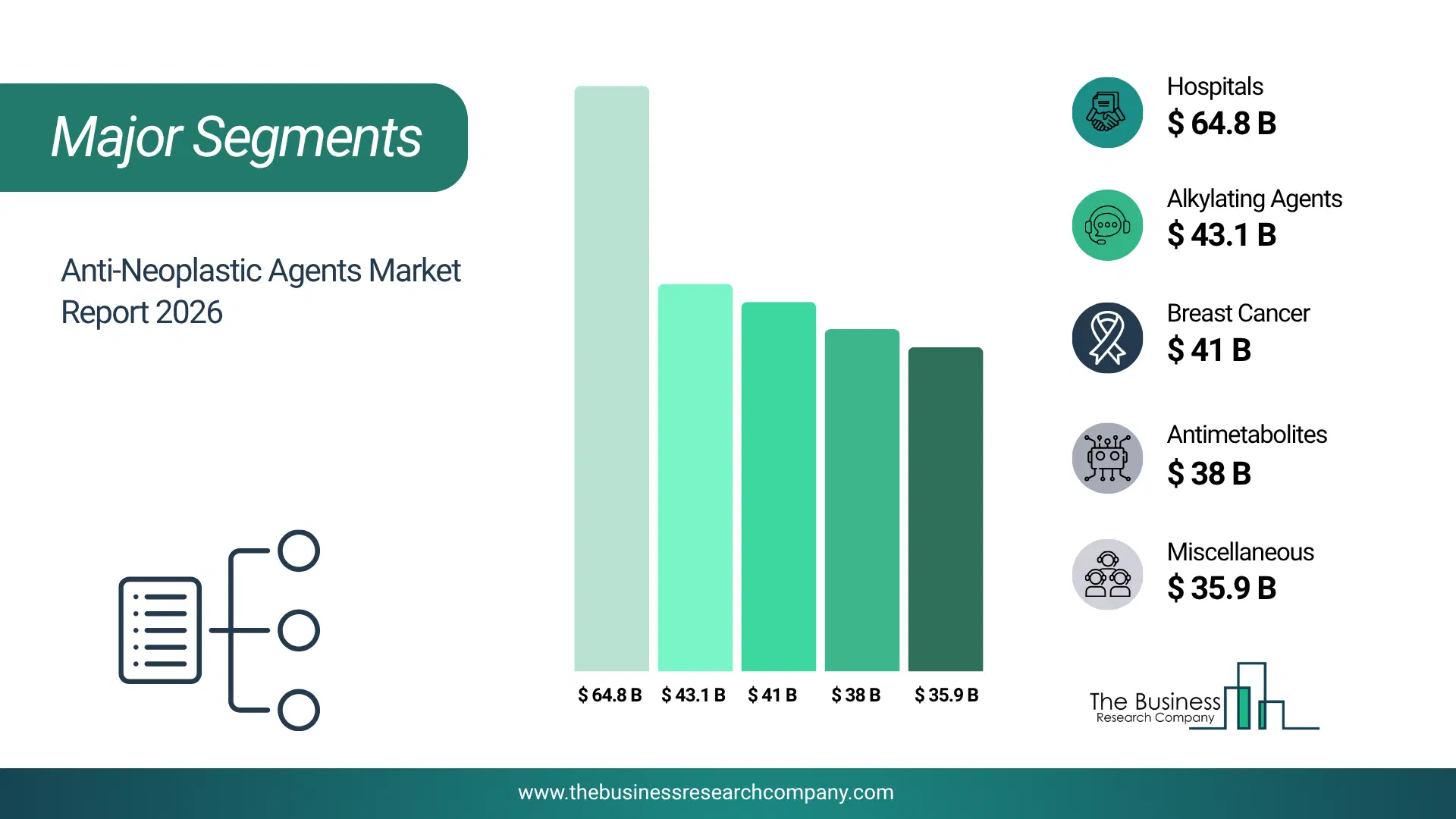
1) By Type: Alkylating Agents, Antimetabolites, Hormones And Antagonists, Miscellaneous 2) By Disease Type: Gastrointestinal Cancer, Prostate Cancer, Lung Cancer, Breast Cancer, Other Disease Types 3) By End User: Hospitals, Clinics Subsegments: 1) By Alkylating Agents: Nitrogen Mustards, Alkyl Sulfonates, Nitrosoureas, Triazines 2) By Antimetabolites: Purine Analogues, Pyrimidine Analogues, Folate Antagonists 3) By Hormones and Antagonists: Estrogens and Antiestrogens, Androgens and Antiandrogens 4) By Miscellaneous: Vinca Alkaloids, Taxanes, Antibiotic Antineoplastics, Targeted Therapy Agents The top segments in the anti-neoplastic agents market will be: • Hospitals will reach $64820.39 Million by 2025. • Alkylating Agents will reach $43174.24 Million by 2025. • Breast Cancer will reach $41088.4 Million by 2025. • Antimetabolites will reach $38063.28 Million by 2025. • Miscellaneous will reach $35942.47 Million by 2025.What Is The Driver Of The Anti-Neoplastic Agents Market?
The increasing number of cancer cases is expected to propel the growth of the antineoplastic agent market going forward. Cancer is a category of illnesses that can develop in nearly any organ or tissue in the body when aberrant cells proliferate uncontrollably, cross their normal boundaries and either spread to other organs or invade neighboring body parts. Antineoplastic agents play an essential role in cancer treatment by inhibiting cancer cell growth and division through various mechanisms, including DNA (Deoxyribonucleic acid) damage, cell cycle disruption and interference with crucial cellular pathways. For instance, in July 2024, according to the Australian Institute of Health and Welfare, an Australia-based government agency, In 2023, an estimated 165,000 Australians were newly diagnosed with cancer, which equates to over 450 cases each day, and males represented about 55% of these diagnoses. Therefore, the increasing number of cancer cases is driving the growth of the antineoplastic agent market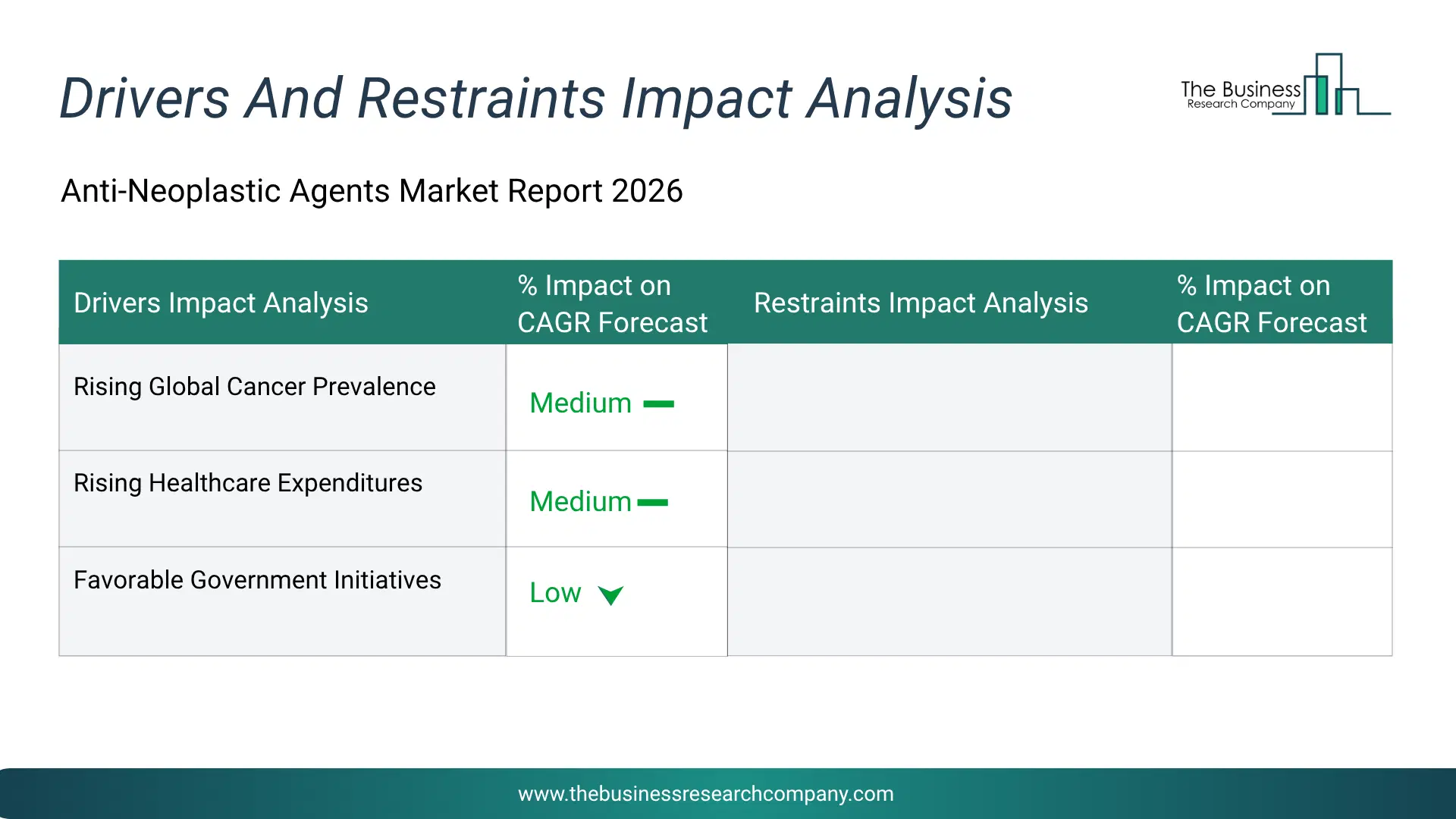
Infographic Chart Showing Key Market Drivers Analysis And Restraints For Anti-Neoplastic Agents Market
The chart presents an impact analysis of key drivers and restraints, quantifying their relative influence on the market's growth rate and helping assess the balance between growth enablers and limiting factors. This chart offers a high-level perspective; the full report contains more detailed insights.
How Will The Drivers Impact Growth In The Global Anti-Neoplastic Agents Market?
• Rising Global Cancer Prevalence (Medium) – The rising global cancer prevalence will emerge as a major factor driving the expansion of the market by 2030. As cancer cases increase worldwide, these agents, ranging from chemotherapy to targeted therapies, play a critical role in extending survival, improving quality of life and reducing cancer-related mortality. Consequently, the rising global cancer prevalence is projected to contributing to a 1.8% annual growth in the market. • Rising Healthcare Expenditures (Medium) – The rising healthcare expenditures will serve as a key growth catalyst for the market by 2030. As cancer incidence grows globally, governments and healthcare systems are allocating more funds to ensure access to effective therapies, such as targeted anti-neoplastic drugs, that offer improved outcomes and reduced long-term treatment costs. Therefore, this rising healthcare expenditures is projected to supporting to a 1.2% annual growth in the market. • Favorable Government Initiatives (Low) – The favorable government initiative will become a significant driver contributing to the growth of the market by 2030. Supportive government initiatives in the anti-neoplastic agents typically involve measures like fast-track drug approvals, tax incentives and increased funding for research and development. Such efforts help speed up the introduction of innovative cancer treatments, enhancing patient access. Additionally, they stimulate investment in oncology research, fostering the development of more precise and effective therapies. Consequently, the favorable government initiative is projected to contributing to a 0.9% annual growth in the market.How Will The Restraints Impact Growth In The Global Anti-Neoplastic Agents Market?
• Side Effects (Medium) – Side Effects will restrict the growth of the Anti-Neoplastic Agents market during the forecast period. Anti-neoplastic agents are associated with significant side effects including myelosuppression, nausea, organ toxicity, and secondary malignancies. The risk of severe adverse effects can limit treatment eligibility, reduce adherence, and affect quality of life. Side effect concerns may lead to treatment modifications or discontinuation, affecting drug utilization and market growth. • High Treatment Costs (Medium) – High Treatment Costs will restrict the growth of the Anti-Neoplastic Agents market during the forecast period. Anti-neoplastic therapies, particularly novel targeted agents and immunotherapies, are expensive and require long-term administration. High treatment costs create financial burdens for patients and healthcare systems, affecting access and affordability. Cost constraints can limit patient access to innovative therapies and affect the commercial potential of new anticancer drugs.Key Players In The Global Anti-Neoplastic Agents Market
Major companies operating in the anti-neoplastic agents market are Pfizer Inc., F. Hoffmann-La Roche Ltd., Merck & Co. Inc., Bayer AG, Novartis AG, Bristol-Myers Squibb Company, AstraZeneca PLC, Fresenius SE & Co. KGaA, Takeda Pharmaceutical Company Limited, Boehringer Ingelheim International GmbH, Viatris Inc., Teva Pharmaceutical Industries Ltd., Eisai Co. Ltd., Sun Pharmaceutical Industries Limited, Ipsen SA, Cipla Limited, Dr. Reddy's Laboratories Ltd., Intas Pharmaceuticals Limited, Hikma Pharmaceuticals PLC, Gland Pharma Limited, Zydus Lifesciences Limited, Glenmark Pharmaceuticals Ltd., Jubilant Life Sciences Ltd., Hutchison Medipharma Ltd., Natco Pharma Ltd., Accord Healthcare Limited, Qilu Pharmaceutical Co. Ltd.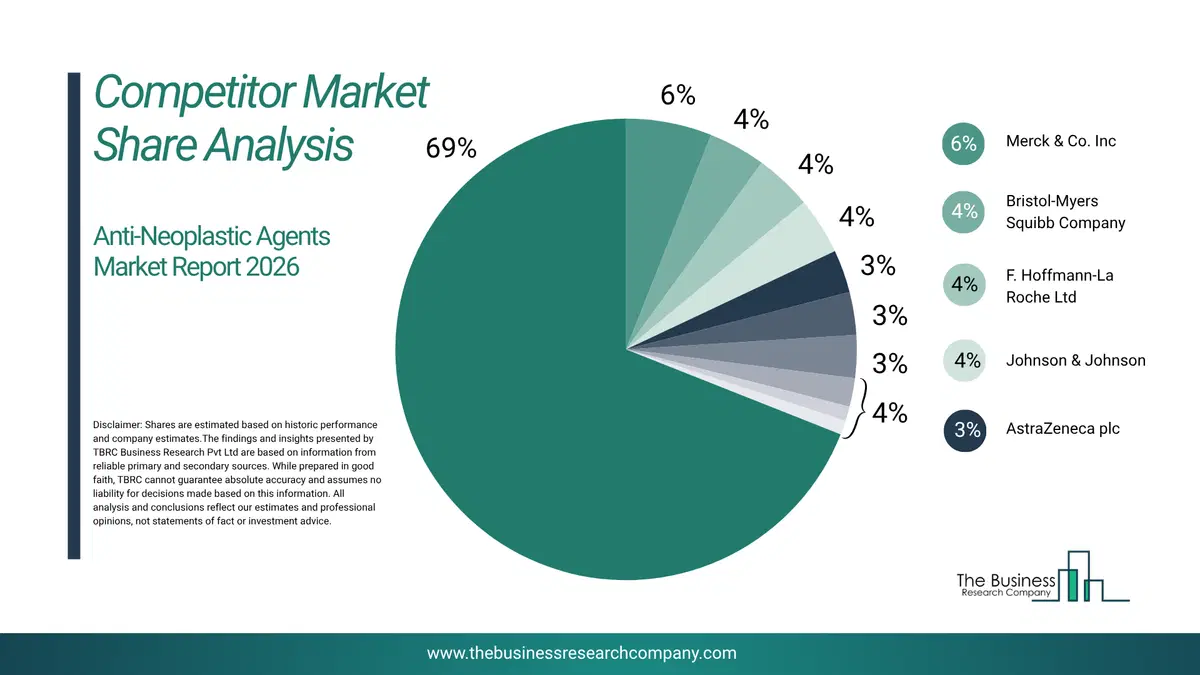
This chart is for illustrative purposes; the full report includes a detailed competitor analysis and comprehensive overview of the top 10 companies in the market.
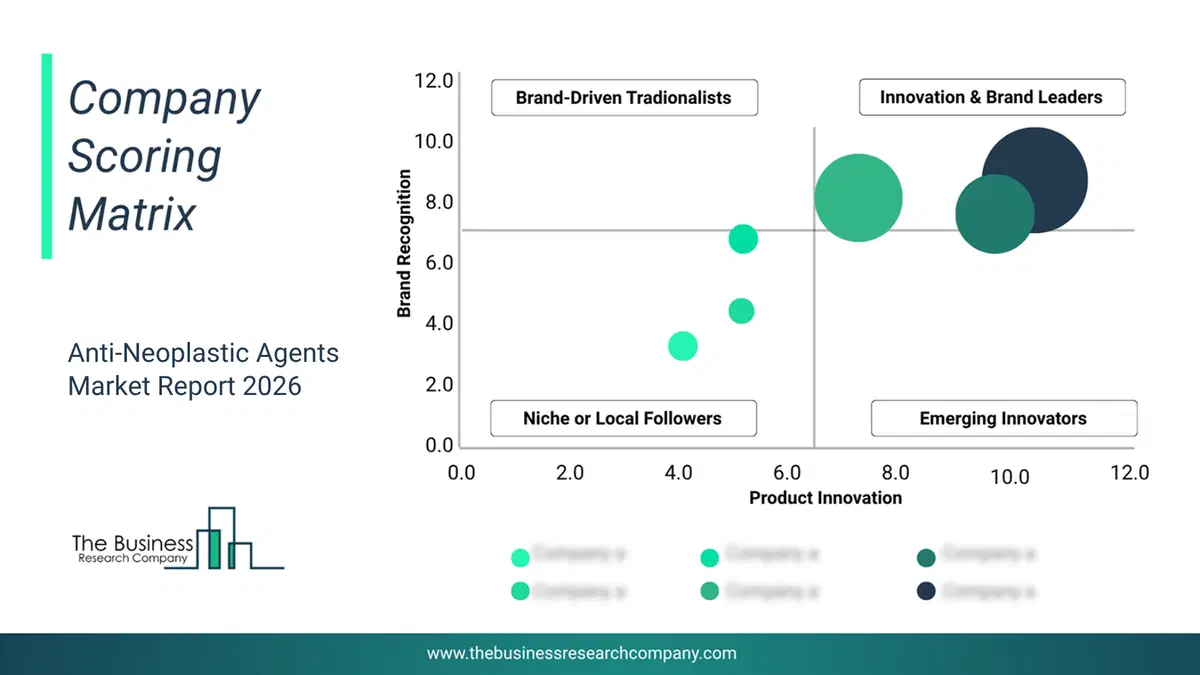
This chart maps companies by product innovation and brand strength, with bubble size indicating relative revenue, helping identify market leaders, challengers, and niche players. This is an illustrative chart; the full report provides a complete and accurate competitive analysis.
Global Anti-Neoplastic Agents Market Trends and Insights
Major companies operating in the anti-neoplastic agents market are focusing on developing innovative solutions such as selective estrogen receptor degraders to target hormone receptor-driven cancers more effectively, improve patient outcomes, and expand treatment options. A selective estrogen receptor degrader (SERD) refers to a class of targeted cancer therapies that bind to estrogen receptors (ER) in cancer cells, block their activity, and promote their degradation, thereby inhibiting ER-driven tumor growth, particularly in estrogen receptor-positive (ER+) breast cancers. For instance, in September 2025, Eli Lilly and Company, a US-based pharmaceutical company, received an approval from the US FDA for Inluriyo (imlunestrant), for the treatment of adults with estrogen receptor-positive (ER+), HER2-negative (HER2–), ESR1-mutated advanced or metastatic breast cancer whose disease has progressed after at least one line of endocrine therapy. Inluriyo is an oral estrogen receptor antagonist that blocks and degrades estrogen receptors, including mutated ESR1 receptors that drive cancer growth.What Are Latest Mergers And Acquisitions In The Anti-Neoplastic Agents Market?
In December 2023, Pfizer Inc., a US-based pharmaceutical company, acquired Seagen Inc., for an undisclosed amount. With this acquisition, Pfizer aims to strengthen its oncology portfolio, accelerate the development and commercialization of targeted cancer therapies, expand its biologics capabilities, and enhance long-term revenue growth in the oncology segment. Seagen Inc., a US-based biotechnology company, specializes in developing and commercializing antibody-drug conjugates (ADCs) for the treatment of various cancers.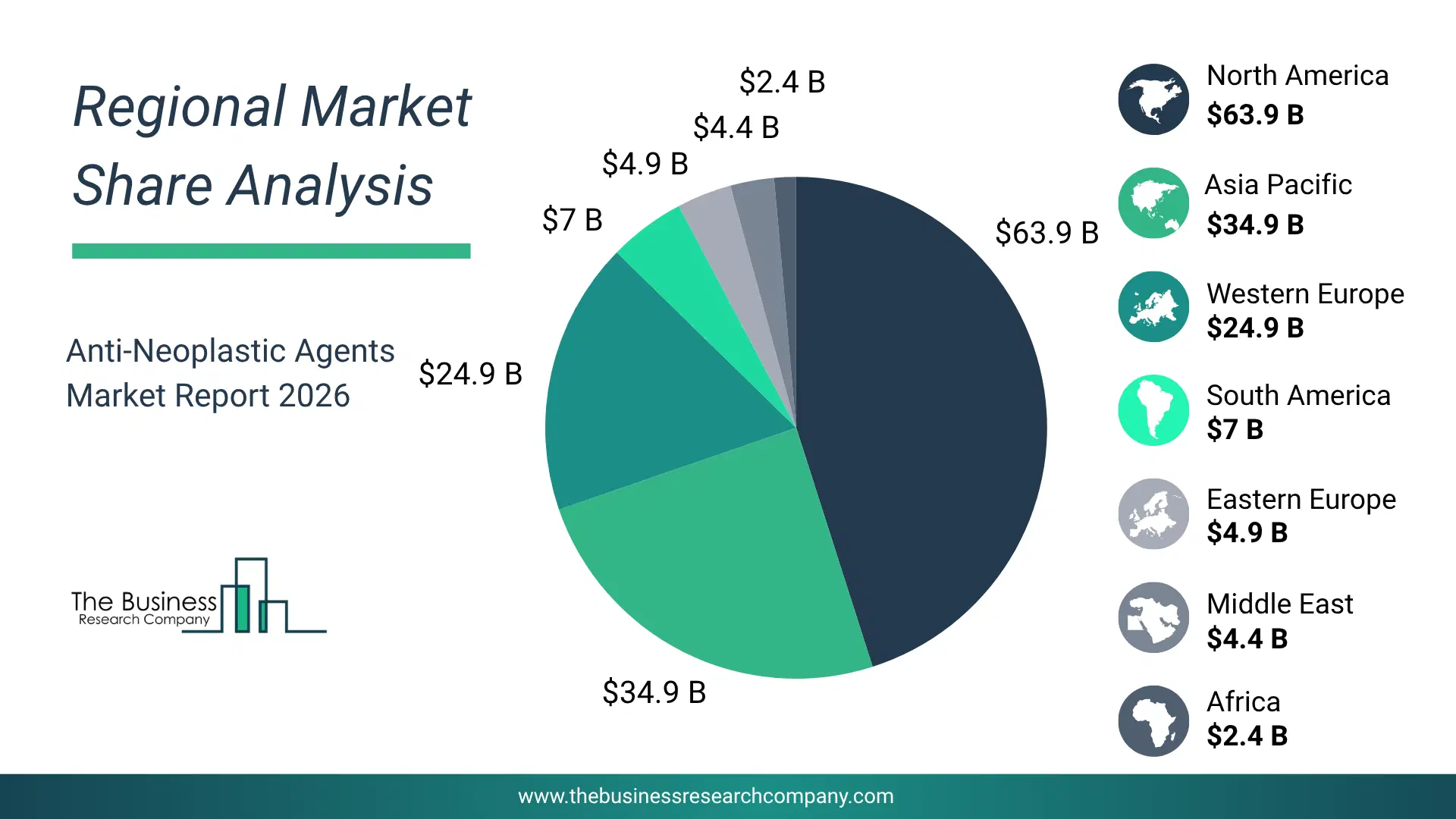
Regional Insights
North America was the largest region in the anti-neoplastic agents market in 2025. Asia-Pacific is expected to be the fastest-growing region in the forecast period. The regions covered in this market report are Asia-Pacific, South East Asia, Western Europe, Eastern Europe, North America, South America, Middle East, Africa. The countries covered in this market report are Australia, Brazil, China, France, Germany, India, Indonesia, Japan, Taiwan, Russia, South Korea, UK, USA, Canada, Italy, Spain.What Defines the Anti-Neoplastic Agents Market?
The anti-neoplastic agents market consists of sales of antitumor antibiotics, microtubule inhibitors and topoisomerase inhibitors. Values in this market are ‘factory gate’ values, that is, the value of goods sold by the manufacturers or creators of the goods, whether to other entities (including downstream manufacturers, wholesalers, distributors and retailers) or directly to end customers. The value of goods in this market includes related services sold by the creators of the goods.How is Market Value Defined and Measured?
The market value is defined as the revenues that enterprises gain from the sale of goods and/or services within the specified market and geography through sales, grants, or donations in terms of the currency (in USD unless otherwise specified). The revenues for a specified geography are consumption values that are revenues generated by organizations in the specified geography within the market, irrespective of where they are produced. It does not include revenues from resales along the supply chain, either further along the supply chain or as part of other products.
This chart presents market attractiveness based on a quantitative evaluation of growth, competition, strategic alignment, and risk, offering a clear view of opportunity areas for decision-making. This chart is for illustrative purposes; the full report contains the complete analysis.

This chart highlights the Total Addressable Market (TAM) by estimating the maximum revenue opportunity using an assumption-driven approach, supporting strategic planning and opportunity sizing across markets. The chart is illustrative; the full report provides a more comprehensive analysis.
What Key Data and Analysis Are Included in the Anti-Neoplastic Agents Market Report 2026?
The anti-neoplastic agents market research report is one of a series of new reports from The Business Research Company that provides market statistics, including industry global market size, regional shares, competitors with the market share, detailed market segments, market trends and opportunities, and any further data you may need to thrive in the anti-neoplastic agents industry. The market research report delivers a complete perspective of everything you need, with an in-depth analysis of the current and future state of the industry.Anti-Neoplastic Agents Market Report Forecast Analysis
| Report Attribute | Details |
|---|---|
| Market Size Value In 2026 | $156.08 billion |
| Revenue Forecast In 2030 | $227.48 billion |
| Growth Rate | CAGR of 9.6% from 2026 to 2030 |
| Base Year For Estimation | 2025 |
| Actual Estimates/Historical Data | 2020-2025 |
| Forecast Period | 2026 - 2030 |
| Market Representation | Revenue in USD Billion and CAGR from 2026 to 2030 |
| Segments Covered | Type, Disease Type, End User |
| Regional Scope | Asia-Pacific, Western Europe, Eastern Europe, North America, South America, Middle East, Africa |
| Country Scope | The countries covered in the report are Australia, Brazil, China, France, Germany, India, Indonesia, Japan, Taiwan, Russia, South Korea, UK, USA, Canada, Italy, Spain. |
| Key Companies Profiled | Pfizer Inc., F. Hoffmann-La Roche Ltd., Merck & Co. Inc., Bayer AG, Novartis AG, Bristol-Myers Squibb Company, AstraZeneca PLC, Fresenius SE & Co. KGaA, Takeda Pharmaceutical Company Limited, Boehringer Ingelheim International GmbH, Viatris Inc., Teva Pharmaceutical Industries Ltd., Eisai Co. Ltd., Sun Pharmaceutical Industries Limited, Ipsen SA, Cipla Limited, Dr. Reddy's Laboratories Ltd., Intas Pharmaceuticals Limited, Hikma Pharmaceuticals PLC, Gland Pharma Limited, Zydus Lifesciences Limited, Glenmark Pharmaceuticals Ltd., Jubilant Life Sciences Ltd., Hutchison Medipharma Ltd., Natco Pharma Ltd., Accord Healthcare Limited, Qilu Pharmaceutical Co. Ltd. |
| Customization Scope | Request for Customization |
| Pricing And Purchase Options | Explore Purchase Options |