

Targeted Therapy Market Report 2026
Global Outlook – By Type (Small Molecule Medicines, Monoclonal Antibodies), By Distribution Channel (Hospital Pharmacies, Retail Pharmacies, Online Pharmacies ), By Application (Breast Cancer, Colorectal Cancer, Leukemia, Lung Cancer, Lymphoma, Renal Cancer, Other Applications ) - Market Size, Trends, Strategies, and Forecast to 2030
Targeted Therapy Market Overview
• Targeted Therapy market size has reached to $109.99 billion in 2025 • Expected to grow to $158.2 billion in 2030 at a compound annual growth rate (CAGR) of 7.6% • Growth Driver: Rising Cancer Prevalence Fuels Surge In Demand For Targeted Therapy • Market Trend: Strategic Partnership To Revolutionize Cancer Treatment Through Molecularly Targeted Radiation Therapies • North America was the largest region in 2025.What Is Covered Under Targeted Therapy Market?
Targeted therapy refers to a kind of cancer treatment that employs medications or other chemicals to attack particular molecules required for the survival and spread of cancer cells. It uses drugs to target specific genes and proteins that help cancer cells survive and grow. The main types of targeted therapy are small molecule medicines and monoclonal antibodies. A small-molecule medicine drug refers to a synthetic chemical that was inspired by or derived from natural products produced by bacteria, fungi, and plants. It is provided through several distribution channels, such as hospital pharmacies, retail pharmacies, and online pharmacies, and are used for breast cancer, colorectal cancer, leukemia, lung cancer, lymphoma, renal cancer and others.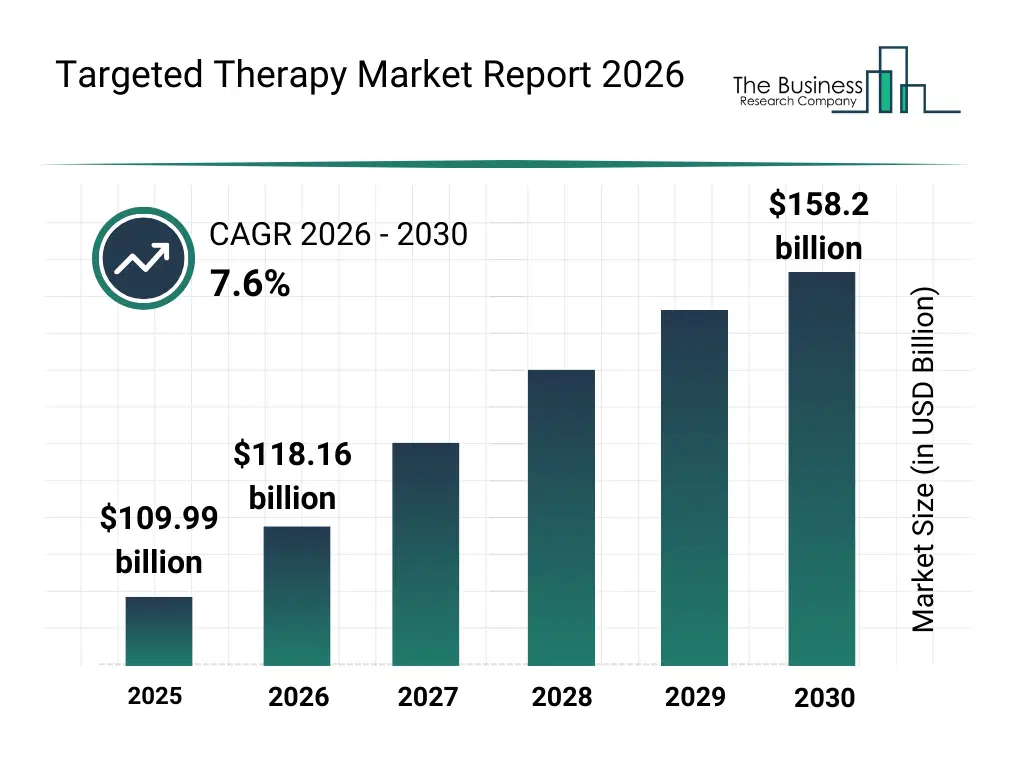
What Is The Targeted Therapy Market Size and Share 2026?
The targeted therapy market size has grown strongly in recent years. It will grow from $109.99 billion in 2025 to $118.16 billion in 2026 at a compound annual growth rate (CAGR) of 7.4%. The growth in the historic period can be attributed to increasing global cancer incidence, expansion of oncology research funding, growing adoption of monoclonal antibodies, advancements in molecular biology research, rising approval of targeted cancer drugs.What Is The Targeted Therapy Market Growth Forecast?
The targeted therapy market size is expected to see strong growth in the next few years. It will grow to $158.2 billion in 2030 at a compound annual growth rate (CAGR) of 7.6%. The growth in the forecast period can be attributed to increasing investments in personalized medicine, growing use of ai-driven drug discovery, expansion of precision diagnostics adoption, rising demand for less toxic cancer therapies, increasing clinical trial activity in oncology. Major trends in the forecast period include increasing development of precision oncology drugs, rising adoption of biomarker-based treatment selection, expansion of combination targeted therapies, growing use of companion diagnostics, enhanced focus on tumor-specific drug design.
Global Targeted Therapy Market Segmentation
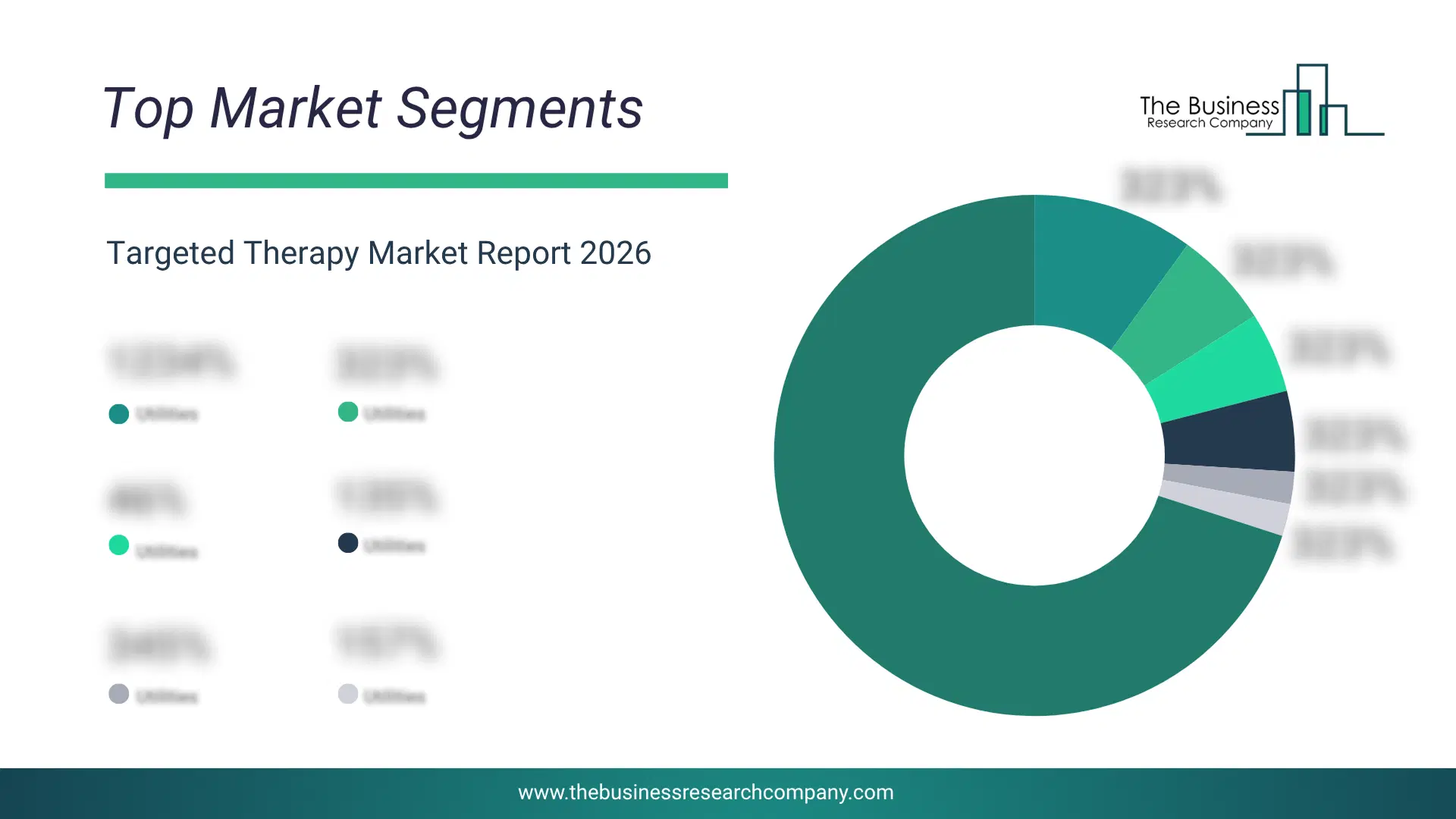
1) By Type: Small Molecule Medicines, Monoclonal Antibodies 2) By Distribution Channel: Hospital Pharmacies, Retail Pharmacies, Online Pharmacies 3) By Application: Breast Cancer, Colorectal Cancer, Leukemia, Lung Cancer, Lymphoma, Renal Cancer, Other Applications Subsegments: 1) By Small Molecule Medicines: Tyrosine Kinase Inhibitors (TKIs), Proteasome Inhibitors, Phosphatidylinositol 3-Kinase (PI3K) Inhibitors, Other Small Molecule Therapies 2) By Monoclonal Antibodies: Immune Checkpoint Inhibitors, Antibody-Drug Conjugates (ADCs), Cytokine Blockers, Other Monoclonal AntibodiesWhat Is The Driver Of The Targeted Therapy Market?
The increasing prevalence of cancer is expected to propel the growth of the targeted therapy market going forward. Cancer is a term for conditions where aberrant cells can infect surrounding tissues and divide uncontrollably. Targeted therapy can disable the signals that encourage the growth of cancer cells or signal the cancer cells to self-destruct. It employs medication to specifically target genes and proteins that support the growth and survival of cancer cells, thus increasing its demand. For instance, in January 2024, according to the American Cancer Society, a US-based nonprofit cancer advocacy organization, the number of cancer cases increased to 2,001,140 compared to 1,958,310 in 2023, reflecting a growth of 2.19%. Therefore, increasing prevalence of cancer will drive growth of the targeted therapy industry.Key Players In The Global Targeted Therapy Market
Major companies operating in the targeted therapy market are Pfizer Inc., Johnson & Johnson, F. Hoffmann-La Roche Ltd, Merck & Co Inc., AbbVie Inc., Bayer AG, Novartis AG, Sanofi SA, Bristol Myers Squibb, AstraZeneca, GlaxoSmithKline plc, Takeda Pharmaceutical Company Limited, Eli Lilly and Company, Gilead Sciences Inc., Amgen Inc., Genmab A/S, Regeneron Pharmaceuticals Inc., Biogen Inc., Vertex Pharmaceuticals Incorporated, Agilent Technologies Inc., Illumina Inc., Incyte Corporation, Sysmex Corporation, Exact Sciences Corporation, Seagen Inc., Exelixis Inc., Seattle Genetics Inc., Genentech Inc., Daiichi Sankyo Company Limited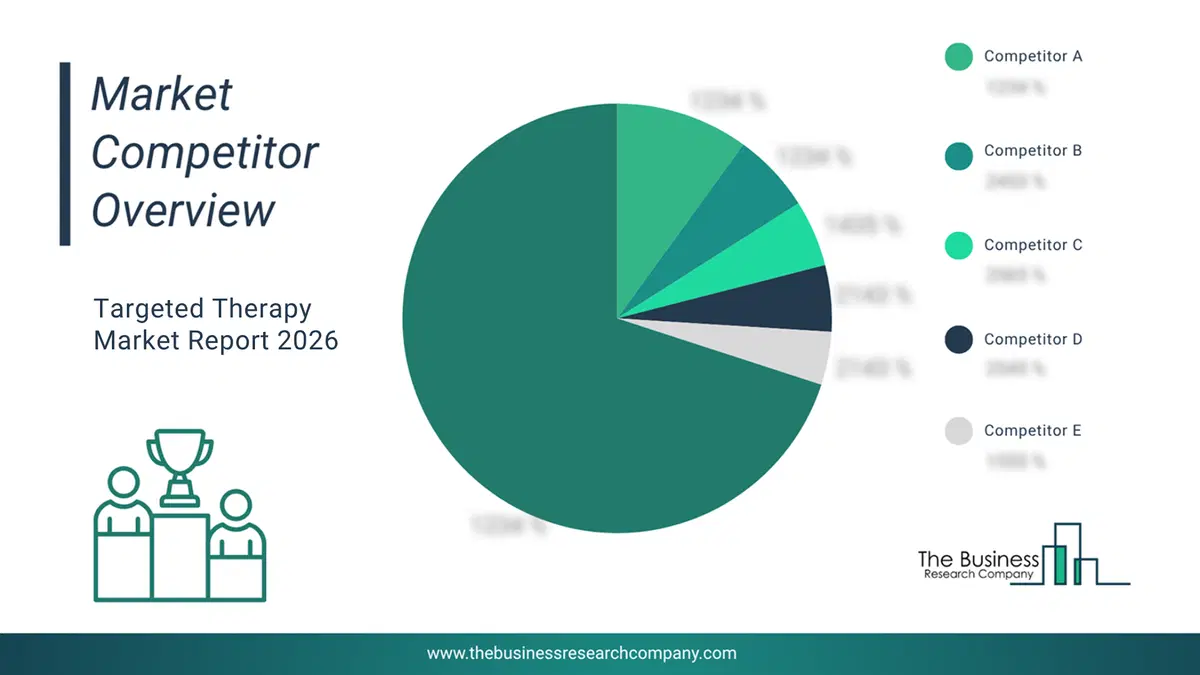
This chart is for illustrative purposes; the full report includes a detailed competitor analysis and comprehensive overview of the top 10 companies in the market.
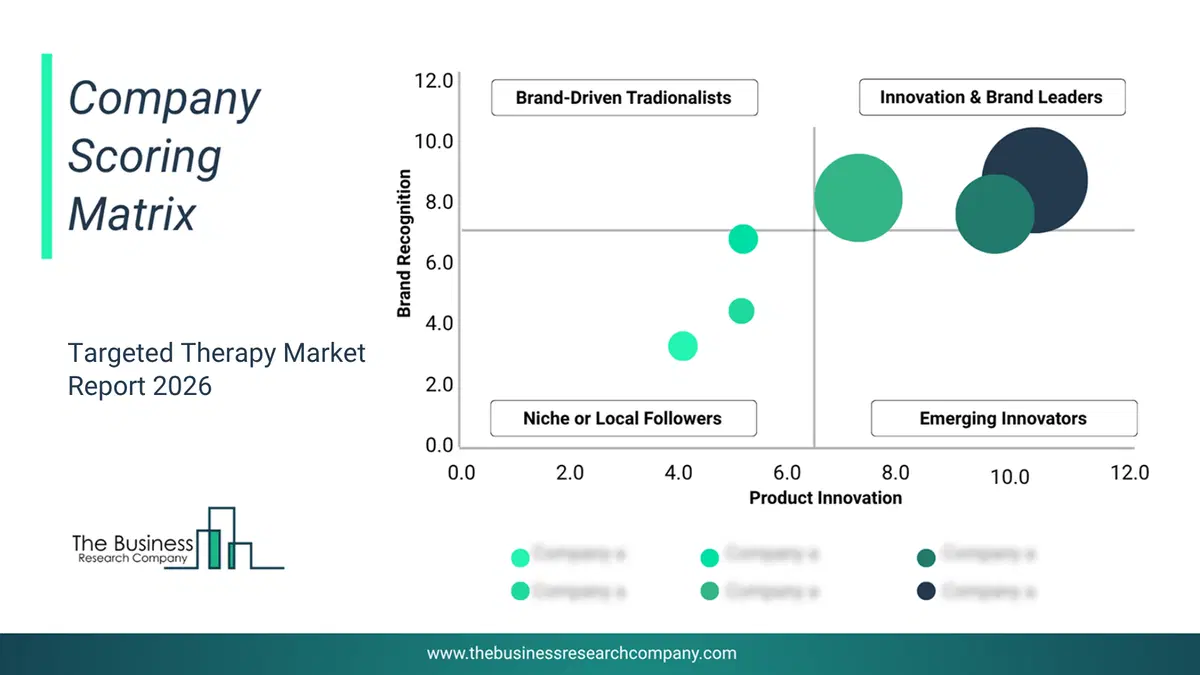
This chart maps companies by product innovation and brand strength, with bubble size indicating relative revenue, helping identify market leaders, challengers, and niche players. This is an illustrative chart; the full report provides a complete and accurate competitive analysis.
Global Targeted Therapy Market Trends and Insights
Major companies operating in the targeted therapy market are focusing on strategic partnerships to provide reliable services to customers. A strategic partnership is an arrangement between two or more companies or organizations that helps each other or works together to achieve their respective goals. For instance, in September 2023, Shine Technologies, a US-based pharmaceutical industry company that produces radioactive isotopes for medical applications, partnered with Curadh MTR Inc., dedicated to improving and accelerating the development of molecularly targeted radiation therapies for solid tumors. This strategic partnership aims to harness the potential of radioisotopes to target and eliminate cancer cells with precision, offering renewed hope to patients and reshaping the future of cancer treatment.What Are Latest Mergers And Acquisitions In The Targeted Therapy Market?
In November 2025, Johnson & Johnson, a US-based pharmaceutical and consumer healthcare company, acquired Halda Therapeutics, for $3.05 billion. With this acquisition, Johnson & Johnson aims to strengthen its biopharmaceutical pipeline, enhance its protein and peptide engineering capabilities, expand its innovative therapeutic portfolio, and accelerate the development of next-generation biologics. Halda Therapeutics is a US-based biotechnology company specializes in the design and development of site-specific protein and peptide therapeutics.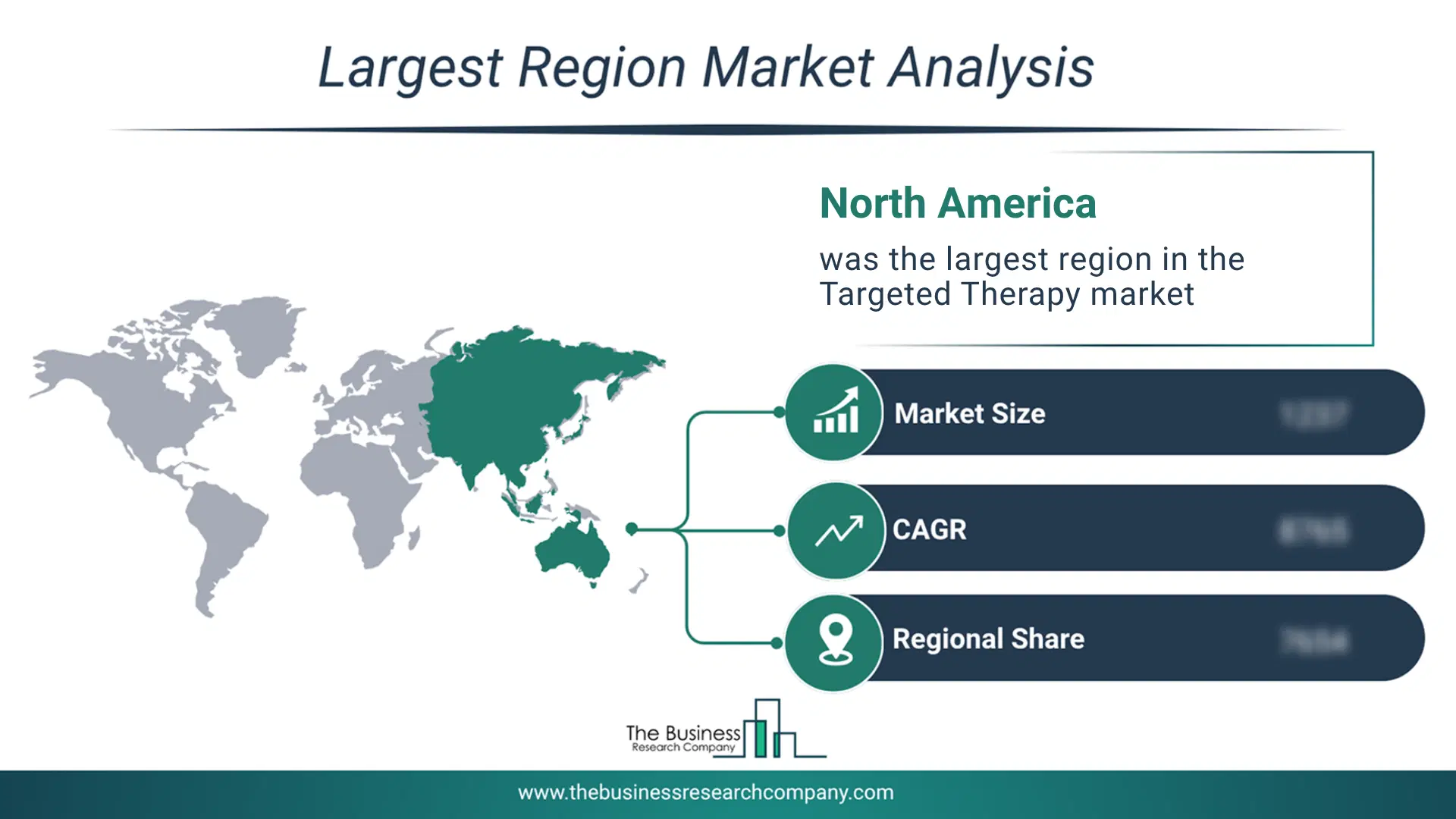
Regional Outlook
North America was the largest region in the targeted therapy market in 2025. The regions covered in this market report are Asia-Pacific, South East Asia, Western Europe, Eastern Europe, North America, South America, Middle East, Africa. The countries covered in this market report are Australia, Brazil, China, France, Germany, India, Indonesia, Japan, Taiwan, Russia, South Korea, UK, USA, Canada, Italy, Spain.What Defines the Targeted Therapy Market?
The targeted therapy market includes revenues earned by entities by providing various kinds of cancer drugs, such as EGFR inhibitors, angiogenesis inhibitors, and apoptosis inducers. The market value includes the value of related goods sold by the service provider or included within the service offering. Only goods and services traded between entities or sold to end consumers are included.How is Market Value Defined and Measured?
The market value is defined as the revenues that enterprises gain from the sale of goods and/or services within the specified market and geography through sales, grants, or donations in terms of the currency (in USD unless otherwise specified). The revenues for a specified geography are consumption values that are revenues generated by organizations in the specified geography within the market, irrespective of where they are produced. It does not include revenues from resales along the supply chain, either further along the supply chain or as part of other products.
This chart presents market attractiveness based on a quantitative evaluation of growth, competition, strategic alignment, and risk, offering a clear view of opportunity areas for decision-making. This chart is for illustrative purposes; the full report contains the complete analysis.

This chart highlights the Total Addressable Market (TAM) by estimating the maximum revenue opportunity using an assumption-driven approach, supporting strategic planning and opportunity sizing across markets. The chart is illustrative; the full report provides a more comprehensive analysis.
What Key Data and Analysis Are Included in the Targeted Therapy Market Report 2026?
The targeted therapy market research report is one of a series of new reports from The Business Research Company that provides market statistics, including industry global market size, regional shares, competitors with the market share, detailed market segments, market trends and opportunities, and any further data you may need to thrive in the targeted therapy industry. The market research report delivers a complete perspective of everything you need, with an in-depth analysis of the current and future state of the industry.Targeted Therapy Market Report Forecast Analysis
| Report Attribute | Details |
|---|---|
| Market Size Value In 2026 | $118.16 billion |
| Revenue Forecast In 2030 | $158.2 billion |
| Growth Rate | CAGR of 7.6% from 2026 to 2030 |
| Base Year For Estimation | 2025 |
| Actual Estimates/Historical Data | 2020-2025 |
| Forecast Period | 2026 - 2030 |
| Market Representation | Revenue in USD Billion and CAGR from 2026 to 2030 |
| Segments Covered | Type, Distribution Channel, Application |
| Regional Scope | Asia-Pacific, Western Europe, Eastern Europe, North America, South America, Middle East, Africa |
| Country Scope | The countries covered in the report are Australia, Brazil, China, France, Germany, India, Indonesia, Japan, Taiwan, Russia, South Korea, UK, USA, Canada, Italy, Spain |
| Key Companies Profiled | Pfizer Inc., Johnson & Johnson, F. Hoffmann-La Roche Ltd, Merck & Co Inc., AbbVie Inc., Bayer AG, Novartis AG, Sanofi SA, Bristol Myers Squibb, AstraZeneca, GlaxoSmithKline plc, Takeda Pharmaceutical Company Limited, Eli Lilly and Company, Gilead Sciences Inc., Amgen Inc., Genmab A/S, Regeneron Pharmaceuticals Inc., Biogen Inc., Vertex Pharmaceuticals Incorporated, Agilent Technologies Inc., Illumina Inc., Incyte Corporation, Sysmex Corporation, Exact Sciences Corporation, Seagen Inc., Exelixis Inc., Seattle Genetics Inc., Genentech Inc., Daiichi Sankyo Company Limited |
| Customization Scope | Request for Customization |
| Pricing And Purchase Options | Explore Purchase Options |