
Immuno-Oncology Drugs Market Report 2026
Global Outlook – By Type (Immune Checkpoint Inhibitors, Immune System Modulators, Other Monoclonal Antibodies, Cancer Vaccines, Other Types), By Therapeutic Application (Melanoma, Lung Cancer, Blood Cancer, Renal Cell Carcinoma, Bladder Cancer, Other Therapeutic Application), By End-Users (Hospitals, Clinics, Ambulatory Surgical Centers, Other End-Users) – Market Size, Trends, Strategies, and Forecast to 2030
Immuno-Oncology Drugs Market Overview
• Immuno-Oncology Drugs market size has reached to $120.37 billion in 2025 • Expected to grow to $226.31 billion in 2030 at a compound annual growth rate (CAGR) of 13.5% • Growth Driver: Global Surge In Cancer Cases And Its Effect On The Market • Market Trend: Collaborative Innovations In Immuno-Oncology Advancements In Checkpoint Antibodies • North America was the largest region in 2025.What Is Covered Under Immuno-Oncology Drugs Market?
Immuno-oncology drugs refer to a therapy or cancer treatment that employs drugs to either boost or suppress the immune system in order to aid the body's defenses against cancer, infection, and other disorders. It makes use of chemicals produced by the body or in a lab to strengthen the immune system and assist the body in locating and eliminating cancer cells. The main types of immuno-oncology drugs market are monoclonal antibodies, immune checkpoint inhibitors, immune system modulators, cancer vaccines, and others. Monoclonal antibodies are created by cloning a single white blood cell. Every subsequent antibody generated in this manner may be traced back to a single parent cell. The different therapeutic applications include melanoma, lung cancer, blood cancer, renal cell carcinoma, prostate cancer, bladder cancer, and others and involve various sectors such as hospitals, clinics, ambulatory surgical centers, and cancer research institutes.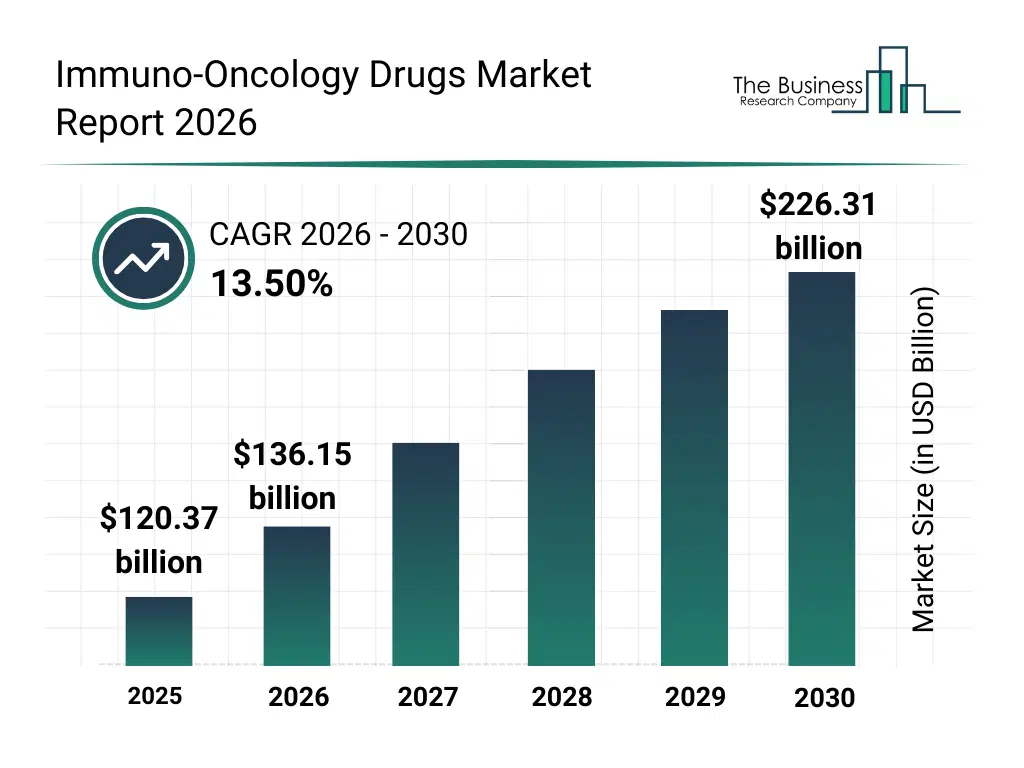
What Is The Immuno-Oncology Drugs Market Size and Share 2026?
The immuno-oncology drugs market size has grown rapidly in recent years. It will grow from $120.37 billion in 2025 to $136.15 billion in 2026 at a compound annual growth rate (CAGR) of 13.1%. The growth in the historic period can be attributed to limited availability of immuno-oncology drugs, reliance on conventional chemotherapy, increasing prevalence of cancers like melanoma and lung cancer, growing oncology-focused research initiatives, early regulatory approvals for monoclonal antibodies.What Is The Immuno-Oncology Drugs Market Growth Forecast?
The immuno-oncology drugs market size is expected to see rapid growth in the next few years. It will grow to $226.31 billion in 2030 at a compound annual growth rate (CAGR) of 13.5%. The growth in the forecast period can be attributed to development of bispecific antibodies and oncolytic virus therapies, expansion of personalized immunotherapy solutions, increasing investment in adoptive cell transfer therapies, rising healthcare expenditure on cancer treatment, integration of digital platforms for patient monitoring and clinical trials. Major trends in the forecast period include rising adoption of immune checkpoint inhibitors across multiple cancer types, growth in development of cancer vaccines and adoptive cell therapies, increasing focus on personalized immuno-oncology treatments, expansion of hospital and ambulatory surgical center-based immunotherapy programs, rising clinical trials and research activities in monoclonal antibodies.
Global Immuno-Oncology Drugs Market Segmentation
1) By Type: Immune Checkpoint Inhibitors, Immune System Modulators, Other Monoclonal Antibodies, Cancer Vaccines, Other Types 2) By Therapeutic Application: Melanoma, Lung Cancer, Blood Cancer, Renal Cell Carcinoma, Bladder Cancer, Other Therapeutic Application 3) By End-Users: Hospitals, Clinics, Ambulatory Surgical Centers, Other End-Users Subsegments: 1) By Immune Checkpoint Inhibitors: PD-1 Inhibitors, PD-L1 Inhibitors, CTLA-4 Inhibitors 2) By Immune System Modulators: Cytokines, Interferons, Colony-Stimulating Factors 3) By Other Monoclonal Antibodies: Targeted Monoclonal Antibodies, Bispecific Antibodies 4) By Cancer Vaccines: Preventive Cancer Vaccines, Therapeutic Cancer Vaccines 5) By Other Types: Adoptive Cell Transfer Therapies, Oncolytic Virus TherapiesWhat Is The Driver Of The Immuno-Oncology Drugs Market?
The increasing incidence of cancer cases is expected to propel the growth of the immuno-oncology drugs market going forward. Cancer is a disease in which abnormal cells grow uncontrollably, potentially spreading to other parts of the body and impairing normal bodily functions. The surge in cancer cases is fueled by factors such as aging populations, lifestyle changes, and improved cancer detection methods. Immuno-oncology drugs support this shift by stimulating the body’s immune system to target and eliminate cancer cells, providing more effective and precise treatment options. For instance, in 2023, according to Cancer Australia, an Australia-based government agency, an estimated 164,694 new cancer cases were diagnosed and 51,269 deaths occurred, with prostate, breast, melanoma, colorectal, and lung cancers being the most common, while rare cancers accounted for about one-third of diagnoses and 42% of deaths. Therefore, the increasing incidence of cancer cases is driving the growth of the immuno-oncology drugs industry.Key Players In The Global Immuno-Oncology Drugs Market
Major companies operating in the immuno-oncology drugs market are F. Hoffmann-La Roche Ltd., Merck & Co., Bristol-Myers Squibb Company, Amgen Inc, Johnson & Johnson, AstraZeneca Plc, Eli Lilly and Company, Novartis International AG, Pfizer Inc., Sanofi S.A., Arlak Biotech, Apikos Pharma, Kolaz biotech, CStone Pharma, CARsgen Therapeutics, JW Therapeutics, BeiGene, Takeda Pharmaceuticals, Astellas Pharma Inc, Otsuka Pharmaceutical Co Ltd, Legend Biotech Co, Zai Lab, Daiichi Pharmaceutical and Sankyo, AQVIDA GmbH, GlaxoSmithKline plc, Affimed Therapeutics, Autolus Therapeutics, Cellectis, Celyad, GammaDelta Therapeutics, Immunocore, Celon Pharma, Veropharm, Biocad, Selvita, OncoArendi Therapeutics Mabion, Fate Therapeutics, Forty-Seven, Arcus Biosciences, Gritstone Oncology, Rakuten Medical, Rubius Therapeutics, Allogene Therapeutics, Celgene Corporation, Bayer AG, Incyte Corporation, Recepta Biopharma, Sandoz Brazil, Life Pharma, Julphar, NewBridge Pharmaceuticals.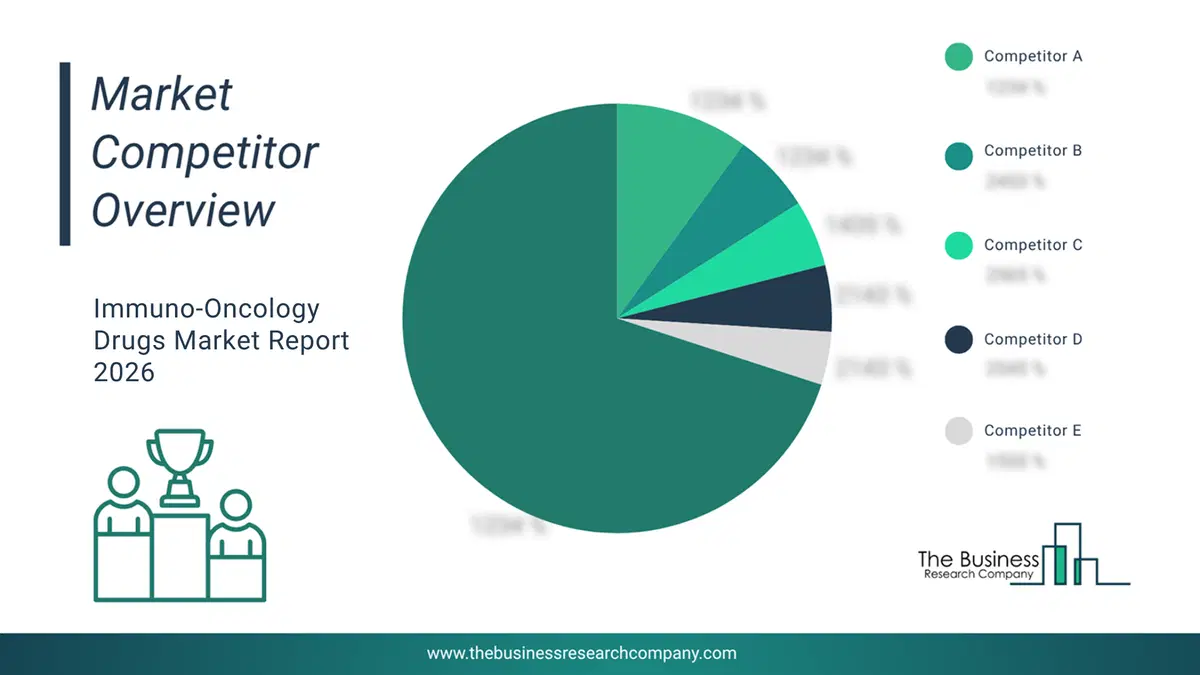
This chart is for illustrative purposes; the full report includes a detailed competitor analysis and comprehensive overview of the top 10 companies in the market.
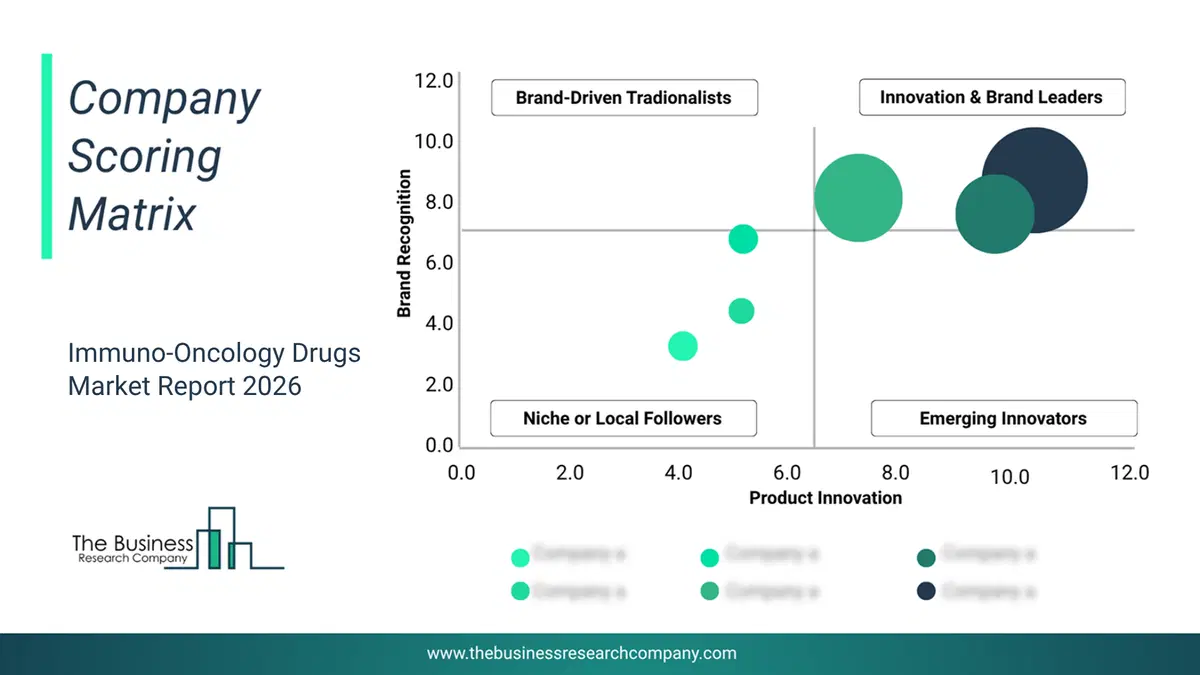
This chart maps companies by product innovation and brand strength, with bubble size indicating relative revenue, helping identify market leaders, challengers, and niche players. This is an illustrative chart; the full report provides a complete and accurate competitive analysis.
Global Immuno-Oncology Drugs Market Trends and Insights
Major companies operating in the immuno-oncology drugs market are collaborating to develop and commercialize a novel checkpoint antibody to enhance the effectiveness of cancer treatments. Strategic collaborations foster innovation through cross-disciplinary knowledge exchange, leading to the faster development of combination therapies, personalized treatments, and novel drug delivery systems. For instance, in March 2023, BioNTech SE, a Germany-based company, partnered with OncoC4 Inc, a US-based pharmaceutical company, to co-develop and commercialize a checkpoint antibody, specifically the anti-CTLA-4 monoclonal antibody candidate known as ONC-392. This partnership aims to enhance cancer treatment options across multiple solid tumor indications.What Are Latest Mergers And Acquisitions In The Immuno-Oncology Drugs Market?
In November 2023, AbbVie Inc., a US-based company, acquired ImmunoGen for $10.1 billion. With this acquisition, AbbVie aims to expand its portfolio by incorporating ImmunoGen's expertise in providing immuno-oncology drugs. ImmunoGen Inc. is a US-based company that offers immune checkpoint inhibitors.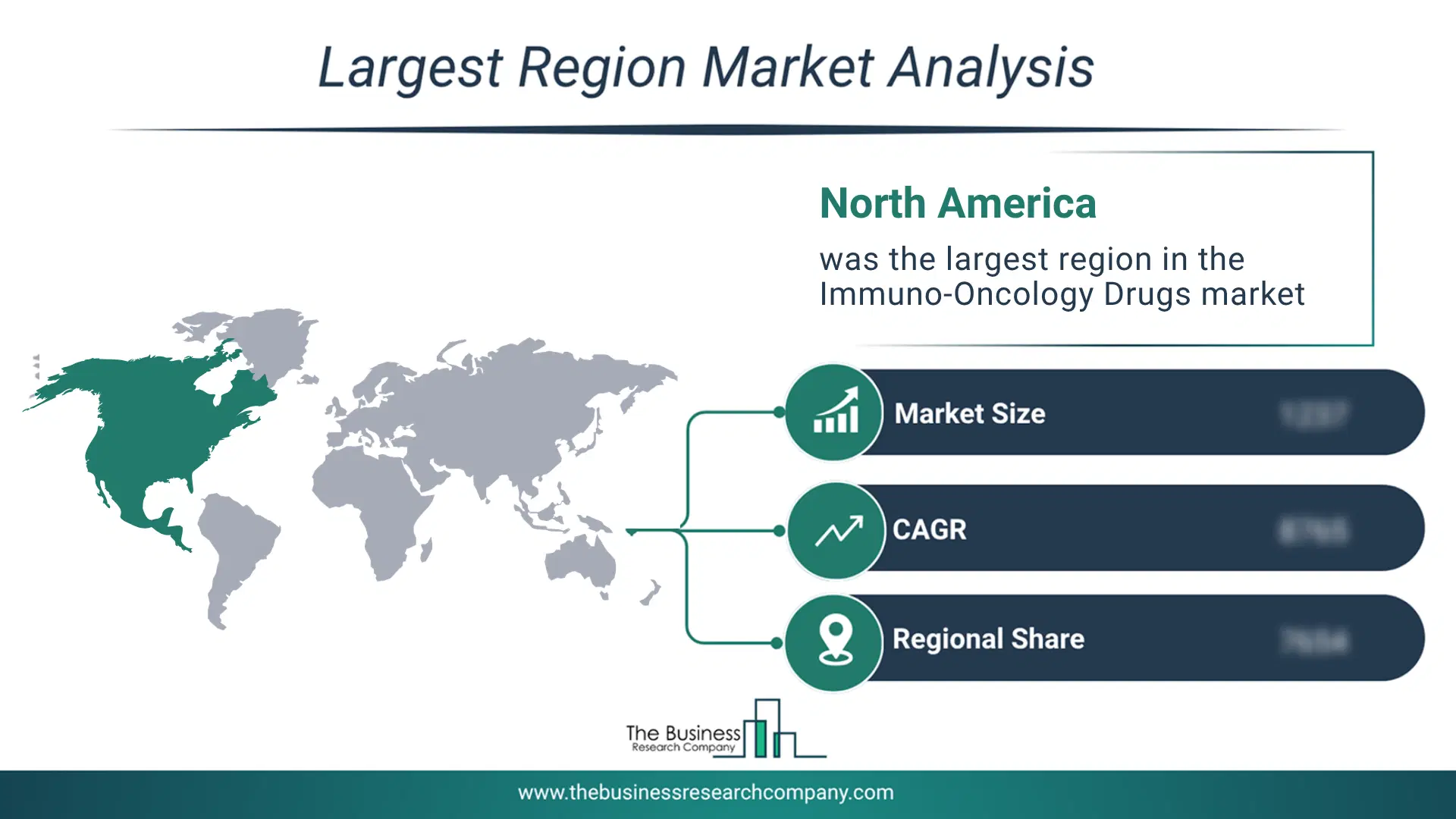
Regional Insights
North America was the largest region in the immuno-oncology drugs market in 2025. The regions covered in this market report are Asia-Pacific, South East Asia, Western Europe, Eastern Europe, North America, South America, Middle East, Africa. The countries covered in this market report are Australia, Brazil, China, France, Germany, India, Indonesia, Japan, Taiwan, Russia, South Korea, UK, USA, Canada, Italy, Spain.What Defines the Immuno-Oncology Drugs Market?
The immuno-oncology drugs market consists of sales of bevacizumab, alectinib, ibrutinib, imatinib, and palbociclib. Values in this market are ""factory gate values,"" that is, the value of goods sold by the manufacturers or creators of the goods, whether to other entities (including downstream manufacturers, wholesalers, distributors, and retailers) or directly to end customers. The value of goods in this market includes related services sold by the creators of the goods.How is Market Value Defined and Measured?
The market value is defined as the revenues that enterprises gain from the sale of goods and/or services within the specified market and geography through sales, grants, or donations in terms of the currency (in USD unless otherwise specified). The revenues for a specified geography are consumption values that are revenues generated by organizations in the specified geography within the market, irrespective of where they are produced. It does not include revenues from resales along the supply chain, either further along the supply chain or as part of other products.
This chart presents market attractiveness based on a quantitative evaluation of growth, competition, strategic alignment, and risk, offering a clear view of opportunity areas for decision-making. This chart is for illustrative purposes; the full report contains the complete analysis.

This chart highlights the Total Addressable Market (TAM) by estimating the maximum revenue opportunity using an assumption-driven approach, supporting strategic planning and opportunity sizing across markets. The chart is illustrative; the full report provides a more comprehensive analysis.
What Key Data and Analysis Are Included in the Immuno-Oncology Drugs Market Report 2026?
The immuno-oncology drugs market research report is one of a series of new reports from The Business Research Company that provides market statistics, including industry global market size, regional shares, competitors with the market share, detailed market segments, market trends and opportunities, and any further data you may need to thrive in the immuno-oncology drugs industry. The market research report delivers a complete perspective of everything you need, with an in-depth analysis of the current and future state of the industry.Immuno-Oncology Drugs Market Report Forecast Analysis
| Report Attribute | Details |
|---|---|
| Market Size Value In 2026 | $136.15 billion |
| Revenue Forecast In 2030 | $226.31 billion |
| Growth Rate | CAGR of 13.1% from 2026 to 2030 |
| Base Year For Estimation | 2025 |
| Actual Estimates/Historical Data | 2020-2025 |
| Forecast Period | 2026 - 2030 |
| Market Representation | Revenue in USD Billion and CAGR from 2026 to 2030 |
| Segments Covered | Type, Therapeutic Application, End-Users |
| Regional Scope | Asia-Pacific, Western Europe, Eastern Europe, North America, South America, Middle East, Africa |
| Country Scope | The countries covered in the report are Australia, Brazil, China, France, Germany, India, Indonesia, Japan, Taiwan, Russia, South Korea, UK, USA, Canada, Italy, Spain. |
| Key Companies Profiled | F. Hoffmann-La Roche Ltd., Merck & Co., Bristol-Myers Squibb Company, Amgen Inc, Johnson & Johnson, AstraZeneca Plc, Eli Lilly and Company, Novartis International AG, Pfizer Inc., Sanofi S.A., Arlak Biotech, Apikos Pharma, Kolaz biotech, CStone Pharma, CARsgen Therapeutics, JW Therapeutics, BeiGene, Takeda Pharmaceuticals, Astellas Pharma Inc, Otsuka Pharmaceutical Co Ltd, Legend Biotech Co, Zai Lab, Daiichi Pharmaceutical and Sankyo, AQVIDA GmbH, GlaxoSmithKline plc, Affimed Therapeutics, Autolus Therapeutics, Cellectis, Celyad, GammaDelta Therapeutics, Immunocore, Celon Pharma, Veropharm, Biocad, Selvita, OncoArendi Therapeutics Mabion, Fate Therapeutics, Forty-Seven, Arcus Biosciences, Gritstone Oncology, Rakuten Medical, Rubius Therapeutics, Allogene Therapeutics, Celgene Corporation, Bayer AG, Incyte Corporation, Recepta Biopharma, Sandoz Brazil, Life Pharma, Julphar, NewBridge Pharmaceuticals. |
| Customization Scope | Request for Customization |
| Pricing And Purchase Options | Explore Purchase Options |