
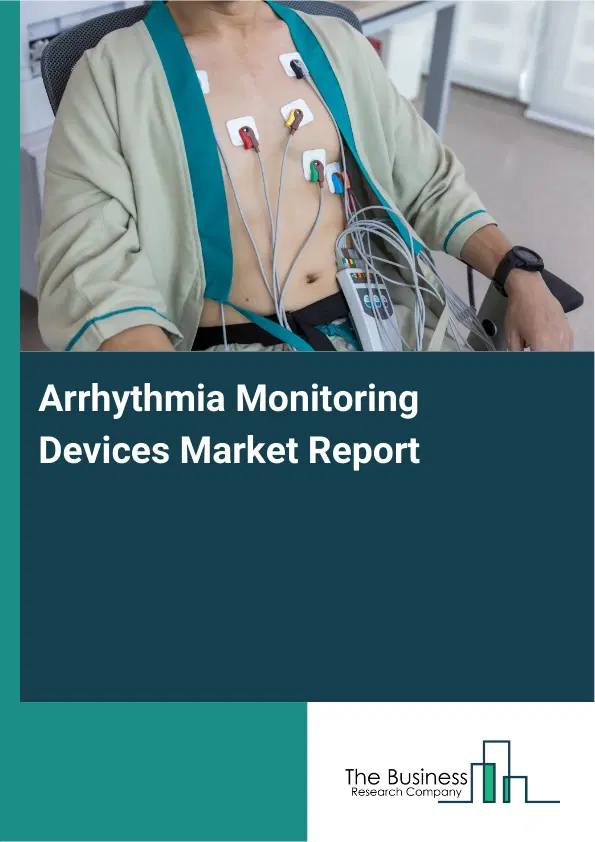
Arrhythmia Monitoring Devices Market Report 2026
Global Outlook – By Type (ECG, Implantable Monitors, Holter Monitors, Mobile Cardiac Telemetry), By Application (Bradycardia, Tachycardia, Atrial Fibrillation, Ventricular Fibrillation, Premature Contraction, Other Applications), By End-User (Hospitals And Diagnostic Centers, Ambulatory Centers) – Market Size, Trends, Strategies, and Forecast to 2030
Arrhythmia Monitoring Devices Market Overview
• Arrhythmia Monitoring Devices market size has reached to $8.16 billion in 2025 • Expected to grow to $13.15 billion in 2030 at a compound annual growth rate (CAGR) of 9.9% • Growth Driver: Elevating Demand For Arrhythmia Monitoring Devices Fueled By Rising Cardiovascular Disease Rates • Market Trend: Impact Of Technology On Advancing The Arrhythmia Monitoring Devices Market • North America was the largest region in 2025 and Asia-Pacific is the fastest growing region.What Is Covered Under Arrhythmia Monitoring Devices Market?
Arrhythmia monitoring devices are equipment that determines the type and cause of abnormal heart rhythms. The arrhythmia monitoring devices are used to track and monitor irregular heart rhythms. Arrhythmia is a heart condition that affects the pace or rhythm of the heartbeat. The main types of arrhythmia monitoring devices are ECG, implantable monitors, holter monitors and mobile cardiac telemetry. ECG is used to detect electrical impulses generated by the heart. An electrocardiogram (ECG or EKG) is a device that measures the electrical signal from the heart to diagnose various cardiac problems. The different applications of arrhythmia monitoring devices include bradycardia, tachycardia, atrial fibrillation, ventricular fibrillation, premature contraction and other applications. Arrhythmia monitoring devices are used by end-users including hospitals and diagnostic centers, ambulatory centers and other end users.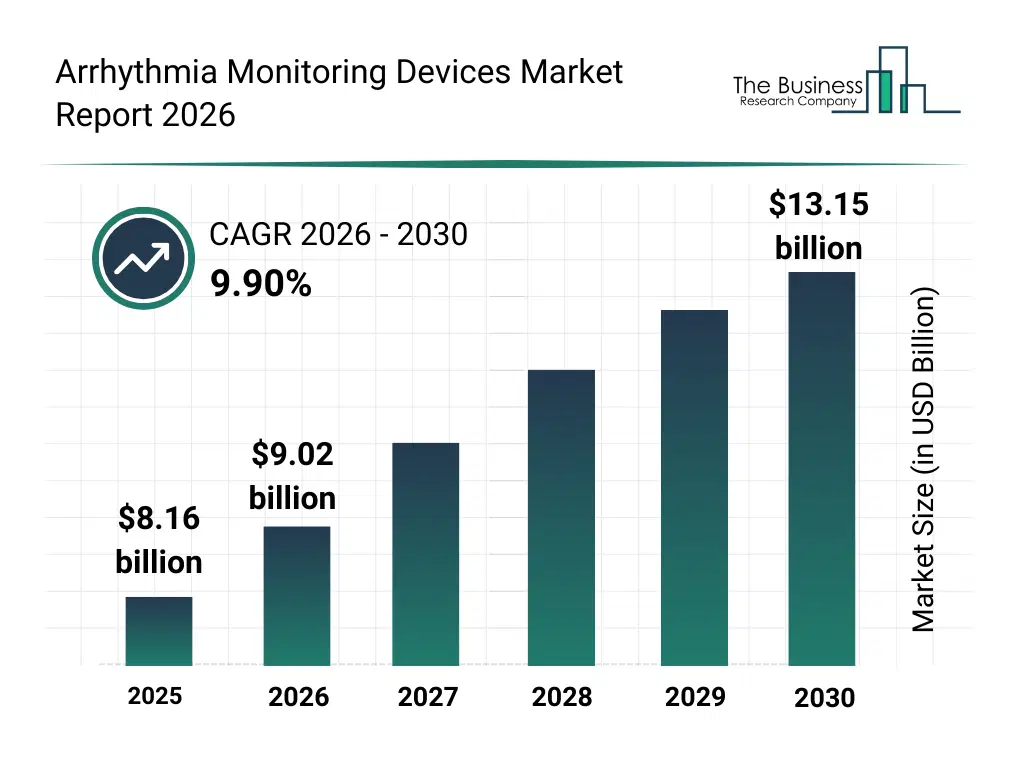
What Is The Arrhythmia Monitoring Devices Market Size and Share 2026?
The arrhythmia monitoring devices market size has grown rapidly in recent years. It will grow from $8.16 billion in 2025 to $9.02 billion in 2026 at a compound annual growth rate (CAGR) of 10.5%. The growth in the historic period can be attributed to rising prevalence of cardiovascular diseases, increased use of ECG-based diagnostics, expansion of cardiac care facilities, growing awareness of arrhythmia-related risks, availability of portable monitoring devices.What Is The Arrhythmia Monitoring Devices Market Growth Forecast?
The arrhythmia monitoring devices market size is expected to see strong growth in the next few years. It will grow to $13.15 billion in 2030 at a compound annual growth rate (CAGR) of 9.9%. The growth in the forecast period can be attributed to increasing adoption of remote patient monitoring, rising demand for continuous real-time cardiac data, expansion of home-based cardiac diagnostics, growing integration of ai-driven analytics, increasing focus on preventive cardiology. Major trends in the forecast period include increasing adoption of remote cardiac monitoring solutions, rising use of wearable arrhythmia detection devices, growing integration of ai-based rhythm analysis, expansion of long-term continuous monitoring systems, enhanced focus on early arrhythmia diagnosis.
Global Arrhythmia Monitoring Devices Market Segmentation
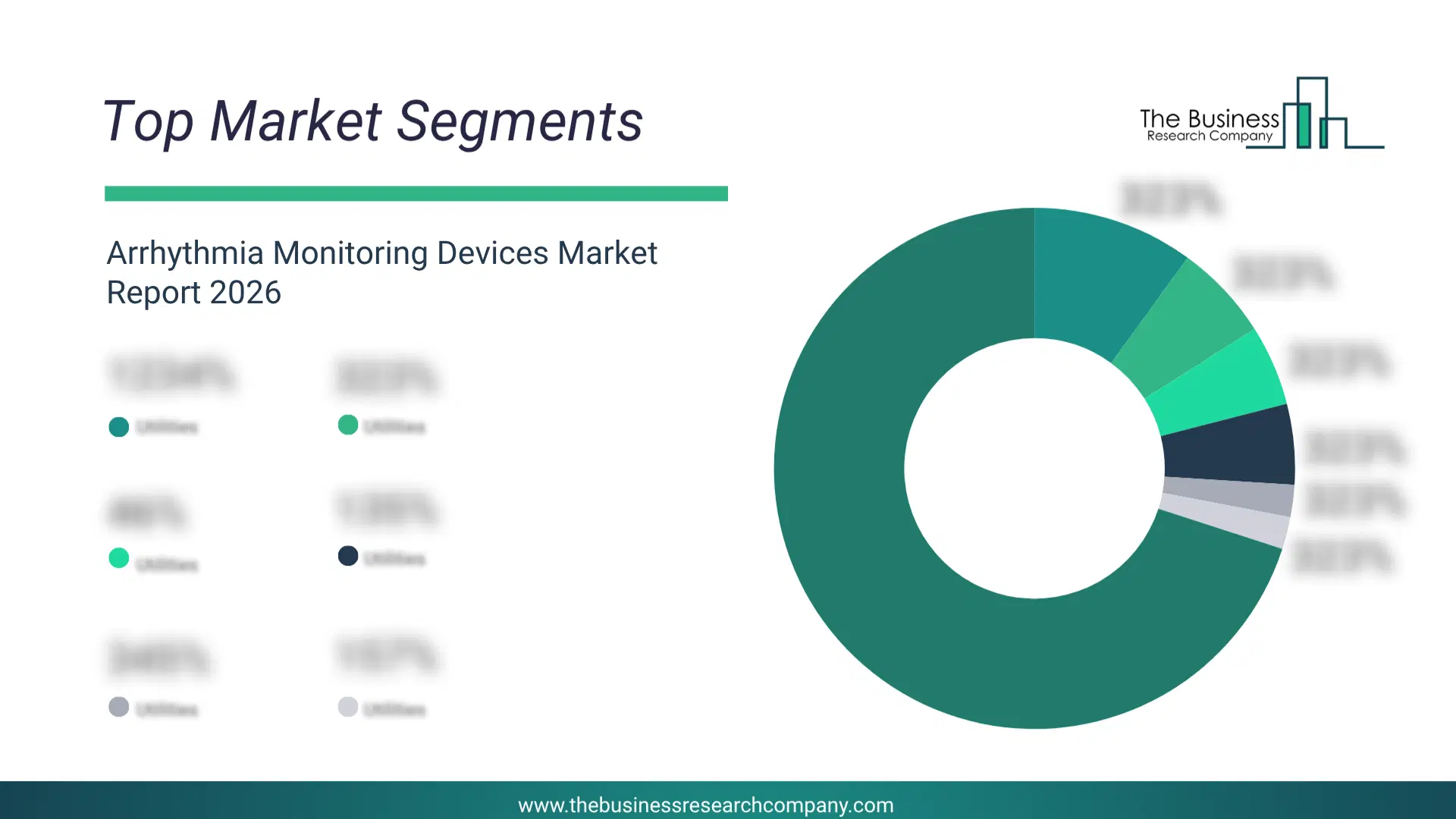
1) By Type: ECG, Implantable Monitors, Holter Monitors, Mobile Cardiac Telemetry 2) By Application: Bradycardia, Tachycardia, Atrial Fibrillation, Ventricular Fibrillation, Premature Contraction, Other Applications 3) By End-User: Hospitals And Diagnostic Centers, Ambulatory Centers Subsegments: 1) By ECG (Electrocardiogram): Resting ECG Machines, Stress ECG Machines, 12-Lead ECG Systems 2) By Implantable Monitors: Implantable Loop Recorders (ILRs), Subcutaneous Implantable Cardioverter Defibrillators (S-ICDs) 3) By Holter Monitors: 24-Hour Holter Monitors, 48-Hour Holter Monitors, 7-Day Holter Monitors 4) By Mobile Cardiac Telemetry: Wireless Telemetry Devices, Smartphone-Integrated Telemetry SystemsWhat Is The Driver Of The Arrhythmia Monitoring Devices Market?
The rising incidence of cardiovascular diseases is expected to drive the arrhythmia monitoring devices market. Cardiovascular disease (CVD) refers to disorders that affect the heart or blood vessels. Arrhythmia monitoring devices are used to monitor irregular heart rates, which is the primary symptom of most cardiovascular diseases. An increase in the incidence of cardiovascular diseases increases the need for arrhythmia monitoring devices. For instance, in January 2024, according to the American Heart Association, a US-based non-profit organization, the age-adjusted death rate from cardiovascular disease increased to 233.3 per 100,000 in 2024, up 4.0% from 224.4 per 100,000 in 2023. Therefore, the rising incidence of cardiovascular diseases will drive the arrhythmia monitoring devices industry.Key Players In The Global Arrhythmia Monitoring Devices Market
Major companies operating in the arrhythmia monitoring devices market are Abbott Laboratories, Medtronic plc, Biotronik Inc., iRhythm Technologies Inc., GE HealthCare Technologies Inc., Koninklijke Philips NV, ACS Diagnostics Inc., AliveCor Inc., Medi-Lynx Cardiac Monitoring LLC, Spacelabs Healthcare Inc., Fukuda Denshi Co. Ltd., Applied Cardiac Systems Inc., BIOTRONIK SE & Co. KG, Nihon Kohden Corporation, CardioNet LLC, Bardy Diagnostics Inc., BioTelemetry Inc., Boston Scientific Corporation, CardioComm Solutions Inc., Cardiac Insight Inc., Cardiac Science Corporation, Johnson & Johnson, Preventice Solutions Inc., Qardio Inc., ZOLL Medical Corporation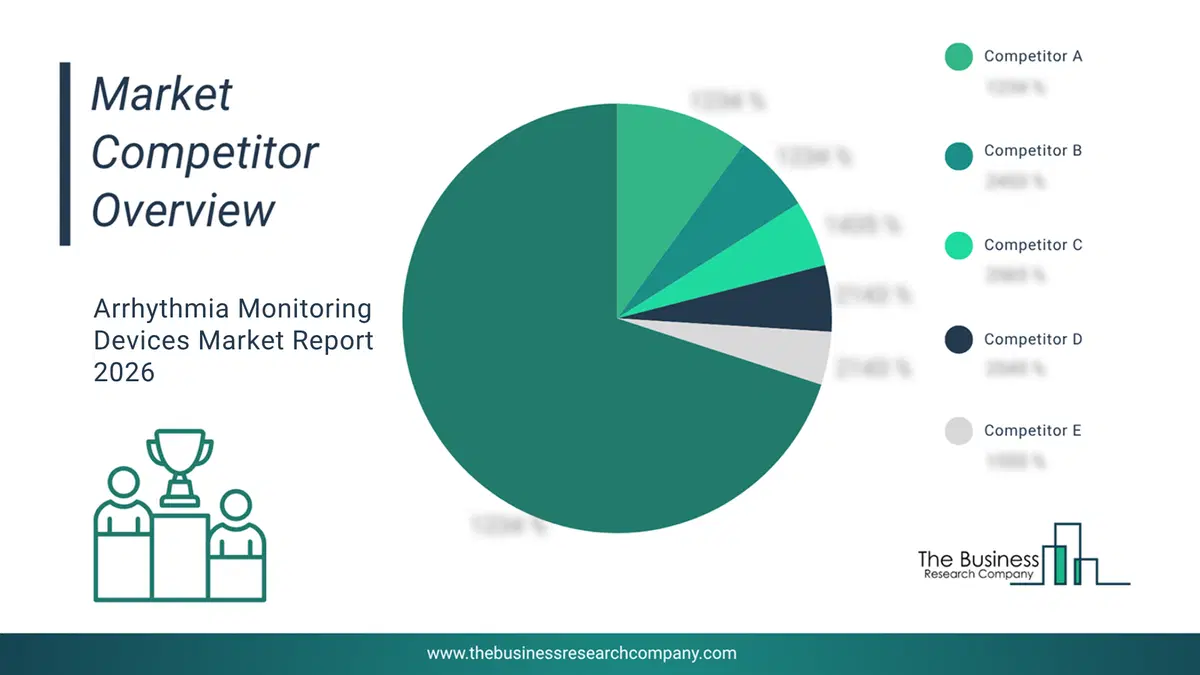
This chart is for illustrative purposes; the full report includes a detailed competitor analysis and comprehensive overview of the top 10 companies in the market.
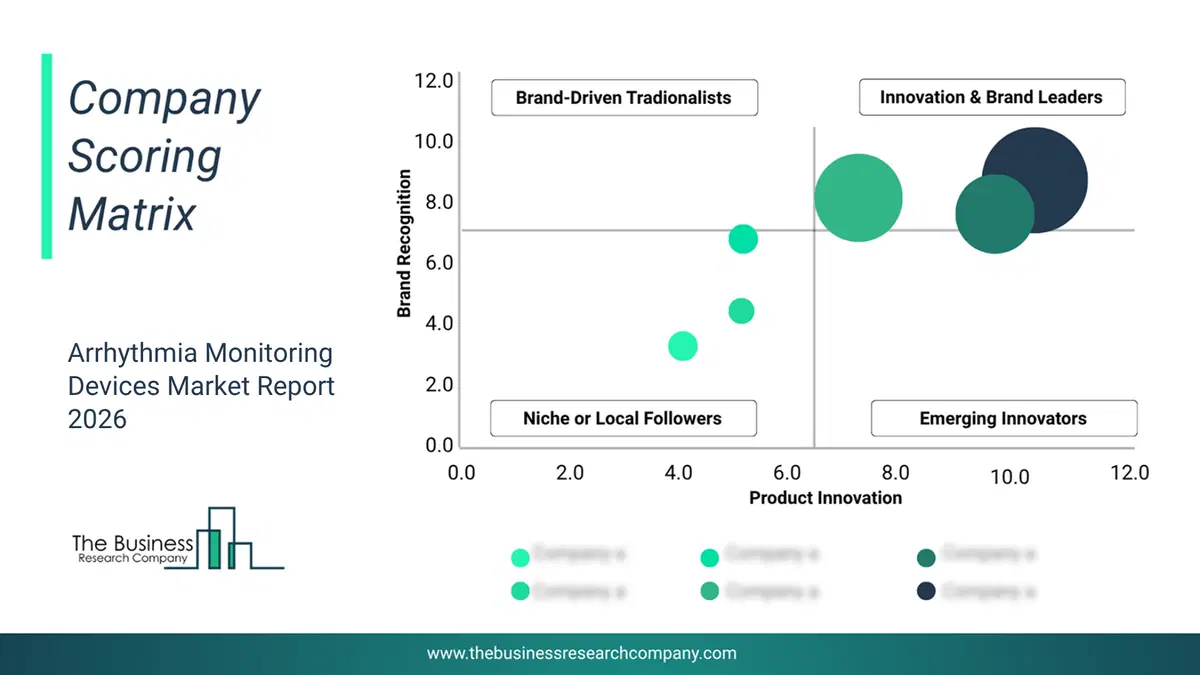
This chart maps companies by product innovation and brand strength, with bubble size indicating relative revenue, helping identify market leaders, challengers, and niche players. This is an illustrative chart; the full report provides a complete and accurate competitive analysis.
Global Arrhythmia Monitoring Devices Market Trends and Insights
Technological advancements are a key trend in the arrhythmia monitoring devices market. Major companies operating in the arrhythmia monitoring devices market are integrating novel technologies such as AI, detection technologies, and others to increase accuracy and manage data efficiently. For instance, in September 2024, iRhythm Technologies, a US-based digital healthcare company, announced the Japanese regulatory approval for the Zio ECG Monitoring System. The Zio system marks a major leap forward in cardiac arrhythmia diagnostics compared to traditional Holter monitoring, offering superior clinical accuracy to assist doctors in making precise diagnoses from the start. iRhythm's deep learning technology can accurately classify a wide range of distinct arrhythmias, achieving diagnostic performance on par with that of cardiologists. In clinical practice, this service has the potential to reduce the frequency of misdiagnosed computerized ECG interpretations and enhance overall clinical efficiency.What Are Latest Mergers And Acquisitions In The Arrhythmia Monitoring Devices Market?
In May 2024, WearLinq, a US-based provider of digital healthcare solutions, acquired AMI Cardiac Monitoring for an undisclosed amount. As a result of the acquisition, the company will be able to provide comprehensive clinical services nationwide, offering greater access to its eWave six-lead wearable ECG monitor, which recently received 510(k) clearance from the U.S. Food and Drug Administration (FDA). AMI Cardiac Monitoring is a US-based manufacturer of ECG devices.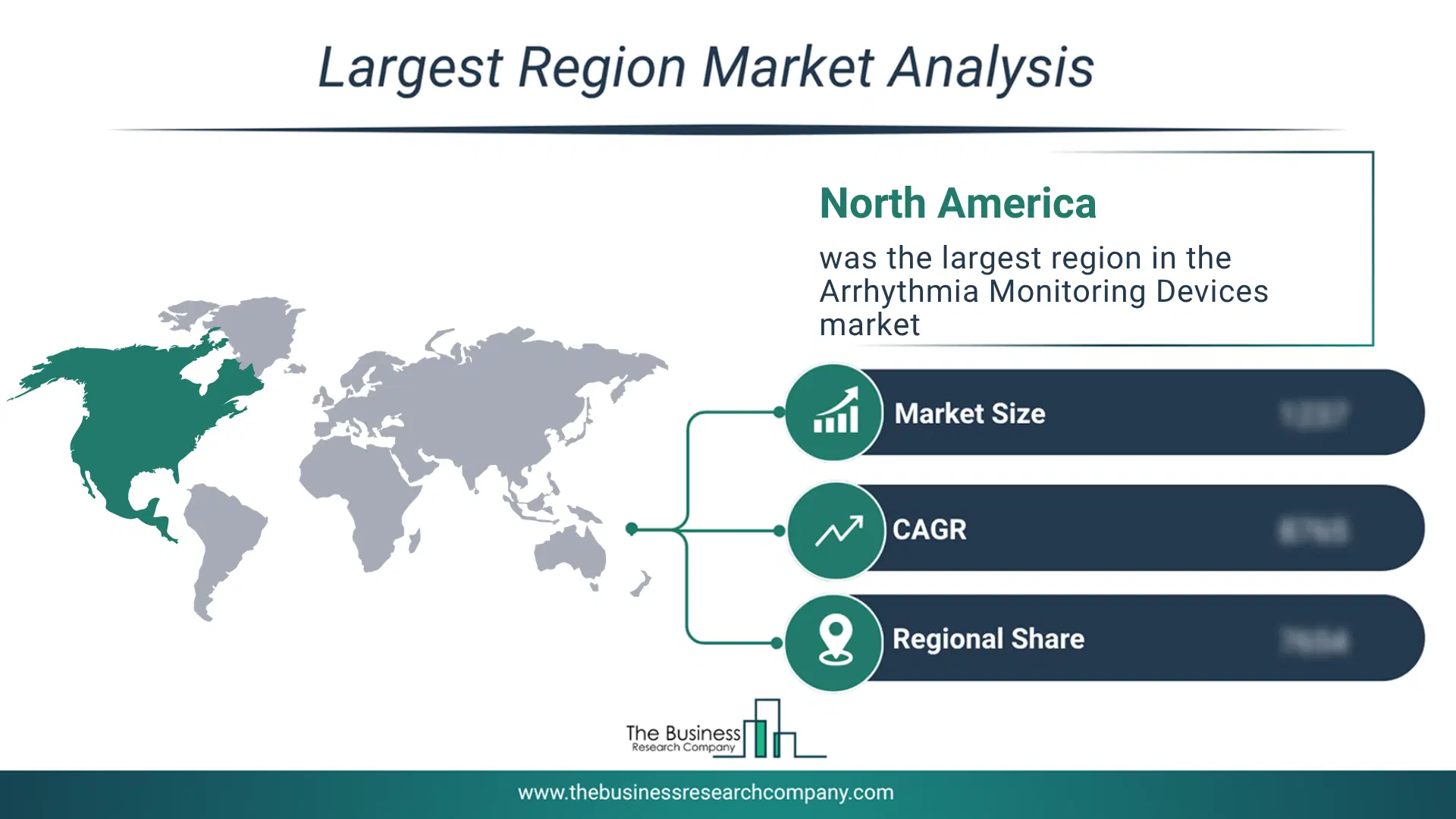
Regional Outlook
North America was the largest region in the arrhythmia monitoring devices market in 2025. Asia-Pacific is expected to be the fastest-growing region in the forecast period. The regions covered in this market report are Asia-Pacific, South East Asia, Western Europe, Eastern Europe, North America, South America, Middle East, Africa. The countries covered in this market report are Australia, Brazil, China, France, Germany, India, Indonesia, Japan, Taiwan, Russia, South Korea, UK, USA, Canada, Italy, SpainWhat Defines the Arrhythmia Monitoring Devices Market?
The arrhythmia monitoring devices market consists of sales of cardiac event monitors, loop memory monitor, patch recorder, and symptom event monitor. Values in this market are ‘factory gate’ values, that is the value of goods sold by the manufacturers or creators of the goods, whether to other entities (including downstream manufacturers, wholesalers, distributors and retailers) or directly to end customers. The value of goods in this market includes related services sold by the creators of the goods.How is Market Value Defined and Measured?
The market value is defined as the revenues that enterprises gain from the sale of goods and/or services within the specified market and geography through sales, grants, or donations in terms of the currency (in USD unless otherwise specified). The revenues for a specified geography are consumption values that are revenues generated by organizations in the specified geography within the market, irrespective of where they are produced. It does not include revenues from resales along the supply chain, either further along the supply chain or as part of other products.
This chart presents market attractiveness based on a quantitative evaluation of growth, competition, strategic alignment, and risk, offering a clear view of opportunity areas for decision-making. This chart is for illustrative purposes; the full report contains the complete analysis.

This chart highlights the Total Addressable Market (TAM) by estimating the maximum revenue opportunity using an assumption-driven approach, supporting strategic planning and opportunity sizing across markets. The chart is illustrative; the full report provides a more comprehensive analysis.
What Key Data and Analysis Are Included in the Arrhythmia Monitoring Devices Market Report 2026?
The arrhythmia monitoring devices market research report is one of a series of new reports from The Business Research Company that provides market statistics, including industry global market size, regional shares, competitors with the market share, detailed market segments, market trends and opportunities, and any further data you may need to thrive in the arrhythmia monitoring devices industry. The market research report delivers a complete perspective of everything you need, with an in-depth analysis of the current and future state of the industry.Arrhythmia Monitoring Devices Market Report Forecast Analysis
| Report Attribute | Details |
|---|---|
| Market Size Value In 2026 | $9.02 billion |
| Revenue Forecast In 2030 | $13.15 billion |
| Growth Rate | CAGR of 9.9% from 2026 to 2030 |
| Base Year For Estimation | 2025 |
| Actual Estimates/Historical Data | 2020-2025 |
| Forecast Period | 2026 - 2030 |
| Market Representation | Revenue in USD Billion and CAGR from 2026 to 2030 |
| Segments Covered | Type, Application, End-User |
| Regional Scope | Asia-Pacific, Western Europe, Eastern Europe, North America, South America, Middle East, Africa |
| Country Scope | The countries covered in the report are Australia, Brazil, China, France, Germany, India, Indonesia, Japan, Taiwan, Russia, South Korea, UK, USA, Canada, Italy, Spain. |
| Key Companies Profiled | Abbott Laboratories, Medtronic plc, Biotronik Inc., iRhythm Technologies Inc., GE HealthCare Technologies Inc., Koninklijke Philips NV, ACS Diagnostics Inc., AliveCor Inc., Medi-Lynx Cardiac Monitoring LLC, Spacelabs Healthcare Inc., Fukuda Denshi Co. Ltd., Applied Cardiac Systems Inc., BIOTRONIK SE & Co. KG, Nihon Kohden Corporation, CardioNet LLC, Bardy Diagnostics Inc., BioTelemetry Inc., Boston Scientific Corporation, CardioComm Solutions Inc., Cardiac Insight Inc., Cardiac Science Corporation, Johnson & Johnson, Preventice Solutions Inc., Qardio Inc., ZOLL Medical Corporation |
| Customization Scope | Request for Customization |
| Pricing And Purchase Options | Explore Purchase Options |