
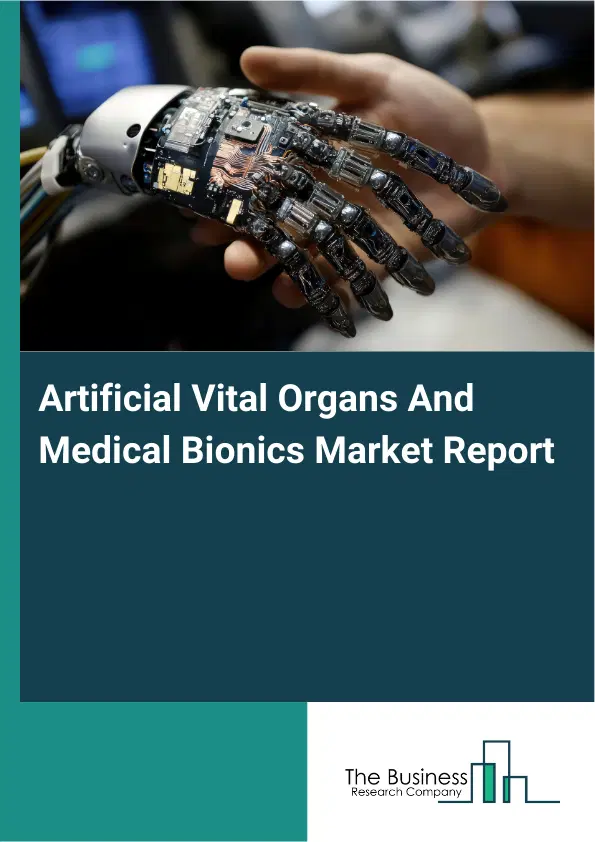
Artificial Vital Organs And Medical Bionics Market Report 2026
Global Outlook – By Type (Artificial Vital Organs, Medical Bionics), By Technology (Mechanical, Electronic), By Application (Hospitals, Clinics, Other Applications) – Market Size, Trends, Strategies, and Forecast to 2030
Artificial Vital Organs And Medical Bionics Market Overview
• Artificial Vital Organs And Medical Bionics market size has reached to $46.95 billion in 2025 • Expected to grow to $70.67 billion in 2030 at a compound annual growth rate (CAGR) of 8.5% • Growth Driver: Increasing Prevalence Of Organ Failures Fuels Market Expansion For Artificial Vital Organs And Medical Bionics • Market Trend: Enhancing Patient Outcomes With Advanced Medical Devices • North America was the largest region in 2025 and Asia-Pacific is the fastest growing region.What Is Covered Under Artificial Vital Organs And Medical Bionics Market?
Artificial vital organs are man-made devices designed to replicate the function of critical organs, while medical bionics involves integrating biological and electronic systems to restore or enhance body functions. The primary goal is to sustain life and improve the quality of life for individuals with severe organ failure and restore lost functions or improve physical capabilities. The main artificial vital organs and medical bionics include artificial vital organs and medical bionics. Artificial vital organs are engineered devices that replicate the functions of natural organs, such as the heart, lungs, or kidneys, to sustain life in patients with organ failure. It can be both mechanical and electronic and is frequently applied by hospitals, clinics, and others.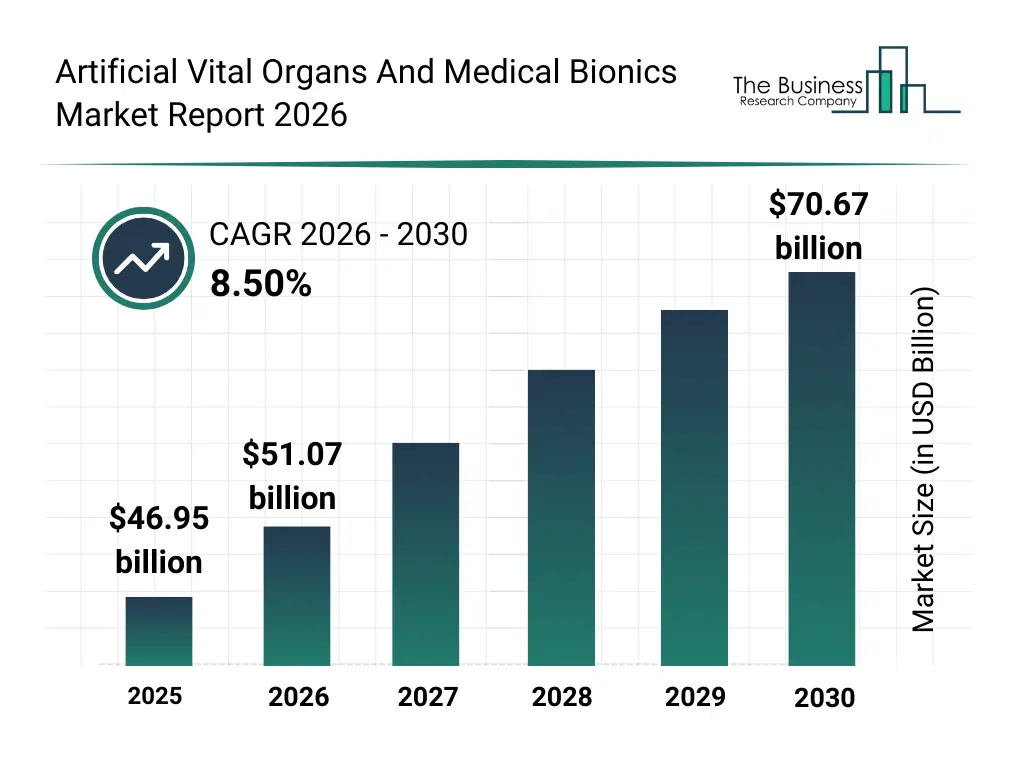
What Is The Artificial Vital Organs And Medical Bionics Market Size and Share 2026?
The artificial vital organs and medical bionics market size has grown strongly in recent years. It will grow from $46.95 billion in 2025 to $51.07 billion in 2026 at a compound annual growth rate (CAGR) of 8.8%. The growth in the historic period can be attributed to limited availability of artificial organ technologies, high cost of early bionic devices, reliance on mechanical organ systems, increasing prevalence of organ failure, initial regulatory approvals for medical bionic devices.What Is The Artificial Vital Organs And Medical Bionics Market Growth Forecast?
The artificial vital organs and medical bionics market size is expected to see strong growth in the next few years. It will grow to $70.67 billion in 2030 at a compound annual growth rate (CAGR) of 8.5%. The growth in the forecast period can be attributed to advancements in electronic and smart bionic devices, rising investment in r&d for artificial organs, increasing adoption of minimally invasive implantation procedures, growth in personalized medicine and patient-specific solutions, expansion of hospitals and clinics offering bionic therapies. Major trends in the forecast period include rising adoption of artificial heart and kidney devices, increasing integration of neural implants and bionic organs, growth in rehabilitation and assistive technologies, emphasis on customizable and patient-specific solutions, expansion of clinical trials and research applications.
Global Artificial Vital Organs And Medical Bionics Market Segmentation
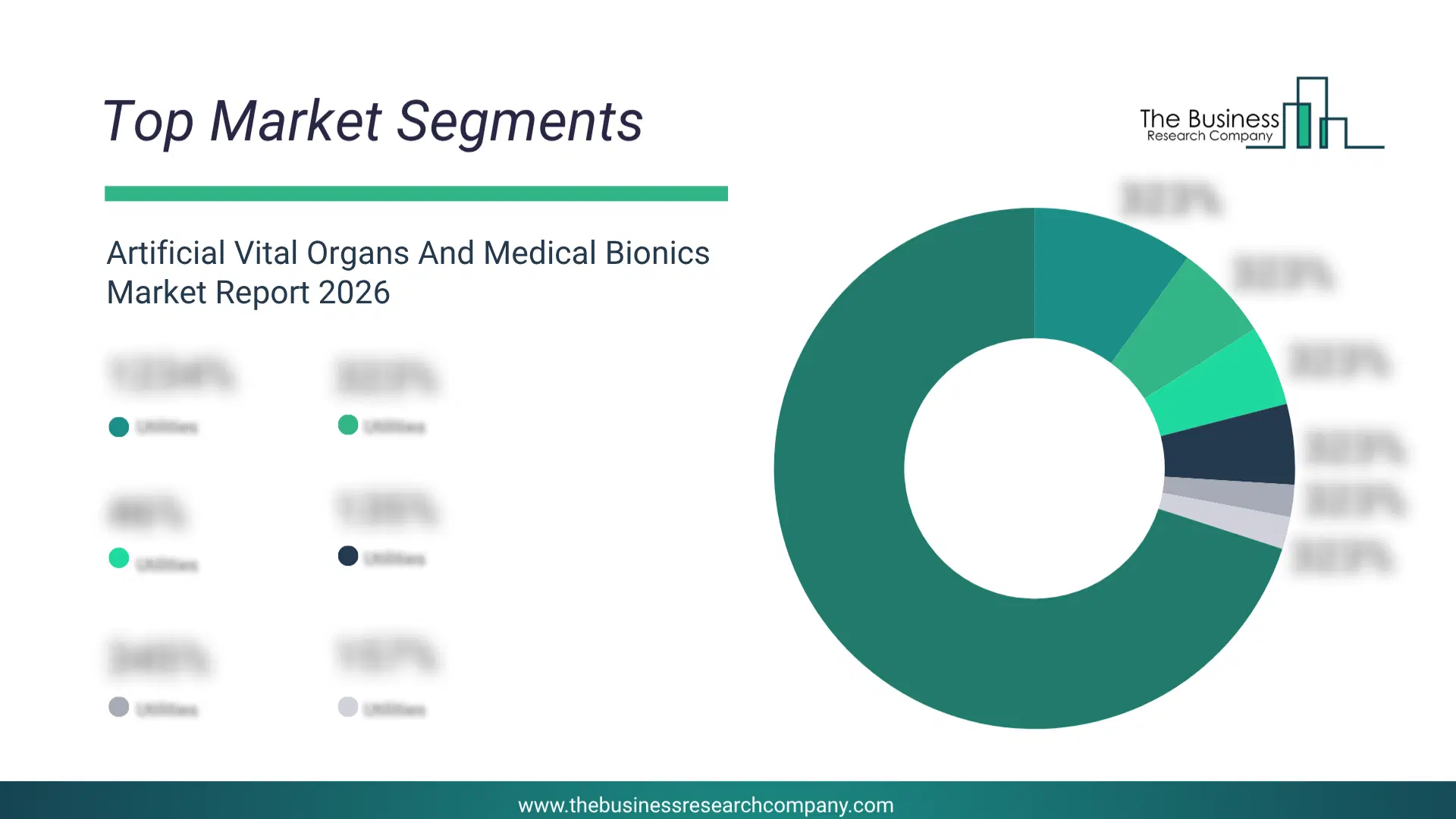
1) By Type: Artificial Vital Organs, Medical Bionics 2) By Technology: Mechanical, Electronic 3) By Application: Hospitals, Clinics, Other Applications Subsegments: 1) By Artificial Vital Organs: Artificial Heart, Artificial Kidney, Artificial Liver, Artificial Lungs, Artificial Pancreas 2) By Medical Bionics: Bionic Limbs, Bionic Eyes, Bionic Ears, Neural Implants, Bionic OrgansWhat Are The Drivers Of The Artificial Vital Organs And Medical Bionics Market?
The rising prevalence of organ failures is expected to propel the growth of the artificial vital organs and medical bionics market going forward. Organ failure is a critical condition where an organ or multiple organs lose their ability to perform their essential functions, leading to severe health complications and potentially life-threatening consequences. Rising organ failures are driven by higher rates of chronic conditions such as diabetes, hypertension, and heart disease, as well as inherited conditions and genetic predispositions that can lead to organ failure. Artificial vital organs and medical bionics help address organ failures by providing life-sustaining support and restoring critical functions in patients with damaged organs. For instance, in January 2025, according to the Organ Procurement and Transplantation Network, a US-based non-profit scientific organ donation transplantation system, Organ transplants exceeded 48,000 in 2024, a 3.3 percent increase from the transplants performed in 2023. Therefore, the rising prevalence of organ failures will drive the growth of the artificial vital organs and medical bionics industry. The rise in elderly population is expected to drive the growth of the artificial vital organs and medical bionics market going forward. The elderly population comprises people aged 60 or 65 and older, needing tailored care and services due to aging-related health and lifestyle challenges. The elderly population is rising due to increasing life expectancy driven by improved healthcare and living conditions. Artificial vital organs and medical bionics support the elderly population by replacing or enhancing failing biological functions to improve mobility, independence, and overall quality of life. For instance, in January 2024, according to a report published by Population Reference Bureau, a US-based non-profit organization responsible for collecting stats for research and academic purpose, the number of Americans aged 65 and older is expected to rise from 58 million in 2022 to 82 million by 2050, marking a 47% increase. As a result, this age group’s proportion of the total U.S. population will grow from 17% to 23% during this period. Therefore, the rise in elderly population is driving the growth of the artificial vital organs and medical bionics industry.Key Players In The Global Artificial Vital Organs And Medical Bionics Market
Major companies operating in the artificial vital organs and medical bionics market are Abiomed Inc., Abbott Laboratories, Medtronic Plc, Fresenius Medical Care AG, Asahi Kasei Corporation, Boston Scientific Corporation, Biomet Inc., Terumo Corporation, Edwards Lifesciences Corporation, Otto Bock Healthcare GmbH, Nikkiso Co. Ltd., Cochlear Ltd., Ossur, Cirtec Medical, Heartware International Inc., Berlin Heart GmbH, SynCardia Systems LLC, Ekso Bionics Holdings Inc., Jarvik Heart Inc., CARMAT, Iwalk Inc., BiVACOR Inc., Nano Retina Inc., Second Sight Medical Products Inc., St. Jude Medical Inc.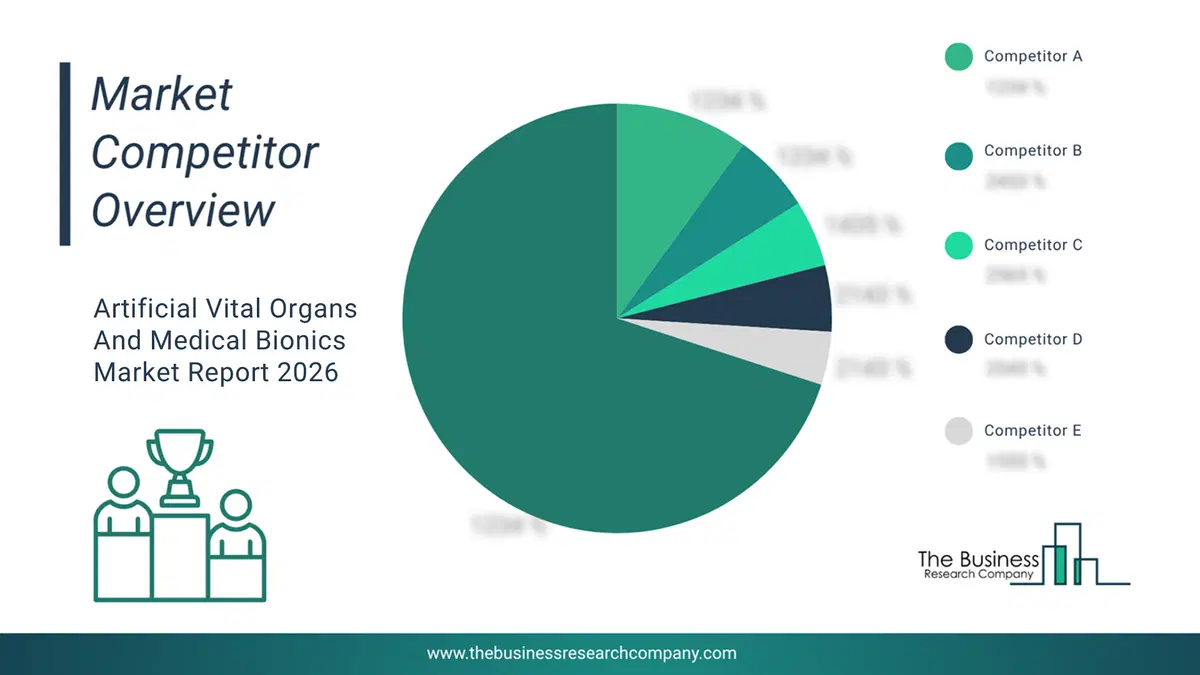
This chart is for illustrative purposes; the full report includes a detailed competitor analysis and comprehensive overview of the top 10 companies in the market.
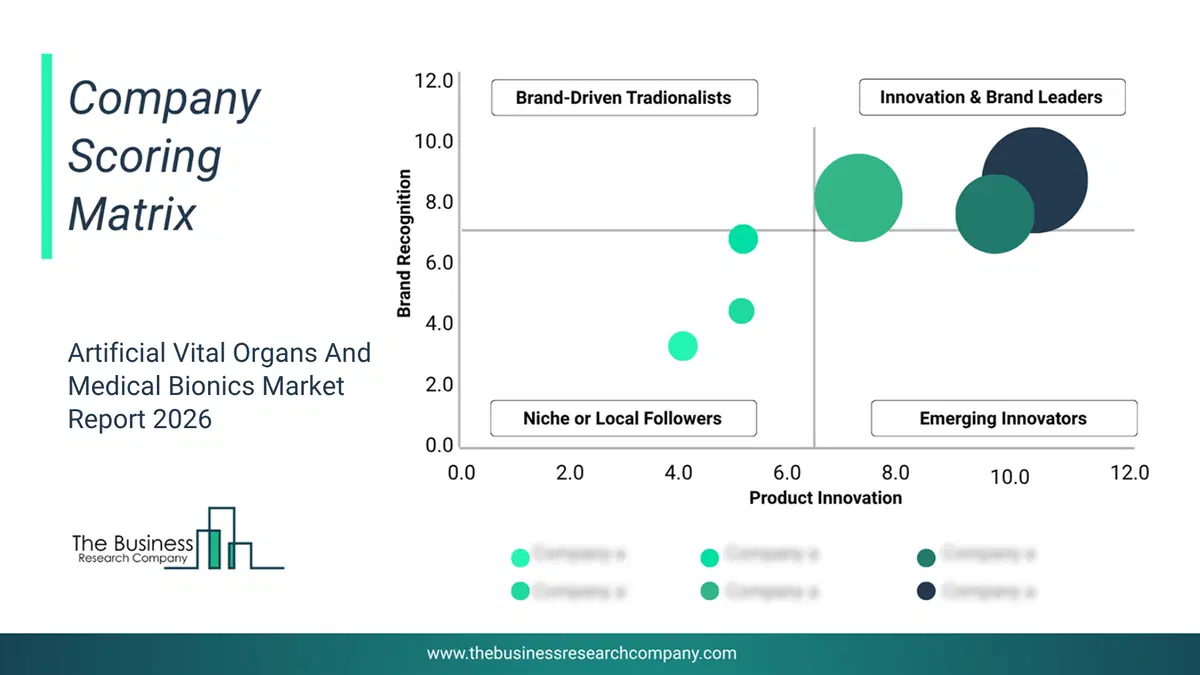
This chart maps companies by product innovation and brand strength, with bubble size indicating relative revenue, helping identify market leaders, challengers, and niche players. This is an illustrative chart; the full report provides a complete and accurate competitive analysis.
Global Artificial Vital Organs And Medical Bionics Market Trends and Insights
Major companies operating in the artificial vital organs and medical bionics market are developing technologically advanced products, such as bionic pancreas, to enhance patient outcomes and address the growing demand for advanced medical solutions. A bionic pancreas is an advanced medical device designed to automate blood sugar regulation in people with diabetes by mimicking the functions of a healthy pancreas. For instance, in December 2023, Beta Bionics Inc., a US-based medical technology company, launched the iLet Bionic Pancreas, an autonomous insulin delivery system that simplifies diabetes management by automatically adjusting insulin delivery based on the user’s weight. This eliminates the need for healthcare providers to configure complex settings such as correction factors, insulin-to-carb ratios, or pre-set basal rates, thereby reducing the burden on both patients and physicians.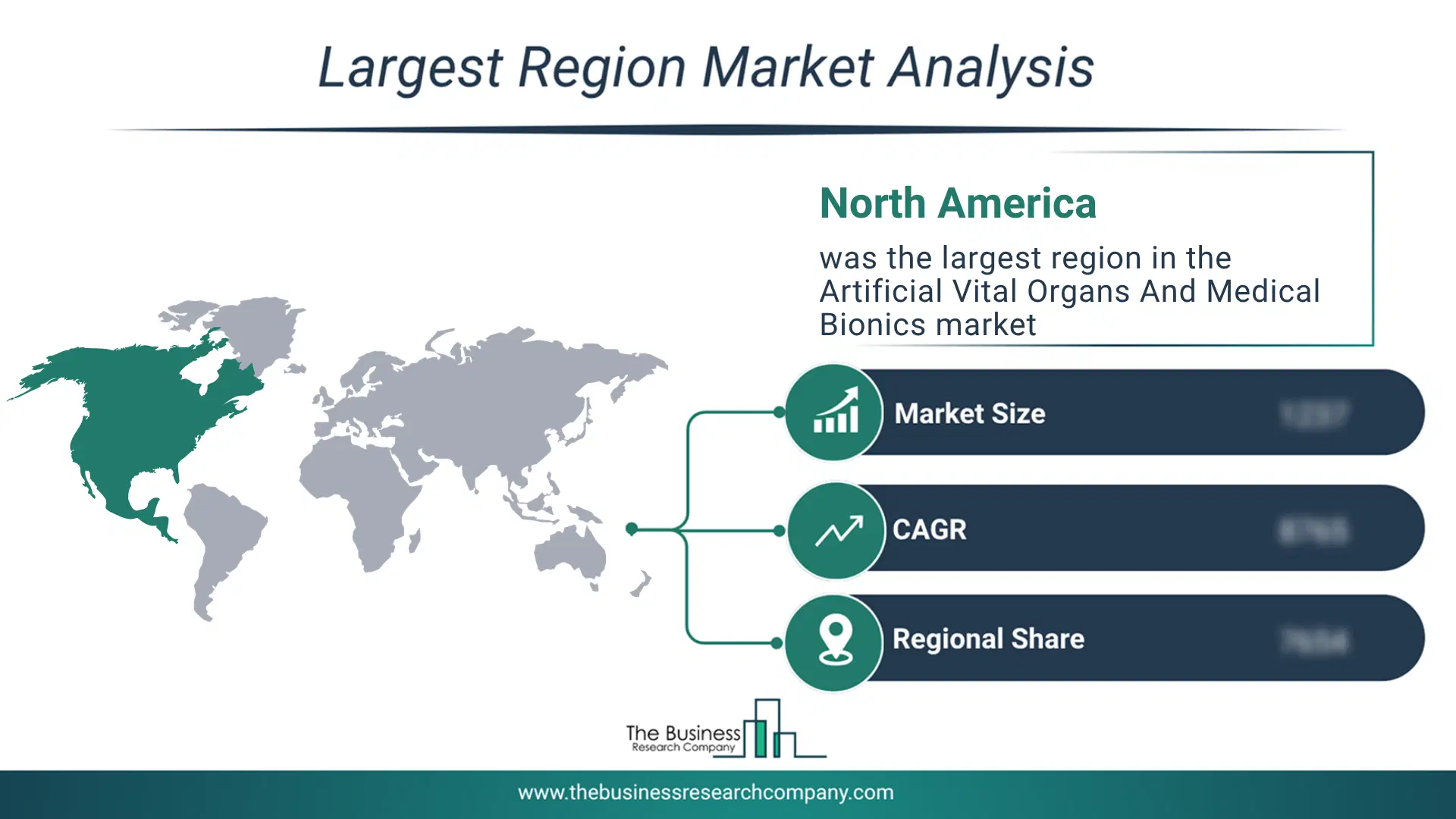
Regional Outlook
North America was the largest region in the artificial vital organs and medical bionics market in 2025. Asia-Pacific is expected to be the fastest-growing region in the forecast period. The regions covered in this market report are Asia-Pacific, South East Asia, Western Europe, Eastern Europe, North America, South America, Middle East, Africa. The countries covered in this market report are Australia, Brazil, China, France, Germany, India, Indonesia, Japan, Taiwan, Russia, South Korea, UK, USA, Canada, Italy, SpainWhat Defines the Artificial Vital Organs And Medical Bionics Market?
The artificial vital organs and medical bionics market consists of sales of artificial hearts, artificial kidneys, artificial lungs, artificial pancreas, bionic limbs, cochlear implants, retinal implants, neuroprosthetics. Values in this market are ‘factory gate’ values, that is the value of goods sold by the manufacturers or creators of the goods, whether to other entities (including downstream manufacturers, wholesalers, distributors and retailers) or directly to end customers. The value of goods in this market includes related services sold by the creators of the goods.How is Market Value Defined and Measured?
The market value is defined as the revenues that enterprises gain from the sale of goods and/or services within the specified market and geography through sales, grants, or donations in terms of the currency (in USD unless otherwise specified). The revenues for a specified geography are consumption values that are revenues generated by organizations in the specified geography within the market, irrespective of where they are produced. It does not include revenues from resales along the supply chain, either further along the supply chain or as part of other products.
This chart presents market attractiveness based on a quantitative evaluation of growth, competition, strategic alignment, and risk, offering a clear view of opportunity areas for decision-making. This chart is for illustrative purposes; the full report contains the complete analysis.

This chart highlights the Total Addressable Market (TAM) by estimating the maximum revenue opportunity using an assumption-driven approach, supporting strategic planning and opportunity sizing across markets. The chart is illustrative; the full report provides a more comprehensive analysis.
What Key Data and Analysis Are Included in the Artificial Vital Organs And Medical Bionics Market Report 2026?
The artificial vital organs and medical bionics market research report is one of a series of new reports from The Business Research Company that provides market statistics, including industry global market size, regional shares, competitors with the market share, detailed market segments, market trends and opportunities, and any further data you may need to thrive in the artificial vital organs and medical bionics industry. The market research report delivers a complete perspective of everything you need, with an in-depth analysis of the current and future state of the industry.Artificial Vital Organs And Medical Bionics Market Report Forecast Analysis
| Report Attribute | Details |
|---|---|
| Market Size Value In 2026 | $51.07 billion |
| Revenue Forecast In 2030 | $70.67 billion |
| Growth Rate | CAGR of 8.5% from 2026 to 2030 |
| Base Year For Estimation | 2025 |
| Actual Estimates/Historical Data | 2020-2025 |
| Forecast Period | 2026 - 2030 |
| Market Representation | Revenue in USD Billion and CAGR from 2026 to 2030 |
| Segments Covered | Type, Technology, Application |
| Regional Scope | Asia-Pacific, Western Europe, Eastern Europe, North America, South America, Middle East, Africa |
| Country Scope | The countries covered in the report are Australia, Brazil, China, France, Germany, India, Indonesia, Japan, Taiwan, Russia, South Korea, UK, USA, Canada, Italy, Spain. |
| Key Companies Profiled | Abiomed Inc., Abbott Laboratories, Medtronic Plc, Fresenius Medical Care AG, Asahi Kasei Corporation, Boston Scientific Corporation, Biomet Inc., Terumo Corporation, Edwards Lifesciences Corporation, Otto Bock Healthcare GmbH, Nikkiso Co. Ltd., Cochlear Ltd., Ossur, Cirtec Medical, Heartware International Inc., Berlin Heart GmbH, SynCardia Systems LLC, Ekso Bionics Holdings Inc., Jarvik Heart Inc., CARMAT, Iwalk Inc., BiVACOR Inc., Nano Retina Inc., Second Sight Medical Products Inc., St. Jude Medical Inc. |
| Customization Scope | Request for Customization |
| Pricing And Purchase Options | Explore Purchase Options |