
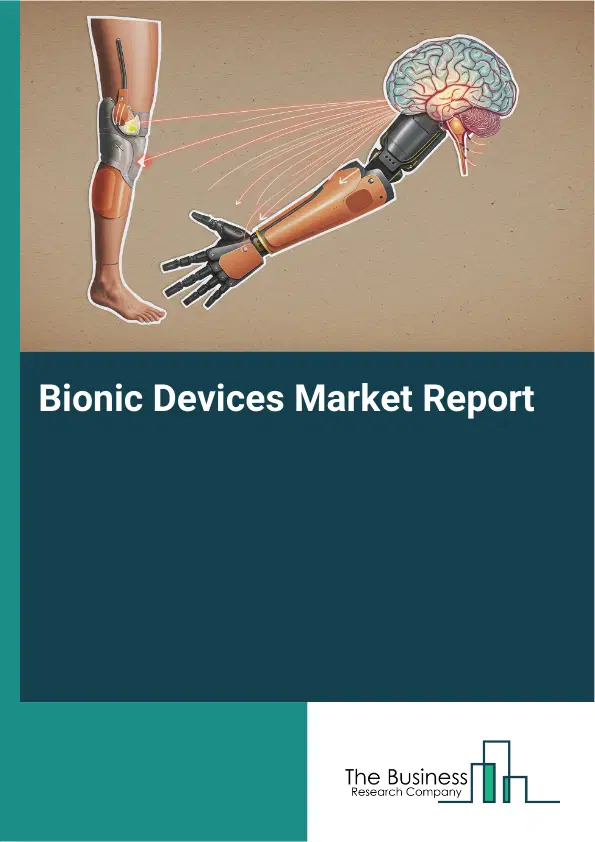
Bionic Devices Market Report 2026
Global Outlook – By Device Type (Upper-Limb Prosthetics, Lower-Limb Prosthetics, Exoskeletons, Bionic Organs, Soft Robotics & Assistive Devices), By Technology (Sensor-Based Devices, Actuator-Based Devices, Neural-Controlled Interfaces, Hybrid Systems), By Application (Rehabilitation, Daily Assistance, Military/Industrial, Medical Enhancement), By End User (Individuals with Disabilities, Hospitals and Rehabilitation Centers, Research & Clinical Institutions, Specialized Clinics) – Market Size, Trends, Strategies, and Forecast to 2030
Bionic Devices Market Overview
• Bionic Devices market size has reached to $5.88 billion in 2025 • Expected to grow to $8.76 billion in 2030 at a compound annual growth rate (CAGR) of 8.3% • Growth Driver: Rising Demand For Joint Replacements Drives Growth In Bionic Devices Market • Market Trend: Neuro Driven Prosthetic Interfaces Enable Intuitive Limb Control • North America was the largest region in 2025 and Asia-Pacific is the fastest growing region.What Is Covered Under Bionic Devices Market?
Bionic devices are advanced prosthetic systems that integrate mechanical elements with electronic components to replicate the functionality of natural limbs or organs. They often incorporate sensors, actuators, and sometimes neural interfaces to enhance control and mimic natural movement or biological processes. These devices aim to restore or augment human capabilities, improving the quality of life for individuals with disabilities. The main types of bionic devices are vision bionics, ear bionics, orthopedic bionics, and cardiac bionics. Vision bionics refer to devices designed to restore or enhance vision for individuals with visual impairments. These devices can be constructed from various materials such as tungsten, silicon, platinum-iridium, stainless steel, and biologics and come with different fixation types, including implantable, wearable, and externally worn. Additionally, they utilize various technology types, including electronics and mechanical, and are used by a range of end users, including hospitals and clinics, research and academic institutes, and other entities.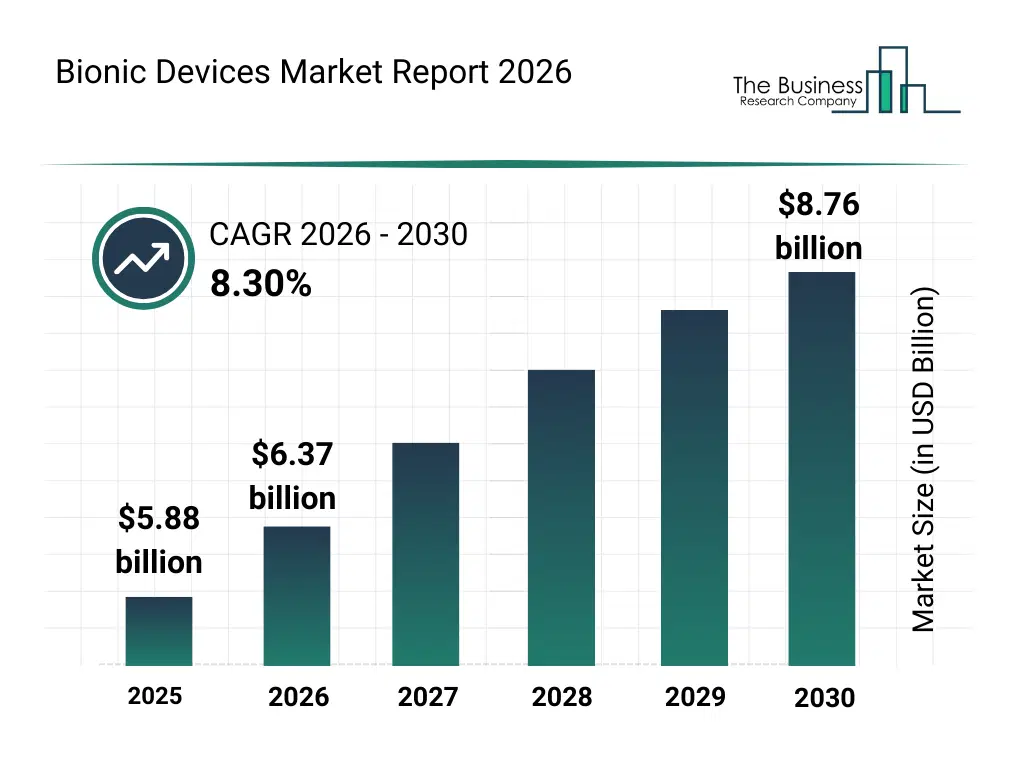
What Is The Bionic Devices Market Size and Share 2026?
The bionic devices market size has grown strongly in recent years. It will grow from $5.88 billion in 2025 to $6.37 billion in 2026 at a compound annual growth rate (CAGR) of 8.4%. The growth in the historic period can be attributed to rise in limb loss due to accidents and trauma, early adoption of electronic and myoelectric prosthetics, increasing rehabilitation and assistive technology programs, advancements in actuator and sensor engineering, growing clinical acceptance of functional restoration devices,.What Is The Bionic Devices Market Growth Forecast?
The bionic devices market size is expected to see strong growth in the next few years. It will grow to $8.76 billion in 2030 at a compound annual growth rate (CAGR) of 8.3%. The growth in the forecast period can be attributed to rising demand for highly responsive and lifelike prosthetic movement, increasing investment in neural interface and brain-machine control research, wider adoption of bionic devices in rehabilitation medicine, growing focus on quality of life improvement and mobility independence, expansion of customized and patient-specific bionic device development. Major trends in the forecast period include increasing integration of sensor-based and neural-controlled prosthetic systems, rising adoption of advanced bionic limbs for enhanced mobility and dexterity, growing use of myoelectric and actuator-driven assistive devices, expansion of bionic solutions for organ support and functional restoration, focus on patient-centric design, comfort, and realistic movement performance.
Global Bionic Devices Market Segmentation
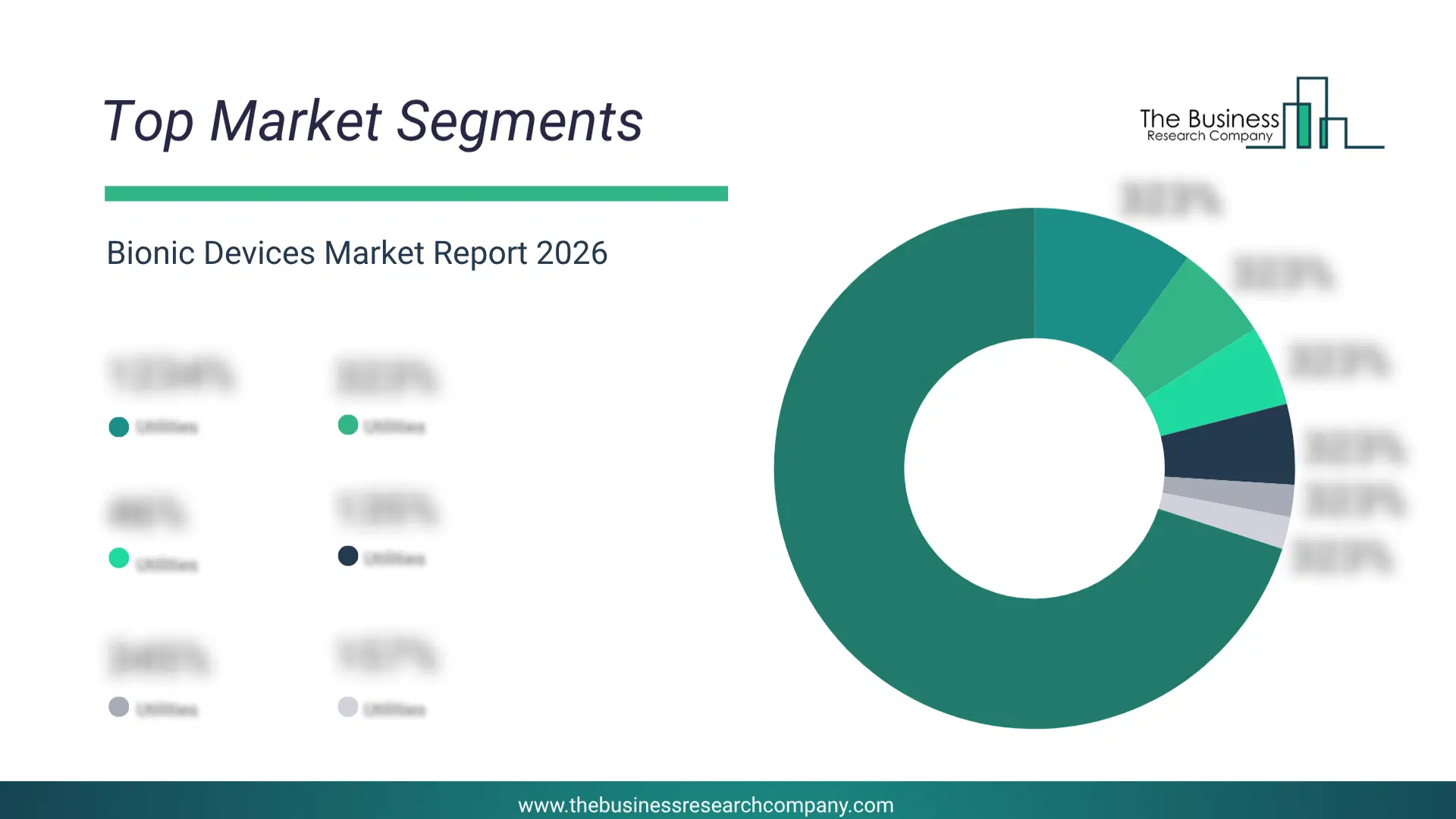
1) By Device Type: Upper-Limb Prosthetics, Lower-Limb Prosthetics, Exoskeletons, Bionic Organs, Soft Robotics & Assistive Devices 2) By Technology: Sensor-Based Devices, Actuator-Based Devices, Neural-Controlled Interfaces, Hybrid Systems 3) By Application: Rehabilitation, Daily Assistance, Military/Industrial, Medical Enhancement 4) By End User: Individuals with Disabilities, Hospitals and Rehabilitation Centers, Research & Clinical Institutions, Specialized Clinics Subsegments: 1) By Upper-Limb Prosthetics: Myoelectric Hands, Robotic Arms, Partial Finger Prosthetics 2) By Lower-Limb Prosthetics: Robotic Legs & Feet, Knee Prosthetics, Ankle-Foot Prosthetics 3) By Exoskeletons: Rehabilitation Exoskeletons, Industrial/Load-Bearing Exoskeletons, Military/Defense Exoskeletons 4) By Bionic Organs: Artificial Heart Systems, Cochlear Implants, Retinal Implants 5) By Soft Robotics & Assistive Devices: Soft Robotic Gloves, Wearable Support Devices, Assistive Devices for Fine Motor SkillsWhat Is The Driver Of The Bionic Devices Market?
The rising demand for joint replacements is expected to propel the growth of the bionic devices market going forward. Joint replacements are surgical procedures where damaged or diseased joints are replaced with artificial implants to restore function and relieve pain. Joint replacements are growing due to an aging population, the increasing prevalence of osteoarthritis, and advancements in surgical techniques and implant materials. Bionic devices for joint replacement enhance mobility and functionality, reduce pain, and offer customized, durable solutions with advanced technology integration. For instance, in November 2024, according to the American Academy of Orthopaedic Surgeons, a US-based non-profit organiation, in 2023, ASCs reported 62,110 total joint arthroplasty care procedural cases, marking a 70% rise compared with 2022. Therefore, rising demand for joint replacements is driving the growth of the bionic devices industry.Key Players In The Global Bionic Devices Market
Major companies operating in the bionic devices market are Ottobock SE and Co. KGaA, Hanger Inc., Cochlear Limited, Ossur hf., Bionx Medical Technologies Inc., Berlin Heart GmbH, Cyberdyne Inc., Ekso Bionics Holdings Inc., Open Bionics Ltd., Jarvik Heart Inc., Axosuits Srl, Bioservo Technologies AB, Carmat SA, ActiveLink Inc., ReWalk Robotics Ltd., B-Temia Inc., Bionik Laboratories Corp., COAPT LLC, Pixium Vision SA, Mobius Bionics LLC, Nano Retina Inc.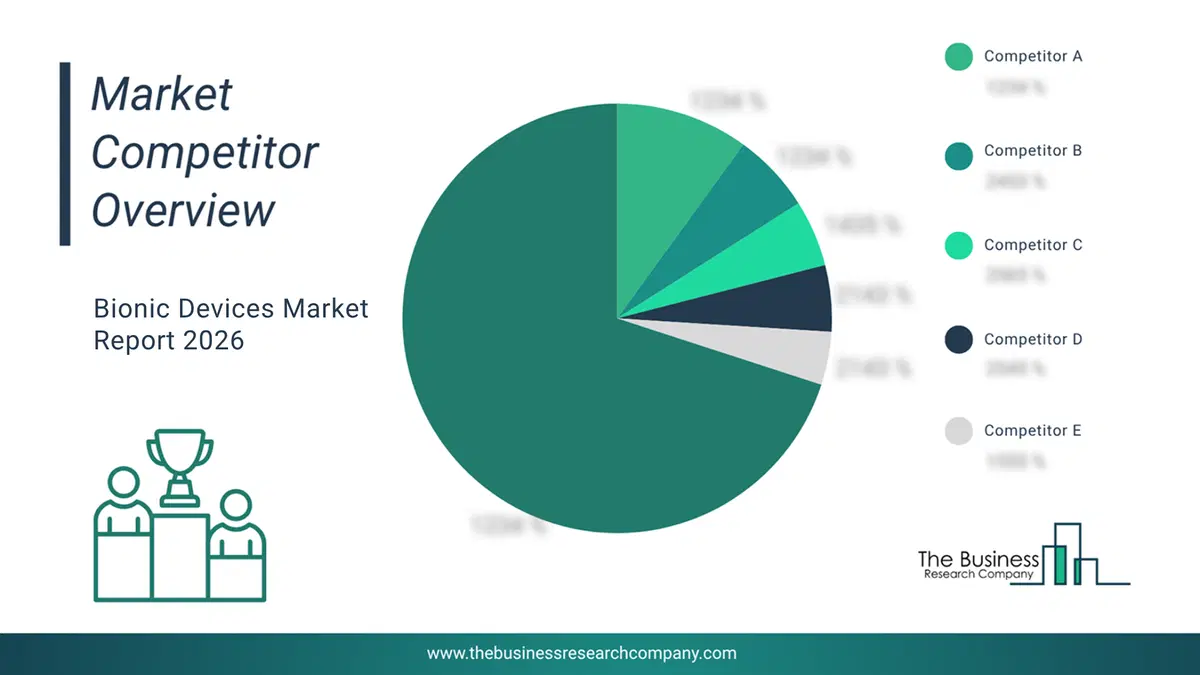
This chart is for illustrative purposes; the full report includes a detailed competitor analysis and comprehensive overview of the top 10 companies in the market.
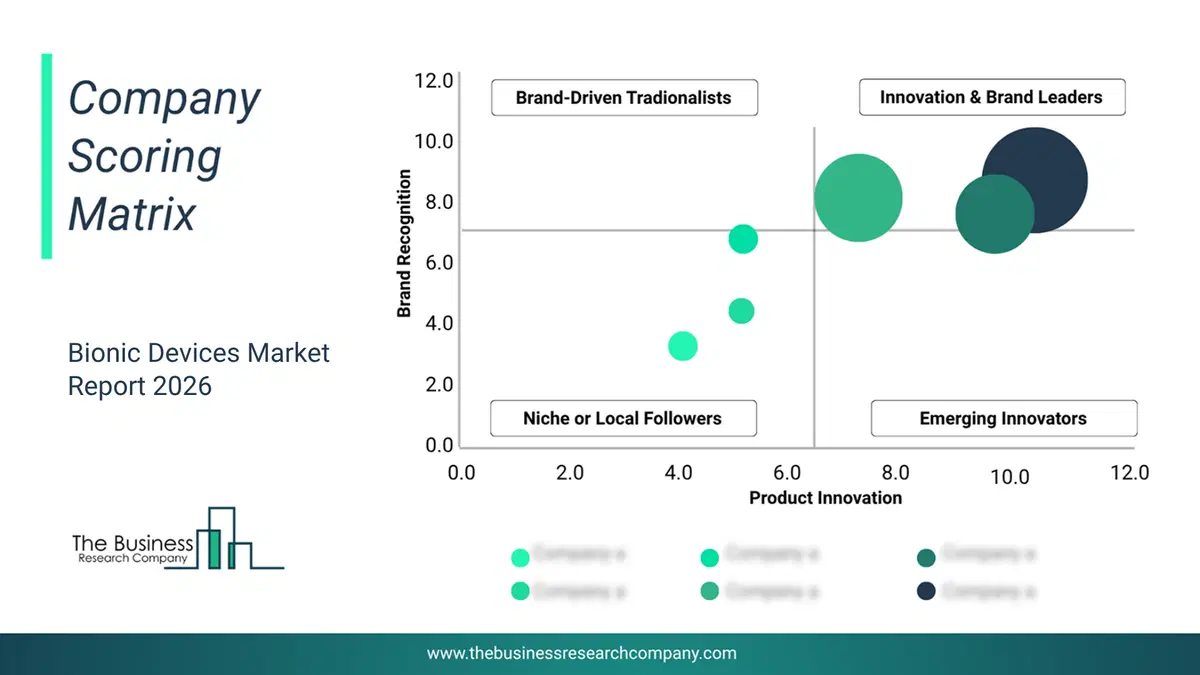
This chart maps companies by product innovation and brand strength, with bubble size indicating relative revenue, helping identify market leaders, challengers, and niche players. This is an illustrative chart; the full report provides a complete and accurate competitive analysis.
Global Bionic Devices Market Trends and Insights
Major companies operating in the bionic devices market are focusing on neuro‑driven interfaces, such as minimally invasive neural control systems for prosthetic limbs, which translate residual nerve or muscle signals into prosthetic movement with high accuracy and low surgical risk. For instance, in April 2025, Ottobock, a Germany‑based prosthetics company, led a US$19 million Series A funding round for Phantom Neuro, a neurotechnology firm, to advance its Phantom X interface. Phantom X is a muscle‑machine link that can be implanted under the skin to read electrical impulses from residual nerves and convert them into commands for prosthetic limbs or exoskeletons. Key features include 94% decoding accuracy across 11 hand/wrist movements, a strip implant design that is less invasive than a full brain implant, and rapid calibration, allowing users to restore up to 85% functionality after just 10 minutes of calibration.What Are Latest Mergers And Acquisitions In The Bionic Devices Market?
In February 2024, Hanger Inc., a US-based provider of orthotic and prosthetic (O&P) patient care services and products, acquired Fillauer Companies Inc. for an undisclosed amount. Through this acquisition, Hanger Inc. aims to expand its portfolio of advanced prosthetic and orthotic products, enhance its technological capabilities, and broaden its market reach to better serve patients with innovative mobility solutions. Fillauer Companies Inc., a US-based company engaged in orthotic and prosthetic products and services, offers bionic devices.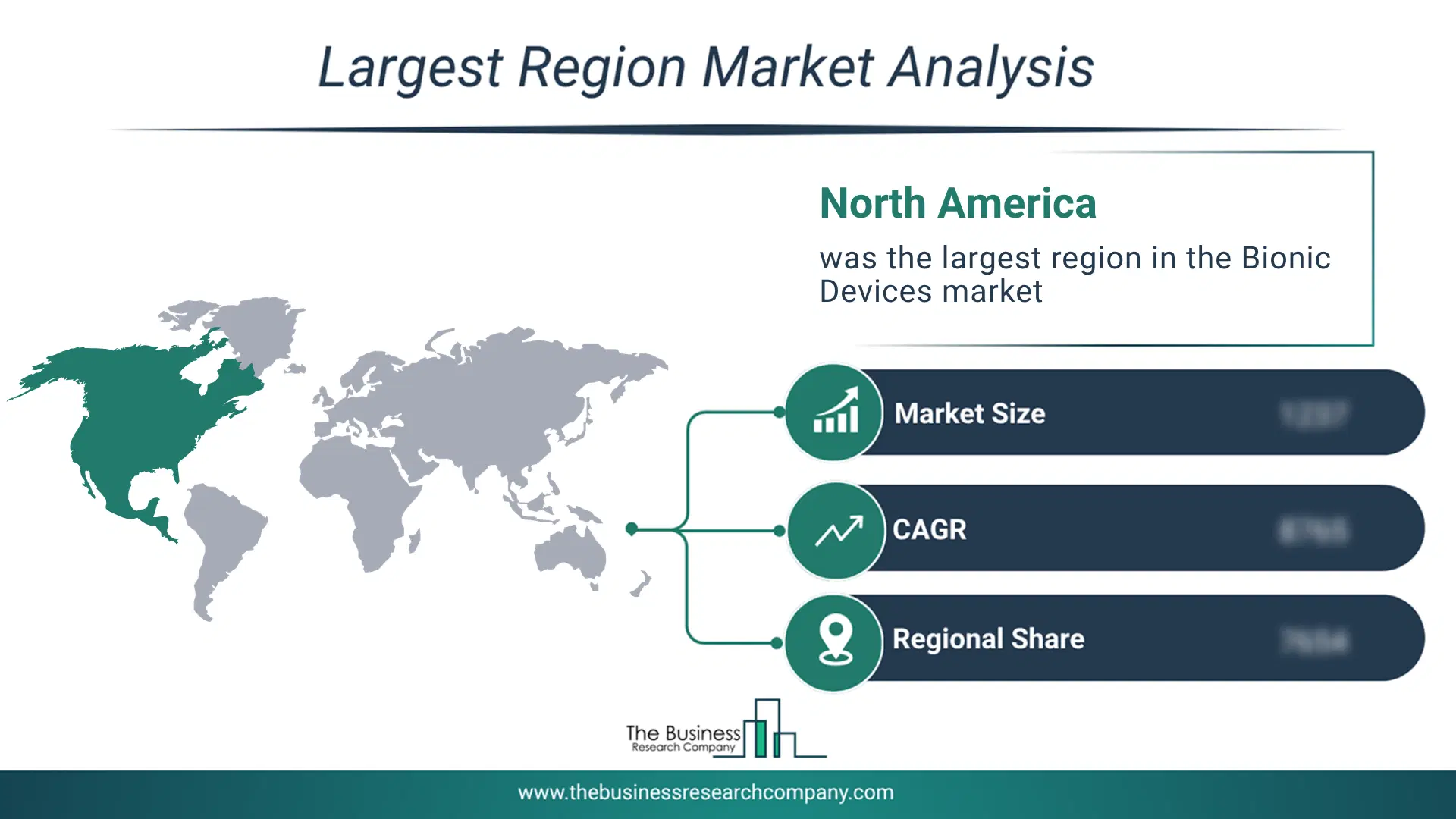
Regional Outlook
North America was the largest region in the bionic devices market in 2025. Asia-Pacific is expected to be the fastest-growing region in the forecast period. The regions covered in this market report are Asia-Pacific, South East Asia, Western Europe, Eastern Europe, North America, South America, Middle East, Africa. The countries covered in this market report are Australia, Brazil, China, France, Germany, India, Indonesia, Japan, Taiwan, Russia, South Korea, UK, USA, Canada, Italy, SpainWhat Defines the Bionic Devices Market?
The bionic devices market consists of sales of bionic implants, exoskeletons, cochlear implants, and functional electrical stimulation devices. Values in this market are ‘factory gate’ values, that is the value of goods sold by the manufacturers or creators of the goods, whether to other entities (including downstream manufacturers, wholesalers, distributors and retailers) or directly to end customers. The value of goods in this market includes related services sold by the creators of the goods.How is Market Value Defined and Measured?
The market value is defined as the revenues that enterprises gain from the sale of goods and/or services within the specified market and geography through sales, grants, or donations in terms of the currency (in USD unless otherwise specified). The revenues for a specified geography are consumption values that are revenues generated by organizations in the specified geography within the market, irrespective of where they are produced. It does not include revenues from resales along the supply chain, either further along the supply chain or as part of other products.
This chart presents market attractiveness based on a quantitative evaluation of growth, competition, strategic alignment, and risk, offering a clear view of opportunity areas for decision-making. This chart is for illustrative purposes; the full report contains the complete analysis.

This chart highlights the Total Addressable Market (TAM) by estimating the maximum revenue opportunity using an assumption-driven approach, supporting strategic planning and opportunity sizing across markets. The chart is illustrative; the full report provides a more comprehensive analysis.
What Key Data and Analysis Are Included in the Bionic Devices Market Report 2026?
The bionic devices market research report is one of a series of new reports from The Business Research Company that provides market statistics, including industry global market size, regional shares, competitors with the market share, detailed market segments, market trends and opportunities, and any further data you may need to thrive in the bionic devices industry. The market research report delivers a complete perspective of everything you need, with an in-depth analysis of the current and future state of the industry.Bionic Devices Market Report Forecast Analysis
| Report Attribute | Details |
|---|---|
| Market Size Value In 2026 | $6.37 billion |
| Revenue Forecast In 2030 | $8.76 billion |
| Growth Rate | CAGR of 8.3% from 2026 to 2030 |
| Base Year For Estimation | 2025 |
| Actual Estimates/Historical Data | 2020-2025 |
| Forecast Period | 2026 - 2030 |
| Market Representation | Revenue in USD Billion and CAGR from 2026 to 2030 |
| Segments Covered | Device Type, Technology, Application, End User |
| Regional Scope | Asia-Pacific, Western Europe, Eastern Europe, North America, South America, Middle East, Africa |
| Country Scope | The countries covered in the report are Australia, Brazil, China, France, Germany, India, Indonesia, Japan, Taiwan, Russia, South Korea, UK, USA, Canada, Italy, Spain. |
| Key Companies Profiled | Ottobock SE and Co. KGaA, Hanger Inc., Cochlear Limited, Ossur hf., Bionx Medical Technologies Inc., Berlin Heart GmbH, Cyberdyne Inc., Ekso Bionics Holdings Inc., Open Bionics Ltd., Jarvik Heart Inc., Axosuits Srl, Bioservo Technologies AB, Carmat SA, ActiveLink Inc., ReWalk Robotics Ltd., B-Temia Inc., Bionik Laboratories Corp., COAPT LLC, Pixium Vision SA, Mobius Bionics LLC, Nano Retina Inc. |
| Customization Scope | Request for Customization |
| Pricing And Purchase Options | Explore Purchase Options |