
Atmospheric Governance Market Report 2026
Global Outlook – By Component (Software, Hardware, Services), By Deployment Type (On-Premises, Cloud-Based), By Technology (Artificial Intelligence, Internet Of Things, Big Data Analytics, Blockchain Technology), By Application (Climate Monitoring, Air Quality Management, Emission Control, Weather Forecasting, Other Applications), By End-User (Government Institutions, Corporate Organizations, Non-Governmental Organizations, Educational Institutions, Healthcare Facilities) – Market Size, Trends, Strategies, and Forecast to 2030
Atmospheric Governance Market Overview
• Atmospheric Governance market size has reached to $2.66 billion in 2025 • Expected to grow to $4.15 billion in 2030 at a compound annual growth rate (CAGR) of 9.3% • Growth Driver: Surge In Reducing Emissions Fueling The Growth Of The Market Due To Stricter Environmental Regulations And Policy Implementation • Market Trend: Innovations Driving Accurate Environmental Assessment And Regulatory Compliance • North America was the largest region in 2025 and Asia-Pacific is the fastest growing region.What Is Covered Under Atmospheric Governance Market?
Atmospheric governance refers to the frameworks, policies, and regulatory mechanisms established to monitor, manage, and control activities affecting the Earth’s atmosphere. It encompasses international agreements, national regulations, and scientific initiatives aimed at mitigating air pollution, controlling greenhouse gas emissions, and addressing climate change. Essentially, it ensures coordinated action to protect atmospheric health and maintain environmental sustainability. The main components of atmospheric governance include software, hardware, and services. Software refers to digital tools and applications used for monitoring, analyzing, and managing atmospheric data and compliance. The deployment types are on-premises and cloud-based, and the technology used is artificial intelligence, the internet of things (IoT), big data analytics, and blockchain technology. The various applications are climate monitoring, air quality management, emission control, weather forecasting, and others, and key end-users are government institutions, corporate organizations, non-governmental organizations, educational institutions, and healthcare facilities.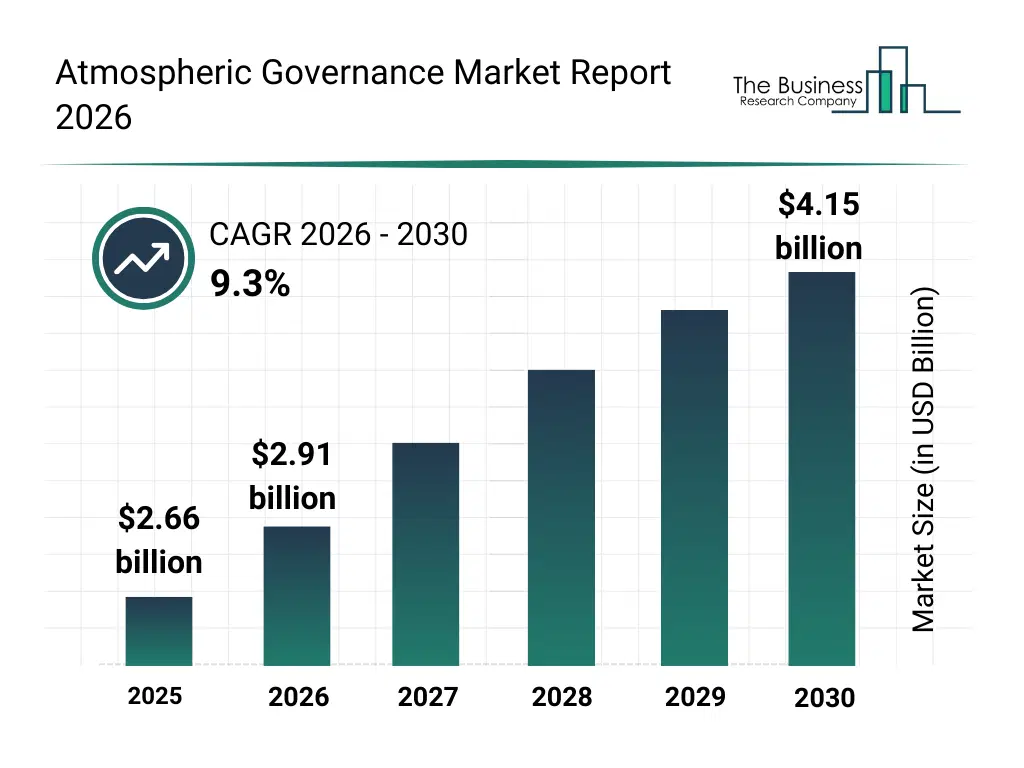
What Is The Atmospheric Governance Market Size and Share 2026?
The atmospheric governance market size has grown strongly in recent years. It will grow from $2.66 billion in 2025 to $2.91 billion in 2026 at a compound annual growth rate (CAGR) of 9.4%. The growth in the historic period can be attributed to expansion of global environmental regulations, establishment of climate monitoring institutions, growth of atmospheric research programs, increasing deployment of air quality sensors, adoption of regulatory compliance systems.What Is The Atmospheric Governance Market Growth Forecast?
The atmospheric governance market size is expected to see strong growth in the next few years. It will grow to $4.15 billion in 2030 at a compound annual growth rate (CAGR) of 9.3%. The growth in the forecast period can be attributed to increasing investments in climate governance technologies, rising demand for data-driven policy enforcement, expansion of cross-border environmental agreements, growing use of ai-driven climate modeling, increasing focus on emission transparency. Major trends in the forecast period include increasing adoption of real-time air quality monitoring systems, rising implementation of emission compliance platforms, growing integration of climate data analytics, expansion of international environmental governance frameworks, enhanced focus on transparent environmental reporting.
Global Atmospheric Governance Market Segmentation
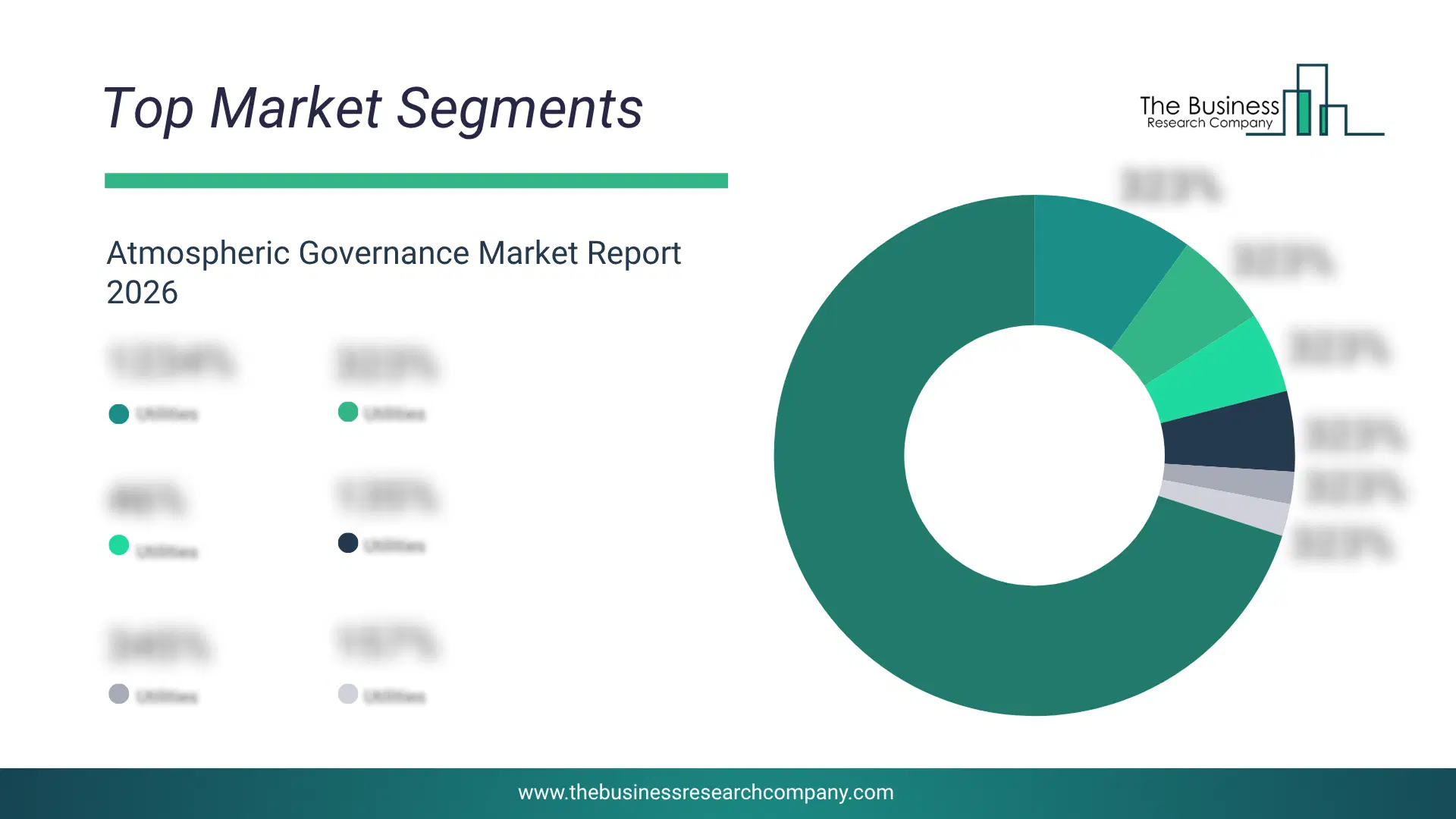
1) By Component: Software, Hardware, Services 2) By Deployment Type: On-Premises, Cloud-Based 3) By Technology: Artificial Intelligence, Internet Of Things, Big Data Analytics, Blockchain Technology 4) By Application: Climate Monitoring, Air Quality Management, Emission Control, Weather Forecasting, Other Applications 5) By End-User: Government Institutions, Corporate Organizations, Non-Governmental Organizations, Educational Institutions, Healthcare Facilities Subsegments: 1) By Software: Emission Monitoring Software, Data Analytics Software, Regulatory Compliance Software, Environmental Reporting Software 2) By Hardware: Air Quality Sensors, Gas Analyzers, Particulate Matter Monitors, Weather Monitoring Devices 3) By Services: Consulting Services, Installation And Maintenance Services, Calibration Services, Training And Support ServicesWhat Are The Drivers Of The Atmospheric Governance Market?
The increasing focus on reducing emissions is expected to propel the growth of the atmospheric governance market going forward. Reducing emissions refers to lowering the release of greenhouse gases, such as carbon dioxide, into the atmosphere. The rise in focus on reducing emissions is driven by stricter environmental regulations, as they mandate lower greenhouse gas outputs and encourage organizations to adopt cleaner, more sustainable practices. Atmospheric governance helps reduce emissions by implementing policies, monitoring systems, and regulatory frameworks that limit greenhouse gas release and promote sustainable environmental practices. For instance, in May 2024, the Clean Energy Regulator, an Australia-based government department, reported that emissions reductions under its schemes rose from 62.1 million tones CO₂-e in 2022 to 65.5 million tons in 2023, with a projected increase to 70.8 million tons in 2024. Therefore, the increasing focus on reducing emissions is driving the growth of the atmospheric governance industry. The increasing urban air pollution is expected to propel the growth of the atmospheric governance market going forward. Urban air pollution refers to the contamination of the air in cities and towns by harmful substances, such as particulate matter, gases, and chemicals, primarily resulting from human activities like transportation, industry, and construction. Increasing urban air pollution is primarily due to vehicular emissions because the exhaust from cars, trucks, and buses releases large amounts of pollutants like nitrogen oxides, carbon monoxide, and particulate matter into the atmosphere. Atmospheric governance helps combat air pollution by implementing coordinated policies, regulations, and technological interventions that monitor, reduce, and prevent the release of harmful pollutants into the atmosphere. For instance, in May 2025, according to the United States Environmental Protection Agency, a US-based government agency, in 2023, about 66 million tons of pollutants were emitted into the atmosphere in the United States. Therefore, the increasing urban air pollution is driving the growth of the atmospheric governance industry.Key Players In The Global Atmospheric Governance Market
Major companies operating in the atmospheric governance market are Siemens AG, General Electric Company, Honeywell International Inc., Thermo Fisher Scientific Inc., ABB Ltd, Emerson Electric Co., Yokogawa Electric Corporation, Horiba Ltd, Camfil, Nederman Holding AB, Vaisala Oyj, CECO Environmental Corp., Wuxi Xuelang Environmental Technology, DURAG Group GmbH, Breeze Technologies GmbH, ECO PHYSICS AG, Aeroqual Ltd, Teledyne Technologies Incorporated, Agilent Technologies Inc., 3M Company.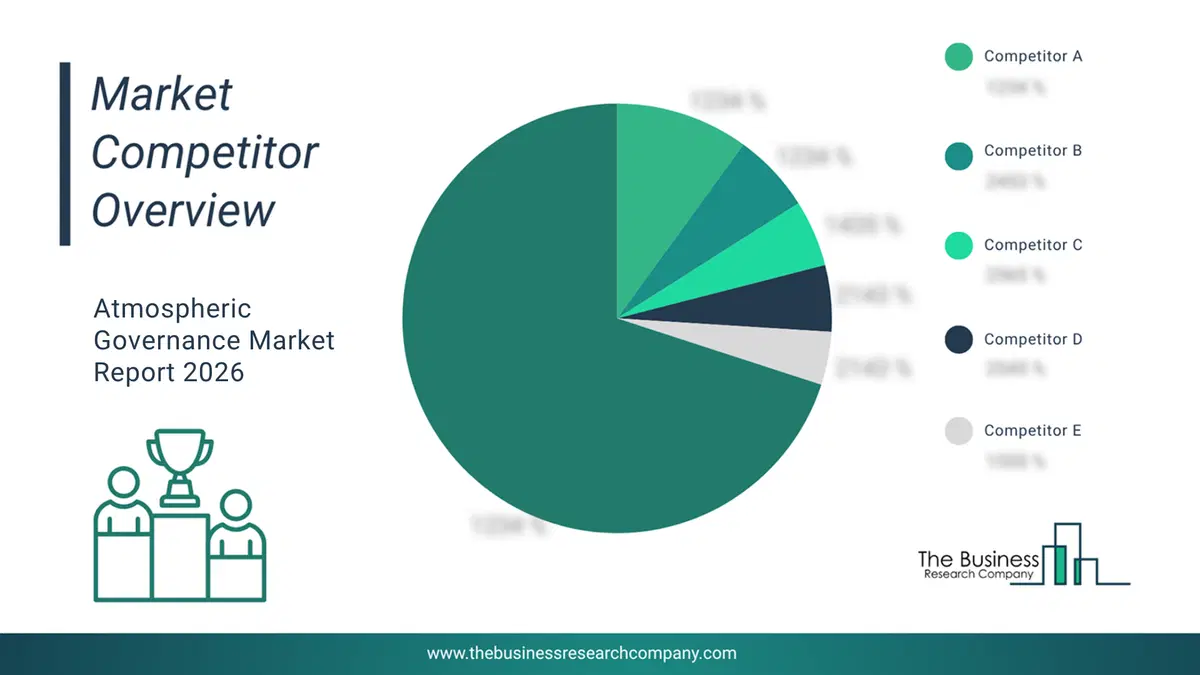
This chart is for illustrative purposes; the full report includes a detailed competitor analysis and comprehensive overview of the top 10 companies in the market.
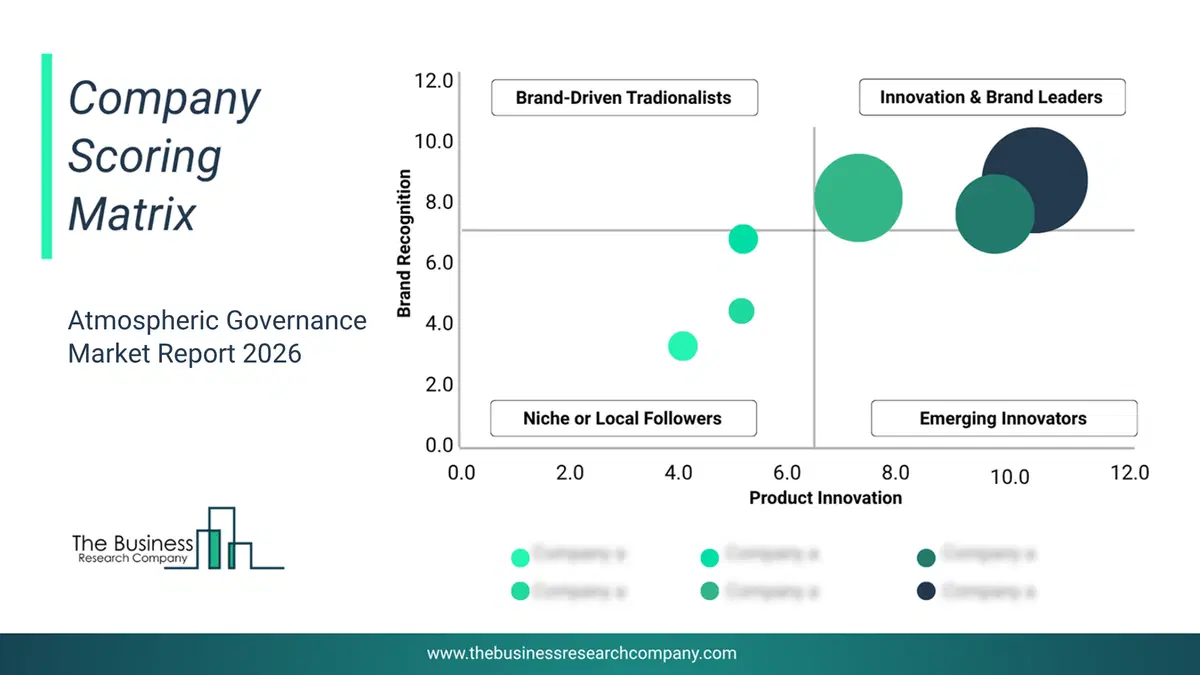
This chart maps companies by product innovation and brand strength, with bubble size indicating relative revenue, helping identify market leaders, challengers, and niche players. This is an illustrative chart; the full report provides a complete and accurate competitive analysis.
Global Atmospheric Governance Market Trends and Insights
Major companies operating in the atmospheric governance market are focusing on advanced innovation, such as next-gen spectrometers that deliver real-time, high-precision monitoring of air pollutants to enable faster, data-driven decision-making and improved regulatory compliance. Next-gen spectrometers refer to advanced optical devices designed for real-time, high-precision detection and analysis of airborne particles and pollutants. For instance, in April 2025, ENVEA, a France-based electronics manufacturer, launched the OPM250, an advanced optical aerosol spectrometer designed for precise, real-time monitoring of airborne particles. The device caters to both environmental and industrial applications, offering reliable measurements of particulate matter. By providing high-resolution data, the OPM250 enhances air quality assessments, helping organizations identify pollution sources more accurately. Its real-time capabilities improve operational efficiency by enabling continuous monitoring without delays. Overall, the instrument supports informed decision-making for environmental management and regulatory compliance.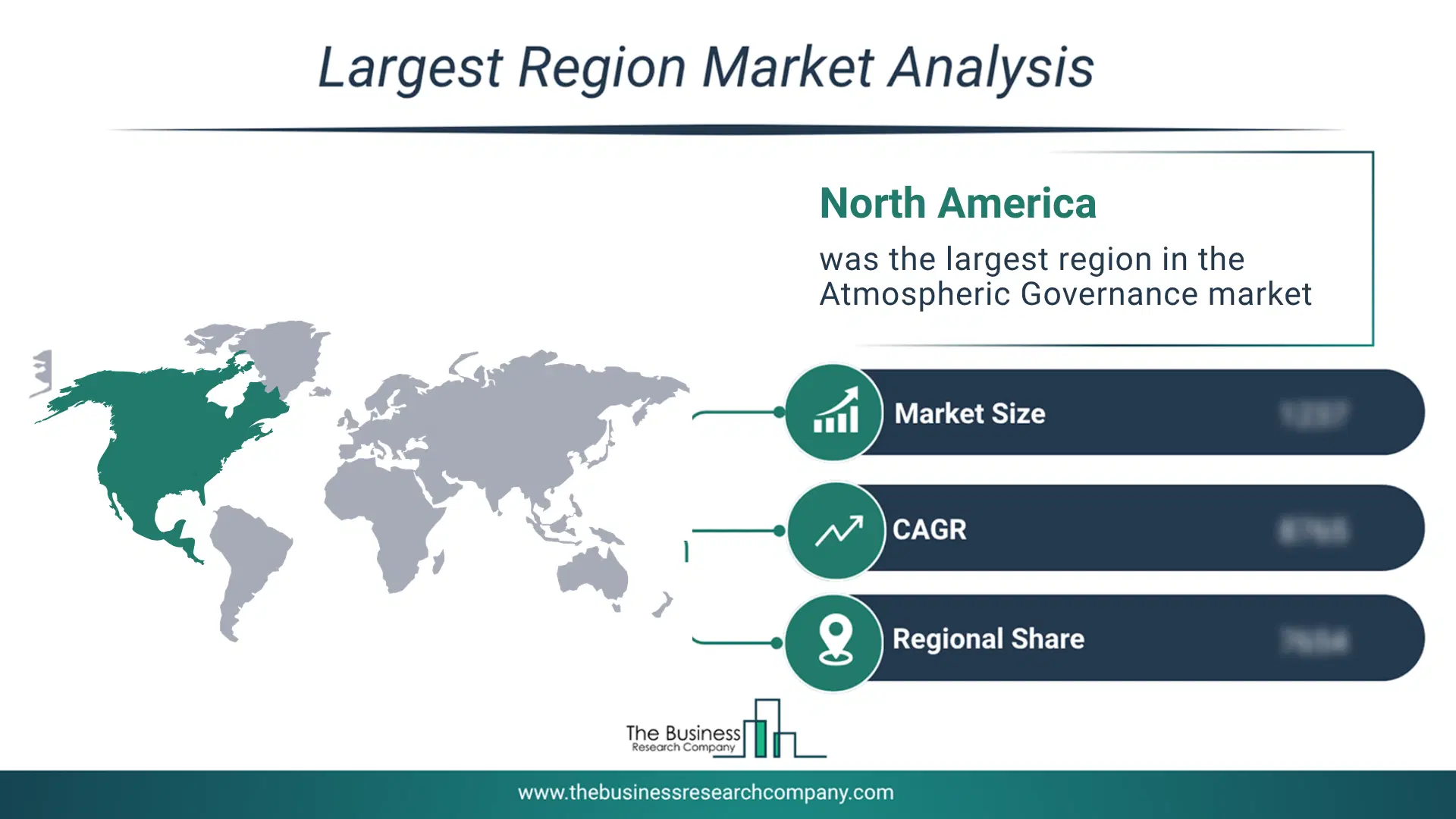
Regional Outlook
North America was the largest region in the atmospheric governance market in 2025. Asia-Pacific is expected to be the fastest-growing region in the forecast period. The regions covered in this market report are Asia-Pacific, South East Asia, Western Europe, Eastern Europe, North America, South America, Middle East, Africa. The countries covered in this market report are Australia, Brazil, China, France, Germany, India, Indonesia, Japan, Taiwan, Russia, South Korea, UK, USA, Canada, Italy, SpainWhat Defines the Atmospheric Governance Market?
The atmospheric governance market consists of revenues earned by entities by providing services such as emergency response and disaster management services, public awareness and outreach services, and emission trading and carbon management services. The market value includes the value of related goods sold by the service provider or included within the service offering. The atmospheric governance market also includes sales of weather and climate sensors, greenhouse gas analyzers, and remote sensing and satellite systems. Values in this market are ‘factory gate’ values, that is, the value of goods sold by the manufacturers or creators of the goods, whether to other entities (including downstream manufacturers, wholesalers, distributors, and retailers) or directly to end customers. The value of goods in this market includes related services sold by the creators of the goods.How is Market Value Defined and Measured?
The market value is defined as the revenues that enterprises gain from the sale of goods and/or services within the specified market and geography through sales, grants, or donations in terms of the currency (in USD unless otherwise specified). The revenues for a specified geography are consumption values that are revenues generated by organizations in the specified geography within the market, irrespective of where they are produced. It does not include revenues from resales along the supply chain, either further along the supply chain or as part of other products.
This chart presents market attractiveness based on a quantitative evaluation of growth, competition, strategic alignment, and risk, offering a clear view of opportunity areas for decision-making. This chart is for illustrative purposes; the full report contains the complete analysis.

This chart highlights the Total Addressable Market (TAM) by estimating the maximum revenue opportunity using an assumption-driven approach, supporting strategic planning and opportunity sizing across markets. The chart is illustrative; the full report provides a more comprehensive analysis.
What Key Data and Analysis Are Included in the Atmospheric Governance Market Report 2026?
The atmospheric governance market research report is one of a series of new reports from The Business Research Company that provides market statistics, including Market Report 2026?global market size, regional shares, competitors with the market share, detailed market segments, market trends and opportunities, and any further data you may need to thrive in the atmospheric governance Market Report 2026? The market research report delivers a complete perspective of everything you need, with an in-depth analysis of the current and future state of the Market Report 2026?Atmospheric Governance Market Report Forecast Analysis
| Report Attribute | Details |
|---|---|
| Market Size Value In 2026 | $2.91 billion |
| Revenue Forecast In 2030 | $4.15 billion |
| Growth Rate | CAGR of 9.4% from 2026 to 2030 |
| Base Year For Estimation | 2025 |
| Actual Estimates/Historical Data | 2020-2025 |
| Forecast Period | 2026 - 2030 - 2030 |
| Market Representation | Revenue in USD Billion and CAGR from 2026 to 2030 |
| Segments Covered | Component, Deployment Type, Technology, Application, End-User |
| Regional Scope | Asia-Pacific, Western Europe, Eastern Europe, North America, South America, Middle East, Africa |
| Country Scope | The countries covered in the report are Australia, Brazil, China, France, Germany, India, Indonesia, Japan, Taiwan, Russia, South Korea, UK, USA, Canada, Italy, Spain. |
| Key Companies Profiled | Siemens AG, General Electric Company, Honeywell International Inc., Thermo Fisher Scientific Inc., ABB Ltd, Emerson Electric Co., Yokogawa Electric Corporation, Horiba Ltd, Camfil, Nederman Holding AB, Vaisala Oyj, CECO Environmental Corp., Wuxi Xuelang Environmental Technology, DURAG Group GmbH, Breeze Technologies GmbH, ECO PHYSICS AG, Aeroqual Ltd, Teledyne Technologies Incorporated, Agilent Technologies Inc., 3M Company. |
| Customization Scope | Request for Customization |
| Pricing And Purchase Options | Explore Purchase Options |