

Bacterial Vaginosis Market Report 2026
Global Outlook – By Type (Point-Of-Care Testing, Laboratory Testing), By Application (Diagnosis, Treatment, Recurrence Prevention Or Maintenance, Screening And Monitoring), By End-User (Hospitals, Homecare, Specialty Clinics) - Market Size, Trends, Strategies, and Forecast to 2030
Bacterial Vaginosis Market Overview
• Bacterial Vaginosis market size has reached to $3.31 billion in 2025 • Expected to grow to $5.13 billion in 2030 at a compound annual growth rate (CAGR) of 9.1% • Growth Driver: Rising STI Incidence Driving Bacterial Vaginosis Cases • Market Trend: Expansion Of Tele-Rx Partner Regimens For Recurrence Prevention • North America was the largest region in 2025.What Is Covered Under Bacterial Vaginosis Market?
Bacterial vaginosis (BV) is a common vaginal infection caused by an imbalance of naturally occurring bacteria, leading to a decrease in lactobacilli and an overgrowth of anaerobic bacteria. It is characterized by symptoms such as a fishy odor, thin grayish-white discharge, and vaginal discomfort, though some cases may be asymptomatic. The main types of bacterial vaginosis are point-of-care testing, laboratory testing, and others. Point-of-care testing (POCT) refers to medical diagnostic testing conducted at or near the site of patient care, providing rapid results for immediate clinical decision-making. Various products include those for individuals below 15 years, between 15-45 years, and others. Applications include antibiotics and other treatments, used by various end users such as hospitals, homecare, specialty clinics, and others.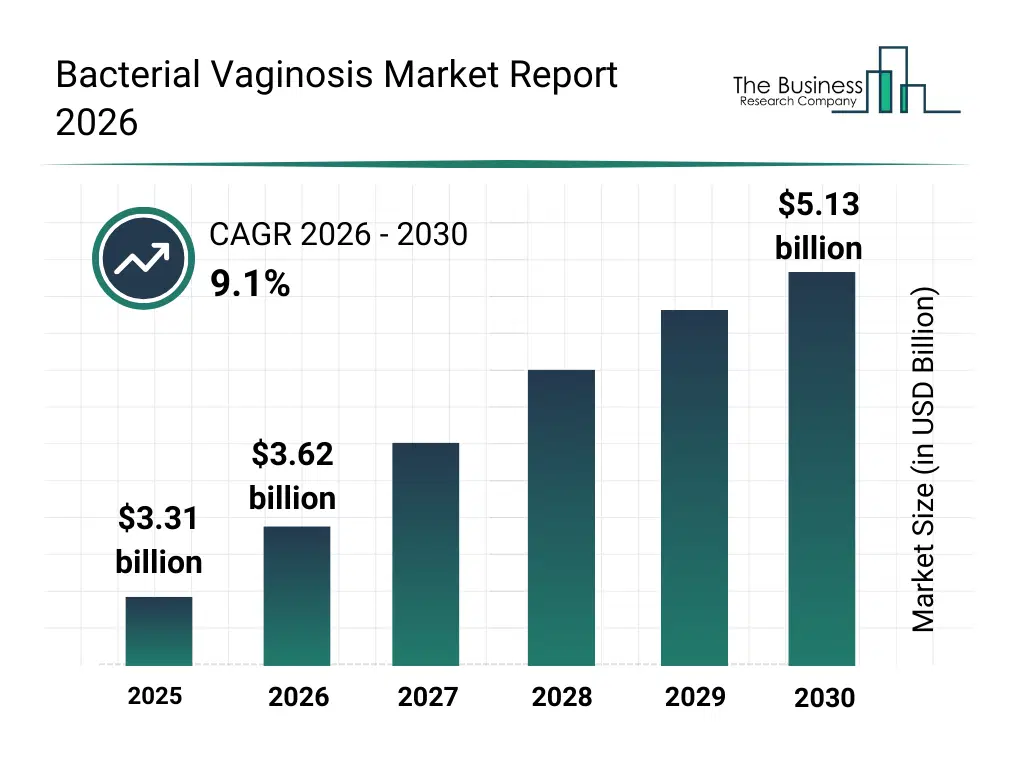
What Is The Bacterial Vaginosis Market Size and Share 2026?
The bacterial vaginosis market size has grown strongly in recent years. It will grow from $3.31 billion in 2025 to $3.62 billion in 2026 at a compound annual growth rate (CAGR) of 9.4%. The growth in the historic period can be attributed to increasing prevalence of bacterial vaginosis among women, wider access to gynecological healthcare services, availability of oral and topical antibiotics, expansion of diagnostic laboratory services, rising clinical screening initiatives.What Is The Bacterial Vaginosis Market Growth Forecast?
The bacterial vaginosis market size is expected to see strong growth in the next few years. It will grow to $5.13 billion in 2030 at a compound annual growth rate (CAGR) of 9.1%. The growth in the forecast period can be attributed to increasing development of microbiome-based therapies, growing adoption of rapid molecular diagnostics, rising focus on preventive women’s health, expansion of telehealth-supported diagnosis, increasing investment in non-antibiotic treatment alternatives. Major trends in the forecast period include increasing adoption of point-of-care diagnostic tests, rising demand for targeted antibiotic therapies, growing awareness of vaginal microbiome health, expansion of home-based testing solutions, enhanced focus on early detection and screening.
Global Bacterial Vaginosis Market Segmentation
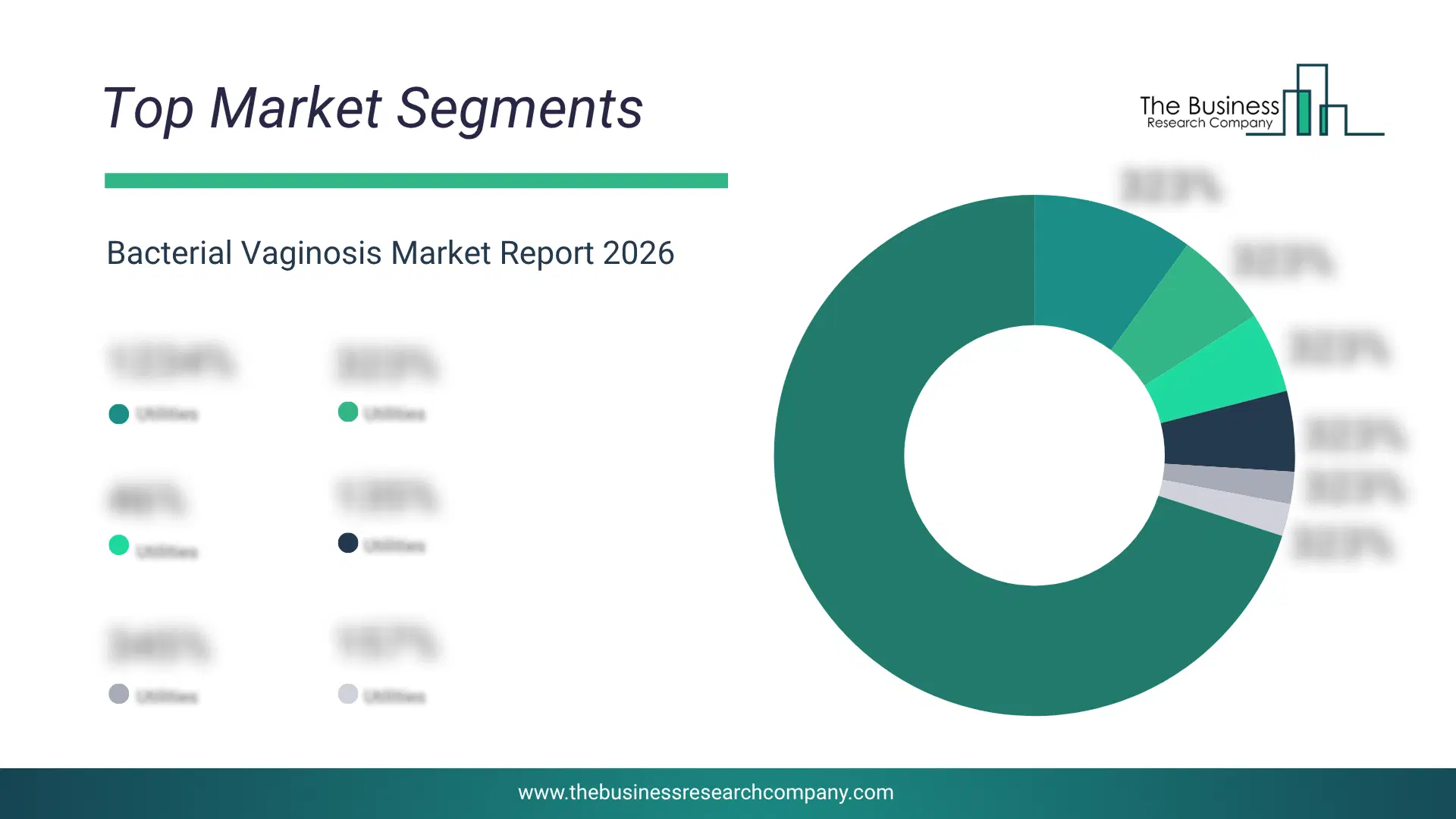
1) By Type: Point-Of-Care Testing, Laboratory Testing 2) By Application: Diagnosis, Treatment, Recurrence Prevention Or Maintenance, Screening And Monitoring 3) By End-User: Hospitals, Homecare, Specialty Clinics Subsegments: 1) By Point-Of-Care Testing: Rapid Diagnostic Tests, Microscopy-based Tests 2) By Laboratory Testing: Gram Staining, Polymerase Chain Reaction (PCR), DNA Probe TestsWhat Is The Driver Of The Bacterial Vaginosis Market?
The increasing incidence of sexually transmitted infections (STIs) is expected to drive the growth of the bacterial vaginosis market going forward. Sexually transmitted infections (STIs) refer to infections that are primarily spread through sexual contact. These infections can be caused by bacteria, viruses, or parasites. The increasing incidence of STIs is due to factors such as unprotected sex, multiple partners, lack of awareness, and antibiotic resistance. Bacterial vaginosis increases susceptibility to STIs by disrupting the vaginal bacterial balance, making it easier for infections such as HIV and chlamydia to take hold. For instance, according to the European Centre for Disease Prevention and Control (ECDC), a Sweden-based government agency, gonorrhea cases rose from 70,881 in 2022 (17.9 per 100,000) to 96,969 in 2023 (25.0 per 100,000), a 31% year-on-year increase. Meanwhile, syphilis climbed from 35,391 cases in 2022 (8.5 per 100,000) to 41,051 in 2023 (9.9 per 100,000), a 13% rise. And chlamydia notifications reached 230,199 in 2023, marking a 3% increase in crude notification rate compared to 2022. Therefore, the increasing incidence of sexually transmitted infections (STIs) is driving the growth of the bacterial vaginosis industry.Key Players In The Global Bacterial Vaginosis Market
Major companies operating in the bacterial vaginosis market are Pfizer Inc., Merck & Co. Inc., Bayer AG, Sanofi S.A., Viatris Inc., Organon & Co., Shionogi & Company Limited, Otsuka Pharmaceutical Co. Ltd., Melinta Therapeutics Inc., Evofem Biosciences Inc., Gedea Biotech AB, Hologic Inc., bioMérieux SA, Becton Dickinson and Company, Thermo Fisher Scientific Inc., Roche Holding AG, Abbott Laboratories, Ferring Pharmaceuticals, Mylan N.V., Almirall S.A.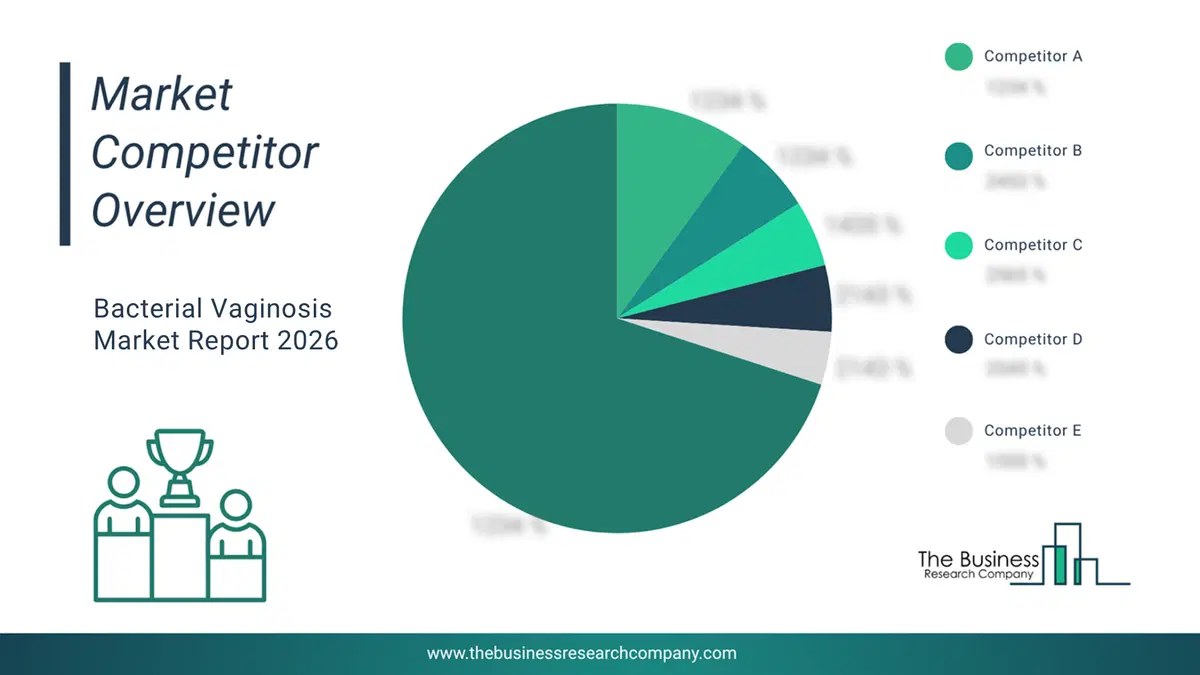
This chart is for illustrative purposes; the full report includes a detailed competitor analysis and comprehensive overview of the top 10 companies in the market.
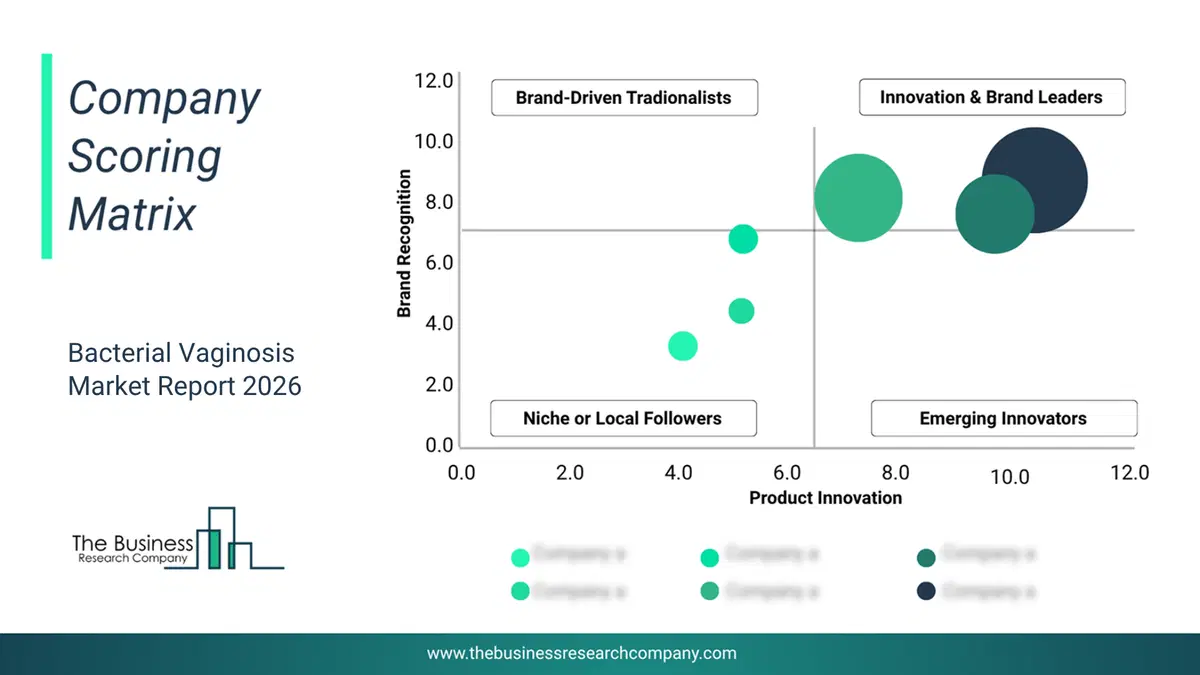
This chart maps companies by product innovation and brand strength, with bubble size indicating relative revenue, helping identify market leaders, challengers, and niche players. This is an illustrative chart; the full report provides a complete and accurate competitive analysis.
Global Bacterial Vaginosis Market Trends and Insights
Major companies operating in the bacterial vaginosis market are focusing on developing innovative solutions, such as paired prescription regimens for sexual partners, to gain a competitive advantage. Paired prescription regimens involve prescribing treatment not only to the infected individual but also to their sexual partner, addressing recurrence risk at its source. For instance, in March 2025, Wisp, a U.S.-based women’s telehealth company, launched the first-ever Male BV Partner Treatment, a two-part prescription regimen comprising oral metronidazole and topical clindamycin for male partners. It features synchronized dual treatment, once-daily administration for seven days, and delivery via Wisp’s telemedicine platform. This strategy leverages emerging clinical evidence to reduce reinfection rates and reinforces the shift toward more comprehensive, relationship-aware care, although it may increase regulatory complexity and raise concerns about partner compliance.What Are Latest Mergers And Acquisitions In The Bacterial Vaginosis Market?
In July 2024, Evofem Biosciences, a US-based biopharmaceutical company, acquired the US commercial women's health specialty business from Lupin Limited for $84 million. This acquisition aims to expand Evofem Biosciences' portfolio in women's health through the acquisition of an FDA-approved treatment for bacterial vaginosis and trichomoniasis. Lupin Limited is an India-based pharmaceutical company that specializes in the development and distribution of a wide range of healthcare products, including women's health specialty products.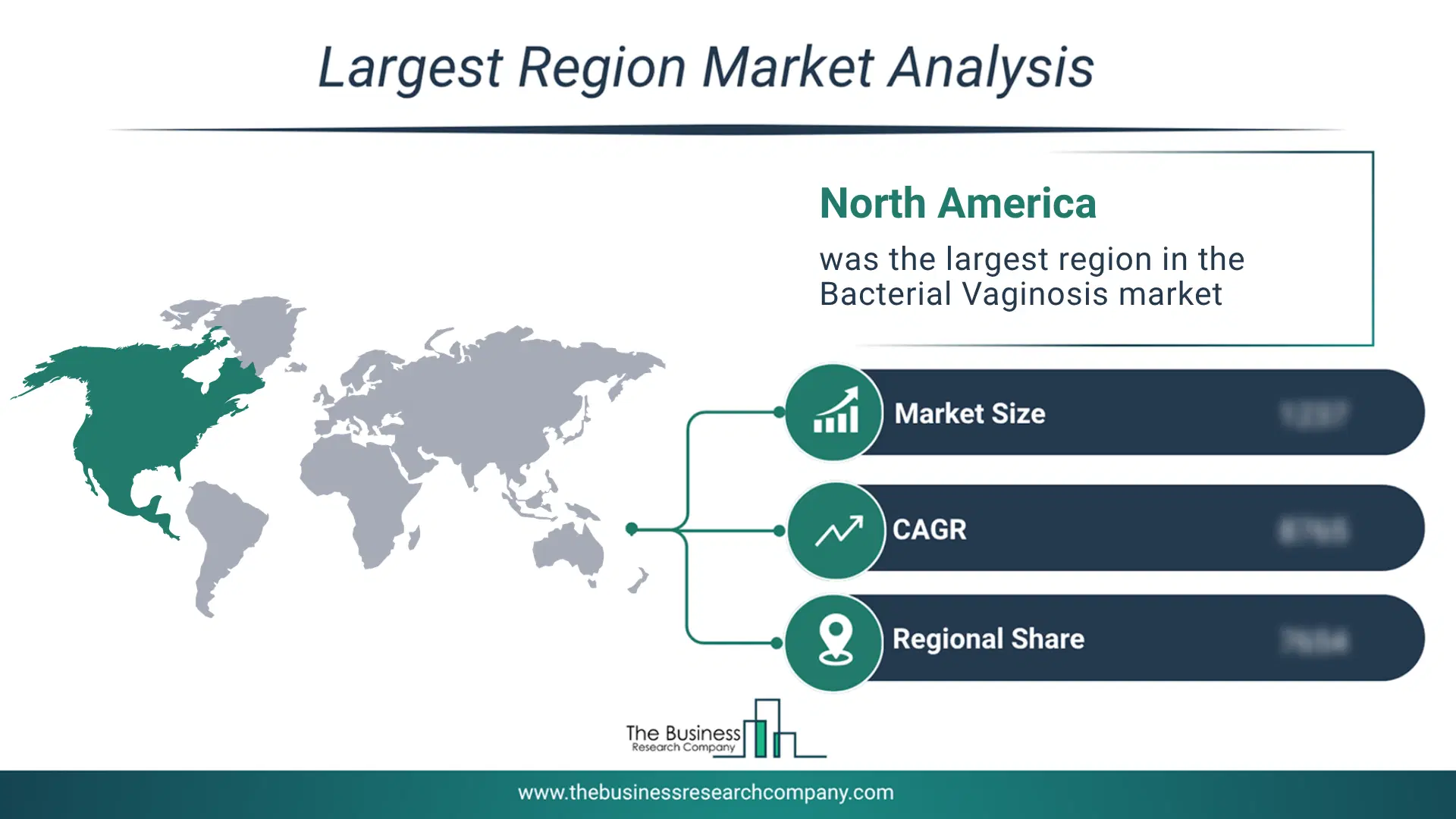
Regional Outlook
North America was the largest region in the bacterial vaginosis market in 2025. The regions covered in this market report are Asia-Pacific, South East Asia, Western Europe, Eastern Europe, North America, South America, Middle East, Africa. The countries covered in this market report are Australia, Brazil, China, France, Germany, India, Indonesia, Japan, Taiwan, Russia, South Korea, UK, USA, Canada, Italy, Spain.What Defines the Bacterial Vaginosis Market?
The bacterial vaginosis market includes revenues earned by entities by providing services such as wet mount microscopy, pH testing, and dietary recommendations. The market value includes the value of related goods sold by the service provider or included within the service offering. The bacterial vaginosis (BV) market consists of sales of oral and topical antibiotics, probiotics, pH balancers, gels, and creams. Values in this market are ‘factory gate’ values, that is the value of goods sold by the manufacturers or creators of the goods, whether to other entities (including downstream manufacturers, wholesalers, distributors and retailers) or directly to end customers. The value of goods in this market includes related services sold by the creators of the goods.How is Market Value Defined and Measured?
The market value is defined as the revenues that enterprises gain from the sale of goods and/or services within the specified market and geography through sales, grants, or donations in terms of the currency (in USD unless otherwise specified). The revenues for a specified geography are consumption values that are revenues generated by organizations in the specified geography within the market, irrespective of where they are produced. It does not include revenues from resales along the supply chain, either further along the supply chain or as part of other products.
This chart presents market attractiveness based on a quantitative evaluation of growth, competition, strategic alignment, and risk, offering a clear view of opportunity areas for decision-making. This chart is for illustrative purposes; the full report contains the complete analysis.

This chart highlights the Total Addressable Market (TAM) by estimating the maximum revenue opportunity using an assumption-driven approach, supporting strategic planning and opportunity sizing across markets. The chart is illustrative; the full report provides a more comprehensive analysis.
What Key Data and Analysis Are Included in the Bacterial Vaginosis Market Report 2026?
The bacterial vaginosis market research report is one of a series of new reports from The Business Research Company that provides market statistics, including industry global market size, regional shares, competitors with the market share, detailed market segments, market trends and opportunities, and any further data you may need to thrive in the bacterial vaginosis industry. The market research report delivers a complete perspective of everything you need, with an in-depth analysis of the current and future state of the industry.Bacterial Vaginosis Market Report Forecast Analysis
| Report Attribute | Details |
|---|---|
| Market Size Value In 2026 | $3.62 billion |
| Revenue Forecast In 2030 | $5.13 billion |
| Growth Rate | CAGR of 9.1% from 2026 to 2030 |
| Base Year For Estimation | 2025 |
| Actual Estimates/Historical Data | 2020-2025 |
| Forecast Period | 2026 - 2030 |
| Market Representation | Revenue in USD Billion and CAGR from 2026 to 2030 |
| Segments Covered | Type, Application, End-User |
| Regional Scope | Asia-Pacific, Western Europe, Eastern Europe, North America, South America, Middle East, Africa |
| Country Scope | The countries covered in the report are Australia, Brazil, China, France, Germany, India, Indonesia, Japan, Taiwan, Russia, South Korea, UK, USA, Canada, Italy, Spain |
| Key Companies Profiled | Pfizer Inc., Merck & Co. Inc., Bayer AG, Sanofi S.A., Viatris Inc., Organon & Co., Shionogi & Company Limited, Otsuka Pharmaceutical Co. Ltd., Melinta Therapeutics Inc., Evofem Biosciences Inc., Gedea Biotech AB, Hologic Inc., bioMérieux SA, Becton Dickinson and Company, Thermo Fisher Scientific Inc., Roche Holding AG, Abbott Laboratories, Ferring Pharmaceuticals, Mylan N.V., Almirall S.A. |
| Customization Scope | Request for Customization |
| Pricing And Purchase Options | Explore Purchase Options |