
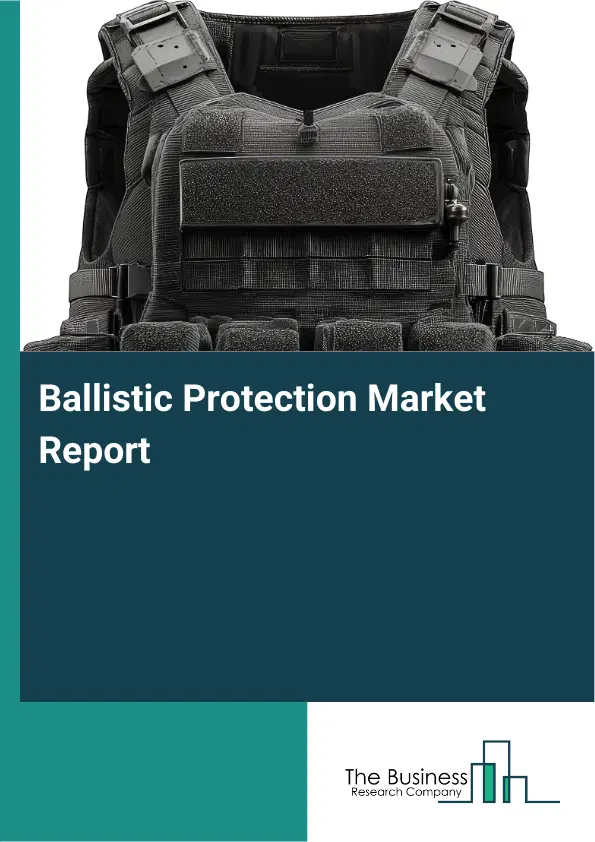
Ballistic Protection Market Report 2026
Global Outlook – By Product Type (Personal Protection Equipment, Vehicle Protection Equipment), By Material (Aramid, Carbon Fiber Composites, Glass Fiber And Thermoplastic, Ceramic, Other Materials ), By Platform (Land, Airborne, Marine), By Application (Defense, Homeland Security, Commercial, Other Applications) – Market Size, Trends, Strategies, and Forecast to 2030
Ballistic Protection Market Overview
• Ballistic Protection market size has reached to $14.75 billion in 2025 • Expected to grow to $19.18 billion in 2030 at a compound annual growth rate (CAGR) of 5.4% • Growth Driver: Défense Spending Surge Propels Ballistic Protection Market Growth • Market Trend: New Military Helmet Optimizes Comfort And Mission Readiness • North America was the largest region in 2025 and Asia-Pacific is the fastest growing region.Market Gains By 2030 – Top Opportunities By Segment
Market Gain identifies the most promising market opportunities by highlighting the segments or products expected to generate the highest incremental revenue growth over the next five years.
What Is Covered Under Ballistic Protection Market?
Ballistic protection refers to body armor that serves to protect against all types of assault or defense. It shields the body and eyes from threats of all sizes, shapes, and impact velocities. The main product types in ballistic protection are personal protection equipment, vehicle protection equipment. Personal protective equipment refers to clothing and accessories worn to reduce exposure to risks that can result in severe workplace diseases and injuries. The material used are aramid, carbon fiber composites, glass fiber and thermoplastic, ceramic, and others. The ballistic protection is used on land, airborne, and marine for defense, homeland security, commercial, and others.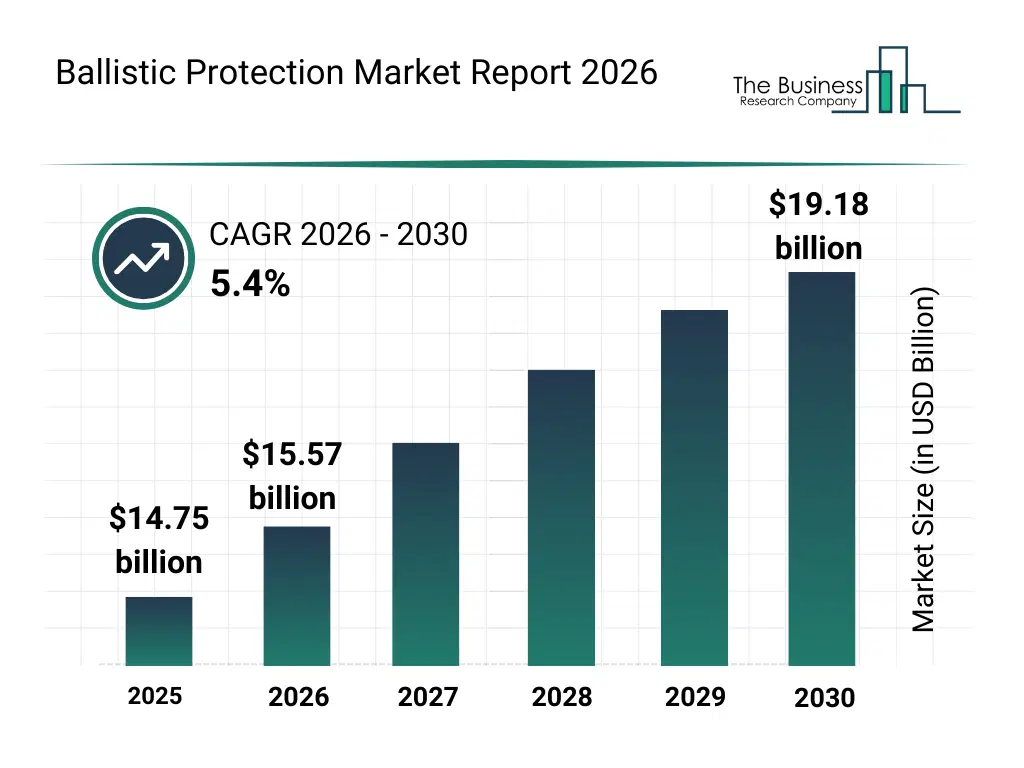
What Is The Ballistic Protection Market Size and Share 2026?
The ballistic protection market size has grown strongly in recent years. It will grow from $14.75 billion in 2025 to $15.57 billion in 2026 at a compound annual growth rate (CAGR) of 5.5%. The growth in the historic period can be attributed to increased global military and law enforcement deployments driving demand for body armor, rising insurgency and terrorism incidents boosting adoption of ballistic vests and shields, advancements in lightweight composite materials enhancing protective gear performance, expansion of domestic armor manufacturing capabilities across emerging economies, stricter safety standards for protective equipment increasing procurement volumes.What Is The Ballistic Protection Market Growth Forecast?
The ballistic protection market size is expected to see strong growth in the next few years. It will grow to $19.18 billion in 2030 at a compound annual growth rate (CAGR) of 5.4%. The growth in the forecast period can be attributed to growing development of next-generation soft and hard armor integrating advanced materials, rising demand for modular and ergonomic protective solutions for varied mission needs, increasing focus on protection against high-velocity and multi-threat ammunition, expansion of civilian security and private defense sectors requiring ballistic protection products, continuous innovation in nanotechnology and fiber engineering enabling improved ballistic resistance. Major trends in the forecast period include rising demand for lightweight and modular armor, increasing focus on multi-threat protection, adoption of advanced composite materials, growing use of vehicle armor for urban security, development of rapid-prototyping and customizable armor solutions.
Global Ballistic Protection Market Segmentation
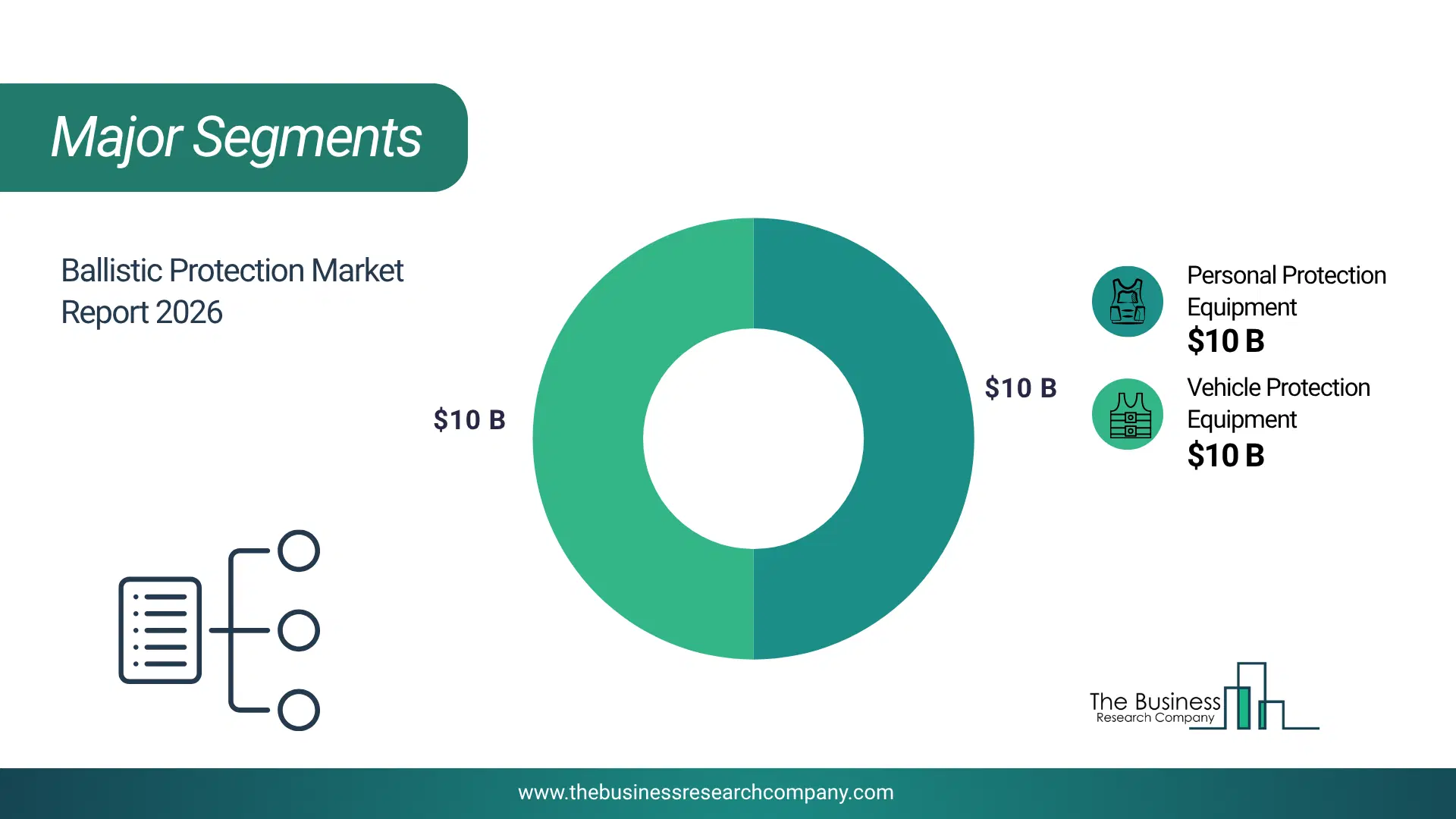
1) By Product Type: Personal Protection Equipment, Vehicle Protection Equipment 2) By Material: Aramid, Carbon Fiber Composites, Glass Fiber And Thermoplastic, Ceramic, Other Materials 3) By Platform: Land, Airborne, Marine 4) By Application: Defense, Homeland Security, Commercial, Other Applications Subsegments: 1) By Personal Protection Equipment: Body Armor, Helmets, Shields, Protective Clothing 2) By Vehicle Protection Equipment: Armored Vehicles, Ballistic Glass, Blast-Resistant Materials, Armor Kits The top segments in the ballistic protection market will be: • Personal Protection Equipment will reach $9.72 Billion by 2030. • Vehicle Protection Equipment will reach $9.66 Billion by 2030.What Is Driver Of The Ballistic Protection Market?
The rise in defence expenditure is expected to propel the growth of the ballistic protection market going forward. Défense expenditure refers to the amount of money allocated by governments for military purposes, such as maintaining and modernizing armed forces, developing new weapons and technologies, and covering operational costs. Défense expenditure can fund the development of lightweight, comfortable, and high-strength materials, which are essential for creating effective ballistic protection equipment. For instance, in October 2025, according to the UK Parliament's House of Commons Library, a UK-based government administration, Defence spending outlined in the 2025 Spending Review is expected to total USD 83.3 billion (£62.2 billion) in 2025/26, increasing to USD 98.2 billion (£73.5 billion) in 2028/29, which corresponds to an annual average real-terms growth rate of 3.8% over this period. Therefore, the rise in defence expenditure is driving the growth of the ballistic protection industry.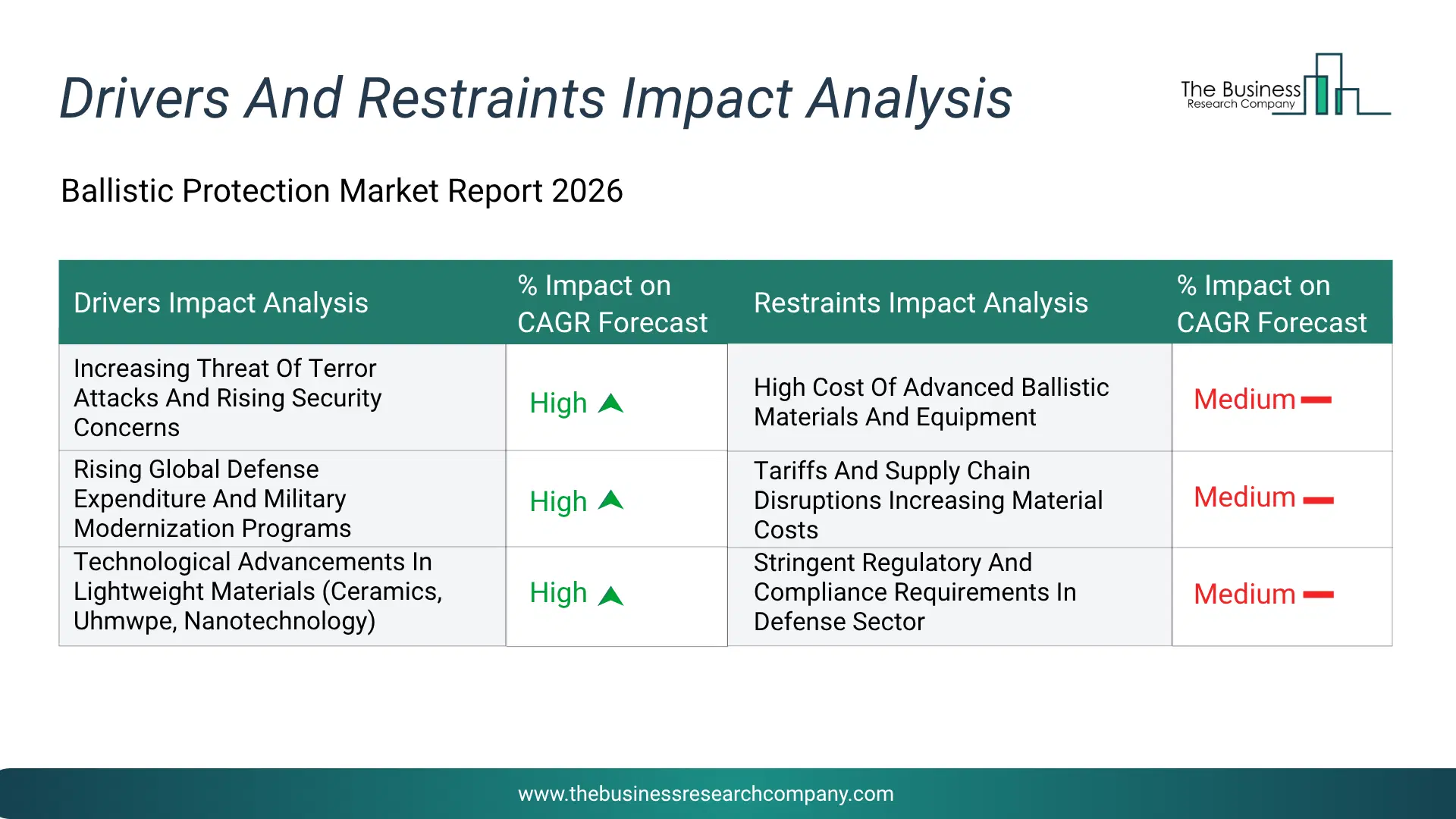
Infographic Chart Showing Key Market Drivers Analysis And Restraints For Ballistic Protection Market
The chart presents an impact analysis of key drivers and restraints, quantifying their relative influence on the market's growth rate and helping assess the balance between growth enablers and limiting factors. This chart offers a high-level perspective; the full report contains more detailed insights.
How Will The Drivers Impact Growth In The Global Ballistic Protection Market?
• Increasing Threat Of Terror Attacks And Rising Security Concerns (High) – During the forecast period, the increasing threat of terror attacks and rising security concerns are expected to become a key growth driver for the ballistic protection market by 2030. Governments, law enforcement agencies, and private security organizations are strengthening protective measures to address evolving security threats and asymmetric warfare risks. The growing need to safeguard personnel, critical infrastructure, public facilities, and transportation networks is accelerating demand for advanced ballistic protection solutions. Security agencies are increasingly deploying protective equipment designed to withstand a broad range of ballistic and explosive threats while maintaining operational effectiveness. This heightened focus on security preparedness is reinforcing sustained market expansion. • Rising Global Defense Expenditure And Military Modernization Programs (High) – During the forecast period, the rising global defense expenditure and military modernization programs are expected to emerge as a major factor driving the expansion of the ballistic protection market by 2030. Defense organizations worldwide are allocating substantial resources toward upgrading protection capabilities for military personnel, vehicles, aircraft, and naval assets. Modernization initiatives are encouraging the adoption of next-generation armor systems capable of addressing evolving battlefield challenges and advanced weapon threats. The increasing emphasis on operational readiness, force survivability, and mission effectiveness is further supporting procurement of sophisticated protection technologies. • Technological Advancements In Lightweight Materials (Ceramics, Uhmwpe, Nanotechnology) (High) – During the forecast period, the technological advancements in lightweight materials, including ceramics, UHMWPE, and nanotechnology, are expected to act as a key growth catalyst for the ballistic protection market by 2030. Material science innovations are enabling the development of highly efficient protection systems that deliver enhanced ballistic resistance while significantly reducing weight. These advancements improve mobility, endurance, and comfort for personnel operating in demanding environments while supporting protection upgrades across various defense platforms. Manufacturers are continuously investing in research and development to enhance material performance, durability, and multi-threat protection capabilities.How Will The Restraints Impact Growth In The Global Ballistic Protection Market?
• High Cost Of Advanced Ballistic Materials And Equipment (High) – During the forecast period, the high cost of advanced ballistic materials and equipment acts as a significant restraint for the ballistic protection market. Developing and manufacturing high-performance materials such as advanced ceramics and UHMWPE involve complex processes and expensive raw inputs. This increases the overall cost of protective gear, making it less accessible for smaller defense budgets and developing regions. High procurement and maintenance costs also limit large-scale adoption, especially for law enforcement agencies with budget constraints. Additionally, frequent upgrades and replacements further add to financial burdens. Cost sensitivity among buyers can delay purchasing decisions or lead to preference for lower-cost alternatives. This pricing challenge restricts market penetration and slows down overall growth potential. • Tariffs And Supply Chain Disruptions Increasing Material Costs (High) – During the forecast period, the tariffs and supply chain disruptions significantly restrain the growth of the ballistic protection market by increasing material costs and causing delays. Many advanced materials used in ballistic protection are sourced globally, making the market vulnerable to trade restrictions and geopolitical tensions. Tariffs on imported raw materials raise production costs, which are eventually passed on to end users. Supply chain disruptions, such as transportation delays and shortages, further impact manufacturing timelines. These uncertainties affect inventory management and lead to inconsistent product availability. Companies may struggle to maintain stable pricing and delivery schedules. As a result, market expansion becomes challenging, particularly in regions dependent on imports. • Stringent Regulatory And Compliance Requirements In Defense Sector (High) – During the forecast period, the stringent regulatory and compliance requirements in the defense sector act as a major restraint for the ballistic protection market. Manufacturers must adhere to strict quality standards, certification processes, and testing protocols before products can be approved for use. These regulations often vary across countries, making it difficult for companies to enter multiple markets. Compliance procedures can be time-consuming and costly, delaying product launches and innovation cycles. Additionally, failure to meet regulatory standards can result in penalties or rejection of products. The need for continuous testing and validation adds to operational complexity. Such regulatory barriers can limit the participation of smaller players and slow overall market growth.Key Players In The Global Ballistic Protection Market
Major companies operating in the ballistic protection market are Avon Protection plc ., BAE Systems plc, DuPont de Nemours Inc., Honeywell International Inc., Point Blank Enterprises Inc., Rheinmetall AG, Saab AB, Koninklijke Ten Cate BV, Teijin Limited, Survitec Group Limited, ArmorWorks Enterprises LLC, Revision Military Inc., ArmorSource LLC, MKU Limited, GENTEX Corporation, Tencate Advanced Armor, Ceradyne Inc., Craig International Ballistics Pty Ltd, EnGarde Body Armor, Safariland LLC, Blackhawk Industries Inc., Armor Express, Ballistic Body Armor Pty Ltd, C.P.E. Production Oy, CQC Limited, DMS Group, Eagle Industries SAS, Hellweg International, HighCom Security Inc., International Armored Group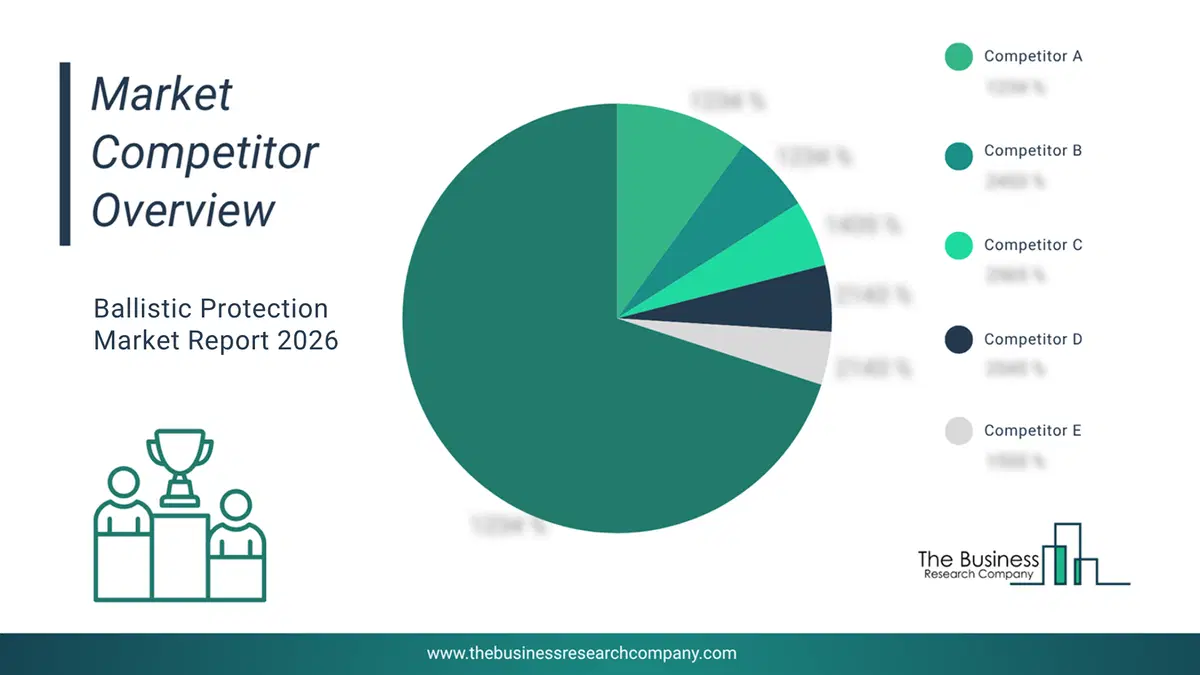
This chart is for illustrative purposes; the full report includes a detailed competitor analysis and comprehensive overview of the top 10 companies in the market.
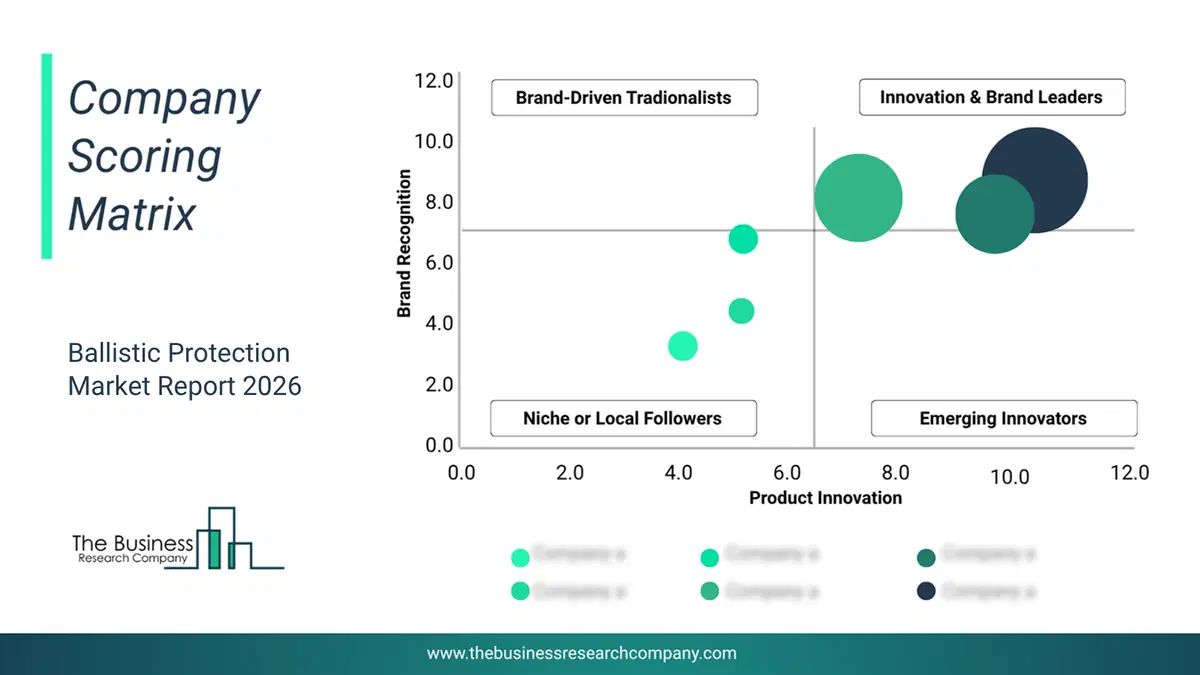
This chart maps companies by product innovation and brand strength, with bubble size indicating relative revenue, helping identify market leaders, challengers, and niche players. This is an illustrative chart; the full report provides a complete and accurate competitive analysis.
Global Ballistic Protection Market Trends and Insights
Major companies operating in the ballistic protection market are focusing on developing innovative products such as next-generation combat helmets to enhance soldier mobility and protection in modern combat scenarios. Next-generation combat helmets are lightweight, modular ballistic helmets designed for improved protection, comfort, and adaptability, integrating accessory mounts, advanced liners, and customizable sizing, helping soldiers move more freely, carry mission-specific gear, and maintain high protection without added fatigue. For instance, in October 2025, Galvion Inc., a U.S.-based defense technology company, launched the Batlskin Caiman UL, an ultra-light next-generation combat helmet designed to provide maximum ballistic protection while minimizing weight and bulk. The helmet incorporates Galvion’s advanced APEX liner system, a redesigned harness, and a modular 3-hole shroud, all engineered to improve fit, stability, and compatibility with night vision and other mission-critical equipment. Developed with more than seven years of end-user feedback from special operations teams, the Caiman UL addresses operational challenges such as long-duration wear, high-mobility maneuvers, and the integration of headborne devices, offering a secure and comfortable fit even under extreme conditions. Its low-profile shroud includes rubber bumpers to prevent rattle, multiple integrated anchor points for secure bungee storage and paracord pass-through, and an interchangeable metal shroud plate to support a range of night vision goggles and future accessories.What Are Latest Mergers And Acquisitions In The Ballistic Protection Market? Iten Defense Expands Portfolio With Transparent Armor Solutions
In March 2023, Iten Defense LLC, a US-based manufacturer of advanced composite armor products, acquired Transparent Armor Solutions for an undisclosed amount. Through this acquisition, combined resources are expected to strengthen and expand Iten's product offering to include transparent armor for both ground vehicles and infrastructure markets. Transparent Armor Solutions is a US-based manufacturer and developer of ballistic glass and transparent armor.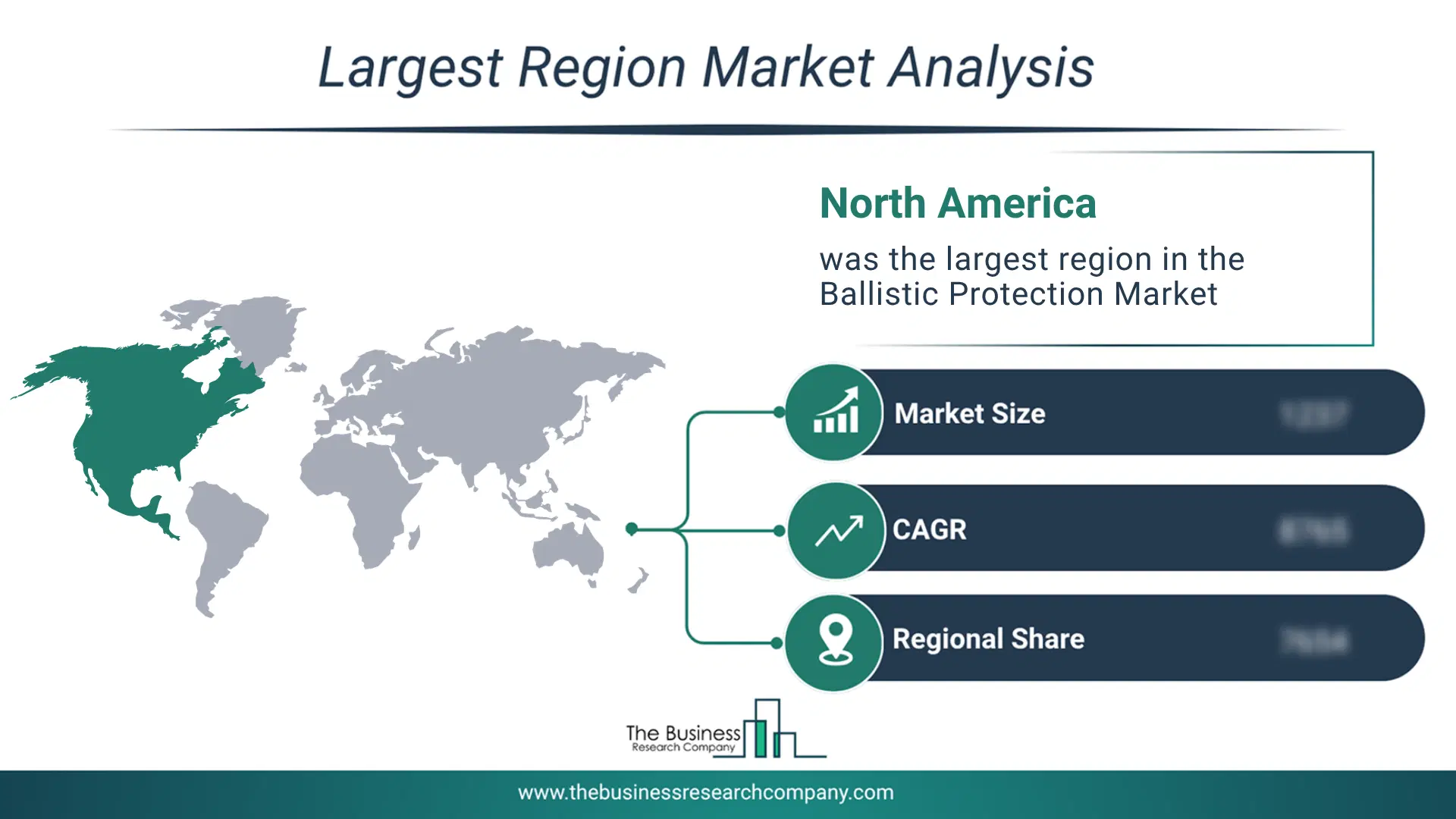
Regional Insights
North America was the largest region in the ballistic protection market in 2025.Asia-Pacific is expected to be the fastest-growing region in the global ballistic protection market report during the forecast period. The regions covered in this market report are Asia-Pacific, South East Asia, Western Europe, Eastern Europe, North America, South America, Middle East, Africa. The countries covered in this market report are Australia, Brazil, China, France, Germany, India, Indonesia, Japan, Taiwan, Russia, South Korea, UK, USA, Canada, Italy, SpainWhat Defines the Ballistic Protection Market?
The ballistic protection market consists of sales of body armor, vest, and shield. Values in this market are ‘factory gate’ values, that is the value of goods sold by the manufacturers or creators of the goods, whether to other entities (including downstream manufacturers, wholesalers, distributors, and retailers) or directly to end customers. The value of goods in this market includes related services sold by the creators of the goods.How is Market Value Defined and Measured?
The market value is defined as the revenues that enterprises gain from the sale of goods and/or services within the specified market and geography through sales, grants, or donations in terms of the currency (in USD unless otherwise specified). The revenues for a specified geography are consumption values that are revenues generated by organizations in the specified geography within the market, irrespective of where they are produced. It does not include revenues from resales along the supply chain, either further along the supply chain or as part of other products.
This chart presents market attractiveness based on a quantitative evaluation of growth, competition, strategic alignment, and risk, offering a clear view of opportunity areas for decision-making. This chart is for illustrative purposes; the full report contains the complete analysis.

This chart highlights the Total Addressable Market (TAM) by estimating the maximum revenue opportunity using an assumption-driven approach, supporting strategic planning and opportunity sizing across markets. The chart is illustrative; the full report provides a more comprehensive analysis.
What Key Data and Analysis Are Included in the Ballistic Protection Market Report 2026?
The ballistic protection market research report is one of a series of new reports from The Business Research Company that provides market statistics, including industry global market size, regional shares, competitors with the market share, detailed market segments, market trends and opportunities, and any further data you may need to thrive in the ballistic protection industry. The market research report delivers a complete perspective of everything you need, with an in-depth analysis of the current and future state of the industry.Ballistic Protection Market Report Forecast Analysis
| Report Attribute | Details |
|---|---|
| Market Size Value In 2026 | $15.57 billion |
| Revenue Forecast In 2030 | $19.18 billion |
| Growth Rate | CAGR of 5.5% from 2026 to 2030 |
| Base Year For Estimation | 2025 |
| Actual Estimates/Historical Data | 2020-2025 |
| Forecast Period | 2026 - 2030 |
| Market Representation | Revenue in USD Billion and CAGR from 2026 to 2030 |
| Segments Covered | Product Type, Material, Platform, Application |
| Regional Scope | Asia-Pacific, Western Europe, Eastern Europe, North America, South America, Middle East, Africa |
| Country Scope | The countries covered in the report are Australia, Brazil, China, France, Germany, India, Indonesia, Japan, Taiwan, Russia, South Korea, UK, USA, Canada, Italy, Spain. |
| Key Companies Profiled | Avon Protection plc ., BAE Systems plc, DuPont de Nemours Inc., Honeywell International Inc., Point Blank Enterprises Inc., Rheinmetall AG, Saab AB, Koninklijke Ten Cate BV, Teijin Limited, Survitec Group Limited, ArmorWorks Enterprises LLC, Revision Military Inc., ArmorSource LLC, MKU Limited, GENTEX Corporation, Tencate Advanced Armor, Ceradyne Inc., Craig International Ballistics Pty Ltd, EnGarde Body Armor, Safariland LLC, Blackhawk Industries Inc., Armor Express, Ballistic Body Armor Pty Ltd, C.P.E. Production Oy, CQC Limited, DMS Group, Eagle Industries SAS, Hellweg International, HighCom Security Inc., International Armored Group |
| Customization Scope | Request for Customization |
| Pricing And Purchase Options | Explore Purchase Options |