

Biodegradable Polymers Market Report 2026
Global Outlook – By Type (Starch-Based, Polylactic Acid (PLA), Polyhydroxy Alkanoates (PHA)), By Processing Method (Injection Molding, Extrusion, Blow Molding, Thermoforming), By Application (Agriculture, Textile, Consumer Goods, Packaging, Healthcare, Other Applications) – Market Size, Trends, Strategies, and Forecast to 2030
Biodegradable Polymers Market Overview
• Biodegradable Polymers market size has reached to $9.09 billion in 2025 • Expected to grow to $20.91 billion in 2030 at a compound annual growth rate (CAGR) of 18.1% • Growth Driver: Impact Of Agricultural Sector Expansion On The Growth Of The Biodegradable Polymers Market • Market Trend: Innovations In Biodegradable Polymers • Asia-Pacific was the largest region in 2025 and Europe is the fastest growing region.What Is Covered Under Biodegradable Polymers Market?
Biodegradable polymers are a class of polymers that can be broken down by microorganisms into water, carbon dioxide (or methane), and biomass. These polymers decompose through natural processes, usually within a short time frame compared to traditional plastics, making them an eco-friendly alternative. Biodegradable polymers can be derived from renewable resources (e.g., plant materials) or synthesized from petrochemicals with biodegradable properties. These materials are commonly used in packaging, agriculture, medical applications, and more. The main types of biodegradable polymers are starch-based, polylactic acid (PLA), polyhydroxy alkanoates (PHA), polyesters (PBS, PBAT, and PCL), and cellulose derivatives. Starch-based biodegradable polymers are materials derived from natural starch sources like corn, potatoes, or wheat. The substrates include paper and paperboard, cellulose films, and others and are applied for agriculture, textiles, consumer goods, packaging, healthcare, and others.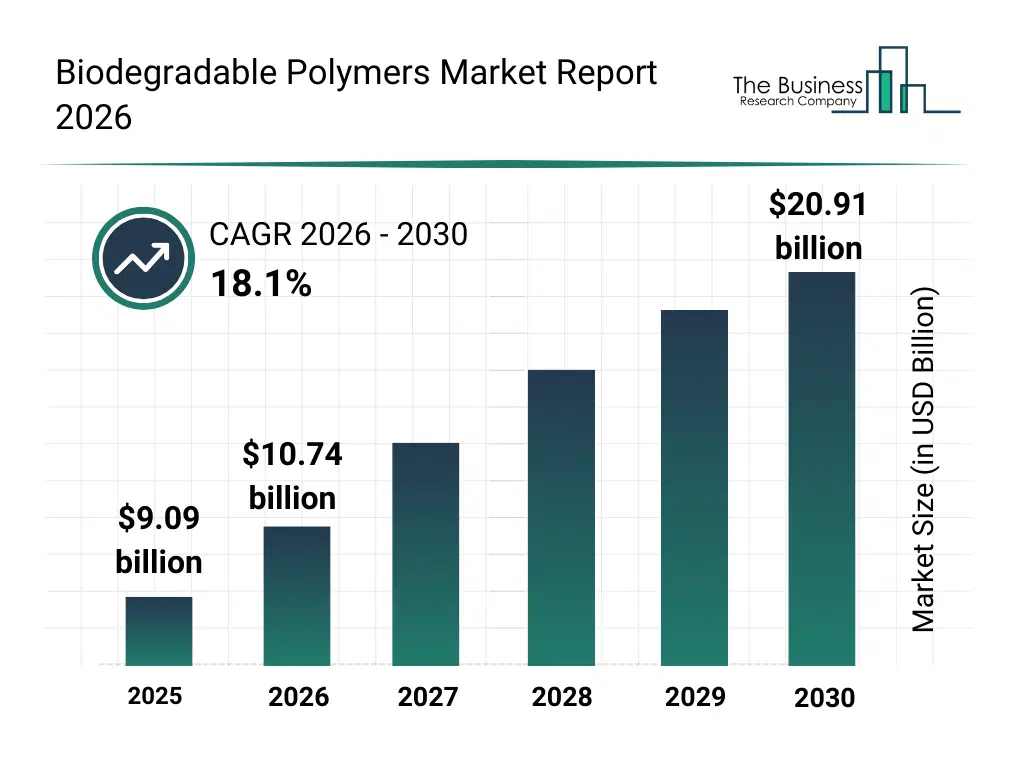
What Is The Biodegradable Polymers Market Size and Share 2026?
The biodegradable polymers market size has grown rapidly in recent years. It will grow from $9.09 billion in 2025 to $10.74 billion in 2026 at a compound annual growth rate (CAGR) of 18.1%. The growth in the historic period can be attributed to environmental concerns over plastic waste, early adoption of bioplastics in packaging, government bans on single use plastics, rising consumer preference for eco friendly products, advancements in polymer chemistry.What Is The Biodegradable Polymers Market Growth Forecast?
The biodegradable polymers market size is expected to see rapid growth in the next few years. It will grow to $20.91 billion in 2030 at a compound annual growth rate (CAGR) of 18.1%. The growth in the forecast period can be attributed to stricter global sustainability regulations, expansion of biodegradable polymers in healthcare, increased investment in bio based materials, scaling of commercial composting infrastructure, rising demand from agriculture and food packaging. Major trends in the forecast period include growing adoption of compostable packaging materials, increasing use of biodegradable polymers in agricultural films, rising demand for bio based medical implants, expansion of biodegradable polymers in textile fibers, focus on performance enhancement of biodegradable materials.
Global Biodegradable Polymers Market Segmentation
1) By Type: Starch-Based, Polylactic Acid (PLA), Polyhydroxy Alkanoates (PHA) 2) By Processing Method: Injection Molding, Extrusion, Blow Molding, Thermoforming 3) By Application: Agriculture, Textile, Consumer Goods, Packaging, Healthcare, Other Applications Subsegments: 1) By Starch-Based: Thermoplastic Starch (TPS), Starch Blends, Starch Composites 2) By Polylactic Acid (PLA): Injection-Molded PLA, Extruded PLA, PLA Films 3) By Polyhydroxy Alkanoates (PHA): Short-Chain PHA, Medium-Chain PHA, Long-Chain PHAWhat Is The Driver Of The Biodegradable Polymers Market?
The expansion of the agricultural sectors is expected to propel the growth of the biodegradable polymer market going forward. Agricultural sectors refer to the various segments of agriculture, including crop production, livestock farming, forestry, fisheries, and agribusiness, each focused on producing food, raw materials, and related products. Agricultural sectors are expanding due to rising global demand for food driven by population growth, advancements in farming technologies, increased investment in sustainable practices, and the growing need for bio-based materials. Biodegradable polymers are required in agricultural sectors to reduce plastic waste, improve soil health, and promote sustainability by providing eco-friendly alternatives for products such as mulch films, seed coatings, and packaging. For instance, in September 2024, according to a report published by the United States Department of Agriculture, a US-based government agency, agriculture, food, and related industries contributed approximately $1.53 trillion to the U.S. gross domestic product (GDP) in 2023, representing 5.6 % of the total. Therefore, expanding the agricultural sectors is driving the growth of the biodegradable polymer industry.Key Players In The Global Biodegradable Polymers Market
Major companies operating in the biodegradable polymers market are BASF SE, Mitsubishi Chemical Group Corporation, Evonik Industries AG, Solvay S.A., Koninklijke DSM N.V., Toyobo Co. Ltd., Corbion N.V., Green Dot Bioplastics Inc., Kaneka Belgium N.V., Danimer Scientific Inc., Sulapac Ltd., TIPA Corp Ltd., Natur-Tec, TotalEnergies Corbion B.V., BioBag International AS, Futerro S.A., Cereplast Inc., Toray Industries, Inc., Novamont S.p.A., Biome Bioplastics Ltd.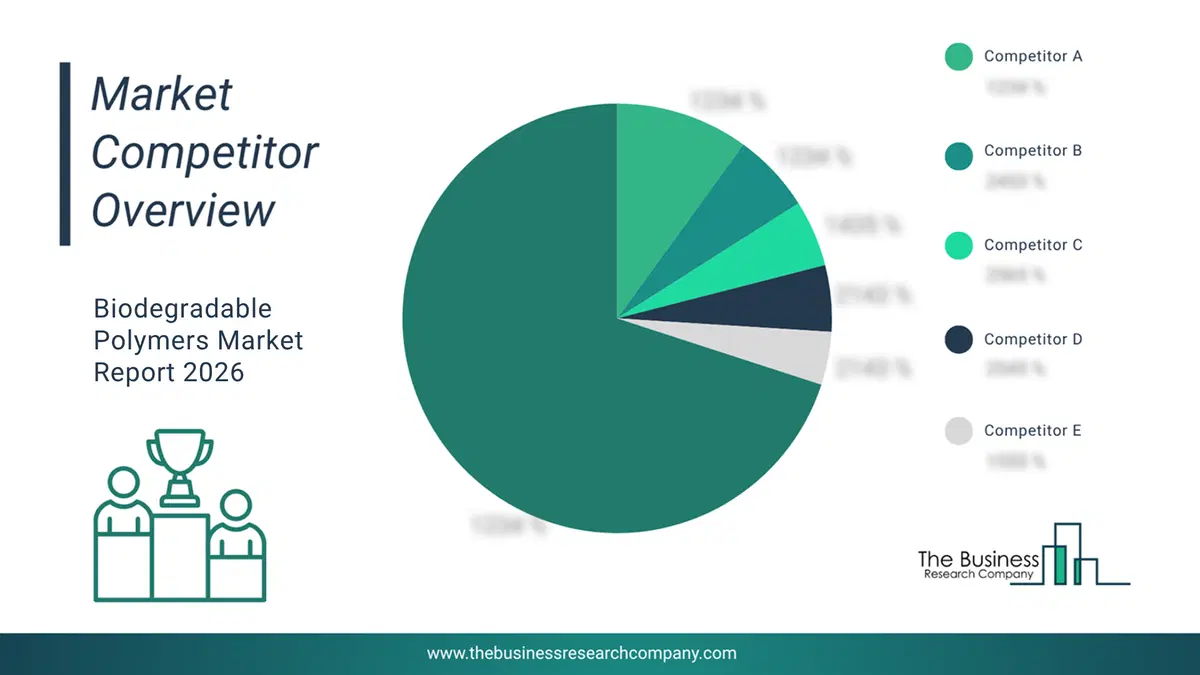
This chart is for illustrative purposes; the full report includes a detailed competitor analysis and comprehensive overview of the top 10 companies in the market.
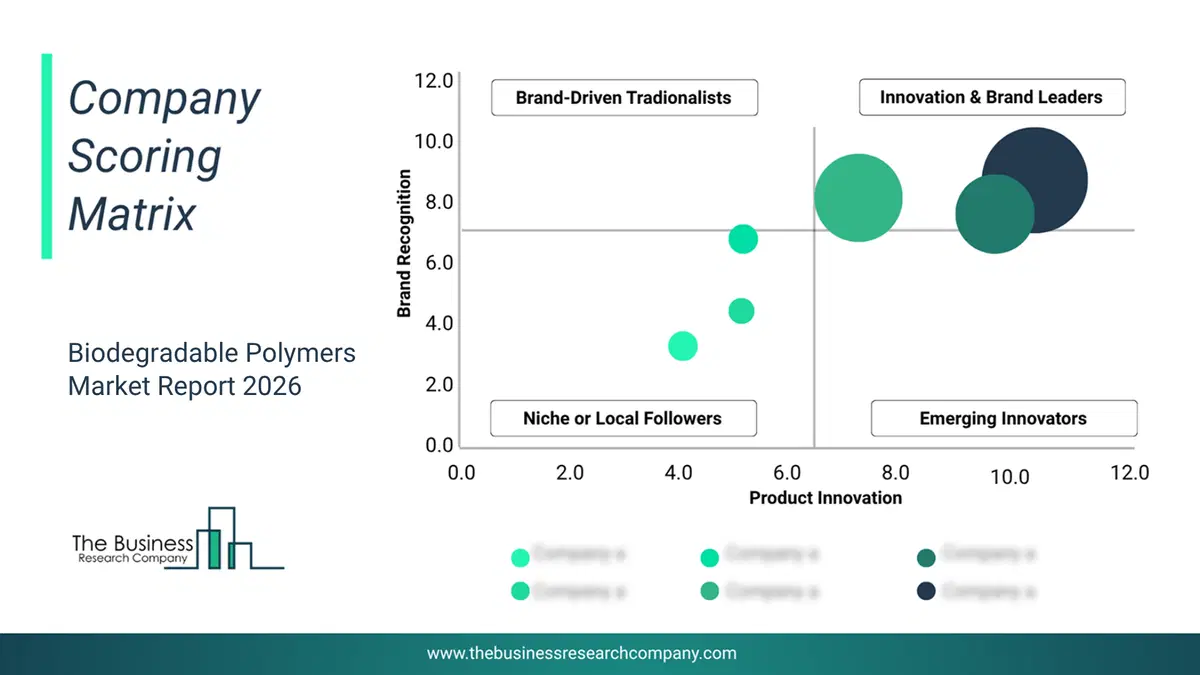
This chart maps companies by product innovation and brand strength, with bubble size indicating relative revenue, helping identify market leaders, challengers, and niche players. This is an illustrative chart; the full report provides a complete and accurate competitive analysis.
Global Biodegradable Polymers Market Trends and Insights
Major companies operating in the biodegradable polymers market are focused on developing soil conditioners to improve soil structure, enhance water retention, boost nutrient availability, and promote better root development. A soil conditioner is a material added to soil to improve its physical characteristics, including structure, water retention, and nutrient availability, promoting plant growth and improving soil health. For instance, in August 2024, Hydroplan-EB, a UK-based manufacturer of biodegradable polymers and superabsorbent polymers, launched HYB PLUS biodegradable polymer. Hydroplan-EB's biodegradable polymers are designed with additives that enhance rooting and promote successful establishment during planting and transplanting. These polymers improve initial plant development while minimizing the need for replanting. Key benefits include elevated nitrogen levels, organic carbon, and enzymes that help mitigate the physiological stress often associated with transplanting.What Are Latest Mergers And Acquisitions In The Biodegradable Polymers Market?
In October 2023, Versalis, an Italy-based chemical and polymer solutions provider, acquired Novamont S.p.A. for an undisclosed amount. The acquisition is anticipated to foster sustainable growth and open new opportunities for both companies. This strategic initiative expedites the shift toward a circular economy and bolsters Versalis' standing in the renewable chemistry sector. Novamont S.p.A. is an Italy-based chemical company that provides sustainable and biodegradable polymers.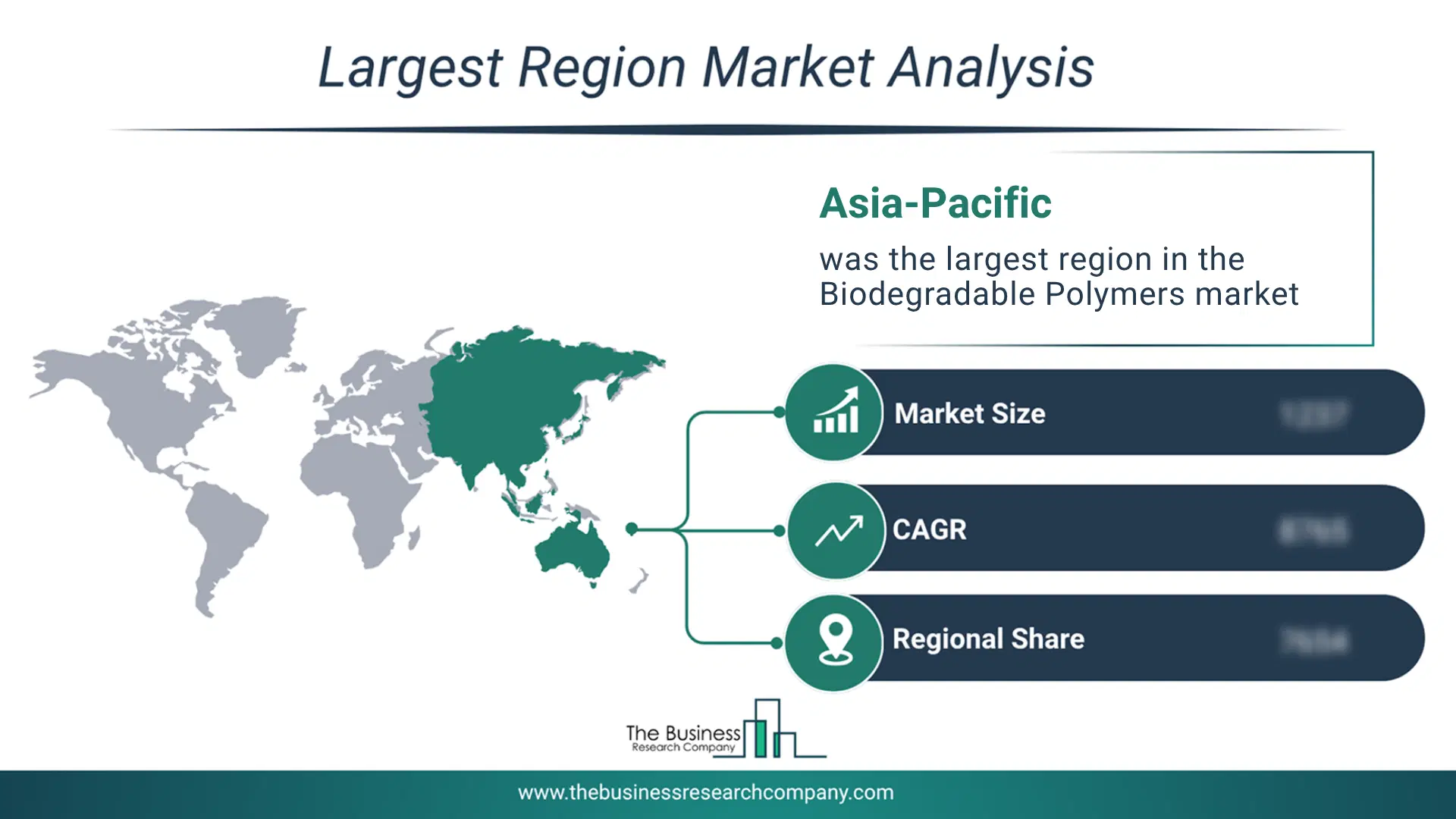
Regional Insights
Asia-Pacific was the largest region in the biodegradable polymers market in 2025. Europe is expected to be the fastest-growing region in the forecast period. The regions covered in this market report are Asia-Pacific, South East Asia, Western Europe, Eastern Europe, North America, South America, Middle East, Africa The countries covered in this market report are Australia, Brazil, China, France, Germany, India, Indonesia, Japan, Taiwan, Russia, South Korea, UK, USA, Canada, Italy, SpainWhat Defines the Biodegradable Polymers Market?
The biodegradable polymers market consists of sales of cutlery and plates, straws, agricultural films, seed coatings and personal care products. Values in this market are ‘factory gate’ values, that is the value of goods sold by the manufacturers or creators of the goods, whether to other entities (including downstream manufacturers, wholesalers, distributors and retailers) or directly to end customers. The value of goods in this market includes related services sold by the creators of the goods.How is Market Value Defined and Measured?
The market value is defined as the revenues that enterprises gain from the sale of goods and/or services within the specified market and geography through sales, grants, or donations in terms of the currency (in USD unless otherwise specified). The revenues for a specified geography are consumption values that are revenues generated by organizations in the specified geography within the market, irrespective of where they are produced. It does not include revenues from resales along the supply chain, either further along the supply chain or as part of other products.
This chart presents market attractiveness based on a quantitative evaluation of growth, competition, strategic alignment, and risk, offering a clear view of opportunity areas for decision-making. This chart is for illustrative purposes; the full report contains the complete analysis.

This chart highlights the Total Addressable Market (TAM) by estimating the maximum revenue opportunity using an assumption-driven approach, supporting strategic planning and opportunity sizing across markets. The chart is illustrative; the full report provides a more comprehensive analysis.
What Key Data and Analysis Are Included in the Biodegradable Polymers Market Report 2026?
The biodegradable polymers market research report is one of a series of new reports from The Business Research Company that provides market statistics, including industry global market size, regional shares, competitors with the market share, detailed market segments, market trends and opportunities, and any further data you may need to thrive in the biodegradable polymers industry. The market research report delivers a complete perspective of everything you need, with an in-depth analysis of the current and future state of the industry.Biodegradable Polymers Market Report Forecast Analysis
| Report Attribute | Details |
|---|---|
| Market Size Value In 2026 | $10.74 billion |
| Revenue Forecast In 2030 | $20.91 billion |
| Growth Rate | CAGR of 18.1% from 2026 to 2030 |
| Base Year For Estimation | 2025 |
| Actual Estimates/Historical Data | 2020-2025 |
| Forecast Period | 2026 - 2030 |
| Market Representation | Revenue in USD Billion and CAGR from 2026 to 2030 |
| Segments Covered | Type, Processing Method, Application |
| Regional Scope | Asia-Pacific, Western Europe, Eastern Europe, North America, South America, Middle East, Africa |
| Country Scope | The countries covered in this market report are Australia, Brazil, China, France, Germany, India, Indonesia, Japan, Taiwan, Russia, South Korea, UK, USA, Canada, Italy, Spain |
| Key Companies Profiled | BASF SE, Mitsubishi Chemical Group Corporation, Evonik Industries AG, Solvay S.A., Koninklijke DSM N.V., Toyobo Co. Ltd., Corbion N.V., Green Dot Bioplastics Inc., Kaneka Belgium N.V., Danimer Scientific Inc., Sulapac Ltd., TIPA Corp Ltd., Natur-Tec, TotalEnergies Corbion B.V., BioBag International AS, Futerro S.A., Cereplast Inc., Toray Industries, Inc., Novamont S.p.A., Biome Bioplastics Ltd. |
| Customization Scope | Request for Customization |
| Pricing And Purchase Options | Explore Purchase Options |