

Biothreat Detection Systems Market Report 2026
Global Outlook – By Technology (Polymerase Chain Reaction Based Detection, Immunological Detection, Biosensors, Microarrays, Other Technologies), By Detection Type (Biological Agents, Chemical Agents, Radiological Agents), By Application (Military And Defense, Public Health, Environmental Monitoring, Agriculture, Other Applications), By End-User (Government Agencies, Hospitals And Healthcare Facilities, Research Laboratories, Commercial And Industrial, Other End-Users) – Market Size, Trends, Strategies, and Forecast to 2030
Biothreat Detection Systems Market Overview
• Biothreat Detection Systems market size has reached to $2.18 billion in 2025 • Expected to grow to $3.49 billion in 2030 at a compound annual growth rate (CAGR) of 10% • Growth Driver: Expansion Of Defense And Homeland Security Budgets Fueling The Growth Of The Market Due To Increasing Investment In National Biosecurity And Threat Preparedness • Market Trend: Advancement Of Continuous Biological Surveillance Enhancing Early Detection Capabilities For Airborne Threats • North America was the largest region in 2025 and Asia-Pacific is the fastest growing region.What Is Covered Under Biothreat Detection Systems Market?
Biothreat detection systems refer to integrated technologies used to detect, identify, and monitor harmful biological agents such as viruses, bacteria, and toxins that may threaten public health or national security. These systems enable early warning and rapid response by combining sensors, laboratory diagnostics, and data analytics to identify natural outbreaks or deliberate biological attacks. The main types of biothreat detection systems include polymerase chain reaction based detection, immunological detection, Biosensors, microarrays, and other technologies. Polymerase chain reaction based detection refers to systems that identify and quantify pathogens or hazardous biological agents by amplifying specific segments of their genetic material. These systems detect biological agents, chemical agents, and radiological agents. They are applied across areas including military and defense, public health, environmental monitoring, agriculture, and other applications, and are used by end users including government agencies, hospitals and healthcare facilities, research laboratories, commercial and industrial organizations, and other end users.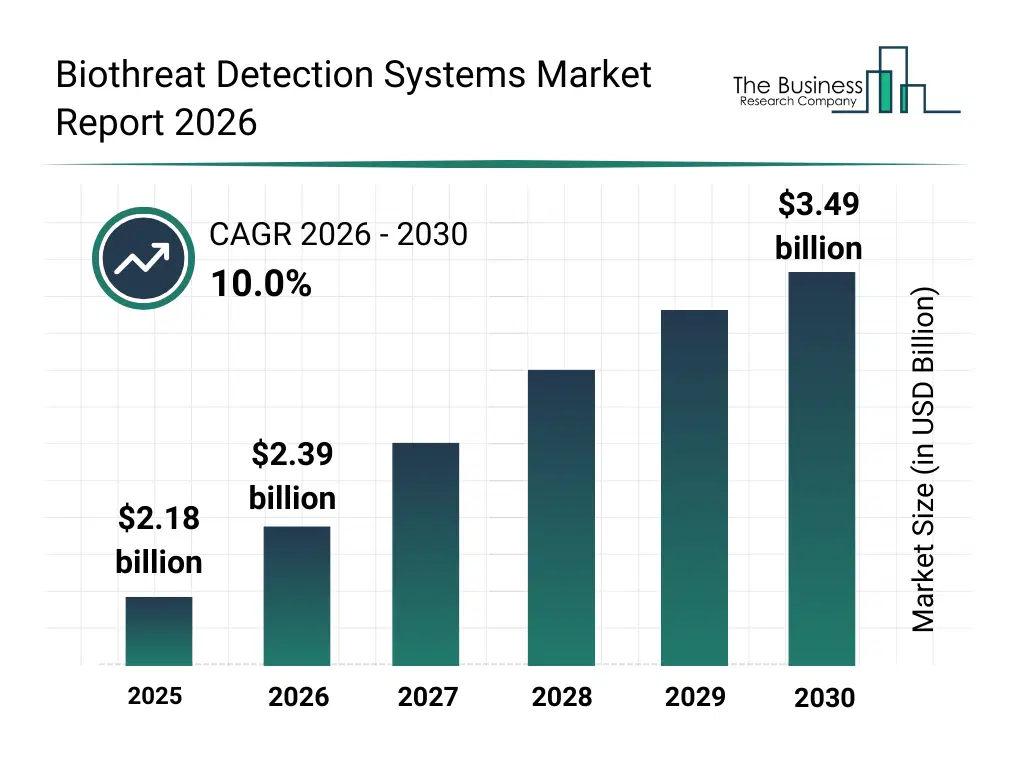
What Is The Biothreat Detection Systems Market Size and Share 2026?
The biothreat detection systems market size has grown strongly in recent years. It will grow from $2.18 billion in 2025 to $2.39 billion in 2026 at a compound annual growth rate (CAGR) of 9.7%. The growth in the historic period can be attributed to increasing public health surveillance initiatives, rising investment in biodefense programs, expansion of laboratory diagnostic capabilities, growing awareness of pandemic preparedness, adoption of molecular detection platforms.What Is The Biothreat Detection Systems Market Growth Forecast?
The biothreat detection systems market size is expected to see strong growth in the next few years. It will grow to $3.49 billion in 2030 at a compound annual growth rate (CAGR) of 10.0%. The growth in the forecast period can be attributed to increasing demand for early-warning biothreat systems, rising integration of AI-driven analytics, expansion of environmental monitoring networks, growing focus on national biosecurity strategies, increasing adoption of portable field-deployable systems. Major trends in the forecast period include increasing deployment of automated bioaerosol monitoring systems, rising adoption of rapid molecular detection technologies, expansion of integrated surveillance networks, growing use of portable detection kits, enhanced focus on real-time threat analytics.
Global Biothreat Detection Systems Market Segmentation
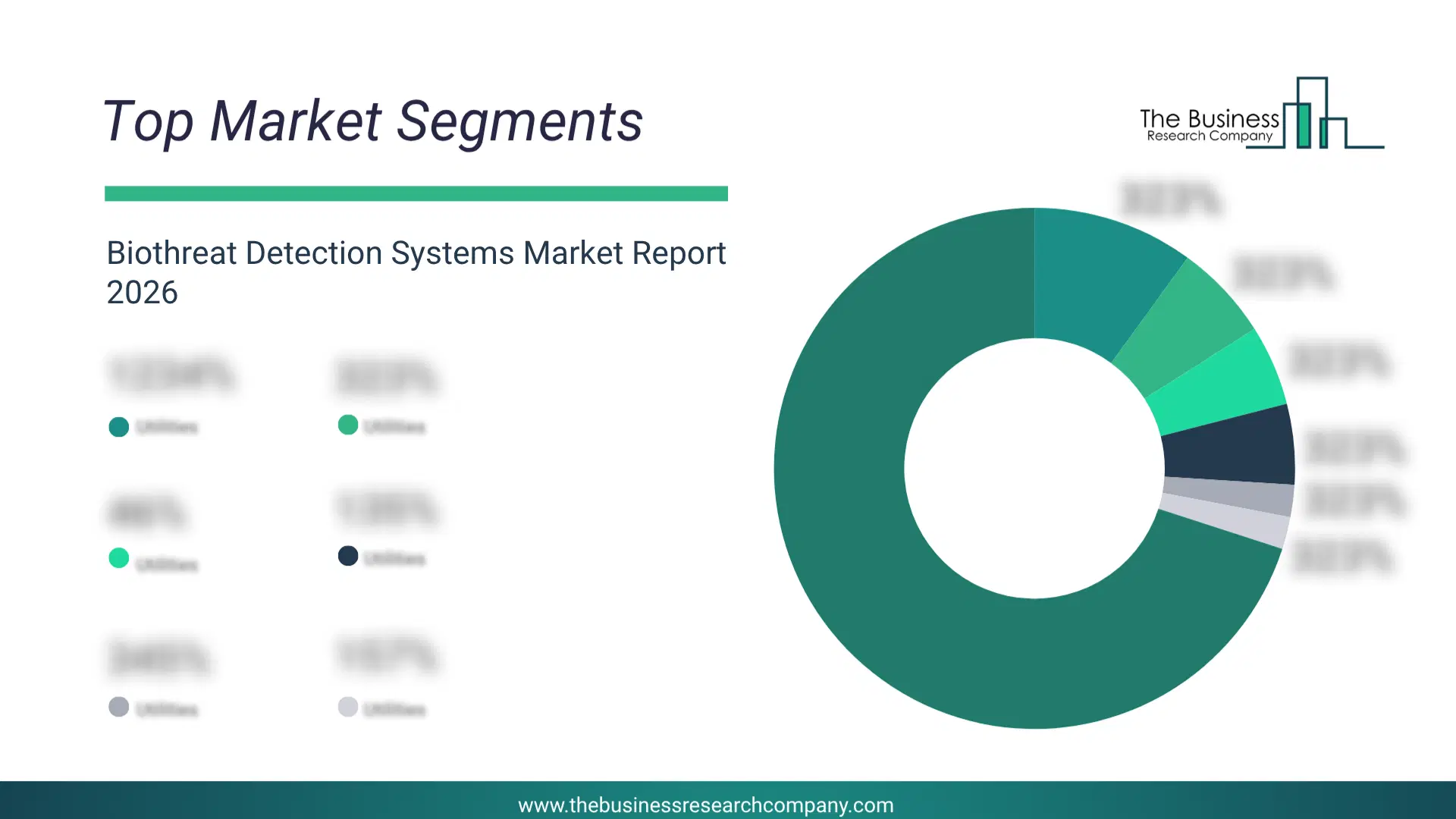
1. By Technology: Polymerase Chain Reaction Based Detection; Immunological Detection; Biosensors; Microarrays; Other Technologies 2. By Detection Type: Biological Agents; Chemical Agents; Radiological Agents 3. By Application: Military And Defense; Public Health; Environmental Monitoring; Agriculture; Other Applications 4. By End-User: Government Agencies; Hospitals And Healthcare Facilities; Research Laboratories; Commercial And Industrial; Other End-Users Subsegments: 1. By Polymerase Chain Reaction Based Detection: Real Time Polymerase Chain Reaction; Digital Polymerase Chain Reaction; Multiplex Polymerase Chain Reaction; Reverse Transcription Polymerase Chain Reaction; Quantitative Polymerase Chain Reaction 2. By Immunological Detection: Enzyme Linked Immunosorbent Assay; Lateral Flow Assay; Agglutination Assay; Western Blot Assay; Immunofluorescence Assay 3. By Biosensors: Electrochemical Biosensors; Optical Biosensors; Piezoelectric Biosensors; Thermal Biosensors; Magnetic Biosensors 4. By Microarrays: DNA Microarrays; Protein Microarrays; Antibody Microarrays; Peptide Microarrays; Cell Microarrays 5. By Other Technologies: Next Generation Sequencing; Flow Cytometry; Mass Spectrometry; Microfluidics Platforms; Lab On A Chip SystemsWhat Is The Driver Of The Biothreat Detection Systems Market?
The expansion of defense and homeland security budgets is expected to propel the growth of the biothreat detection systems market going forward. Defense and homeland security budgets refer to government-allocated financial resources dedicated to national defense, military operations, intelligence, border protection, counterterrorism, emergency preparedness, and the protection of critical infrastructure and public safety. Defense and homeland security budgets are increasing due to rising geopolitical tensions that require greater investment in national security and threat preparedness. Biothreat detection systems help defense and homeland security budgets by enabling early identification and rapid response to biological threats, reducing the cost and impact of large-scale outbreaks, emergency interventions, and national security incidents. For instance, in April 2025, according to the Stockholm International Peace Research Institute (SIPRI), a Sweden-based independent international institute, in 2024 United Kingdom raised its military spending by 2.8% to $81.8 billion, positioning it as the world’s sixth-largest defense spender. Therefore, the expansion of defense and homeland security budgets are driving the growth of the biothreat detection systems industry.Key Players In The Global Biothreat Detection Systems Market
Major companies operating in the biothreat detection systems market are Roche Diagnostics AG, Thermo Fisher Scientific Inc., Abbott Laboratories, Eurofins Scientific SE, Agilent Technologies Inc., Battelle Memorial Institute, Illumina Inc., Smiths Group, Shimadzu Corporation, Bruker Corporation, Bio Rad Laboratories Inc., QIAGEN NV, Tecan Group Ltd., DiaSorin S.p.A., Emergent BioSolutions Inc., Physical Sciences Inc, DetectaChem Inc., PositiveID Corporation, AdVnt Biotechnologies, Alexeter Technologies LLC.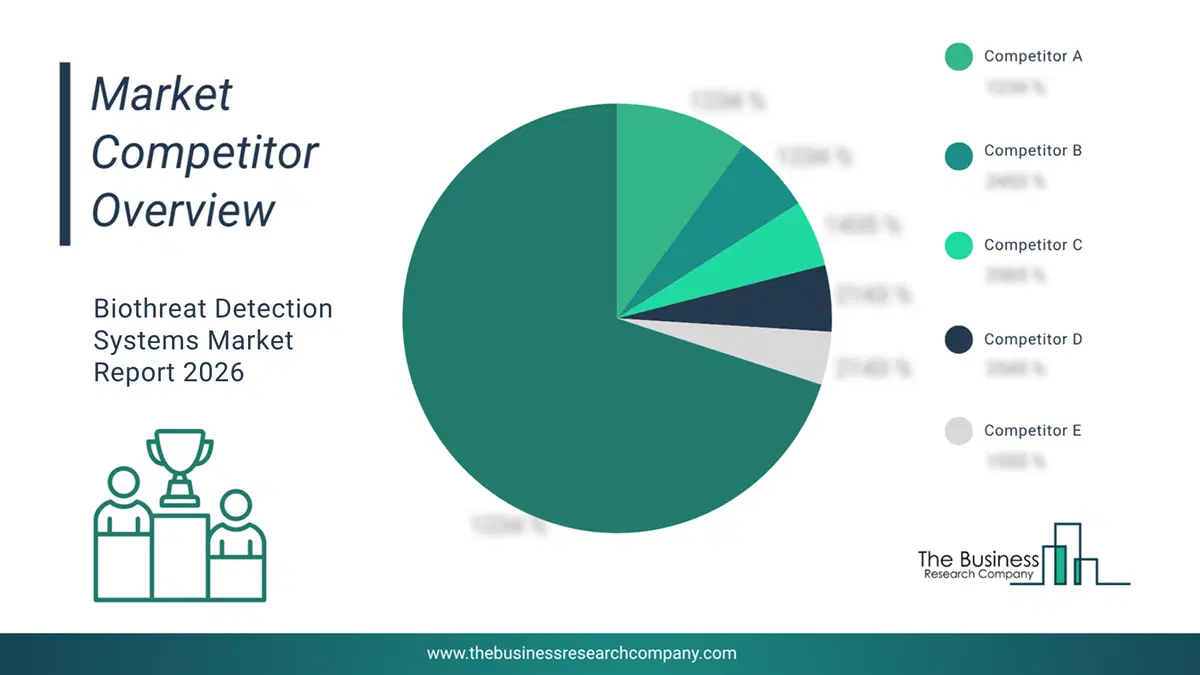
This chart is for illustrative purposes; the full report includes a detailed competitor analysis and comprehensive overview of the top 10 companies in the market.
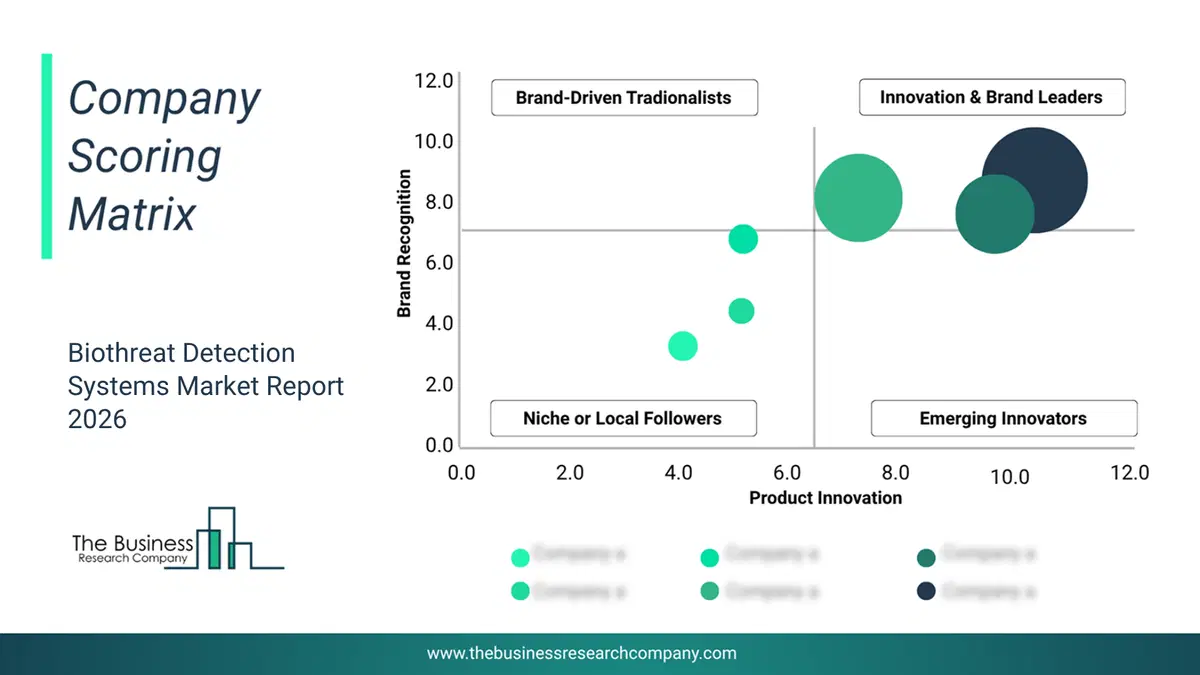
This chart maps companies by product innovation and brand strength, with bubble size indicating relative revenue, helping identify market leaders, challengers, and niche players. This is an illustrative chart; the full report provides a complete and accurate competitive analysis.
Global Biothreat Detection Systems Market Trends and Insights
Major companies operating in the biothreat detection systems market are focusing on advancing continuous biological surveillance technologies, such as real-time aerosol-based pathogen monitoring systems, to enable early detection of airborne biological threats in public and critical infrastructure settings. Real-time aerosol-based pathogen monitoring systems continuously collect and analyze air samples to identify biological agents, which allows authorities to detect emerging health threats or deliberate releases before widespread exposure occurs. For instance, in August 2023, BioFlyte Inc., a US-based biodefense technology company, launched a first-of-its-kind biothreat surveillance pilot program at Pittsburgh International Airport. The pilot deploys autonomous air-sampling and pathogen detection units throughout airport facilities, enables near real-time identification of airborne biological threats, and integrates alerting capabilities to support rapid response by public health and security teams, strengthening early-warning preparedness for high-traffic transportation hubs.What Are Latest Mergers And Acquisitions In The Biothreat Detection Systems Market?
In July 2025, XBridge LLC, a US-based healthcare company, partnered with BioFlyte to deploy advanced aerosol-based biothreat detection technology for continuous biological surveillance in high-risk public environments. Through this partnership, xBridge aims to enhance early-warning capabilities for airborne biological threats by deploying continuous aerosol detection and real-time pathogen monitoring technology across Pittsburgh International Airport. BioFlyte Inc. is a US-based company that offers a novel type of fieldable biological threat collection.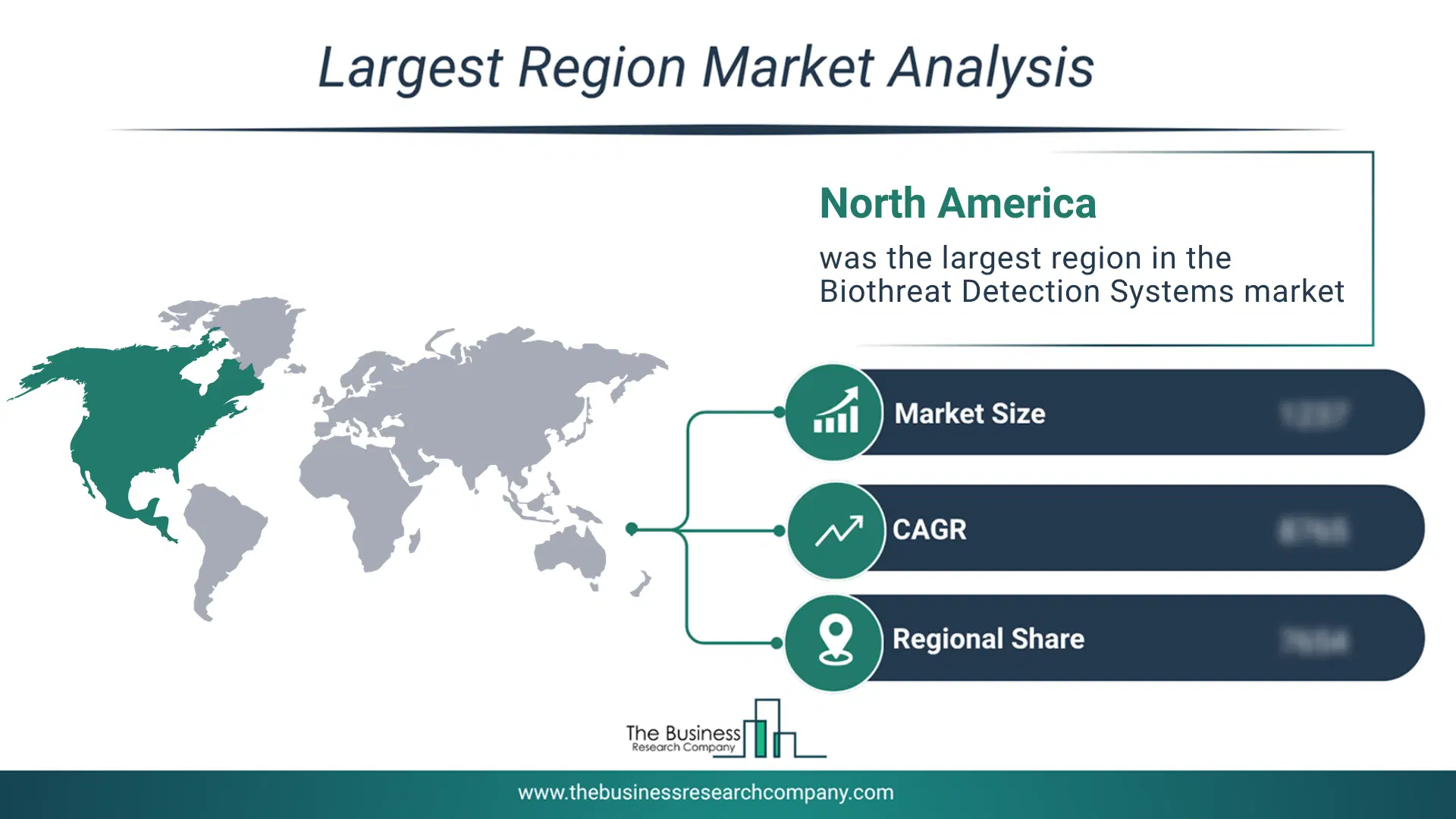
Regional Insights
North America was the largest region in the biothreat detection systems market in 2025. Asia-Pacific is expected to be the fastest-growing region in the forecast period. The regions covered in this market report are Asia-Pacific, South East Asia, Western Europe, Eastern Europe, North America, South America, Middle East, Africa. The countries covered in this market report are Australia, Brazil, China, France, Germany, India, Indonesia, Japan, Taiwan, Russia, South Korea, UK, USA, Canada, Italy, Spain.What Defines the Biothreat Detection Systems Market?
The biothreat detection systems market consists of sales of biosensors, polymerase chain reaction instruments, immunoassay analyzers, air sampling devices, bioaerosol collectors, portable detection kits, microbial detection reagents, automated sample preparation systems, and environmental monitoring detectors. Values in this market are ‘factory gate’ values, that is, the value of goods sold by the manufacturers or creators of the goods, whether to other entities (including downstream manufacturers, wholesalers, distributors, and retailers) or directly to end customers. The value of goods in this market includes related services sold by the creators of the goods.How is Market Value Defined and Measured?
The market value is defined as the revenues that enterprises gain from the sale of goods and/or services within the specified market and geography through sales, grants, or donations in terms of the currency (in USD unless otherwise specified). The revenues for a specified geography are consumption values that are revenues generated by organizations in the specified geography within the market, irrespective of where they are produced. It does not include revenues from resales along the supply chain, either further along the supply chain or as part of other products.
This chart presents market attractiveness based on a quantitative evaluation of growth, competition, strategic alignment, and risk, offering a clear view of opportunity areas for decision-making. This chart is for illustrative purposes; the full report contains the complete analysis.

This chart highlights the Total Addressable Market (TAM) by estimating the maximum revenue opportunity using an assumption-driven approach, supporting strategic planning and opportunity sizing across markets. The chart is illustrative; the full report provides a more comprehensive analysis.
What Key Data and Analysis Are Included in the Biothreat Detection Systems Market Report 2026?
The biothreat detection systems market research report is one of a series of new reports from The Business Research Company that provides market statistics, including industry global market size, regional shares, competitors with the market share, detailed market segments, market trends and opportunities, and any further data you may need to thrive in the biothreat detection systems industry. The market research report delivers a complete perspective of everything you need, with an in-depth analysis of the current and future state of the industry.Biothreat Detection Systems Market Report Forecast Analysis
| Report Attribute | Details |
|---|---|
| Market Size Value In 2026 | $2.39 billion |
| Revenue Forecast In 2030 | $3.49 billion |
| Growth Rate | CAGR of 10% from 2026 to 2030 |
| Base Year For Estimation | 2025 |
| Actual Estimates/Historical Data | 2020-2025 |
| Forecast Period | 2026 - 2030 |
| Market Representation | Revenue in USD Billion and CAGR from 2026 to 2030 |
| Segments Covered | Technology, Detection Type, Application, End-User |
| Regional Scope | Asia-Pacific, Western Europe, Eastern Europe, North America, South America, Middle East, Africa |
| Country Scope | The countries covered in the report are Australia, Brazil, China, France, Germany, India, Indonesia, Japan, Taiwan, Russia, South Korea, UK, USA, Canada, Italy, Spain. |
| Key Companies Profiled | Roche Diagnostics AG, Thermo Fisher Scientific Inc., Abbott Laboratories, Eurofins Scientific SE, Agilent Technologies Inc., Battelle Memorial Institute, Illumina Inc., Smiths Group, Shimadzu Corporation, Bruker Corporation, Bio Rad Laboratories Inc., QIAGEN NV, Tecan Group Ltd., DiaSorin S.p.A., Emergent BioSolutions Inc., Physical Sciences Inc, DetectaChem Inc., PositiveID Corporation, AdVnt Biotechnologies, Alexeter Technologies LLC. |
| Customization Scope | Request for Customization |
| Pricing And Purchase Options | Explore Purchase Options |