
Bone Metabolism Tests Market Report 2026
Global Outlook – By Test Type (Biochemical Tests, Imaging Tests, Bone Density Tests, Histomorphometry, Molecular Testing), By Product (Assay Or Consumables, Instruments), By Technology (Enzyme-Linked Immunosorbent Assay (ELISA), Chemiluminescence Immunoassay (CLIA), Other Technologies), By Application (Osteoporosis Diagnosis, Bone Disease Diagnosis, Fracture Risk Assessment, Drug Development, Clinical Research), By End-User (Hospitals, Diagnostic Laboratories, Research Institutes, Specialty Clinics Or Imaging Centers, Academic Institutions) - Market Size, Trends, Strategies, and Forecast to 2030
Bone Metabolism Tests Market Overview
• Bone Metabolism Tests market size has reached to $2.06 billion in 2025 • Expected to grow to $3.02 billion in 2030 at a compound annual growth rate (CAGR) of 7.9% • Growth Driver: The Growing Prevalence Of Osteoporosis And Osteopenia Is Fueling The Growth Of The Market Due To Rising Bone Fragility And The Need For Early Diagnostic Monitoring • North America was the largest region in 2025 and Asia-Pacific is the fastest growing region.What Is Covered Under Bone Metabolism Tests Market?
Bone metabolism tests are laboratory tests that assess the balance between bone formation and bone breakdown. They measure specific markers in blood or urine such as alkaline phosphatase and osteocalcin for bone formation, and CTX or NTX for bone resorption to evaluate bone health, diagnose metabolic bone disorders, and monitor treatment effectiveness. The main types of bone metabolism tests are biochemical tests, imaging tests, bone density tests, histomorphometry, and molecular testing. Biochemical tests measure markers in blood or urine that reflect bone turnover, while imaging and bone density tests help assess bone structure and mineral content. The product includes assays or consumables and instruments with various technologies, such as enzyme-linked immunosorbent assay (ELISA), chemiluminescence immunoassay (CLIA), and others. It is applicable in various applications such as osteoporosis diagnosis, bone disease diagnosis, fracture risk assessment, drug development, and clinical research, and is used by several end users, including hospitals, diagnostic laboratories, research institutes, home care settings, and academic institutions.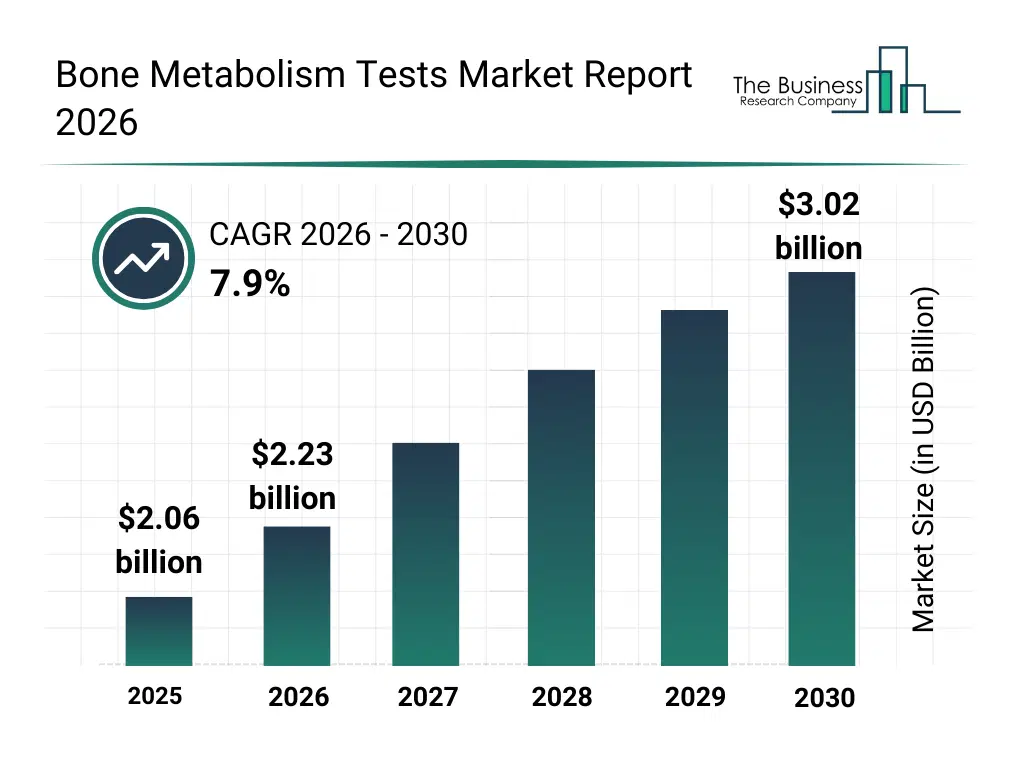
What Is The Bone Metabolism Tests Market Size and Share 2026?
The bone metabolism tests market size has grown strongly in recent years. It will grow from $2.06 billion in 2025 to $2.23 billion in 2026 at a compound annual growth rate (CAGR) of 8.2%. The growth in the historic period can be attributed to rising prevalence of osteoporosis, increased clinical awareness of metabolic bone disorders, wider availability of biochemical testing assays, growth in hospital-based diagnostic services, adoption of bone density screening programs.What Is The Bone Metabolism Tests Market Growth Forecast?
The bone metabolism tests market size is expected to see strong growth in the next few years. It will grow to $3.02 billion in 2030 at a compound annual growth rate (CAGR) of 7.9%. The growth in the forecast period can be attributed to increasing aging population, growing demand for personalized bone health assessment, expansion of clinical research on bone diseases, rising use of molecular diagnostics, increasing integration of laboratory automation. Major trends in the forecast period include increasing adoption of advanced bone turnover biomarker panels, rising use of automated immunoassay platforms, growing integration of molecular bone metabolism testing, expansion of bone health monitoring in drug development, enhanced focus on early osteoporosis detection.
Global Bone Metabolism Tests Market Segmentation
1) By Test Type: Biochemical Tests, Imaging Tests, Bone Density Tests, Histomorphometry, Molecular Testing 2) By Product: Assay Or Consumables, Instruments 3) By Technology: Enzyme-Linked Immunosorbent Assay (ELISA), Chemiluminescence Immunoassay (CLIA), Other Technologies 4) By Application: Osteoporosis Diagnosis, Bone Disease Diagnosis, Fracture Risk Assessment, Drug Development, Clinical Research 5) By End-User: Hospitals, Diagnostic Laboratories, Research Institutes, Specialty Clinics Or Imaging Centers, Academic Institutions Subsegments: 1) By Biochemical Tests: Serum Calcium Test, Serum Phosphorus Test, Alkaline Phosphatase Test, Parathyroid Hormone Test, Vitamin D Test 2) By Imaging Tests: X-Ray, Computed Tomography (CT), Magnetic Resonance Imaging (MRI), Dual-Energy X-Ray Absorptiometry (DEXA), Positron Emission Tomography (PET) 3) By Bone Density Tests: Central Dual-Energy X-Ray Absorptiometry (DEXA), Peripheral Dual-Energy X-Ray Absorptiometry (DEXA), Quantitative Ultrasound, Quantitative Computed Tomography (CT), Single Photon Absorptiometry (SPA) 4) By Histomorphometry: Static Histomorphometry, Dynamic Histomorphometry, Bone Biopsy Analysis, Fluorochrome Labeling, Trabecular Thickness Measurement 5) By Molecular Testing: Gene Expression Profiling, Micro Ribonucleic Acid (MicroRNA) Analysis, Deoxyribonucleic Acid (DNA) Methylation Assay, Bone Turnover Marker Panels, Genetic Mutation ScreeningWhat Are The Drivers Of The Bone Metabolism Tests Market?
The growing prevalence of osteoporosis and osteopenia is expected to propel the growth of the bone metabolism tests market going forward. Osteoporosis and osteopenia are musculoskeletal disorders characterized by low bone density and deterioration of bone tissue, leading to increased fragility and fracture risk, particularly in older adults. The prevalence of osteoporosis and osteopenia is increasing as aging populations experience accelerated bone loss, leading to reduced bone density. Bone metabolism tests aid in identifying and tracking osteoporosis and osteopenia by evaluating bone formation and breakdown markers. They offer valuable insight into bone turnover, supporting early intervention and treatment planning. For instance, in February 2024, according to the Arthritis Australia, an Australia-based non-profit organization, in 2025, osteoarthritis (OA) is projected to affect 2.35 million Australians (Figure 2), accounting for 57% of the total arthritis population and making it the most common form of arthritis in the country. By 2040, the number of Australians with OA is expected to rise to 3.11 million, representing a 32% increase from 2025. This corresponds to an additional 762,515 people living with OA in Australia by 2040 compared to 2025. Therefore, the growing prevalence of osteoporosis and osteopenia is driving the growth of the bone metabolism tests industry. The rising focus on personalized medicine is expected to propel the growth of the bone metabolism tests market going forward. Personalized medicine refers to tailoring medical treatments to individual biological characteristics such as genetic markers and biomarkers. The growth of personalized medicine is fueled by advancements in molecular diagnostics that enable more precise patient profiling and targeted therapeutic decisions. Bone metabolism tests support personalized medicine by providing biochemical markers that help clinicians customize osteoporosis treatment and metabolic bone disease care. For instance, in February 2024, according to the Personalized Medicine Coalition, a US-based professional healthcare organization, the organization reported that the FDA approved 16 new personalized treatments for rare-disease patients in 2023, up from six in 2022. Therefore, the rising focus on personalized medicine is driving the growth of the bone metabolism tests industry.Key Players In The Global Bone Metabolism Tests Market
Major companies operating in the bone metabolism tests market are F. Hoffmann-La Roche AG, Abbott Laboratories, Siemens Healthineers AG, Laboratory Corporation of America Holdings, Hologic Inc., QuidelOrtho Corporation, Beckman Coulter Inc., Bio-Rad Laboratories Inc., DiaSorin S.p.A., Randox Laboratories Ltd., Trivitron Healthcare Pvt. Ltd., MESO SCALE DIAGNOSTICS LLC, Immunodiagnostic Systems plc, DMS Imaging SA, Creative Diagnostics, Oxford Biosystems Ltd., Epitope Diagnostics Inc., Maccura Biotechnology Co. Ltd., Ortho Clinical Diagnostics, Fujirebio Diagnostics Inc., Sysmex Corporation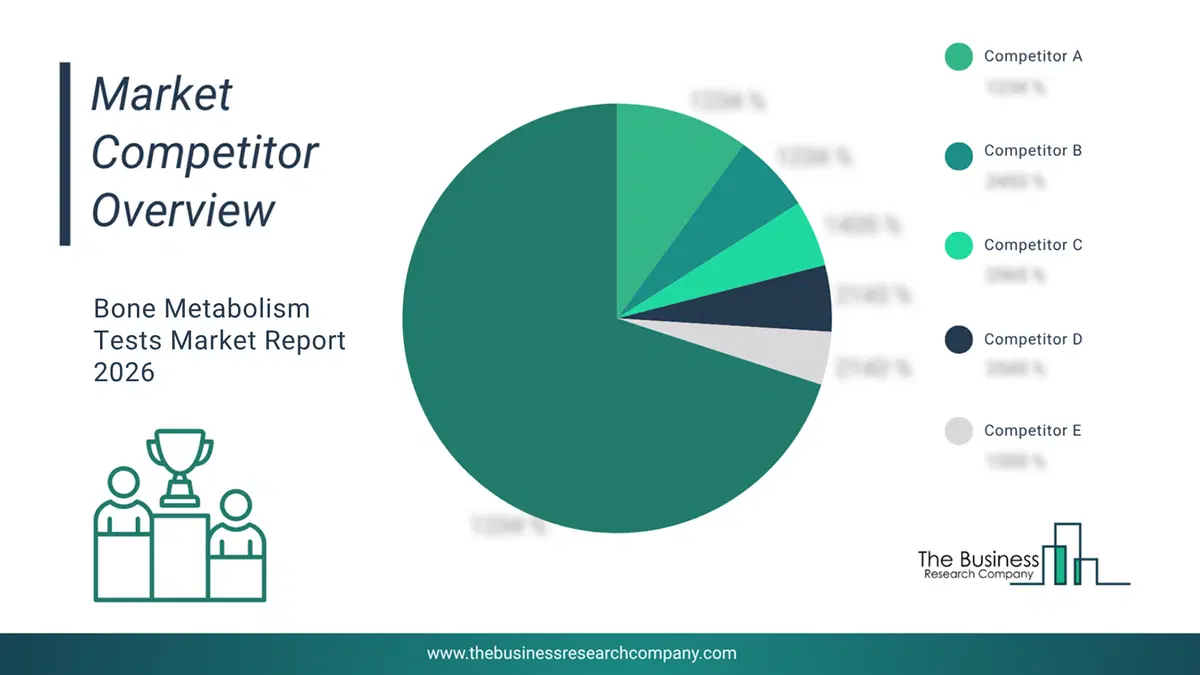
This chart is for illustrative purposes; the full report includes a detailed competitor analysis and comprehensive overview of the top 10 companies in the market.
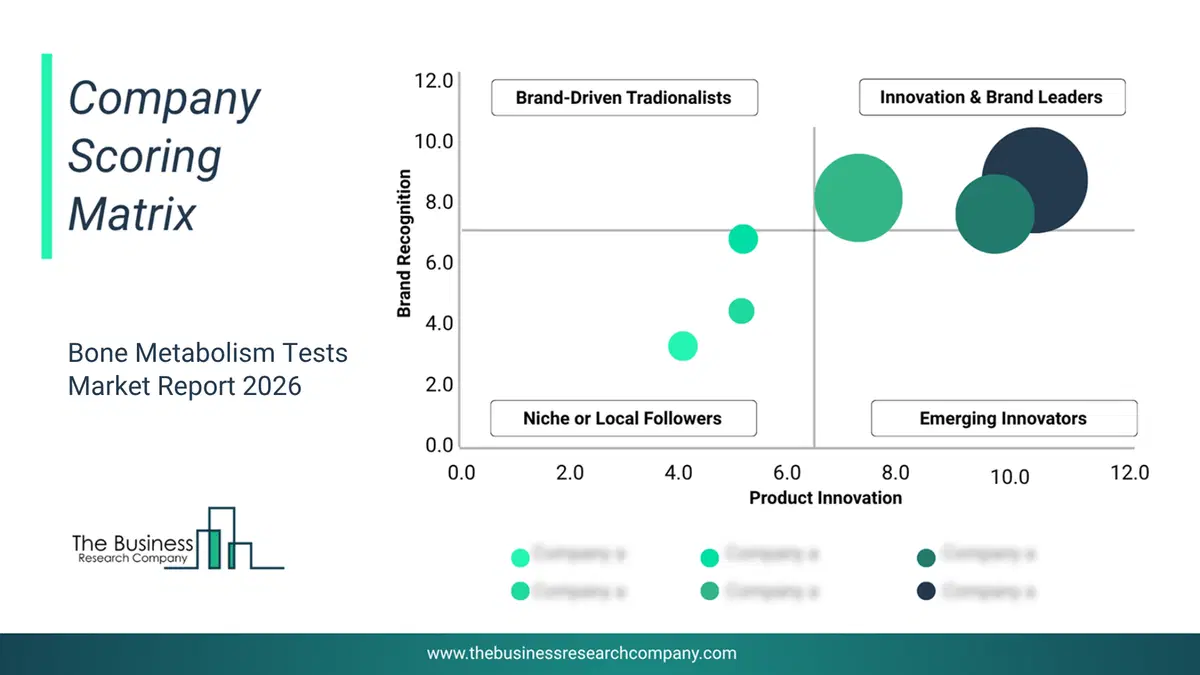
This chart maps companies by product innovation and brand strength, with bubble size indicating relative revenue, helping identify market leaders, challengers, and niche players. This is an illustrative chart; the full report provides a complete and accurate competitive analysis.
What Are Latest Mergers And Acquisitions In The Bone Metabolism Tests Market?
In February 2025, SimonMed, a US-based outpatient medical imaging provider, partnered with HeartLung Technologies to advance bone health through the use of AI-powered early detection. The collaboration aims to enhance preventive patient care by enabling nationwide, radiation-free bone density screening through the use of AI-driven analysis of existing CT scans. HeartLung Technologies is a US-based provider of imaging‑based bone density screening.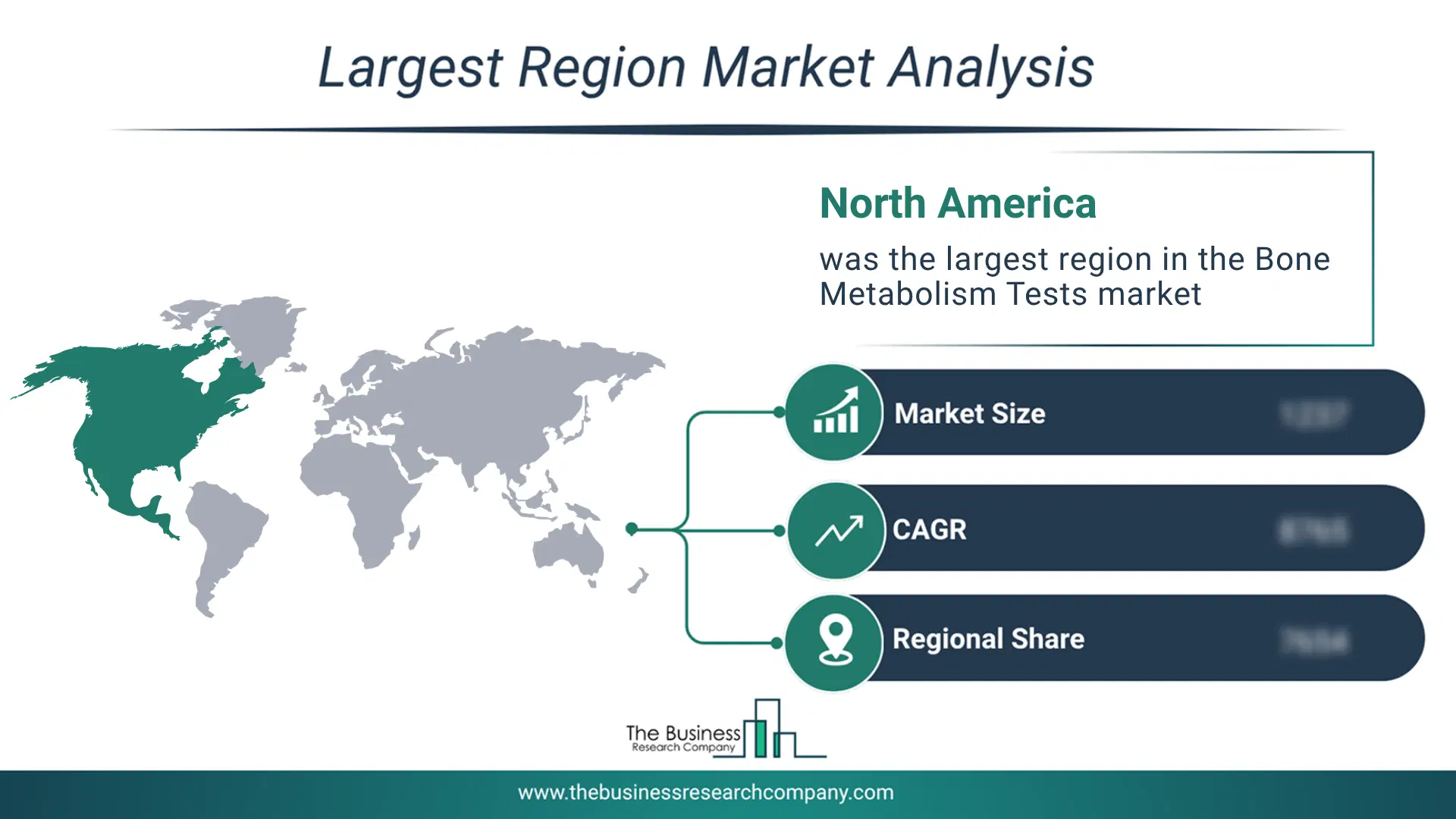
Regional Outlook
North America was the largest region in the bone metabolism tests market in 2025. Asia-Pacific is expected to be the fastest-growing region in the forecast period. The regions covered in this market report are Asia-Pacific, South East Asia, Western Europe, Eastern Europe, North America, South America, Middle East, Africa. The countries covered in this market report are Australia, Brazil, China, France, Germany, India, Indonesia, Japan, Taiwan, Russia, South Korea, UK, USA, Canada, Italy, Spain.What Defines the Bone Metabolism Tests Market?
The bone metabolism tests market consists of revenues earned by entities by providing services such as sample collection and processing, test result interpretation, patient screening consultations, diagnostic panel customization, and remote test accessibility. The market value includes the value of related goods sold by the service provider or included within the service offering. The bone metabolism tests market includes sales of analyzers, calibration standards, patient-specific reporting software, quality control reagents, and at-home test kits. Values in this market are ‘factory gate’ values, that is, the value of goods sold by the manufacturers or creators of the goods, whether to other entities (including downstream manufacturers, wholesalers, distributors and retailers) or directly to end customers. The value of goods in this market includes related services sold by the creators of the goods.How is Market Value Defined and Measured?
The market value is defined as the revenues that enterprises gain from the sale of goods and/or services within the specified market and geography through sales, grants, or donations in terms of the currency (in USD unless otherwise specified). The revenues for a specified geography are consumption values that are revenues generated by organizations in the specified geography within the market, irrespective of where they are produced. It does not include revenues from resales along the supply chain, either further along the supply chain or as part of other products.
This chart presents market attractiveness based on a quantitative evaluation of growth, competition, strategic alignment, and risk, offering a clear view of opportunity areas for decision-making. This chart is for illustrative purposes; the full report contains the complete analysis.

This chart highlights the Total Addressable Market (TAM) by estimating the maximum revenue opportunity using an assumption-driven approach, supporting strategic planning and opportunity sizing across markets. The chart is illustrative; the full report provides a more comprehensive analysis.
What Key Data and Analysis Are Included in the Bone Metabolism Tests Market Report 2026?
The bone metabolism tests market research report is one of a series of new reports from The Business Research Company that provides market statistics, including industry global market size, regional shares, competitors with the market share, detailed market segments, market trends and opportunities, and any further data you may need to thrive in the bone metabolism tests industry. The market research report delivers a complete perspective of everything you need, with an in-depth analysis of the current and future state of the industry.Bone Metabolism Tests Market Report Forecast Analysis
| Report Attribute | Details |
|---|---|
| Market Size Value In 2026 | $2.23 billion |
| Revenue Forecast In 2030 | $3.02 billion |
| Growth Rate | CAGR of 7.9% from 2026 to 2030 |
| Base Year For Estimation | 2025 |
| Actual Estimates/Historical Data | 2020-2025 |
| Forecast Period | 2026 - 2030 |
| Market Representation | Revenue in USD Billion and CAGR from 2026 to 2030 |
| Segments Covered | Test Type, Product, Technology, Application, End-User |
| Regional Scope | Asia-Pacific, Western Europe, Eastern Europe, North America, South America, Middle East, Africa |
| Country Scope | The countries covered in the report are Australia, Brazil, China, France, Germany, India, Indonesia, Japan, Taiwan, Russia, South Korea, UK, USA, Canada, Italy, Spain |
| Key Companies Profiled | F. Hoffmann-La Roche AG, Abbott Laboratories, Siemens Healthineers AG, Laboratory Corporation of America Holdings, Hologic Inc., QuidelOrtho Corporation, Beckman Coulter Inc., Bio-Rad Laboratories Inc., DiaSorin S.p.A., Randox Laboratories Ltd., Trivitron Healthcare Pvt. Ltd., MESO SCALE DIAGNOSTICS LLC, Immunodiagnostic Systems plc, DMS Imaging SA, Creative Diagnostics, Oxford Biosystems Ltd., Epitope Diagnostics Inc., Maccura Biotechnology Co. Ltd., Ortho Clinical Diagnostics, Fujirebio Diagnostics Inc., Sysmex Corporation |
| Customization Scope | Request for Customization |
| Pricing And Purchase Options | Explore Purchase Options |