
Brain Health Devices Market Report 2026
Global Outlook – By Device Type (Magnetic Resonance Imaging, Magneto Encephalogram, Computed Tomography, Transcranial Doppler Device, Other Device Types, By Procedure (Invasive, Non-Invasive), By Application (Sleep Disorders, Accidental Injuries, Alzheimer's Disease, Epilepsy, Stroke, Other Applications), By End-User (Hospitals And Clinics, Diagnostic Imaging Centers, Homecare Settings, Assisted Living Facilities, Other End-Users) – Market Size, Trends, Strategies, and Forecast to 2030
Brain Health Devices Market Overview
• Brain Health Devices market size has reached to $11.9 billion in 2025 • Expected to grow to $16.84 billion in 2030 at a compound annual growth rate (CAGR) of 7.1% • Growth Driver: Rising Prevalence Of Neurological Disorders Drives Growth in Brain Health Devices Market • Market Trend: Advancements In Brain Monitoring Platforms By Enhancing Diagnostics And Care In Neurological Health • North America was the largest region in 2025 and Asia-Pacific is the fastest growing region.What Is Covered Under Brain Health Devices Market?
Brain health devices are tools designed to monitor, assess, or enhance cognitive functions, brain activity, and mental well-being. These devices range from wearable headsets that track brainwave patterns to neurostimulation tools that help manage conditions such as depression or epilepsy. They aim to promote overall brain health, aid in the early detection of neurological disorders, and support cognitive enhancement through various methods, including brain training and biofeedback. The main types of devices in the brain health devices market are magnetic resonance imaging, magneto encephalogram, computed tomography, transcranial doppler device, and others. Magnetic resonance imaging (MRI) is a non-invasive technique that uses magnetic fields and radio waves to create detailed images of the brain's structure. The various procedures include invasive and non-invasive, and several applications including sleep disorders, accidental injuries, alzheimer's disease, epilepsy, stroke, and others. The different end-users encompass hospitals and clinics, diagnostic imaging centers, homecare settings, assisted living facilities, and others.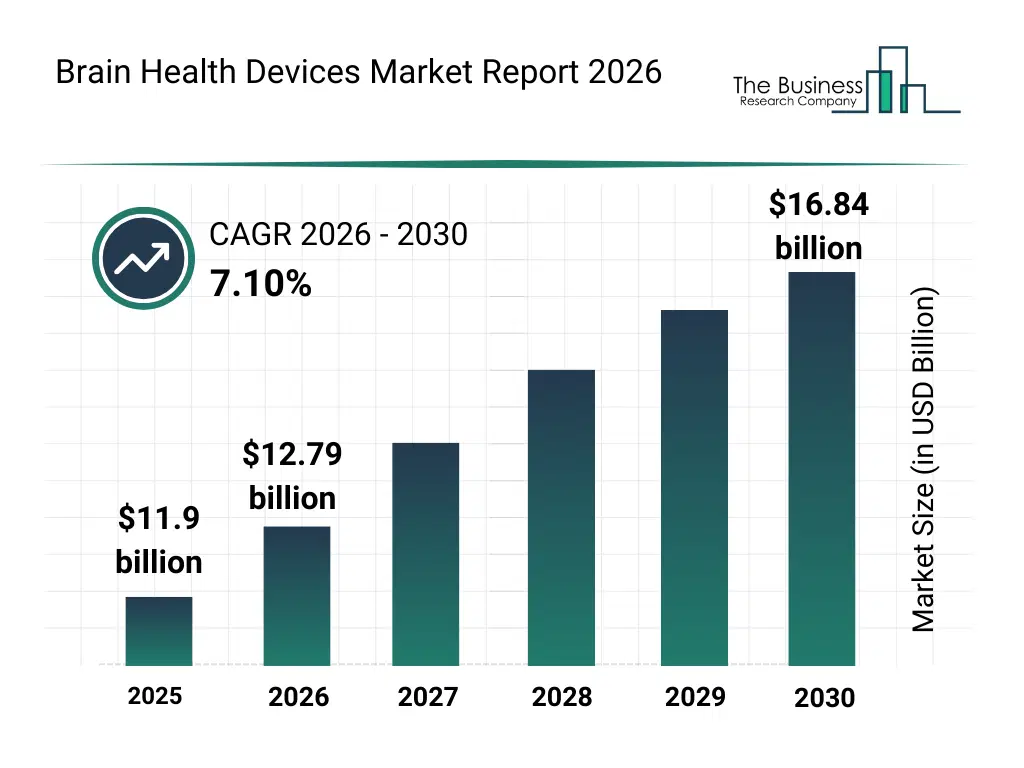
What Is The Brain Health Devices Market Size and Share 2026?
The brain health devices market size has grown strongly in recent years. It will grow from $11.9 billion in 2025 to $12.79 billion in 2026 at a compound annual growth rate (CAGR) of 7.5%. The growth in the historic period can be attributed to limited availability of advanced neuroimaging devices, growing prevalence of neurological disorders, increasing hospital and clinic infrastructure, reliance on conventional diagnostic procedures, awareness of cognitive health management.What Is The Brain Health Devices Market Growth Forecast?
The brain health devices market size is expected to see strong growth in the next few years. It will grow to $16.84 billion in 2030 at a compound annual growth rate (CAGR) of 7.1%. The growth in the forecast period can be attributed to advancements in wearable brain health devices, integration with ai and machine learning algorithms, rising adoption of telehealth and remote monitoring, increasing government and private funding for neurotechnology, development of portable and cost-effective brain health solutions. Major trends in the forecast period include growing adoption of non-invasive brain monitoring devices, rising focus on early detection of neurological disorders, integration of wearable cognitive tracking devices, increasing demand for home-based brain health solutions, expansion of brain training and neurostimulation applications.
Global Brain Health Devices Market Segmentation
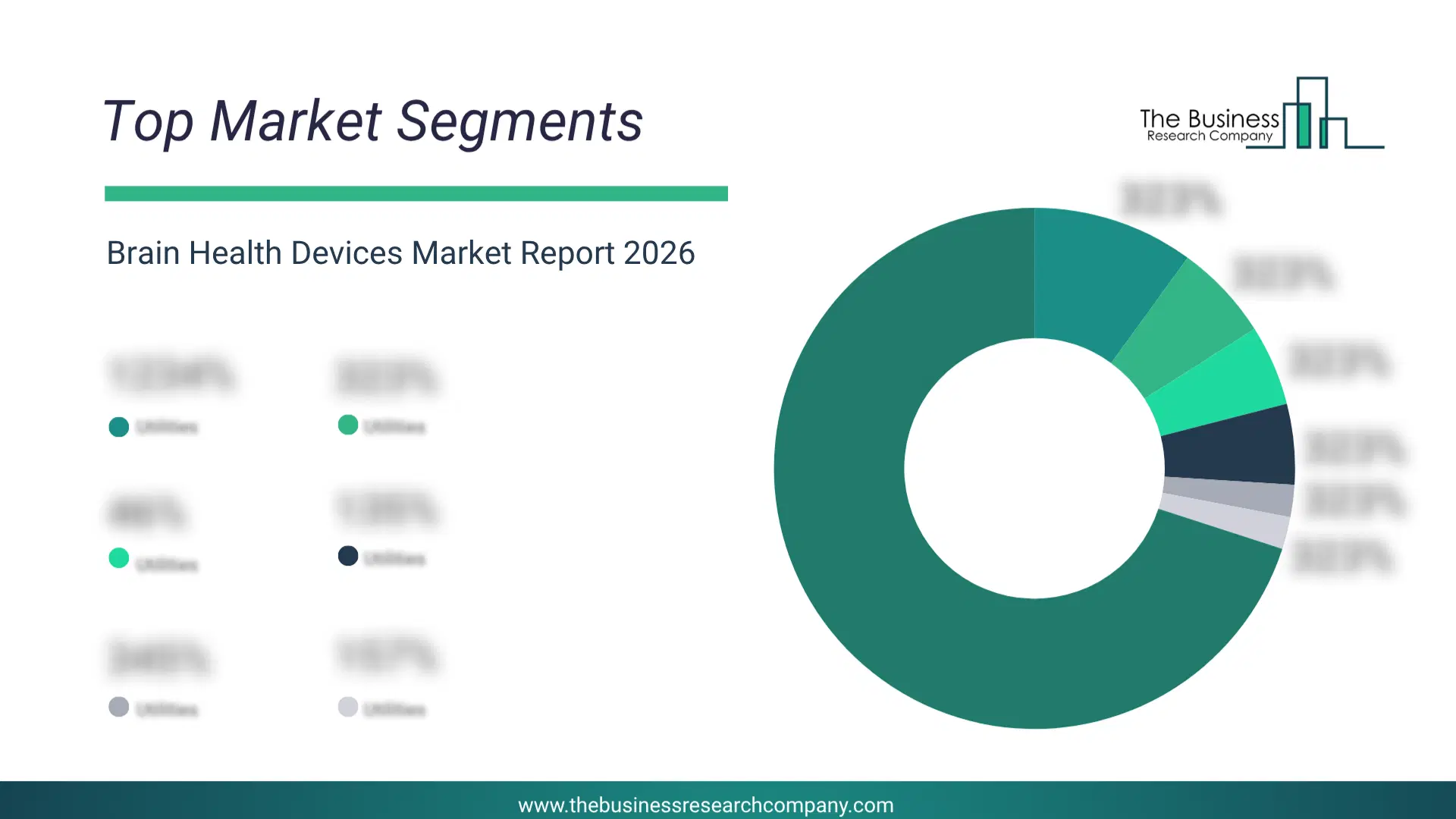
1) By Device Type: Magnetic Resonance Imaging, Magneto Encephalogram, Computed Tomography, Transcranial Doppler Device, Other Device Types 2) By Procedure: Invasive, Non-Invasive 3) By Application: Sleep Disorders, Accidental Injuries, Alzheimer's Disease, Epilepsy, Stroke, Other Applications 4) By End-User: Hospitals And Clinics, Diagnostic Imaging Centers, Homecare Settings, Assisted Living Facilities, Other End-Users Subsegments: 1) By Magnetic Resonance Imaging (MRI): Functional MRI (fMRI), Diffusion Tensor Imaging (DTI), MRI Spectroscopy 2) By Magnetoencephalogram (MEG): Whole-Head MEG Systems, Cooled MEG Systems 3) By Computed Tomography (CT): Standard CT Scanners, CT Angiography, High-Resolution CT Scanners 4) By Transcranial Doppler Device: Handheld Transcranial Doppler Devices, Portable Transcranial Doppler Devices 5) By Other Device Types: Electroencephalogram (EEG) Devices, Positron Emission Tomography (PET) Scanners, Near-Infrared Spectroscopy (NIRS) DevicesWhat Is The Driver Of The Brain Health Devices Market?
The increasing prevalence of neurological disorders is expected to propel the growth of the brain health devices market going forward. Neurological disorders are medical conditions that affect the nervous system, including the brain, spinal cord, and nerves, leading to various cognitive, motor, and sensory dysfunctions. The increasing prevalence of neurological disorders is largely driven by an aging population and the rising incidence of chronic diseases, such as diabetes and hypertension. Additionally, environmental and lifestyle factors, along with advances in diagnostic techniques and genetic predispositions, contribute to the growing number of reported cases. Brain health devices monitor brain activity and delivering targeted therapies to manage symptoms, enhance cognitive function, and improve patient outcomes. For instance, in January 2025, according to the European Brain Council, a Belgium-based non-profit organization, 7 million people in Europe are living with Alzheimer’s disease, with estimates suggesting this number is projected to rise to a staggering 14 million by 2030. Therefore, the increasing prevalence of neurological disorders is driving the growth of the brain health devices industry.Key Players In The Global Brain Health Devices Market
Major companies operating in the brain health devices market are Johnson & Johnson Services Inc., Medtronic plc, Siemens Healthineers AG, Koninklijke Philips N.V., GE HealthCare Technologies Inc., Boston Scientific Corporation, electroCore Inc., Masimo Corporation, Integra LifeSciences Corporation, LivaNova plc, Natus Medical Incorporated, Cadwell Industries Inc., NeuroSky Inc., Neuropace Inc., Compumedics Limited, Magstim Co. Ltd., Mindmaze SA, Brain Products GmbH, Emotiv Inc., Electrical Geodesics Inc., BrainScope Company Inc., Soterix Medical Inc., Advanced Brain Monitoring Inc., Bio-Signal Group Corp., Cognionics Inc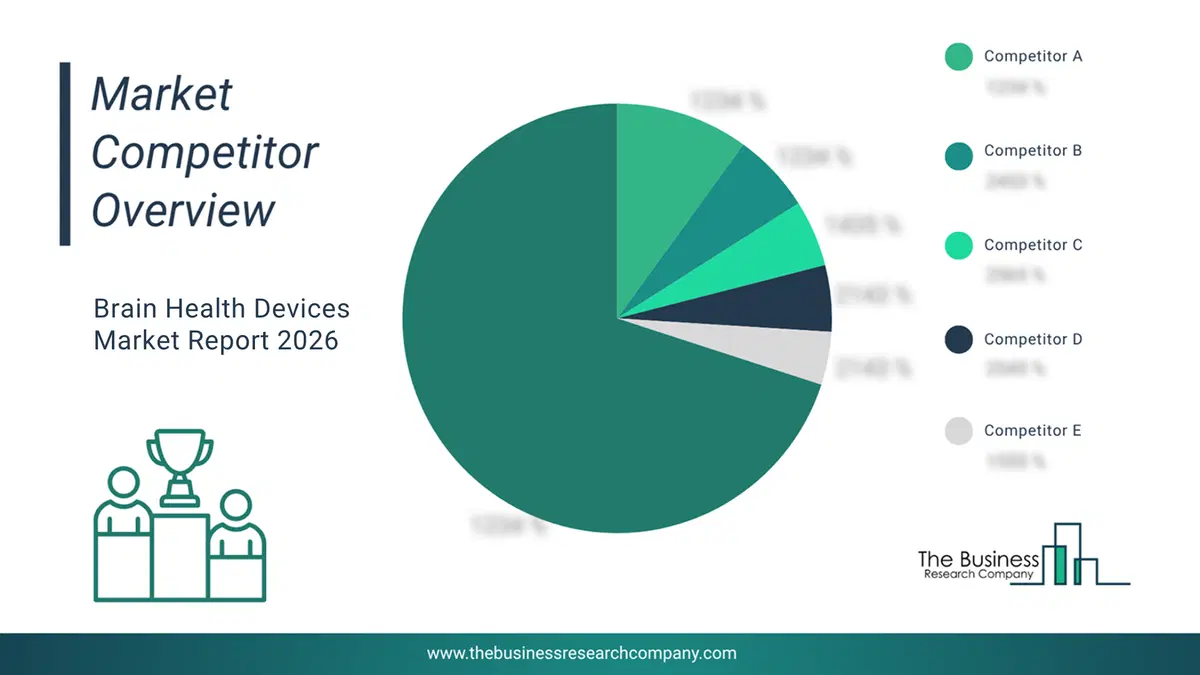
This chart is for illustrative purposes; the full report includes a detailed competitor analysis and comprehensive overview of the top 10 companies in the market.
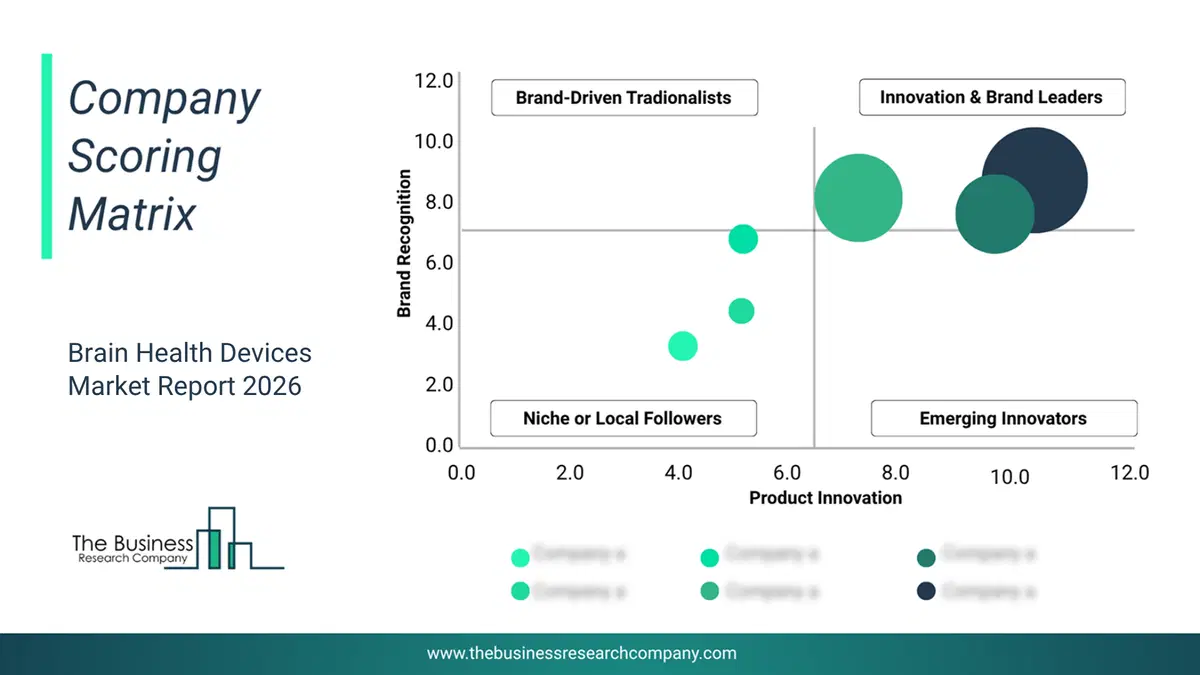
This chart maps companies by product innovation and brand strength, with bubble size indicating relative revenue, helping identify market leaders, challengers, and niche players. This is an illustrative chart; the full report provides a complete and accurate competitive analysis.
Global Brain Health Devices Market Trends and Insights
Major companies operating in the brain health monitoring market are focusing on developing innovative products, such as passive smartphone-based monitoring platforms, to continuously track cognitive and motor function changes without active patient participation or wearable devices. Passive smartphone-based monitoring utilizes everyday keyboard interactions, motion, and device usage to unobtrusively generate clinically relevant neurological insights. For instance, in May 2025, Neurocast, a Netherlands-based provider of digital health and brain health monitoring solutions, launched its FDA-registered Neurocast platform in the U.S. This platform analyzes routine smartphone interactions such as keystrokes, motion patterns, and usage behaviors to detect subtle neurological changes, enabling early identification of cognitive or motor decline in patients with conditions like multiple sclerosis, Alzheimer’s disease, ADHD, and depression. Key features of Neurocast include continuous data collection through daily phone use, privacy-centered design with no active input or wearables required, GDPR compliance, ISO 27001 certification, and real-world clinical validation across European studies involving hundreds of patients. The launch empowers U.S. healthcare providers to access scalable, unobtrusive, and data-driven insights for proactive brain health management, marking a pivotal milestone in remote neurological care.What Are Latest Mergers And Acquisitions In The Brain Health Devices Market?
In March 2024, Linus Health Inc., a US-based software company, acquired Aural Analytics Inc. for an undisclosed amount. This acquisition of Aural Analytics boosts its cognitive assessment platform by adding advanced speech analytics, enabling more accurate detection of cognitive impairments. This integration enhances the tools available to clinicians and researchers while expanding Linus Health's reach into the life sciences sector. Aural Analytics Inc. is a US-based healthcare company specializing in developing brain health analytics solutions.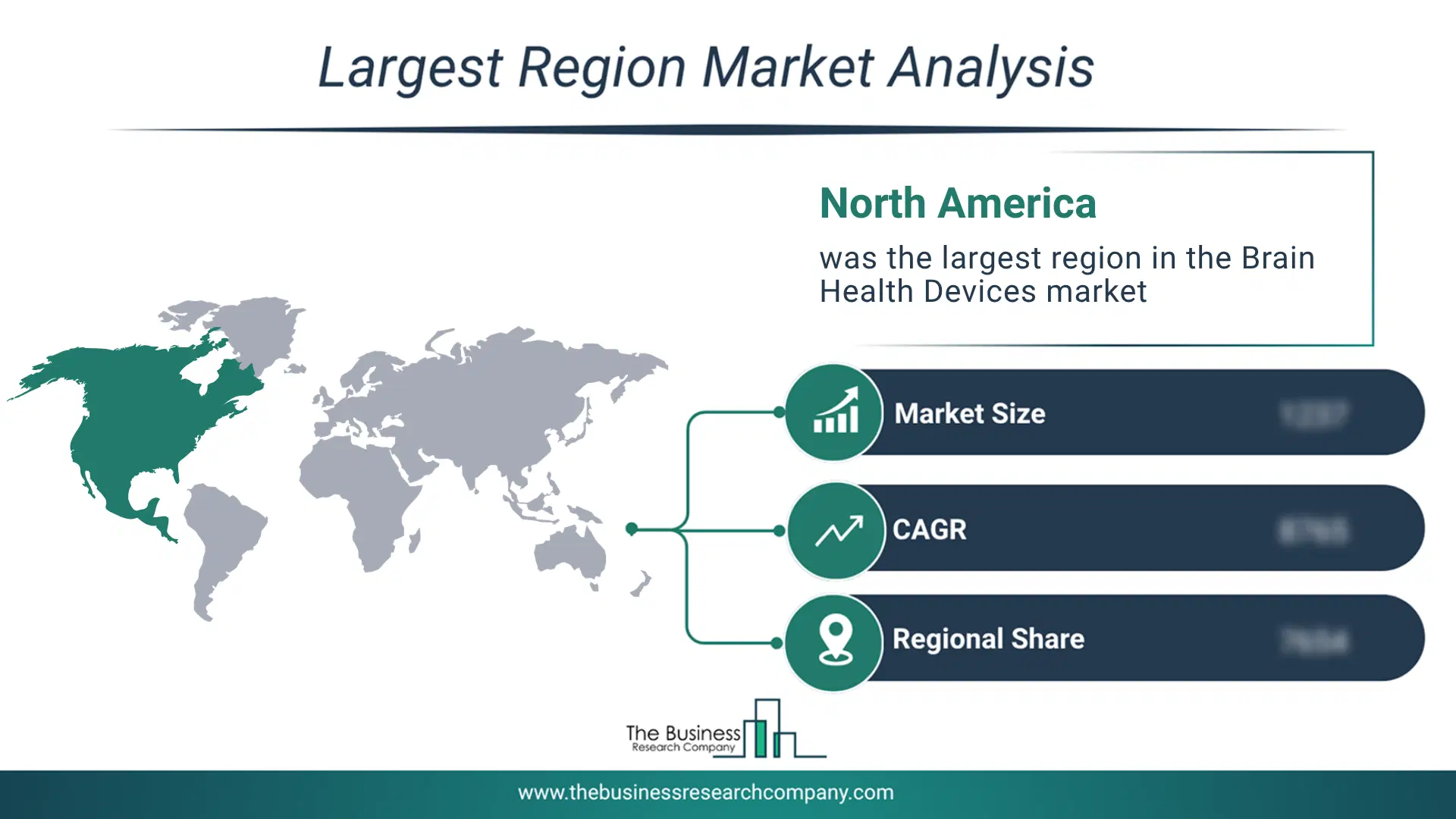
Regional Outlook
North America was the largest region in the brain health devices market in 2025. Asia-Pacific is expected to be the fastest-growing region in the forecast period. The regions covered in this market report are Asia-Pacific, South East Asia, Western Europe, Eastern Europe, North America, South America, Middle East, Africa. The countries covered in this market report are Australia, Brazil, China, France, Germany, India, Indonesia, Japan, Taiwan, Russia, South Korea, UK, USA, Canada, Italy, SpainWhat Defines the Brain Health Devices Market?
The brain health devices market consists of sales of electroencephalography (EEG) headsets, neurostimulation devices, brain training software, cognitive assessment tools, and wearable biosensors. Values in this market are ‘factory gate’ values, that is the value of goods sold by the manufacturers or creators of the goods, whether to other entities (including downstream manufacturers, wholesalers, distributors and retailers) or directly to end customers. The value of goods in this market includes related services sold by the creators of the goods.How is Market Value Defined and Measured?
The market value is defined as the revenues that enterprises gain from the sale of goods and/or services within the specified market and geography through sales, grants, or donations in terms of the currency (in USD unless otherwise specified). The revenues for a specified geography are consumption values that are revenues generated by organizations in the specified geography within the market, irrespective of where they are produced. It does not include revenues from resales along the supply chain, either further along the supply chain or as part of other products.
This chart presents market attractiveness based on a quantitative evaluation of growth, competition, strategic alignment, and risk, offering a clear view of opportunity areas for decision-making. This chart is for illustrative purposes; the full report contains the complete analysis.

This chart highlights the Total Addressable Market (TAM) by estimating the maximum revenue opportunity using an assumption-driven approach, supporting strategic planning and opportunity sizing across markets. The chart is illustrative; the full report provides a more comprehensive analysis.
What Key Data and Analysis Are Included in the Brain Health Devices Market Report 2026?
The brain health devices market research report is one of a series of new reports from The Business Research Company that provides market statistics, including industry global market size, regional shares, competitors with the market share, detailed market segments, market trends and opportunities, and any further data you may need to thrive in the brain health devices industry. The market research report delivers a complete perspective of everything you need, with an in-depth analysis of the current and future state of the industry.Brain Health Devices Market Report Forecast Analysis
| Report Attribute | Details |
|---|---|
| Market Size Value In 2026 | $12.79 billion |
| Revenue Forecast In 2030 | $16.84 billion |
| Growth Rate | CAGR of 7.1% from 2026 to 2030 |
| Base Year For Estimation | 2025 |
| Actual Estimates/Historical Data | 2020-2025 |
| Forecast Period | 2026 - 2030 |
| Market Representation | Revenue in USD Billion and CAGR from 2026 to 2030 |
| Segments Covered | Device Type, Procedure, Application, End-User |
| Regional Scope | Asia-Pacific, Western Europe, Eastern Europe, North America, South America, Middle East, Africa |
| Country Scope | The countries covered in the report are Australia, Brazil, China, France, Germany, India, Indonesia, Japan, Taiwan, Russia, South Korea, UK, USA, Canada, Italy, Spain. |
| Key Companies Profiled | Johnson & Johnson Services Inc., Medtronic plc, Siemens Healthineers AG, Koninklijke Philips N.V., GE HealthCare Technologies Inc., Boston Scientific Corporation, electroCore Inc., Masimo Corporation, Integra LifeSciences Corporation, LivaNova plc, Natus Medical Incorporated, Cadwell Industries Inc., NeuroSky Inc., Neuropace Inc., Compumedics Limited, Magstim Co. Ltd., Mindmaze SA, Brain Products GmbH, Emotiv Inc., Electrical Geodesics Inc., BrainScope Company Inc., Soterix Medical Inc., Advanced Brain Monitoring Inc., Bio-Signal Group Corp., Cognionics Inc |
| Customization Scope | Request for Customization |
| Pricing And Purchase Options | Explore Purchase Options |