
Wearable Electroencephalogram (EEG) Device Market Report 2026
Global Outlook – By Type (Battery, Charge), By Channel Type (5-Channel Type, 14-Channel Type, 32-Channel Type, Other Channel Types), By Application (Hospitals And Clinics, Neurology Centers, Research And Academics, Other Applications) – Market Size, Trends, Strategies, and Forecast to 2030
Wearable Electroencephalogram (EEG) Device Market Overview
• Wearable Electroencephalogram (EEG) Device market size has reached to $1.48 billion in 2025 • Expected to grow to $2.66 billion in 2030 at a compound annual growth rate (CAGR) of 12.4% • Growth Driver: Rising Awareness Of Mental Health Driving Demand For Wearable EEG Device • Market Trend: Innovative EEG Wearables Revolutionize Non-Invasive Brain Monitoring And Sleep Enhancement • North America was the largest region in 2025.What Is Covered Under Wearable Electroencephalogram (EEG) Device Market?
A wearable electroencephalogram (EEG) device is a portable tool for capturing and recording brain electrical activity. It uses scalp-mounted electrodes to detect brainwave patterns, which are analyzed to assess neurological functions. These devices enable real-time brain activity monitoring, assisting in diagnosing and managing neurological disorders. They offer continuous, natural-setting data, providing a more complete view than traditional clinical EEG systems. The main types of wearable electroencephalogram (EEG) devices are battery and charge. Battery-powered EEG devices are portable, convenient, and increasingly in demand due to advancements in battery technology and the need for on-the-go monitoring. They come with various channels such as 5-channel type, 14-channel type, 32-channel type, and others for several applications, including hospitals and clinics, neurology centers, research and academics, and others.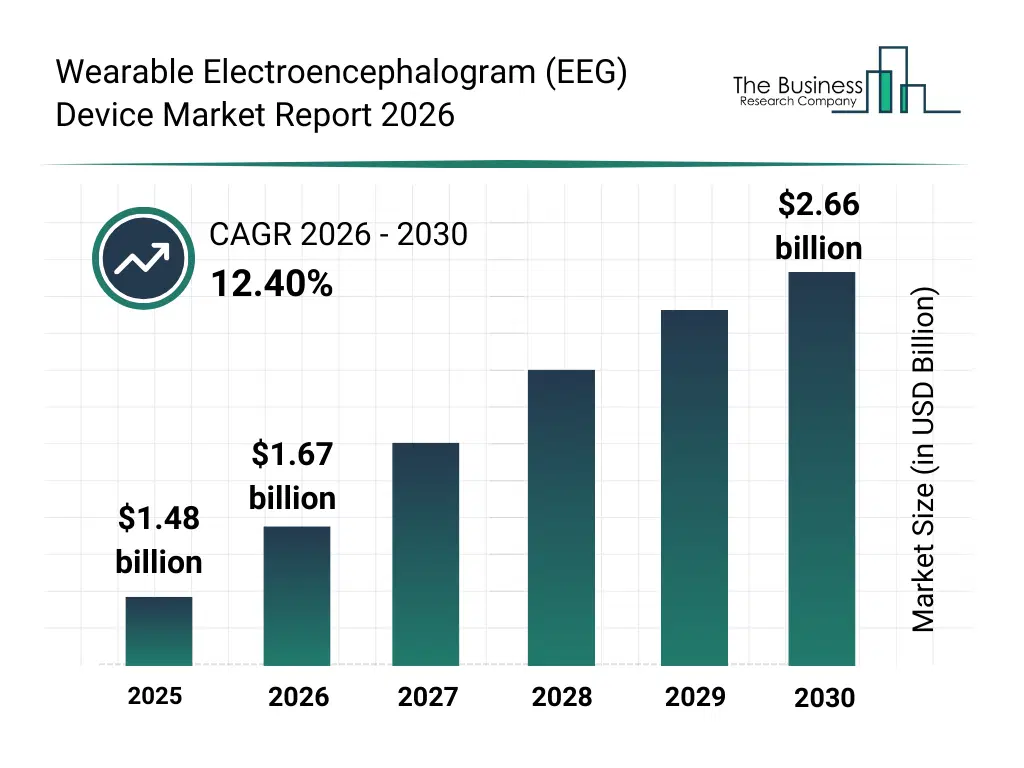
What Is The Wearable Electroencephalogram (EEG) Device Market Size and Share 2026?
The wearable electroencephalogram (eeg) device market size has grown rapidly in recent years. It will grow from $1.48 billion in 2025 to $1.67 billion in 2026 at a compound annual growth rate (CAGR) of 12.6%. The growth in the historic period can be attributed to neurological disorder diagnosis demand, epilepsy monitoring growth, hospital EEG procedure adoption, research neuroscience expansion, wearable health technology growth.What Is The Wearable Electroencephalogram (EEG) Device Market Growth Forecast?
The wearable electroencephalogram (eeg) device market size is expected to see rapid growth in the next few years. It will grow to $2.66 billion in 2030 at a compound annual growth rate (CAGR) of 12.4%. The growth in the forecast period can be attributed to AI-powered brainwave analysis, tele-neurology expansion, wearable mental health monitoring, long-term neurological care demand, remote clinical trials. Major trends in the forecast period include continuous brain activity monitoring, portable neurological diagnostics, wireless EEG data transmission, home-based EEG monitoring, improved electrode comfort designs.
Global Wearable Electroencephalogram (EEG) Device Market Segmentation
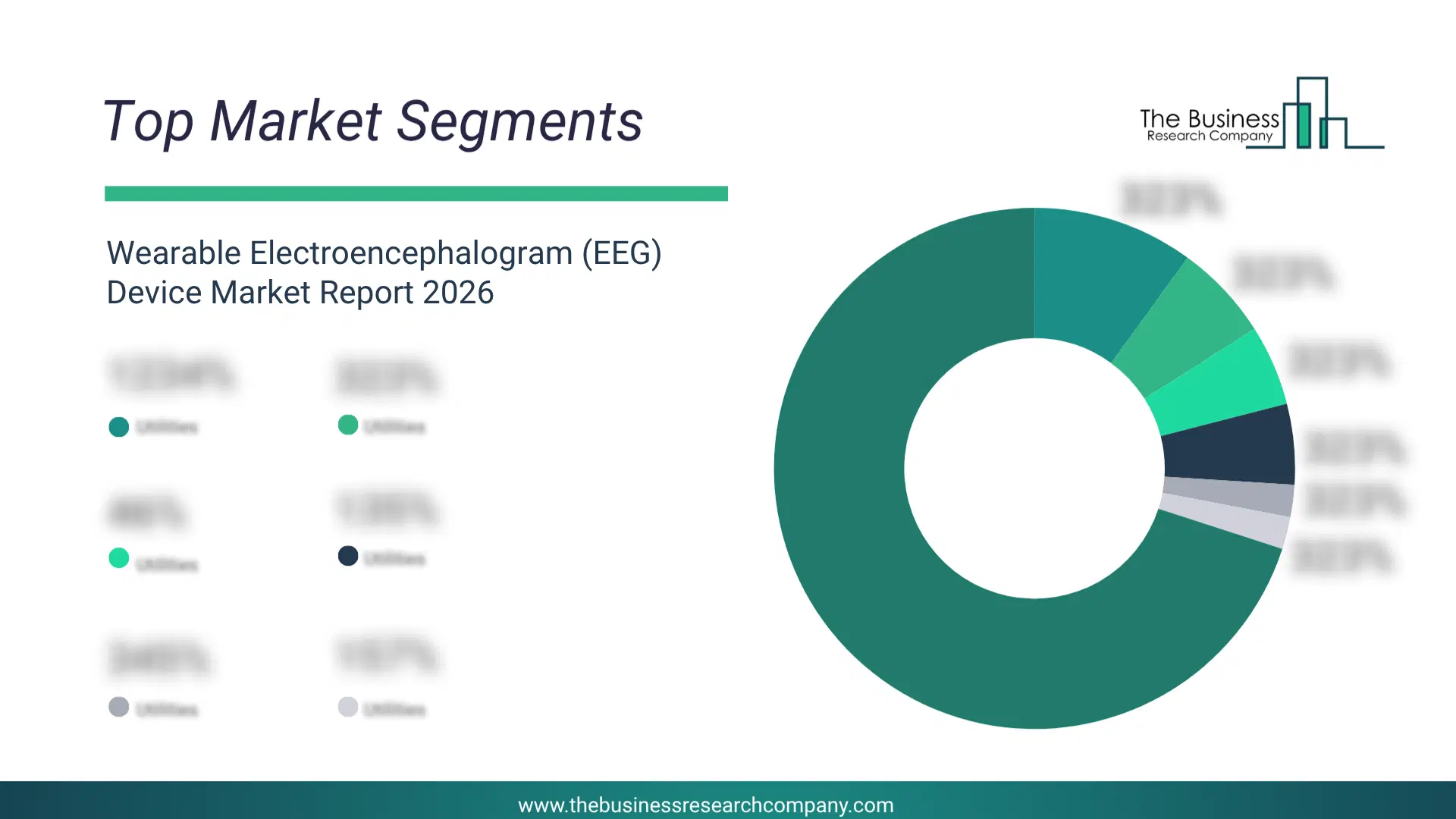
1) By Type: Battery, Charge 2) By Channel Type: 5-Channel Type, 14-Channel Type, 32-Channel Type, Other Channel Types 3) By Application: Hospitals And Clinics, Neurology Centers, Research And Academics, Other Applications Subsegments: 1) By Battery: Rechargeable Battery EEG Devices, Non-Rechargeable Battery EEG Devices, Lithium-Ion Battery EEG Devices 2) By Charge: Wired Charging EEG Devices, Wireless Charging EEG Devices, Quick Charge EEG DevicesWhat Is The Driver Of The Wearable Electroencephalogram (EEG) Device Market?
Increasing mental health awareness is expected to propel the growth of the wearable electroencephalogram (EEG) device market going forward. The increasing awareness of mental health is driven by a combination of factors, including heightened media coverage, educational initiatives, advocacy from mental health organizations, and a growing recognition of the impact of mental well-being on overall health. Wearable EEG devices aid in managing and monitoring mental health conditions by providing data for personalized treatment and supporting therapies such as biofeedback and neurofeedback. For instance, in April 2024, according to the white paper published by FAIR Health Inc., a US-based health organization, the percentage of patients with mental health diagnoses in the US increased from 17.9% in 2022 to 18.9% in 2023. Therefore, increasing mental health awareness is driving the wearable electroencephalogram (EEG) device industry.Key Players In The Global Wearable Electroencephalogram (EEG) Device Market
Major companies operating in the wearable electroencephalogram (eeg) device market are Brain Products GmbH, EMOTIV Inc., BrainCo Inc., BioSemi B.V., NeuroSky Inc., Beacon Biosignals Inc., Neurable Inc., Advanced Brain Monitoring Inc., Elemind Technologies Inc., Muse, OpenBCI Inc., Brainbit Inc., Wearable Sensing, MyndPlay Ltd., Epitel Inc., Mentalab, Cogwear LLC, AAVAA Inc., NEEURO PTE LTD., Nexstem India Private Limited, Pankhtech India Private Limited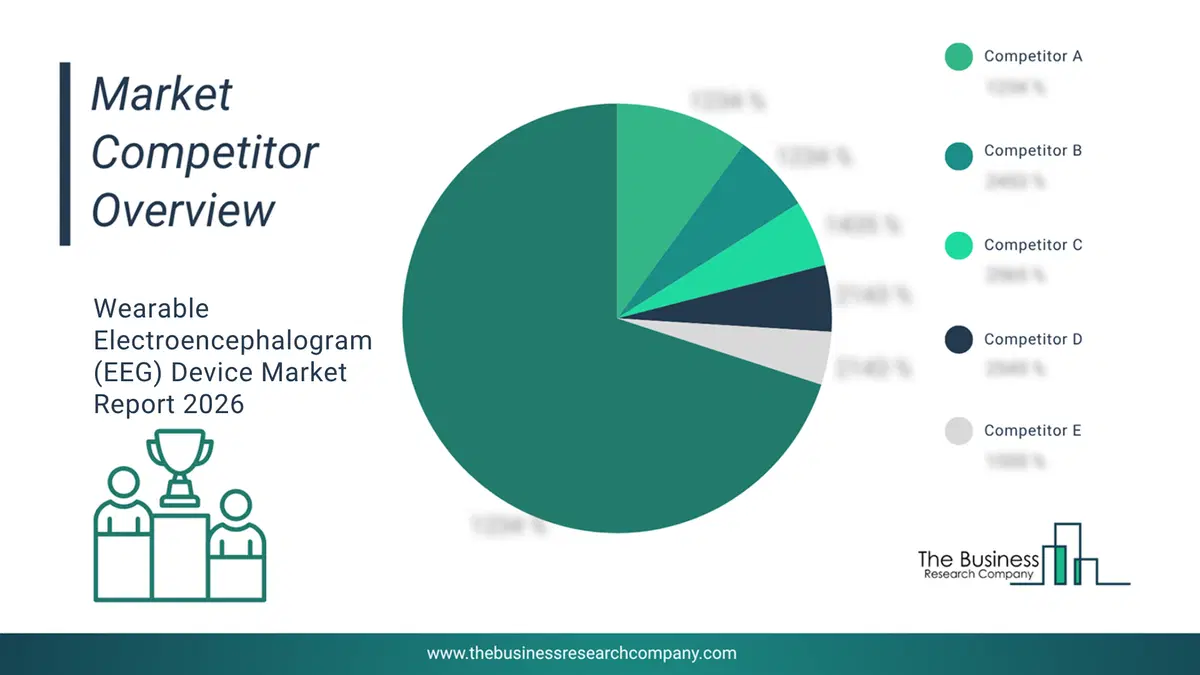
This chart is for illustrative purposes; the full report includes a detailed competitor analysis and comprehensive overview of the top 10 companies in the market.
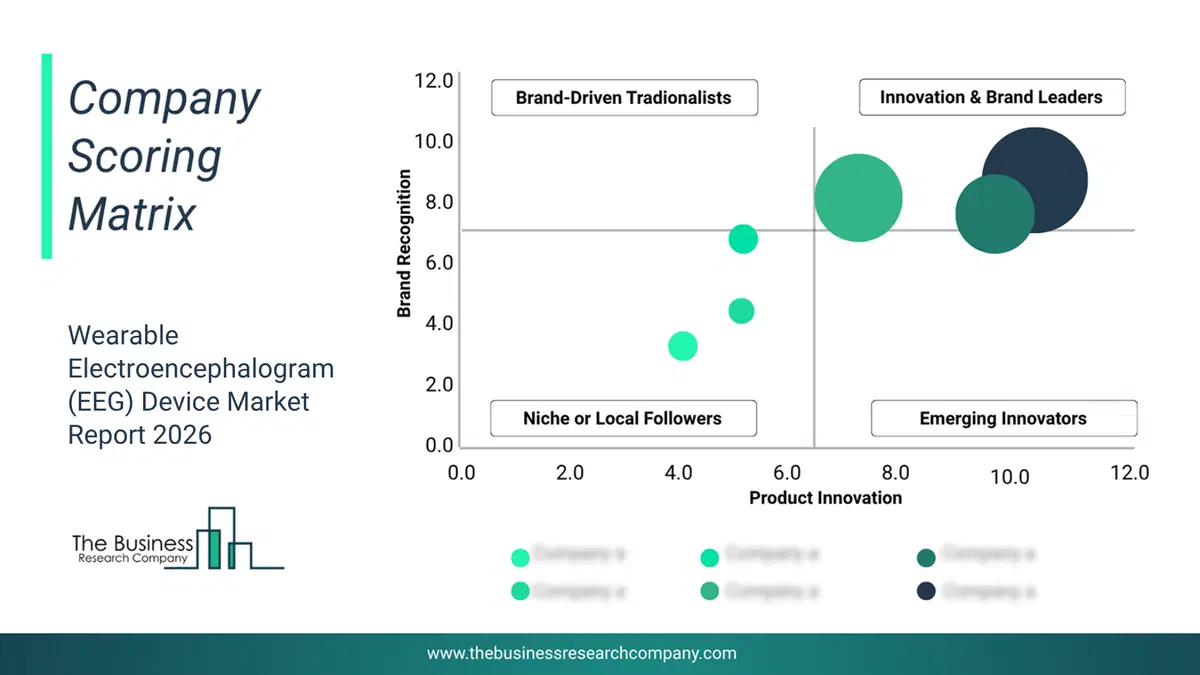
This chart maps companies by product innovation and brand strength, with bubble size indicating relative revenue, helping identify market leaders, challengers, and niche players. This is an illustrative chart; the full report provides a complete and accurate competitive analysis.
Global Wearable Electroencephalogram (EEG) Device Market Trends and Insights
Major companies operating in the wearable electroencephalogram (EEG) device market are focused on integrating brainwave monitoring algorithms, such as acoustic stimulation, to offer non-invasive treatment options for brain monitoring. Acoustic stimulation in headphones uses sound waves or vibrations to enhance therapeutic effects, complementing electrical stimulation for improved neurological or psychological outcomes. For instance, in June 2024, Elemind Technologies, Inc., a US-based neurotechnology company, launched a headband. This sleep headband offers real-time brainwave monitoring to enhance sleep quality, helping users fall asleep up to 74% faster. It utilizes AI-driven algorithms to deliver personalized acoustic stimulation, transitioning brainwaves from wakefulness to sleep. The device syncs with a smartphone app, providing detailed insights on sleep duration, efficiency, and stages. Over time, the system adapts to individual sleep patterns, continuously improving its effectiveness.What Are Latest Mergers And Acquisitions In The Wearable Electroencephalogram (EEG) Device Market?
In July 2023, Beacon Biosignals Inc., a US-based computational neurodiagnostic and electroencephalogram (EEG) analytics company, acquired Dreem for an undisclosed amount. The acquisition aims to enhance Beacon’s clinical trials and patient outcomes by utilizing Dreem’s at-home sleep monitoring technology, improving research efficiency, and offering deeper insights into sleep and neurological disorders. Dreem is a France-based manufacturer of wearable electroencephalogram (EEG) headbands.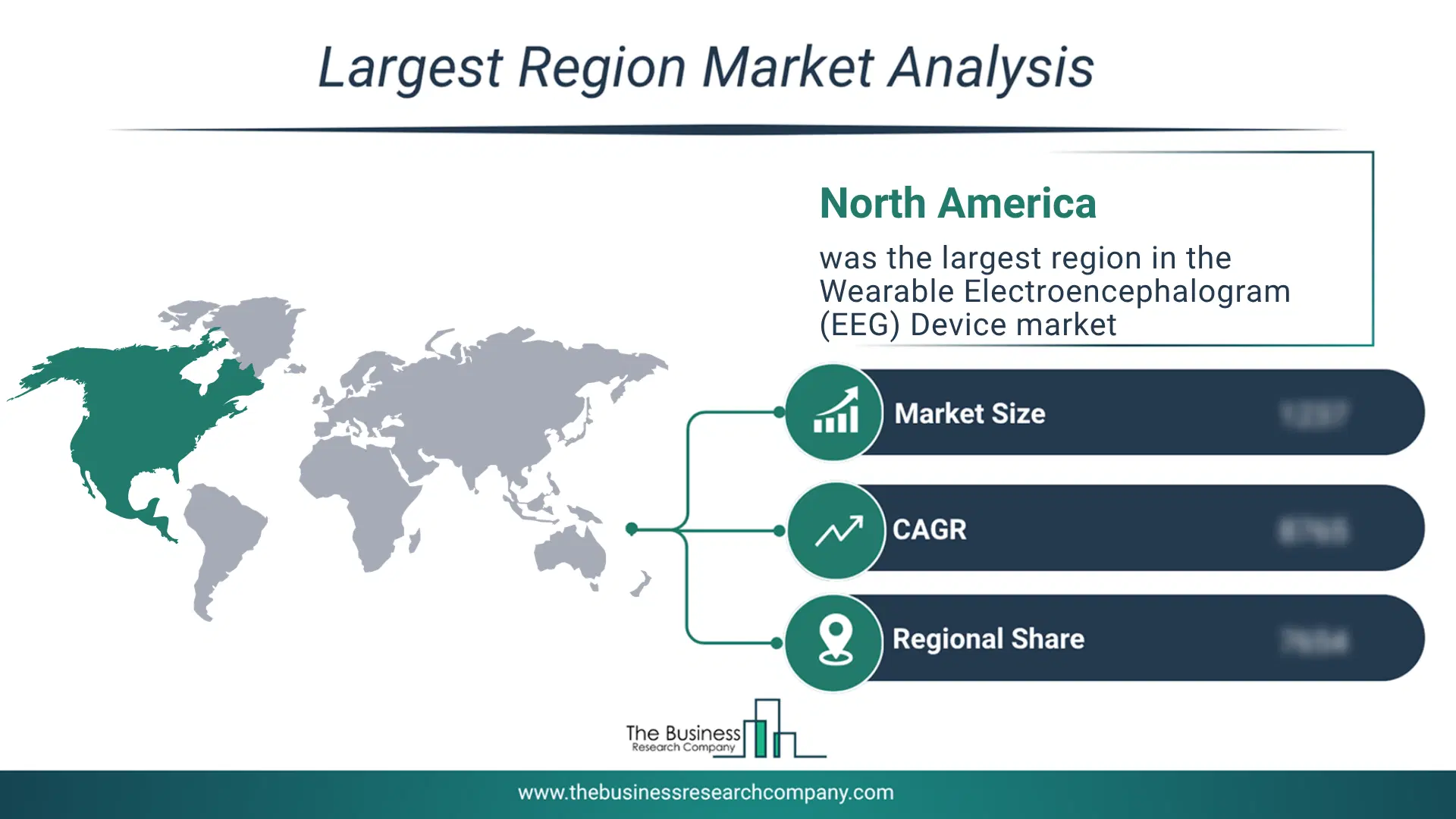
Regional Outlook
North America was the largest region in the wearable electroencephalogram (EEG) device market in 2025. The regions covered in this market report are Asia-Pacific, South East Asia, Western Europe, Eastern Europe, North America, South America, Middle East, Africa. The countries covered in this market report are Australia, Brazil, China, France, Germany, India, Indonesia, Japan, Taiwan, Russia, South Korea, UK, USA, Canada, Italy, SpainWhat Defines the Wearable Electroencephalogram (EEG) Device Market?
The wearable electroencephalogram (EEG) device market consists of sales of signal amplifiers, data processors, electrodes, headphones, or caps. Values in this market are ‘factory gate’ values, that is, the value of goods sold by the manufacturers or creators of the goods, whether to other entities (including downstream manufacturers, wholesalers, distributors, and retailers) or directly to end customers. The value of goods in this market includes related services sold by the creators of the goods.How is Market Value Defined and Measured?
The market value is defined as the revenues that enterprises gain from the sale of goods and/or services within the specified market and geography through sales, grants, or donations in terms of the currency (in USD unless otherwise specified). The revenues for a specified geography are consumption values that are revenues generated by organizations in the specified geography within the market, irrespective of where they are produced. It does not include revenues from resales along the supply chain, either further along the supply chain or as part of other products.
This chart presents market attractiveness based on a quantitative evaluation of growth, competition, strategic alignment, and risk, offering a clear view of opportunity areas for decision-making. This chart is for illustrative purposes; the full report contains the complete analysis.

This chart highlights the Total Addressable Market (TAM) by estimating the maximum revenue opportunity using an assumption-driven approach, supporting strategic planning and opportunity sizing across markets. The chart is illustrative; the full report provides a more comprehensive analysis.
What Key Data and Analysis Are Included in the Wearable Electroencephalogram (EEG) Device Market Report 2026?
The wearable electroencephalogram (eeg) device market research report is one of a series of new reports from The Business Research Company that provides market statistics, including industry global market size, regional shares, competitors with the market share, detailed market segments, market trends and opportunities, and any further data you may need to thrive in the wearable electroencephalogram (eeg) device industry. The market research report delivers a complete perspective of everything you need, with an in-depth analysis of the current and future state of the industry.Wearable Electroencephalogram (EEG) Device Market Report Forecast Analysis
| Report Attribute | Details |
|---|---|
| Market Size Value In 2026 | $1.67 billion |
| Revenue Forecast In 2030 | $2.66 billion |
| Growth Rate | CAGR of 12.4% from 2026 to 2030 |
| Base Year For Estimation | 2025 |
| Actual Estimates/Historical Data | 2020-2025 |
| Forecast Period | 2026 - 2030 |
| Market Representation | Revenue in USD Billion and CAGR from 2026 to 2030 |
| Segments Covered | Type, Channel Type, Application |
| Regional Scope | Asia-Pacific, Western Europe, Eastern Europe, North America, South America, Middle East, Africa |
| Country Scope | The countries covered in the report are Australia, Brazil, China, France, Germany, India, Indonesia, Japan, Taiwan, Russia, South Korea, UK, USA, Canada, Italy, Spain. |
| Key Companies Profiled | Brain Products GmbH, EMOTIV Inc., BrainCo Inc., BioSemi B.V., NeuroSky Inc., Beacon Biosignals Inc., Neurable Inc., Advanced Brain Monitoring Inc., Elemind Technologies Inc., Muse, OpenBCI Inc., Brainbit Inc., Wearable Sensing, MyndPlay Ltd., Epitel Inc., Mentalab, Cogwear LLC, AAVAA Inc., NEEURO PTE LTD., Nexstem India Private Limited, Pankhtech India Private Limited |
| Customization Scope | Request for Customization |
| Pricing And Purchase Options | Explore Purchase Options |