
Bus Rapid Transit System Market Report 2026
Global Outlook – By Type (Articulated, Bi-Articulated, Traditional Bus), By Seating Capacity (Less Than 50, 50-80 Seater, Above 80), By Level Of Service (Express, Semi-Express, Local), By Fuel Type (Diesel, Natural Gas, Other Fuel Types), By End-Use (Government, Private) – Market Size, Trends, Strategies, and Forecast to 2030
Bus Rapid Transit System Market Overview
• Bus Rapid Transit System market size has reached to $3.08 billion in 2025 • Expected to grow to $4.94 billion in 2030 at a compound annual growth rate (CAGR) of 10% • Growth Driver: Sustainable Transport Drives The Growth Of The Bus Rapid Transit System Market • Market Trend: Enhancing Public Transport The Impact Of Platform-Level Boarding In BRT Systems • North America was the largest region in 2025.Market Gains By 2030 – Top Opportunities By Segment
Market Gain identifies the most promising market opportunities by highlighting the segments or products expected to generate the highest incremental revenue growth over the next five years.
What Is Covered Under Bus Rapid Transit System Market?
Bus Rapid Transit (BRT) is an advanced bus-based transit system engineered for enhanced capacity, reliability, and overall quality compared to traditional bus networks. BRT blends the flexibility and cost-effectiveness of regular bus routes with the efficiency and amenities reminiscent of light rail systems. It offers reliable and effective public transportation and provides efficient transportation, cutting down on travel time and enhancing the whole transit experience. The main types of bus rapid transit systems are articulated, bi-articulated, and traditional buses. An articulated bus refers to a type of high-capacity bus that has two or more rigid sections connected by a pivoting joint that is protected on all sides by bellows and has a cover plate on the floor. The seating capacities are less than 50, 50–80-seater, and above 80 with express, semi-express, and local services. The fuel types are diesel, natural gas, and others used in government and private.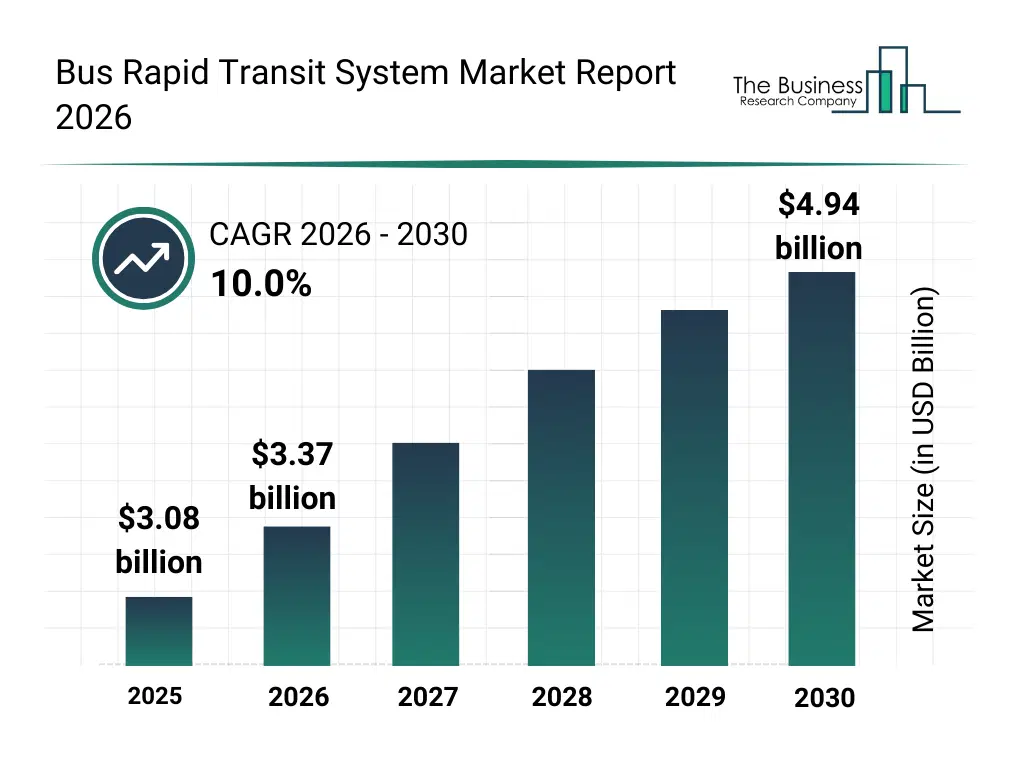
What Is The Bus Rapid Transit System Market Size and Share 2026?
The bus rapid transit system market size has grown strongly in recent years. It will grow from $3.08 billion in 2025 to $3.37 billion in 2026 at a compound annual growth rate (CAGR) of 9.3%. The growth in the historic period can be attributed to urban congestion growth, need for mass transit solutions, government transport investments, cost advantages over rail, population urbanization.What Is The Bus Rapid Transit System Market Growth Forecast?
The bus rapid transit system market size is expected to see rapid growth in the next few years. It will grow to $4.94 billion in 2030 at a compound annual growth rate (CAGR) of 10.0%. The growth in the forecast period can be attributed to electric bus adoption, smart mobility funding, emission reduction targets, integrated ticketing systems, real-time transit management. Major trends in the forecast period include expansion of dedicated bus corridors, adoption of intelligent traffic systems, integration of electric brt fleets, focus on high-capacity urban transport, enhanced passenger experience.
Global Bus Rapid Transit System Market Segmentation
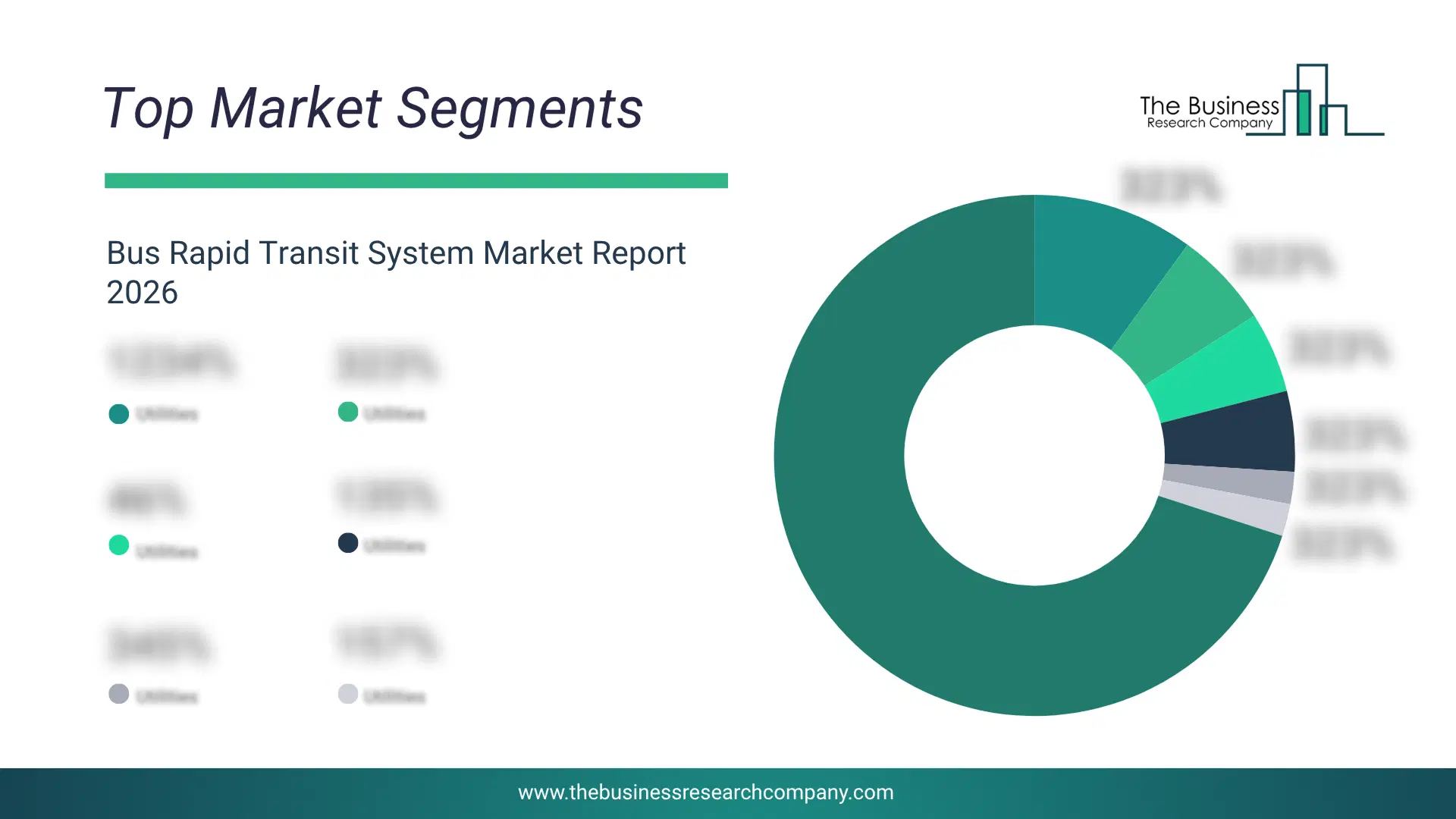
1) By Type: Articulated, Bi-Articulated, Traditional Bus 2) By Seating Capacity: Less Than 50, 50-80 Seater, Above 80 3) By Level Of Service: Express, Semi-Express, Local 4) By Fuel Type: Diesel, Natural Gas, Other Fuel Types 5) By End-Use: Government, Private Subsegments: 1) By Articulated: Single Articulated Buses, Double Articulated Buses 2) By Bi-Articulated: Three-Section Buses, Four-Section Buses 3) By Traditional Bus: Standard Length Buses, Low-Floor Buses The top segments in the bus rapid transit system market will be: • Articulated will reach $2.51 Billion by 2030. • Bi-Articulated will reach $1.91 Billion by 2030. • Traditional Bus will reach $1.14 Billion by 2030.What Is The Driver Of The Bus Rapid Transit System Market?
The increasing need for sustainable transport is expected to propel the growth of the bus rapid transit system market going forward. Sustainable transport refers to sustainable ways of transportation in terms of their social and environmental impacts. It involves using modes of transport that are energy-efficient, low- or zero-emission, and affordable. The bus rapid transit system (BRT) is a sustainable mode of transportation that offers several benefits to the environment and society. BRT systems are designed to be energy-efficient and low-emission, which helps reduce carbon emissions from transportation. For instance, in September 2025, according to the Department For Infrastructure, a UK-based government department, in 2024–25, public transport recorded 81.1 million journeys, marking an increase of 2.9 million journeys, or 3.6%, compared to 78.2 million journeys in 2023–24. Therefore, the increasing need for sustainable transport is driving the growth of the bus rapid transit system industry.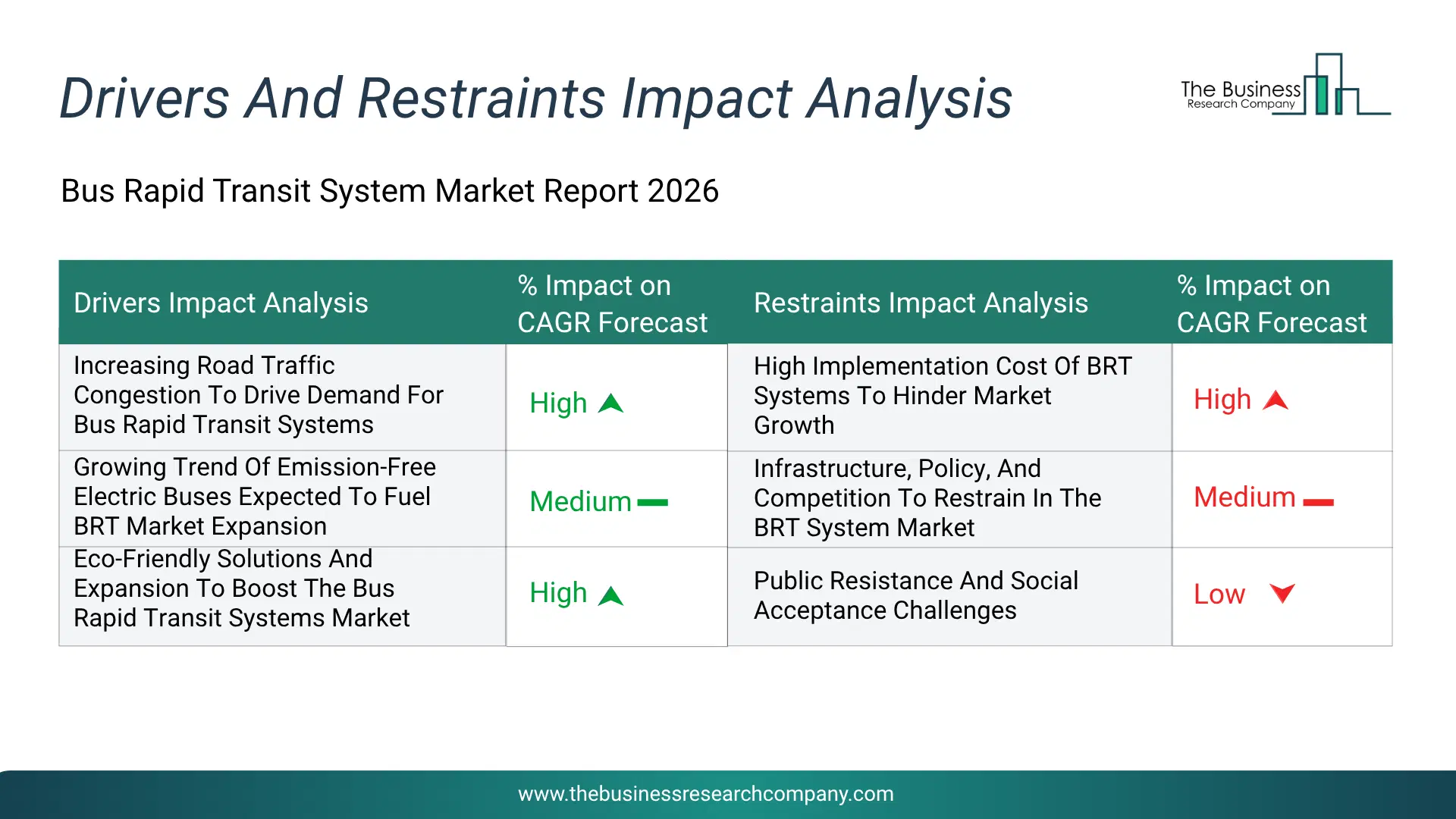
Infographic Chart Showing Key Market Drivers Analysis And Restraints For Bus Rapid Transit System Market
The chart presents an impact analysis of key drivers and restraints, quantifying their relative influence on the market's growth rate and helping assess the balance between growth enablers and limiting factors. This chart offers a high-level perspective; the full report contains more detailed insights.
How Will The Drivers Impact Growth In The Global Bus Rapid Transit System Market?
• Increasing Road Traffic Congestion To Drive Demand For Bus Rapid Transit Systems (High) – During the forecast period, the increasing road traffic congestion to drive demand for bus rapid transit systems is expected to become a key growth driver for the bus rapid transit system market by 2030. Increasing road traffic congestion is a major factor accelerating the growth of the Bus Rapid Transit (BRT) System market. Rapid urbanization and rising vehicle ownership have placed significant pressure on existing transportation networks, leading to longer travel times and increased fuel consumption. BRT systems provide dedicated bus lanes that help bypass traffic bottlenecks and ensure faster, more reliable commuting. Cities are increasingly investing in BRT infrastructure to improve mobility while reducing roadway congestion. The ability of BRT networks to transport large numbers of passengers efficiently makes them an attractive alternative to private vehicles. Governments also view BRT as a cost-effective solution compared to rail-based transit systems. • Growing Trend Of Emission-Free Electric Buses Expected To Fuel BRT Market Expansion (Medium) – During the forecast period, the growing trend of emission-free electric buses expected to fuel BRT market expansion is expected to emerge as a major factor driving the expansion of the bus rapid transit system market by 2030. Growing adoption of emission-free electric buses is significantly supporting the expansion of the Bus Rapid Transit System market. Public transport authorities are prioritizing cleaner mobility solutions to reduce greenhouse gas emissions and improve urban air quality. Electric buses integrated into BRT networks offer sustainable transportation while maintaining high passenger capacity and operational efficiency. Advances in battery technology and charging infrastructure are making electric BRT fleets more practical and economically viable. Governments are further encouraging adoption through subsidies, grants, and environmental regulations. The shift toward electrified public transportation aligns with global climate goals and sustainable development strategies. • Eco-Friendly Solutions And Expansion To Boost The Bus Rapid Transit Systems Market (High) – During the forecast period, the eco-friendly solutions and expansion is expected to act as a key growth catalyst for the bus rapid transit system market by 2030. Eco-friendly transportation initiatives and network expansion projects are key drivers of the Bus Rapid Transit System market. Municipal authorities are seeking sustainable transit solutions that can reduce carbon emissions and dependence on private vehicles. BRT systems offer an environmentally responsible option by improving public transport accessibility and reducing traffic-related pollution. Many cities are expanding existing BRT corridors and developing new routes to accommodate growing populations and travel demand. These expansion projects enhance connectivity between residential, commercial, and industrial areas. Increased investment in green urban infrastructure further supports BRT deployment across developed and emerging economies. As sustainability becomes a central transportation priority, the market continues to experience strong momentum.How Will The Restraints Impact Growth In The Global Bus Rapid Transit System Market?
• High Implementation Cost Of BRT Systems To Hinder Market Growth (High) – During the forecast period, the high implementation costs represent a significant restraint on the growth of the Bus Rapid Transit (BRT) System market. Establishing dedicated bus corridors, stations, signaling systems, and supporting infrastructure requires substantial capital investment from governments and transit authorities. In many developing regions, limited public budgets and competing infrastructure priorities can delay or restrict BRT projects. The costs associated with land acquisition, road modifications, and utility relocation further increase project expenses. Additionally, ongoing maintenance and operational expenditures place financial pressure on transportation agencies. Smaller municipalities may find it challenging to secure sufficient funding for large-scale BRT deployments. As a result, high upfront and long-term investment requirements can slow market expansion and project adoption. • Infrastructure, Policy, And Competition To Restrain In The BRT System Market (Medium) – During the forecast period, the infrastructure limitations, policy challenges, and competition from alternative transport modes collectively restrain the growth of the Bus Rapid Transit System market. Many cities face difficulties in allocating adequate road space for dedicated BRT lanes, particularly in densely populated urban environments. Regulatory delays, changing government priorities, and inconsistent transportation policies can also hinder project planning and execution. In some regions, insufficient coordination between transportation agencies creates implementation challenges. Furthermore, BRT systems face competition from metro rail networks, light rail transit, ride-sharing services, and other mobility solutions. These alternatives may attract investment and passenger demand that could otherwise support BRT development. Consequently, infrastructure constraints, policy uncertainties, and competitive pressures can limit the pace of market growth. • Public Resistance And Social Acceptance Challenges (High) – During the forecast period, the public resistance and social acceptance challenges act as a restraint for the Bus Rapid Transit System market because successful BRT implementation often requires changes in existing traffic patterns, road usage, and commuting behavior. Some communities may oppose dedicated bus lanes due to concerns about reduced road space for private vehicles and potential traffic disruptions. Lack of public support can delay project approvals and affect implementation timelines. Transit authorities must invest in awareness campaigns and stakeholder engagement to improve acceptance. These social challenges can slow the adoption of BRT systems in urban areas.Key Players In The Global Bus Rapid Transit System Market
Major companies operating in the bus rapid transit system market report include Mercedes-Benz Group AG, BYD Auto Co Ltd., AB Volvo, Scania AB, Iveco S.p.A., Qingdao Hisense TransTech Co Ltd., Hino Motors Ltd., MAN SE, Transdev Group S.A., VDL Bus & Coach BV, Xiamen King Long Motor Group Co Ltd., Tata Motors Ltd., Zhengzhou Yutong Group Co Ltd., Ashok Leyland Ltd., Zhongtong Bus Holding Co Ltd., Solaris Bus & Coach sp. z o. o., NFI Group Inc., New Flyer Industries Inc., Marcopolo S.A., Gillig LLC, Anhui Ankai Automobile Co Ltd., Xiamen Golden Dragon Bus Co Ltd., Optare Group Ltd., Ebusco BV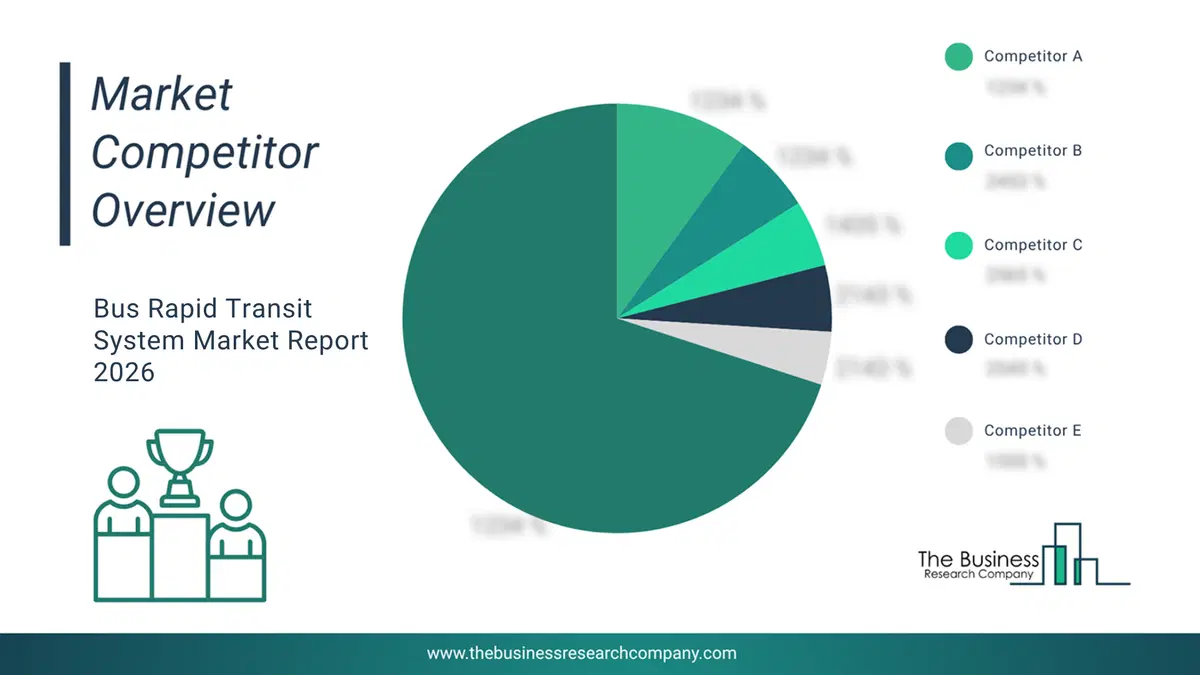
This chart is for illustrative purposes; the full report includes a detailed competitor analysis and comprehensive overview of the top 10 companies in the market.
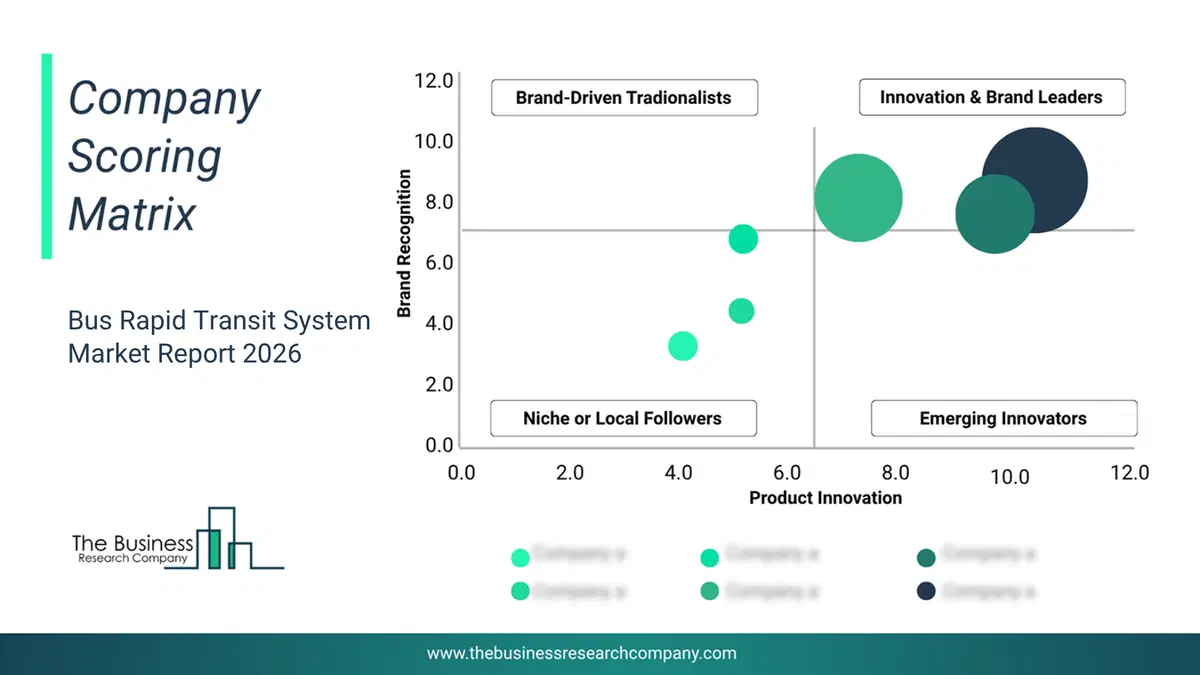
This chart maps companies by product innovation and brand strength, with bubble size indicating relative revenue, helping identify market leaders, challengers, and niche players. This is an illustrative chart; the full report provides a complete and accurate competitive analysis.
Global Bus Rapid Transit System Market Trends and Insights
Major companies operating in the bus rapid transit system market are focused on developing bus rapid transit (BRT) systems that feature platform-level boarding to enhance accessibility, reduce boarding times, and improve overall passenger flow, making public transport more efficient and user-friendly. Platform-level boarding refers to a design feature in public transport systems, particularly in bus rapid transit (BRT) systems and some rail systems, where the boarding area for passengers is at the same height as the vehicle floor. For instance, in September 2024, Metro Inc, a Canada-based company, launched Bus Rapid Transit (BRT), Buses operate on exclusive lanes that are separated from mixed traffic. This design minimizes delays caused by congestion, allowing buses to maintain consistent schedules and improve travel times. Stations are designed with platforms that align with the bus doors, facilitating easy access for all passengers, including those with disabilities. BRT vehicles can trigger green lights at intersections, which helps them bypass traffic delays and improves overall travel efficiency.What Are Latest Mergers And Acquisitions In The Bus Rapid Transit System Market?
In November 2025, TPG, a US-based private equity company, acquired a majority stake in Kinetic for an undisclosed amount. With this acquisition, TPG aims to accelerate Kinetic’s growth, expand its service offerings in the mobility sector, strengthen operational capabilities, and enhance long-term value creation for stakeholders. Kinetic is an Australia-based integrated mobility and transportation solutions provider, that offers bus rapid transit systems.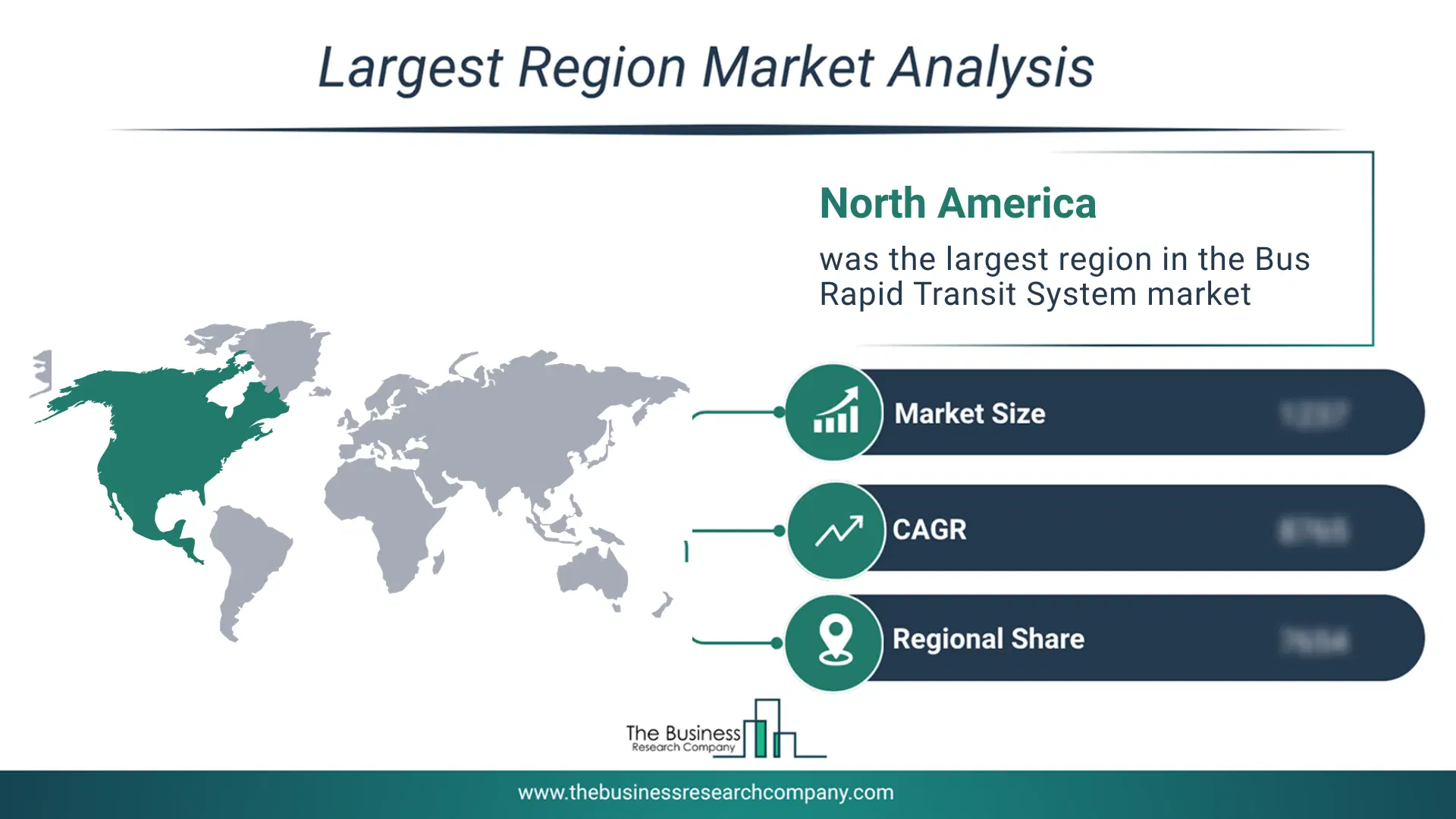
Regional Outlook
North America was the largest region in the bus rapid transit system market in 2025. The regions covered in this market report include Asia-Pacific, South East Asia, Western Europe, Eastern Europe, North America, South America, Middle East, Africa. The countries covered in this market report include Australia, Brazil, China, France, Germany, India, Indonesia, Japan, Taiwan, Russia, South Korea, UK, USA, Canada, Italy, SpainWhat Defines the Bus Rapid Transit System Market?
The bus rapid transit system market includes revenues earned by entities by providing services such as traffic signal priority, off-board fare collection, elevated platforms and enhanced stations. The market value includes the value of related goods sold by the service provider or included within the service offering. Only goods and services traded between entities or sold to end consumers are included.How is Market Value Defined and Measured?
The market value is defined as the revenues that enterprises gain from the sale of goods and/or services within the specified market and geography through sales, grants, or donations in terms of the currency (in USD unless otherwise specified). The revenues for a specified geography are consumption values that are revenues generated by organizations in the specified geography within the market, irrespective of where they are produced. It does not include revenues from resales along the supply chain, either further along the supply chain or as part of other products.
This chart presents market attractiveness based on a quantitative evaluation of growth, competition, strategic alignment, and risk, offering a clear view of opportunity areas for decision-making. This chart is for illustrative purposes; the full report contains the complete analysis.

This chart highlights the Total Addressable Market (TAM) by estimating the maximum revenue opportunity using an assumption-driven approach, supporting strategic planning and opportunity sizing across markets. The chart is illustrative; the full report provides a more comprehensive analysis.
What Key Data and Analysis Are Included in the Bus Rapid Transit System Market Report 2026?
The bus rapid transit system market research report is one of a series of new reports from The Business Research Company that provides market statistics, including industry global market size, regional shares, competitors with the market share, detailed market segments, market trends and opportunities, and any further data you may need to thrive in the bus rapid transit system industry. The market research report delivers a complete perspective of everything you need, with an in-depth analysis of the current and future state of the industry.Bus Rapid Transit System Market Report Forecast Analysis
| Report Attribute | Details |
|---|---|
| Market Size Value In 2026 | $3.37 billion |
| Revenue Forecast In 2030 | $4.94 billion |
| Growth Rate | CAGR of 9.3% from 2026 to 2030 |
| Base Year For Estimation | 2025 |
| Actual Estimates/Historical Data | 2020-2025 |
| Forecast Period | 2026 - 2030 |
| Market Representation | Revenue in USD Billion and CAGR from 2026 to 2030 |
| Segments Covered | Type, Seating Capacity, Level Of Service, Fuel Type, End-Use |
| Regional Scope | Asia-Pacific, Western Europe, Eastern Europe, North America, South America, Middle East, Africa |
| Country Scope | The countries covered in the report are Australia, Brazil, China, France, Germany, India, ... |
| Key Companies Profiled | Mercedes-Benz Group AG, BYD Auto Co Ltd., AB Volvo, Scania AB, Iveco S.p.A., Qingdao Hisense TransTech Co Ltd., Hino Motors Ltd., MAN SE, Transdev Group S.A., VDL Bus & Coach BV, Xiamen King Long Motor Group Co Ltd., Tata Motors Ltd., Zhengzhou Yutong Group Co Ltd., Ashok Leyland Ltd., Zhongtong Bus Holding Co Ltd., Solaris Bus & Coach sp. z o. o., NFI Group Inc., New Flyer Industries Inc., Marcopolo S.A., Gillig LLC, Anhui Ankai Automobile Co Ltd., Xiamen Golden Dragon Bus Co Ltd., Optare Group Ltd., Ebusco BV |
| Customization Scope | Request for Customization |
| Pricing And Purchase Options | Explore Purchase Options |