
Cardiology Electronic Health Record (EHR) Market Report 2026
Global Outlook – By Product (Web Or Cloud-Based Electronic Health Record (EHR), On-Premise Electronic Health Record (EHR)), By Business Model (Licensed Software, Technology Resale, Subscriptions, Professional Services, Other Business Models), By End Use (Hospital, Ambulatory Surgical Centers, Other End Uses) - Market Size, Trends, Strategies, and Forecast to 2030
Cardiology Electronic Health Record (EHR) Market Overview
• Cardiology Electronic Health Record (EHR) market size has reached to $3.1 billion in 2025 • Expected to grow to $4.23 billion in 2030 at a compound annual growth rate (CAGR) of 6.4% • Growth Driver: Rise In Cardiovascular Diseases Fueling The Growth Of The Market Due To Increasing Need For Efficient Patient Data Management • Market Trend: Advancement In Intelligent Healthcare Tools Enhancing Early Diagnosis And Clinical Efficiency • North America was the largest region in 2025 and Asia-Pacific is the fastest growing region.What Is Covered Under Cardiology Electronic Health Record (EHR) Market?
Cardiology electronic health record (EHR) refers to a specialized digital system designed to systematically collect, store, and manage cardiovascular-related clinical data. It organizes patient health information in a structured format specific to cardiology, enabling comprehensive documentation of cardiac health indicators. The system ensures accuracy, consistency, and accessibility of cardiac records, supporting streamlined workflows and informed clinical decisions in the field of cardiology. The main products of cardiology electronic health records (EHR) include web- or cloud-based electronic health records (EHR) and on-premise electronic health records (EHR). A web- or cloud-based EHR is a digital medical record system hosted on external servers and accessed via the internet. It offers various business models, including licensed software, technology resale, subscriptions, professional services, and others, and serves several end uses, including hospitals, ambulatory surgical centers, and others.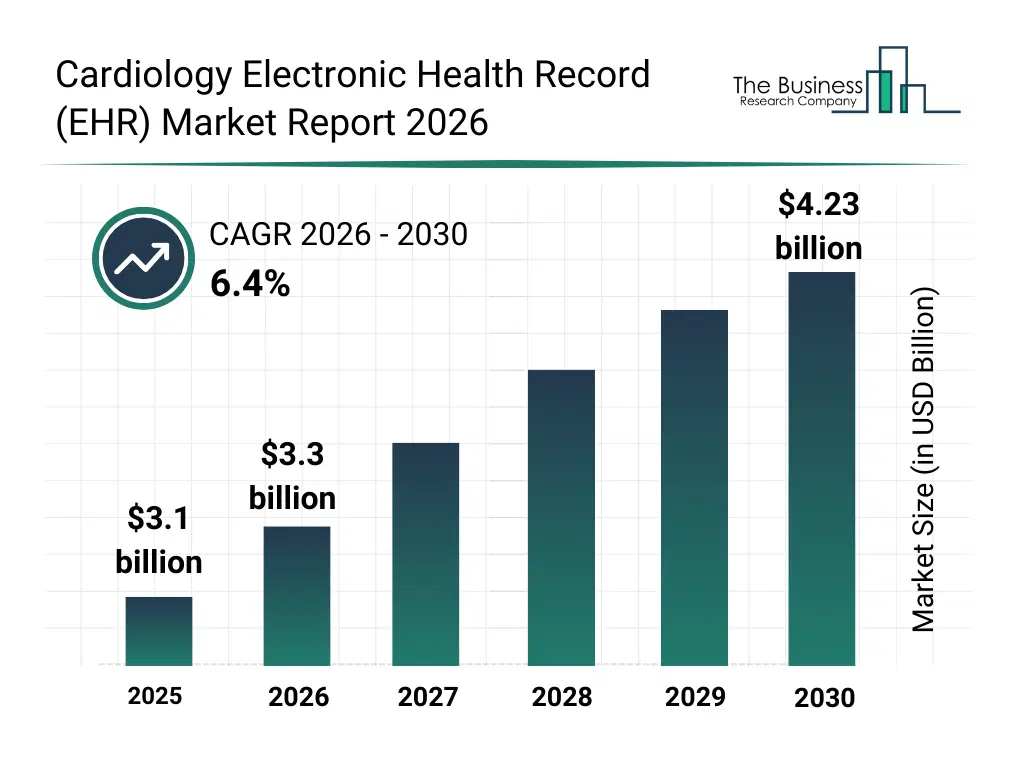
What Is The Cardiology Electronic Health Record (EHR) Market Size and Share 2026?
The cardiology electronic health record (ehr) market size has grown strongly in recent years. It will grow from $3.1 billion in 2025 to $3.3 billion in 2026 at a compound annual growth rate (CAGR) of 6.5%. The growth in the historic period can be attributed to increasing digitization of hospital records, rising prevalence of cardiovascular diseases, growing adoption of specialty-specific ehr systems, regulatory push for electronic health data, expansion of healthcare it infrastructure.What Is The Cardiology Electronic Health Record (EHR) Market Growth Forecast?
The cardiology electronic health record (ehr) market size is expected to see strong growth in the next few years. It will grow to $4.23 billion in 2030 at a compound annual growth rate (CAGR) of 6.4%. The growth in the forecast period can be attributed to increasing use of predictive analytics in cardiology care, rising investments in cloud healthcare platforms, growing demand for remote cardiac monitoring integration, expansion of value-based healthcare models, increasing focus on data-driven clinical outcomes. Major trends in the forecast period include increasing adoption of cloud-based cardiology ehr platforms, rising integration of AI-driven cardiac decision support, growing demand for interoperable health data systems, expansion of structured cardiovascular data analytics, enhanced focus on workflow automation in cardiology.
Global Cardiology Electronic Health Record (EHR) Market Segmentation
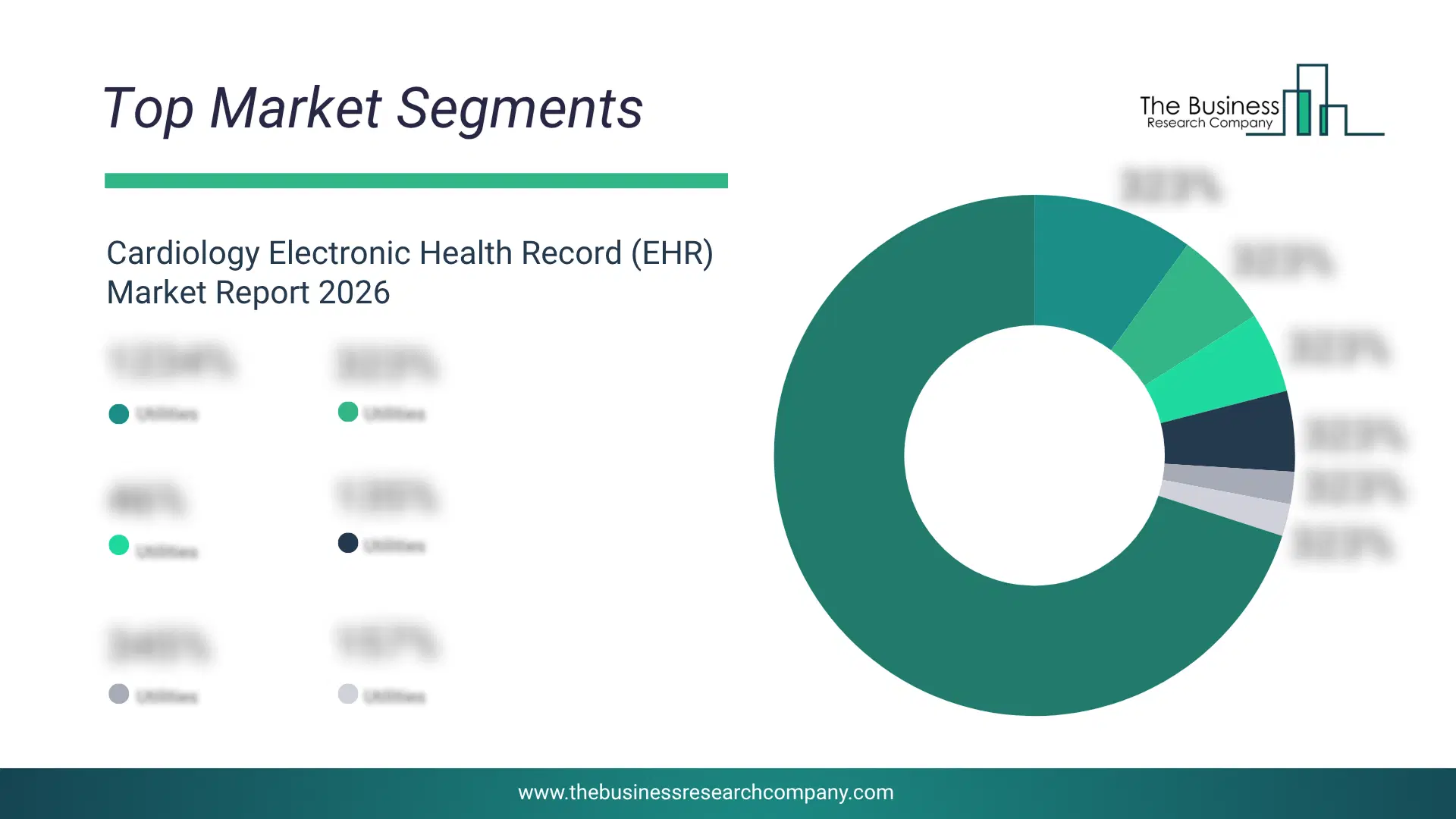
1) By Product: Web Or Cloud-Based Electronic Health Record (EHR), On-Premise Electronic Health Record (EHR) 2) By Business Model: Licensed Software, Technology Resale, Subscriptions, Professional Services, Other Business Models 3) By End Use: Hospital, Ambulatory Surgical Centers, Other End Uses Subsegments: 1) By Web Or Cloud-Based Electronic Health Record (EHR): Subscription-Based EHR, Customizable EHR, Mobile EHR Solutions 2) By On-Premise Electronic Health Record (EHR): Licensed Software, Integrated EHR Systems, Standalone EHR ApplicationsWhat Is The Driver Of The Cardiology Electronic Health Record (EHR) Market?
The increasing number of cardiovascular diseases is expected to propel the growth of the cardiology electronic health record (EHR) market going forward. Cardiovascular diseases refer to a range of conditions that impact the heart and blood vessels, often leading to issues such as heart attacks, strokes, or other circulatory system problems. Cardiovascular diseases are rising due to increasingly sedentary lifestyles, which lead to weight gain, elevated blood pressure, and weakened cardiovascular function over time. Cardiology EHR is beneficial for cardiovascular diseases as it allows healthcare providers to access and monitor patient information instantly, leading to quicker diagnoses, tailored treatments, and more effective long-term care for heart-related conditions. For instance, in 2023, according to the Centers for Disease Control and Prevention (CDC), a US-based federal agency, in 2023 the CDC reported that there were approximately 919,032 cardiovascular-related deaths in the United States. Therefore, the increasing number of cardiovascular diseases is driving the growth of the cardiology electronic health record (EHR) industry.Key Players In The Global Cardiology Electronic Health Record (EHR) Market
Major companies operating in the cardiology electronic health record (ehr) market are Oracle Corp., GE Healthcare Technologies Inc., Henry Schein Inc., Epic Systems Corporation, Athenahealth Inc., eClinicalWorks LLC, Veradigm LLC, Greenway Health LLC, Tebra Technologies Inc., AdvancedMD Inc., CureMD Inc., CareCloud Inc., Practice Fusion Inc., DrChrono, Azalea Health Co., Sevocity, Praxis EMR, EncounterWorks, ReLi Med Solutions LLC, ProEmTech Infosystems Pvt. Ltd.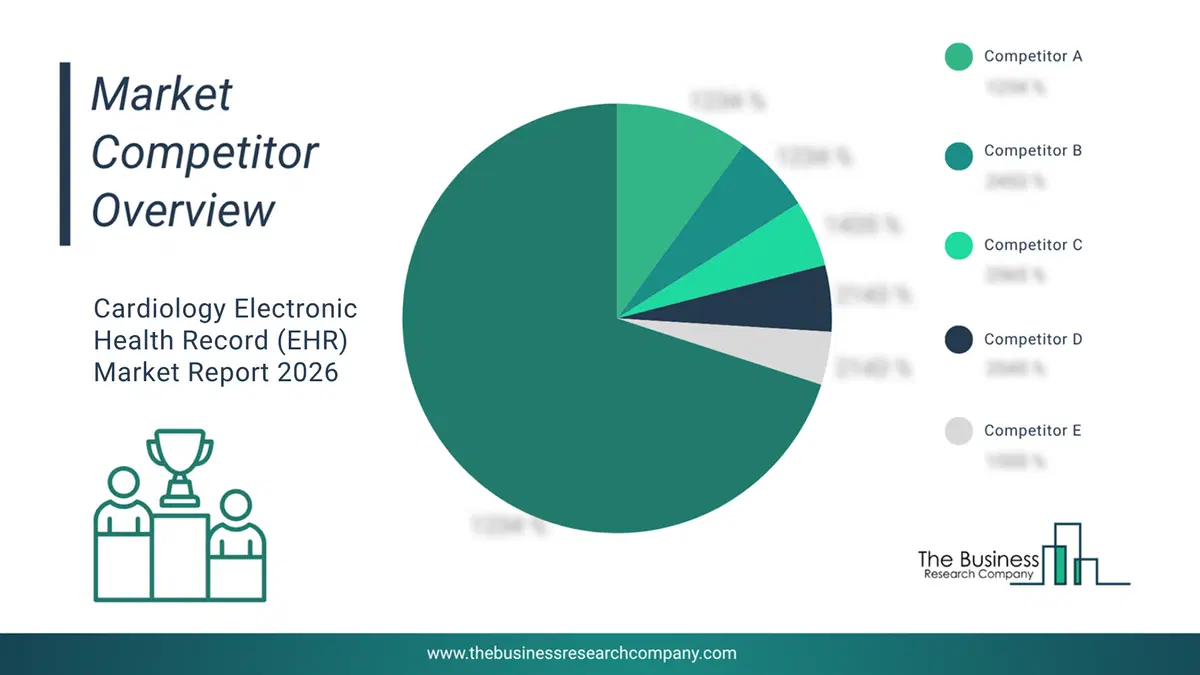
This chart is for illustrative purposes; the full report includes a detailed competitor analysis and comprehensive overview of the top 10 companies in the market.
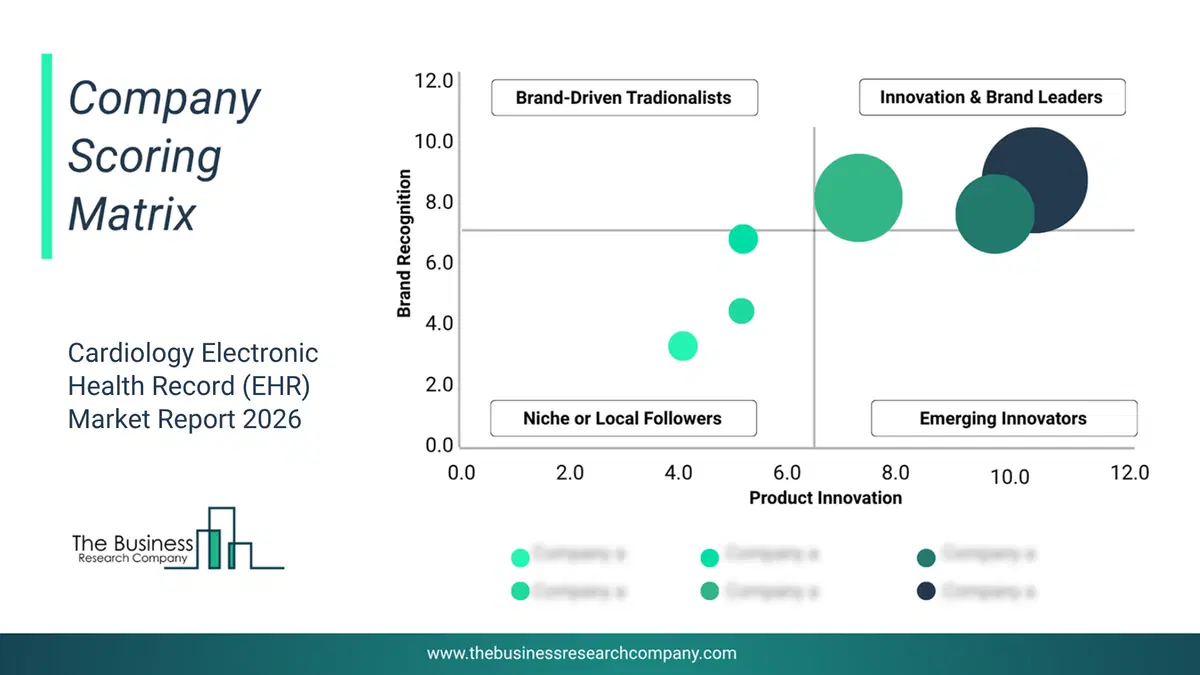
This chart maps companies by product innovation and brand strength, with bubble size indicating relative revenue, helping identify market leaders, challengers, and niche players. This is an illustrative chart; the full report provides a complete and accurate competitive analysis.
Global Cardiology Electronic Health Record (EHR) Market Trends and Insights
Major companies operating in the electronic health record (EHR) market are focusing on developing advanced solutions, such as AI-powered solutions, to offer smarter outcomes and more adaptive performance in dynamic environments. AI-powered solutions are systems that leverage artificial intelligence algorithms to process information, make informed decisions, and carry out tasks that usually need human cognitive abilities. For instance, in July 2024, Intrahealth, a US-based non-profit organization, launched an integrated AI-powered co-pilot for cardiologists. The AI-powered co-pilot for specialists represents a significant advancement in healthcare technology. With the addition of cardiovascular disease detection, it enables cardiologists to identify high-risk patients earlier, supporting improved outcomes and reduced medical costs. Integration with Intrahealth’s Profile EHR ensures global access to this advanced tool. The extensive data generated through its use contributes to ongoing enhancements and refinement of its performance.What Are Latest Mergers And Acquisitions In The Cardiology Electronic Health Record (EHR) Market?
In June 2024, Athenahealth, a US-based provider of cardiology EHR, partnered with Cardiovascular Associates of America (CVAUSA) to help independent cardiology practices enhance clinical and financial outcomes and succeed in value-based care models. The collaboration with athenahealth is intended to help independent cardiology practices boost both clinical outcomes and financial efficiency, enabling success under value-based care frameworks. Through this partnership, CVAUSA-affiliated practices will have prioritized access to athenaOne, a comprehensive platform offering EHR, revenue cycle management, and patient engagement tools. Cardiovascular Associates of America (CVAUSA) is a US-based private equity-backed network of cardiovascular specialists.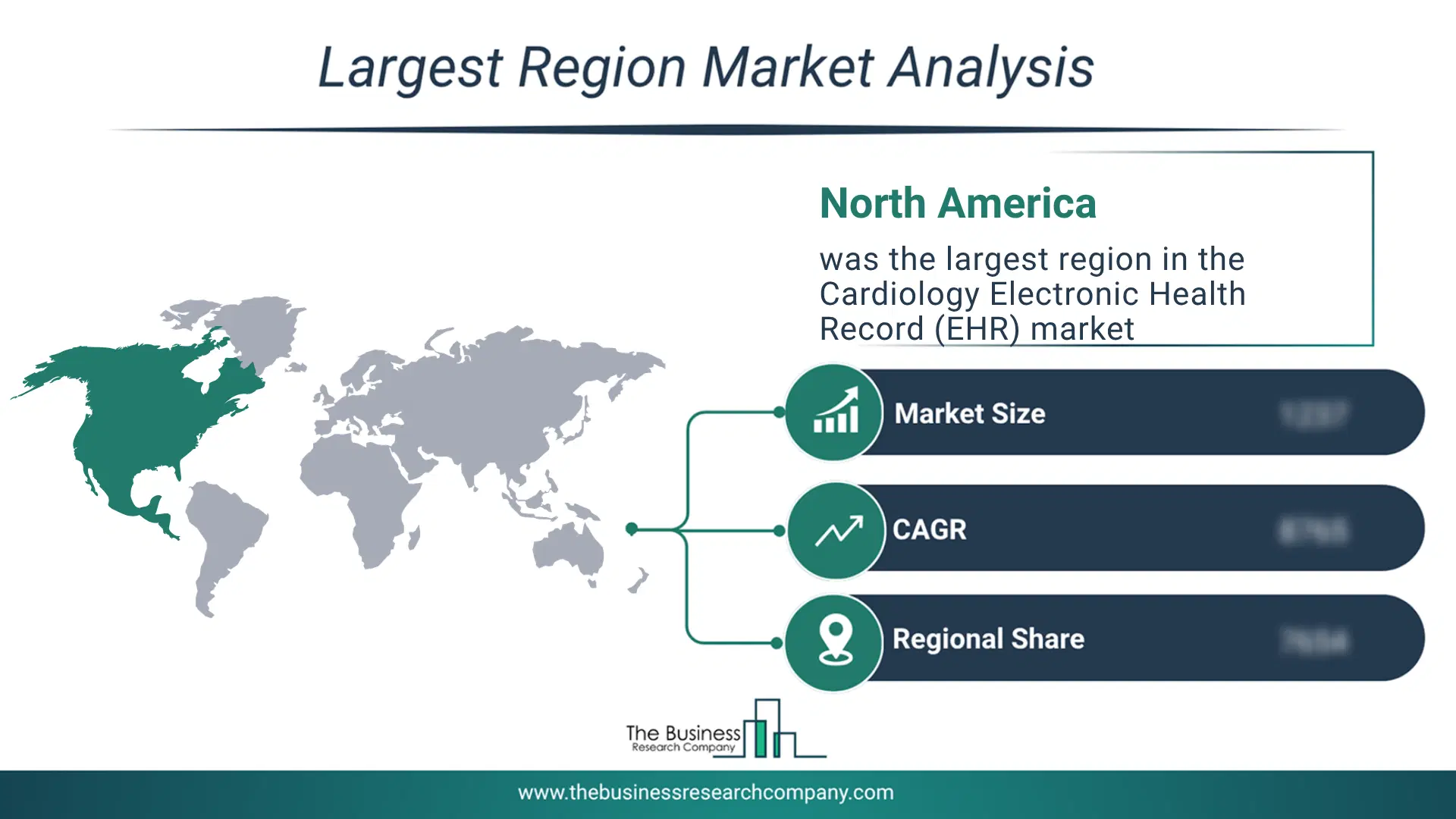
Regional Outlook
North America was the largest region in the cardiology electronic health record (EHR) market in 2025. Asia-Pacific is expected to be the fastest-growing region in the forecast period. The regions covered in this market report are Asia-Pacific, South East Asia, Western Europe, Eastern Europe, North America, South America, Middle East, Africa. The countries covered in this market report are Australia, Brazil, China, France, Germany, India, Indonesia, Japan, Taiwan, Russia, South Korea, UK, USA, Canada, Italy, Spain.What Defines the Cardiology Electronic Health Record (EHR) Market?
The cardiology electronic health record (EHR) market consists of revenues earned by entities by providing services such as installation services, data migration services, customization services, and interoperability services. The market value includes the value of related goods sold by the service provider or included within the service offering. The cardiology electronic health record (EHR) market also includes sales of medical grade tablets, barcode scanners, secure backup devices, and biometric authentication devices. Values in this market are ‘factory gate’ values, that is the value of goods sold by the manufacturers or creators of the goods, whether to other entities (including downstream manufacturers, wholesalers, distributors and retailers) or directly to end customers. The value of goods in this market includes related services sold by the creators of the goods.How is Market Value Defined and Measured?
The market value is defined as the revenues that enterprises gain from the sale of goods and/or services within the specified market and geography through sales, grants, or donations in terms of the currency (in USD unless otherwise specified). The revenues for a specified geography are consumption values that are revenues generated by organizations in the specified geography within the market, irrespective of where they are produced. It does not include revenues from resales along the supply chain, either further along the supply chain or as part of other products.
This chart presents market attractiveness based on a quantitative evaluation of growth, competition, strategic alignment, and risk, offering a clear view of opportunity areas for decision-making. This chart is for illustrative purposes; the full report contains the complete analysis.

This chart highlights the Total Addressable Market (TAM) by estimating the maximum revenue opportunity using an assumption-driven approach, supporting strategic planning and opportunity sizing across markets. The chart is illustrative; the full report provides a more comprehensive analysis.
What Key Data and Analysis Are Included in the Cardiology Electronic Health Record (EHR) Market Report 2026?
The cardiology electronic health record (ehr) market research report is one of a series of new reports from The Business Research Company that provides market statistics, including industry global market size, regional shares, competitors with the market share, detailed market segments, market trends and opportunities, and any further data you may need to thrive in the cardiology electronic health record (ehr) industry. The market research report delivers a complete perspective of everything you need, with an in-depth analysis of the current and future state of the industry.Cardiology Electronic Health Record (EHR) Market Report Forecast Analysis
| Report Attribute | Details |
|---|---|
| Market Size Value In 2026 | $3.3 billion |
| Revenue Forecast In 2030 | $4.23 billion |
| Growth Rate | CAGR of 6.4% from 2026 to 2030 |
| Base Year For Estimation | 2025 |
| Actual Estimates/Historical Data | 2020-2025 |
| Forecast Period | 2026 - 2030 |
| Market Representation | Revenue in USD Billion and CAGR from 2026 to 2030 |
| Segments Covered | Product, Business Model, End Use |
| Regional Scope | Asia-Pacific, Western Europe, Eastern Europe, North America, South America, Middle East, Africa |
| Country Scope | The countries covered in the report are Australia, Brazil, China, France, Germany, India, Indonesia, Japan, Taiwan, Russia, South Korea, UK, USA, Canada, Italy, Spain |
| Key Companies Profiled | Oracle Corp., GE Healthcare Technologies Inc., Henry Schein Inc., Epic Systems Corporation, Athenahealth Inc., eClinicalWorks LLC, Veradigm LLC, Greenway Health LLC, Tebra Technologies Inc., AdvancedMD Inc., CureMD Inc., CareCloud Inc., Practice Fusion Inc., DrChrono, Azalea Health Co., Sevocity, Praxis EMR, EncounterWorks, ReLi Med Solutions LLC, ProEmTech Infosystems Pvt. Ltd. |
| Customization Scope | Request for Customization |
| Pricing And Purchase Options | Explore Purchase Options |