

Caviar Market Report 2026
Global Outlook – By Product (Sevruga, Osetra, Salmon, Sushi, Beluga, Sterlet, Other Products), By Form (Fresh, Dried, Frozen), By Sales Channel (On-Trade, Off-Trade), By Application (Hotels And Restaurants, Airliners And Cruise Ships, Retail Stores, Other Applications) – Market Size, Trends, Strategies, and Forecast to 2030
Caviar Market Overview
• Caviar market size has reached to $3.09 billion in 2025 • Expected to grow to $4.79 billion in 2030 at a compound annual growth rate (CAGR) of 8.9% • Growth Driver: Popularity Of Restaurants Fuels Growth In Caviar Market • Market Trend: Sustainable Luxury Plant-Based Caviar Alternatives Redefine Indulgence • Asia-Pacific was the largest region in 2025 and Europe is the fastest growing region.What Is Covered Under Caviar Market?
Caviar refers to the processed and salted roe (eggs) of certain fish species, primarily sturgeon. It is renowned for its delicacy and is often enjoyed as a luxury food item, known for its rich, briny flavor and smooth texture. Caviar is traditionally served chilled and is considered a gourmet treat in many cultures worldwide. The main product types of caviar are sevruga, osetra, salmon, sushi, beluga, sterlet, and others. Sevruga refers to a type of caviar made from the roe of the acipenser stellatus, a sturgeon species native to the caspian and black seas known for its small, grey-colored eggs. This includes various forms such as fresh, dried, and frozen. These are distributed through different sales channels such as on-trade, and off-trade, and are used in various applications such as hotels and restaurants, airliners and cruise ships, retail stores, and others.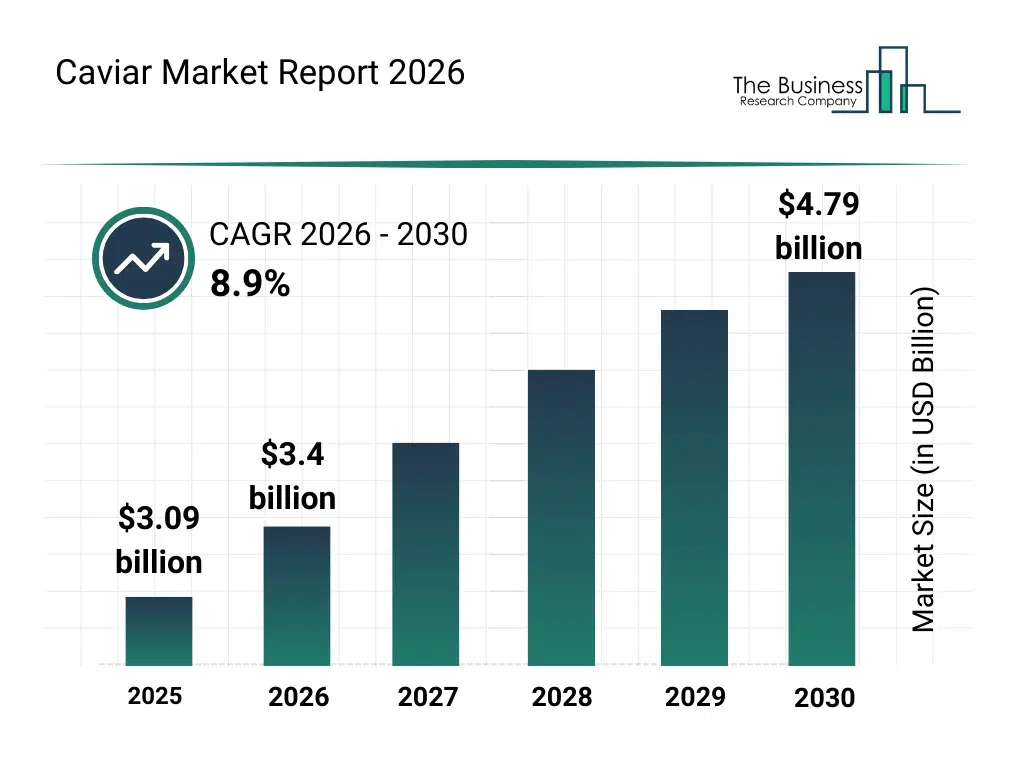
What Is The Caviar Market Size and Share 2026?
The caviar market size has grown rapidly in recent years. It will grow from $3.09 billion in 2025 to $3.4 billion in 2026 at a compound annual growth rate (CAGR) of 10.0%. The growth in the historic period can be attributed to expansion of luxury food consumption, growth of global fine dining culture, development of aquaculture farming techniques, rising international seafood trade, increasing availability of farmed caviar.What Is The Caviar Market Growth Forecast?
The caviar market size is expected to see strong growth in the next few years. It will grow to $4.79 billion in 2030 at a compound annual growth rate (CAGR) of 8.9%. The growth in the forecast period can be attributed to increasing demand for sustainably sourced luxury foods, expansion of premium food retail channels, rising disposable incomes in emerging markets, growing focus on ethical aquaculture, increasing diversification of caviar product offerings. Major trends in the forecast period include growing preference for farmed caviar production, rising demand for premium and gourmet seafood, expansion of sustainable aquaculture practices, enhanced focus on product traceability and authenticity, increasing popularity of alternative caviar varieties.
Global Caviar Market Segmentation
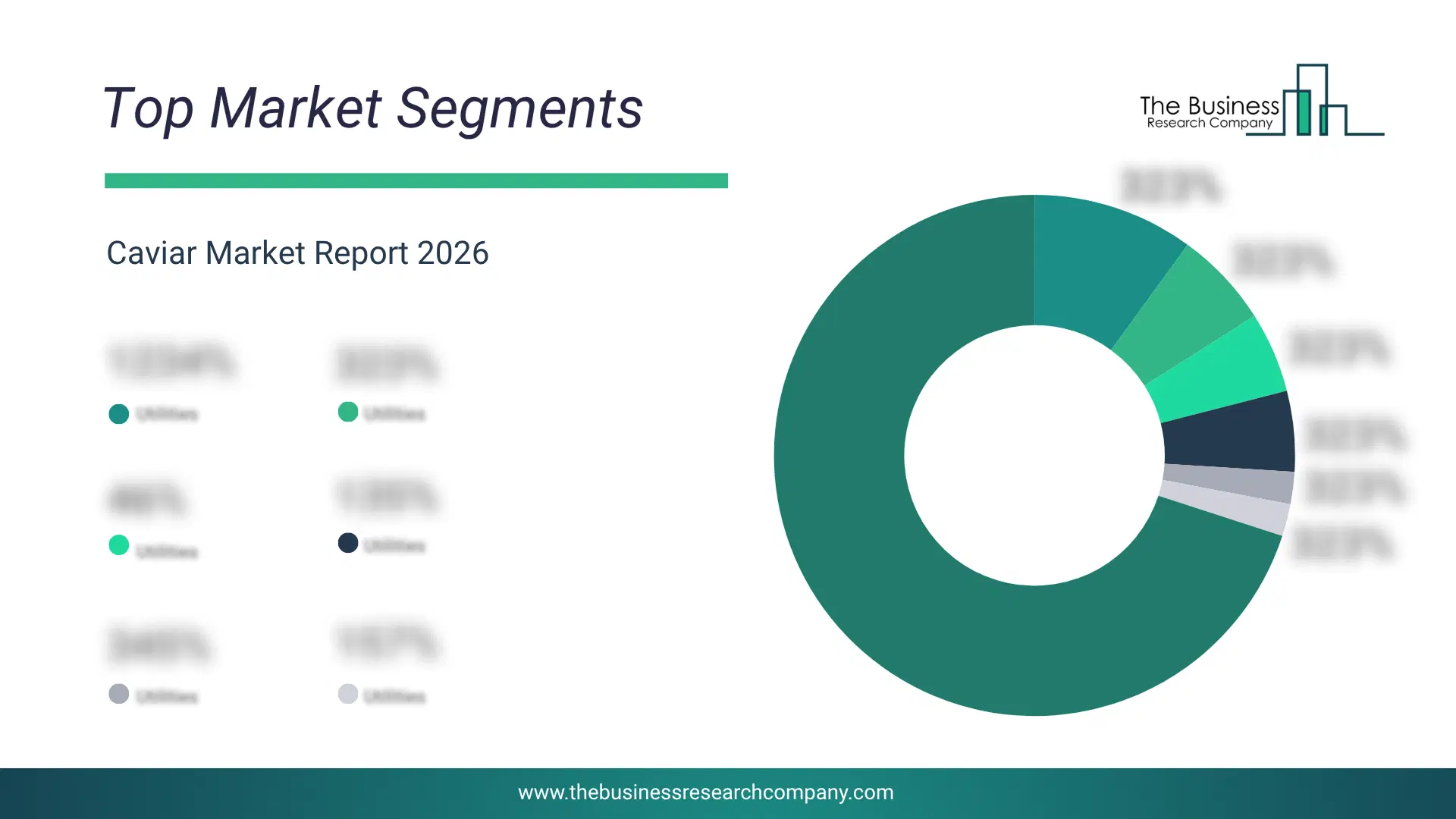
1) By Product: Sevruga, Osetra, Salmon, Sushi, Beluga, Sterlet, Other Products 2) By Form: Fresh, Dried, Frozen 3) By Sales Channel: On-Trade, Off-Trade 4) By Application: Hotels And Restaurants, Airliners And Cruise Ships, Retail Stores, Other Applications Subsegments: 1) By Sevruga: Farmed Sevruga, Wild Sevruga 2) By Osetra: Russian Osetra, Persian Osetra, Siberian Osetra 3) By Salmon: Wild Salmon Caviar, Farmed Salmon Caviar 4) By Sushi: Masago (Capelin Roe), Tobiko (Flying Fish Roe) 5) By Beluga: Iranian Beluga, Russian Beluga 6) By Sterlet: Farmed Sterlet, Wild Sterlet 7) By Other Products: Paddlefish Caviar, Bowfin Caviar, Whitefish CaviarWhat Is The Driver Of The Caviar Market?
The rise in the popularity of restaurants is expected to propel the growth of the caviar market going forward. The popularity of restaurants is growing due to an increasing emphasis on experiential dining, where consumers seek unique and memorable culinary experiences as a form of social and cultural engagement. Caviar enhances restaurant menus by offering a luxurious and sophisticated delicacy that elevates dining experiences. For instance, in June 2024, according to Statistics Sweden, a Sweden-based government agency, restaurants increased their sales volume by 1.2% during the first quarter of 2024 compared with the same period in 2023. Therefore, the rise in the popularity of restaurants drives the caviar industry.Key Players In The Global Caviar Market
Major companies operating in the caviar market are Labeyrie Fine Foods SAS, Caviar House & Prunier, Petrossian Inc., The Caviar Co., The Caviar House, Amur Caviar Company Ltd., Black River Caviar, Hyde Caviar LLC, Riofrío 1963 SL, Hangzhou Qiandaohu Xunlong Sci-Tech Co. Ltd., L'Osage Caviar Company Inc., Sasanian Caviar Inc., Agroittica Lombarda, California Caviar Company, Russian Caviar House LLP, Delicatessen SNAILEX s.r.o., Karat Caviar, Tsar Nicoulai Caviar LLC, Bemka, Imperial Caviar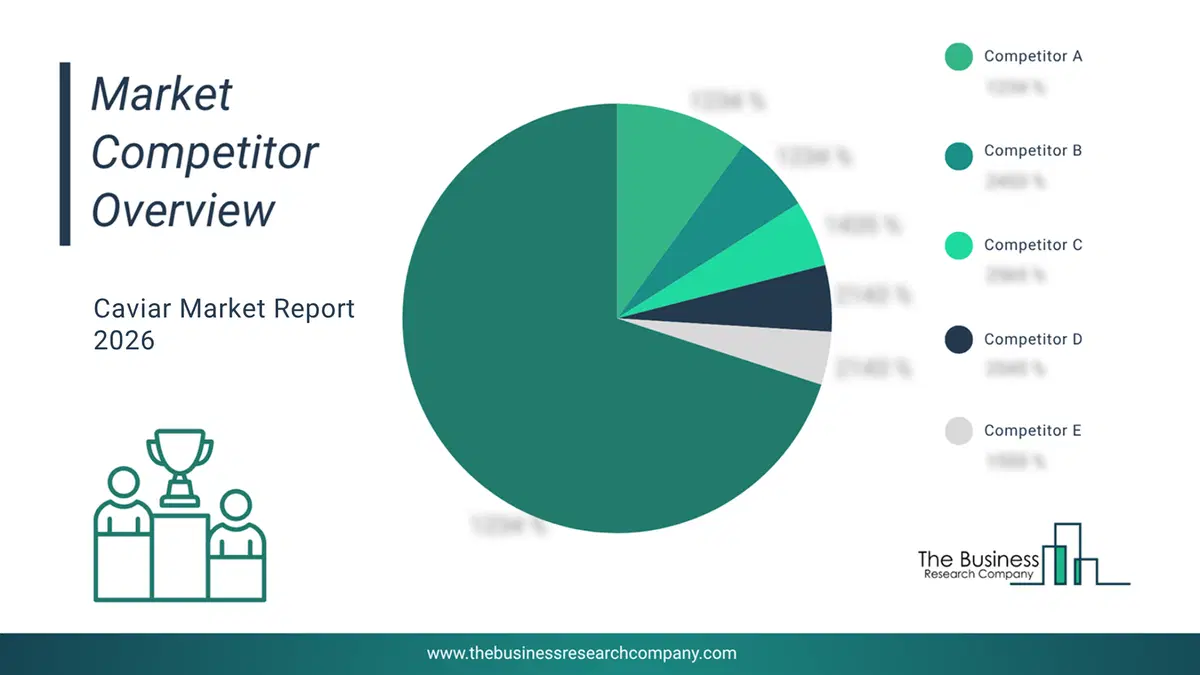
This chart is for illustrative purposes; the full report includes a detailed competitor analysis and comprehensive overview of the top 10 companies in the market.
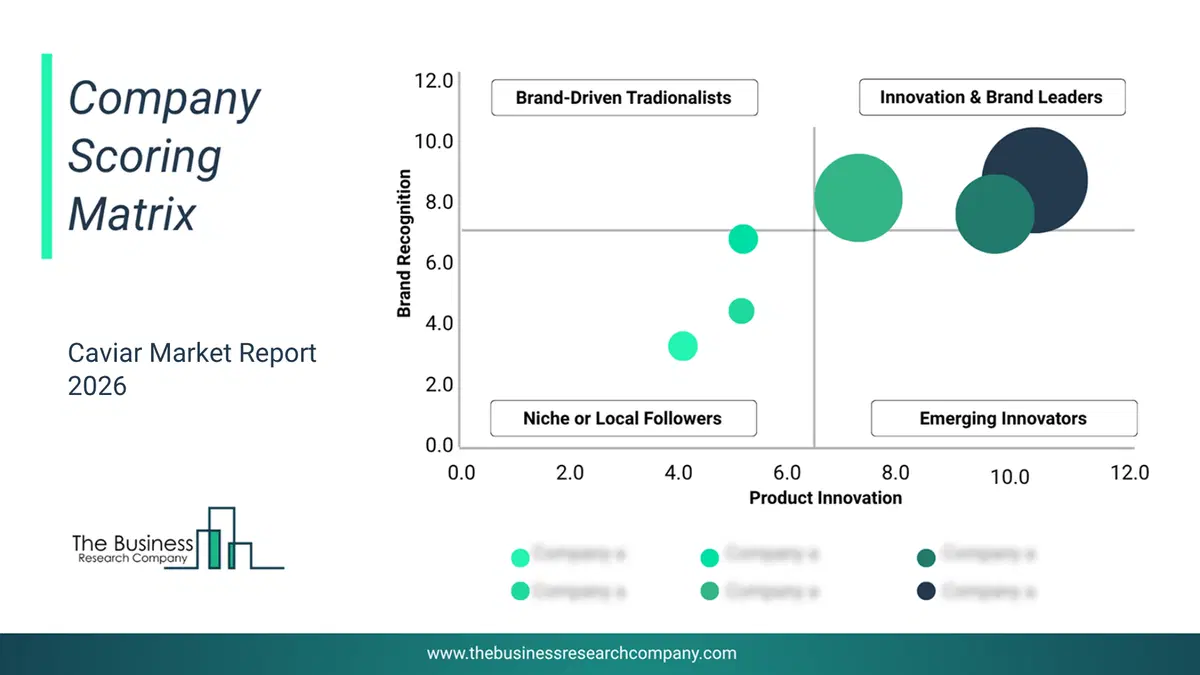
This chart maps companies by product innovation and brand strength, with bubble size indicating relative revenue, helping identify market leaders, challengers, and niche players. This is an illustrative chart; the full report provides a complete and accurate competitive analysis.
Global Caviar Market Trends and Insights
Major companies operating in the caviar market are developing innovative products such as plant-based caviar, catering to the growing demand for sustainable and vegan options. Plant-based caviar refers to a vegan or vegetarian alternative to traditional caviar, made from plant-derived ingredients designed to mimic the taste, texture, and appearance of real caviar without using fish roe. For instance, in July 2024, Ancrée, a France-based company that manufactures caviar, launched the First French Plant-Based Caviar, using chia seeds and seaweed. This plant-based caviar is enriched with chia seeds, omega-3 fatty acids, fiber, vitamins, and minerals, offering a nutritious alternative to traditional caviar. The seaweed in the plant-based caviar provides essential iodine, similar to a key nutrient found in traditional caviar.What Are Latest Mergers And Acquisitions In The Caviar Market?
In March 2023, Modern Plant-Based Foods, a Canada-based company that manufactures plant-based products, acquired Northern Pacific Caviar for an undisclosed amount. The acquisition aims to strengthen Modern Plant Based Foods' ability to produce and distribute vegan caviar to retail stores, restaurants, and other food service locations. Northern Pacific Caviar is a Canada-based company that manufactures vegan caviar products using a blend of seaweed, flavorings, and chia seeds.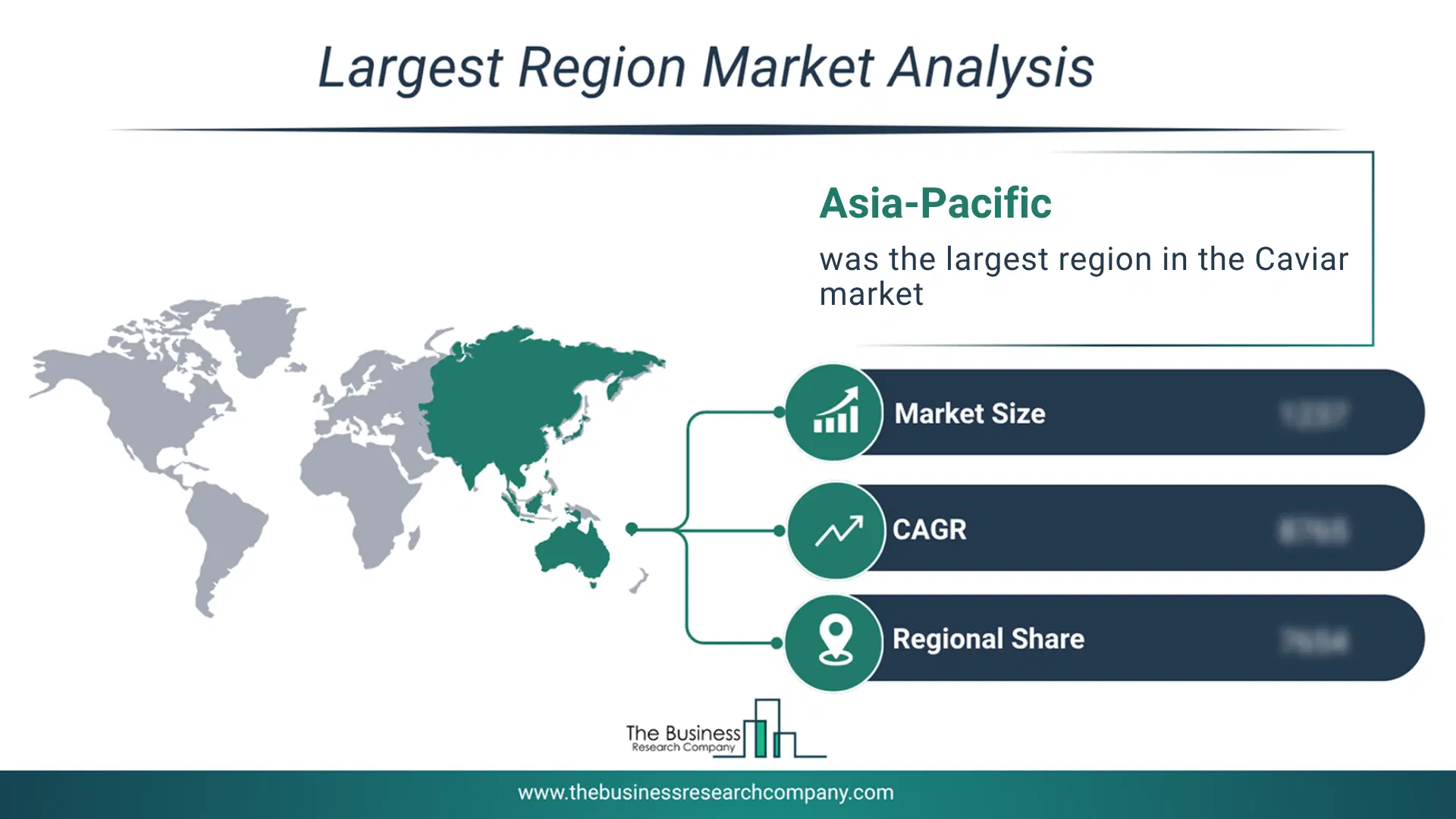
Regional Outlook
Asia-Pacific was the largest region in the caviar market in 2025. Europe is expected to be the fastest-growing region in the forecast period. The regions covered in this market report are Asia-Pacific, South East Asia, Western Europe, Eastern Europe, North America, South America, Middle East and Africa. The countries covered in this market report are Australia, Brazil, China, France, Germany, India, Indonesia, Japan, Taiwan, Russia, South Korea, UK, USA, Italy, Spain, CanadaWhat Defines the Caviar Market?
The caviar market consists of sales of processed caviar, infused caviar, sevruga caviar, white sturgeon caviar, and hackleback caviar. Values in this market are ‘factory gate’ values, that is the value of goods sold by the manufacturers or creators of the goods, whether to other entities (including downstream manufacturers, wholesalers, distributors, and retailers) or directly to end customers. The value of goods in this market includes related services sold by the creators of the goods.How is Market Value Defined and Measured?
The market value is defined as the revenues that enterprises gain from the sale of goods and/or services within the specified market and geography through sales, grants, or donations in terms of the currency (in USD unless otherwise specified). The revenues for a specified geography are consumption values that are revenues generated by organizations in the specified geography within the market, irrespective of where they are produced. It does not include revenues from resales along the supply chain, either further along the supply chain or as part of other products.
This chart presents market attractiveness based on a quantitative evaluation of growth, competition, strategic alignment, and risk, offering a clear view of opportunity areas for decision-making. This chart is for illustrative purposes; the full report contains the complete analysis.

This chart highlights the Total Addressable Market (TAM) by estimating the maximum revenue opportunity using an assumption-driven approach, supporting strategic planning and opportunity sizing across markets. The chart is illustrative; the full report provides a more comprehensive analysis.
What Key Data and Analysis Are Included in the Caviar Market Report 2026?
The caviar market research report is one of a series of new reports from The Business Research Company that provides market statistics, including industry global market size, regional shares, competitors with the market share, detailed market segments, market trends and opportunities, and any further data you may need to thrive in the caviar industry. The market research report delivers a complete perspective of everything you need, with an in-depth analysis of the current and future state of the industry.Caviar Market Report Forecast Analysis
| Report Attribute | Details |
|---|---|
| Market Size Value In 2026 | $3.4 billion |
| Revenue Forecast In 2030 | $4.79 billion |
| Growth Rate | CAGR of 10.0% from 2026 to 2030 |
| Base Year For Estimation | 2025 |
| Actual Estimates/Historical Data | 2020-2025 |
| Forecast Period | 2026 - 2030 |
| Market Representation | Revenue in USD Billion and CAGR from 2026 to 2030 |
| Segments Covered | Product, Form, Sales Channel, Application |
| Regional Scope | Asia-Pacific, Western Europe, Eastern Europe, North America, South America, Middle East, Africa |
| Country Scope | The countries covered in the report are Australia, Brazil, China, France, Germany, India, Indonesia, Japan, Taiwan, Russia, South Korea, UK, USA, Canada, Italy, Spain. |
| Key Companies Profiled | Labeyrie Fine Foods SAS, Caviar House & Prunier, Petrossian Inc., The Caviar Co., The Caviar House, Amur Caviar Company Ltd., Black River Caviar, Hyde Caviar LLC, Riofrío 1963 SL, Hangzhou Qiandaohu Xunlong Sci-Tech Co. Ltd., L'Osage Caviar Company Inc., Sasanian Caviar Inc., Agroittica Lombarda, California Caviar Company, Russian Caviar House LLP, Delicatessen SNAILEX s.r.o., Karat Caviar, Tsar Nicoulai Caviar LLC, Bemka, Imperial Caviar |
| Customization Scope | Request for Customization |
| Pricing And Purchase Options | Explore Purchase Options |