

Cell Culture Plates Market Report 2026
Global Outlook – By Type (Standard Cell Culture Plates, Coated Cell Culture Plates, Specialty Cell Culture Plates), By Material (Polystyrene, Glass, Other Materials), By Surface (Treated, Untreated), By Application (Drug Discovery And Development, Biopharmaceutical Production, Tissue Engineering And Regenerative Medicine, Other Applications), By End-User (Research Institutes, Pharmaceutical And Biotechnology, Diagnostic Laboratories) – Market Size, Trends, Strategies, and Forecast to 2030
Cell Culture Plates Market Overview
• Cell Culture Plates market size has reached to $2.29 billion in 2025 • Expected to grow to $3.09 billion in 2030 at a compound annual growth rate (CAGR) of 6.1% • Growth Driver: Cell Culture Plates Market Surges In Response To Escalating Chronic Disease Prevalence • Market Trend: 3D Cell Culture Plates To Transform The Cell Culture Plate Market • North America was the largest region in 2025.What Is Covered Under Cell Culture Plates Market?
A cell culture plate is a medical instrument that is a low-flat-bottomed laboratory container used to grow a layer of organisms such as bacteria, Molds, and cells. This cell culture plate provides the right conditions for the growth of cell cultures. The main types of cell culture plates are standard cell culture plates, coated cell culture plates, and specialty cell culture plates. Standard cell culture plates refer to palettes made of borosilicate glass or transparent polymers that enable distortion-free microscopic inspection and are used for the cultivation of adherent cell lines. They are made of polystyrene, glass, and other materials with treated and untreated surfaces for drug discovery and development, biopharmaceutical production, tissue engineering and regenerative medicine, and others. These are used by various end-users including research institutes, pharmaceutical and biotechnology, and diagnostic laboratories.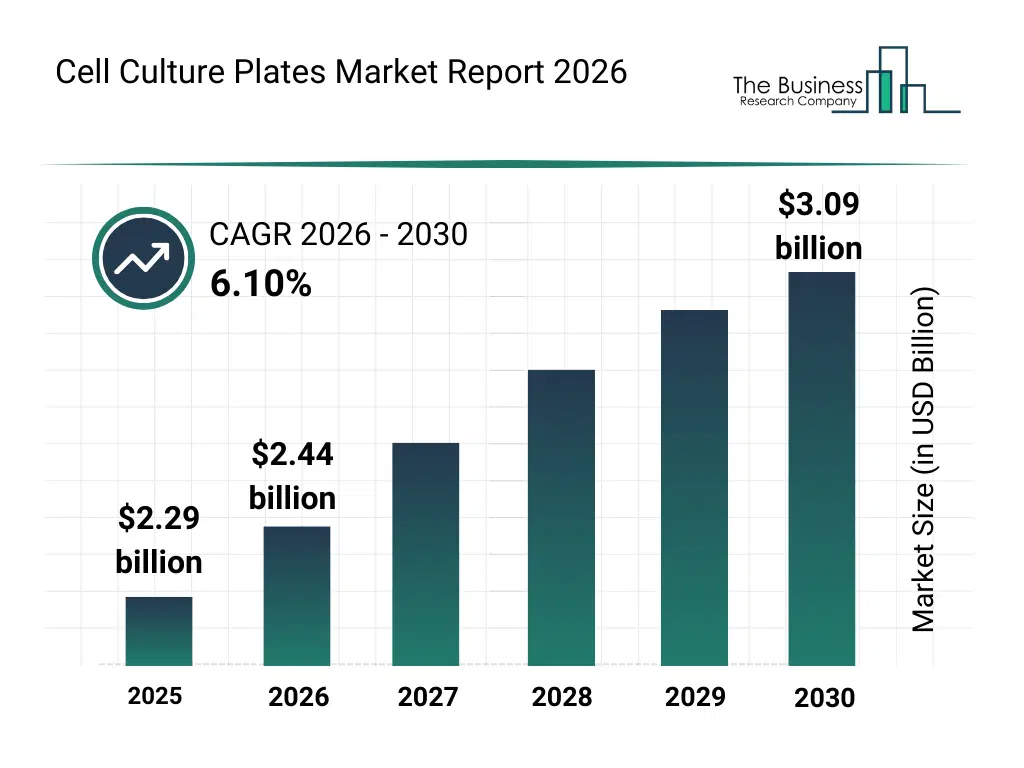
What Is The Cell Culture Plates Market Size and Share 2026?
The cell culture plates market size has grown strongly in recent years. It will grow from $2.29 billion in 2025 to $2.44 billion in 2026 at a compound annual growth rate (CAGR) of 6.2%. The growth in the historic period can be attributed to expansion of biomedical research activities, increasing use of in vitro testing models, growth in pharmaceutical R&D spending, rising adoption of cell-based assays, availability of standardized laboratory consumables.What Is The Cell Culture Plates Market Growth Forecast?
The cell culture plates market size is expected to see strong growth in the next few years. It will grow to $3.09 billion in 2030 at a compound annual growth rate (CAGR) of 6.1%. The growth in the forecast period can be attributed to increasing demand for advanced cell culture models, rising investments in regenerative medicine research, expansion of biopharmaceutical manufacturing, growing adoption of automated lab workflows, increasing focus on precision medicine research. Major trends in the forecast period include increasing adoption of high-throughput cell culture plates, rising use of 3D cell culture systems, growing demand for coated culture surfaces, expansion of plates for organoid and stem cell research, enhanced focus on reproducibility in cell-based assays.
Global Cell Culture Plates Market Segmentation
1) By Type: Standard Cell Culture Plates, Coated Cell Culture Plates, Specialty Cell Culture Plates 2) By Material: Polystyrene, Glass, Other Materials 3) By Surface: Treated, Untreated 4) By Application: Drug Discovery And Development, Biopharmaceutical Production, Tissue Engineering And Regenerative Medicine, Other Applications 5) By End-User: Research Institutes, Pharmaceutical And Biotechnology, Diagnostic Laboratories Subsegments: 1) By Standard Cell Culture Plates: 6-Well Plates, 12-Well Plates, 24-Well Plates, 48-Well Plates, 96-Well Plates, 384-Well Plates 2) By Coated Cell Culture Plates: Collagen-Coated Plates, Poly-D-Lysine-Coated Plates, Fibronectin-Coated Plates 3) By Specialty Cell Culture Plates: 3D Cell Culture Plates, Microplates For High-Throughput Screening, Plates For Stem Cell Culture, Plates For Organoid CultureWhat Is The Driver Of The Cell Culture Plates Market?
The rising prevalence of chronic diseases is expected to propel the growth of the cell culture plates market going forward. Chronic diseases are problems that last a year or longer, necessitating continuing medical care, restricting everyday activities, or both. Cell culture plates combine several types of cells in integrated and self-organized systems to understand illness progression, provide optimum conditions for cell culture, test new treatments, and assess drug performance in research and development efforts. For instance, in June 2024, according to the National Health Service, a UK-based government department, 3,615,330 individuals registered with a general practitioner (GP) were diagnosed with non-diabetic hyperglycemia or pre-diabetes (a condition with elevated blood sugar levels, not high enough to be classified as diabetes) in 2023, marking an 18% increase from 3,065,825 cases in 2022. Therefore, the rising prevalence of chronic diseases is driving the growth of the cell culture plate industry.Key Players In The Global Cell Culture Plates Market
Major companies operating in the cell culture plates market are Thermo Fisher Scientific Inc., Corning Inc., Merck KGaA, Lonza Group AG, Sartorius AG, Eppendorf AG, Greiner Bio-One International GmbH, Sarstedt AG & Co., TPP Techno Plastic Products AG, Sumitomo Bakelite Co. Ltd., USA Scientific Inc., Himedia Laboratories Pvt. Ltd., Porvair PLC, Brand GmbH & Co. KG, Stemcell Technologies Inc., MatTek Corporation, Celltreat Scientific Products, Crystalgen Inc., Jet Bio-Filtration Co. Ltd., Zhejiang Sorfa Life Science Research Co. Ltd., Wuxi NEST Biotechnology Co. Ltd., Cellvis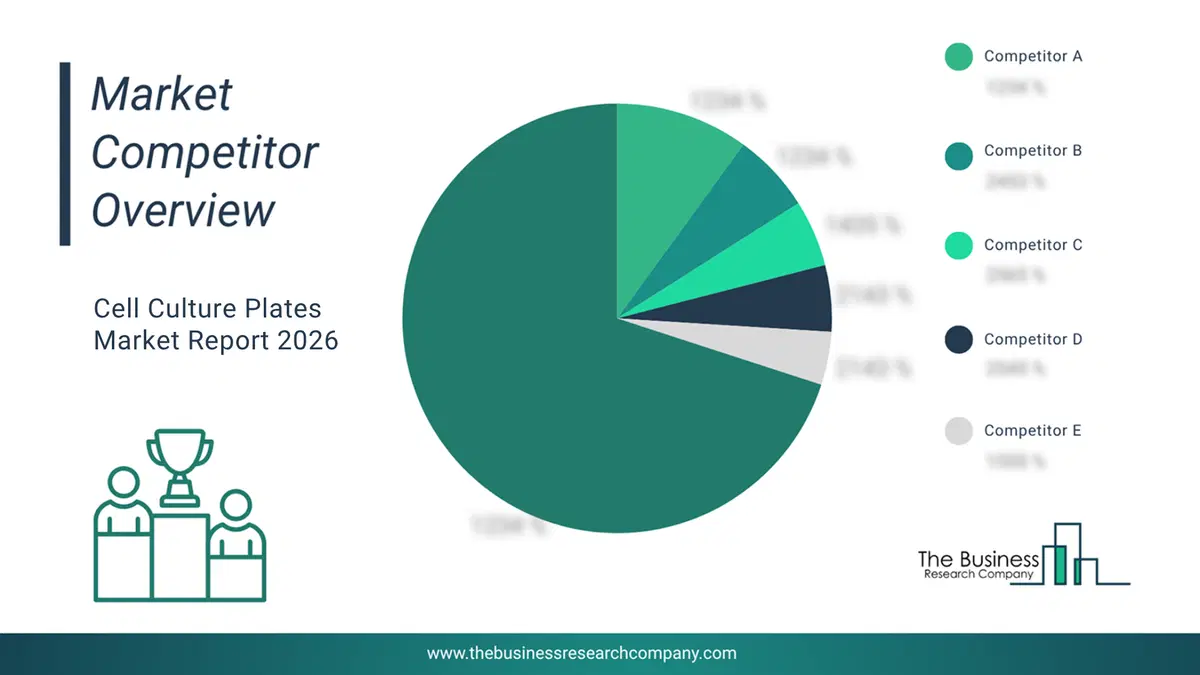
This chart is for illustrative purposes; the full report includes a detailed competitor analysis and comprehensive overview of the top 10 companies in the market.
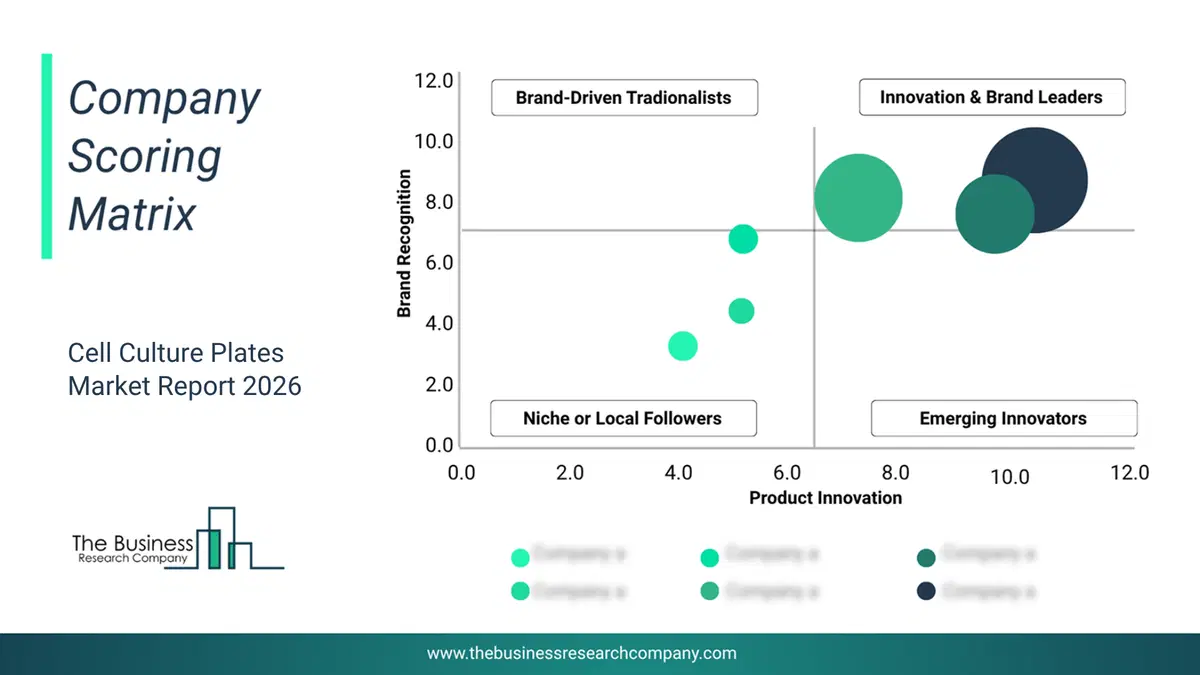
This chart maps companies by product innovation and brand strength, with bubble size indicating relative revenue, helping identify market leaders, challengers, and niche players. This is an illustrative chart; the full report provides a complete and accurate competitive analysis.
Global Cell Culture Plates Market Trends and Insights
Major companies operating in the cell culture plate market are focused on developing advanced products such as 3D Cell Culture Plates to strengthen their position in the market. 3D cell culture plates meet the demand for advanced, physiologically relevant models, significantly contributing to the cell culture plates market across diverse research and development applications. For instance, in May 2024, TheWell Bioscience, a US-based biotechnology research company, launched VitroPrime Spread-Attach Plates. The vitroprime spread-attach plates are designed for hydrogel-based 3D and 2D cell culture, offering superior hydrogel spreading and adherence to enhance cell attachment. These plates ensure homogenous gel distribution, minimize edge effects, and promote rapid cell growth for high-throughput applications.What Are Latest Mergers And Acquisitions In The Cell Culture Plates Market?
In May 2025, Brookfield Corporation, a Canada-based investment and asset management company, and Quebec Deposit and Investment Fund, a Canada-based institutional investor, jointly acquired Antylia Scientific for an undisclosed amount. With this acquisition, the companies aim to strengthen their presence in the life sciences and laboratory equipment sector, accelerate innovation, and expand their global market reach. Antylia Scientific LLC is a US-based healthcare technology company that specializes in providing advanced laboratory consumables and cell culture solutions for research and clinical applications.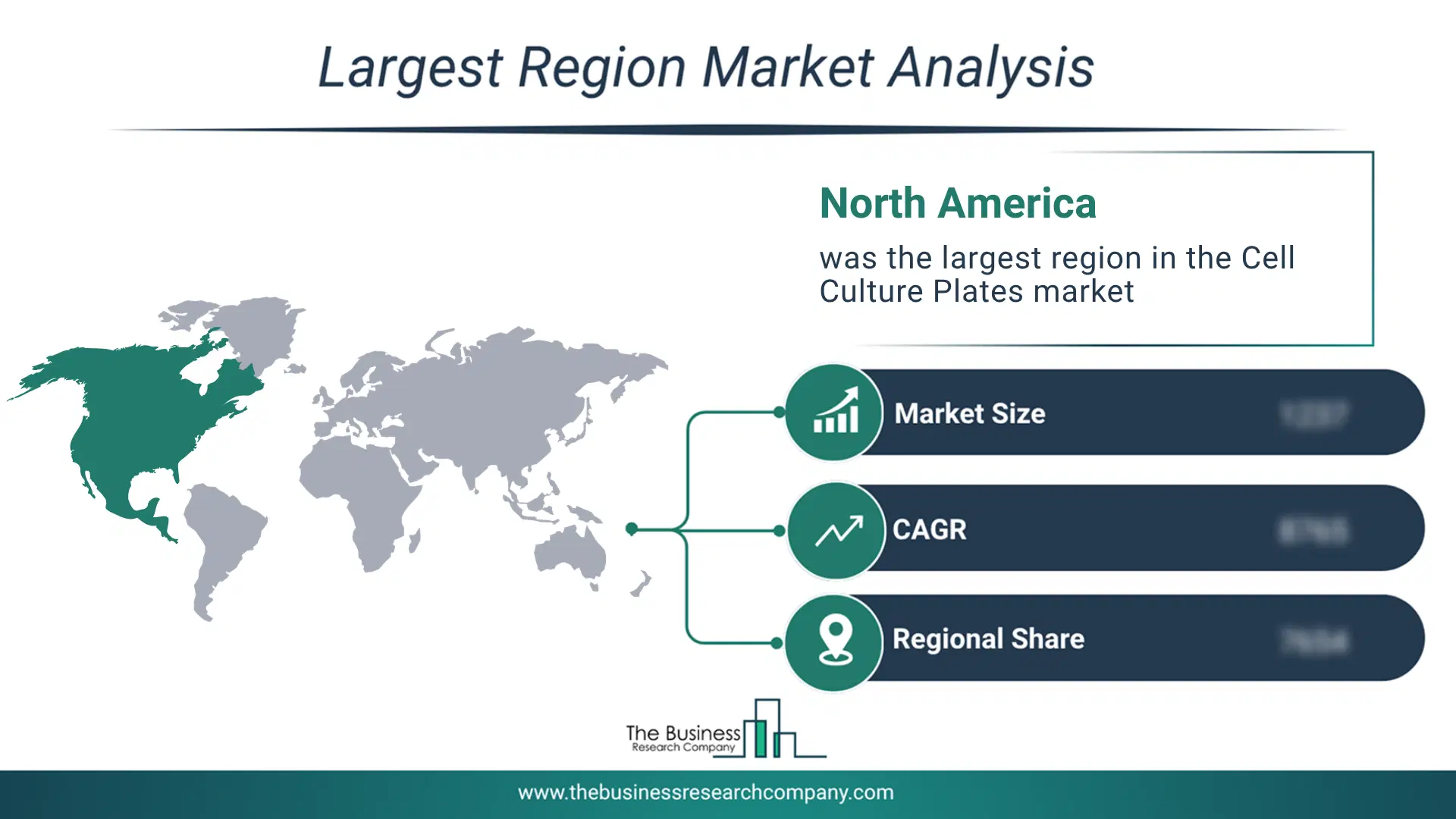
Regional Outlook
North America was the largest region in the cell culture plates market in 2025. The regions covered in this market report are Asia-Pacific, South East Asia, Western Europe, Eastern Europe, North America, South America, Middle East, Africa. The countries covered in this market report are Australia, Brazil, China, France, Germany, India, Indonesia, Japan, Taiwan, Russia, South Korea, UK, USA, Canada, Italy, SpainWhat Defines the Cell Culture Plates Market?
The cell culture plates market consists of sales of T-flasks, erlenmeyer flasks, dishes plate, tubes and roller bottles. Values in this market are ‘factory gate’ values, that is the value of goods sold by the manufacturers or creators of the goods, whether to other entities (including downstream manufacturers, wholesalers, distributors and retailers) or directly to end customers. The value of goods in this market includes related services sold by the creators of the goods.How is Market Value Defined and Measured?
The market value is defined as the revenues that enterprises gain from the sale of goods and/or services within the specified market and geography through sales, grants, or donations in terms of the currency (in USD unless otherwise specified). The revenues for a specified geography are consumption values that are revenues generated by organizations in the specified geography within the market, irrespective of where they are produced. It does not include revenues from resales along the supply chain, either further along the supply chain or as part of other products.
This chart presents market attractiveness based on a quantitative evaluation of growth, competition, strategic alignment, and risk, offering a clear view of opportunity areas for decision-making. This chart is for illustrative purposes; the full report contains the complete analysis.

This chart highlights the Total Addressable Market (TAM) by estimating the maximum revenue opportunity using an assumption-driven approach, supporting strategic planning and opportunity sizing across markets. The chart is illustrative; the full report provides a more comprehensive analysis.
What Key Data and Analysis Are Included in the Cell Culture Plates Market Report 2026?
The cell culture plates market research report is one of a series of new reports from The Business Research Company that provides market statistics, including industry global market size, regional shares, competitors with the market share, detailed market segments, market trends and opportunities, and any further data you may need to thrive in the cell culture plates industry. The market research report delivers a complete perspective of everything you need, with an in-depth analysis of the current and future state of the industry.Cell Culture Plates Market Report Forecast Analysis
| Report Attribute | Details |
|---|---|
| Market Size Value In 2026 | $2.44 billion |
| Revenue Forecast In 2030 | $3.09 billion |
| Growth Rate | CAGR of 6.1% from 2026 to 2030 |
| Base Year For Estimation | 2025 |
| Actual Estimates/Historical Data | 2020-2025 |
| Forecast Period | 2026 - 2030 |
| Market Representation | Revenue in USD Billion and CAGR from 2026 to 2030 |
| Segments Covered | Type, Material, Surface, Application, End-User |
| Regional Scope | Asia-Pacific, Western Europe, Eastern Europe, North America, South America, Middle East, Africa |
| Country Scope | The countries covered in the report are Australia, Brazil, China, France, Germany, India, Indonesia, Japan, Taiwan, Russia, South Korea, UK, USA, Canada, Italy, Spain. |
| Key Companies Profiled | Thermo Fisher Scientific Inc., Corning Inc., Merck KGaA, Lonza Group AG, Sartorius AG, Eppendorf AG, Greiner Bio-One International GmbH, Sarstedt AG & Co., TPP Techno Plastic Products AG, Sumitomo Bakelite Co. Ltd., USA Scientific Inc., Himedia Laboratories Pvt. Ltd., Porvair PLC, Brand GmbH & Co. KG, Stemcell Technologies Inc., MatTek Corporation, Celltreat Scientific Products, Crystalgen Inc., Jet Bio-Filtration Co. Ltd., Zhejiang Sorfa Life Science Research Co. Ltd., Wuxi NEST Biotechnology Co. Ltd., Cellvis |
| Customization Scope | Request for Customization |
| Pricing And Purchase Options | Explore Purchase Options |